
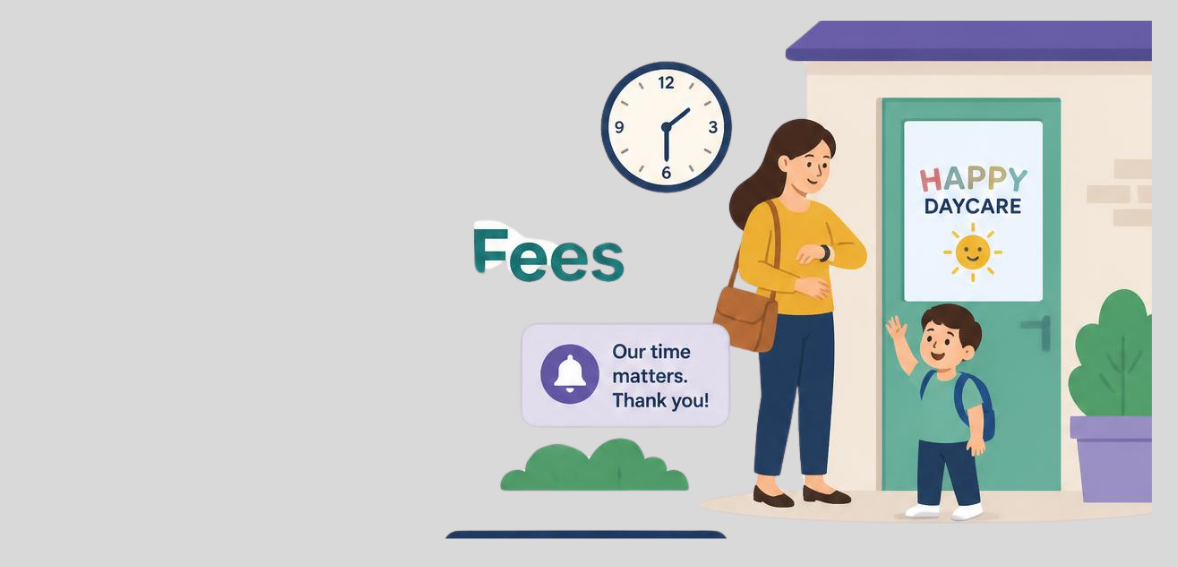
Sometimes it’s unexpected traffic and sometimes it’s work meetings or family emergencies; late pickups have become a common issue for daycare owners. Late pickup means staff staying late, extra payroll, and disruption to the normal closing routine. Late pickup is more than a minor inconvenience. Child care centers need to keep the staff available until each child leaves. Because employees’ salaries are one of a center’s biggest expenses, extra minutes add to operating costs.
Child Care Aware of America reported that child care teachers earned a median wage of $11.81 per hour in 2022. A 2025 report also showed that many child care programs operate with very small profit margins.
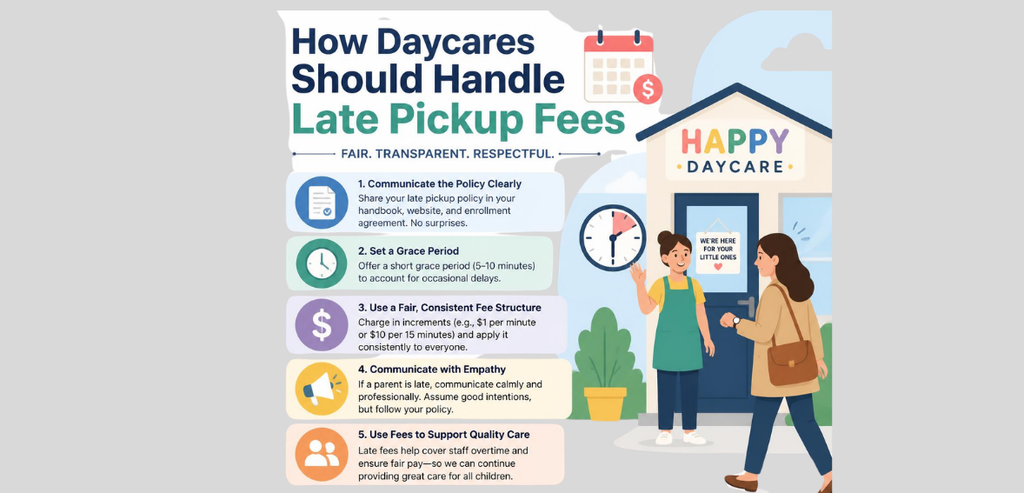
A clear pickup policy helps protect the child care center while still maintaining the family’s best interests. The late pickup policy should have specific terms, explain the charges and consequences, and be enforced strictly and uniformly. A policy helps parents understand and become familiar with the guidelines, building a good rapport with your care center.
Late pickups can affect many aspects of your daycare program, ranging from your staff schedules to your budget. Here’s how:
This is why a late fee should be charged to cover the expenses and inconvenience of staying overtime. The fee is not meant to punish parents; it is meant to help cover costs and, hopefully, encourage parents to arrive before closing time.
There is no standard late pickup fee for every daycare. The appropriate fee should consider factors such as the business’s location, overhead and operating costs, closing time, staff salaries, and local regulations.
Some daycares charge per minute, while others use a fee schedule based on the number of blocks of time the child was kept after hours. Charging per minute is simple: the more minutes you are late, the more you pay, while a block-based fee can be easier for centers that do not want to calculate every minute.
Whatever system you select, ensure that it is simple enough for the parents to understand. For instance, if a parent has to pay a $1 fee for each minute after the five-minute grace period, they should be able to calculate what they owe without assistance.
In addition, the fee should cover your center’s costs. Consider staff wages, additional hours, administrative costs, and other expenses you may have to cover due to late pickups.

A grace period may give families extra time during unexpected delays such as traffic jams, weather, road construction, or other issues that can make it hard to arrive exactly at closing time.
For example, a child care program could have a five-minute grace period before adding charges for being late. The program should explain the specific policy to all families and apply it consistently.
A verbal warning upon pickup is not enough. Parents should thoroughly review and understand the late pickup policy before leaving their child at a day care. The policy should include the center’s closing time, any grace period, the late fee and payment method, and a policy on habitual late pickups.
ChildCare.gov advises child care providers to clearly communicate payment terms, additional fees, due dates, and late fees to parents. The website also suggests including signatures and dates from both parties.
This way, both parents and the facility have a solid basis for the agreement. In the case of a late pick-up, a child care provider can rely on the agreement’s clauses to remind the parent of their responsibilities.
A written policy is more effective when parents acknowledge that they received and understood the information. Include the late pickup rules in the parent handbook or enrollment agreement, and have the parent sign or acknowledge online. The acknowledgment should show that parents received the policy before their child started attending the center.
It is also important to make sure that the policy is easy to find. Parents should not have to scan through pages to find the late pickup fee policy. It would be easier to understand if the policy included a short section titled “Late Pickup Policy.” This will make it easier for the parents to understand the rules.
Closing time gets hectic at daycare. Teachers are busy looking after children, parents are arriving, and the center is about to close. It may not be the best time to ask parents for cash for a late pickup, especially if they arrived 10 minutes late.
A more appropriate solution may be to add the late fee to the family’s account. The center can charge the family an appropriate late-pickup fee and add it to their account, which would then be paid with their next payment. With consent on file, the center can also charge the late fee to their saved payment method.
Cloud Daycare Manager can automate billing by letting you add a late pickup fee directly to an account. This can relieve staff of the burden of charging and collecting fees during a busy pickup time. It can also help track charges. Staff won’t have to track who has paid, who hasn’t, and how much has been paid at the door.

Repeated late pickups need a different approach. If a parent is repeatedly late, a manager should talk with them and explain how their behavior negatively affects employees and disrupts the closing procedure. The manager should remind them of the center’s policies and possible additional payments.
If the parent continues to be late, the manager should remind them of the consequences described in the enrollment agreement. Under the agreement, they may be required to pay additional fees or even be excluded from the program if the center’s policy allows.
The center’s policies should clearly state the process to prevent problems. This allows parents to address the problem before it becomes too severe.
A genuine emergency, bad weather, or another exceptional circumstance may justify waiving a late fee. The center should establish criteria for what qualifies and state them in its policy. Clear guidelines make it easier for staff and help ensure parents are treated equally. Any exceptions to the written policy should be stated in the policy.
For example, the policy might state that the center will not assess a late fee for a documented emergency. The policy should always reflect the center’s practice.
A late fee helps cover the center’s costs and motivates parents to pick up their children on time. However, the late fee should be simple and easy to understand.
Since families often pay a lot for child care, late fees can add to their expenses. According to Child Care Aware of America’s 2025 report, the average child care cost per year is $13,184, which is 10% of income for two-parent families and 33% for single-parent families.
That makes communication essential. Parents need to know when the late fee applies. They also need to know how much they may have to pay. A clear, straightforward fee is much easier to understand than a sudden, unclear one that feels more like a surprise.
Sometimes, a parent may disagree with a late pickup fee. First, confirm that the recorded pickup time is accurate and that the parent received the agreed-upon policy document. If the fee is correct, explain how it is calculated and remind them of the policy they signed. If a parent refuses to pay, follow the collection and enrollment policies already included in the family’s agreement. Do not add any new penalties during the disagreement. Keep the tone calm and factual, and refer to policies and calculations to avoid unnecessary arguments.
A daycare late-pickup fee should not surprise parents. It should be part of the enrollment and payment policy they sign when they arrive. Late pickups can create unnecessary overtime for daycare employees, and parents need to know which rules apply to their child-care plans, since child care is already a costly expense.
A simple solution is to set rules before any late pickups, explain them clearly, record the pickup time accurately, and add the charges to their account rather than requesting payment upon arrival.
Offer grace periods and/or fee waivers when appropriate, and establish a clear, documented procedure for repeated late pickups.
There is no standard rate. Each daycare center sets its own rules depending on its needs and expenses.
Rules may also change by state or local area. Daycare centers should research and understand the rules that apply to them and state the fee rate in the contract with parents.
Most daycare centers provide a grace period, but there is no standard one. Therefore, clearly state this point and follow the rules.
