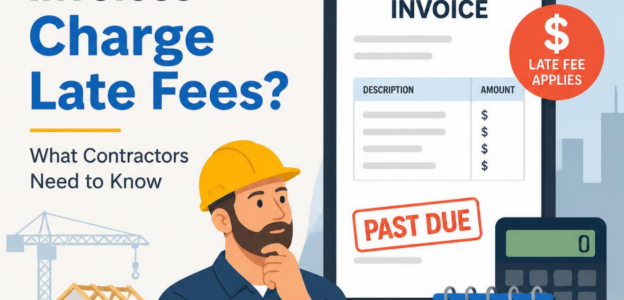
If you have a client who always pays 30 or 45 days late, no matter how many follow-ups you make or reminders you send, you’ve probably wondered whether a contractor’s late-payment fee is even allowed. If you’re under a client who always pays 30 or 45 days late, no matter how many follow-ups you make or reminders you send, you’ve probably wondered whether a contractor’s late fees is even allowed. A clearly documented late payment policy will encourage your client to pay on time, and especially when a late fee charge is applied, that’s enough to change payment behaviour.
But for contractors, there’s a way to do it. You can’t necessarily add a late fee just because you printed it on the invoice. For contractors, whether you can charge interest or a late fee depends on what your contract says, when the terms were agreed upon, and the laws that apply to the transaction. State rules may also limit the interest rate or fees you can legally charge.
So should you add a late fee on invoices? What should you charge, a flat fee or a monthly percentage? And what should you do when a good customer pays late? In today’s blog, we’ll break down important aspects that contractors need to know before adding late fees on invoices and how you can do it without denting your relationships with customers.
Can Contractors Legally Charge Late Fees on Overdue Invoices?
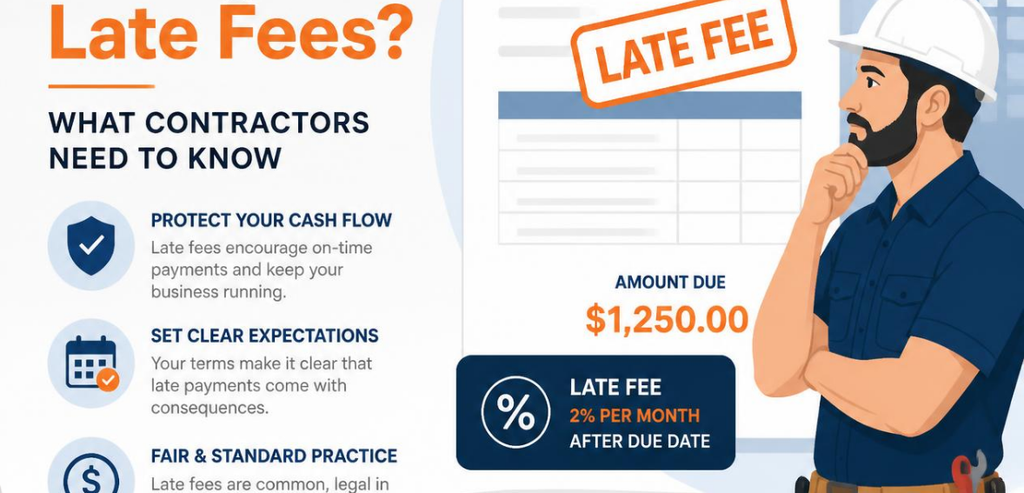
Yes, contractors can charge late fees or interest on overdue invoices. But it’s important to note that all the terms are agreed upon and disclosed in writing before the work starts. That usually means spelling it out in your contract, your signed estimate, or the payment terms printed on the invoice itself, not something you decide to add once a payment is already late. Your contract should ideally establish:
- When payment is due
- What happens if payment is late
- Whether interest or a late fee applies
- How the fee is calculated
- When the fee begins accruing
- Whether there is a maximum charge
- Which state’s law governs the agreement, where appropriate
Additionally, the customer should know the payment rules before starting the work. For example:-
Imagine your contract says that payment is due within 30 days on invoice receipt. But haven’t included anything about interest, late fees or penalties. But there is no mention of interest, penalties, or late fees. Thirty-five days later, you send an invoice that says:
Late payments are subject to 2% monthly interest
You may have a problem if the customer disputes the charge because that term wasn’t part of the agreement they originally accepted. The fix is the same either way: get it in writing before the next job starts, not after this one goes overdue.
Why Your Contract Matters More Than the Invoice
Your invoice tells the customer how much they owe and when payment is due. Your contract outlines the terms both parties agree to. This difference matters most when you want to add late penalties or fees. In simple terms, the customer must know about the late-payment terms before the project starts. The contract can outline when payment is due, whether interest or a late fee applies, how it is calculated, and when it begins.
The invoice can, then, serve as a reminder of those agreed terms to the customer. For example, if your contract establishes Net-30 payment terms and a legally permissible late-payment charge, the invoice should clearly display the due date and reference the applicable payment terms. It’s important that your invoice should cover every detail about the late payment charge. The problem occurs when charges appear suddenly, and your customer has never agreed to that term; here you may face a dispute. That’s why late fee wording in a contract is so important.
What Are the Common Types of Late Fees?
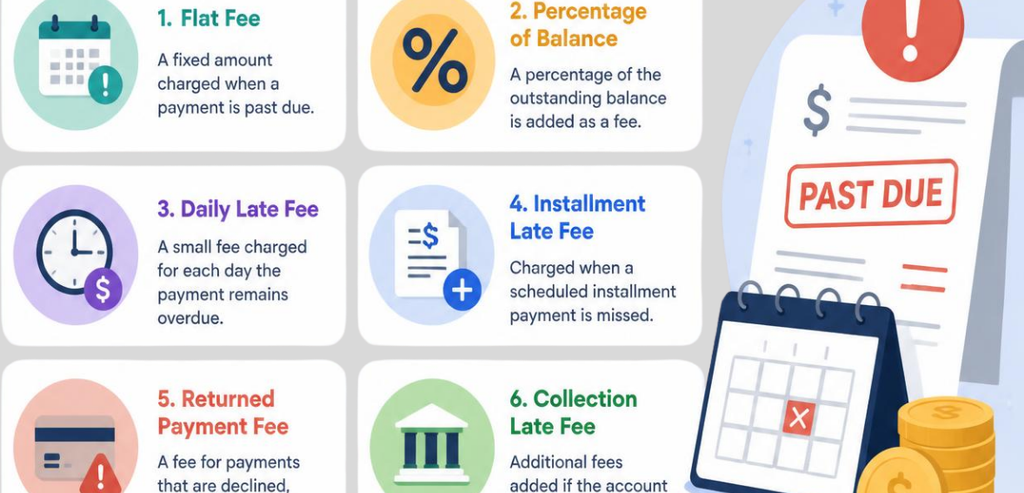
Contractors use two basic approaches when it comes to late-payment charges: a flat fee or a percentage-based charge. The appropriate structure depends on the business, transaction, and applicable law.
A flat fee is a static dollar amount that becomes due when an invoice passes the payment deadline. For example, a contract might state that a $50 charge applies to an overdue invoice, if legally allowed. The benefit is simplicity. Customers can easily understand the amount, and your accounting team doesn’t need to perform complicated calculations.
However, a flat fee can have a very different impact depending on the invoice amount. A $50 charge on a $10,000 invoice is relatively small, while the same $50 charge on a $500 invoice represents a much larger percentage of the balance. Contractors should consider whether the fee is reasonable and permitted under applicable law.
A percentage-based charge adds the late payment amount to the unpaid balance. For example, a contract may disclose a monthly interest rate on overdue amounts, subject to applicable legal limits. This approach can make sense for larger commercial invoices because the charge increases with the amount outstanding. Percentage-based charges need more care because usury and interest laws apply. Contractors shouldn’t simply copy a percentage from another company’s contract, since your situation may differ.
What Is a Reasonable Late Fee for Contractors?
There isn’t a standard answer, as the amount or rate depends on factors like the type of customer, invoice size, project type, industry practices, payment terms, and applicable law. For example, a contractor working mostly with homeowners may have a different late-fee policy or face different considerations than a subcontractor working with commercial clients.
Similarly, a small repair invoice and a big construction contract may require very different approaches to payment terms. The key is to avoid choosing a number simply because it is common online. Your goal should be to practice a payment policy that is clear, legally appropriate, and commercially sensible for your specific contracts.
Understanding Invoice Interest Rates by State
One of the more confusing issues that contractors face is confirming the right invoice interest rate by state. There isn’t a single nationwide rule that provides one late-payment rate for every private invoice. State laws can treat interest differently, and applicable rules may involve various aspects, the parties involved, the transaction, and the terms of the agreement. Some situations may involve statutory interest rates, while others may involve contractual rates subject to legal limits.
This means contractors should be careful when using a standard interest rate across every customer and project. A rate that works for one contract may not necessarily apply to another.
Flat Fee vs Percentage: Which Approach Makes Sense?

Both structures have advantages and drawbacks. A flat fee is easy to understand and administer, while a percentage-based charge adjusts according to the outstanding balance.
The fee structure suits businesses starting with a small investment, but a percentage-based model can cost more in fees over time. Flat-fee structures are transparent, so customers know what they’ll pay. For example, a contractor with smaller invoices may prefer a straightforward fixed charge because customers can immediately understand what happens when an invoice becomes overdue.
The better approach depends on whether the customer agreed to the terms, whether you clearly explain the charges, and whether the amount complies with applicable law.
The structure should also fit your actual billing process. If your accounting software automatically calculates monthly interest, a percentage-based system may be easier to administer. If you prefer a simple manual process, a fixed charge may be easier to manage.
What Should Your Late-Fee Clause Say?
A good late-payment clause should answer the basic questions a customer mostly has, like:- When exactly is the invoice due? When does the late charge begin? How is it calculated? Does a grace period apply? Is there a maximum amount? What happens if the customer disputes part of the invoice? The language of your clause shouldn’t be unnecessarily complicated; the goal is to convey your terms clearly so that they are easy to understand.
A Simple Example of Late-Fee Wording
Here is an example of the type of language contractors can discuss with their attorney:
“Late Payment: Payment is due according to the terms stated in this agreement. Amounts that remain unpaid after the applicable due date may accrue interest or a late-payment charge at the rate specified in this agreement, subject to applicable law. The customer will remain responsible for undisputed amounts while any disputed portion is being resolved.”
Should You Put the Late Fee on the Invoice Too?
Yes, if the invoice language matches your contract. Contractors can include a short note such as Past-due balances may be subject to the late-payment terms stated in the service agreement,”- referring customers back to the agreement. This approach is best and should be followed by every contractor as it dictates everything clearly without suggesting that the invoice itself created a new contractual obligation.
What If You Didn’t Put a Late Fee in the Contract?
Then it’s best not to add one to an overdue invoice. Instead, review the agreement and confirm what payment terms were actually accepted. You can also send a reminder, ask when payment will be made, and answer any billing-related questions. If the unpaid amount is substantial or the customer disputes your right to charge interest, it may be worth getting legal advice before adding charges or escalating the matter.
When Does It Make Sense to Waive a Late Fee?
You can offer a one-time waiver if a customer was facing an administrative issue and has a strong payment history. For example, the customer may never have received your invoice because it went to an outdated email address, or the customer may have contacted you and explained a short delay. In these situations, you might choose to waive the fee as a business courtesy.
Why Visible Waiving Can Be Better Than Never Charging
Interestingly, a late fee can improve payment behaviour even when you occasionally waive it. Suppose your customer pays an invoice 10 days late. You decide not to charge the late fee because they have been a reliable customer. Instead of saying nothing, you can tell them that you’ve waived the charge as a one-time courtesy.
That communication reminds the customer that your contract contains a late-payment policy without turning a minor delay into a major dispute.
Use Automated Reminders Before the Invoice Becomes Overdue
Your first payment communication shouldn’t necessarily happen after the invoice is late. A simple reminder sequence can keep payment on the customer’s radar without making your team spend hours chasing invoices. Automation reminders make this manual process more consistent and accurate. If slow-paying commercial accounts are already putting pressure on your cash flow, you may also want to review “Net-30 Commercial Accounts Are Wrecking Your Cash Flow.”
Conclusion
Late fees on invoices should be treated as a part of a clear billing system rather than as a punishment for customers for late payment, but this policy is getting both the boxes ticked.
The most important step is establishing your payment terms before the work begins. Your contract should clearly explain when payment is due and, where applicable, what happens when an invoice remains unpaid. Don’t assume that simply printing a late fee on an invoice creates an enforceable obligation.
You also need to consider applicable state laws before choosing an interest rate or fee. Ultimately, the goal isn’t to collect more late fees. It’s to get paid on time. Clear contracts, straightforward invoices, automated reminders, convenient payment methods, and consistent follow-up can all help you get there.
Late fees on invoices: one piece of getting paid on the job. The rest of our contractor payment guides are in Contractor Payment Resources.