

Posted: July 10, 2026 | Updated: July 10, 2026 at 2:31 PM
Your customer’s inbox is a hellscape of newsletters. Their phone isn’t. If you run a small or medium-sized business and are still relying on email marketing, you are wasting money, time, and customers. Text message marketing campaigns send the same message to the SMS and RCS thread that is one swipe away from your potential customers’ home screens.
If you have a small to medium-sized business, SMS marketing isn’t a luxury anymore. Text marketing campaigns have the highest potential return on investment of any SMB marketing channel. Customers actually interact with text messages. Text messaging has the furthest reach of any marketing form. Small businesses can achieve the marketing reach of custom app development by launching a text messaging campaign at a fraction of the cost.
Text message marketing should be your primary focus and biggest budget allocation for the 2026 marketing year, and this guide will show you why. This guide will show you how to market via text messaging while staying TCPA-compliant, along with the top seven text message marketing campaigns to implement this quarter. Each campaign is designed as a practical playbook to drastically reduce the time required to reach out to your customers via text.

Email marketing persists in the marketplace, although the number of detractors is growing. Open rates average 20 to 21 percent. Compare that to SMS – 98 percent – and texts are read within three minutes of delivery. The stark difference in those numbers is why SMS marketing for small businesses is one of the fastest-growing segments of small-to-medium business marketing.
Performance stats for SMS and email are even more striking. Text message marketing campaigns result in click-through rates of 19 to 36 percent. Email campaign click-through rates are one to ten percent. Those numbers also hold true for response rates. SMS average response rates are 45 percent, and email is 6 to 10 percent. If a customer has a question about a delivery, an appointment, or a flash sale, text is the channel they will see.
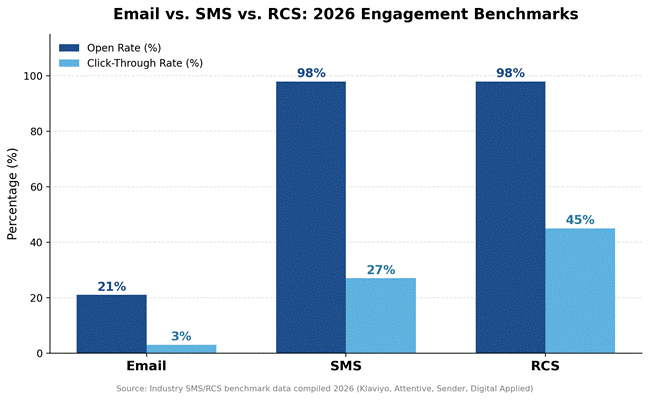
Figure 1: Email vs. SMS vs. RCS engagement benchmarks, 2026.
RCS provides additional advanced features to businesses. Early statistics from 2026 show that RCS integrates verified branding, enabling rich imagery and interactive messaging. As a result, RCS click rates for the same audience were 1.8 to 2.4 times higher than standard SMS. For small and medium businesses (SMBs) deciding where to allocate their marketing dollars this year, the answer is SMS text messaging.
Short Message Service (SMS) is a simple yet effective messaging protocol of all mobile devices that has existed for more than three decades. There can be no more than 160 characters in a message segment. SMS does not support images, sender branding, or read receipts. That simplicity is why it has stayed relevant and trusted.
RCS stands for Rich Communication Services. RCS is the GSM Association’s and Google’s response to the old SMS system and is available to the majority of Android devices. RCS allows verified senders to include their company name and logo in the message header, rather than a random number. RCS also allows the sending of full-size images and message threads, offers product carousels and suggested quick-reply buttons, and shows typing and read receipts, thereby revolutionizing messaging.
Recently, the biggest change to RCS is its availability to iOS devices. With the iOS 18 release, RCS is no longer an Android-only application and is now available on approximately 62 percent of iOS devices in the US, as well as virtually all modern US Android devices. While RCS is still not the complete replacement for SMS, for small and medium businesses, it is now a channel worthy of a budget as previously it was a channel only for testing.
For campaign delivery, the practical difference comes down to fallback behavior. On most modern messaging platforms, if the recipient’s device and carrier support RCS, an RCS-enabled campaign is sent. If not, the application falls back to the standard SMS messaging.
To run compliant text marketing campaigns, small businesses must first establish a solid legal foundation. Unfortunately, this is typically the most skipped section in small-business text marketing, and the one with the most expensive consequences for being ignored.
Is SMS marketing legal for small businesses? Yes, but it is complicated. In the U.S., text message marketing is governed by the Telephone Consumer Protection Act, or TCPA for short. Texting TCPA compliant messages requires obtaining prior express written consent before sending marketing messages, and that consent must be for your specific business, must be time-stamped, and cannot be a “permission to market” clause in the general terms of your website. Violating the TCPA can result in penalties of $500 to $1,500 per message sent, and small businesses can incur significant legal expenses from class action lawsuits.
Consent is only part of compliance. The Federal Communications Commission has also made changes to opt-out rules. As of April 2025, businesses are required to comply with opt-out requests made by any means that are determined to be reasonable, and not just by the opt-out command of “STOP.” Further, businesses are required to comply with the opt-out request within ten business days. An automatic reply to the opt-out command is compliant, but any messages sent after that would be considered a violation. In addition to the compliance time, messages must be sent only between 8 a.m. and 9 p.m. in the recipient’s local time zone. Additionally, the messages must comply with the 10DLC system for U.S. long codes. These are the basic compliance requirements for any small-business text marketing program to send messages.
The consent requirements for purchased or shared lead lists have undergone the most drastic and rapid changes. Heading into 2026, the consent requirements will most likely be dictated by federal laws and regulations, with appeal courts as the deciding factor.
SMBs should ideally obtain written consent from all customers and should avoid any texting list that incorporates third-party lead generation. A brief discussion with a marketing attorney is a good rule of thumb and much cheaper than a lawsuit.
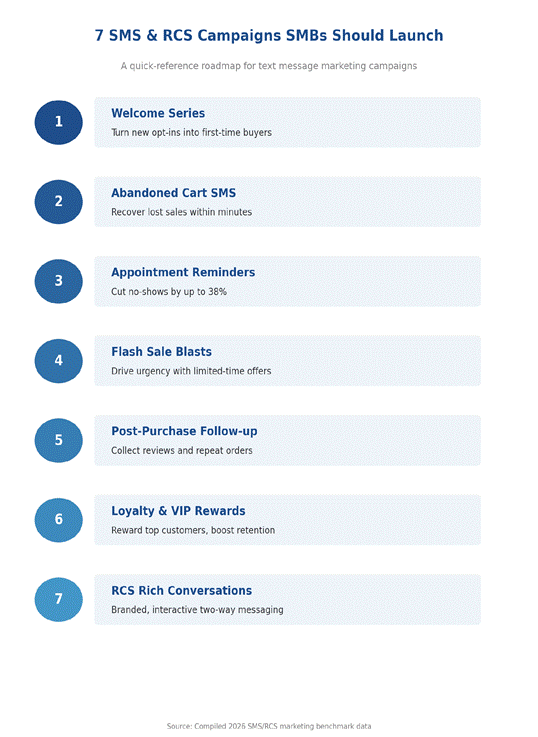
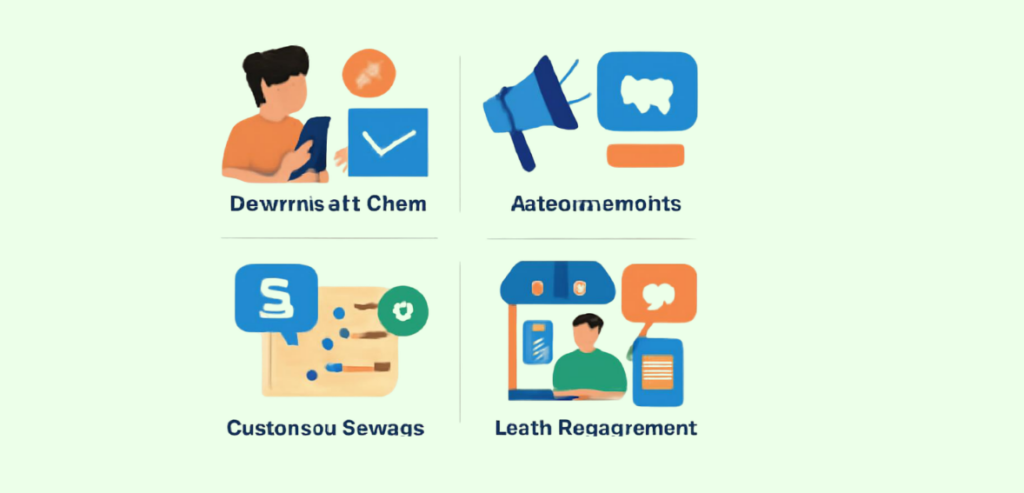
Figure 2: Quick-reference roadmap of the 7 campaigns covered in this guide.
The very first message your subscriber receives will always be the most important one. Statistically, the most effective Welcome Series consists of 2 to 3 messages, with a 1- to 2-day gap between messages over the course of a week. The first message in the Welcome Series not only confirms their opt-in but also shows gratitude by thanking the subscriber by name (usually with a 10% discount on their first purchase). The second message, scheduled for one to two days after the first, encourages the subscriber to make their first purchase, ideally of the lowest-risk, lowest-cost product, which is usually the most popular item in your catalog, or the most booked service that you offer.
Small and medium-sized businesses see the greatest success with automated welcome flows, and the messages in a welcome series deliver a higher return and revenue per message sent. This is because the subscriber’s intent to purchase is greatest in the first few minutes to hours after they sign up. The offer should be limited-time, and the tone should be friendly. To remain TCPA-compliant, there must be a clear unsubscribe option.
Cart abandonment is a costly problem for any e-commerce business, and solving it with abandoned cart SMS is one of the least expensive options. Once a customer leaves the checkout page, an SMS is sent about 30 to 60 minutes later, when the product is still fresh in the customer’s mind. The speed and efficiency of SMS are the reasons for the reported cart abandonment SMS sequence conversion rates of 25 to 40 percent without needing major discounts. An effective cart abandonment sequence design starts with a reminder message sent within the first hour after cart abandonment. The second message is sent the next day with a small discount if the cart is still unpurchased. For small- to mid-sized businesses (SMBs) with e-commerce or subscription storefronts, this SMS sequence likely has the highest return on investment (ROI) of any campaign on this list.
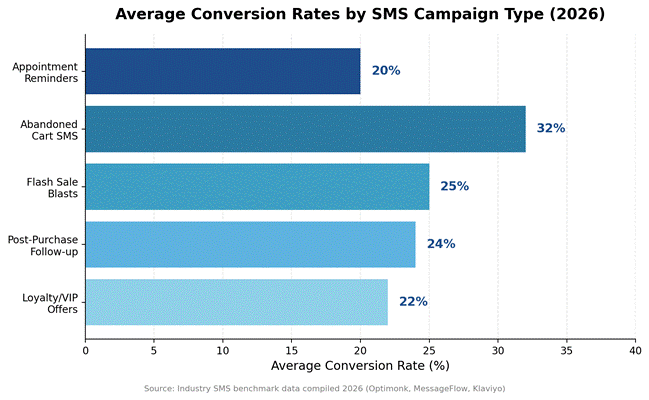
Figure 3: Average conversion rate by SMS campaign type, 2026 benchmark data.
From dentists and hairstylists to home DIY fixers, appointment reminder texts help all service-based SMBs avoid no-shows, which can be very expensive. Texts sent 24 hours and 2 hours prior to an appointment reduce the no-show rate by about 33%. Many healthcare providers have adopted this model, and the majority, if not all, now use SMS to communicate with patients. Appointment reminders are considered informational texts by the TCPA, and the required consumer consent is lower than for marketing texts, though consent should still be documented. A reply option, such as Reply C to confirm or Reply R to reschedule, turns your reminder text system into a self-scheduling system, which greatly reduces the workload on staff managing phone calls.
Urgency is your best friend when it comes to growing your text message marketing campaign numbers. The sales event message blasts, which feature a sale that expires within 24-48 hours, generate some of the best click-through and conversion rates of all campaign types, averaging 20-30 percent. The nature of SMS lends itself to the framework, too. The offer appears directly on the recipient’s lock screen, creating a now-or-never feeling. The channel does have a frequency issue, though. Opt-out numbers appear to double when you cross 8 messages in a month. Because of this, small- to midsize businesses should limit flash sales to messages that are genuinely time-constrained and manage their frequency to align with what their subscribers expect.
The bond doesn’t break at checkout, and after-delivery SMS is actually one of the most untapped campaigns within SMBs. A quick follow-up text a few days after the delivery achieves several things at once. It asks them to review the service/product and lets you know how their experience was. It helps you identify problems before they become public complaints. It also provides the social proof that helps you convert future buyers. The conversion rate for offers sent as a follow-up is usually between 15-30%, and SMS review requests also tend to get a lot better response than the email counterparts. The primary reason is that responding to SMS review requests takes a few seconds. This campaign also helps generate the reviews that SMBs usually need to get local visibility in their online searches.
You owe loyal customers who repeatedly support your business a different approach than you do to a first-time customer. Loyalty and VIP rewards texting offer small to medium-sized businesses (SMBs) this approach while avoiding the costs and maintenance of developing a full loyalty app. Loyalty texting campaigns reward VIPs by creating a separate customer list that offers new products before the public, additional loyalty points, and/or discounts. Loyalty texting campaigns leverage that list’s brand affinity, and loyal customers respond and redeem offers at higher rates. Loyalty texting is a simple campaign that works with point-of-sale (POS) or customer relationship management (CRM) systems that automatically flag and separate customer message lists.
The seventh campaign gives SMBs the opportunity to use RCS effectively. With RCS, SMBs can take the next step in conversational commerce by sending a card that showcases the product line and lets users tap on images, tap Suggested Reply buttons that say ‘Book Now’ or ‘Add to Cart’ while a typing indicator appears, and much more. RCS offers verified brand messaging that displays the business name and logo before customers open the message. For SMBs, this campaign combines a text-message line with a lightweight support desk and storefront.
These seven campaigns rely on a text messaging platform to run smoothly. The platform should handle compliance, list segmentation, and RCS fallback on its own. A number of vendors have become the go-to choice for small- to medium-sized businesses (SMBs) building out text messaging marketing campaigns.
Because Twilio operates on an API-first infrastructure, it’s become the foundation for many other texting solutions. While Twilio does require a more technical setup, developer-oriented SMBs are rewarded with customization of automated flows, two-way replies, and RCS delivery over what many out-of-the-box solutions offer.
SimpleTexting targets SMBs that need an easy visual campaign builder and a more simplified way to build automation and compliance tools, all without a developer.
Attentive works with e-commerce small and midsize businesses (SMBs) to integrate SMS and email marketing into cohesive customer lifecycle flows. They also provide industry reference data on abandoned carts and post-purchase performance.
Klaviyo began as an email platform but has since developed strong SMS and RCS offerings. As such, Klaviyo is a good choice for SMBs looking for a unified, dual-channel solution.
Regardless of the platform you choose, the following features are required: built-in measures for TCPA compliant texting, automated 10DLC and/or short code provisioning, RCS fallback, and sophisticated reporting that goes beyond open rates to include click, conversion, and opt-out rates.
Open rate is the number-one metric that SMS vendors promote, but it can be considered the least valuable once your program has grown. SMS preview text appears on the lock screen before the message is even opened, which means the 98 percent figure reflects device-level delivery rather than actual engagement with the message. Metrics that actually correlate to revenue are click-through rate, conversion rate per campaign, revenue per message sent, and opt-out rate.
A good program will have an opt-out rate of around 3 percent or lower for every message sent, and an opt-out rate closer to 1 percent for targeted campaigns sent at the right time. Looking at the four previously mentioned metrics will give a small- to mid-size business a better idea of which campaign text messages get the best response than using the open rate metric alone.
Email as a marketing channel is here to stay, but it’s no longer how SMBs get noticed. With an almost 98% open rate and other superior stats, SMBs can use SMS, with the boost from RCS, to create a clean, branded messaging interface. With these resources, the polished look can be offered even to small, local businesses. In this guide, the customer journey was organized into seven marketing campaigns, including the traditional welcome series and abandoned cart recovery campaigns, as well as appointment reminders, flash sales, post-purchase follow-ups, loyalty rewards, and RCS marketing campaigns.
Depending on your business or personal needs, the welcome series, abandoned cart recovery, appointment reminders, and loyalty rewards campaigns are a good starting point for implementing SMS marketing campaigns. Day-one compliance and consent-based marketing mean SMS campaigns are likely to be the highest-converting channel in the coming year.
RCS (Rich Communication Services) is the next generation of SMS messaging. Unlike SMS, which is limited to 160 characters and is unbranded, RCS can send messages from verified, branded senders, support high-res images, incorporate product carousels and suggested reply buttons, and include typing and message read indicators. Unlike RCS, SMS is universal and can be used by every messaging client. With the introduction of iOS 18, Apple now supports RCS, and messaging clients on Apple devices can reach a broader audience using it.
In the United States, small businesses can legally use SMS marketing under the TCPA regulations. Prior express written consent must be obtained from the small businesses before sending the messages. SMS messages must include a clear opt-out method, and requests must be honored promptly — within the FCC’s maximum of ten business days. There are no size exemptions in the regulations. A large corporation and a small business owner must comply with the same regulations.
The most common method, which is also the easiest to defend, is an unchecked web form checkbox at check-out or sign-up that the customer actively checks to agree to receive marketing text messages. Another method is keyword opt-in, where a customer sends a text message containing the opt-in keyword. Opt-in methods can be varied, but ensure that a timestamped record of consent is kept. This will be your primary defense should a compliance issue be raised.
Being precise and pertinent in your communication beats the remnants of broad marketing every time. Messages that remind people of their appointments, alert them about abandoned shopping carts, or notify them about flash sales, among other things, always score highly in click-through and conversion rates because they include a clear call to action. Messages customized to the individual customer (using the customer’s name and order number or booking) have a far higher success rate than the broad marketing messages.
The most successful SMS campaigns with small and medium-sized business (SMB) clients average 4 to 8 messages per month across all campaign types. Data show that monthly opt-out rates tend to increase by about 2x when monthly message volume exceeds 8. Track opt-out rates to catch rising trends early. Appointment reminders and transactional messages triggered by client activity do not count toward the budget the same way promotional blasts do, as clients expect and usually appreciate those messages.
