

Posted: July 13, 2026 | Updated: October 06, 2026 at 5:57 PM
Your customers aren’t reading brochures anymore — but capturing your local customer is easier than ever. You don’t need a big budget, fancy equipment, or a big marketing team. All you need is a phone and a plan. This guide is a plan: a phone-based marketing playbook to walk you through the ins and outs of marketing your business using short-form video. It discusses why short-form video is a must, how to create captivating video hooks, and instructional short videos you can produce in an evening that reach new local customers and increase foot traffic to your location!

Where audience engagement exists, marketing opportunities follow. HubSpot’s 2026 State of Marketing report states short-form video content is expected to dominate marketing teams’ most successful content ‘slots’, a prediction backed by approximately half of the marketers surveyed. It is also said to provide the greatest return on investment when compared to other content types. Consumers are also on marketers’ side. 73% of respondents prefer to view a short-form video to learn about a product or service over a lengthy text description. Content that is less than a minute in duration is said to receive, on average, 2.5 times more engagement when compared to content that is longer.
Marketing success for short-form video content is easily explained. Social media platforms are the biggest proponents of short-form video content, so brand new, zero-follower accounts can easily reach thousands of ‘For You’ feeds. Text and photo posts do not receive the same reach. For local businesses, that video reach is marketing, not vanity. Approximately 50% of Google’s searches are for local businesses, and short-form video content marketing is feeding straight into that. Potential customers view and engage with your video content before calling, making the video content marketing successful.
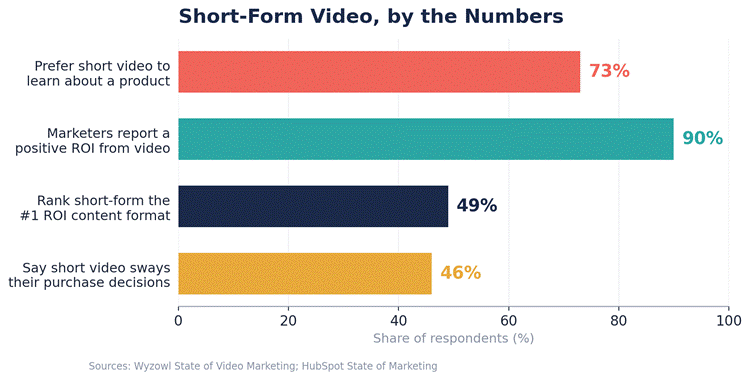
Figure 1. Consumers prefer short video, and marketers see the strongest returns from it.
The biggest misconception about small-business video is thinking you need equipment. You don’t. The phone in your pocket shoots higher-quality video than the equipment that shot the first blockbuster ads. About half of all companies invest less than $5,000 in their yearly video production. Many companies spend close to nothing on production. A DIY video shot with a smartphone has the potential to outperform a studio video. People learned to scroll past things that look like ads. Raw and real content stops scrollers. Everything else is skipped.
Your video will be of higher quality by developing a few habits and without the need for massive spending on gear. First, shoot vertically to fill the 9:16 frame. Position yourself in front of a window for natural light. Film with a steady hand by bracing against a counter. Self-record in a quiet room because audio clarity is always worth more than an expensive camera. Finally, add captions for the likely scenario where people will watch the video with the sound off. This is your kit to produce high-quality video. The only subsequent gear worth purchasing is a clip-on mic and a small tripod. Everything else impedes the most important thing — your consistency.

Deciding what to film is more difficult than the filming itself. The twelve formats below work for nearly every local business- a bakery, a plumber, or even a yoga studio. Choose a few formats to work with, and you’ll never be out of ideas.
The most effective formats are built on real customers. Customer reviews and a short customer story or read-aloud have the ability to gain trust fast. Trust is what matters most to new customers, which is why you should lean on customer reviews.
Every format has an opportunity to succeed or fail in the first few seconds. These few seconds aren’t an introduction to the video. They’re a chance to audition for the viewer. In the first two to three seconds, approximately seventy percent of viewers will recognize if the video is worth their time. The platforms are paying attention as well. They track how many viewers make it past the first few seconds, and they use this information to determine if they will promote your video. The bar for openings continues to rise, and platforms have grown increasingly aggressive about not promoting videos that most viewers click away from.
Getting a viewer to stay is the challenge every creator must try to overcome. Never slowly build up to the main message of the video. Never begin with “Hi guys, welcome back.” Be bold with the message and say it first, or ask a question, or reveal a common mistake. Also, use on-screen text of fewer than seven words, because many viewers will watch the video with no sound. The text should promise a payoff. A clip that earns a viewer’s attention has the potential to be promoted and can earn more than twice the views of a typical clip.
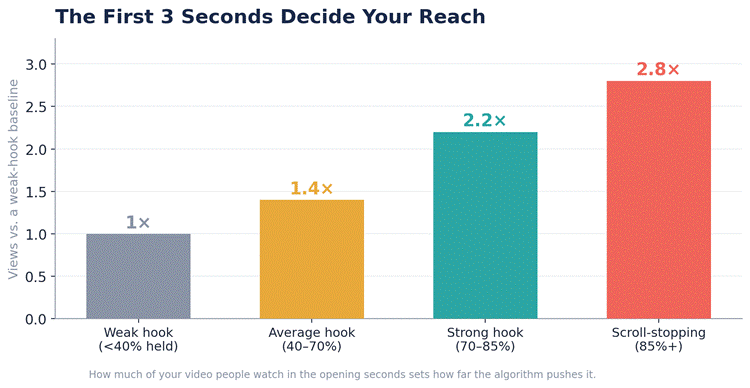
Figure 2. How much people watch in the opening seconds sets how far the algorithm spreads your video.
Nobody has time to record every day. The answer is batching. You record a bunch of videos in one session and release one video each day of the following week. This habit differentiates the businesses that last from the ones that stop after just four posts.
This is how it works. Each batching session begins with a quick 10-minute planning session in which you choose the 5 hooks and formats you want to include in the videos. Then spend 5 minutes setting up a good spot with natural light. After you finish your setup, record the videos back to back. This takes about 30 minutes. As you finish each video, take some time to capture extra seconds of b-roll. B-roll is simply a short clip of your hands, your product, or your store that you will layer under the videos you will edit in the future. You finish by writing out the captions and scheduling the posts. You now have a full week of content. Spend an hour once a week on this, and you have consistency in your video marketing.
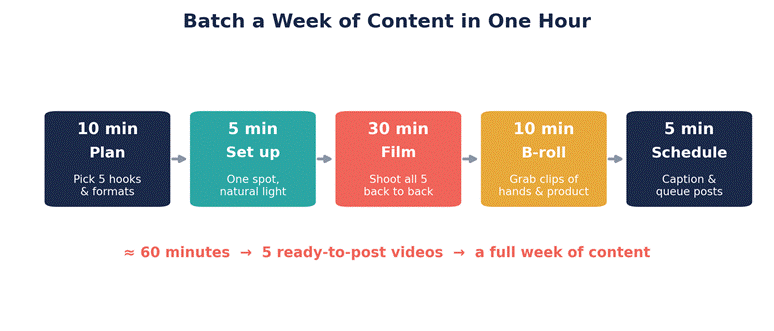
Figure 3. One focused hour turns into five ready-to-post videos and a full week of content.

Volume isn’t what matters most. Better for local businesses to post three to four videos weekly than for them to post a video daily. Consistency is more important than posting a lot in a short amount of time. Algorithms favor accounts that post videos consistently. The best approach is to film a video one time and post it to multiple sites. A single vertical video can be posted on four different sites with little to no changes for each. Each site has a different personality.
TikTok favors speed and sound. Fast clips filmed with a phone that use trending audio or songs are more likely to go viral. Since TikTok’s audience leans toward discovering new things, a small business is more likely to reach new customers. Be yourself, use a strong verbal hook, and keep your videos feeling like content and not an advertisement.
Reels is integrated with a platform that your potential customers use to evaluate your business. It is designed to reward a neat and attractive first frame, as well as a person looking directly into the camera. Meta publishes Reels-specific guidance in their Business help resources, and the short answer is: vertical, authentic, and always captioned.
Of all the short-form platforms, Shorts viewers have the longest attention spans. Posts become evergreen the fastest on Shorts, and can take on a life of their own long after you’ve posted them. YouTube will begin to show your Shorts in search results, making it a prime platform for how-tos and Q&As, as those are often searched by users.
Facebook Reels has a similar system to Instagram. Because of this, you can usually upload the same clip. It usually gets shown to an older audience in your area. You shouldn’t ignore your Google Business Profile either. Google’s data shows that with a complete profile, users are over 70% more likely to visit the business and 50% more likely to purchase as a result. If you share a short video there, it’ll be displayed right next to your listing when someone searches for a business “near me”.
Views and customers are vital to business success, and a good call to action can turn a view into a customer. Most local businesses forget to put a call to action, and a view only becomes a visit when people know what action to take next.
Each video should have a single instruction to take an action, and you should strive to have no more than one instruction per video. Actions can include: “stop by”, “order using the link”, “leave a comment”, and “save this video”. Fit the action to the goal, because local searches are likely to end with a visiting customer. It is estimated that 76% of people who search with a “near me” search will visit that business on the same day, and 28% of local searches will end in a purchase.
Use the fast search results to your advantage to capture the intent of those searches. Use your caption space to promote your neighborhood and include your best food or product video clips to promote ordering directly from your business rather than through a third party, which protects your profit. Don’t oversell or promote your business too aggressively, because this can create a lack of trust and lose you potential customers.
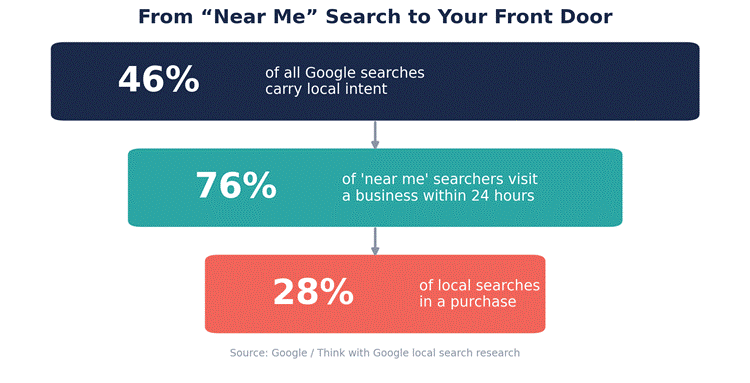
Figure 4. Local intent is high; a clear call to action is what converts a view into a visit.
Let’s put theory aside and get to the plan. This one offers some thought to spacing and variety. Plus, it uses one batch-filming session per week for the simplicity and speed of a filming-and-format-shifting workflow. The first three rows are the first week of the plan. The last three rows are the second week. Give it your own spin/variety, but keep the rhythm.
| Day | Format | Hook idea | Call to action |
| Mon | Behind the scenes | “Here’s what 6 a.m. looks like before we open.” | “Come see the result this week.” |
| Wed | Quick tip | “The one mistake that ruins this every time.” | “Save this to try later.” |
| Fri | Product spotlight | “Our most-ordered item — and why people love it.” | “Order yours through the link.” |
| Mon | Meet the team | “Meet the person who makes your favorite order.” | “Say hi next time you stop in.” |
| Wed | Customer question | “You keep asking this, so here’s the answer.” | “Comment your question below.” |
| Fri | Before & after | “Watch this transformation in 15 seconds.” | “Book yours this weekend.” |
Tip: film both weeks in two short sessions, then schedule everything in advance so posting never depends on a free afternoon.
Self-recorded marketing videos are a great opportunity for most local businesses. Filming short videos used to be much more expensive and time-consuming. Professional studios, sets, lighting, and editing used to be the industry standard. Now, with short-format videos, literally anyone with a phone can do it (as long as they have a few promotional techniques and a willingness to do it a few times a week). There’s a ton of potential to bring in local business using short videos, which already live where your target market spends its online time.
You can draw in new business and have measurable success as long as you post with a clear goal in mind; you should tell your audience what action to take to help you achieve that goal. With each post, you’re more likely to see new customers in your store because you’ve successfully reached your target market. The most successful businesses in your area weren’t the ones with the most professional marketing materials. They were just the ones that did it first. Check our solutions overview for more information about how to bring everything your business needs together, like videos, reviews, first-party ordering, and local search.
Yes. Short-form video is the most consumer-friendly way to learn about a product, and for marketers, it delivers the strongest returns thanks to the free reach offered. Short videos are shown to consumers who do not yet follow you, which is the perfect way to enable a local business to be found. It is possible not to use short-form video, but you are making things harder on yourself.
Help customers see the people behind the products! You can do this by introducing your team, providing behind-the-scenes glimpses, answering real customer questions, giving tips, or promoting a product. Customer stories and read-aloud reviews are the best ways to build trust quickly. Mix up your format, and start each post (your first sentence or first clip) with a clear hook.
You should value consistency over volume. Posting three to four times a week, for example, is way more effective than a daily posting spree that dies out quickly. Once you find a pace for posting that’s comfortable for you, stick to it! With that in mind, you should spend one hour filming a week’s worth of content. After you do that, just go home, relax, and enjoy the rest of your week.
Absolutely not. Most people have all they need for great, authentic, and quality video content at their fingertips – their smartphone! To create quality content, they just need a little bit of help and knowledge of how to use their phone, like filming in well-lit locations, filming vertically, and how to caption their videos to help articulate their message to their audience who may be viewing the videos with the sound off. If they want to invest more, getting a small tripod and a microphone would help, but really, the only true investment you will ever need to make is the smartphone that you already use to capture the videos. It’s all you need, really.
Always include only one call to action at the end of a video. Direct viewers to your link to place orders, stop in, leave comments, or make a booking. Use your actual location or neighborhood in the video caption to let local users know how close you are. Use strong local intent to your advantage, as many searchers who look for things “near me” are likely to check out a place the very same day. Your video will capture the audience. Your call to action will bring them to you.
Related reading on short-form video marketing for studios: Fitness and Gym Payment Resources.