Because restaurants operate on thin profit margins, restaurateurs must leverage every payment type to attract every type of customer while simultaneously leveraging the support of their credit card processor. Business owners don’t have time to waste on deciphering complex credit card processing fees during their monthly reconciliation. Nor do they have the luxury of refusing payment types in the digital age when customers are trying out every new payment trend available. Restaurants must weigh several factors in choosing a merchant service provider.
Great Customer Service
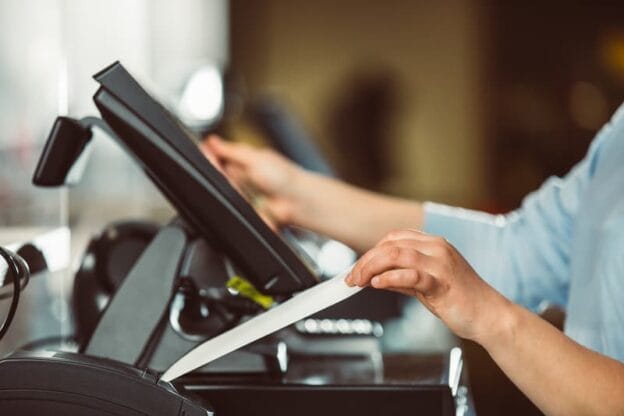
The owners and employees of restaurants are in the business of customer service. Their priority is creating the best dining experience possible for their clientele. They can’t be bogged down with complicated point of sale technology that slows the process and frustrates the end user. If they do experience technical challenges, they need support pronto in a 24-hour business cycle.
Knowledgeable Point of Sale Support
Restaurants have unique business needs regarding their credit card processor. In addition to round-the-clock support, a business needs restaurant merchant services that offer solutions that fit various business models. Depending on the restaurant, point of sale solutions may need to accommodate both a traditional style of service, as well as catering service and beyond, including mobile flexibility to allow a restaurant to meet the customers in multiple locations under a variety of circumstances.
Point of Sale Options
A restaurant needs a payment processor that can synchronize current processing systems with their solutions or provide a whole new solution to fit the restaurant’s circumstances. Keeping both security and convenience in mind, restaurants need a merchant service provider that can help the business to accommodate as many customers as possible in a secure fashion while also making transactions easy for restaurant owners and staff.
Low Rates & Transparent Pricing
And while customer service, ease of use, and processing simplification are ideal goals for a restaurant, none of it matters if the cost eats into the restaurant’s profits. Restaurants need a merchant service provider that offers interchange plus pricing, the pricing model merchants can rely on to offer the lowest cost interchange fees on the market. With a low markup over the wholesale cost, the interchange plus pricing model provides flexibility in equipment and payment options while keeping costs as low as possible.
Host Merchant Services: What Your Restaurant Needs in a Payment Processor
HMS provides customer support for restaurant credit card processing 24 hours a day, 7 days a week, 365 days a year. We know we need to work as much as you do to properly support an industry that can operate nearly 24 hours a day. That’s why we have operators standing by to answer your call any time of day.
HMS also explains how payment processing works. Providing a comprehensive package including credit card processing and financial transaction services to restaurants, we will custom design a flexible credit card processing solution to fit the needs of your restaurant.
And when we do demonstrate your payment processing scenario selections, HMS also offers your restaurant several point of sale options, including Clover, Vital, Bonsai, SwipeSimple, and more to fit your specific operation. If your restaurant is already equipped with hardware, HMS provides an easy point of sale integration.
Whether you need an entirely new point of sale system or a solution for your current system, HMS offers a suite of services to suit your restaurant’s needs. From wireless equipment, payment by check, recurring billing, to online payment gateways, HMS has everything a restaurant needs for serving customers in both traditional sit-down establishments and catering services.
With our low rate guarantee, HMS provides a Free Rate Analysis to show where you can save on your restaurant payment processing. If HMS can’t save your restaurant money, we will give you a $50 Gift Card. The best pricing model on the payment processing market, Interchange Plus Pricing will help your restaurant’s bottom line.
Host Merchant Services will even provide your restaurant free equipment via our free equipment program to qualified merchants along with receipt paper at wholesale prices. We are your restaurant’s credit card processing solution.
Frequently Asked Questions
What factors should I consider when choosing a credit card processor for my restaurant?
When selecting a credit card processor for your restaurant, consider factors such as transaction fees, processing rates, contract terms, and equipment compatibility. It’s also important to assess the processor’s reliability, customer support, and security features. Ensure that the processor can handle the volume of transactions your restaurant typically processes and offers features like tip adjustments and split payments to accommodate your needs.
How do transaction fees and processing rates impact my restaurant’s profitability?
Transaction fees and processing rates can significantly affect your restaurant’s bottom line. Higher fees or rates can eat into your profits, especially if you have a high volume of credit card transactions. Compare the fee structures of different processors, including flat-rate pricing, interchange-plus pricing, or tiered pricing, to determine the most cost-effective option for your restaurant’s transaction volume and average ticket size.
What should I look for in terms of contract terms and hidden fees?
Carefully review the contract terms and conditions offered by credit card processors. Look for transparent and flexible contract terms without long-term commitments or early termination fees. Be cautious of any hidden fees, such as statement fees, PCI compliance fees, or monthly minimums, as these can add up over time and impact your restaurant’s profitability.
How important is equipment compatibility for my restaurant’s credit card processing?
Equipment compatibility is crucial for smooth credit card processing in your restaurant. Ensure that the processor’s hardware and software options integrate seamlessly with your point-of-sale (POS) system. Consider whether you prefer traditional countertop terminals, mobile card readers, or online payment gateways. Assess compatibility with contactless payment methods like NFC and digital wallets, which are increasingly popular among customers.
What role does customer support and security play in selecting a credit card processor?
Customer support and security are vital considerations when choosing a credit card processor. Look for processors that offer 24/7 customer support to address any technical issues promptly. Additionally, processors that prioritize data security, comply with Payment Card Industry Data Security Standard (PCI DSS), and provide advanced fraud protection measures. Protecting your customers’ payment information is essential for maintaining trust and avoiding potential liabilities.
Because of the complexity of credit card processing, it’s hard to know when or if to switch merchant services providers. With the added confusion of automatically renewed contracts, equipment leases, and hidden fees, a business may feel it needs to outsource the research on their already outsourced credit card processor. Here are five things to consider when switching merchant services providers:
1. Contracts
Before making the switch to a new credit card processor, check with your current provider on the status of your contract. You may have transitioned to a month-to-month contract, in which case it’s easy to switch. If you’re still under contract, or worse, your merchant account provider automatically renewed your contract, it still may be worth the potentially hefty cost to break the contract and switch in the long run, depending on the fees you’re currently paying.
2. Equipment
Leasing equipment is one of the least cost-effective aspects of merchant services. If you’re currently leasing equipment, it would be in your business’s best interest to find a new credit card processor that will either sell the equipment to you at cost or – in an ideal world – give you equipment for signing on to their services.
3. Rates & Fees
Interchange fees are confusing, and because of their complexity, many merchant service providers can sneak extra charges into your monthly bill. If your business is using any payment model besides the interchange plus payment model, it is almost guaranteed you are paying more than you need to. The best merchant services at least offer the interchange plus model for pricing. This alone is a reason to make the switch.
4. Payment Methods & Security
Your merchant service provider should be able to provide the latest security and technology enhancements available. To protect your business from the liability of a fraudulent charge, your credit card terminal needs to be EMV-compliant at the least. Beyond security, depending on your business and clientele, you may even want to offer NFC-based payments such as Apple and Android Pay.
5. Customer Service
The person who sold your business your current merchant services contract is not the same person answering the customer service line. If your merchant services provider is not supporting you 24 hours a day, 7 days a week, you may need to look elsewhere. Your business can’t afford to wait on a callback. You need assistance when you need assistance. Not to mention, the customer service representatives should actually be helpful when you call. Try a test run with your current merchant service provider to see how their customer service will help you when you really need it.
Host Merchant Services
Delivering personalized service and clarity, Host Merchant Services takes the time to explain your payment processing. We want you to understand your monthly statement, and we will ensure that your statement matches our promises during our sales presentation. If you do have questions, you can reach a live representative any time, any day. HMS offers wonderful customer service, as well as great rates.
A Payment Gateway is the interface between consumers and the merchant acquiring bank that processes a payment during a consumer transaction, whether the transaction be online or in a brick and mortar store. In addition to the point of sale (POS) terminals, physical stores also need a payment gateway to complete a transaction made in person with a credit or debit card or by phone with a credit or debit card. And payment gateways are the “checkout” in online transactions where consumers enter their credit card information.
Payment gateways vary in options available to both merchants and consumers. Sometimes merchants employ more than one payment gateway to ensure consumers have every payment option available in this fast-paced, digital world. Not all payment gateways offer payment options for international consumers. Security is a priority for merchants, making tokenization increasingly popular to ensure safe and secure transactions.
Tokenization
Tokenization is a payment method in which credit or debit card data includes a unique identification code known as a “token” used in digital transactions. Increasing the security of e-commerce payment processing, tokens allow consumers to bypass providing card data. Specifically, tokenization converts the card number into a code, or token, which is then used instead of the card number during the transaction. Keeping the real data secure, the token is unique and can only be used within the platform – or website, or the device – or smartphone that generated the code. Irreversible and useless to hackers, tokenization further increases security for consumers. Visa and Mastercard, as well as Apple Pay, Google Pay, Samsung Pay, and any banking application can generate tokens for consumers’ transactions.
Types of Payment Gateways for Online Payments
There are three types of payment gateways for e-commerce online payments: redirects, checkout on-site with payment off-site, and on-site payments. Redirects take the consumer off of the merchant’s site and send them to a whole new site to complete a transaction. While this may be disorienting for a consumer, this method is also very easy to setup.
The checkout on-site with payment off-site option allows consumers to make the payment on the merchant’s site while the payment gateway actually completes the transaction behind the scenes. As with the redirect option, merchants have little to no control over the user experience for their customers, but also, as with the redirect option, merchants have access to a robust system without requiring extensive technical knowledge.
The on-site payment option is well suited for large-scale businesses, in which the merchant handles both the front end and behind the scenes portion of the transaction, placing both control over the consumer’s experience and potential liability for fraud on the merchant’s shoulders.
Host Merchant Services
Supporting a variety of Payment Gateways, Host Merchant Services can fulfill your processing needs. Customized to your business needs, your processing solution lies in one of our offerings: from Transaction Express, Vital, Authorize.net, NMI, Paytrace, USAePay and many more. Solutions include all basic features such as tokenization, Quickbooks sync, ACH, level II & III data processing, and multiple MIDs, along with a number of other supported gateways. No matter the technical requirements, HMS has a fit for your business.
The United States is one of about a dozen countries without a mandatory national identification document; for this reason, driver’s licenses, state ID cards, passports, and even social security numbers have served as alternatives to a federal identification system that both conservatives and liberals cannot seem to agree on. Starting in October 2020, the Real ID Act will come into full effect, and this digital coordination of personal information currently managed at a state level will be the closest Americans will get to national ID card, at least for the time being.
In Colorado, a state known for its friendly attitude towards technology, both driver’s licenses and state-issued ID cards are going fully digital. In an interview with the Wall Street, Colorado’s Chief Information Officer Theresa Szczurek explained that a mobile version of driver’s licenses is like a “killer app” for state residents in the sense that it takes away the burden of having to carry a wallet. This new form of ID is actually a feature of myColorado, a comprehensive mobile app that grants residents access to a variety of services provided by the state.
The philosophy behind this digital ID project comes from the growing trend of Americans never leaving home without their smartphones. If a woman in Denver goes out to walk the dogs, she is unlikely to bring her purse, wallet, or pocketbook, but she will very likely bring along her smartphone. Speaking of Denver, this is a city where 20% of retail payments are made with mobile devices. By order of Governor Jared Polis, most Colorado state agencies have been ordered to accept this electronic ID as a valid form of identification, and this is already being used by a few commercial establishments that need to check ID for various purposes such as selling cigarettes, serving liquor, or verifying a point-of-sale purchase made with credit cards.
The myColorado driver’s license automatically links with the databases managed by the Department of Motor Vehicles. Changes personal information can be updated through the myColorado app, and this includes taking selfies. A Colorado driver’s license is typically good for five years, and for many residents who change addresses two or more times during that period, this means many trips to the DMV. With the new electronic ID version, changes can be made directly from smartphones 24 hours a day and even on weekends without worrying about taking time off from work to stand in long lines at DMV offices.
The cashless paradigm has gone from credit and debit cards to smartphones, and the next logical step appears to be wearable devices such as smartwatches and fitness trackers; however, it should be noted that wearable digital payment systems do not necessarily need to be part of smart devices. In early 2017, market research firm Tractica issued a forecast that suggested more than $500 billion worth of wearable retail transactions will be made in the year 2020; nonetheless, a more recent estimate by MasterCard Europe revises this projection closer to a billion dollars.
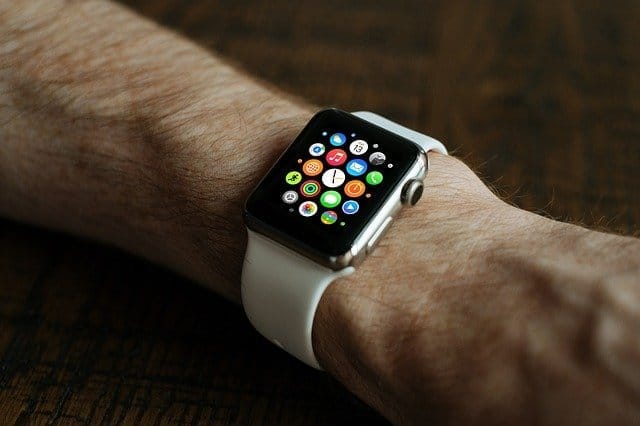
Contact-less payments technology is at the heart of this wearable digital wallet revolution, which is powered by Radio-Frequency Identification (RFID) and Near-Field Communications (NFC). These solutions are not exactly new; in the United States, RFID key fobs were marketed to drivers about a decade ago for the purpose of facilitating the process of paying for fuel purchases right at the pump. NFC payments were initially designed almost exclusively for smartphone, but smart wearable devices such as the Apple Watch, which links with the iPhone and the iPad, are making more sense as digital wallets.
MasterCard has a good reason to follow the wearable payments segment; the debit and credit card giant has a good opportunity to catch up to its rival visa in terms of global market share through wearable devices, which are not limited to smartwatches. Consumers who do not particularly care for smartwatches and prefer more traditional analog and digital versions can get watch straps equipped with contact-less payment technology, and MasterCard wants to be the primary processor in this regard. The company started working with luxury watchmakers in Sweden and Switzerland about a year ago, but MasterCard has recently struck partnerships with manufacturers of aftermarket watch straps to give more consumers the ability to pay with accessories they wear.
Mobile point-of-sale transactions are taking hold in Asia and Europe more so than in North America. At European brick-and-mortar stores, 61% of transactions are already contact-less, and about 16% are made with wearable devices. One aspect of wearable devices that is resonating with consumers is that many of them coming on the market are of the passive kind, which means that they do not rely on smartphone batteries to operate; this technology has been around since the key fob days, and it is regaining interest as an alternative to mobile devices such as smartwatches and smartphones, which only allow digital wallet transactions as long as their batteries will last.
With a predicted rush in 2020 for more merchants and customers to jump onto the contactless payment cards bandwagon, PSCU announced earlier this week that they are fully prepared to handle whatever will be coming their way over the following year.
Having already rolled out more than half a million NFC (Near Field Communication) enabled cards via natural reissuance to members amongst 14 owner credit unions, the credit union service organization (CUSO) PSCU anticipates that they will be distributing in excess of 3 million new NFC enabled cards throughout 2020 to more than 100 credit unions.
By keeping themselves ahead of coming payment innovations, PSCU can help to ensure that its owner credit unions members’ accounts are most frequently used, and by offering NFC enabled cards to owners, Jeremiah Lotz, managing vice president of digital experience and payment products at PSCU said, “We help our credit unions achieve top of wallet status” as the adoption of tap to pay solutions continues to rise.
The second yearly Eye on Payments study by PSCU has shown that 25 percent of respondents make transactions with an NFC enabled card a few times per month. They have cited reasons such as ease, convenience, speed, and security, while non-users stated that the stores they frequent aren’t as of yet accepting NFC enabled card transactions.
With an ever-increasing number of merchants each year opting into NFC technology and accepting NFC enabled payments, it’s believed that more consumers will begin to adopt the technology and participate. As many as 95 percent of all payment card terminals feature NFC enabled capabilities, according to Visa, and as of October 2019, 80 percent of the top 10 merchants were accepting NFC transactions.
Jeremiah Lotz has also stated: “Credit unions should be prepared to not only offer contactless cards to their members, but also have information readily available to educate members on how to use these new payment methods and ascertain whether a merchant’s point of sale terminal is contactless enabled.”
The PSCU’s original model is scale and collaboration, and for more than the past 40 years, the company has leveraged its influence on behalf of credit unions and their members. To this day, PSCU provides an end to end competitive advantage that helps to enable the secure growth of credit unions, making sure that they are able to meet ever-evolving consumer demands.
Frequently Asked Questions
What are contactless cards?
Contactless cards, also known as tap-and-go cards, allow users to make payments by simply tapping their card on a contactless-enabled payment terminal. They use radio frequency identification (RFID) technology to transmit payment information securely and quickly.
How did PSCU prepare for the growth of contactless cards in 2020?
PSCU, a leading credit union service organization, ensured its member credit unions were ready for the surge in contactless card adoption. They worked closely with partners to upgrade payment terminals, implemented fraud detection measures, and educated credit union staff and members on the benefits and usage of contactless cards.
Are contactless cards secure?
Yes, contactless cards are secure. They use advanced encryption technology to protect cardholder information during transactions. Additionally, contactless cards have built-in security features, such as transaction limits and authentication requirements, to prevent unauthorized use.
Can I use my contactless card everywhere?
Contactless cards can be used at a wide range of merchants and payment terminals that support contactless payments. Look for the contactless symbol on the terminal or ask the merchant if they accept contactless payments. If the terminal is not contactless-enabled, you can still use your card by inserting it into the chip reader or swiping it.
How do I know if my card is contactless?
Contactless cards typically have a contactless symbol on the front or back of the card. This symbol looks like a sideways Wi-Fi icon or four curved lines. If you’re unsure, you can also check with your card issuer or refer to the card’s documentation.
Can I disable the contactless feature on my card?
Yes, most card issuers allow you to disable the contactless feature on your card if you prefer not to use it. Contact your card issuer’s customer service or use their mobile app or online banking platform to manage your card settings and preferences.
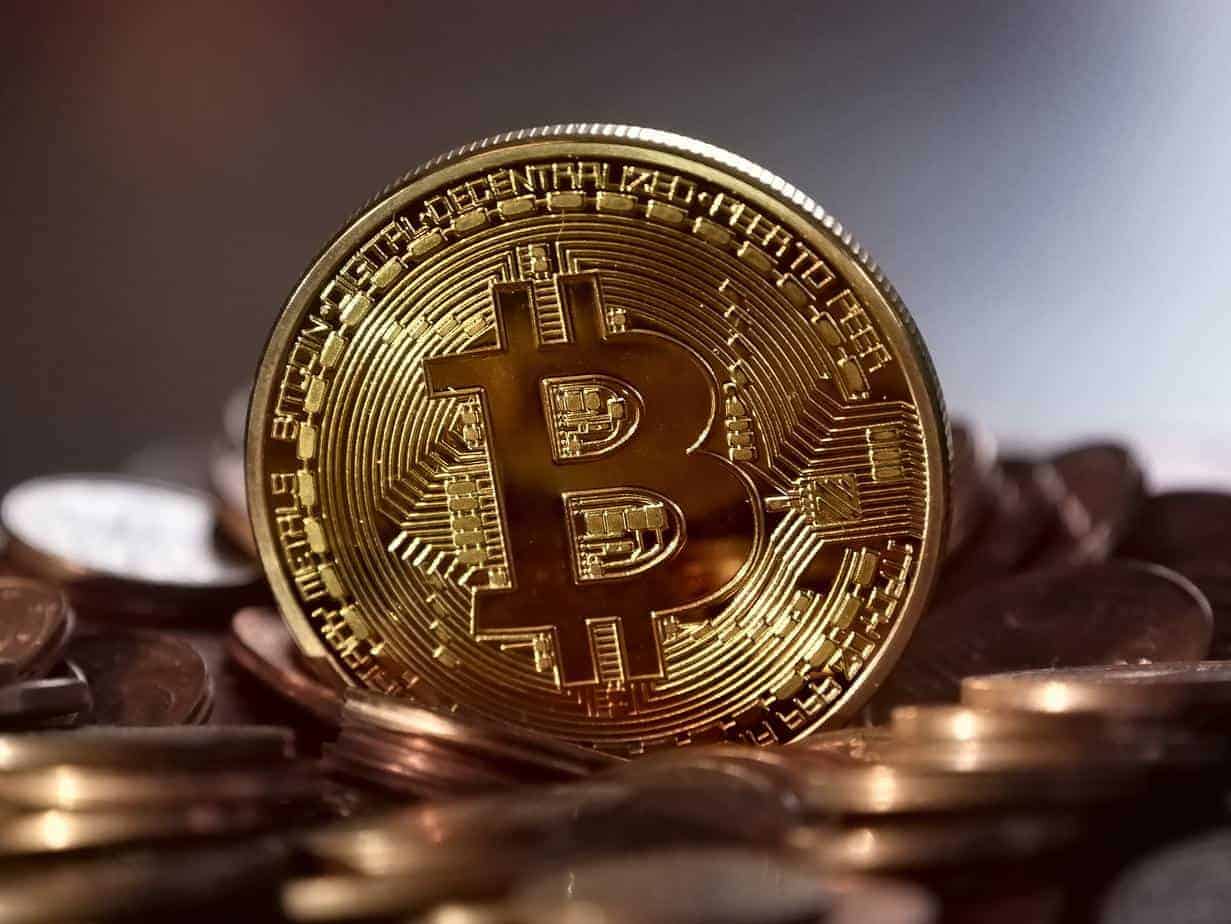
In the world of cryptocurrencies, Bitcoin is the leading token in terms of circulation, but this has a lot to do with being the most valuable digital asset, which means that most transactions are related to speculative trading and investing. Ripple, a centralized digital currency that trades under the symbol XRP, gets more circulation than BTC, but mostly in the remittances and international money transfer arenas.
There are two emerging cryptocurrencies making a circulation splash, and they share one factor in common: their value is tied to the United States dollar. Tether (USDT) and U.S. Coin (USDC) are known as “stablecoins” which means that their currency exchange value will always be the same as the American dollar because this is the business plan of their respective development teams. In the case of USDC, which is backed by investment banking giant Goldman Sachs, its market capitalization has increased considerably this year because users of this digital currency enjoy its stability and trust in Goldman Sachs as the manager of the underlying blockchain.
With the profile of stablecoins rising, it stands to reason that the U.S. Treasury could soon develop a digital version of the greenback, but this is not likely to happen as long as Chairman Jerome Powell leads the Federal Reserve Bank. Powell recently sent a letter to Congress for the purpose of answering questions related to cryptocurrency use, and it was clear that Powell does envision a sovereign blockchain for the USD.
It should be noted that the Russian central bank has already developed a digital version of the ruble, and a similar approach has been taken with the Singapore dollar. As of October 2019, the Eastern Caribbean Dollar was undergoing a digital pilot program to test if going cashless is in the future of various island nations. These three digital currency projects are based on the open-source Ethereum blockchain, and they are being monitored by American financial regulators, but there does not seem to be an interest in emulating projects.
Powell’s letter to Congress included his opinion of the American banking and payments systems, which he thinks are advanced, secure, dynamic, inexpensive, and robust; this opinion was clearly meant to underscore why the Fed Reserve Chairman does not think a crypto-greenback is needed, but those who work in the U.S. payments industry know that this is not the case. Asia and Europe are the leading markets in the digital payments arena, and a major reason why the American market lags behind is because of inflexible financial and banking regulation. Refraining from testing the waters of digital currencies will only make the U.S. less competitive in the global payments arena.
Technology giant Apple is trying to get the most functionality out of the iPhone before the next chapter of personal and portable computing is written. Subscription-based services, digital content, and mobile payments are some of the verticals that Apple has been exploring for the purpose of squeezing more profits from the iOS ecosystem, and this includes enabling commuters to pay for bus or metro fares with their iPhone or Apple Watch devices.
According to a news report by the London Evening Standard, Apple Pay has officially gone underground with its new Express Transit feature. Although the ability to use Apple Pay for London tube fares is not exactly new, this method used to require biometric authentication in order to complete the transaction. What this meant for London commuters was getting stuck behind fellow tube riders trying to figure out the Apple Pay FaceID or TouchID systems; we are talking about wait times of up to 30 seconds during rush hour. With Express Transit, Apple is going the more traditional and faster route of contact-less payments supported by Android Pay.
To enable Express Transit, which is available on iPhone models starting from the SE all the way to the 11 Pro, users should tap the Settings icon and visit their Wallet and Apple Pay section where they will find the new Express Transit feature. Setting this up is as easy as selecting the desired payment card; if you have an Apple Card, it will become the default payment method for fares in the Transport for London system. Although Apple has only mentioned the London underground in its Express Transit announcement, any of the yellow card and device readers installed at railway stations all across the United Kingdom will work.
It should be noted that Express Transit works with the Apple Watch, and this is probably the most convenient way to handle mobile payments because of the wearable factor. Needless to say, Express Transit devices must have the latest version of iOS or WatchOS to work properly. This new Apple Pay feature is not only a time-saver but is also more in line with the direction the mobile payments segment is taking. Express Transit was previously launched in the Metropolitan Transit Authority of New York City, but Google Pay is found in even more public transportation systems around the world.
Mobile payments have moved from a novelty to a necessity in recent years. In the United States, over three-quarters of consumers now use some form of mobile payment, and more businesses are adapting to this cashless, app-driven economy. With digital wallets, tap-to-pay cards, and phone apps becoming ubiquitous, in-store contactless transactions accounted for over 50% of U.S. in-person payments in 2023.
This rapid shift means that business owners – from small retailers to enterprise executives – must stay on top of the latest mobile payment trends. Adopting the right payment technologies can enhance customer experience, improve security, and even boost sales. Below, we break down the new mobile payment trends in the U.S. that your business should investigate.
Mobile Payment Trends: Businesses Should Watch Out for in 2026
1. Mobile Wallets Go Mainstream
Digital mobile wallets like Apple Pay, Google Pay, and Samsung Pay have become the most popular payment method worldwide, accounting for 49% of all transactions in 2022. In the U.S., adoption has skyrocketed in the past couple of years – a 2023 study found that the share of consumers using digital wallets jumped from 12% in 2022 to 48% in 2023. Mobile wallets let customers store credit/debit cards, loyalty cards, transit passes, and more on their phone, enabling fast, contactless payments with a tap or scan.
This matters because accepting mobile wallets at checkout (both in-store and online) is increasingly expected by customers. Over 75% of U.S. consumers now use mobile payment apps or accounts like PayPal, Venmo, Zelle, or Cash App, meaning your patrons likely have a preferred mobile wallet ready to use.
By enabling Apple Pay, Google Pay, and similar options in your point-of-sale (POS) system or e-commerce site, you offer a faster, more convenient checkout experience. Mobile wallet transactions are encrypted and tokenized (a random token replaces the card number), which also improves security and trust. In short, mobile wallets have gone mainstream – and businesses that don’t accommodate them risk falling behind customer expectations.
2. Contactless Payments Are the New Normal
Hand-in-hand with mobile wallets is the rise of contactless payments – tapping a phone or contactless card on a reader for instant payment. What was once a nice-to-have convenience is now the norm across the United States. The COVID-19 pandemic dramatically accelerated this trend as consumers and merchants sought safer, touch-free payment methods. The result? By 2023, more than 50% of all in-store transactions in the U.S. were contactless.
Additionally, over 70% of U.S. merchants now offer contactless payment options to their customers. Whether it’s tapping a physical NFC-enabled credit card or using a smartphone’s wallet app, Americans have come to love the speed and ease of “tap-and-go” payments.
If your business hasn’t upgraded to contactless-capable payment terminals, now is the time. Customers increasingly expect to “tap to pay” at checkout for speed and hygiene reasons – one survey found 79% of Americans view contactless payments as more hygienic than handling cash or cards. Contactless transactions are also faster, resulting in shorter lines and higher throughput for stores or restaurants.
Security is strong as well: each tap transaction uses one-time encrypted tokens, making it extremely difficult for fraudsters to intercept payment info. Embracing contactless payments (including mobile wallet taps) not only meets customer demand but can also lead to higher customer satisfaction and loyalty. Many retailers report that once they accepted contactless, a majority of customers quickly adopted it for the convenience, speed, and safety it offers.
3. Mobile Point-of-Sale (mPOS) and Phone-as-Terminal Technology
Accepting payments via mobile point-of-sale (mPOS) is nothing new – for years, small businesses have used plugins or dongles (like Square readers) with phones or tablets to swipe cards at farmers’ markets and pop-up shops. What’s new is the evolution of this trend into truly hardware-free POS solutions. Tech giants have introduced “Tap to Pay” functionality that turns a standard smartphone into a payment terminal. For example, Apple’s Tap to Pay on iPhone now allows merchants to accept any contactless card or mobile wallet payment using only an iPhone – no extra card reader needed.
The phone itself can securely receive a tap from a customer’s card or smartphone. This SoftPOS (Software Point-of-Sale) approach is rolling out via payment providers like Stripe, Square, and PayPal, as well as Apple and Android solutions.
mPOS and SoftPOS technology empower businesses to take payments anywhere, anytime, with minimal equipment. A craft vendor at a street fair, a food truck operator, or even an in-home service provider can accept a quick tap payment on a phone, eliminating the need to carry cash or set up a bulky register. Even in retail stores, sales associates with a phone or tablet can bust checkout lines by ringing up customers on the sales floor.
This flexibility not only improves customer experience (no one likes waiting in long lines) but can also boost sales – customers are more likely to complete a purchase if you make payment frictionless. Additionally, using phones as terminals can be cost-effective for small businesses, since you don’t need to invest in dedicated POS hardware or pay high card terminal rental fees. The bottom line: modern mobile POS solutions let you meet your customers where they are and never miss a sale, whether in-store, curbside, or at an off-site event.
4. Buy Now, Pay Later (BNPL) Options
Another payment trend that has surged via mobile and online channels is Buy Now, Pay Later (BNPL) financing. BNPL services like Affirm, Klarna, Afterpay, and PayPal Pay in 4 allow customers to split purchases into installment payments (often interest-free) at checkout. This trend took off in the past few years, especially among younger shoppers who prefer not to rack up credit card debt. Global BNPL transaction volume has boomed, reaching around $310 billion in 2023 and projected to exceed $565 billion by 2026.
In the U.S., millions of consumers have embraced BNPL for both online and in-store purchases (e.g., using a BNPL app’s virtual card via a mobile wallet). Retailers, from fashion brands to travel sites, now prominently offer these flexible payment plans at checkout.
Offering BNPL at checkout can be a powerful tool to boost sales and customer acquisition. Many shoppers are more likely to make a purchase or buy a more expensive item if they can pay in smaller chunks over time. Studies show BNPL can increase conversion rates and average order values for merchants, especially in e-commerce. It’s essentially modern layaway, but the customer gets the product immediately while the BNPL provider pays the merchant upfront (the merchant then pays the provider a fee).
For businesses, partnering with a BNPL provider requires minimal integration – often it’s an API or plugin for your online store or POS. Given the rapid growth of BNPL, customers may start to expect it as a payment choice alongside credit cards and PayPal. However, use it judiciously: consider your customer demographics and ticket sizes. When deployed well, “buy now, pay later” options can attract budget-conscious shoppers and reduce cart abandonment, giving your business an edge in conversion.
5. Social Commerce and In-App Purchases
Social media is no longer just for marketing – it’s becoming a direct sales channel. Social commerce refers to selling products directly through social media platforms, and it’s a trend driven heavily by mobile usage. Shoppers can discover and purchase items without ever leaving apps like Instagram, Facebook, Pinterest, or TikTok.
Instagram and Facebook offer in-app checkout for products featured in posts or ads, and TikTok launched its TikTok Shop for seamless buying while scrolling through videos. This fusion of social media and e-commerce is growing fast: U.S. social commerce sales jumped 26% in 2024 to reach $71.6 billion, and are expected to surpass $100 billion by 2026. A major portion of this growth comes from mobile users seeing a product on social media and instantly tapping “Buy” or “Shop Now.”
If your business has a social media presence, integrating shopping features can open a new revenue stream. Rather than redirecting a follower to your website, you can enable them to purchase the item they see in your post right within the app. This streamlines the customer journey and reduces friction – fewer clicks increase the likelihood of conversion. Social commerce is especially popular with younger demographics (Gen Z and Millennials) who are very comfortable with mobile shopping.
Businesses can start by setting up a product catalog on Facebook/Instagram Shops or experimenting with TikTok Shop if it fits the brand. Additionally, chatbot-assisted purchases (for instance, a customer buys through Facebook Messenger or WhatsApp after interacting with a bot) are emerging, making the buying process feel like a natural conversation. While social commerce is still developing – and some users remain hesitant due to trust concerns – it’s definitely a mobile-driven trend to watch. Even if you don’t sell directly in-app yet, ensure your social profiles showcase your products and link to a mobile-friendly store, because consumers are increasingly inspired to buy through social feeds.
6. Biometric Authentication and Enhanced Security
As mobile payments proliferate, security and fraud prevention have become top priorities. One major trend is the use of biometric authentication – leveraging unique user traits such as fingerprints, facial recognition, or iris scans to verify identity for payments. If you use Apple Pay or Google Pay, you’re already familiar with this: a fingerprint or Face ID scan authorizes the transaction instead of a PIN. Biometrics are also used to unlock banking apps, approve payments, and even at physical checkouts (e.g., Amazon’s palm-scanning payments at some stores). The biometric payments market is growing rapidly – valued at $7.4 billion in 2022 and expected to exceed $19 billion by 2029.
Beyond biometrics, tokenization and encryption are being employed everywhere to secure mobile transactions. For example, mobile wallet payments never transmit your actual card number, only a scrambled token. And amid high-profile data breaches and card fraud, many platforms now require multi-factor authentication (such as an SMS code or biometric scan) for higher-risk transactions.
All of this matters because trust and security are critical for any payment method – customers won’t use mobile payments if they feel unsafe. Fortunately, the latest mobile payment technology is making transactions more secure than traditional card transactions in many ways. Merchants benefit from lower fraud and chargebacks when strong authentication (like biometrics) is in place. You should ensure your payment systems support the newest security standards – for instance, if you have a mobile app or website, use payment gateways that offer 3D Secure 2.0, biometric verification, or tokenization to protect card data.
Embracing biometric-enabled payments can also speed up checkout. Customers appreciate the convenience of paying with a touch of a finger or a quick face scan, and they’re increasingly confident in the safety – 90% of U.S. consumers feel confident about the security of contactless payments (which often use biometrics on smartphones). By staying current with security trends such as biometrics and encryption, and complying with standards like PCI DSS, your business can prevent fraud and build customer trust, all while providing a seamless payment experience.
7. Artificial Intelligence in Payments
Artificial Intelligence (AI) and Machine Learning are injecting new intelligence into the payments process. In fact, 2023 saw AI take center stage in tech (with the popularity of ChatGPT), and this is spilling into fintech and payments. AI is being used to fight fraud, personalize customer experiences, and even enable new payment interfaces. For example, machine learning models can analyze transaction patterns in real time and flag suspicious activity far more effectively than older rule-based systems. This helps payment providers and banks prevent fraud before it happens, saving merchants from costly chargebacks.
AI can also power smarter chatbots and voice assistants – we’re seeing early versions of voice-enabled shopping where you might ask Alexa or Google Assistant to order and pay for an item. On the back end, AI helps with risk assessment (deciding to approve or decline a transaction within milliseconds) and with personalized offers (such as your banking app suggesting a better credit product based on your spending). AI technology could add trillions of dollars in value across industries, and the payments sector is tapping into it by using AI to enhance everything from fraud detection to customer service.
Many of these AI-driven improvements operate behind the scenes, but they have real impacts on merchants. Advanced fraud detection means fewer fraudulent transactions and chargeback headaches for business owners. If you’ve ever had to deal with chargeback disputes, you’ll appreciate that AI is helping catch fraudsters using stolen cards or testing card numbers on websites, etc. AI can also enable smoother customer experiences – for instance, an AI might auto-fill payment details, recommend the best payment option for a customer, or power a virtual assistant that answers billing questions.
AI could enable innovations such as dynamic pricing and optimized payment routing to minimize fees. For a business, the key is to partner with payment processors or platforms that leverage modern AI tools. You may not implement these technologies yourself, but when evaluating payment solutions, ask about their fraud prevention and AI capabilities. A forward-thinking payment provider using AI and machine learning will help ensure your transactions are secure and your customers have a frictionless experience.
8. Open Banking and Account-to-Account Payments
Open banking is an emerging trend that could reshape how payments work, even though it’s still early-stage in the U.S. Open banking refers to banks securely sharing financial data and payment capabilities with third-party fintech apps via APIs (with customer consent). One result of open banking is the rise of account-to-account (A2A) payments, in which money moves directly from the customer’s bank account to the merchant’s account, bypassing card networks as middlemen.
In some regions like Europe and the UK (where open banking is mandated by regulations), A2A payments and instant bank transfers are becoming popular alternatives to card payments. Globally, this trend is picking up speed – in 2022, A2A payments accounted for an estimated $525 billion in e-commerce transaction value (about 13% of online payments), and they’re projected to reach 11% of e-commerce payments by 2026. In the U.S., we don’t have a blanket open banking law yet, but fintech companies like Plaid enable consumers to link their bank accounts to apps, and new instant payment networks like FedNow (launched in 2023) and Zelle are facilitating bank-to-bank transfers in real time.
Open banking and A2A payment solutions can offer merchants lower-cost, faster payments. When a customer pays directly from their bank account (such as an ACH transfer or an open banking instant payment), the transaction fees are often much smaller than credit card processing fees. This can be especially attractive for industries with thin margins or for accepting large payments (where the percentage-based card fees really cut in). Open banking can also enable innovative financial services – for instance, an app that integrates with a user’s bank could combine payments with personal finance insights or lending offers.
While still emerging, some U.S. businesses are already taking bank-to-bank payments via services like Venmo (which ultimately pulls from bank accounts), or via eCheck/ACH at checkout for online bill pay. As open banking technology matures, we may see more customers opt to pay through their banking app or via ACH on mobile, skipping card entry entirely. For now, consider offering an ACH or bank transfer option for large transactions, or keep an eye on open banking payment apps making inroads. This trend promises a future with more payment options beyond traditional card networks, which could lead to cost savings and better financial control for businesses.
Conclusion
Mobile payment technology is evolving at a blistering pace, and U.S. consumers are embracing these new options for convenience and security. From the ubiquity of mobile wallets and contactless taps to the rise of BNPL financing and social commerce, the way people pay is fundamentally changing. Small business owners and enterprise leaders alike should regularly assess which of these trends align with their customer needs and business goals.
Adopting mobile payment innovations can lead to faster checkouts, higher sales, and more satisfied customers – but it’s important to prioritize those that add real value to your operations. As you investigate these trends, consider starting with the basics (such as enabling mobile wallets and contactless payments if you haven’t yet), then explore strategic additions (such as offering BNPL or experimenting with social selling) based on your industry. Ensure that security measures, such as biometrics and tokenization, are in place as you expand payment options, and choose payment partners that leverage modern technologies, such as AI and open banking, to support future growth.
Frequently Asked Questions
What are the most important mobile payment trends to focus on first?
Start with the “table stakes”: mobile wallets (Apple Pay/Google Pay) and contactless tap-to-pay, because customers increasingly expect them and they speed up checkout. Then evaluate BNPL, social commerce, and mobile POS/phone-as-terminal based on your average order value, sales channels, and where customers buy.
Do I need new hardware to accept mobile wallets and contactless payments?
Often, yes, you need NFC- or contactless-capable terminals to accept tap payments in-store. The good news is that many businesses can upgrade easily through their existing payment processor or POS provider, and some “phone-as-terminal” options may reduce or eliminate the need for extra hardware in specific setups.
Are mobile wallets and contactless payments secure for my customers and my business?
Generally, they’re very secure because they use protections like tokenization and encryption, and many payments require biometric authentication (Face ID/fingerprint). For businesses, this can reduce exposure to card data and help lower fraud risk, especially when paired with strong security standards and updated payment gateways.
Will offering Buy Now, Pay Later (BNPL) actually increase sales?
It often can—BNPL can increase conversion rates and average order value, especially for higher-priced items and online purchases. It’s best for businesses with customers who want flexibility (often younger shoppers), but you should factor in provider fees and ensure it fits your brand and ticket sizes.
How do I know which payment options my customers actually want?
Use a mix of data and direct feedback: check your POS/e-commerce reports for abandoned carts and payment-method usage, ask customers at checkout, and test options (e.g., add BNPL for 60-90 days). If you sell on social platforms, monitor which posts drive clicks and consider enabling in-app checkout where it makes sense.
In the United States, prepaid wireless services took a while to catch on; while customer demand was certainly there from the beginning, telecoms were somewhat apprehensive about deviating from the tried-and-true service contract and monthly billing arrangements. Eventually, American providers of wireless services gave into demand, and they marketed this option as being more convenient, more flexible, and just as secure as cell phone service contracts.
Unlike other countries where the regulation of prepaid wireless services tends to be more relaxed in terms of requesting information from users, a prepaid SIM account in the U.S. requires the collection of personally identifiable information; moreover, each prepaid customer becomes an account record, one that can be tied to financial information to make it easier to add credit, airtime, and services. With regard to data security, there is no difference between wireless contracts and prepaid arrangements, and this is something that T-Mobile was recently forced to contend with.
According an official press release issued by T-Mobile on November 22, a data breach affected about 1.12 million prepaid service customers, which represents less than 1.5% of their total user base. The incident occurred in early November, and it looks like a standard cybercrime situation and not an insider attack. Affected customers received SMS notifications about the incident, and they were urged to change their passwords as well as the PIN codes they use for easy account access.
Fortunately, the cyber perpetrators were not able to steal financial records associated with the accounts, which means that credit cards and social security numbers were not compromised; nonetheless, the stolen records include names, phone numbers, account numbers, and billing addresses. In the hands of cybercrime groups dedicated to identity theft, this type of information can be very dangerous.
Earlier this year, hackers were somehow able to access customer records of Sprint wireless subscribers, and they did so by exploiting a vulnerability on a website that caters to owners of Samsung smartphones. Similar to the T-Mobile incident, financial records were not accessed, and this is probably related to compliance with Payment Card Industry Data Security Standards.
For the payment processing industry, prepaid wireless services have become a substantial segment of their business. Unlike wireless contracts, which are mostly settled once per month and sometimes just once per year for customers seeking deep discounts, topping up prepaid smartphones with voice minutes or blocks of data is something that they may do a couple of times each week, and even more often when carriers send out notifications with coupons and special deals. The most privacy-conscious will only “top up” their cell phones with cash; however, quite a few end up linking credit and debit cards for convenience.
Cookie Consent
We use cookies to enhance your browsing experience, analyze site traffic, and support our marketing.You can accept all cookies, reject non-essential ones, or manage your preferences below. Learn more in our Privacy Policy.
Cookie Preferences
Manage your cookie preferences below:
Essential cookies enable basic functions and are necessary for the proper function of the website.
Name
Description
Duration
Cookie Preferences
This cookie is used to store the user's cookie consent preferences.
180 days
These cookies are needed for adding comments on this website.
Name
Description
Duration
comment_author_email
Used to track the user across multiple sessions.
Session
comment_author_url
Used to track the user across multiple sessions.
Session
comment_author
Used to track the user across multiple sessions.
Session
Google Tag Manager simplifies the management of marketing tags on your website without code changes.
Name
Description
Duration
cookiePreferences
Registers cookie preferences of a user
2 years
td
Registers statistical data on users' behaviour on the website. Used for internal analytics by the website operator.
session
These cookies are used for managing login functionality on this website.
Name
Description
Duration
wordpress_logged_in
Used to store logged-in users.
Persistent
wordpress_sec
Used to track the user across multiple sessions.
15 days
wordpress_test_cookie
Used to determine if cookies are enabled.
Session
Statistics cookies collect information anonymously. This information helps us understand how visitors use our website.
Google Analytics is a powerful tool that tracks and analyzes website traffic for informed marketing decisions.
Contains information related to marketing campaigns of the user. These are shared with Google AdWords / Google Ads when the Google Ads and Google Analytics accounts are linked together.
90 days
__utma
ID used to identify users and sessions
2 years after last activity
__utmt
Used to monitor number of Google Analytics server requests
10 minutes
__utmb
Used to distinguish new sessions and visits. This cookie is set when the GA.js javascript library is loaded and there is no existing __utmb cookie. The cookie is updated every time data is sent to the Google Analytics server.
30 minutes after last activity
__utmc
Used only with old Urchin versions of Google Analytics and not with GA.js. Was used to distinguish between new sessions and visits at the end of a session.
End of session (browser)
__utmz
Contains information about the traffic source or campaign that directed user to the website. The cookie is set when the GA.js javascript is loaded and updated when data is sent to the Google Anaytics server
6 months after last activity
__utmv
Contains custom information set by the web developer via the _setCustomVar method in Google Analytics. This cookie is updated every time new data is sent to the Google Analytics server.
2 years after last activity
__utmx
Used to determine whether a user is included in an A / B or Multivariate test.
18 months
_ga
ID used to identify users
2 years
_gali
Used by Google Analytics to determine which links on a page are being clicked
30 seconds
_ga_
ID used to identify users
2 years
_gid
ID used to identify users for 24 hours after last activity
24 hours
_gat
Used to monitor number of Google Analytics server requests when using Google Tag Manager
1 minute
Marketing cookies are used to follow visitors to websites. The intention is to show ads that are relevant and engaging to the individual user.
Facebook Pixel is a web analytics service that tracks and reports website traffic.

 The owners and employees of restaurants are in the business of customer service. Their priority is creating the best dining experience possible for their clientele. They can’t be bogged down with complicated point of sale technology that slows the process and frustrates the end user. If they do experience technical challenges, they need support pronto in a 24-hour business cycle.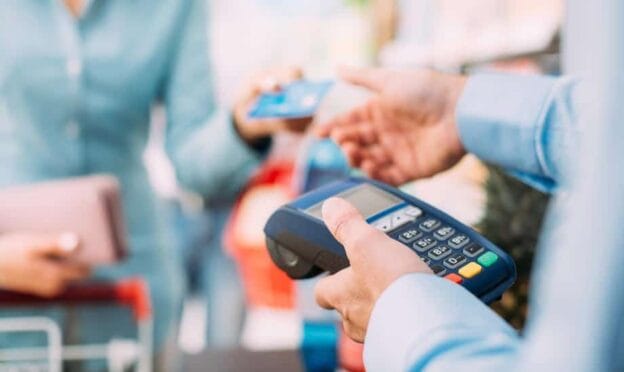
 There are three types of payment gateways for e-commerce online payments: redirects, checkout on-site with payment off-site, and on-site payments. Redirects take the consumer off of the merchant’s site and send them to a whole new site to complete a transaction. While this may be disorienting for a consumer, this method is also very easy to setup.
 In Colorado, a state known for its friendly attitude towards technology, both driver’s licenses and state-issued ID cards are going fully digital. In an interview with the Wall Street, Colorado’s Chief Information Officer Theresa Szczurek explained that a mobile version of driver’s licenses is like a “killer app” for state residents in the sense that it takes away the burden of having to carry a wallet. This new form of ID is actually a feature of myColorado, a comprehensive mobile app that grants residents access to a variety of services provided by the state.
 Having already rolled out more than half a million
 There are two emerging cryptocurrencies making a circulation splash, and they share one factor in common: their value is tied to the United States dollar. Tether (USDT) and U.S. Coin (USDC) are known as “stablecoins” which means that their currency exchange value will always be the same as the American dollar because this is the business plan of their respective development teams. In the case of USDC, which is backed by investment banking giant Goldman Sachs, its market capitalization has increased considerably this year because users of this digital currency enjoy its stability and trust in Goldman Sachs as the manager of the underlying
 According to a news report by the London Evening Standard,


 Unlike other countries where the regulation of prepaid wireless services tends to be more relaxed in terms of requesting information from users, a prepaid SIM account in the U.S. requires the collection of personally identifiable information; moreover, each prepaid customer becomes an account record, one that can be tied to financial information to make it easier to add credit, airtime, and services. With regard to data security, there is no difference between wireless contracts and prepaid arrangements, and this is something that T-Mobile was recently forced to contend with.