
Author Archives: hostmerchantservices

1

Room for Improvement: Commercial Cards in 2017

The year 2016 was not exactly a breakthrough period for commercial cards and other payment tools available to the competitive business-to-business sector. According to research recently published by the Professional Association for the Commercial Card and Payment Industry, B2B credit cards and virtual cards are gaining corporate acceptance, but they are not quite ready to completely replace checks.

The aforementioned year-to-date study was published in mid-December, and it shows that ¾ of business owners who have implemented purchasing cards in their companies are satisfied with using them. The respondents of the study feel that they do not have the same level of control as they used to with their commercial checking accounts that were tied to credit lines.

What is interesting about the current sentiment on commercial cards is that business users are not fully aware of how they work and everything they have to offer. Some purchasing managers who have previously used company credit cards for small expenses do not understand that P-cards are not necessarily credit accounts.

Purchasing cards can take many forms; for example, a virtual card can be assigned exclusively to a sole vendor for the sake of making B2B electronic payments. The terms and conditions do not have to change; in fact, some of them can be programmed to be executed automatically. If a business is used to floating invoices for 30 days, such a payment frequency can be scheduled.

commercial cards

Less than a third of company owners and managers using P-card solutions are interested in using SMS alerts or mobile payments. Not being familiar with the system and security concerns are the major reasons why business owners are not interested at this time.

Clearly, it is up to leaders in the payments industry to educate corporate America about the benefits of leaving their company checkbooks behind. Features such as electronic invoices and convenience checks that simulate old-fashioned payments could help in this regard.

What Are Commercial Cards?

Commercial cards refer to credit or debit cards that companies provide to their employees. These cards allow workers to make purchases on behalf of their employers. They are usually co-branded with retailers or fuel stations and restrict where the employee can use them.

Types of Commercial Cards

There are types of cards available, each designed to meet the diverse needs of businesses. Now let’s explore some variations:

Purchasing Cards (P Cards)

These cards are primarily used for making company purchases. They provide businesses with a way to manage their procurement processes.

Travel and Entertainment Cards (T&E Cards)

T&E cards are specifically intended for businesses with employees who frequently travel or entertain clients. These cards simplify expense tracking and management related to travel, accommodations, meals, and entertainment.

Corporate Cards

Corporate cards are typically issued to ranking executives within an organization. They offer flexibility and higher spending limits. Additionally, these cards come with benefits like access to concierge services, airport lounge entry, and other exclusive perks.

Fuel Cards

Tailored specifically for businesses that have fleets or frequently use vehicles, fuel cards allow for effortless monitoring of fuel-related expenses while also presenting discounts at gas stations.

Virtual Card Solutions

As the name implies, these cards do not exist physically. Virtual card solutions are an addition to the commercial card landscape and provide enhanced security by generating unique card numbers for each online transaction.

Benefits and Advantages Of Utilizing Commercial Cards

Benefits and Advantages Of Utilizing Commercial Cards

  • Using cards offers advantages to all types of businesses regardless of their size. One significant benefit is the ability to streamline expenses and effectively manage cash flow.
  • With a commercial card, employees can make company purchases without the need for reimbursement processes. Handling petty cash.
  • Commercial cards often come with reporting features that make it simple for business owners to track and analyze spending patterns. This can be valuable in identifying areas where costs can be reduced or optimized.
  • Another advantage is the increased security provided by these cards. They typically incorporate fraud protection measures, like real-time transaction monitoring and zero liability policies. This ensures that businesses are protected against charges and fraudulent activities.
  • Furthermore, commercial cards offer convenience by acting as a payment solution. Businesses no longer need to rely on payment methods or carry amounts of cash. Instead, they can opt for cards to cover expenses such as travel bookings, supplier payments, and office supplies.
  • Commercial cards often come with perks like reward programs or discounts from partner vendors. These incentives offer businesses the opportunity to save money or earn rewards based on their spending habits.

Tips for Selecting the Commercial Card for Your Business

When it comes to choosing a card for your business, there are several factors you should consider. Here are some tips to assist you in making the decision;

Evaluate your business needs: Start by assessing your company’s spending patterns and financial goals. Determine which features and benefits would be most valuable in streamlining your expenses.

Consider rewards programs: Many commercial cards offer rewards programs that can provide savings or perks such as cashback, airline miles, or discounts on office supplies. Look for a card with rewards that align with your business needs.

Review fees and interest rates: Carefully examine the fees associated with each card option, including fees, balance transfer fees, late payment penalties, etc. It is important to compare interest rates to ensure that you are obtaining a card with the lowest rates.

Look at the credit limit options and evaluate whether they align with your company’s requirements. Make sure they are neither excessive nor restrictive.

Look for services that may come bundled with commercial cards, such as expense management tools or travel insurance coverage. Determine if these offerings would be advantageous or not for your business operations.

Check the acceptance network of the card to ensure acceptance both domestically and internationally. This will allow you to use the card wherever necessary without any inconvenience.

Do proper research on the quality of customer support provided by card issuers. Look into their reputation for assistance as it can make a difference when dealing with any issues or inquiries related to the card.

Tips for Selecting the Commercial Card for Your Business

Conclusion

Commercial cards offer value to businesses of all sizes by providing convenience, control and enhanced security in expense management and simplified payment processes. By utilizing these cards, businesses can enjoy benefits like improved cash flow, simplified expense tracking, advanced reporting capabilities, and exclusive rewards programs.

It is crucial for businesses to carefully consider their needs and requirements when selecting a card. Factors such as credit limits, interest rates, rewards programs, and acceptance networks should all be taken into consideration. It is recommended to compare different merchant service providers and carefully evaluate the terms and conditions before making a choice.

In today’s business landscape, where efficiency holds importance, commercial cards provide a practical solution for seamless transaction management. Whether it solves the purpose of paying suppliers or vendors, keeping track of employee expenses, or implementing spending limits across departments – commercial cards offer flexibility and control.

To sum up, commercial cards go beyond a piece of plastic. They are powerful tools that help businesses stay organized financially while reaping the many benefits they have to offer.  If you’re searching for a way to handle your company’s finances while also enjoying these advantages, it might be worthwhile to consider incorporating cards into your business strategy today.

The Yahoo Data Breach and Its Dire Consequences

For internet giant Yahoo, the year 2016 cannot be over soon enough. The legendary internet services portal and search engine has been losing significant market share over the years, but two major security issues in 2016 may have compromised its future.

Yahoo has been involved in talks with American telecommunications giant Verizon about a possible merger. Massive data breach episodes announced by Yahoo in September and December could leave the company in a precarious position with regard to its finances.

The first data breach happened in 2013, and it involved the theft of personal data belonging to a billion users of the online service. The second incident, which took place a year later, compromised 500 million accounts.

An Endangered Merger

What is truly worrisome about these data breach instances is that the company’s security team had not been able to identify the method of intrusion as of late 2016. What is known, however, is that the data sets are being sold in the black market, and information such as passwords, dates of birth, and even secret question/answer challenges could now fall into the wrong hands.

Armed with the stolen data, hackers could engage in massive identity theft operations. Many users are known to use security question/answer combinations and passwords across many websites that provide personal banking and online payment services. Credit card holders would be particularly vulnerable in this regard.

The potential issues for hacked users are numerous; for its part, the company could now see its hopes of a merger evaporate. Earlier in 2016, Verizon lowered the proposed value of the acquisition, which at one point was mentioned to be around $4.8 billion. The second incident could actually turn Verizon completely off, thereby leaving Yahoo wistfully waiting for another buyer that may fail to materialize due to the negative press that the security incidents have received.

MasterCard Using Artificial Intelligence to Attack False Declines

One of the biggest problems for merchants accepting credit cards is not fraudulent transactions, but rather false declines. Certainly, credit card fraud is costly, but it’s estimated that merchants lose $118 billion due to credit card declines where the transaction is genuine and the customer is not over their limit. It’s estimated that 15% of all transactions are falsely declined. It’s a problem that credit card companies like MasterCard are working on solving.

It’s easy to see just how bad the problem is. When a customer is declined, there is a good chance they won’t return. In fact, statistics show that 33% of customers who are declined falsely don’t return to the business ever again. This is due to several reasons, but likely embarrassment plays a role in this. Imagine having your transaction declined when you know you have enough money in your account or you are well below your credit limit.

False declines are a problem that the major credit card companies are aware of and are working on. MasterCard has recently begun using artificial intelligence (AI) to attack false positives. It’s an effort to ensure that customers are able to use their card when and where they want to.

Previously, MasterCard would use a very narrow band of parameters to decide if a transaction was valid or not. It was strongly biased to guard against fraud, but it didn’t take into account other data points. This is why they developed their Decision Intelligence engine and have deployed it globally.

The Decision Intelligence system looks at more than just the narrow band of variables and takes in a more complete picture of not only the customer but the retailers and even the card terminal itself. By looking at these richer data points, including customer behavior and even retailer behavior, the rate of false declines can be reduced.

MasterCard’s Decision Intelligence AI could be a winner for retailers. Instead of turning away up to 15% of their customers, they can convert these customers into repeat customers. That means more money in the pockets of retailers going forward.

hacker host merchant services 2 scaled 2

Fraudsters Don’t Take a Vacation During the Holidays

Fraudsters know that some of the greatest opportunities to commit theft occur during the hustle and bustle of the holiday season. Consumers do not only have to worry about double-swiped credit cards at checkout and phone or email scams. Criminals study consumer buying habits and use those habits against them during the holidays.

Here are the top three worst habits:

Poor Attention

Shoppers are more likely to forget important safety and security habits when rushing around during the holidays. Always hold on to anything that might contain identifying information about you or property, including shopping bags, phones, wallets and purses. Additionally, pay close attention when you park your car and pump gas. Many criminals look for unlocked cars this time of year.

Cheap Attitudes

Some shoppers are so obsessed with the cheapest deals that they ignore common sense and known security risks when shopping online. They click links in emails and pick the cheapest deals even when the sources of these supposed deals are unfamiliar merchants. Fraudsters then steal their identities or banking information through phishing sites or perform payment scams where they take orders, forward the orders to known merchants and then keep the payments for themselves.

Technology Dependence

Now more than ever before, shoppers are depending on portable devices, the internet and apps to help them find great deals. Criminals use this dependence to their advantage by hacking portable devices in public places where shoppers use free WiFi to get updates about real-time deals and coupons. They also create fake shopping and merchant apps that collect personal information. To block thieves, never use portable devices through unsecured public networks, change passwords after every shopping trip and only install apps from verified merchant websites.

You do not need to become a victim. To stop fraudsters from ruining your fun over the holidays, always attempt to keep yourself aware of your environment and your actions and curb any impulsive and bad shopping and technology habits.

MasterCard is Serious About Digital Wallets

Although the United States is considered to be a global leader in finance and technology, the country has strangely been a laggard in the realm of digital payments. According to John Lambert, executive vice president at payments giant MasterCard, the American system of retail banking and payments is in dire need of adopting a set of standards to help it move in the right direction.

Lambert recently announced that his company is serious about the future of digital payments; to this effect, MasterCard has issued a call to action that will hopefully inspire the major tech and finance players to work together and establish a common framework for digital payments. This call to action includes four principles for establishment:

1 – Accessibility
2 – Privacy
3 – Security
4 – Transparency

The materials and foundations to completely modernize the payments industry have been available for a few years, but the efforts to create digital wallets and major networks have failed to take hold. In the retail world, more than 90% of purchase transactions are still being settled at the point of sale via cash or with credit and debit cards. This preference extends to the online world, where transactions are rarely settled by means of digital wallets.

MasterCard believes that digital payments should follow the path of Apple Pay, the first digital wallet that was not solely dependent on being linked to credit or debit cards. The network has taken a first step with MasterPass, a digital wallet system developed with the aforementioned four principles in mind. The network is not calling on the payments industry to copy its wallet; the goal is to stimulate developers into creating similar solutions that can be easily adopted by merchants and shoppers alike.

The current landscape of digital wallets and payment solutions in the U.S. is too disjointed when compared to various Asian and European systems. The payments industry could clearly benefit from a coordinated call to action to create consistency and consolidation.

Samsung Pay Rewards

In a world where digital media and the use of mobile apps are taking over, the new Samsung Pay Rewards system is seemingly one that is built for long term success. Not only will customers be able to use the service to track their mobile payments, but use of the app also allows for current subscribers to benefit directly from simply using the system as a form of payment in their everyday purchases. This is because the new rewards program offers tiers of reward benefits based on the sheer number of transactions logged by the app.

These Samsung Rewards points are not only able to be redeemed through a simple cashback transaction, but can also be used in the acquisition of gift cards, memberships, and other forms of merchandise. This adds a whole other dimension to the relevancy of the rewards program on a global scale, as customers are now able to use their accumulated points on a variety of different potential reward benefits. While rivaling credit card rewards services which are now beginning to expand their available redemption options, the service will surely look to benefit individuals who enjoy choices.

Despite the introductory success of the Samsung Pay program, a statute of limitations is currently in effect due to the limited number of cell phones and service companies which provide the app as a platform. Without a current cellphone subscription to one of the four more high-end Samsung Galaxy phones, the mobile app is not compatible. Ultimately, as Samsung Pay continues to revolutionize mobile payment services as well as provide a credible rewards network, the company will look to expand the platform for its app in the hopes of maximizing its potential consumer pool.

image 3

About $11 Out of Every $100 in Digital Sales is Fraud

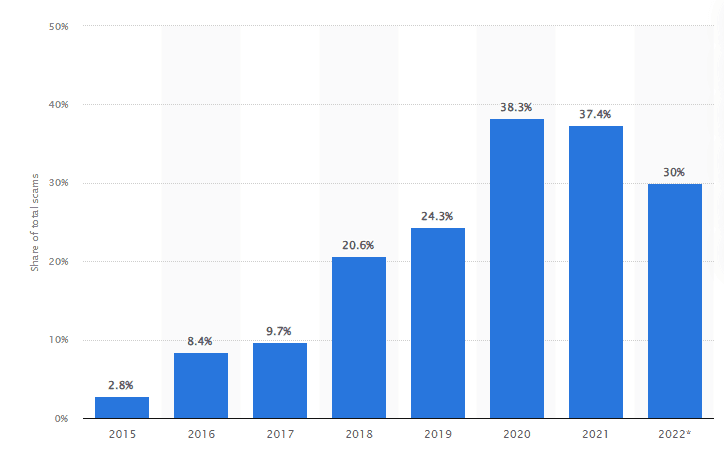
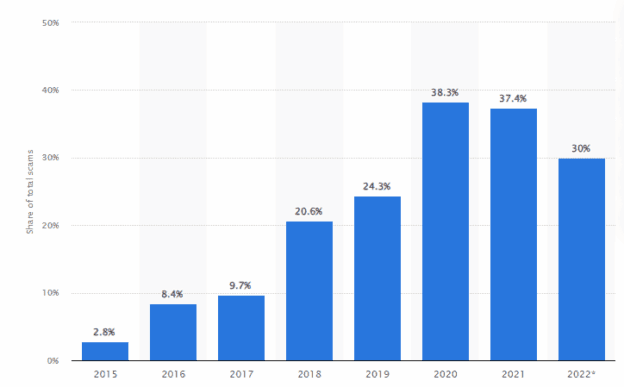
As online sales continue to trend up, there is an increased exposure to digital sales fraud specifically for card-not-present related fraud.

According to Forter, a fraud protection company, fraudulent activity accounts for about $11 of every $100 in digital sales nowadays. Fraudsters are remaining flexible in fighting the industry’s effort to stop these criminal acts. In response to changes in the marketplace, some of these criminals have found ways around the new mitigation techniques.

A large part of this trend is due to the introduction of EMV, which is the chip that most credit cards now have. On one hand, the chip has been successful in mitigating point-of-sale fraud in traditional brick-and-mortar stores. However, this has resulted in an upward trend for card-not-present issues for e-commerce merchants, resulting in an overall upward trend for digital sales fraud.

Online digital sales fraud

Source: Statista

The hardest impacted segments of the market are the merchants who deliver digital products such as music, movies, and other on-demand content. This makes sense when you consider the nature of their business in which the consumer expects their product at the time of purchase. Digital goods merchants do not have the luxury of time to mitigate fraud on those transactions. This results in a significant amount of chargebacks. A whitepaper published by Javelin indicates that the amount of chargebacks that come from online transactions is almost triple that of in-person transactions.

Not only do merchants have to deal with the losses directly related to the transactions impacted by these types of criminal activity, but there is also the indirect cost of managing and mitigating fraudulent transactions. Based on Javelin’s whitepaper, fraudulent activity costs e-commerce merchants 7.9% of their revenue. The effort required to reduce and manage these effects accounts for a whopping 74% of fraud-related costs.

One thing is for certain if e-commerce merchants want to remain profitable, combating fraud-related activities will continue to be at the forefront of their operations. Fortunately, there are companies that specialize in this very thing, giving merchants an alternative to solving this in-house. This gives merchants the ability to focus on what they do best, sales.

What is Digital Sales Fraud?

fraud in MOTO

Digital sales fraud encompasses fraudulent practices that occur in online transactions. It involves exploiting technology and digital platforms to deceive individuals or businesses resulting in financial loss compromised information or both. These scams manifest in ways, such, as websites, phishing emails, counterfeit goods, and identity theft.

One common form of fraud is called “phishing.” It happens when scammers send emails pretending to be companies to trick people into revealing sensitive information, like passwords or credit card numbers. Another type of fraud involves creating marketplaces where sellers advertise products at unbelievably low prices but never deliver them after receiving payment.

Scammers also employ tactics like creating replica websites that closely resemble well-known e-commerce sites but have variations in the URL. They may even use social engineering techniques to manipulate individuals into sharing information.

The consequences of falling prey to sales fraud can be severe. Not only can you lose your hard-earned money but your data may also end up in the wrong hands leading to identity theft or financial ruin.

To safeguard yourself against sales fraud it’s crucial to remain vigilant and skeptical when engaging in transactions. Exercise caution when sharing information and always verify the authenticity of a website before making a purchase. Watch out for warning signs such as bad grammar, website email addresses, and offers that seem too good to be true.

Types of Digital Sales Fraud

digital sales fraud


Digital sales fraud is a growing concern in today’s online world. As technology advances, so do the tactics used by scammers to deceive unsuspecting consumers. It is important to be aware of the different types of digital sales fraud so that you can protect yourself and your hard-earned money. Always remember, educating yourself is the best prevention from such frauds.

One of the most common types of digital sales fraud that you might also know is phishing scams. These are common globally. A fraudulent email or a website that resembles well-known brands are some of the most common ways fraudsters use to rob you. An individual is tricked either to spend money on the site or share his or her personal information. Personal information may include passwords, credit card details, or other types of personal information.

Another very common way of online sales fraud is by using counterfeit products. Ecommerce has grown exponentially over the years. Fraudsters use counterfeit products to lure people. These products are exact replicas of the original product and for a layman, it is difficult to differentiate. Usually, this type of fraud is done by launching a new eCommerce website where these products are sold. Once the fraudster generates the expected income the website is removed and it becomes difficult for the buyer to contact the seller.

Online auction fraud is also prevalent in the digital sales world. Scammers may create fake listings, bid on their items, or fail to deliver goods after receiving payment. To avoid falling victim to this type of fraud, research sellers thoroughly and read reviews from other buyers before participating in an online auction.

Identity theft scams are unfortunately common where criminals aim to steal information to commit fraud like opening credit card accounts or making transactions. To safeguard your information it’s crucial to use strong passwords and enable two-factor authentication whenever available. Regularly keep an eye on your financial statements for any signs of suspicious activity.

How to Spot and Avoid Digital Sales Fraud

Fraud Mitigation Synthetic ID Fraud

The rise of digital technology has undoubtedly made our lives more convenient, but it has also given rise to a new kind of threat – digital sales fraud. As consumers increasingly turn to online platforms for their shopping needs, scammers have found new ways to exploit unsuspecting buyers. However, by staying vigilant and following a few simple tips, you can spot and avoid falling victim to digital sales fraud.

One telltale sign of potential fraud is when a deal seems too good to be true. If you come across an offer that promises unbelievable discounts or prices significantly lower than the market value, proceed with caution. Scammers often use these tactics to lure in victims and make quick profits.

Another red flag is poor website design or unprofessional appearance. Legitimate businesses usually invest in well-designed websites that are easy to navigate and provide clear information about their products or services. On the other hand, fraudulent websites may appear hastily put together with spelling errors or inconsistent branding.

It’s essential always to do your research before making a purchase from an unfamiliar seller or website. Look for customer reviews and ratings on independent review platforms or social media channels. If there is limited information available about the seller or numerous negative reviews, consider it a warning sign.

Additionally, pay attention to secure payment options provided by sellers. Reputable e-commerce platforms typically offer secure payment gateways such as PayPal that protect your financial information during transactions. Be cautious if a seller insists on alternative payment methods like wire transfers or cryptocurrency since these options are harder to trace if something goes wrong.

Furthermore, be wary of spammy emails or messages offering incredible deals from unknown sources—especially those requesting personal information such as passwords or credit card details through links embedded within them (phishing). Legitimate companies rarely ask for sensitive data via email and will usually direct you back to their official website for any account-related actions.

Conclusion

Digital sales fraud is a growing concern for businesses and consumers alike. With the increasing reliance on online transactions, it’s important to be aware of the various types of fraud that can occur and take steps to protect yourself.

By understanding what digital sales fraud is and being able to spot the warning signs, you can avoid becoming a victim. Remember to always research sellers before making a purchase, use secure payment methods, and be cautious of deals that seem too good to be true.

Additionally, staying informed about emerging trends in digital sales fraud can help you stay one step ahead of scammers. By following these tips and remaining vigilant, you can protect yourself from falling victim to digital sales fraud.

So next time you’re browsing online or making an e-commerce transaction, keep these tips in mind. Stay safe and enjoy your online shopping experience without worrying about falling prey to digital sales fraud!

1

Customer Service: A Big Challenge for Payment Processors

The credit and debit card industry thrives on payment processors and the services they offer; unfortunately, customer service and support seem to be taking a backseat to other factors for many companies. At Host Merchant Services, we believe there is an unfortunate financial motive at play that explains why this is happening.

Consolidation is one of the reasons customer support seems to be lacking these days among the biggest payment processors. Investment bankers see great potential in this industry, and they are approaching big players to make them even bigger players. And therefore customer service has become a big challenge for payment processors.

Once an investment banking firm starts working with a payment processing firm, the prospect of a merger is never far behind. This is how Wall Street operates, and this is how major payment processors acquire their peers and get bigger. Unfortunately, this is also how customer support goes away.

The problem with these consolidated giants is that their customer support platform begins to suffer through growth. Value-added services start piling up, and the smaller merchants will take them because they are bells and whistles, which are always very appealing. The problem is that these features are offered at the expense of customer support. These companies become so large they have to use call centers where you are put on hold for a long period and speak with representatives who aren’t very helpful or knowledgeable about the industry and your account.

Granted, there is nothing wrong with a processing firm offering some bells and whistles for their customers such as free equipment. This would be a very valuable feature for a smaller business that is either starting or expanding to add a new location. In this case, the merchant would love to get new credit card terminals for free, but what about support for this service?

When payment processors offer too much and get too big, they tend to become merchant technology companies. This is when Wall Street investors recommend scaling back on customer support, which is a costly proposition for processors. This is also when online help desk packages are rolled out to replace call centers. There are some large credit card processing companies out there that don’t even have a phone number to call if you need help or would like to sign up. It’s not even an option, which we don’t think is right.

At Host Merchant Services, we believe that customer support is of greater value than the gimmicks the big guys offer. We also believe that customer support will be the next frontier of the credit card processing industry. Once big processors start losing market share due to inadequate merchant support channels, the industry will once again pay attention to this important aspect of the business.

The Importance of Customer Service In The Payment Processing Industry

4 5

In the dynamic world of payment processing, customer service plays a crucial role in ensuring smooth transactions and building strong relationships with merchants and consumers. Why is it so important? A knowledgeable customer care representative can handle difficult customers efficiently and help in the growth of the company. On the other hand, a bad customer care executive can ruin the deal and also destroy the company’s reputation.

Good customer service helps to build trust and confidence in the merchants as well as the customers. And especially when it is about any financial information trusted customer support is crucial. With a skilled customer support team any payment processor can easily develop a sense of reliability and enhance reputation.

Efficient customer service reduces frustration for all parties involved. Imagine waiting endlessly on hold or receiving generic automated responses when you need urgent help! Payment processors that prioritize personalized support not only save time but also ensure that issues are resolved quickly.

Outstanding customer service can lead to increased loyalty from both merchants and customers alike. Building long-term relationships requires going above and beyond mere transactional interactions. By delivering top-notch support consistently, payment processors can create lasting partnerships based on trust.

Any payment processor depends on fast and better payment processing and a strong and reliable customer support and service mechanism.

Quality Customer Service: Biggest Challenge for Payment Processors

Quality Customer Service:  Biggest Challenge for Payment Processors

1. High call volumes: For any customer service team high call volume is not a positive sign. If the call volumes are high then delays are natural. The delay starts with the call of the customer when no executive is free to take the call. The second part is resolving the issue after understanding the query or problem of the customer. This can lead to long wait times and frustrated customers.

2. Complex technical issues: Payment processing systems are complex, and when something goes wrong, it can be challenging to troubleshoot and resolve the issue quickly. Technical glitches or system downtime can significantly impact customer satisfaction.

3. Lack of communication: Effective communication between payment processors and their customers is crucial for providing quality service. However, there are often gaps in communication channels, leading to delays in resolving issues or providing updates on account statuses.

4. Fraud prevention: Payment processors must constantly stay vigilant against fraudulent activities that could potentially harm their customers’ accounts. Balancing security measures while ensuring a smooth user experience can be difficult.

5. Limited support hours: Many payment processors have limited support hours, which may not align with the needs of all customers who require assistance outside traditional business hours.

6. Language barriers: After globalization, many payment processing services provide their services globally. Language in different regions of the world varies and it leads to a strong language barrier. Language barriers become a significant challenge for customer service representatives trying to assist non-native speakers effectively. For the company, it adds more expenditure to hire and train customer support staff to cater to customers of different languages.

7. Ongoing training requirements: Customer support and services are always evolving. Therefore it is important to update the staff with proper training and orientation regularly. With evolving technology and industry regulations, payment processor staff need continuous training to stay updated on best practices for handling customer inquiries and concerns.

8. Integration issues with third-party software: Some merchants use third-party software that integrates with payment processor systems but may encounter compatibility issues or difficulties during implementation or troubleshooting processes.

9. Slow response time from other stakeholders: Occasionally, resolving certain customer queries requires coordination with external parties such as banks or card networks; however obtaining timely responses from these stakeholders can sometimes pose challenges

Strategies for Improving Customer Service in the Payment Processing Industry

Strategies for Improving Customer Service in the Payment Processing Industry

1. Prioritize Training: One of the most effective strategies for improving customer service in the payment processing industry is to prioritize training for your customer service representatives. Ensure that they are well-versed not only in the technical aspects of payment processing but also in providing excellent customer support.

2. Enhance Communication Channels: Customers want quick and easy access to the customer service representative. By offering multiple communication channels like phone, email, live chat, etc can lead to a good customer experience. Additionally, a comprehensive FAQ page on your website can help to answer the most common questions for your customers. Make sure these channels are easily accessible and staffed by knowledgeable representatives who can quickly address any concerns or issues.

3. Implement Self-Service Options: Empowering customers with self-service options can significantly reduce wait times and enhance their overall satisfaction. Provide online portals where customers can access account information, make payments, or initiate refunds without needing to contact a representative.

4. Monitor and Analyze Customer Feedback: Customer feedback is crucial for any company for improvement and growth. Therefore, payment processors should regularly monitor and analyze customer feedback to identify areas of improvement within their customer service processes. Use this valuable information to proactively resolve issues, streamline workflows, and enhance overall satisfaction.

5. Invest in Technology Solutions: Technology is ever-evolving. You should be ready to accept and implement new technologies in your customer service system. AI can easily reduce the burden on your staff by handling customer inquiries efficiently. Technologies such as artificial intelligence (AI) chatbots or interactive voice response systems (IVRs) to automate routine inquiries or provide instant responses outside regular business hours.

By implementing these strategies, payment processors can strengthen their relationships with merchants while fostering loyalty among end-users who rely on seamless transactions every day

Banks Are Hoarding Bitcoin to Protect Against Hackers

On October 21, 2016 there was a DDoS attack that efficiently shut down several internet services for an extended period of time. Some of the websites include Github, Twitter, Spotify, The New York Times, Pinterest, Netflix, and many, many others. As a precaution in case of further attacks, banks are now stockpiling Bitcoin to pay off hackers if an attack is underway. Bitcoin are the preferred currency of online criminals due to their anonymity and difficulty to trace.

The reason the hackers were able to take down so many different websites at once is because they attacked a DNS hosting company, Dyn. Many popular and high-traffic websites use Dyn, and this made the attack much stronger than launching it on each website individually.

Banks have taken notice of the recent attacks, and now some are looking at several different options of how to minimize losses that may incur from said attacks. While no policy has been confirmed as of now, it appears that many banking companies believe that a bribe in the form of the online currency may cost them less money than suffering an attack.

It is currently unknown which particular businesses are taking this route, and it may remain that way for the foreseeable future. Only time will tell if this pay off method will be a worthwhile option. There is some worry that this kind of negotiation will cause more criminal groups to increase threats and attacks in hopes of making easy money, but hopefully that is not the case. Depending on what happens in the future, other companies, not just banks, may look into bartering with Bitcoin as well.

Identity Stolen

Who is Likely to Have Their Identity Stolen?

Identity theft is a growing problem. Part of the reason for this rise in the number of people having their identities stolen is the use of the internet for social and commercial interaction. A recent study has shown that people who spend the most time and do the widest range of activities online are up to four times as likely to have their identities stolen. They routinely share personal information on multiple online channels, and this behavior increases their degree of online exposure.

A growing number of people see the convenience of online activities as being more important than privacy and security. While many companies are working to create methodologies and technologies to protect people’s identities online, cybercriminals are becoming more sophisticated with each passing day. They’re able to capture sensitive information from a wide range of people, and it’s getting harder to catch them. People trying to reduce their risk of becoming a victim of identity theft should be careful about what information they share online and what sites they share it on.

The increasing popularity of social media is also making people more vulnerable to identity fraud. Each day millions of people interact on social media. Yet few of them know how to protect their identities online. In an attempt to generate revenue through the use of targeted advertising, these sites encourage users to share as much personal information as possible. Users trust the social platforms and freely share private information. Sadly, many social platforms lack effective policing and security methods so their users’ information is vulnerable to nefarious characters.

People who share their full name including middle name, date of birth, home town, school name, location, and graduation date, relationship status, pet names, affiliations, hobbies and interests on social media run a great risk of becoming a victim of identity theft and other types of fraud.