Is Goldman Sachs About To Take The Plunge Into Bitcoin?
Something as flashy and relatively new to the scene as Bitcoin may not be the first thing you would imagine a company like Goldman Sachs getting themselves involved with. However, they may yet still have a few surprises up their sleeves. Recently, Goldman Sachs has hinted at the idea that they are looking to help their customers with Bitcoin. In other words, they are likely about to start trading in Bitcoin to some degree.
What This Means For Merchant Services
There are already many in the financial world questioning what it means for all the rest of us that Goldman Sachs has made such a bold announcement. Are we about to see them dive full boar into the world of accepting payments via Bitcoin? That much is still a little too far off to see, but we do know that this is yet another sign that merchant services are changing rapidly in today’s world.
Changing The Game
Many first heard the news of how Bitcoin was changing the game for merchant services when they read about how Starbucks would begin to accept payments via Bitcoin for their delicious caffeinated beverages.
Starbucks is a brand that when they make a move, people take notice. Obviously, credit card processing is still a larger part of the business that Starbucks and most other retailers do, but no one can honestly deny at this point that Bitcoin is creeping into the market.
Goldman Sachs Getting More Serious About Bitcoin
It seems like, nearly every day now, there is a technology that comes along that people think can will change the world. So many, in fact, that most people brush the new technology off until it catches momentum. It is therefore not stunning that Goldman Sachs and others did not initially take Bitcoin all that seriously. The idea that credit card processing could be upended by a currency that exists only in cyberspace sounded more like science fiction than reality. However, now the currency has changed the payments game forever, and Wall Street giants are starting to take notice.
Goldman Sachs is still the leader in looking at this currency as a serious contender for something that they want to be involved with, but it is likely that others will follow suit at some point. Goldman is so often ahead of competitors when it comes to identifying the next big thing. That is probably the case yet again with this currency.
Yesterday the U.K.’s Treasury Ministry ruled to forbid surcharges on debit and credit purchases. The ban is to go into effect January of 2018.
In recent years merchants have been imposing surcharges to their customers for using credit or debit cards. They, in essence, were passing along the fees that the merchant would incur from the banks and credit card companies to the customer. The fees charged range from 10p and 20p per transaction and 0.60% for credit cards. Merchants feel that they are “taking a hit” from accepting card payments thus impose surcharge on the customer. The name given to these surcharges varies – “order processing fee”, “service charge”, “card handling fee”, “facility fee” and so on.
There are no regulations on the surcharges charged to customers. These arbitrary fees are created at will by the merchants sometimes in the form of a percentage markup normally ranging from 0.3%-2.4% or flat transaction fees ranging from 30p-£2.50. Though some markets are much, much higher. Airfare and travel surcharges can charge as much as 20% for purchases with debit and credit cards!
Merchants aren’t the only ones charging customers. Some government agencies are also applying surcharges. Hammersmith and Fulham council in London charge 1.25% while the Driver and Vehicle Licensing Agency (DVLA) currently adds a fee of £2.50 to vehicle tax payments using debit and credit cards just to name a couple. The U.K. government says the best estimate of surcharges incurred by consumers in 2010 on a whole was £473 million, at the time equivalent to $700 million USD.
Given that the charges to merchants will not end, chances are the fees will still be passed along to the consumer by ways of price increases of goods and services. That being said, it can be argued that including fees in product price will create a straight forward price competition between merchants and serve to keep the markups low. Yes, around a dozen U.S. states have passed legislation banning surcharges and several states have banned discounts for using cash. Though, upfront card surcharges for card payments are very rare in the U.S. and not part of the standard business model barring fuel sales that have historically had separate pricing for each form of payment.
Ironically this all comes about at the same time as Visa is waging a campaign against cash. They recently started a pilot program offering companies in the U.S. monetary gifts to help them move to a completely cashless business model. Last week Visa announced plans to introduce a similar program in the United Kingdom. “We’re focused on putting cash out of business,” Visa CEO Al Kelly said.
It looks like Visa wants to kill cash transactions. The credit card company announced last week that they are spending $500,000 to get restaurants to move completely cashless. They say they will give $10k to each of 50 “qualifying restaurants, eateries, cafes, and food trucks” as an incentive to make the transition.
“At Visa, we believe you can be everywhere you want to be, and that it should be easy to pay and be paid in more ways than ever – whether it’s a phone, card, wearable or other device,” Jack Forestell, Visa’s head of global merchant solutions, said in a statement. “We have an incredible opportunity to educate merchants and consumers alike on the effectiveness of going cashless.”
It makes sense that Visa wants to do away with cash transactions. They make money on every transaction using one of their cards. The company claims to have discovered, through market research, that cities that make better use of digital payments can both make and save a lot more money. How you might ask? Efficiency and Labor. Visa claims that in New York City businesses could generate an $6.8 billion more dollars in revenue and save more than 186 million hours of labor by making greater use of digital payments.
Now, converting 50 restaurants to be completely cashless isn’t going to change the whole market. Not even close. This is a test from Visa to see how realistic cashless businesses can be. They want to be able to show other businesses that it’s a good business move to stop accepting cash. I’m sure that we will be seeing reports and statistics coming from Visa’s marketing department if this experiment is successful. The question is, what will Visa do next if they can prove it is worth it to bribe businesses to go cashless?
As Amazon.com’s market share grows, retailers are feeling the pressure. They aren’t the only ones. Vantiv’s acquisition of Worldpay is putting the squeeze on payment processing companies in much the same way.
On Wednesday Vantiv agreed to pay 7.7 billion pounds ($9.9 billion USD) for Worldpay Group PLC, both payment processing companies. This move will greatly increase Vantiv’s presence in the e-commerce, online retail market.
Vantiv is the largest merchant acquirer in the U.S. and usually focus’ on large chains. In fact, over 50% of Vantiv’s revenue comes from the big guys. This move is different. The acquisition of Worldpay Group brings many smaller online retailers into the mix. A strategic move as Vantiv has struggled in the past to gain footing in the e-commerce marketplace. So, who is Vantiv’s biggest competitor when it comes to e-commerce? JPMorgan, who processes payments for… you guessed it- Amazon.com. Worldpay was an obvious move. In fact, JPMorgan had also considered acquiring Worldpay but to beat out the low margin offer Vantiv made would have cost JPMorgan too much.
The payment processing marketplace is continually shrinking in with large processing companies combining. A couple months ago CardConnect Corp was purchased by First Data, both payment processing companies. Last year Global Payment Systems Inc acquired Heartland Payment Systems Inc and Total Payment System Services offered to buy out TransFirst.
We live in a world of conglomerates and tightening markets. Though this seems bad smaller companies there may be a silver lining. Interestingly, it seems that when payment processing companies grow big they cherry pick and fight for larger customers and get away with higher prices and reduced customer service for the rest. They won’t fight for the small-mid size companies because they’re too focused on the larger fruit of the proverbial sales tree. This is the saving grace for the lesser sized payment processing companies and retailers alike. Small-mid size processing (merchant services) companies can focus on smaller business’, getting competitive delivering a price and a level of customer service that none of the conglomerates can offer. So, what is the benefit of going with a huge processing company? Probably nothing unless you are big enough for them to care about you.
President Trump may be gunning to reform the Dodd-Frank Act, in particular one of the most contentious policies of the act: the Durbin Amendment.
The Durbin Amendment—passed as a stipulation of the Dodd-Frank Act—allows the government to set price caps on fees for card transactions. Before 2009, interchange rates were set by banks and merchants involved in the transaction process.
The passing of the Durbin Amendment resulted in the stagnation of free services offered to consumers: before 2009, 76% of banks offered free checking accounts. After Dodd-Frank and Durbin, that number dropped to 45% in 2011, 39% in 2012, and 37% in 2015. This decline has forced some Americans to avoid banking entirely.
The goal of The Durbin Amendment was to pass savings to consumers by giving merchants fee breaks on interchange rates. Instead, 77% of merchants’ prices have stayed the same, while 22% have increased.
What would happen if President Trump and congress overhauled Dodd-Frank and repealed Durbin in its entirety?
A return to the pre-2009 era of interchange rates would result in retailers negotiating the cost of card transactions. This could lead to larger businesses paying less per transaction, while smaller businesses could take a more significant hit.
There is something to be said for retailers’ motivations: the largest proponents of keeping Durbin in the Dodd-Frank Act are massive outlets like Walmart, Walgreen’s, etc.
For the individual consumer, this could mean a change in the price of goods, depending on where they shop. It could also mean an increase in the number of free services that many banking institutions provide to incentivize the clientele that they’ve lost since 2009 to return, now that the burden of card processing fees are no longer shifted onto the consumer.
Either way, these changes are not likely to take place any time soon: Height Securities analyst Edwin Groshans theorizes that these regulation changes may not take place for at least another year. Ultimately, the ability to amend or repeal Dodd-Frank lies with the regulators in charge of these sanctions, not just with the President or congress, and any changes made will be hard-fought, given that the act was initially considered to prevent the irresponsible banking practices that lead to the 2008 market crash.
Membership may have its privileges, but American Express is finding out that members of the Millennial Generation do not consider feeling snooty as a privilege.
As a credit card and as a symbol of refinement by means of wealth, American Express has long been associated with the moneyed class and the jet set, and this association can be explained by the company’s marketing and branding efforts over the last few decades. Unfortunately, this marketing image seems to have backfired in relation to appealing to millennials.
A recent article in The New York Times illustrated the woes currently experienced by the legendary credit card company, which is trying its best to attract millennials, particularly those that have made their fortunes at an early age and would be eager to travel the world and spend at their leisure. It so happens that young and wealthy are more likely to leave home without Amex cards because they fear that they may be labeled as snobs.
The New York Times article explains that a competing credit card issuer held a focus group by inviting millennial professionals to dinner at an expensive restaurant. These are the kind of cardholders that Amex would drool over; however, there was a surprise at the end of the meal when the focus group participants were casually asked which credit they would use to pay for the meal. Right off the bat, a diner explained that flashing an American Express card was out of the question because it would seem as a blusterous act of braggadocio.
The other millennials in attendance at the dinner agreed that using Amex for payment would send an unwanted message, one that screams “look at me: I’m rich!” To drive the dagger even deeper and twist it, one of the dinner guests said that he would prefer to pay with a Chase Sapphire Reserve card, clearly a better choice among millennial cardholders.
What Chase has accomplished with its Sapphire Reserve product is exactly what Amex would like: capture the attention of young cardholders. The problem is that Amex is no longer considered cool; young consumers are not particularly interested in being lumped with the “one percent.” The Chase Sapphire, on the other hand, is heavily marketed on social media and offers benefits that speak to the Millennial Generation. In other words, Amex will likely need to change its image for the purpose of becoming cool again.
It seems that the U.S. Food and Drug Administration (FDA) is finally beginning to crack down on the growing vape and e-cig industry, after it announced last year that all e-cigarettes and other vaping products will now be regulated in the same way as cigarettes are under the 2007 Family Smoking Prevention & Tobacco Control Act. The law now applies to all electronic nicotine delivery systems (ENDS) and other vapor-producing products, meaning that all retailers and manufacturers of these products must now meet certain regulations in order to sell their products.
By extending its authority over e-cigs and vape products, the FDA is forcing both retail and online merchants to incur many additional expenses related to bringing their business in line with the new regulations. As these regulations cover the manufacturing, labeling, marketing and advertising of any e-cig related products, the expenses tend to pile up quite quickly.
Unfortunately, the new FDA regulations have also led to MasterCard changing its policy concerning online merchants. Previously, all companies who sold tobacco and tobacco-related products were required to prove their legal compliance and pay a $500 yearly registration fee in order to accept credit cards. However, the revised policy means that all vape merchants who wish to accept MasterCard payments are required to pay this yearly fee. Worse still, it seems certain that Visa and American Express will soon follow suit.
What the New Regulations Mean for Your Vape Business
One of the biggest problems associated with the FDA regulations is that they will make it much harder for merchants to continue to accept Visa and MasterCard payments. While $1,000 in total yearly registration fees will definitely have a negative impact on your company’s bottom line, there are many hoops you’ll first need to jump through before you can even get to the registration process.
In order for a merchant to register with one of the credit card companies, they’ll need to make sure that all transactions are properly age-verified. This means restricting sales to anyone under the age of 18, and, for online merchants, ensuring that all products require a signature from a legal adult upon delivery. As well, merchants also need to obtain a letter from an attorney legally verifying that the business is in compliance with all state and federal regulations.
The problem is that even paying the registration fee doesn’t actually entitle you to accept credit card payments, as you’ll then need to find a credit card processor that’s willing to underwrite your business. Despite the work you’ve put in to become complaint, the credit card processor is the one who has the burden to prove it.
Unfortunately, many credit card processors are currently unwilling to take the risk that goes along with it, meaning many online retailers may be left without a way to accept online credit card payments or will be forced to pay much higher fees in order to do so. For this reason, the FDA regulations seem certain to have a major impact on the industry, both in the short and long term.
Apple, Android, and Google have their own pay services, where people can make payments directly from their devices. Recently, Wal-Mart joined the bandwagon when it released Walmart Pay. Target is now joining the game, planning to release its own payment service, Target Pay, later this year. Although Target has not decided if the service will be part of the Cartwheel Coupon App, the main Target app, or perhaps a feature of both apps, mobile payments are definitely coming to Target.
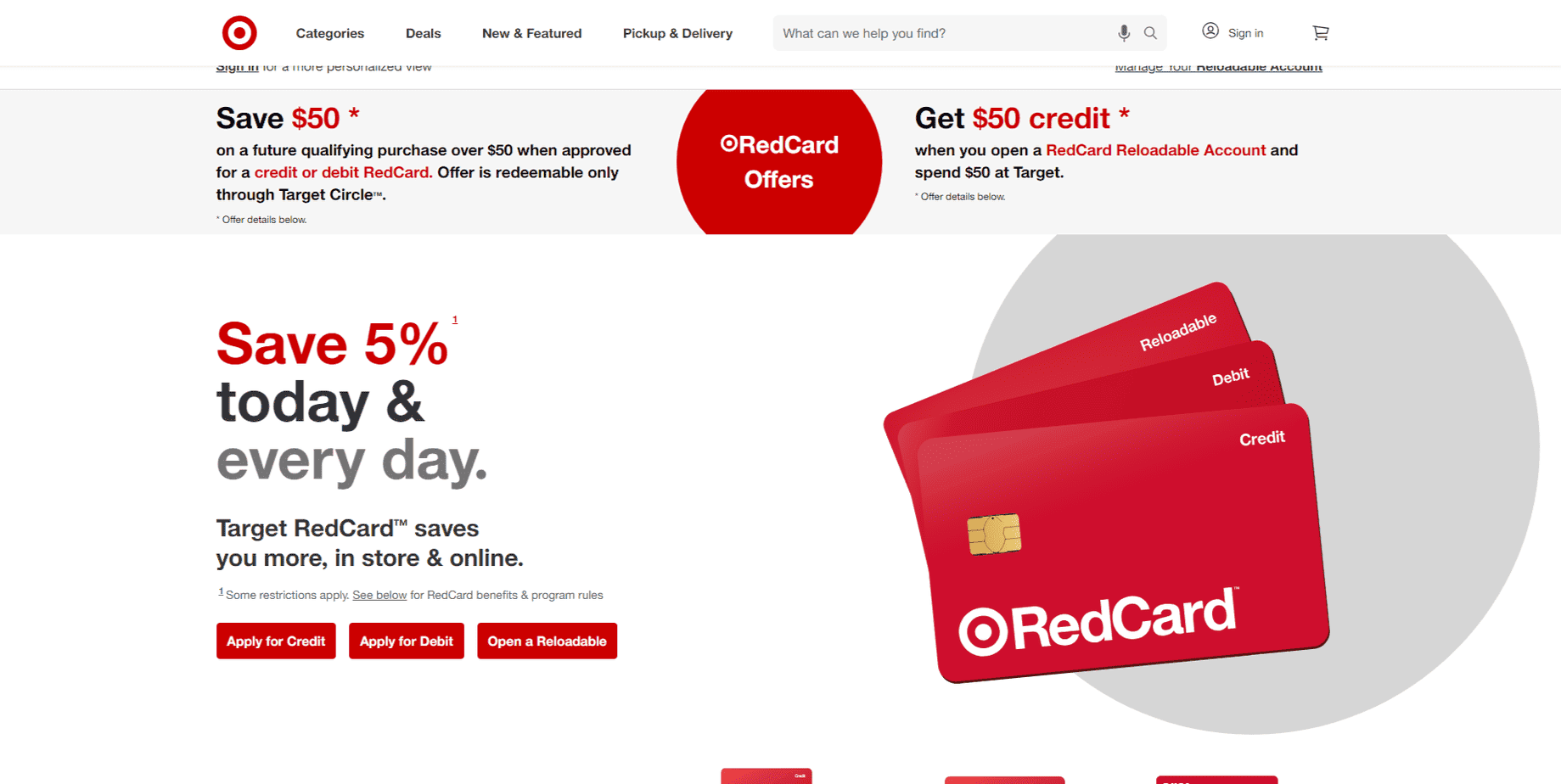
This means that customers can leave their credit cards at home. If the feature is anything like Walmart Pay, Target customers will scan a QR code with their phone to initiate payment processing. Target Pay will only be available to REDcard customers. At least, at first. This differs from retailers like Walmart and Kohl’s, which offered an option for mobile payments to all of their customers from the start. Target does say that it will allow customers to use and earn rewards as well as process payments. This is very similar to what their retail competitors are already doing.
The announcement comes after Target saw a drop in its in-store sales and a rise in its online sales over the holiday season. Overall sales have been flat year after year, which was also hurt further by sales in electronics and entertainment, which have declined. However, online transactions have increased by 30%. It is hoped that by extending a mobile payment option, Target can increase its sales. Significant growth in both numbers could easily put Target at an all-time high.
While options like Apple Pay will continue to be allowed online, users will find that they cannot use those payment services in-store. The only in-store mobile payment service that Target will accept will be its own. However, users will be able to use Target Pay online. For Target, mobile payments could mean new opportunities, and it remains to be seen how their service will stack up against their competitors.
Recent Updates – Target Pay And Target Wallet
In a recent update shared on their company blog, Target announced the integration of a Wallet feature in their app, revolutionizing the checkout process for shoppers. With Wallet, customer can easily pay with their Target REDcard and access savings through Cartwheel with just one scan of their smartphones at checkout. The initiative aims to expedite the payment process while consolidating digital discounts, Cartwheel offers, weekly ad coupons, and the 5 percent discount for REDcard holders into a single, convenient location. Target also revealed plans to enhance Wallet’s functionality by enabling the storage and use of Target gift cards.
Mike McNamara, Target’s Chief Information and Digital Officer, emphasized that Wallet in the Target app is designed to streamline the checkout experience significantly. He highlighted the added convenience for customers of having a unified platform for handling payments, discounts, coupons, and gift cards.
This development is part of Target’s broader strategy to amplify its presence in the eCommerce arena, a move that could potentially escalate its market value by 20 to 30 percent in the next two years, as per analyses by Barron’s magazine. Target’s proactive strategies to outperform Amazon have led to a noticeable increase in online sales, with eCommerce accounting for 4.4 percent of their total sales in the most recent fiscal year—a jump from 2.8 percent in fiscal 2016, outpacing growth at Walmart.
Furthermore, Target’s launch of exclusive in-house brands, like the children’s apparel line Cat & Jack, contributes to its upward trajectory. The retailer plans to introduce 12 unique brands by the end of 2018, with eight slated for release during the 2017 holiday season, spanning various categories from baby and children’s items to men’s and women’s apparel and home goods.
Benefits of Using Target Wallet
Target’s Wallet revolutionizes the checkout experience, offering shoppers benefits for smoother, safer transactions. This mobile payment option streamlines purchases by allowing a single barcode scan from your phone, directly integrating discounts and loyalty rewards into the payment process. With advanced security measures, including encryption and biometric authentication, Wallet ensures your payment details are safe. Additionally, its support for contactless payments and real-time updates enhances convenience and customer peace of mind.
How to Set Up and Use Target Wallet
Setting up and using Target’s Wallet for seamless payments is simple and quick. Follow these steps to get started easily:
1. Download the Target app: If you don’t already have it, download the Target app on your mobile device. It is available for both iOS and Android versions.
2. Create or sign in to your Target account: To use Wallet, you’ll need a Target account. If you don’t have one, create a new account by providing the required details. If you already have an account, sign in.
3. Navigate to the Wallet feature: Once you’re signed in, locate the Wallet feature within the Target app. It is usually found in the main menu or navigation bar.
4. Add your payment methods: In the Wallet section, you can add various payment methods, such as credit cards, debit cards, and even Target gift cards. Enter the necessary information for each payment method you wish to use.
5. Set a preferred payment method: If multiple payment methods are added, you can choose one. This will be automatically selected when making a purchase using “Wallet.”
6. Verify your identity: Target may require you to verify your identity for security purposes. You can do this by providing additional information or following a verification process.
7. Start using Wallet for payments: Once you’ve completed the setup process, you can start using Wallet to make payments in-store. At the checkout, open the Target app, navigate to the Wallet feature, and scan the barcode presented by the cashier.
Security Features of Target Wallet
With Target’s Wallet, you can enjoy the convenience of making contactless payments using your mobile device. It’s a secure and hassle-free way to complete your shopping transactions at Target.
Target prioritizes your security with Wallet by incorporating encryption, tokenization, biometric and multi-factor authentication, and continuous fraud monitoring. These robust security features safeguard your information, providing a trustworthy and stress-free shopping experience.
Compared to other mobile payment options like Apple Pay, Walmart Pay, CVS Pay, and Kohl’s Pay, Target’s Wallet stands out for its accessibility across all Target stores, comprehensive security features, and seamless integration of loyalty and discount programs. Unlike these competitors, Wallet is designed to enhance Target’s shopping experience, making it a uniquely convenient choice for Target customers.
Mobile payments are still a new development for most consumers. They are clearly marked on most retail payment terminals, and most banking apps offer the ability to make transfers and deposits with just a few taps. However, most people still slide their card, reluctantly slip it into the chip reader or hop on a computer to move money around. Why are customers so slow to use a technology that seems so easy and convenient? Deloitte’s 2016 Mobile Consumer Survey offers some interesting statistics about mobile payments, and it seems to suggest age plays a roll along with lifestyle.
A poll of 2,000 internet users between the ages of 18 and 75 in the United States participated, and the group most likely to take advantage of using a mobile phone for payment is the older end of the millennials spectrum. This group, ages 24 to 35, said they made purchases this way at least once a week. Older millennials are twice as likely to use mobile payments as their 18 to 23-year-old counterparts, and three times more inclined than the generation just before them. Though it should be noted that this older group, ages 35 to 44, is a growing market and actually saw a 6% increase in utilization. It is also interesting to note that there was a significant 3% drop in usage among younger millennials.
Overall, the survey shows that mobile phone payments are used to transfer money or make payments in coffee shops and fast food establishments approximately 40% of the time and to a much lesser degree at restaurants, clothing stores, and grocery stores.
Millennials are a huge segment of the buying public, and they have the ability to move the smartphone purchasing option forward, so it may become the new normal in the near future.
Chase Pay is now making it easier to feel secure when you checkout at Walmart and Sam’s Club. You can now use this payment option to pay for your purchases online and in stores with Walmart Pay, as well as the mobile app.
Mobile payments are fast becoming the way to pay for your purchases. The convenience of it makes this option of paying very appealing. With increased security breaches, however, customers are looking for the safety that Chase Pay provides by using ChaseNet, a closed-loop platform. This platform is designed to eliminate fraud risk. This added security protects both the merchant and the consumer.
Retailers are looking for mobile payment options to help speed up checkout lines. With the rise in chip credit and debit cards, checkout line times have increased. The ease of this payment option will speed up those lines and allow consumers peace of mind at the same time.
Walmart joins a list of other companies that utilize this additional payment option. Best Buy just signed a deal for use in their stores, online, and on their app.
As paying for products as quickly and safely as possible becomes more in demand for consumers, Chase Pay is leading the way to make seamless enhanced experiences at multiple retailers an easy and safe reality.
Cookie Consent
We use cookies to enhance your browsing experience, analyze site traffic, and support our marketing.You can accept all cookies, reject non-essential ones, or manage your preferences below. Learn more in our Privacy Policy.
Cookie Preferences
Manage your cookie preferences below:
Essential cookies enable basic functions and are necessary for the proper function of the website.
Name
Description
Duration
Cookie Preferences
This cookie is used to store the user's cookie consent preferences.
180 days
These cookies are needed for adding comments on this website.
Name
Description
Duration
comment_author_email
Used to track the user across multiple sessions.
Session
comment_author_url
Used to track the user across multiple sessions.
Session
comment_author
Used to track the user across multiple sessions.
Session
Google Tag Manager simplifies the management of marketing tags on your website without code changes.
Name
Description
Duration
cookiePreferences
Registers cookie preferences of a user
2 years
td
Registers statistical data on users' behaviour on the website. Used for internal analytics by the website operator.
session
These cookies are used for managing login functionality on this website.
Name
Description
Duration
wordpress_logged_in
Used to store logged-in users.
Persistent
wordpress_sec
Used to track the user across multiple sessions.
15 days
wordpress_test_cookie
Used to determine if cookies are enabled.
Session
Statistics cookies collect information anonymously. This information helps us understand how visitors use our website.
Google Analytics is a powerful tool that tracks and analyzes website traffic for informed marketing decisions.
Contains information related to marketing campaigns of the user. These are shared with Google AdWords / Google Ads when the Google Ads and Google Analytics accounts are linked together.
90 days
__utma
ID used to identify users and sessions
2 years after last activity
__utmt
Used to monitor number of Google Analytics server requests
10 minutes
__utmb
Used to distinguish new sessions and visits. This cookie is set when the GA.js javascript library is loaded and there is no existing __utmb cookie. The cookie is updated every time data is sent to the Google Analytics server.
30 minutes after last activity
__utmc
Used only with old Urchin versions of Google Analytics and not with GA.js. Was used to distinguish between new sessions and visits at the end of a session.
End of session (browser)
__utmz
Contains information about the traffic source or campaign that directed user to the website. The cookie is set when the GA.js javascript is loaded and updated when data is sent to the Google Anaytics server
6 months after last activity
__utmv
Contains custom information set by the web developer via the _setCustomVar method in Google Analytics. This cookie is updated every time new data is sent to the Google Analytics server.
2 years after last activity
__utmx
Used to determine whether a user is included in an A / B or Multivariate test.
18 months
_ga
ID used to identify users
2 years
_gali
Used by Google Analytics to determine which links on a page are being clicked
30 seconds
_ga_
ID used to identify users
2 years
_gid
ID used to identify users for 24 hours after last activity
24 hours
_gat
Used to monitor number of Google Analytics server requests when using Google Tag Manager
1 minute
Marketing cookies are used to follow visitors to websites. The intention is to show ads that are relevant and engaging to the individual user.
Facebook Pixel is a web analytics service that tracks and reports website traffic.



 Many first heard the news of how Bitcoin was changing the game for merchant services when they read about how Starbucks would begin to accept payments via Bitcoin for their delicious caffeinated beverages.
 Merchants aren’t the only ones charging customers. Some government agencies are also applying surcharges. Hammersmith and Fulham council in London charge 1.25% while the Driver and Vehicle Licensing Agency (DVLA) currently adds a fee of £2.50 to vehicle tax payments using debit and credit cards just to name a couple. The U.K. government says the best estimate of surcharges incurred by consumers in 2010 on a whole was £473 million, at the time equivalent to $700 million USD.