Sustainability has evolved from a scientific concept to a standard baseline for a long time. Sustainable property management has evolved from a mere moral obligation to a survival necessity for protecting the asset value of your real estate properties. With rising utility costs, net income is declining, making it crucial for landlords to raise rents. Regulatory pressures are also increasing globally, for example, local carbon footprint requirements, driving demand for more environmentally friendly and energy-efficient buildings.
However, this does not automatically mean that the property business is doomed. Tenant demand for green living is at an all-time high; modern renters are actively seeking out buildings with smart thermostats, recycling programs, and energy transparency. For property managers and landlords, this is an opportunity: buildings that adopt environmentally friendly property management best practices and efficient energy management can secure higher rents, justified by the “green premium.”
To become sustainable, the first step is to reduce the reliance on manual processes and switch to proptech. The limitation of manual management is that you cannot optimize what you cannot measure. Tracking utility bills does not help you to spot wastage, which is why proptech software is required.
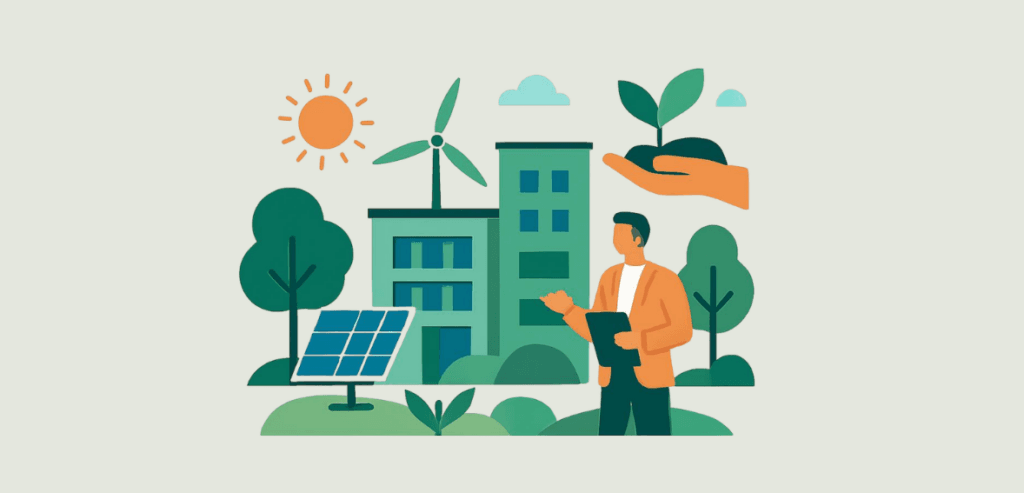
The core of sustainable property management is operational efficiency — focus on doing more with fewer resources, such as maintaining a cooler temperature while using less electricity. But this does not mean switching to newer devices; it means optimizing the current arsenal. Lifeycle asset management means moving away from the disposable mindset. Instead of purchasing new devices, start preventive maintenance on the existing ones to extend their lifespans.
After implementing sustainable property management, the question arises: what benchmarks are used to measure a property’s sustainability? To assess the company’s environmental impact, treatment of its people, and operational governance, the ESG framework is used. ESG stands for Environmental, Social, and Governance, and the ESG framework is becoming a necessary requirement for real estate investors. Another important metric is the Indoor Environmental Quality (IEQ), which refers to the health of the building’s interior. IEQ measures how the building’s interior environment, such as air quality and natural lighting, helps reduce tenant sickness, improve satisfaction, and lower turnover.
An important metric we mentioned earlier was the carbon footprint. The carbon footprint of a building refers to the total amount of greenhouse gases generated by its operations, measured in tons of carbon dioxide.
In the pursuit of sustainability, financial alignment is also very important. True sustainable management must balance ecological benefits with economic returns. The ultimate goal is to ensure longevity — an eco-upgrade is only sustainable if it does not bankrupt your property business.
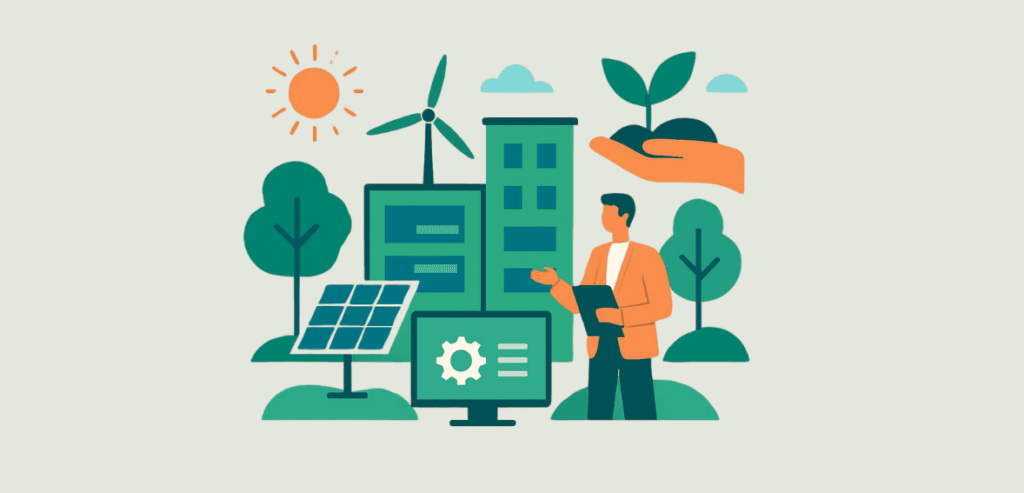
Software plays a crucial role in determining the ease of implementation of sustainable management in your business. It enables you to move away from guesswork and establish clear rules and a framework to efficiently monitor and optimize energy use in your units.
Software features such as centralized data dashboards, predictive analytics, and automated utility tracking are critical to the sustainability of your properties.
Automated utility tracking pulls data directly from the utility providers into the software, eliminating manual data entry errors and saving hundreds of hours of administrative time. It compiles all operational data into a centralized dashboard, so you can see exactly where and when resources are being wasted.
Digital document management allows leases, work orders, and notices to be handled entirely via mobile apps or email. On the one hand, it reduces paper and printing costs while eliminating time delays and the major consequences associated with exceeding legal deadlines. A legal notice sent past its due date could not only sabotage its outcome, but it could also pull you into a legal battle, harming your reputation and credibility.
Tenant communication automation enables managers to instantly send emergency warnings and recycling reminders, fostering trustworthiness without manual effort. Vendor routing optimization uses software to schedule maintenance appointments, saving oil and gas resources by maximizing the number of units served in the fewest possible trips.
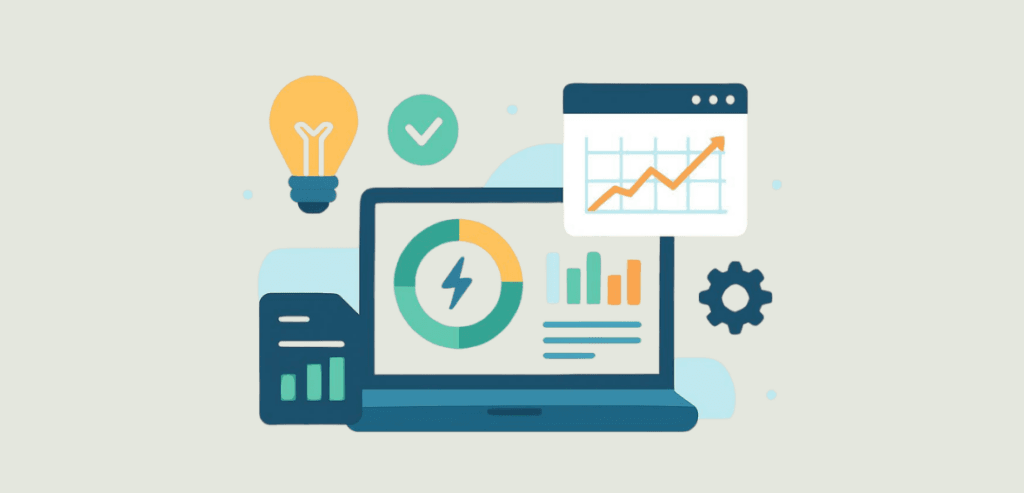
Energy efficiency refers to using fewer resources to achieve the desired level of comfort. For example, using smart algorithms to manage thermostats in vacant units to prevent pipe freezing in winter without wasting energy. Before understanding how energy can be efficiently managed through software, it is critical to understand phantom load. Phantom load, also known as vampire power, refers to the electricity consumed by appliances and electronics even when they are off or in standby mode. It is one of the primary causes of silent energy waste, reflected as unjustified charges on bills.
Smart metering integration involves connecting digital utility meters to software dashboards. It lets you see anomalies and energy spikes in real time, rather than waiting until next month’s bill. Suppose your thermostat malfunctions on the 5th of the month. Traditional property management will have to wait for the next billing cycle to identify the problem, whereas software will allow the manager to spot the malfunction on the day it started behaving abnormally, saving a month of excessive utility costs.
Automated vacant unit management uses software to manage utilities in vacant rental units to prevent wastage. For example, thermostats can be managed to prevent pipe freezing in winter, or sensors can be used to detect water leakage in vacant units immediately. Benchmarking performance enables software to compare energy usage across multiple buildings and identify those with unusual energy spikes. This highlights which properties require energy audits or insulation upgrades.
Modern software provides intuitive features, such as peak load shedding, that automatically power down non-essential systems during periods when energy rates are highest. Tenant energy portals allow tenants to monitor energy usage and electricity bills, using behavioral psychology to encourage energy saving to lower their bills.
Software allows you to track water usage across the entire building in real time, helping identify abnormal spikes and preventing catastrophic property damage and massive utility bills. For this, you must understand two main concepts: submetering and waste diversion rates.
Submetering refers to installing smaller meters for individual units rather than relying on a single meter for the entire building. Submeter tracking via software enables you to monitor water usage in vacant units, preventing water damage. On the other hand, smart waste tracking uses sensors in dumpsters connected to software that signals garbage trucks when the bin is full, allowing pickups to be scheduled only when bins are full, saving pickup fees.
Weather-integrated irrigation systems connect building software to on-ground sprinklers, automatically pausing them when rain is predicted, saving thousands of gallons of water. Tracking waste diversion allows you to log recycling volumes in your system. This is crucial for future investments and remaining in regulatory compliance.
The Internet of Things (IoT) refers to a network of physical devices, such as thermostats, water sensors, and contact sensors, and the software that connects and exchanges data over the internet. IoT building ecosystems allow for real-time, smart monitoring of units. Using pipe sensors under the sink enables you to detect and manage pipe leaks before they turn into a water catastrophe. Contact sensors can be placed at entry points, such as doors and windows, so property managers can see whether cooling or heating is being wasted. However, you must be careful not to violate privacy while using them.
Smart locks reduce physical waste by eliminating the need for metal keys, which often get lost and have to be remade. Additionally, occupancy-based lighting saves energy by automatically turning off lights in empty rooms. Predictive HVAC maintenance sensors analyze vibration and air quality, alerting management to change a dirty filter before the unit starts to degrade.
You do not become sustainable by buying and installing more devices. At its core, sustainability is about integrating these devices to achieve the ultimate goal of increased energy efficiency of the unit.
One of the most crucial aspects of “going green” is reporting the outcomes achieved with the new technology. ESG reporting is the process of publishing data that shows the environmental and social responsibility of your company to investors, tenants, and the government.
Software helps you automate logging the carbon footprint, preventing the nightmare of manually compiling a year’s worth of utility bills. The primary use case of software is avoiding regulatory fines, such as New York’s Local Law 97. It lets you track your carbon footprint in real time, so you can plan ahead if your building’s emissions are approaching the penalty threshold.
Attracting institutional capital becomes easier when you have hard data to show the impact you have had on the environment. Using software helps you prevent greenwashing accusations. It is a deceptive marketing practice in which a company falsely claims to be environmentally friendly without operational data to back up those claims. Software provides a proof-based, time-stamped log of all activity, providing a mathematically sound audit trail of every claim in your ESG report.
Streamlining green certifications, such as LEED or ENERGY STAR, becomes faster when property software already tracks all prerequisite metrics.
Sustainability is not achieved by buying multiple “smart” home devices or purchasing software. Most business owners already have property management software; to avoid the hassle of data migration, they install smart devices in their units and buy a separate software solution to track them, creating operational overhead. A disconnected tech stack cannot maintain sustainability.
Considering your tech stack is streamlined, devices become useless if the tenant does not know how to use them. You must educate tenants on how to use those devices to “lower their electricity and water bills.” Before implementing “green systems”, it is important to have a correct estimate of current utility costs. This ensures that the new technology actually saves money rather than eating up your operational cash.
Another mistake is overhauling everything overnight; if you rip out all older systems and install new ones without proper staff training, it will create administrative chaos, sparking resentment and friction. The software is not a magic wand; it is an operational optimization assistant. If your current management has structural flaws, the software will eventually fail.
Sustainability is not a mere buzzword; it is the operational reality of the real estate business. With tangible outcomes tied to “going green”, simply sitting back idly won’t help. Sustainable property management is driven by costs, compliance, and tenants — meaning software is the only viable way to measure and manage this transition. Simply buying software is not the solution — you must establish SOPs and enforce new rules to ensure that the new technology and management are in seamless alignment. As of today, only businesses that adopt green software will be able to command higher rents, lower OpEx, and dominate the market, while others will be left scrambling for tenants.
It is the practice of operating your real estate in a way that minimizes environmental impact, increases energy efficiency, reduces utility waste, and improves tenant well-being, ultimately lowering the unit’s operational costs.
Software can help by monitoring energy wastage, faulty devices, and leakage problems. Moreover, software enables you to conserve crucial resources, such as water and electricity, through predictive maintenance and tracking.
Sustainability can be increased through policy alone, but the scope becomes limited as enforcement becomes irregular. Smart devices allow for better monitoring and alignment with sustainability goals, making them operationally advantageous.
The software automatically tracks and logs the usage with timestamps. This creates an undeniable audit trail for your company to back your claims with reliable data.
The biggest mistake is buying disconnected hardware without a centralized software platform to manage data and measure actual financial savings.