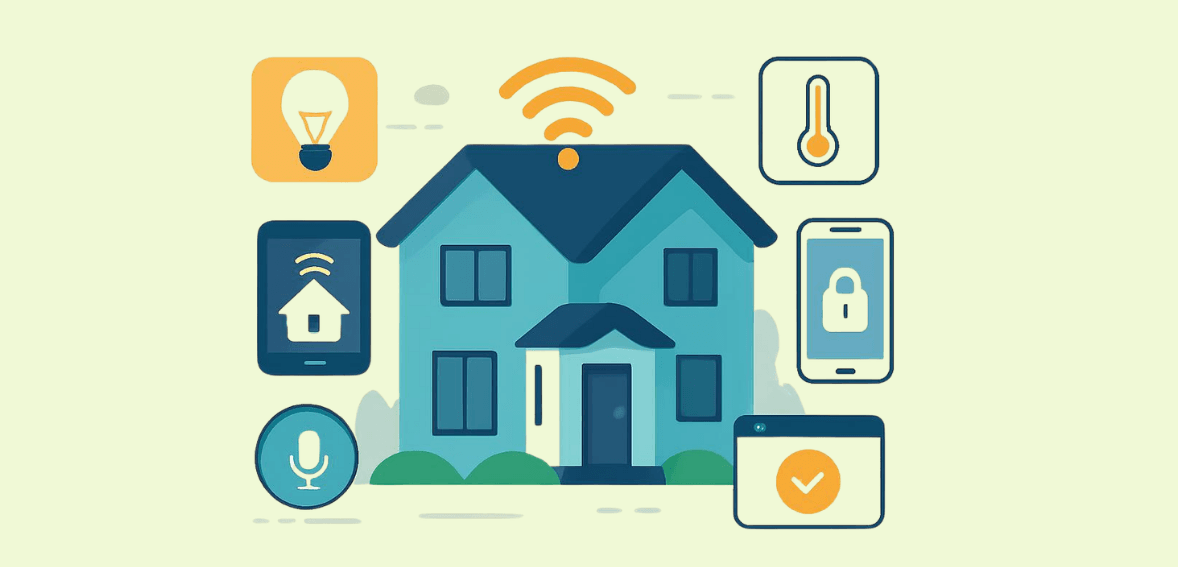
With the advancement in smart home technology, the property management landscape is changing rapidly. Outdated, manual property management methods that relied on humans are being increasingly replaced by modern, automated software and data-driven systems. Property technology, also known as proptech, refers to the use of digital tools and software to automate and optimize the management, buying, and selling of real estate. Traditional property management relies on reactive processes, for example, waiting for a tenant to report a broken heater. This led to delayed responses, unhappy renters, and higher repair costs.
Another important concept you must understand is the Internet of Things (IoT). It is a network of physical, everyday objects embedded with sensors and internet connectivity that allow them to collect, share, and act on data without human intervention. IoT has transformed buildings into proactive entities by using internet-connected devices that constantly monitor property conditions and alert managers before major issues occur.
Tenant expectations have also evolved, shifting from an analog living experience to a modern, digitized ecosystem. Modern renters now expect the same digital convenience in their apartments that they experience with their smartphones and tablets.
Most property managers are shifting towards automated software; the reason is simple: operational costs are rising, including insurance premiums and labor shortages, which means that the only effective solution is to minimize reliance on human labor and variable factors. Automation has emerged as the only solution to protect their profit margins.
The transition to smart home technology is no longer a futuristic luxury; it has become a baseline market standard required to survive in the competitive rental market.

To understand how IoT benefits rental property management and overall property management infrastructure, it is crucial to grasp the concept and its applications in detail. There are two major applications of IoT that you must understand: smart hubs and cloud computing.
Smart devices collect environmental data using built-in sensors, such as motion detectors, temperature sensors, and moisture sensors. These serve as the system’s foundational raw information. However, these devices cannot directly communicate with each other. So, these individual devices communicate their collected data to a central smart hub.
A smart hub or gateway is a central piece of hardware installed in a unit that acts as a translator, connecting all individual devices to the internet. You can think of the smart hub as the crucial checkpoint every signal must pass through to connect to the internet. Data is transferred from individual devices to the smart hub via low-power protocols, such as Z-Wave, which prevents the property’s Wi-Fi network from being overloaded.
The smart hub then securely transmits the data over the internet to a cloud-based server. Cloud-based servers are remote servers accessible via the internet. These servers store all the device-generated data, eliminating the need for on-site computers. At the cloud servers, the data is analyzed by complex software that determines whether any action is required. If the software detects an anomaly, it immediately sends an alert to the property manager.
Property managers can view all this cloud data through a centralized, web-based dashboard, giving them a real-time snapshot of the health and security of their entire portfolio.
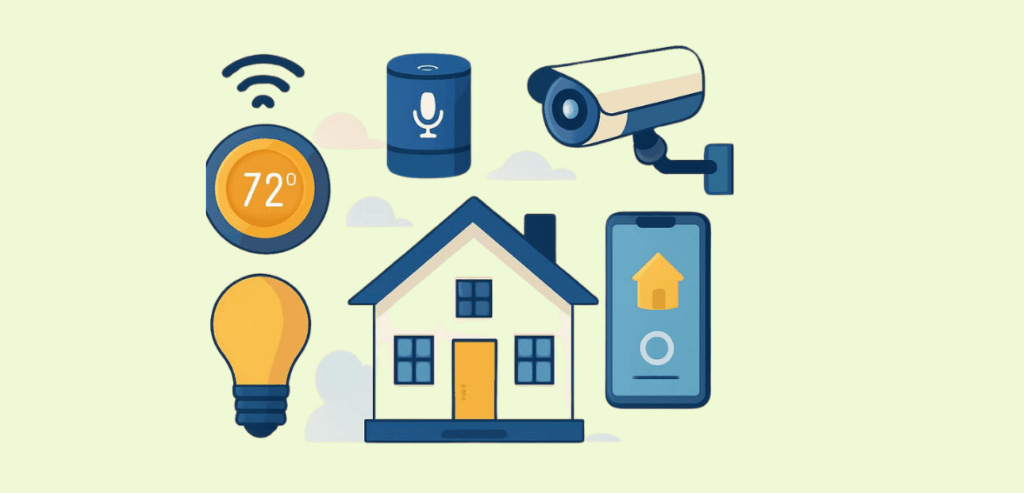
The primary smart devices used in almost all rental units are smart locks and smart thermostats. Smart locks are electronic deadbolts that have replaced traditional keys with digital entry methods, such as smartphone apps, PIN codes, or key codes. On the other hand, smart thermostats are internet-connected temperature regulators that can learn user preferences and be controlled remotely via their mobile app.
Smart locks enable landlords to remotely control property access by generating time-bound digital keys for maintenance staff or vendors, eliminating the need to be physically present on-site to carry out repairs. This improves security, as there is no scope for physical key handovers. Smart thermostats enable property managers to enforce heating and cooling limits in vacant units, ensuring energy is not wasted while still protecting the pipes from freezing in winter.
Water leak sensors can be installed under the sink to detect leaks from pipes. These operate on the principle of water’s electrical conductivity, and once the sensor detects a leak, an automated alert is sent to the landlord’s phone. It can prevent minor drips from becoming catastrophic floods that can damage the property. Smart switches and lighting systems enable automated control of common areas, such as corridors, porches, and shared spaces.
Another common sensor used in properties is the contact sensor. It is most commonly used at entry points, such as doors and windows, to monitor whether they are left open. This helps the landlord secure vacant units. It also helps the tenants to improve their personal safety and energy efficiency.
Using IoT and smart devices to secure and manage properties directly affects your ROI and tenant experience. The effect is significant enough to justify the cost of purchasing and installing smart technology. To understand the effect of IoT and smart devices on the ROI of a rental unit, you must first understand two key concepts: net operating income and automated workflows.
Net Operating Income (NOI) refers to the property’s total revenue minus its operating expenses. You can think of NOI as the money left in your bank account after paying the costs to maintain the property. It is the primary metric used to determine a rental property’s profitability and overall market value. Automated workflows are digital processes in which an event automatically triggers a sequence of actions without human intervention. This saves staff time and prevents unnecessary delays.
IoT devices significantly increase a property’s NOI. This is because the landlord can charge a premium rate for the “smart home” and, at the same time, cut operational costs by reducing the number of support staff and error margins. Keyless entry systems drastically reduce labor costs by eliminating the hours spent managing physical key inventories, conducting in-person lockouts, and creating duplicate keys when originals are lost.
Smart tech makes rental tours much easier. The tenant can take a tour of the rental on their own schedule with access codes provided by the landlord. On the other hand, the landlord can still monitor activity on the property, providing two-way transparency. This speeds up the leasing process and reduces the burden on agents.
Centralized digital dashboards eliminate the need for maintenance staff to conduct routine physical property walks. A tenant can raise a request through the software interface, and maintenance can address them based on urgency and batch size. Insurance providers frequently offer reduced premiums to properties equipped with smart safety devices, such as smoke and leak detectors. This is because these devices dramatically reduce the risk of a massive payout from fire or water damage.
The strategy of keeping current renters in their units at the end of their leases to avoid the high costs of marketing, cleaning, and turning over an empty apartment is known as tenant retention. Most tenants now expect resident apps to monitor tenancy, communication, and ledger details. A resident app is a unified mobile app that lets tenants pay rent, submit maintenance requests, and control all their smart home devices from a single interface.
Smart tech provides ultimate daily convenience to the tenants. For example, a tenant can unlock the main door with their smartphone while carrying groceries, or they do not have to worry about misplacing the home keys. Connected thermostats empower tenants to save on bills by efficiently leveraging weather patterns to adjust temperature and cooling. Digital access systems increase perceived tenant security by allowing them to create temporary entry codes for dog walkers, cleaners, or visiting guests without disclosing the permanent house codes to outsiders.
Modern, tech-enabled smart systems align perfectly with the lifestyle of Millennial and Gen Z renters, who view fast internet and personalized integrations as essential utilities rather than housing luxuries. Providing a single, unified resident app that controls both unit access and rent payments creates a frictionless living experience, significantly boosting resident satisfaction and long-term lease renewals.
After understanding how IoT and smart appliances affect rent management, you must now understand how IoT helps in proactive asset management. Using sensor data to identify and fix equipment degradation before the machinery actually breaks down is called predictive maintenance.
IoT transforms maintenance from reactive damage control to a predictive model by continuously monitoring the baseline performance of critical appliances and systems. HVAC monitoring sensors measure energy draw and airflow of air conditioning units, alerting staff to replace clogged filters or service struggling motors weeks before the unit eventually fails.
Leak sensors placed near water heaters immediately detect failing tanks. This helps automatically shut off leaking valves to stop water flow and save thousands of dollars in subfloor repairs from water damage. In bathrooms, humidity sensors can be used to monitor extreme moisture buildups. This helps detect mold growth and ensure that exhaust fans are functioning properly.
By catching issues early, property managers significantly extend the lifespan of expensive capital equipment, spreading out replacement costs and preserving the property’s long-term budget.
The major issues associated with IoT and smart appliances are capital expenditure and reliance on Wi-Fi. The initial CapEx for purchasing commercial smart hubs, locks, and thermostats for an entire building can be quite high, requiring significant upfront budgeting and financial planning. Many IoT systems are dependent on Wi-Fi; if the property’s internet goes down, basic remote functionality can fail unless cellular backup systems are in place.
Smart devices run on batteries that inevitably die, so property managers must periodically replace them to keep them operational. The older, less tech-savvy generation might experience a steep learning curve and high frustration as they get accustomed to the software.
A fragmented approach results in disjointed systems that don’t communicate with each other, creating more administrative work rather than less.
IoT moves property management from manual, reactive firefighting to automated, predictive control. It provides a two-pronged ROI benefit: drastically reducing operational expenses and mitigating catastrophic damage, while simultaneously boosting rental income and tenant retention. Properties that fail to adopt integrated smart technology will soon face higher operating costs and lower tenant demand than modernized competitors.
IoT refers to internet-connected devices, such as smart locks and thermostats, installed in rental properties. These devices collect data and allow property managers to monitor and control units remotely from a digital dashboard.
Yes, smart devices help you to justify charging a “smart home” premium, which helps you increase the rent. This works because modern tenants value the convenience and security of smart devices over traditional systems.
If the power goes out, the smart lock runs on back-up batteries. The access codes are stored locally in the lock’s onboard memory, allowing the keypad to function and allowing the tenant to enter.
While you can manage them via vendor-provided cloud dashboards, it is highly recommended to integrate the smart devices directly into your existing Property Management Software (PMS) to fully automate code generation and billing.
Technically, a landlord can see when tenants come and go via data from contact sensors. However, it is considered a breach of the tenant’s privacy and must be avoided.