
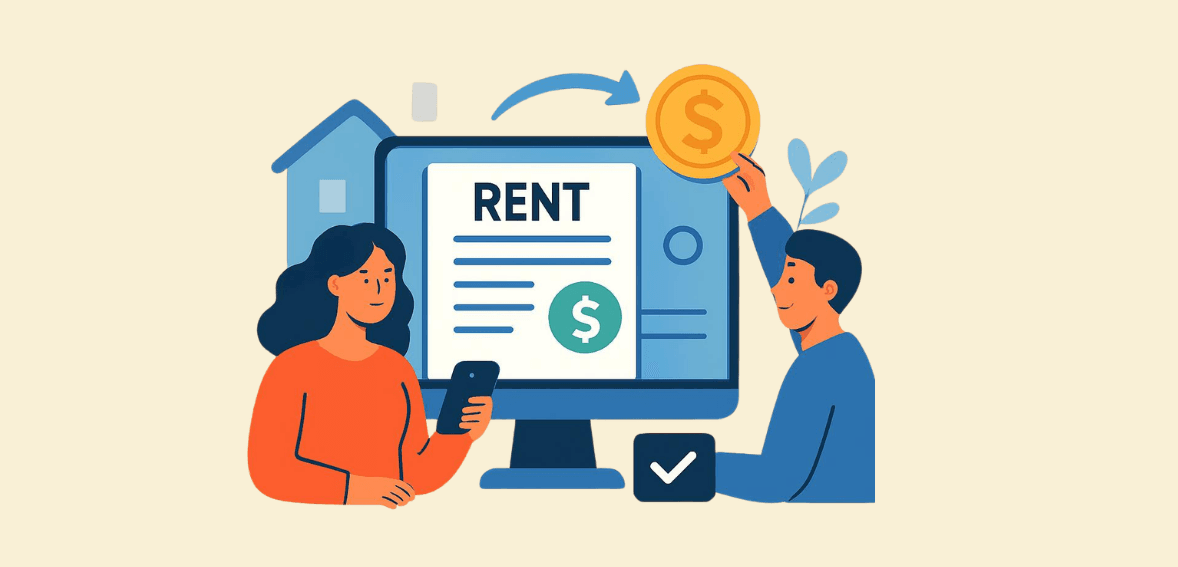
Unpredictable cash flow and the hassle of chasing checks are the biggest pain points for property managers and rental owners. A reliable, predictable inward flow of rental income is required to cover a property’s operating expenses and mortgages. The primary aim of landlords is to ensure consistent cash flow.
Often, the primary reason for inconsistent cash flow is relying on paper checks or cash for rent payments. It forces managers into a reactive position, requiring them to wait for mail or physical drop-offs.
Another challenge faced by property managers is the overhead of manual collection. It is the hidden cost, which is measured in administrative hours, of physically picking up checks, processing paper, and sending manual emails or texts to chase late payers.
Manual rent collection requires dedicated administrative hours every single day. Depositing funds, reconciling ledgers, and tracking down missing payments are the processes that hinder scalability as the property portfolio grows. The process of chasing late rent payments damages the landlord-tenant relationship. The landlord serves as a debt collector, whereas automated systems act as neutral enforcers of lease terms.
You can shift the operational focus from “rent collection” to “rent management” simply by adopting automated software systems. This will allow your teams to focus on tenant retention and property maintenance. Modern renters are accustomed to paying for subscriptions and digital payments. They expect a seamless, mobile-friendly way to pay their rent, which makes online options a baseline requirement rather than an optional luxury.
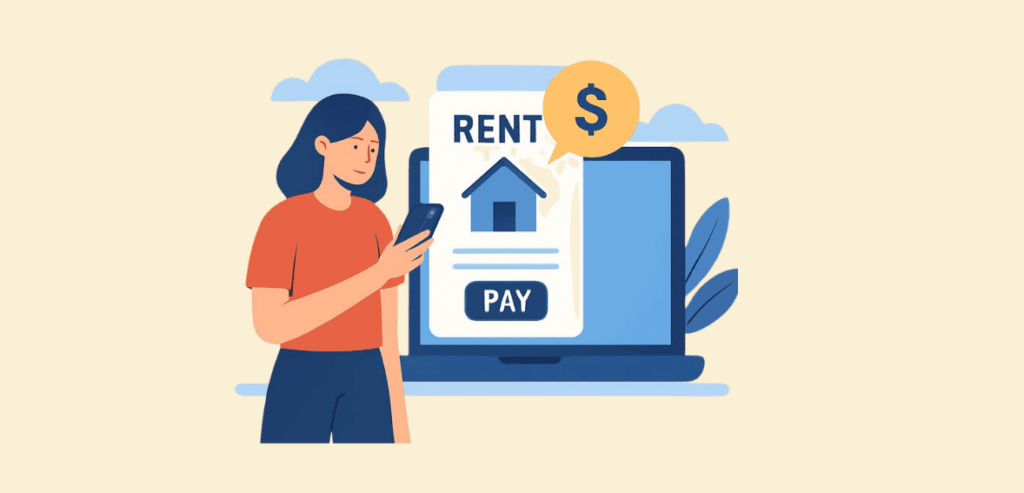
Online rent collection software is a digital platform designed specifically for real estate that facilitates electronic payments, updates accounting ledgers, and communicates with tenants. It serves as an intermediary bridge that securely connects the tenant’s bank account or credit card directly to a landlord’s operating account. This eliminates the need to physically handle funds, eliminating last-minute hassle and human errors.
Unlike generic software, dedicated rental software automatically applies incoming funds to specific ledgers. For example, applying money to late fees first, before applying it to the base rent. This keeps your financial records clean and audit-ready.
These platforms maintain data security by using integrated payment gateways that secure and encrypt payment data at the source before it travels through the payment network. Payment gateways are the underlying secure tech infrastructure that securely reads payment data and authorizes the transfer of funds between banks. It serves as the screening layer through which payment data first enters the network. Encryption of financial data during transit ensures that neither the property manager nor the landlord can see or store the tenant’s bank account details.
This software automates the reconciliation process by generating unique digital IDs for every transaction. This means that operators no longer have to rely on guesswork and confusing entries. Many rent collection systems operate on a cloud-based architecture, allowing property managers to access real-time data from anywhere rather than being tied to a local office computer.

Various payment methods differ in their mechanics and financial characteristics. Understanding them will help you choose methods that incentivize transactions and avoid the ones that do not.
The first one is the ACH or Automated Clearing House. ACH is an electronic fund transfer network for financial transactions that moves money directly from one bank account to another using routing and account numbers. ACH payments are the gold standard for rent collection because they rely on direct bank-to-bank transfers, which means each transaction’s processing cost is significantly lower than with other payment methods. They often charge a flat fee of $0.25 to $0.75 per transfer, making them ideal for high-volume rent payments.
The next payment method is credit/debit card. It is one of the most popular methods of online transactions in the retail market. Credit card transactions are very easy to integrate into your rent management software, and by opting for the right pricing model, such as interchange plus, which protects you from inflated, blended rates, you can offer easier ways to pay their rent. However, credit card transactions are expensive — they usually charge 2–3% of the transaction amount, so the fee per rent transaction depends on the rent amount.
There are other options available in the market, for example, consumer P2P apps such as Venmo or Zelle. You should strictly avoid these apps for rent payments, as they do not allow you to block partial payments, which can halt eviction processes in many states.
Now, you might wonder if P2P apps are out of the question, and the fee difference between card transactions and ACH transfers is so significant, why would anyone opt for card payments? The answer to this lies in the method of payment processing. While ACH transfers are cheap and secure, they are processed in batches. This means a transaction takes at least 4 to 5 business days to be processed. If the transaction is declined for any reason, payment settlement is delayed.
On the other hand, card transactions offer near-instant fund verification. They act as a critical safety net for tenants facing temporary cash flow issues, allowing them to pay rent on time via credit rather than defaulting entirely.
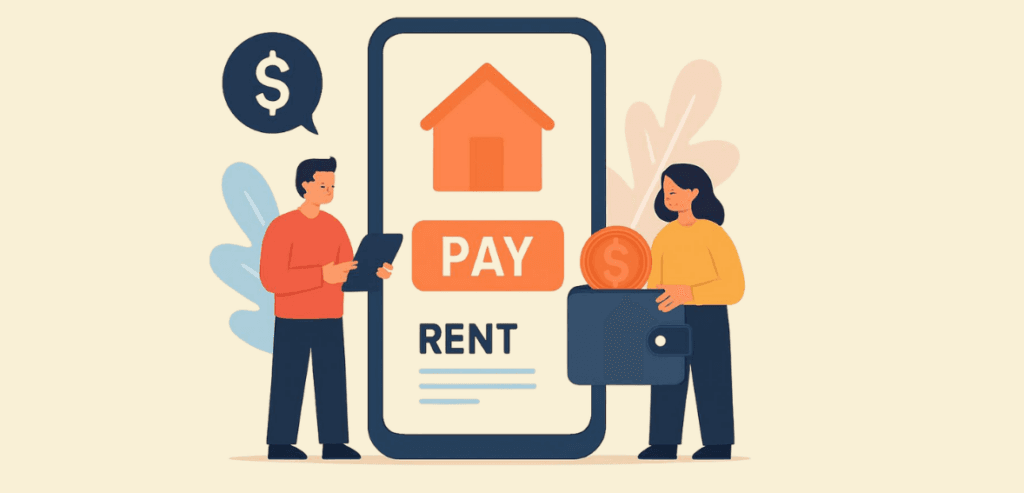
Autopay is a system feature that allows a tenant to pre-authorize the software to automatically deduct their full rent balance from their selected payment method on a specific day each month. You must understand how autopay works and its behavioral impact on the tenant’s payment psychology to understand why it is an effective solution to payment problems. Autopay effectively removes human memory and procrastination from the rent collection equation. It ensures that funds are pulled exactly on the due date, regardless of whether the tenant is busy, traveling, or forgetful.
The primary cause of rent payment delays is the effort required to overcome the psychological hurdle of making a payment. For the tenant, manual rent payment is a chore that they have to perform at the end or beginning of the month. By converting this manual chore into a passive, background event, autopay aligns rent collection with how consumers currently pay for other services, such as music streaming, movie streaming, and gym memberships.
You can experience a dramatic shift in the cash flow curves when a high percentage of your tenants are on autopay. Cash flow becomes smoother when predictable batches of funds are initiated simultaneously on the 1st of every month. Many platforms allow tenants to customize their autopay preferences, for example, setting up autopay right after their payday.
Autopay directly reduces the burden of late rent follow-ups, as managers only need to intervene when payments fail. The number of such tenants is very small, which makes the work much easier.
A tenant portal is a secure, personalized website or mobile app that allows tenants to log in and manage all aspects of their tenancy. Tenant portals provide a centralized digital dashboard where renters can view their exact ledger balance in real time. This eliminates the benefit of doubt and reduces administrative disputes over unpaid rent. Account ledgers are a running, transparent digital record, visible to the tenant, that details all charges, such as rent, utilities, and fees, as well as all payments made.
Portals serve as an official system of record. The tenant can view a breakdown of complex charges, such as base rent, prorated utilities, and parking. This helps the tenant understand exactly what they are paying for, which reduces doubt and conflict.
Many platforms offer self-service features. Self-service means allowing tenants to find answers or complete actions independently, such as downloading receipts, without having to call or email management. By offering self-service, portals drastically reduce incoming phone calls and emails, which reduces the need for a large number of support staff.
Many portals integrate payment capabilities into maintenance requests, creating a one-stop solution that increases tenant satisfaction by making it easier to interact with property management.
Portals empower tenants to securely update their financial information, such as changing debit cards or linking a new bank account, without management handling sensitive data updates.
An automated workflow is a sequence of digital actions triggered by specific dates or events. For example, sending a late notice on the 3rd of the month. Automated pre-due reminders send polite SMS or email notifications to tenants three to five days prior to the rent due date. This gently prompts tenants not on autopay to make their payments before the deadlines.
You should aim to configure a strict, automated grace period within the software itself. It ensures that late fees are applied fairly and uniformly to all tenants, which spares managers the burden of deciding who takes a pass and who does not. Automated late fees must be applied to the tenant’s ledger immediately upon the grace period’s end. The immediate enforcement of lease terms without requiring manager intervention keeps rent handling transparent and fair.
Workflows can be configured to automatically generate and email legally compliant pre-due reminders, preliminary “Pay or Quit” notices, and post-payment receipts. These prompts speed up the collection timeline, while post-payment acknowledgment helps reduce the tenant’s anxiety of confirming deposit status.
Sometimes, payments can be rejected. It happens due to a variety of reasons, ranging from insufficient balance in the tenant’s account to chargebacks. ACH returns due to insufficient funds (NSF) are common in digital rent collection. These rejections typically take 2–3 days to bounce back, so the software must automatically update the ledger in case of an ACH failure. To prevent endless cycles of ACH returns, the software must be configured to handle common rejection types and automatically apply a rejection fee to the tenant’s ledger for NSF failures.
On the other hand, chargebacks require immediate action; you must use the digital lease, the tenant’s portal login history, and the ledger data stored in the software as evidence to fight and win the dispute with the credit card issuer. Another important exception to be handled is partial payments. You must block partial payments in your software, because in many states, they can halt eviction proceedings.
Manual rent collection is an outdated, high-risk operational bottleneck. ACH and Autopay are the foundational tools for securing predictable cash flow. Automation is the definitive solution for modern property management. You must understand how money moves securely from the tenant’s bank account to your account without manual intervention. Providing your tenants with a dedicated digital space to manage their tenancy improves their experience, builds trust, and reduces administrative inquiries.
The ultimate value of online rent collection isn’t just modernizing payments. It’s using automation to fundamentally improve both the tenant experience and the financial stability of the real estate business.
Absolutely. Using an online rent collection software does not mean that you have to block traditional payment methods. You can still accept paper checks; however, having dedicated software will make data reconciliation much easier than before.
You should strictly avoid using consumer P2P apps, such as Zelle or Venmo, for rent collection. This is because these apps do not have the provision to block partial payments, which can halt eviction processes in many states.
For credit card transfers, the funds are settled within 1–2 business days. ACH transfers, on the other hand, take a bit longer, around 3–5 business days to settle in the owner’s account.
You can offer hands-on onboarding support. It might be worth offering a one-time incentive to encourage them to try the system and set up autopay.
ACH payments can fail for many reasons. If the payment fails due to NSF, the software should apply an NSF late fee to the tenant ledger and retry the payment based on intelligent algorithms. For payments that fail due to invalid account numbers, the tenant must be notified via automated SMS or email to update their payment information.