
Imagine this: it’s lunchtime, and a long line of people is waiting for their turn at your food truck. Most people are tired and frustrated by the slow-moving line and decide to leave without eating. You’re watching customers walk away, and there’s nothing you can do about it. If this sounds anything like you, it is time to upgrade your food truck payment processing infrastructure.
The modern customer does not want friction in their experience. A cash-only setup is not the first choice for modern customers. 54% of adults younger than 50 do not worry about having cash on them on any given day. That is more than half of the adult population under 50, meaning a major chunk of your customer base prefers digital payment methods to cash on any given day. In a line of customers waiting for food, the idea of having an “ATM run” is a dealbreaker. Most customers who leave the line do not return. The friction is too high.
There are a few steps you can take to turn your business around, from losing customers to driving growth in food truck payment processing. Digital payments can help you take your business from survival to growth mode. With fewer people carrying cash, digital payments are an absolute necessity for any business, regardless of size.
There are two main components involved in any payment: the payment gateway and the payment processor. The payment gateway can be seen as a digital bridge between the food truck and the banking network. It securely transmits the data from the truck to the banking network. The payment processor is a service that communicates with the customer’s bank to approve or decline the funds.
When a customer taps their card at your food truck, the card data is securely encrypted at the truck’s POS. For security purposes, the data is encrypted into a one-time transaction code, which is used throughout the transaction process. This way, sensitive customer data is protected from cyberattacks. There are two aspects of a card transaction at a food truck. The hardware component is the card reader you use at your truck, and the second is the backend software—the processor that connects to the payment network.
Modern processors bundle the gateway and processor into integrated mobile apps. With the introduction of digital wallets and tap-to-pay technology, smartphones can be converted into POS systems. This makes it easier for food trucks to implement digital payment processing in their business.
The need for implementing digital payment systems for your food truck business is not just about customer convenience. It is about increasing revenue. Having a cashless payment system not only makes it easier to accept payments, but it also increases the payments you receive.
The reason for this lies in customer psychology and its influence on determining average transaction value (ATV). Average transaction value is defined as the average amount a customer spends per order. When a customer pays in cash, multiple friction points arise, such as insufficient cash, missing smaller bills, or the inconvenience of change. With a digital payment method, the friction is reduced. From a complex process of taking out cash from their wallet or going to the ATM, digital systems have reduced payments to a single tap. The customer does not have to worry about carrying cash or checking if they have enough — their smartphones can handle the payments.
This is not a mere hypothesis — businesses that use preset tipping interfaces report a 26% increase in tipping volume compared to traditional or manual tipping methods. Having a digital payment processing system also reduces the manual labor of matching receipts and doing complex accounting after closing up for the day. Instead of spending your time stressing over mismatched totals, the payment software can generate the day’s report in a single click. Digital payment systems also reduce the risk of theft and shrinkage, making your accounting process more transparent and efficient.
When tips are higher, you get two birds with one stone. Your customers are satisfied with faster, frictionless service, and your staff is happy because their take-home pay has increased thanks to preset tipping prompts. Having digital payments is not just a strategic advantage, but a structural necessity to gain an edge over competitors in the food truck business.
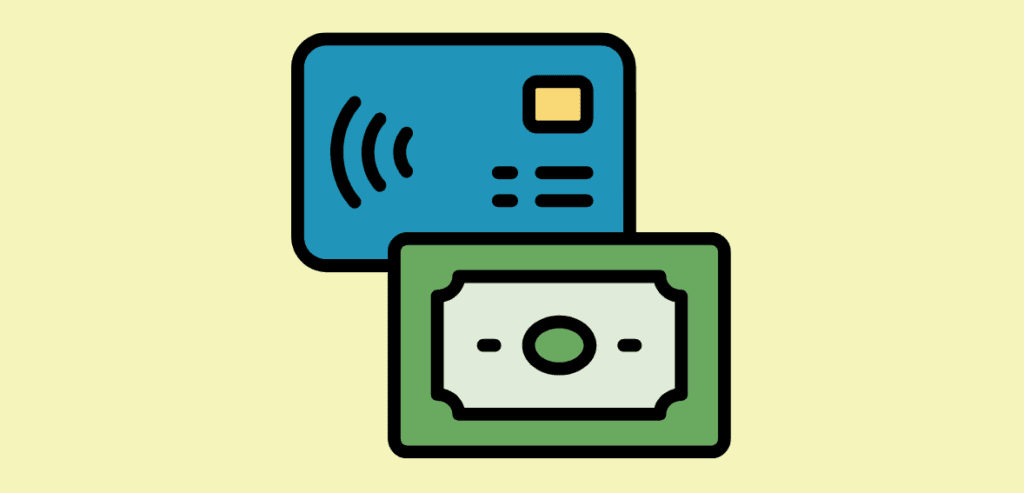
With the rapid growth of digital payments, it is essential to adopt payment processing methods preferred by the majority of customers. Contactless/NFC payments and mobile wallets are growing rapidly and becoming increasingly popular as payment methods. Contactless technology allows devices and cards to communicate over short distances for tap payments, and mobile wallets store payment methods on smartphones and smartwatches for quick transactions.
Earlier, magstripes were very popular. Swiping a card at a food truck was a convenient choice, but now even that is being seen as slow. Even “dipping” your EMV chip card is no longer the fastest option. With the growing popularity of contactless payments, it has become essential for businesses to accept tap-to-pay and digital wallet payments. Without these, the customer experiences higher friction in the payment process, which affects revenue.
And practically speaking, if a customer is eating or has taken their order at a food truck, a more convenient choice would be to tap their phone on the restaurant POS than to dig out their card or touch the screen of a card reader that has already been touched by other customers.
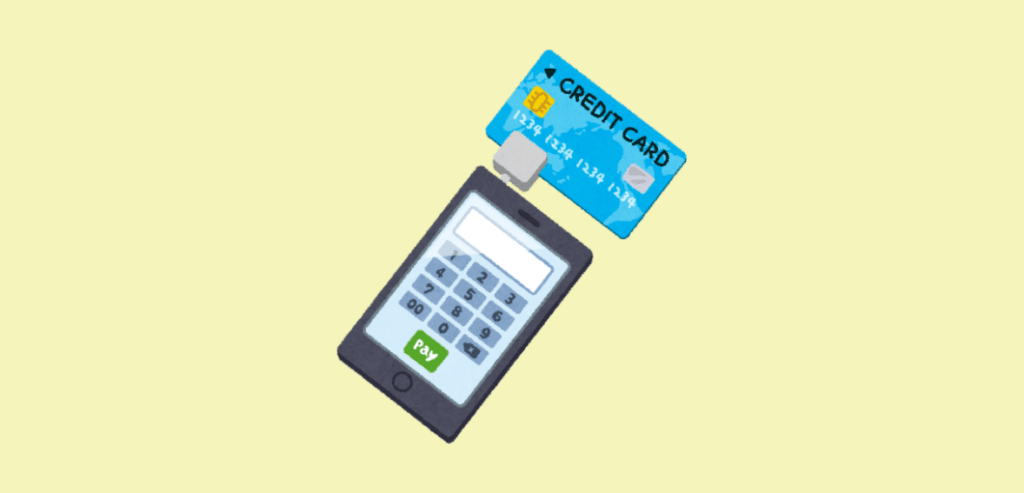
After learning about payment methods and the benefits of choosing the right one for your food truck, it is now time to understand mobile point-of-sale (mPOS) systems and the hardware best suited for your business. mPOS systems act as the central nervous system of the food truck — they go beyond being just card readers.
An mPOS is a lightweight, cloud-based software that runs on portable devices such as tablets. They eliminate the need for bulky, hardwired, fixed, and expensive terminals. Tablets can be moved around the truck easily, allowing for a flexible payment acceptance process.
A really important feature of the mPOS system is real-time menu management. As the customer orders an item from your menu, the corresponding inventory systems are synced and automatically updated. This way, items that are out of stock cannot be ordered, which prevents chaos. It also upholds customer trust, as waiting for a refund is a frustrating process that makes customers hesitant in the future. With inventory synced to the cloud, you can track waste and predict which items need restocking and how much to keep on hand.
A food truck kitchen is not a delicate place. It is a rugged environment that needs durable hardware. Not every POS system is feasible or applicable to food truck kitchens. The primary device used in food trucks is a card reader or card dongle—a physical device that captures card data and connects to the mPOS via Bluetooth or USB.
Any device used at a food truck needs a long battery life. You should aim for hardware that survives a 10-hour shift. The device also needs to be structurally durable. A food truck doesn’t have much space. Unlike a restaurant, the POS is not sitting in an air-conditioned room. A food truck faces environmental hazards such as heat from fryers, grease splatter, and high-impact drops. The device has to survive those conditions day in and day out.
The device should have high screen brightness, as it will be used during peak lunch hours in direct sunlight. Consider skipping physical receipts altogether. Receipt printers take up space and add hassle for the customer. The mPOS system can automatically generate digital receipts and send them to the customer’s phone as soon as the payment goes through.
Consumer tablets like iPads are generally not built for food truck environments. Look for rugged mPOS hardware designed to withstand harsh conditions and deliver long battery life.
After deciding on the hardware, you have to choose your payment processor. A payment processor handles your transactions from the moment a customer taps their card at your truck to the moment money is credited to your account. There are two types of pricing structures in the market: flat-rate pricing and interchange-plus pricing.
Flat-rate pricing models charge a fixed fee per transaction. The advantage of flat-rate pricing is that it provides a predictable processing fee structure: a single fee is charged for all transactions, regardless of the card type used. The account statements of flat-rate pricing models are simple to interpret and help you in predicting the processing fees that you will be charged.
The interchange-plus pricing model is more nuanced. There are two fees charged on every transaction: an interchange fee and a markup fee. The interchange-plus model has more complex account statements that can be difficult to interpret for someone without a financial background.
For small food truck businesses, a flat-rate pricing model is usually a better choice. Food businesses need predictability. A flat-rate pricing model lets you predict next month’s operational costs, helping you plan your inventory and operations effectively.
A cash-only setup silently kills your growth. The modern consumer rarely carries cash. Digital payment methods are becoming more popular, making online payment processing systems an essential requirement for any business. An mPOS system is not an overhead expense — it is a strategic investment. mPOS systems increase average transaction value and tipping volumes, leading to revenue growth and more effective management.
Understanding the advantages of having a robust mPOS system and choosing the right pricing model can help you achieve significant growth in your food truck business.
You do not need to install a separate internet infrastructure, as mPOS systems can easily operate on 4G/5G cellular networks.
Yes, many processors offer apps that pair with a Bluetooth card reader. Newer “Tap-to-Phone” technologies even allow you to accept contactless payments directly on your phone.
The typical settlement time for card payments is 1 to 2 business days. However, some processors offer instant deposits for an additional fee of around 1% to 1.5%.
No, paper receipts are not required by law. Most customers prefer digital receipts sent over SMS or email for on-the-go food purchases.
If you mostly sell low-cost items like $4 coffees, a flat-rate pricing model will eat heavily into your profit margins. In that case, you’re better off with a more flexible, cheaper model like interchange-plus pricing.