Tag Archives: industry news

Payment Option For China

Ingenico Offers New Mobile Payment Option For China [2023 Update]

On Thursday, October 10, 2019, international payment services provider Ingenico announced its plan to open up the mobile payment processing market in China to the world through several unprecedented business partnerships. Ingenico has decided to focus in-country on China’s local e-commerce and mobile payment systems: It has partnered with bank card services provider UnionPay and Alipay and WeChat Pay, which are two of China’s top app platforms that utilize mobile payment systems.

Why Pick China?

China’s internet user population represents a quarter of all internet users worldwide. China also has a huge e-commerce market, the largest in the world, that grows by leaps and bounds every year because of online retail sales. A large part of China’s population uses convenient mobile and online options to fulfill their shopping needs. Mobile tech users alone make up 82 percent of the population and primarily use apps for offline and online payments. Whether shopping in a brick-and-mortar store or online, consumers typically use Alipay for all of their purchases. Additionally, the WeChat app is used for a wide mix of reasons by approximately 1.1 billion users daily. China is also one of the leading countries for creating new and successful offline and online consumer engagement strategies. As a result, mobile shoppers in the country connect quickly to brands through a variety of apps.

How Do Merchants Benefit?

Merchants from outside of China have traditionally found it difficult to operate in-country through China’s e-commerce systems because of the differences in platforms and the dominance of local payment solutions. Ingenico’s announcement means that international merchants will increasingly gain access to China’s mobile consumer population. Merchants will have the ability to accept real-time payments from mobile and desktop devices through UnionPay support and Alipay upgrades. Ingenico also plans to offer a full range of currency conversion options that make it possible for merchants to accept Chinese Yuan as payment. Through the WeChat text and voice messaging service, Ingenico will provide full support so that local WeChat users can make purchases from businesses without leaving the app. WeChat Pay support will extend to both official accounts and advanced sub-applications known as mini-programs. No other payment services provider currently offers this option on a global scale.

At Host Merchant Services, we stay on top of changes in the payment processing industry to provide the newest and best business opportunities to our clients. We will continue to keep an eye on this and other Ingenico developments and publish updates as they become available. For answers to any questions that you might have about this specific announcement or our payment processing services, contact us today.


Starbucks Mobile App

Is Apple Pay Really More Popular Than the Starbucks Mobile App? [2023 Update]

According to an October report published by eMarketer, a respected online publication dedicated to the digital marketing industry, the mobile payments service known as Apple Pay is now more popular than its counterpart developed by the Starbucks Coffee Company. Since about 2014, the Starbucks app, which started off as a digital version of its successful gift and rewards card, had been the most widely used mobile payments platform in the United States, but statistics crunched by eMarketer indicate that this is no longer the case.

Top Mobile Payment Apps

Mobile Payment Apps

More than 27 million purchase transactions and payments were settled with Apple Pay in 2018, a figure that eMarketer expects will increase to 30.3 million by the end of 2019, thus representing a 47.3% share of the “contactless” or Near Field Communications (NFC) payments market. It should be noted that Apple Pay is accepted at Starbucks, whereas the Starbucks mobile app only works at the company’s retail locations equipped with NFC point-of-sale terminals.

The holiday shopping season happens to be very busy for Starbucks, particularly with its pumpkin spice flavors and often controversial choice of coffee cup designs, but this will not allow the company to retake its place atop the mobile payments totem pole. The number of active Google Pay users, who are those making at least one NFC payment within a six-month period, will climb to 12.1 million, less than half of Starbucks mobile app users, who can easily be assumed to be even more active because such is the nature of delicious caffeinated beverages and tasty gourmet treats. Samsung Pay comes in at third place with 10.8%, just a sliver of the market share it holds in places such as South Korea.

Both Companies Benefit

For payment processing analysts, comparing Apple Pay to the Starbucks app is an apples to oranges situation. While it is true that Apple now commands nearly 50% of the American NFC payments market, Starbucks is the true leader because this is a mobile app that can be installed in iOS and Android devices; in fact, it worked on Windows Mobile devices until about 2017. As for Apple Pay, the popularity of the iPhone is what is really boosting this digital wallet, and it could be argued that the Apple Card, which is a very recent product still being rolled out, will likely enhance Apple Pay.

It could be argued that the new Apple Card could very well be the factor that can realistically propel Apple Pay past Starbucks. There is one thing that coffee lovers enjoy as much as coffee itself, and that is being rewarded for their good taste; this is where the Starbucks mobile app excels, and it is what the Apple Card is going for. The current cash-back rewards program offered to Apple Card holders is pretty standard; should Apple spice it up with greater rewards for using the card in conjunction with Apple Pay, it would entice greater use of this iOS digital wallet. In the end, providers of payment processing services stand to benefit from this competition.

E commerce Credit Card 1

PayPal to Roll out Branded Venmo Credit Card

PayPal has announced plans to introduce Venmo Credit Cards in the year 2020. This is going to be a strategic move aimed at improving peer-to-peer payment services with additional options that give users more benefits.

PayPal has partnered with Synchrony to achieve this goal. PayPal, a foremost player in the peer-to-peer payment industry, will become the first service in that sector to offer its users an opportunity to own a credit card affiliated with its brand.

The market projections look encouraging, with a PayPal alternative, more users, mostly younger people, can access the Venmo Branded credit cards and enjoy the benefits of using a Venmo service at businesses that use a traditional credit card processing service.

PayPal aqcuired Venmo back in 2013, after buying Braintree, the parent company of Venmo. PayPal will be taking a step further by expanding the Venmo payment processing platform to include credit card processing and payments.

The Task Ahead for Synchrony

Venmo Credit Card Processing Backed By PayPaySynchrony will leverage its digital technology assets to forge a path to success for this new deal. Synchrony is entering the credit card processing industry that already has established brands such as MasterCard, Visa, American Express, Chase, among many others.

The agreement between PayPal and Synchrony is structured as a profit sharing deal, which may begin with minimal gains, and eventually more profits as people subscribe, to gain access to the Venmo credit card.

The new credit card offer will give consumers more purchasing power and access to credit. Since it is the first of its kind, using the PayPal alternative will give consumers an opportunity to have a new experience, much different from Peer-to-Peer payments.

Possible Benefits for Users

Owning a credit card gives the user a flexible spending limit that is convenient. Considering the reputation of all the brands involved, it is expected that the new Venmo credit cards will have standard and possibly better security features.

Strategic partnerships between Venmo and brands such as Uber, Chipotle, among others, will go a long way to attract more customers who want to enjoy discounts and participate in promotions offered by brand partners.

PayPal has earned the trust of many users. In such a significant strategic business move, the brand’s reputation is important. From our perspective, the Venmo credit card is positioned for success because of the vast customer base and stakeholders in this deal. 

Before its acquisition, Venmo already had a large subscriber base, with over 40 million active users.

Using the Venmo Credit Card

Credit Card Processing E-commerce SolutionsPeople who already have active Venmo accounts will be granted access to manage their new credit card with the Venmo mobile app. All the main features of the credit card will be accessible through the Venmo mobile app. However, PayPal is yet to disclose the exact features of the credit card.
We expect a full disclosure a few months before the launch of the Venmo credit card next year.

wallet 908569 1920 1

MasterCard’s Dispute Resolution Initiative

Mastercard is rolling out its new Dispute Resolution Initiative for payment processors and merchants that will bring many changes to how Mastercard chargebacks and transactions are handled.

The initiative, which has a goal of improving chargeback outcomes and efficiency, will likely mean a more consistent process for merchants. The Dispute Resolution Initiative is being rolled out in four phases and began in October 2018 with a final phase rollout scheduled for April 2020. The latest changes went into effect in October 2019.

What Merchants Should Understand

The Mastercard Dispute Resolution Initiative (MDRI) brings modern solutions to payment processing and chargeback resolutions. MDRI puts more responsibility on issuing banks which must collect information from cardholders like a receipt before initiating a dispute which rules that aim to prevent double refunds completely and reduce invalid disputes that are expensive for merchants.

Merchants won’t use Mastercard’s new dispute system, MasterCom, directly. Instead, the payment processor uses it on the merchant’s behalf. Acquirers and issuers will use MasterCom to initiate and respond to every Mastercard chargeback. As a merchant, your processor can submit supporting documentation through the system if you want to fight a chargeback.

The new dispute system is similar to Visa Claims Resolution (VCR) which Visa rolled out in 2018. VCR, a method of simplifying the chargeback process, automated 80% of dispute volume and reduced the average chargeback resolution time from 54 to 23 days.

New Payment Processing and Chargeback Rules

The Dispute Resolution Initiative adds new processes, technology, and rules to automatically validate dispute requests, open new communication channels between merchants and cardholders, and create a central dispute management platform for acquirers and card issuers.

During the first phase of the rollout, Mastercard instituted a new rule that requires issuers to request more information from cardholders to file a Mastercard chargeback for these reasons:

  • Cardholder Does Not Recognize (4863)
  • Cardholder Dispute, Recurring Billing and Digital Goods (4853)
  • Point of Interaction Error (4834)
  • Incorrect Transaction Amount (4831)

Payment Processing Chargeback Resolution CenterFor these reason codes, issuers must get supporting documentation. For disputes over digital goods or recurring transactions, there must be a cardholder email, letter, or expedited transaction dispute form.


By obtaining more information at the beginning of the chargeback process, the goal is to reduce the number of invalid chargebacks.

Mastercard also added a new pre-compliance requirement. Before an issue can be escalated to a compliance case, a pre-compliance case needs to be filed.

During the second phase, Mastercard instituted a new rule that refunds cannot be initiated after a chargeback is reversed or filed. An acquirer cannot use a pre-compliance case to reverse a second refund if credit is issued for a disputed transaction. Acquirers can still recover the money with a new presentment if the time limit allows, through a pre-arbitration case filing if credit is issued after a second presentment, or through collections.

Issuers are now instructed to check for a reversal or refund before a chargeback and accept a second presentment if the transaction is submitted as “Credit Processed.” Always verify if the customer’s bank is involved before filing a refund to avoid a double refund.

Issuers can no longer use the following reason code for a Mastercard chargeback:
Fraudulent Processing of Transactions (4840)

The timeframe to file a chargeback for a Point of Interaction Error (4834) has also been reduced to 90 days from 120 days.

Changes Still Planned

Phase four of MDRI in 2020 will streamline the chargeback process by removing the arbitration or second chargeback cycle. Instead, card issuers can continue disputes with pre-arbitration before escalating to arbitration in case of fraud. This will be similar to the Visa Claims Resolution process.

During the final phase, Mastercard will eliminate the following reason code for a chargeback:

  • Cardholder Does Not Recognize (4863)
times square 2835995 1280 1

US Congress Takes on Resort Fees

Resort fees: you think you’ve got a great deal on a hotel, only to find an extra charge slapped on once you get to checkout. For the most part, there’s nothing we can do about it, however Congress has just introduced an interesting new piece of legislation that could see the days of frustrating surprise resort surcharges coming to an end.

What Are Resort Fees?

You decide to book a one night stay at a hotel, and you go to their website or your favorite hotel booking site and see that it’s advertised at $100 per night. You select your room and continue on to the checkout. One you get to the checkout, however, you notice that the price has now increased by an extra $50. When you check the fine print, you discover that it’s the resort surcharge added to your rate.

Hotel Surcharge Rates and Fees IncreaseIf this is new to you and you don’t know what a resort surcharge is, you may be somewhat surprised. Essentially, it’s just an extra cost, typically mandatory, that covers a bundle of services that you, as a hotel guest, might come to expect during your stay. Services such as “free” Wi-Fi, pool access, morning newspapers, and more are what tend to be part of the resort fee bundle. Even if you don’t want to use any of these services, you can’t decline the surcharge.
In the year leading to July 2018, these surcharges have seen an increase of as much as 11%, with a 14% increase in the number of hotels adopting the practice. For the vast majority of these hotels, the resort surcharges are not at all optional. In some areas like Las Vegas, virtually every hotel has a resort surcharge.

What’s the Issue with Resort Surcharges?

A Consumer Reports survey that questioned over 2,000 adults taken in 2018 showed that more than one-third had experienced a hidden hotel charge within the previous two years. Many consumers are upset with the lack of transparency and what many consider to be sneaky behavior to lure customers in by making hotel rates appear cheaper than they really are.

Other studies show that people are now beginning to avoid areas notorious for their resort surcharges. Resort surcharges have become shockingly common in tourist-heavy areas with places such as Las Vegas, Walt Disney World, and Times Square, New York ranking among the worst offenders. Places like these are obviously some of the most sought after tourist attractions in the world, and many feel that they use that status to prey on unsuspecting tourists.

What’s the new Legislation?

The Hotel Advertising Transparency Act was introduced to Congress in 2019 by Republican Congressman Jeff Fortenberry of Nebraska and Democratic Congresswoman Eddie Bernice Johnson of Texas with the goal of abolishing add-on resort surcharges, and requiring that hotels are upfront and transparent about showing the full, pre=tax price of a hotel room in their advertised costs. This would include short-term rentals immediately at the time of booking without the resort fees being added at the end.

Several major hotel chains, including Hilton and Marriott, have seen lawsuits brought against them following investigations into their hotel surcharges and pricing practices. In Hilton’s case, it was indeed found that their advertisements of resort surcharges, both online and over the phone, were misleading, deceptive, and even in violation of the consumer protection statute held by the state.

Global Payments TSYS Merger 1

Global Payments, TSYS Complete Merger

In a $21.5 billion all-stock deal, Global Payments Inc., a global provider of payment processing technology and software solutions, merged with TSYS (Total System Services) to form a pure-play payments company using the name Global Payments, the largest merger of payment technology companies to date. Working with 1,300 financial institutions and 3.5 million merchant locations in more than 100 countries, facilitating credit card processing for more than 600 million cardholders, the merger positions the company to be a leader in owned software, integrated payments, and omnichannel solutions.

TSYS can leverage Global Payments 32-country global reach to access the global markets during a time when e-commerce transnational transactions are on the rise. By focusing on merchant services and payments-related business, the merged company hopes to differentiate itself from the other fintech mergers, according to TSYS CEO Troy Woods. For example, the TSYS Netspend business offers reloadable payment products while the merged company will also engage in consumer solutions and merchant acquiring. 

Global Payments TSYS Merger 1A pure-play payments technology firm, Global Payments’ headquarters is located in Atlanta, Georgia with more than 24,000 employees around the globe, serving countries in North America, Europe, Asia Pacific, and Latin America. Offering global solutions and advanced software, Global Payments offers a technology-enabled strategy to merchant services. 

Following the $35 billion FIS acquisition of Worldpay and Fiserv’s $22 billion acquisition of First Data, Global Payments’ acquisition of TSYS is another big fintech merger for 2019. TSYS shareholders will receive 0.8101 of Global Payments shares for each of their own. Global Payments investors will own 52 percent of the new company, leaving the remaining 48% percent to TSYS shareholders. Traded on the New York Stock Exchange (NYSE: GPN), Global Payments is a member of the S&P 500. Global Payments gained 1.0% in premarket trading. 

TSYS holds a presence with smaller retail merchants, and Global Payments has a strong hold with restaurants with each providing point of sale (POS) solutions tailored to those industries. Combining TSYS’s strength as a U.S. payment provider with Global Payments’ strength as an international payment provider makes for a stronger whole. 

Jeff Sloan will serve as CEO of the merged Global Payments company, Cameron Bready as president and chief operating officer, Paul Todd as senior executive vice president and chief financial officer, and David Green will serve as the senior executive vice president, general counsel, and corporate secretary. Josh Whipple will serve as chief strategy and risk officer while Gaylon Jowers oversees issuer solutions, and Kelly Knutson oversees NetSpend. 

“We share a common value of putting people first and will leverage the best of our cultures to preserve and enhance our commitment to all of our stakeholders,” said Jeff Sloan in the press release announcing the merger.

paypal and visa partnership

What the PayPal and Visa Partnership Means for the Future of Payments

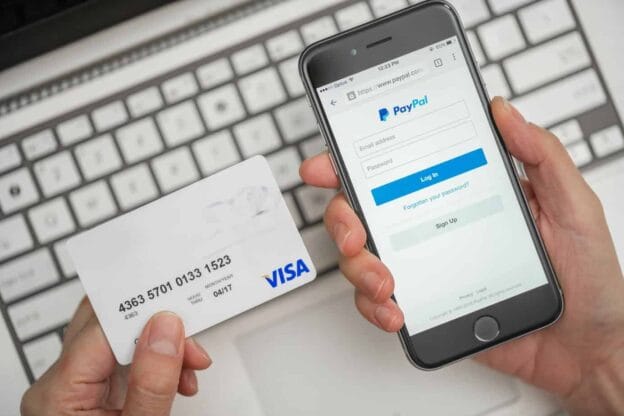
Discovering Visa and PayPal were partnering up has shaken up the credit card processing industry. It is believed that everything from merchant services to eBay will be affected. Some immediately lauded how the partnership will enhance in-store NFC payments. The most cynical critics believe Visa, with PayPal under its watchful eye, will be better suited to tackle competition like Checkout.

The major reason this partnership has stunned the industry is because company heads at Visa and PayPal previously expressed opinions that could be interpreted as being diametrically opposed to ever working together.

Visa CEO Charlie Scharf has stated that payment players – merchant services, credit card processors, etc. – were either against Visa or with Visa. He believed “co-opetition” did not reflect how the traditional payment ecosystem and standard network model had operated for over five decades. The success of PayPal’s ACH and the many accounts it held contradicted this and, for Visa, made PayPal a serious concern.

Meanwhile, Dan Schulman, CEO at PayPal, has made it quite clear he saw PayPal as a new and unique entity after its break from eBay. Schulman has made it clear that he was running a very different enterprise. He stated the company was primed to look at consumer options and, yes, partnerships. As the driving force behind ACH, PayPal was pretty much indifferent to tender types.

Among the most interesting notions to come out of the partnership is that it will energize in-store NFC payments. Others took issue with PayPal’s business model being totally overshadowed by its new partner’s traditional credit card processing. Some analysts wondered if Visa would force PayPal to disband its business model and take on a more traditional credit card processing operation. Whatever is to come, the market took notice of the potential disadvantages. The day after the announcement, PayPal saw its stock ending down 6.75%.

Visa is the biggest credit card network in the world. PayPal is the world’s largest digital payment network with an estimated 188 million active users. PayPal’s merchant services are beloved by vendors and businesses globally. PayPal also has dormant accounts that this partnership could reinvigorate with accountholder incentives.

Still, while one can make it look good on paper, all the credit card processing in the world cannot guarantee this will work.

PCI Guidelines for Mobile Apps

Today the Official Merchant Services Blog will examine the PCI Security Standards Council’s most recent guidelines, and their slow crawl towards comprehensive security requirements for mobile devices.

On Thursday, the PCI Security Standards Council released a set of best practices geared toward software developers of mobile devices.  These guidelines come four months after they released some guidance about mobile payments for small businesses.

The PCI Council, based in Wakefield Massachusetts administers the Payment Card Industry data-security standard and affiliated standards for secure payments software and also PIN-based transaction devices. The guidelines were released during the Council’s annual North American meeting in Orlando, Florida on Thursday, after hinting at a possible PCI clarification in early September.  Present at the gathering were security assessors, merchants, processors and vendors, all preparing for the update of the main PCI standard next year.

The Council announced that it is starting to approve hardware for mobile payments such as card readers that plug into smart phones or tablet computers.  The Council has not delved into the approval of software for mobile payments and have they made it clear when that will happen. They have however, announced that more guidance for merchants will come next year and that they will continue to take input from the payments industry on the serious task of protecting card holder data when payments originate from mobile devices.

Correcting software vulnerabilities is the most important aim of the Council’s new guidelines, as app developers crank out new programs for processing payments on smart phones and tablets everyday.  The guidance covers everything from the payment transaction, access protection, and remote disablement of a missing device.

The last point is arguably the most important aspect of a new mobile PCI security system.  Since mobile payments are true to their name, mobile, the chance of someone running away with your credit card terminal is an increasingly possible risk.  The same applies for any tablets acting as POS systems in a store. An unlucky shopkeeper may open up in the morning only to find part of his or her POS system missing, and all cardholder data inside compromised. This is what the PCI Security Standards Council seeks to avoid.