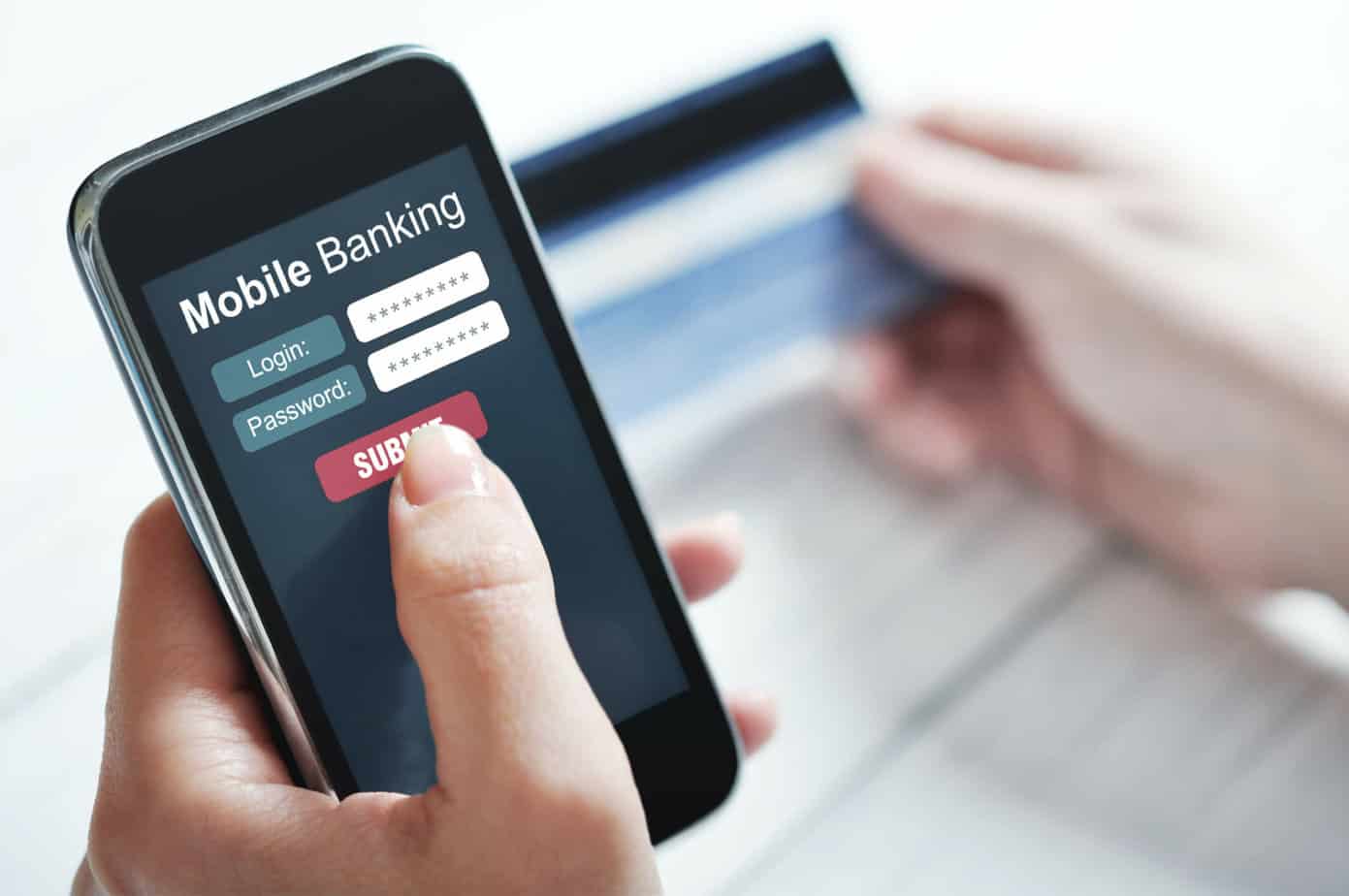
Payment Gateways: How They Help Your Business

The Official Merchant Services Blog delves into Payment Gateways today. We’re going to examine the pros that exist for businesses in using Payment Gateways to establish an online business presence and accept online payments. We also detail some of the basic questions you want to ask yourself about e-commerce, why you want an e-commerce presence for your business, and how much the two Host Merchant Services Payment Gateway options cost.

Why Do I Want To Start Collecting Online Payments In the First Place?

The easiest answer is that it opens up a new market for you and improves your cash-flow.

Online payments give you the ability to accept credit cards through a Payment Gateway itself, or through a third-party add-on, without a lot of trouble or delay. Your clients can pay you quickly with a credit card transaction and the money is in your bank fast.

This increases your cash-flow. You no longer need to wait for a physical check to show up in the mail, then spend time depositing that check in the bank, and then waiting days for the check to clear before you can access the money.

Accepting online payments also opens your business up to a wider potential customer base. Beyond just the local draw your brick and mortar business can attract, the ability to set up an effective e-commerce business lets you reach out to customers far away. Online shopping, especially as we close in on the holiday shopping season, is booming. And virtual shopping options for your website (e-commerce solutions) all hinge on having a way to process payments through your website. In short, to cash in on the online shopping potential your business has, you need a payment gateway in place to process those transactions.

Also, accepting online payments allows you the ability to charge your client’s credit card on a recurring basis (for monthly, quarterly or annual services). This process can be automated, making recurring revenue streams a reliable and predictable source of income.

What are the Costs of Using Payment Gateways?

Most Payment Gateways charge a base monthly fee as well as a “discount rate” for each sale (usually 2-4% of the sale). Monthly fees are generally charged for premium options that can include added support, personal branding for your business and other miscellaneous functions.

Host Merchant Services offers two basic Payment Gateway options: Authorize.net, and HMSExpress. Authorize.net, which is one of the three largest Payment Gateways offered, costs HMS Merchants a base fee of $10.00 a month and 5 cents per transaction. HMSExpress, the new virtual terminal solution that HMS offers, costs its merchants $10 a month and has no added fees for individual transactions.

When analyzing your options, you want to balance the costs of the services against the additional value these services bring to you and your business. One basic way to evaluate the cost of even having a payment gateway is: What is it worth to you to get paid faster for online transactions than you do for check transactions? What is it worth to your business to be able to process more transactions during the holiday season because you can attract business from all over the country?

Questions like that are what you have to consider when you decide if you want your business to transition to an online one. In our next part of the series, we’re going to get into the details of how Payment Gateways work and see what other questions you have to consider when trying to decide which Payment Gateway to use.


Are Smartphones the Credit Cards of the Future?

Credit card processing will continue to evolve over the next generation, according to a prominent consultant with deep roots in the industry. And, inevitably, merchants who accept plastic will need to keep pace with the changes, working with their merchant services providers to stay on top of new technology.

Jerome Svigals — known as the “father of the credit card” for his work engineering the magnetic stripe technology on which it is based — predicts that within a decade high-end mobile phones (smartphones) will supersede plastic as the primary payments vehicle.

“Banks have got to start thinking ahead for this transition period,” the former IBM project manager told American Banker magazine recently. “If they don’t, they are going to be left with a set-up that will not be useful in this new environment.”

In his report “Retail Bank 2020: A Roadmap for the Future”, Svigals maintains that the U.S. retail banking industry will evolve to have three supporting pillars: smartphones, the Internet and intelligent banking applications. The Internet, he says, will become the primary banking channel, with smartphones elevated to the channel of choice for transferring funds, opening accounts and applying for loans.

Approximately 35% of today’s bank transactions take place at teller stations; Svigals’ predicts that number will shrink to 15% by 2020 and 5% by 2029. The shift to the Internet will result in 55% of transactions, 50% of service requests and 45% of sales being initiated online by the end of the decade; in 20 years, 80% of all transactions will be Web based.

The technology exists to make smartphones the rulers of the banking universe. Earlier this summer, PayPal demonstrated its new phone-to-phone payment mechanism that uses NFC (near field communications) radio technology that will be built into future handsets. The video showed two users exchanging funds by merely touching their phones together.

Meanwhile, AT&T, Verizon Wireless, and T-Mobile are partnering to develop a mobile payment system that works with smartphones. Businessweek says such a system would “turbocharge mobile payments in the U.S.”

With cash and checks steadily falling in popularity with U.S. consumers, non-cash alternatives like credit/debit cards and electronic payments already account for more than half of all their purchases, according to the industry newsletter The Nilson Report. Additionally, more than half of U.S. consumers — and close to 80% of those in the 18-to-34 age bracket coveted by retailers — will rely on mobile financial services within five years, according to Boston consulting firm Mercatus. These statistics appear to support the idea that smartphones will replace credit cards for a majority of consumers in the near future.

Of course, in the near term the transition from credit cards to smartphones for financial transactions may resemble a see-saw: Consumers holding off on adopting mobile payments until enough merchants accept them, and merchants delaying implementation until enough consumers demand it. But the trend seems clear. Smartphone owners, start your engines!

A Different Kind of +1

The Official Merchant Services Blog takes a moment to look at a transition in marketing strategies that is extremely relevant to small business : Postage. The United States Postal Service announced this week that it is going to raise its postal rates. Most notable is the cost of the first class stamp is going up one cent from $0.44 to $0.45.

Some other drastic changes are being investigated as well, as cited in that article from Reuters: “The Postal Service has asked Congress for permission to drastically overhaul its business, including cutting Saturday mail delivery and eliminating a massive annual payment to prefund retiree health benefits. The agency also is studying thousands of post offices and processing facilities for possible closure.”

Digital Over Direct Mail

This change is indicative of a shift in how the country does business. And it’s not really all that surprising. The USPS has to react to more than just competition from Federal Express and UPS. Businesses are thriving on the internet. And that makes using more traditional means of marketing –– i.e. print-based marketing –– too little bang for a business owner’s buck.

44centsWhich brings us to this interesting article from Multichannel Merchant that suggests that suggests that the postal rate increase is going to cut into the amount of printed materials that businesses mail –– specifically catalogs. Printed direct mail marketing materials, in my experience, have always had a really low impact with customers. Catalogs were usually stronger than other direct mail marketing pieces, for sure. But overall junk mail is called junk mail for the very reason that people ignore it. You send out thousands of direct mail items and are hoping to get dozens of responses, if you’re lucky. So things were already looking bleak for the future of direct mail marketing strategies.

The 2012 postal rate increase only furthers things a long right at the time when internet based marketing strategies are becoming very user friendly for just about everyone.

Social Media Plus One

Social Media can have a much stronger impact with your customers when utilized properly. And there are a lot of easy-to-find resources to help small business owners take advantage of Social Media. Getting tips on how to best use Facebook Ads and Google Ads and Twitter feeds to reach customers organically and generate strong responses to your business and its activities. Host Merchant Services provides some of those resources itself. This very blog is designed with the intent of reaching out to our merchants to help keep them on top of trends and news that help their business thrive. The company also provides an article archive on topics related to the industry so merchants can understand processing better. The company actively keeps its Facebook presence updated. It’s all part of the goal of reaching out to our merchants to help their business run better. The company also provides e-commerce solutions and social media and marketing advice and analysis for its customers. Beyond just the marketing aspects, Host Merchant Services is here to provide its merchants the assistance they need for their e-commerce opportunities.

So take this 2012 postal rate increase as a sign of how marketing for your small business now exists in a very different environment, and you have an opportunity to reach out to customers with the money you don’t give the USPS. You can reconsider reaching out via direct mail and focus on reaching out to your customers through facebook, twitter, your own site and blog, or any combination thereof. At the very least you’ll avoid those higher postal rates, and should be able to drum up just as many points of contact as your mailers were generating.

Print Still Has Its Place

Keep in mind, this isn’t a suggestion to go completely digital. You don’t have to abandon print-based marketing strategies. But you can certainly give serious consideration to adjusting how much you budget for them. If the price increase isn’t worth your money, you can scale back and focus your efforts and resources on something web-based. Use the postal rate increase as a catalyst for boosting your businesses’ e-commerce. Sticking to the most basic plan:

  • You can have your business online, with a website.
  • You can offer your products online, with a catalog.
  • You can process transactions online, through your website and its catalog.
  • You can use a merchant services provider like Host Merchant Services, to handle those transactions.
  • You can then connect to customers and potential customers through social media services like Facebook or Google Ads or Twitter.

From the Multichannel Merchant Article: “Deb Dyer, vice president of marketing for bedding merchant Cuddledown, says the rate increase “won’t keep us from sending catalogs to our house file or prospects, but it will make us look at other digital prospect opportunities and programs.” “

Information Flows Digitally Now

And that’s really what the postal rate increase is most likely going to do for a lot of other merchants. Give them the perfect opportunity to explore the powerful tools they have at their disposal with social media and e-commerce solutions. To put it in perspective, as I was reading the article I link here from Multichannel Merchant, my eyes were drawn to the Facebook “Share” button, Google “Plus One” button and Twitter “Tweet” button that were all conveniently placed on the left-hand side of the article. It’s all right there. One click and you can get yourself involved in a whole new marketing plan for your business.

In short, a lot of people have stopped getting their news from print media. They ignore direct mail sending it to the trash as junk mail. But they’re still consumers and you can reach them with well executed social media marketing strategies. The United States Postal Service is just reminding you that you have this option, albeit indirectly.

Florida Adds New Twist in Durbin Drama [2023 Update]

The Official Merchant Services Blog has learned of the latest twist in the ongoing saga about the Durbin Amendment. The legislation, which was tacked onto the Dodd-Frank Wall Street Reform and Consumer Protection Act, caps the fees banks can charge for the use of debit cards. It went into effect on October 1, 2011. Host Merchant Services provided an extensive analysis of the legislation months ago, and The Official Merchant Services Blog ran a series leading up to October 1st titled Countdown to Durbin.

Since then the frenzy over the legislation has sky rocketed. The Occupy Wall Street movement embraced Bank of America as a target for its protests. Congressmen have suggested a Department of Justice investigation into big banks for antitrust violations. And lawmakers have even suggested repealing the amendment and going back to square one.

But Florida state Lawmakers have, by far, come up with the boldest response — a bill that would prohibit banks, including Bank of America, from charging customers fees to use debit cards.

A Miami Herald article had this to say: “A House Democrat disgusted by big banks and their new monthly fees for using debit cards proposed on Monday to make those charges illegal for Florida customers.

It may be a dream for angry consumers, but it begs a few questions. The biggest being, can it even happen?

Lake Worth Rep. Jeff Clemens says yes. His bill would prevent banks from imposing a dormancy fee or service fee on customers using debit cards.”

This is a fascinating suggestion on how to deal with the issue. Banks have been putting forth the idea that these fees are their way of dealing with the huge losses the debit fee cap would bring them. Going from 44 cents a transaction to 24 cents a transaction was going to bring about an overall dearth of billions of dollars for the industry. And banks were very up front about how they would deal with this restriction: They would shift it from the merchants who were having to pay these fees for each swipe, to the consumers — their customers — with new fees for debit card use.

The backlash for these consumer targeted fees has been extremely negative, with Bank of America getting much of the spotlight due to their $5 per month fee that they say will take effect in January 2012.

Key Points about the Durbin Amendment

So one Florida lawmaker has decided to head that off at the pass, and restrict banks’ ability to do that at all, at least in the state of Florida. Whether this happens or not, this move does at least demonstrate a few key things about the Durbin Amendment:

  • It’s very design left a loophole for banks to shift the fees. Which means its ability to reform what it wanted to reform was hampered at the very stage of its inception.
  • Florida Lawmakers might only be closing one of the holes in the law if they implement this, and not even very effectively, but they at least set an example as to how lawmakers should have approached the idea of reform in the first place.
  • Instead of repealing the amendment, or investigating banks with the Department of Justice, the Florida Lawmakers knee-jerk reactionary bill at least tries to work with the bill.

The ability of the law to actually work is somewhat in doubt. Clemens cited in the article: “the 2009 U.S. Supreme Court case Cuomo vs. Clearing House Association, in which the court decided federal law did not preempt states from enforcing their own laws in cases against national banks.”

But Anthony DiMarco, a spokesperson for the Florida Bankers Association responded in the article with: “the state cannot impose the law because of the country’s longstanding dual banking system. State banks comply with state law and a few national regulations, he said, and national banks answer mostly to federal regulators like the FDIC. Big banks are allowed to charge fees under federal law.”

In the end, though, all this bill would end up doing is force banks, in Florida at least, to simply shift to another tactic. As the article states: Trish Wexler, Electronic Payments Coalition spokeswoman [said that if] Clemens’ idea is law, “consumers are either going to lose their debit cards or they’re going to pay another way.

So essentially this story makes for an engaging mental exercise in the legislative process and a very fascinating turn in the Durbin Amendment’s aftermath. The bill still has to pass for the legality of it to become an issue. Then the legality of it has to be addressed. Then the banks’ response has to happen. But it’s nice to see a fresh take on how to deal with financial reform get offered up. Maybe it’ll get the federal government off the track of a Justice Department investigation and on the track of reforming their own reforms?

E-Commerce Social Media For Businesses

Using Twitter for Business

Since Twitter was founded by Jack Dorsey, Biz Stone, and Evan Williams in March 2006, both consumers and businesses have been growing and learning together on how best to use this new mass communication tool. Of course Twitter is the micro blogging service that limits ‘tweets’ to a 140 character limit. The real question is: Can Twitter effectively be used to grow your business? The answer is an unqualified “Yes!”.

Consider research conducted in September 2011 by Maritz Research and evolve24 which surveyed a panel of 1,298 U.S. consumers who reported being active Twitter users. The survey participants had also previously used Twitter to complain about a specific product, service, brand, or company.

The Maritz Research findings revealed that even though fully half of the Twitter complainers expected a response from the company directly – less than one third of the complaints received a company reply. To the great benefit of those companies who did respond to Twitter complaints, fully 83% said they liked or loved hearing from the company. Imagine your feelings as a disgruntled consumer if you received no reply at all as was the case with over 70% of the complainers. You can see the details of the complete study here.

Suffice it to say that if you are a business owner you will absolutely benefit from the following actions:

1. If you do not already have a Twitter account – set one up at: https://twitter.com/signup.

2. Promote your Twitter name to your current customers in every way possible.

3. Tweet out anything that your company does of significance. Don’t worry if you only have a small number of followers to start with.

4. Monitor (search for) your company name on Twitter frequently and most importantly reply to every single customer (or prospect) communication.

Need more evidence that Twitter can help grow your business and your brand? Here is a true story of how Twitter grew the reputation of WordPress hosting company 34SP.com in Manchester, United Kingdom. In early August 2011 a wave of violence swept across the UK precipitated by a series of sharp government spending cuts designed to cut tens of thousands of public sector jobs through 2015. In the aftermath of the destruction which saw shop windows broken and cars smashed and burned, one British citizen created a website to organize a public cleanup effort. The website which is located at riotcleanup.co.uk is hosted by 34SP.com. After an amazing flurry of positive publicity for the website, the Twitter hashtag #ukcleanup went viral inundating the website’s servers and slowing the site to a crawl.

After a multitude of tweets complaining about the website accessibility, 34SP.com donated a dedicated server and ramped up the capability of the website to withstand the nearly 2 million visitors per hour that the website experienced during peak traffic volumes. The Twitter complaint behavior turned nearly 100% positive as word went around that 34SP.com had risen to the challenge and created a massive positive experience for UK riot cleanup visitors and a boost for the 34SP.com brand.

So make a point of engaging your customers and prospects with Twitter and reap the benefits. Of course you can also follow all the latest information on Twitter from Host Merchant Services.

mobile payments

Magic 8-Ball on Mobile Payments [2023 Update]

Magic 8-Ball on Mobile Payments: Outlook Hazy, Ask Again Later

Mobile Payments are getting a lot of press right now and are being heralded as the future of commerce. There are quite a few media sources playing the role of prognosticator, tagging Mobile Payments as a billion-dollar boom waiting to explode. But as we creep right up on the 2011 holiday shopping season, the actual impact of Mobile Payments is still short of its predicted potential. So today The Official Merchant Services Blog is going to take a brief look at Mobile Payments, shaking the topic up vigorously and seeing what the Magic 8-Ball (a potential holiday gift in itself) has to say about the whole thing.

Sunshine and Positivity

One of the most commonly quoted statistics about Mobile Payments can already be found in Host Merchant Services Article Archive in a story about Mobile Payments and how bright the future is: A Juniper Research study that predicts the value of all mobile money transactions will grow from $240 billion to $670 billion. That’s a hefty number and makes for sexy copy. Other stats cited often from the Juniper Research study are that digital goods will make up nearly 40% of the market that the $670 billion figure is drawn from. And that Asia, Western Europe and North America will make up nearly 75% of the entire market for those goods.

So that’s the good news. What’s the bad news?

Two Big Problems

The bad news is mobile payments haven’t taken off as quickly in the U.S. as the media reports suggest. The Juniper study sets things in four years in the future. So the boom is still very much capable of happening. But two things are holding Mobile Payments back in this country:

  1. The technology isn’t developed fully yet.
  2. Security issues scare consumers.

The technology is sort of all over the place right now. You have a variety of different ways to process a mobile payment. And the biggest competitors in the industry (Google, PayPal, Amazon.com, MasterCard, Amex, Visa) are all still racing to outdevelop each other. Google Wallet is still not fully there yet. Near Field Communication (NFC)  is still only being tested on a small scale in the United States. The phenomenon simply hasn’t taken root.

Security Concerns

Mobile Payment Security Concerns

The other major problem holding a Mobile Payment boom back in the U.S. is security. People are already worried about credit card hacks, phishing scams and the security of their transactions with plastic or with online transactions. PCI Compliance is a hot button issue, especially in light of Sony’s security breach earlier this year as well as the recent DigiNotar Hack. So technology like NFC where people just wave their cell phone at a scanner make people nervous about how secure the transaction really is. And of course it was already shown this year at a security conference that the Square device from Square Up could be hacked and used to steal credit card information.

All is Not Doom and Gloom

While there isn’t much anyone can do but wait when it comes to the technology being developed, Host Merchant Services provides a nice set of tips for addressing the security concerns.

And the Mobey Forum provides a whitepaper extensively reviewing the ability for NFC mobile payments to take hold, and detailing ways to make that happen.

Blogger Keith Cowing also wrote this interesting read on mobile payments, addressing the issue of security and the worries consumers have over eReceipts. In his blog he asks: “The world of retail is changing faster than it ever has before. Nobody had heard of flash sales, group buying, or NFC three years ago. One of the most exciting changes will be the adoption of mobile payments and eReceipts, which will combine to provide a paperless way to checkout and manage your expenses. But when mobile payments and eReceipts become widespread, who will own your purchase data and how will they use it?”

A very compelling question. He goes on to touch on many of the same talking points The Official Merchant Services Blog brings up about mobile payments. I’ll leave you with Mr. Cowing’s final point: “When a customer visits your website, walks into your store, makes a purchase, gets an eReceipt, or talks about your brand on Facebook, these are all touch points in an ongoing customer experience. Your brand is represented by every step along the way and doing the right thing for your customer is doing the right thing for your business. When it comes to mobile payments and eReceipts, providing a convenient and simple solution is part of the customer experience. “

That’s exactly what it’s going to take for Mobile Payments to reach those lofty Juniper Research predictions. The customer has to experience mobile payment as a convenient and simple solution to their transactions. That’s when the mass of consumers will just seamlessly shift their gears (and their dollars) into mobile payments.

Nonprofit Reduced Merchant Rates

Interchange Change For Charities

A really short entry in The Official Merchant Services Blog today. More of a news flash for merchants:

Effective October 15, 2011, Visa introduces the Consumer Credit Card Charity Interchange Rate Program for charitable organizations –– which specifically only refers to organizations with the Merchant Category Code (MCC) of 8398, Charitable and Social Service Organizations – Fundraising. Processing requirements for this program will be the same as those for the current CPS Retail 2 Program (the previous interchange program that was available to charitable contributions). The new rates for this program are 1.35% + $0.05.

Host Merchant Services offers this great low rate affected by Visa’s recent announcement in addition to the quality customer service and targeted focus of HMS processing solutions. Download our quick reference guide here to have all the information on this new interchange rate at your fingertips.

the durbin amendment 1

More Durbin Amendment Follow Up [2023 Update]

The Official Merchant Services Blog continues its in-depth look at an interesting opinion article we found on Practical E-Commerce. We recently did a 2-part series on the differences between Tiered Pricing plans and Interchange Plus pricing plans. And in it we heralded Interchange Plus and explained why Host Merchant Services uses what we feel is the superior pricing plan to benefit its merchants. Phil Hinke’s article went beyond just the pricing plans, however, so we split our analysis up into two separate entries. This one will focus on the Durbin Amendment.

Durbin Amendment Can Bring Added Fees

Hinke’s article goes on to discuss some of the effects of the Durbin Amendment in relation to MSPs and their offerings: “No merchant should make a decision solely based on the savings analysis done by a merchant account provider, even if it is a well-known provider or financial institution. I am seeing biased and flawed savings analyses presented to merchants. The most common flaw is identifying savings that take the merchant’s existing debit and credit card volume, then showing a projected savings based on the entire volume being at the lower Durbin Amendment regulated debit card rates. Make sure all savings analyses show an accurate breakdown of credit and debit card volume for your business. Also, remember that the Durbin-Amendment-regulated rates will probably only affect 60-70 percent of your debit transactions, since it applies only to financial institutions with more than $10 billion in assets. The remaining transactions will still be at the previous unregulated rate.”

Hinke again makes a compelling point. Much of the Durbin Amendment analysis that was presented in the media solely focused on consumers and the banks. Rarely did traditional media sources delve into what would happen with the transaction processing side of things after October 1, 2011. Host Merchant Services addressed this in their Durbin Amendment analysis, however, citing the very issue that MSPs could indeed soak up savings from the Durbin Amendment: “There is also speculation that the merchant won’t see much of the savings in the first place. And this speculation is tied directly to the payment processing industry. The basics of the industry are that merchants do not deal directly with large credit card issuers like Visa and MasterCard. Rather, they deal with acquirers, or middle men, who offer payment processing of credit cards and debit cards to merchants through their acquirer company’s own goods and services. The rampant speculation is that the acquirers will reap the large savings from the Durbin Amendment, since they are in line between the credit company and the merchant, and will shift high fees right back onto the merchant. This wiggle room in the middle, if it takes place as predicted, could see a large short term spike in profits for acquirers.”

Knowing is More Than Half the Battle

Hinke also suggests Merchants really get involved in a discussion with an MSP that gives them an analysis and an offer: “However, I believe merchants should ask these companies tough questions before using them. This includes asking how the third party makes money, and who is paying that company.”

Host Merchant Services is proactive in this area. The company provides articles on its web site covering specific and helpful topics. Host Merchant Services provides The Official Merchant Services Blog to keep its customers up to date on the latest news affecting their business and the processing industry. The company guarantees savings, transparency on statements, and 24x7x365 customer support. The goal is to keep its merchants happy and informed. Interchange Plus in the hands of Host Merchant Services is the perfect tool. Because it’s goals take advantage of the strengths of the pricing plan.

In Conclusion

Mr. Hinke’s article is insightful. It demonstrates some of the problems that can still occur with an Interchange Plus pricing plan and strives to get merchants to be vigilant with their statements and processing fees that are on their statements.