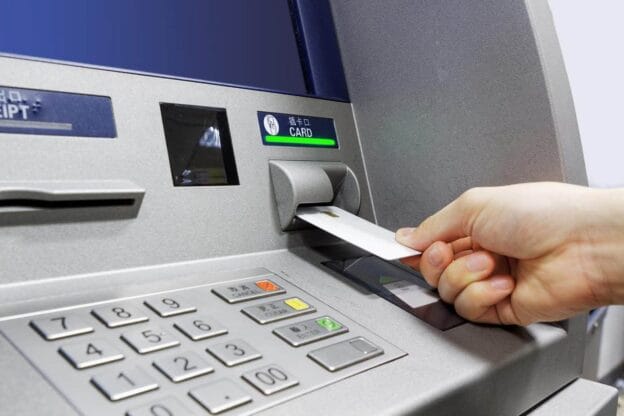
Can Durbin Debit Rates Go Even Lower

Can Durbin Debit Rates Go Even Lower? [2026Update]

A new U.S District Court ruling could lead to major changes in debit card processing fees. Will the Durbin debit rates go lower with this? Let us understand.

On July 31, U.S. District Judge Richard Leon swept aside the Federal Reserve‘s 2011 implementation of the Durbin Amendment. Passed in 2010, this amendment to the Dodd-Frank law was intended to limit the upward trajectory of debit processing rates. According to Leon, the Fed’s 2011 regulations directly counteracted the original intent of the Durbin Amendment. Though the Fed capped the base rate for debit processing fees at 21 cents, they raised debit rates for transactions under $12. Essentially, the Fed lowered the debit price for large transactions while raising them substantially on small transactions.

Can Durbin Debit Rates Go Lower?

Durbin Debit Rates

In general, debit card caps are highly advantageous for retail businesses. However, the current implementation of the Durbin debit amendment creates grave concerns for many retailers. It is sensible to lower debit card interchange fees at a time when many retail companies are struggling with low consumer demand. Months will pass before the nation sees new, concrete debit processing rules. In the meantime, the response to Judge Leon’s ruling starkly illustrates a growing conflict between the retail industry and major banks.

In this struggle to define the costs of merchant services, both sides claim to represent the best interests of the public. However, the banking industry is so politically influential and entrenched that it is hard to see this industry as truly vulnerable or consumer-focused. Retailers are achieving broader public support as they tout their intentions to lower costs for ordinary Americans.

1 18

To be fair, it is demonstrably true that banks could lose enormous profits in the wake of Judge Leon’s ruling. Undoubtedly, the banking industry will pass some of these costs on to consumers in the form of higher fees and tighter restrictions. A strong, profitable American banking industry is vital for the United States and the global economy. 

At the same time, history has shown that the banking industry is far less volatile than the retail sector. When banks are in danger of failing, they can often use their political influence to gain unique concessions and loans from the government. In stark contrast, retailers must stand on their own during problematic times. In light of this power imbalance, the public may well benefit from retailer-friendly debit price controls.

The new ruling on Durbin debit rates represents a fascinating turn of events. However, only time will tell if Judge Leon will have the final word in Durbin implementation. The Federal Reserve and large banks have many more tools at their disposal in their quest to control the state of debit processing fees.

What Is the Durbin Amendment

The Durbin Amendment is a part of the Dodd-Frank Wall Street Reform and Consumer Protection Act, a law enacted in 2010 in the United States. It was named after Senator Richard Durbin, who played a role in its development. This amendment primarily focuses on the fees that merchants pay to banks for processing debit card transactions, known as interchange fees.

What Is the Durbin Amendment

The key features of the Durbin Amendment are as follows

Regulation of Interchange Fees: The Durbin Amendment introduced regulations to limit the interchange fees charged by banks to merchants, for processing debit card transactions. The aim was to make these fees more reasonable and transparent.

Exemption for Smaller Financial Institutions: These regulations specifically apply to institutions that surpass a certain asset threshold. Smaller banks and credit unions generally do not have to follow the restrictions on interchange fees.

Choice of Network Routing for Merchants: Another objective of this amendment is to promote competition among payment card networks. It allows merchants to select which network they prefer for processing debit card transactions. This provision encourages competition. May potentially reduce costs, for merchants.

Prohibition of Exclusive Network Agreements: The Durbin Amendment prohibits card networks from imposing agreements that would restrict merchants from routing their transactions through networks.

Measures to Protect Consumers: The amendment included provisions that aimed to strengthen consumer protection. One of these provisions required issuers to offer consumers a choice, between two payment card networks that were not affiliated with each other for each debit card. This gave consumers options and flexibility.

Challenges in Implementation

The implementation of the Durbin Amendment faced some difficulties, which sparked debates about its effectiveness and potential unintended consequences. While some believed that it successfully achieved its goal of reducing interchange fees others had concerns about effects on smaller banks and financial institutions.

Impact on the Debit Card Industry

The Durbin Amendment had an impact on the debit card industry by changing the dynamics of interchange fees and fostering competition among payment networks. It continues to be a regulation in the United States influencing the relationships, between banks, merchants and consumers when it comes to debit card transactions.

financial stock market graph and rows of coins growth abstract and symbol for finance concept business investment and currency 162020228

MCX, Paydiant, and the Battle Over Mobile Wallets [2023 Update]

The mobile Internet revolution is rapidly changing the longstanding status quo in the payment processing industry. As more people purchase items with their mobile devices, the public is demanding more options and greater security from transaction processing companies. For many long years, big banks and processing companies like Visa and Mastercard faced little competition and were free to change processing fees at will. Today, the upstart MCX network (Merchant Customer Exchange) is making a strong bid to compete in e-wallet services. This consortium of retailers recently added Kohl’s  to its roster of members. The cooperative already includes major players like Walmart, Target and Best Buy. Formed in August 2012, MCX has stated its intention to better protect consumer data, lower processing fees and otherwise improve conditions for mobile shoppers.

In many ways, MCX represents the most forward-looking hopes of the retail industry. Though the network is not fully operational, industry watchers are fascinated by the ways that MCX could change the e-commerce  landscape. In its bid to create a viable alternative payment network, MCX seeks to emulate the success of Paypal, the most successful independent online transaction processor. With its focus on mobile purchasing, MCX shows a feel for the developing trends of modern commerce. As the battle over mobile payment fees heats up, many consumers aren’t aware of how their payment choices effect the underlying struggle for lower fees in the mobile commerce sector.

Increasingly, large banks and financial companies are bringing enormous resources to bear in their efforts to woo mobile consumers and prolong their dominance. While these large institutions are currently making concessions to secure their position in mobile payments, one could persuasively argue that more choice will lead to greater satisfaction for participants in mobile commerce.

MCX Logo

Of course, MCX faces an uphill battle in its quest to change modern payments. Major banks and Interchange processors have rallied around Paydiant, the mainstream platform for e-wallet services. Though far from perfect, Paydiant has won broad acceptance for its widespread relevance and ease of use. Over the next few years, the competition between MCX and Paydiant will represent one front in the all-out war to control and define mobile payments. At the same time, Paypal will likely make every effort to extend its commanding position into the mobile commerce sector. While Google Wallet has yet to make major gains in mobile processing, it is never wise to underestimate the potential of this groundbreaking corporation.

Every month, dramatic numbers of people start using mobile payments to purchase goods and services. Familiar with brands like Visa and Mastercard, many of these consumers will gravitate towards Paydiant. At the same time, MCX has hired media-savvy personnel to potentially launch their brand into global prominence. If any group has a real chance of changing the status quo of modern transaction processing, it is MCX.

Paydiant

Compared to monolithic financial companies, retailers are arguably better poised to meet the changing needs of modern consumers. Only time will tell which mobile processing network will achieve the same kind of dominance that Paypal has realized in online payment processing. Though consumers are fairly loyal to major financial brands like Visa, the new decade tells a tale of increased public hunger for technological innovation and greater choice. Whoever succeeds in dominating mobile online payments, it is likely that consumers will experience a new era of speedy, secure transactions. As mobile devices continue to revolutionize modern culture, people from all walks of life will learn to appreciate the ease and convenience of doing business through cell phones and mobile devices. Experts can only guess at how many middle-class consumers will ultimately execute most of their daily payments online.

PIN vs. Signature

Visa, MasterCard weigh PIN vs. Signature [2023 Update]

Today the Official Merchant Services Blog takes us to Australian and covers a topic that the big card brands are pushing as a needed security measure in the credit card processing industry. A recent push by Visa and MasterCard  is aimed at increasing the percentage of transactions that are verified by PIN to 90 percent. This reduction in the amount of payments backed by a signature is an attempt to lower the amount of fraud by millions of dollars caused by stolen and otherwise compromised cards.

How Easy it Can be to Forge a Signature

Visa and MasterCard are pushing for this change because of how easy it can be to forge a signature and the lack of employees double-checking signatures against identification. The target date for banning signature based transactions is June 30, 2014. The bar is set at 90 percent as the other 10 percent of transactions do not require signatures. Currently, around 45 percent of transactions are signed for.

Some objections that small business owners have raised to eliminating signature verification is the need to install additional PIN pads or have the customer come to a POS terminal in order to pay as opposed to just leaving a slip at the table. These changes and upgrades would be an increased cost on the merchant and some are worried that smaller businesses might not be able to shoulder this extra expense.

The proponents of this change state that “it is much more difficult for a fraud perpetrator to ascertain a PIN than to forge a signature”. They also reference data from a similar measure taken in Great Britain in 2006 that saw fraud on stolen cards “decline substantially”.

Opponents of the measure say that the costs to businesses are not justified by the potential decrease in fraud through this avenue and efforts could be focused elsewhere to see more substantial gains against fraud. According to a report on 2012, forged signatures accounted to for around $23.5 million on Australian cards. Whereas skimming and card-not-present fraud accounted for ten times that amount or $235 million.

No matter what the outcome of this proposal is, I think that everyone can agree that reducing fraud in merchant services is a top priority for all parties involved in the process. And as we see different markets such as Britain and Australia adopting different methods to try and combat fraudulent transactions it may be a glimpse into the future of what could eventually make its way to the U.S.

Card Data

NSA PRISM Program Could be Expanded to Card Data [2023 Update]

It was recently revealed that the federal government has been monitoring private citizens’ phone records through the National Security Agency. The program is said to have collected over one trillion metadata records in total and nearly one billion cell phone calls every day. The NSA states that the program is authorized by the Patriot Act which was passed in the wake of the 9/11 attacks to help combat terrorism.

During a House Judiciary Committee meeting last week, representative s of the NSA did not rule out the possibility of expanding the data collection to include payment transactions, hotel records and Internet search queries. The point that stands out to us here at Host Merchant Services is the access to credit and debit card transaction history.

The NSA and federal government wants access to this rich flow of information because it can provide greater insight into actions of someone suspected of plotting a terrorist act, especially when combined with phone, email and Internet activity. The point being to proactively stop any domestic or offshore terrorist activity aimed at U.S. citizens or military personnel.

One pain point for merchants, especially those outside the United States, is that they are already wary of the federal government accessing sensitive data. These merchants come to credit card processing companies in the U.S. looking for payment processing services because there are limited solutions in their home country and sometimes no options at all.

There are no indications that credit card transaction data is currently being collected by the government and as stated in the congressional meeting last week, no plans to for the immediate future. Host Merchant Services offers great payment solutions for businesses of all sizes, both domestic and foreign. Call us at 877-517-4678 to explore what a new merchant account with one of our payment experts today. Companies that are located outside the United States that are looking for a merchant services account should fill out our quick sign up form.

Montana Minimum Wage

What Does The Future Hold For Interchange?

Now that card payments are a major force in the economy, a system had to be set up to move this “virtual” currency from customer to business. This system is the basis of interchange.

The evolution of how customers pay businesses has changed dramatically over the past half-century or so. Cash was king during the infancy of American Express, MasterCard, and Visa. But as their networks expanded and more and more consumers began to expect to be able to pay with plastic in stores, merchants felt the pressure of lost sales if they turned away customers with credit cards.

What Exactly Are Interchange Fees?

Interchange fees are payments for handling the transaction between a business bank account and the cardholder’s bank account. They cover the costs of converting the electronic transaction through a credit or debit card into funds in the merchant’s account. These fees also cover administrative services and fraud risk.

Why Do We Need Interchange?

The card networks (Visa, MasterCard, Discover, and American Express) have developed intricate pricing models based off of criteria like brand, geography, card type, business type, and even transaction type. With all these variables it is easy to understand why there are hundreds of different interchange rates.

Why Do We Need Interchange?

The original intent behind charging merchants interchange was to offset the risk that issuing banks took for any losses occurring from debt default by the cardholder. According to Visa “the primary role of interchange is to create the right balance of incentives between a cardholders’ financial institutions – which promote and issue Visa cards to consumers – and a merchants’ financial institutions – which enroll and process Visa transactions for merchants.” Or basically that it is a balance between what the businesses are willing to pay for the ability to accept cards and what the banks are willing to accept as far as risk of profit and loss.

Interchange In The Past

In the early 1970s interchange was just one rate. As more merchants in different industries began to accept credit cards and new card types and rewards were introduced new rates began to appear in the interchange charts. The goal of the card networks when determining what rates to establish has always been a balancing act between covering any losses banks may realize and keeping the cost to merchants low enough so that it is attractive from a financial standpoint to the business.

So What Is Next For Interchange?

So What Is Next For Interchange?

As interchange fees are set by individual card companies there is an ever-present need to adjust rates. These pressures include other card brands and new and emerging technology. Since banks have the freedom to choose what card type they issue to their customers, they will usually favor the choice that gives them the most profit, which keeps rates overall pretty competitive.

Legislation and legal costs can also factor into where rates are headed. Late in 2012, a judge ruled against Visa and MasterCard in a class action lawsuit brought against the card companies by retailers and other business associations. The retail merchants accused Visa and MasterCard of increasing swipe rates while there was no legislation to protect the businesses from high fees.

Previous to this litigation, the Federal government passed the Durbin Amendment that set a ceiling on what card brands could charge for certain debit transactions. This bill was designed to greatly lower the cost to merchants, and therefore consumers, when paying with a debit card. Lawmakers argued that the risk to banks was very low with this type of card and thus did not justify the high rate that businesses were paying.

While it seems that only banks and card companies love interchange rates, it is hard to envision the complex systems we have without some sort of cost associated. The truth of the matter is that if your business is going to accept credit cards, you are going to pay interchange rates no matter what merchant services company you decide to go with. The advantage that Host Merchant Services offers over others is the transparent, easy-to-understand pricing model that is interchange plus. Quite simply you just pay a small markup over published interchange rates for any given card. No tricks like tiered pricing or overpaying with a flat rate for every card.

interchange definition

If you aren’t currently accepting credit cards at your business contact one of our payment experts today at 877-517-4678 or simply fill out our quick sign-up form. They will guide you through the process of setting up a merchant account and explain the benefits of taking this form of payment. And if you are already taking card payments let us provide a free, no strings attached statement analysis to see if you truly are getting as good of a deal as you think.

Decline of Paper Checks

Q1 2013 NACHA Report Shows Decline of Paper Checks [2023 Update]

NACHA, the governing body that oversees the automated clearing house network, released figures from the first quarter of 2013 regarding transaction volume and overall traffic on the network. ACH is the system that links virtually all financial institutions in the US allowing banks and merchants the ability to convert paper checks to electronic form.

POP, or point of purchase, is the system that retailers convert checks to electronic payments right at the register and the voided check is returned immediately to the customer. The year-over-year numbers from January through March were down 8.5% as compared to the same time period in 2012. In addition, compared to Q4 2012 to the most current numbers, POP transactions were down a full 15%. While some of this decline can be credited to seasonality and inflated volume from holiday spending, the decline is still worth noting.

An alternative to POP is BOC, back-office conversion, which allows merchants to collect check payments at the register throughout the day and process the total in a batch all at one time. While this method historically has had lower volume than POP, it still saw a year-over-year decline, falling 10.5% to slightly under 43 million transactions in the first three months of 2013.

One appeal of BOC vs. POP for merchants is added transaction speed at the register because the customer does not have to wait for the check to be run through, verified, and given back to them. It also does not require each point-of-sale location to have the equipment to convert checks, which can reduce overall hardware costs.

The overall trend that can be gleaned from these numbers is that there seems to be a clear trend showing the use and acceptance of paper checks in retail environments is on a slow decline. This can be attributed to the rise of other forms of payment, one in particular being the growth in number of businesses that accept credit cards. In addition, in my own personal experiences at retail stores and restaurants over the past few years, there is a growing number of business owners that due to fraud, forgery, or even a high instance of returned checks NSF have voluntarily decided not to accept personal checks as a form of payment.

Parking Meters See Decline in Cash, Rise in Cards

A recent report from the city of Los Angeles’ parking department showed that for the first time more than half of the payments made for public parking were from a debit or credit card as opposed to cash. The report shows that in March of this year, debit and credit card payments made up $2.34 million of the $4.46 million in total collected in the month. This translates into roughly 52% of revenue collected for the city through the so called “smart meters”.

Smart meters have been popping up in cities all over the country in recent years. While they still accept coins like their predecessors, they run off of solar power, authorize cards through an Internet connection, and can even send an alert to city staff if they malfunctioning. The convenience that these smart meters provide, for both consumer and municipality, is clear.

For consumers, who more and more a less likely to have cash readily available, this provides the ease of paying with their cards that they have experienced in retail stores for decades. This delivers a much more seamless experience across many normal, daily experiences.

parking-meter

For the city, a decrease in coins used means less time sending city employees from meter to meter collecting the currency. Also, according to the city, drivers are more likely to pay the $5 an hour with the swipe of a card as opposed to dropping in the coin equivalent of 20 quarters. This convenience leads to higher spending by drivers and thus more revenue for the city.

So what does this mean for you if you are a business owner? This shift by towns and cities to align with the “cashless society” means that consumer behavior to carry less and less cash on their person will probably accelerate. If your business does not currently accept credit cards or you are with a merchant services provider that does not provide you with the best, transparent pricing, there is real money walking out your front door month after month. Contact one of our payment experts today at 877-517-4678 or take a few moments to fill out our signup form to see how much money you could be saving.

1

Paying With Your Fingerprint? –2026 Update

Could the next emerging payment method be associated with your fingerprint? In a recent six-month trial, a grocery store chain in France gave their customers the choice of signing up for a voluntary program to test the technology. The pilot program ran from October 2012 through March 2013 and saw more than 900 participants. The results are encouraging and soon, you might be paying with your fingerprint.

Those that chose to participate carried a payment card that had their fingerprint data stored on it and the terminal had a special add-on where the finger was inserted to be read. When customers were ready to pay they simply presented their card and inserted a finger into the reader, where either the actual fingerprint ridges or veins in the fingertip were read.

Paying With Your Fingerprint

In effect, the fingerprint data is the authentication method replacing the user entering a PIN number via a PIN pad. A recent, separate study of almost 2,200 shoppers showed that almost 50% of consumers were interested in biometric payment methods. Compared to just 30% and 23% in favor of contactless smartphone payment and text message payment methods respectively. Examples of biometric payments include fingerprint, palm, and iris scanners.

The 900 participants tallied a total of close to 5,000 transactions, which was considered to be a very good adoption rate. The average transaction amount was around €60, or about $78 USD. In a survey after the trial, 94% of the consumers who took part said they were open to the idea of paying with your fingerprint method for all in-store transactions.

It is interesting to see that the general public is open to this idea as a new form of paying for purchases. When the 24 Hour Fitness chain of fitness centers installed fingerprint readers as a way to speed up the check-in process of members, some were skeptical about whether the public would be open to this technology. Over three years later the company still utilizes the readers to speed up check-in and also increase validation of member usage.

While this one study seemed like a success, there aren’t any signs that you will be seeing in your local grocery store stateside anytime soon though. If you are a business owner looking for the latest in payment processing technology or would just simply like a free, no-strings-attached statement analysis to see if you are truly getting the best rate possible, one of our payment experts is here to help. Contact us today at 877-517-4678 or simply fill out our quick signup form and we will be in contact with you.

Paying With Your Fingerprint – Benefits of Using Fingerprint Authentication

Benefits of Using Fingerprint Authentication
  1. Enhanced Security; Fingerprint recognition is widely regarded as a form of authentication. Since each fingerprint is unique it significantly hinders individuals from gaining access to your payment information.
  2. Convenience; Opting for fingerprint-based payments often proves convenient compared to methods like entering PINs or passwords. It saves time. Requires effort on the users part.
  3. Preventing Fraud; Fingerprint authentication adds a layer of security effectively reducing the risk of fraud associated with stolen payment cards. With fingerprints being unique to each individual it becomes significantly harder for someone to misuse your payment information.
  4. User Friendly Approach; Fingerprint authentication prioritizes user friendliness, particularly benefiting individuals who may struggle with remembering passwords or PINs. It simplifies the payment process. Ensures accessibility for a range of users.
  5. Swift Transactions; The speed of fingerprint authentication enables transactions, which proves advantageous in time-sensitive scenarios such, as retail stores, public transportation, or online purchases.
  6. Reduced Reliance, on Physical Cards; Fingerprint payments offer the advantage of reducing our dependence on payment cards. This is particularly useful in situations where carrying cards may be inconvenient or pose a risk.
  7. Enhanced Security with Multi-factor Authentication; Fingerprint recognition can be combined with authentication methods creating a multi-factor authentication system that boosts overall security.
  8. ** Encryption of Biometric Data**; Fingerprint authentication systems employ secure encryption techniques to safeguard biometric data. This ensures that stored fingerprint information is not easily compromised.
  9. ** Experience**; Fingerprint payment methods can be tailored to users providing a more personalized and user-centric experience. This personalization extends beyond security encompassing preferences and settings well.
  10. Effortless Contactless Transactions; Fingerprint payments seamlessly integrate into contactless payment systems enabling users to make transactions without touching a payment terminal or card.

Drawbacks Of Fingerprint Authentication

how does fingerprint payment works

While there are advantages, to using fingerprint payment systems it’s important to consider the drawbacks;

  1. Privacy Concerns; The storage and usage of data like fingerprints raises privacy concerns. People may worry about the security of their information and how it could potentially be misused.
  2. Security Risks; Although fingerprints are unique to individuals they aren’t completely immune to being copied or forged. Sophisticated attackers might find ways to replicate fingerprints, which raises concerns about the security of this authentication method.
  3. False Positives and Negatives; Fingerprint recognition systems aren’t flawless. Can sometimes produce positives (wrongly authenticating someone) or false negatives (failing to recognize the correct person). These errors can create security issues and affect user experience.
  4. Accessibility Challenges; Certain individuals may face difficulties with fingerprint authentication due to factors like aging, injuries, or specific medical conditions that affect the quality of their fingerprints. This limitation can impact the inclusivity of fingerprint-based payment systems.
  5. Cost of Implementation; Implementing fingerprint payment systems can be expensive, for both businesses and consumers alike. It involves hardware and software requirements. Upgrading existing infrastructure can be a costly process.
  6. Reliance, on External Factors; The effectiveness of fingerprint recognition can be influenced by factors such as dirt, moisture, or finger injuries. These external elements have the potential to affect the accuracy and reliability of the authentication process.
  7. Lack of Standardization; Different fingerprint payment systems may lack uniformity in their implementation and compatibility which could pose challenges for adoption.
  8. Legal and Regulatory Challenges; Laws and regulations regarding the collection and usage of data may vary across regions and countries. Complying with these regulations can be complex for businesses operating in jurisdictions.
  9. Inherent Irreversibility; Unlike passwords or PINs that can be changed if compromised fingerprints are permanent. Cannot be easily altered. In case of a breach in a fingerprint database, the compromised biometric information cannot be “reset” like a password.
  10. Cultural and Social Factors; Acceptance of fingerprint payment methods may vary across cultures and societies due to personal reasons that make some people uncomfortable, with using their fingerprints for financial transactions.
    To overcome these limitations it is essential for companies and developers to incorporate security measures to give importance to user privacy and guarantee that fingerprint payment systems are easy to use and accessible, to a wide range of people.

Conclusion

While the advantages are noteworthy it’s crucial to consider drawbacks such as privacy concerns, the necessity for security measures to protect biometric data and the possibility of false positives or negatives in fingerprint recognition systems. Striking the balance, between convenience and security is vital when developing and adopting fingerprint payment technologies.

Article Head Image Template 2 1

CVV Codes: Why do They Exist?

CVV (Card Verification Value) codes are either three or four-digit numbers that are printed on either the front or back of credit and debit cards. This system was created to provide an extra layer of security to merchants and card-issuing banks against fraudulent transactions in card not present purchases.

Two Types of Codes

These codes come in two different forms: CVV 1 and 2. The CVV1 is integrated into the magnetic strip on the back of every card. In a retail, or other card present environment, where the card is physically swiped through a reader, the first CVV is used to verify the data on the track 2 mag strip is legitimate and matches up with the information the issuing bank has on file.

The second, and some might argue more important type, is the CVV2. Just to clarify, Visa and MasterCard use the three-digit CVV2 number printed on the back of the card next to the signature line. American Express uses a four-digit “Unique card code” that is located on the front of the card. Regardless of location or length, these both serve the same purpose: to prove that the person making the purchase has the original and real card in their possession.

man showing where CVV is located on a credit card

Skimming and Fraud

The CVV2 code is commonly requested by merchants in purchases over the Internet or in MOTO (Mail Order, Telephone Order) transactions. If a fraudulent card has been produced from a skimming device, the thief will not have the CVV2 number as it is only physically printed on the card and not stored electronically. Skimming is the practice of attaching a device over the top of a real magnetic strip reader, usually on ATMs or gas station pumps, to gather the sensitive information about the card. This information is used to make fraudulent cards and/or purchases.

If a thief attempts to make a purchase with a stolen card and does not have the CVV2 when the merchant requests it, the transaction will not be approved. The problem is that according to a recent study, only around 56% of online merchants request the CVV2 in order to complete transactions. Also, if a business does require the code, they can see around a 25% reduction in chargebacks.

The Bottom Line

It is important for consumers and merchants alike to protect sensitive information about their debit and credit cards. If a thief has your name, card number, expiry information, and CVV code they can very easily make fraudulent purchases or even create a duplicate copy of your card. For consumers it is important to ensure the business you are purchasing from is legitimate. For businesses, it is critical that proper procedures be followed when recording and storing your customers’ sensitive financial data.

Discover “On Us” Program Update

Last fall we wrote about the new Discover “On Us” Program that allows merchants that are new to accepting Discover to defer the cost for a whole year. For many businesses the summer months are their “busy season” and as such this program could add up to great savings all summer long. The “On Us” program offered from discovered is brought to merchants through Host Merchant services. When a customer uses a Discover card at checkout, merchants will not be charged any fees or interchange rates, so all the revenue stays in the businesses pocket.

More Details

First, to qualify for the program, merchants must not have accepted Discover cards in the last six months or be entirely new to accepting the following cards: Discover, Diners Club International, BCcard, China Union Pay, JCB, and DinaCard. To enroll in the program there are just four simple steps merchants must do:

  1. Apply before the deadline of December 31, 2013 (the sooner you apply the more you’ll save)
  2. Confirm your enrollment with a special test transaction
  3. Update signage in your brick and mortal retail store and/or update your website for ecommerce merchants
  4. Provide training on how to communicate the benefits of using Discover to pay for transactions


Voila. Once Discover has verified that your business qualifies you will receive written notice and within 10 business days a welcome packet with free signage and tips on how to increase sales by accepting Discover.


Test Transaction Instructions

You can use the following instructions to see if your terminal is currently set up to accept Discover cards.

Test your terminal using these simple steps:

  • Prompt your terminal or point-of-sale device for a manual sales transaction.
  • For BCcard, JCB, China UnionPay, DinaCard, and Rupay enter the following test card information:

Test card account: 6555 9000 0015 9720*
Expiration date: 09/14
Transaction amount: $1.00
CID: 458
Zip code (if necessary): 43054

  • For Discover and Diners Club International cards, enter the following test card information:

Test card account: 6011 2023 0029 5223**
Expiration date: 07/14
Transaction amount: $1.00
CID: 045
Zip code (if necessary): 43054

  • A “decline” status means the test was successful and your terminal is ready.


Benefits of the Program

While on the “On Us” program, every time you accept a Discover brand card, you will not have to pay the normal interchange rates and fees thus keeping more of the money from the sale in your pocket. Your customers also get the freedom of being able to choose their favorite card and possibly earning cash rewards or points. Host Merchant Services can even provide you with Discover signage to increase awareness that your business now accept Discover cards as payment.

Next Steps

This incredible offer only lasts until December 31, 2013. Pick up the phone right now and give us a call at 877-517-4678 to talk to one of our knowledgeable payment experts or fill out our quick sign up form and someone will be in touch with you shortly. The Discover “On Us” program, a quick easy way for your business to save more on credit card processing.