
The automotive repair industry has rapidly shifted to a wholly digital environment, and in 2025, technology will no longer be optional for staying competitive. Paperwork orders, handwritten estimates, and delayed customer updates have been replaced by streamlined, transparent processes that build trust and improve efficiency. Modern auto shops now function like technology-driven service centers, where every touchpoint is designed to keep operations smooth and customers informed.
Choosing the right auto shop management software is now one of the most critical decisions a shop owner can make. The right platform can transform day-to-day operations, increase customer satisfaction, and strengthen profitability. This review looks at the top auto shop management systems of 2025, focusing on how they guide the customer journey from digital inspection through to final payment, and highlighting what sets each one apart.

The most successful shops in 2025 have embraced a completely digitized workflow that transforms every touchpoint of the customer experience. This modern approach begins the moment a vehicle arrives and continues seamlessly through completion and payment, creating a level of transparency and convenience that builds lasting customer relationships.
The process typically starts with a comprehensive digital vehicle inspection (DVI) performed on a tablet or smartphone. Technicians photograph problem areas, document findings with detailed notes, and even record short videos to help customers understand complex issues. This digital documentation serves multiple purposes: it provides clear evidence of needed repairs, helps customers make informed decisions, and protects the shop from disputes about recommended work.
Once the inspection is complete, the system automatically generates a detailed report that’s immediately sent to the customer via text message or email. This report includes high-resolution photos, explanations of each issue, and prioritized recommendations for repairs. Customers can review everything at their own pace, often sharing the information with family members or trusted advisors before making decisions.
The approval process happens digitally as well. Instead of requiring customers to return to the shop or spend time on lengthy phone calls, they can approve individual repairs directly from their phone. Many systems allow customers to select which repairs they want completed immediately and which can wait, giving them control over their budget while helping shops secure authorization for the most critical work.
Modern payment processing represents the final piece of this digital puzzle. Rather than requiring customers to return to the shop for payment, the best systems automatically send secure payment links via text message when work is complete. Customers can pay using their preferred method – credit card, debit card, or even financing options – without ever leaving their home or office.
This streamlined workflow delivers measurable benefits. Shops report higher approval rates for recommended services, faster payment collection, improved customer satisfaction scores, and reduced administrative overhead. The transparency builds trust, the convenience exceeds customer expectations, and the efficiency allows shops to handle more vehicles without adding staff.
The key to success lies in choosing a management system that supports this entire workflow seamlessly. The platforms we’ll examine each handle these processes differently, with varying levels of sophistication and integration.
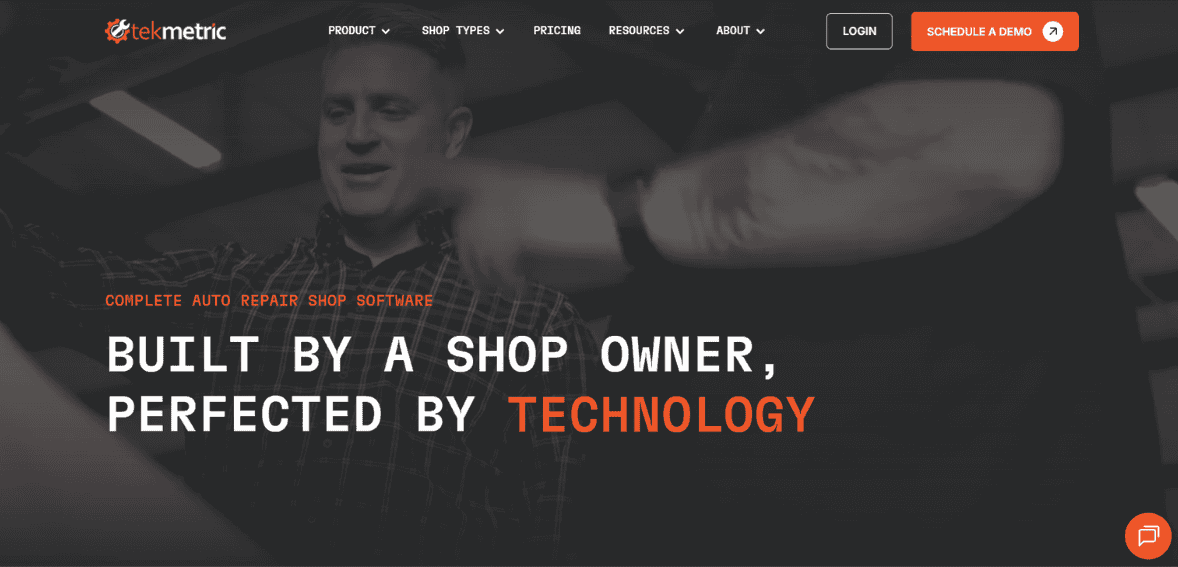
Image source
Tekmetric is a cloud-based shop management system built from the ground up to modernize auto repair operations rather than simply migrate legacy systems to the cloud. Ingeniously crafted by a former shop owner, the platform empowers today’s auto shops with fast repair order creation, clear customer communication, and operational visibility.
At its core, Tekmetric offers a unified user experience covering repair estimates, digital vehicle inspections, parts and labor management, customer relationship tools, and real-time analytics, all accessible from any device. Its mission is to help shops streamline workflows, boost transparency, and foster customer trust.
Key Features of Tekmetric:
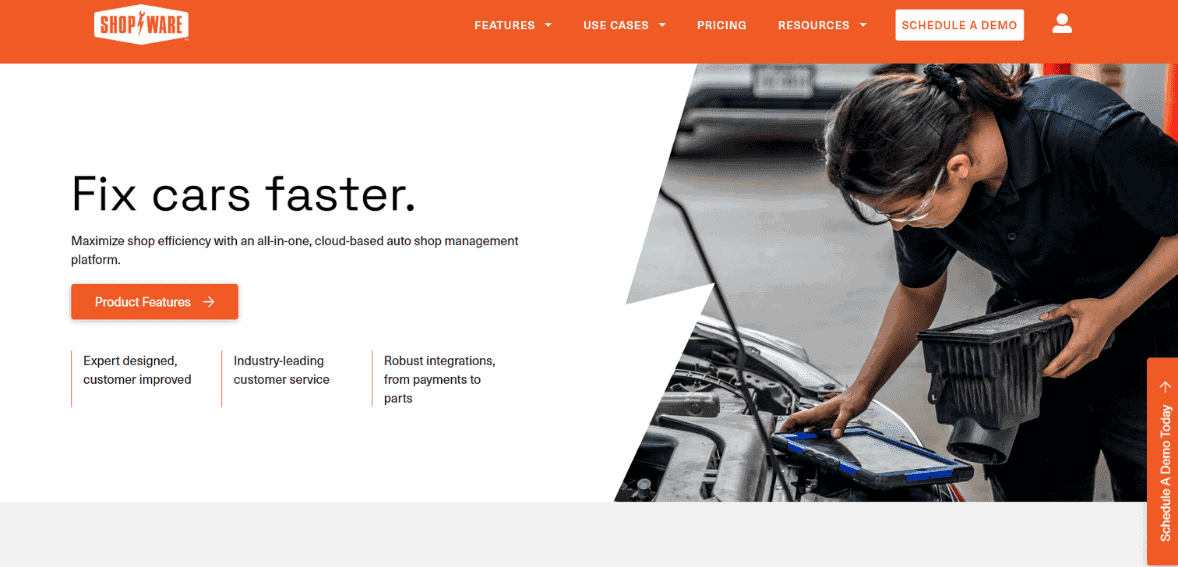
Image source
Shop‑Ware is a cloud‑based, all‑in‑one auto shop management platform designed to streamline operations, improve customer satisfaction, and increase profitability for repair shops. It empowers shops with tools such as online service scheduling, integrated payment processing, a mobile tech app, and messaging, enabling teams to work more efficiently while reducing redundant tasks.
At its core is the Digital Vehicle Experience (DVX). This feature‑rich digital vehicle inspection system enables service advisors to share photos, videos, and live chat with customers for quick approvals and higher transparency. The platform also offers advanced business analytics and capacity management, giving shop owners a real‑time view of productivity, staffing, and workflow efficiency.
Key Features of Shop-Ware
ALLDATA Shop Manager is a cloud‑based shop management solution tailored for small to mid‑sized auto repair and collision centers. Priced at approximately $99 per month (or about $1,188 annually), it simplifies critical daily tasks such as creating estimates, repair orders, and invoices. The platform tightly integrates with ALLDATA Repair or ALLDATA Collision, giving technicians a seamless workflow between OEM repair information and shop documentation.
Users benefit from built‑in 24/7 parts ordering capabilities via suppliers like AutoZone and Nexpart Multi‑Seller, as well as access to CARFAX‑powered recalled service data and vehicle history through Trusted Advisories. The system also stores customer and vehicle information and generates essential reports covering sales, taxes, payments, profit, and parts.
Key Features of ALLDATA
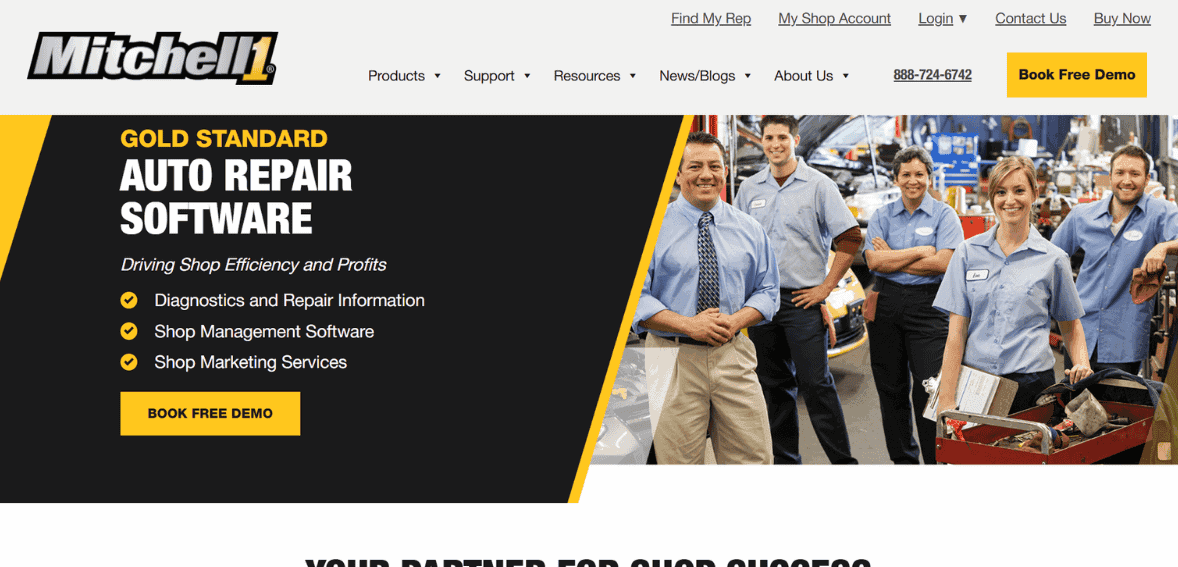
Image source
Mitchell 1 is a century-old leader in automotive repair software, founded in 1918, with deep roots in offering trusted, expert-level repair information and management tools for the automotive industry. Initially known for its repair manuals, the company has evolved into a comprehensive digital solutions provider, featuring everything from OEM repair data and diagnostic support to workflow automation and marketing tools.
At the heart of its offering is Manager SE, a shop management platform that provides a 360-degree view of operations, from estimating and service writing to scheduling, parts ordering, and final invoicing. This platform is tightly integrated with Mitchell 1’s ProDemand repair information system, delivering labor guides, OEM procedures, parts catalogs, and real-world repair insights through SureTrack.
Key Features of Mitchell 1:
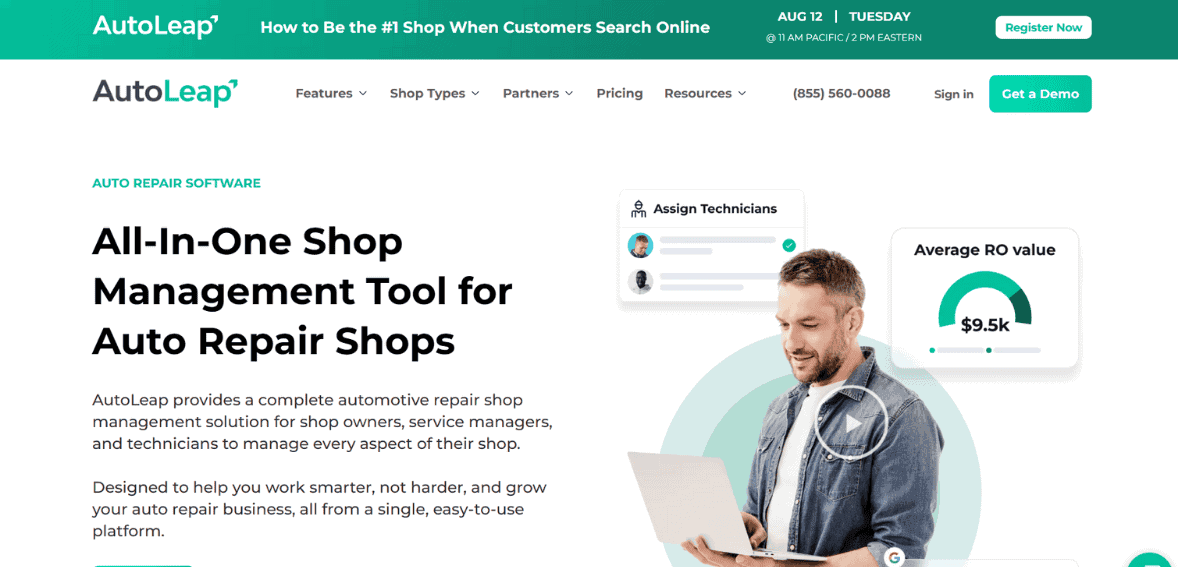
Image source
AutoLeap is a robust, cloud-based auto repair shop management platform tailored for independent repair shops, multi-location operations, and franchises. It streamlines the full scope of shop operations, from appointment scheduling, digital vehicle inspections, and workflow oversight via a technician app to customizable estimates and seamless invoicing. Its focus on simplifying daily tasks and reducing administrative burden enables shops to focus on delivering quality service and growing their business.
The platform shines with its digital-first approach: technicians can conduct inspections using tablets or smartphones, embedding photos, videos, and notes into reports that customers can approve remotely. This functionality not only boosts transparency and trust but also accelerates the upsell process and improves average repair order values. With deep QuickBooks integration, real-time reporting, and user-friendly interfaces, AutoLeap enables effective financial management and operational insight, helping shop owners make informed decisions and optimize profitability.
Key Features of AutoLeap:

Choosing auto shop management software involves considerations that extend far beyond the feature list. The quality of implementation support, ongoing customer service, training resources, and pricing transparency often determine the long-term success of a software investment more than any specific functionality.
The best software platforms recognize that successful implementation requires more than just setting up user accounts and importing data. Leading providers offer comprehensive onboarding programs that include data migration assistance, workflow optimization consulting, and hands-on training for all staff members.
Quality onboarding typically begins with a detailed analysis of your current processes, identifying areas where the new system can improve efficiency and customer satisfaction. The best providers assign dedicated implementation specialists who work closely with shop owners and managers to configure the system according to specific business needs and preferences.
Data migration represents one of the most critical aspects of implementation. Shops often have years of customer history, vehicle records, and pricing information that must be accurately transferred to the new system. The leading platforms offer automated migration tools backed by human expertise to ensure nothing is lost in translation.
Training quality varies significantly between providers. The most successful implementations include role-specific training for different staff positions. Technicians need to understand the digital inspection process, service advisors must master customer communication features, and management requires comprehensive reporting training.
Software support becomes crucial when problems arise during busy periods or when staff need assistance with unfamiliar features. The best providers offer multiple support channels, including phone, email, live chat, and comprehensive online knowledge bases.
Response time expectations vary by platform, but leading providers typically offer same-day response for critical issues and next-business-day response for general questions. Some platforms include dedicated account managers for larger shops, providing personalized support and regular check-ins to ensure optimal system utilization.
The quality of support personnel makes a significant difference in problem resolution speed and effectiveness. The best providers employ support staff with automotive industry experience who understand shop workflows and can offer practical solutions rather than just technical fixes.
Modern shop management software platforms frequently release new features and improvements, making ongoing training essential for maximizing system value. The best providers offer multiple learning resources, including video tutorials, webinars, user conferences, and online certification programs.
Self-service training resources become particularly important as staff turnover occurs and new employees need system training. Comprehensive video libraries, step-by-step guides, and interactive tutorials allow shops to train new staff members without relying entirely on vendor support resources.
Advanced users benefit from specialized training on reporting tools, system customization options, and integration capabilities. Leading platforms offer tiered training programs that allow shops to develop internal expertise and reduce dependence on external support.
Software pricing models in the auto repair industry vary widely, from simple flat-rate subscriptions to complex usage-based structures with multiple add-on fees. Understanding the actual total cost requires careful analysis of all potential charges, including setup fees, training costs, payment processing rates, and charges for additional users or locations.
Here’s the latest pricing and payment‑processing information for each processor we have reviewed above:
| Software | Subscription Pricing (per month) | Payment Processing / Fees Info |
| AutoLeap | Essentials $179; Pro $309; Elite $409 (flat monthly rate) | Integrates with payment platforms like Worldpay for Platforms; setup fees vary (contact sales) |
| Mitchell 1 (Manager SE) | Software lease $134/month (12-month lease, $0 activation); otherwise, pricing is custom/quote‑based | Integrated payments via 360 Payments / XCharge; one user reports “no monthly fees, 1.6 % on credit cards, $0.29 for debit”; credit‑card fee not built‑in, shops often bake into pricing or offer cash discounts |
| ALLDATA Shop Manager | $99/month (or $1,188/year) | Supports invoicing and payment processing, but details on processing fees are not publicly listed |
| Shop-Ware | Startup: $249/mo (or $224/mo annually); Pro: $379/mo (or $341 annually); Master: $499/mo | Tekmetric Payments includes built-in payment processing with fraud protection, text-to-pay, BNPL options (Affirm, Klarna, Sunbit), fees similar to credit-card rates, and settlement in 1–2 business days. |
| Tekmetric | Tekmetric Payments includes built-in payment processing with fraud protection, text-to-pay, BNPL options (Affirm, Klarna, Sunbit), fees similar to credit-card rates, and settlement in 1–2 business days.s | Plans start at $179/month (with annual discounts); exact pricing requires contacting sales. |
Selecting auto shop management software represents a significant investment that will impact daily operations for years to come. The most successful shops approach this decision systematically, evaluating not just immediate needs but also future growth plans and changing customer expectations.
The platforms reviewed here each offer unique strengths that align with different shop priorities and operational styles. Tekmetric excels in customer communication and approval rate optimization. Shop-Ware leads in digital customer experience innovation. ALLDATA provides unmatched technical information integration. Mitchell 1 offers comprehensive functionality with proven reliability. AutoLeap delivers modern efficiency tools with accessible pricing.
The key to success lies in matching platform strengths with your specific priorities, whether that’s maximizing customer satisfaction, improving operational efficiency, or achieving the best return on investment. The shops thriving in 2025 are those that embrace digital transformation while choosing tools that support their unique approach to customer service and business growth.
Remember that software selection is just the beginning. The shops achieving the best results are those that fully embrace the digital workflow, train their staff comprehensively, and continuously optimize their processes based on system capabilities and customer feedback. In the modern automotive repair industry, the right software platform isn’t just a tool – it’s the foundation for building stronger customer relationships and sustainable business growth.
Digital workflows improve transparency, speed up payments, increase service approvals, and reduce manual tasks, helping operations run smoothly and building customer trust.
They send inspection reports with photos or videos by text or email, allowing customers to approve work and pay from any device without visiting the shop.
Evaluate onboarding support, ease of switching systems, scalability for multiple locations, and quality of ongoing customer service.
Tekmetric focuses on communication and tracking, Shop-Ware on interactive customer experience, ALLDATA on OEM data, Mitchell 1 on diagnostics, and AutoLeap on workflow efficiency and marketing tools.
Plans range from about $99/month to $499/month, with some offering tiered or quote-based pricing—factor in setup, payment processing, hardware, and support costs.