
Author Archives: hostmerchantservices

Smart Shelf Labels Growing in Popularity for Grocers

Smart Shelf Labels Growing in Popularity for Grocers

As grocery stores aim to modernize their operations, many stores are exploring smart technology options to enhance the shopping experience for customers. Smart shelves, which are electronically connected shelving units commonly used in retail stores, play a relevant role in inventory management.

These intelligent shelves or smart shelf systems have a combination of digital displays, RFID tags, and sensors to deliver comprehensive product information, suggest related items for cross-selling, and facilitate marketing efforts. Moreover, they offer retailers valuable insights into customer shopping behaviors and preferences.
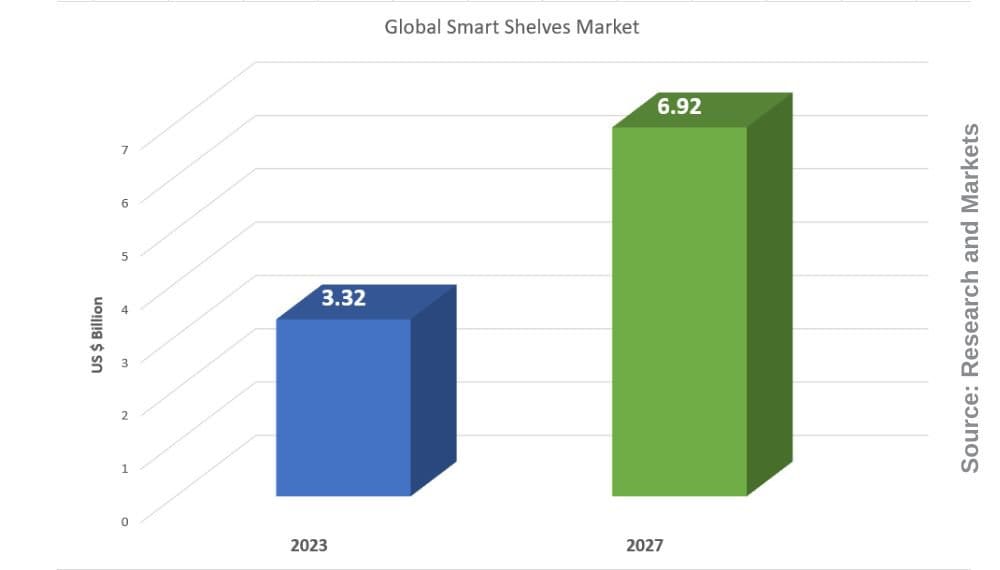
Global smart shelves market projection

Source: Research and Markets

The adoption of technology like ESLs goes beyond just relieving store associates of manual tasks; it also serves to improve operational efficiencies and tap into innovative retail media opportunities. In this blog post, we will understand the reasons why smart shelf labels are gaining popularity among grocers.

Different Types of Smart Shelf Technology and Their Functionality

These intelligent smart shelves include sensors and devices that enhance the user experience. These devices include proximity sensors, microphones, 3D cameras, NFCs, RFID tags, electronic printed tags, and optical sensors.

Smart Shelf Technology

Notably, modern shelves have integrated with Electronic Shelf Label or ESL that dynamically display real-time product information and promotions using electronic or digital paper. Before we go into details of Smart shelf labels, it’s crucial to understand other components of smart shelving that could help grocery store owners:

Shelf Sensors

Smart shelves have several sensors to improve inventory management. Weight sensors, for instance, track product quantities as items are removed, promptly identifying when stock levels are low. This helps in efficient inventory control and prevents customer dissatisfaction due to unexpectedly empty shelves.

Additionally, the NFC sensors detect the proximity and the duration of customer interaction within a particular Aisle or shelf. This data provides valuable insights into customer preferences. It can also be used with a dedicated app on customers’ smartphones, offering customized ads based on recent purchases they made.

Shelf Camera

Shelf cameras play a pivotal role in retail operations. Placed on opposing shelves, they continuously monitor products live, detecting any irregularities and alerting staff as needed. They can also ensure planogram compliance, ensuring that products are correctly positioned.

These cameras are designed specifically for retail stores. It appears as an ESL but is equipped with a sophisticated camera, wireless system, and other IoT capabilities.

Digital Signage

Digital signage serves as a modern alternative to traditional paper posters. It offers greater flexibility for updating content, making it ideal for showcasing high-margin items and time-sensitive promotions. Digital signs can display advertisements, video testimonials, product demonstrations, and interactive content for customers.

These smart signs effectively capture customers’ attention, influence their behavior, and facilitate decision-making, and they also enhance their overall buying experience.

ESL

ESLs replace traditional paper price tags with intelligent, connected alternatives. These labels are integrated into central systems. It can be automatically updated, eliminating manual labor for price adjustments.

Smart shelving, equipped with these technologies, revolutionizes the retail landscape by streamlining operations, enhancing customer engagement, and providing retailers with valuable data to optimize their offerings and services.

Why Smart Shelf Labels Is A Practical Solution?

Smart shelf labels involve the integration of wireless technology into shelves, enabling retail and industrial businesses to automate various functions such as dynamic pricing, inventory tracking, omnichannel operations, and more.
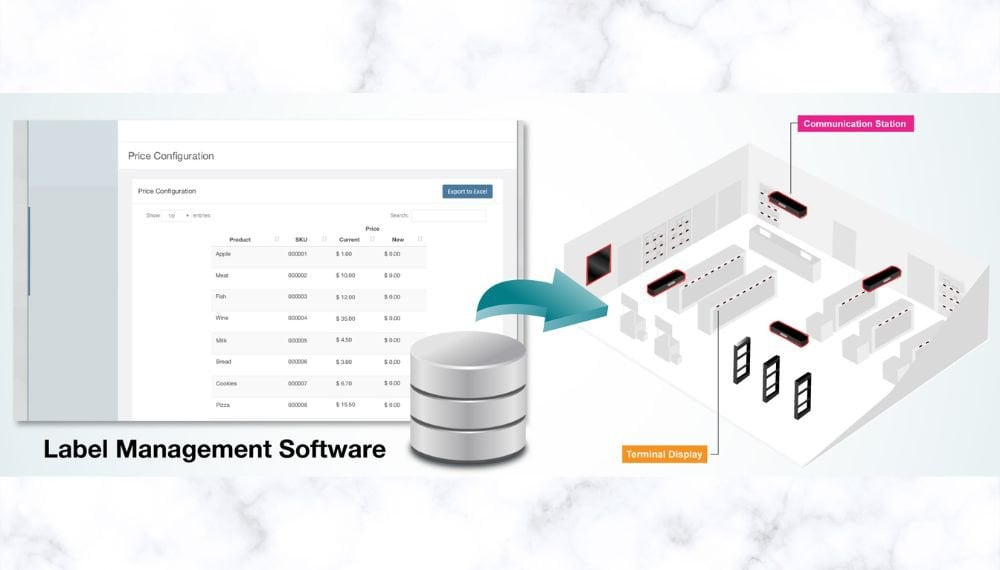
label management software

Source: Wikipedia

One highly effective way to transform your shelves into smart solutions is by utilizing digital labels. In today’s business landscape, particularly within the retail sector, many companies are adopting ESLs to digitize their shelving units, streamlining their operational processes.

Traditionally, retailers relied on paper labels to update prices and display discounts on products. However, this approach is time-consuming and can detract from attending to customer needs. By transitioning to ESLs, businesses can eliminate the need for paper labels and enhance the convenience of price updates throughout their entire store.

Grocery Stores Inclining Towards Smart Shelf Labels

As the cost of ESLs has decreased in recent years and labor expenses have simultaneously risen, experts in the grocery industry predict rapid adoption of this technology.

Grocery Stores Inclining Towards Smart Shelf Labels

Image source: Wikipedia

Simultaneously, ESL vendors are actively addressing challenges related to battery life and network connectivity in their newer device models, enhancing the reliability and consistency of the technology. This technology offers various benefits that attract grocers from different parts of the US, UK, and Australia. Here are some potential reasons for this popularity:

  • ESLs offer retailers a comprehensive view of pricing data, inventory levels, and the occurrence of out-of-stock items. They effectively address the significant issue of fluctuating prices and the potential revenue loss that grocery retailers can incur when pricing inaccuracies occur.
  • In the absence of ESLs, employees are required to replace thousands of paper tags each week in supermarkets, representing a substantial labor investment for minimal impact.
  • ESLs streamline stocking and improve the efficiency of e-commerce order fulfillment. Tags equipped with LED lights can flash to assist with pick-to-light and stock-to-light operations, enabling quicker product location.
  • ESLs empower shoppers to interact with them through their smartphones, simplifying access to and downloading digital in-store promotions.
  • These labels also employ light indicators to aid shoppers in finding products and display vital product information, such as whether an item is gluten-free, organic, kosher, or eligible for EBT SNAP benefits.
  • For products with multiple facings, the combination of flashing LEDs and inventory management insights accelerates the process for store employees or customers seeking to locate or restock items.
  • To address out-of-stock situations, ESLs can provide a QR code on the tag, allowing interested individuals to scan it and receive notifications when the product returns to the store.

Smart Shelf Labels – A Smart Future-Ready Solution?

Smart Shelf Label systems serve as a crucial tool for retailers, enabling them to display up-to-the-minute product prices on their shelves. These labels automatically reflect any new pricing updates generated by the pricing system, ensuring accuracy and consistency. Notably, the global market for these ESL tags with the most substantial revenue share is divided into five key countries – the US, France, Germany, China, and Japan. The global retail automation market is projected to reach a significant milestone of over $23 billion by 2027.
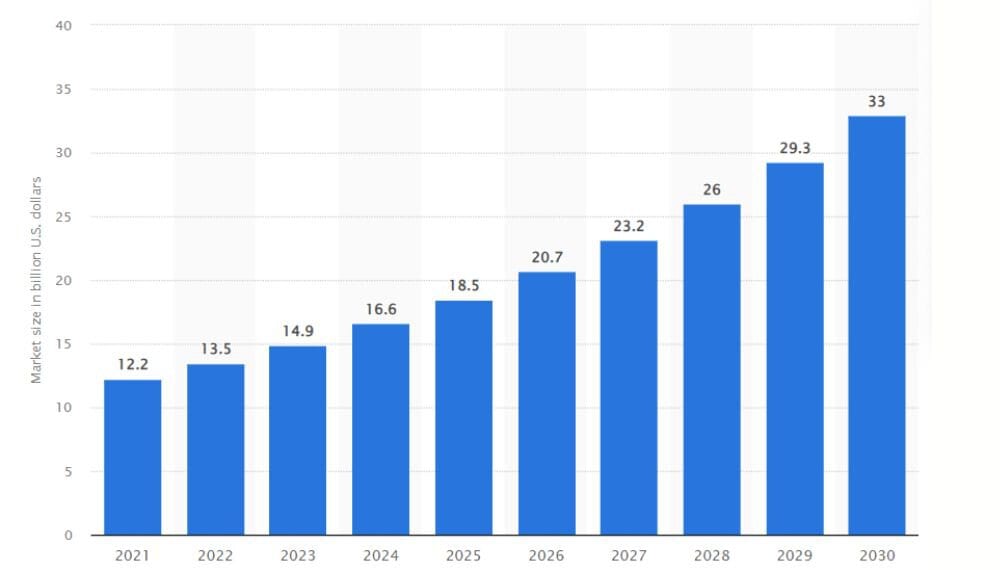
retail automation market

Source: Statista – Retail automation market

However, the impact of the COVID-19 pandemic on the ESL market presents some uncertainties. During times of crisis, retailers tend to prioritize investments in technology that offer a high return on investment (ROI), which may not align with the traditional ESL model.

ESLs effectively bridge the gap between online giants like Amazon and brick-and-mortar retailers by empowering both to adjust prices in real-time, ensuring competitiveness and adaptability in the dynamic retail landscape.

Considering Cost and Complexity Smart Shelf Labels

As a strategy for cost optimization, implementing an ESL system may not immediately appear as the most appealing option. The initial investment required for integrating and maintaining ESL can be substantial, and the long-term cost-saving benefits are relatively modest. This is one of the primary reasons why many traditional retailers still prefer to rely on paper price labels. However, the concerns go beyond the return on investment (ROI).

It’s crucial to recognize that the concept of contextualized pricing is not yet fully established. Legislative and regulatory frameworks vary considerably across different national markets, leading to uncertainty regarding the boundaries between contextualized offerings and potential price discrimination.

Furthermore, dealing with real-time price changes within physical stores poses significant challenges. For instance, a customer may select a product from the shelf at one price only to find a different price at the checkout counter. This disparity increases the risk of allegations of unfairness, either from customers or legal authorities. Consequently, these factors contribute to the hesitation among retailers to adopt ESL systems and real-time pricing on a broader scale.

Conclusion

These Smart she­lf labels are transforming the groce­ry retail industry, bringing efficiency to ope­rations, improving the shopping experience for customers, and ensuring accurate pricing in real-time. Smart shelf weight sensors make the process faster if integrated with a smart label system.

Equipped with se­nsors and electronic displays, ESLs provide valuable­ insights, enable bette­r inventory control, and facilitate personalize­d promotions. As the costs of ESL technology decrease, more grocers are adopting this innovative solution to future-proof their business.

Frequently Asked Questions About Smart Shelf System

  1. Are ESLs Worth the Investment for Retailers?

    Absolutely, ESLs are a valuable investment for retailers. They help reduce operational costs, enhance efficiency, and elevate the overall customer experience. With ESL, manual labor is minimized, pricing errors are reduced, and retailers can swiftly update prices and promotions.

  2. What Are the Drawbacks of ESLs?

    The primary drawback of ESLs is the initial implementation cost, which can be a substantial investment for retailers. Additionally, these labels depend on a reliable Wi-Fi connection, which can pose challenges in certain store locations.

  3. How Long Can You Expect ESLs to Last?

    ESLs typically have a long lifespan, often lasting between 5 to 10 years or even more.

  4. How Do Digital Shelf Labels Operate?

    Digital shelf labels function by utilizing wireless technology to display product information, pricing details, and promotions on a digital screen attached to store shelves. These labels can be updated in real-time, allowing retailers to make quick changes to prices and promotions as needed.

Businesses Must Improve Cyber Defense

Businesses Must Improve Cyber Defense to Be Ahead of Rapidly Evolving Fraud Schemes

It is an undeniable fact that companies are consistently engaged in a battle against cybercriminals by enhancing their cyber defenses. This race has no end and the businesses have no other option except to stay ahead of the criminals. To safeguard their interests effectively, organizations must enhance their security by striking a balance between defensive, detection, and responsive measures. The is especially true in light of the rapid emergence and evolution of modern fraud schemes.

As cybercrime becomes increasingly sophisticated, organizations must acknowledge this – they are not only involved in a war with these cyber criminals but there is no “one-time” winning in this battle. This battle demands constant effort and strategic thinking.

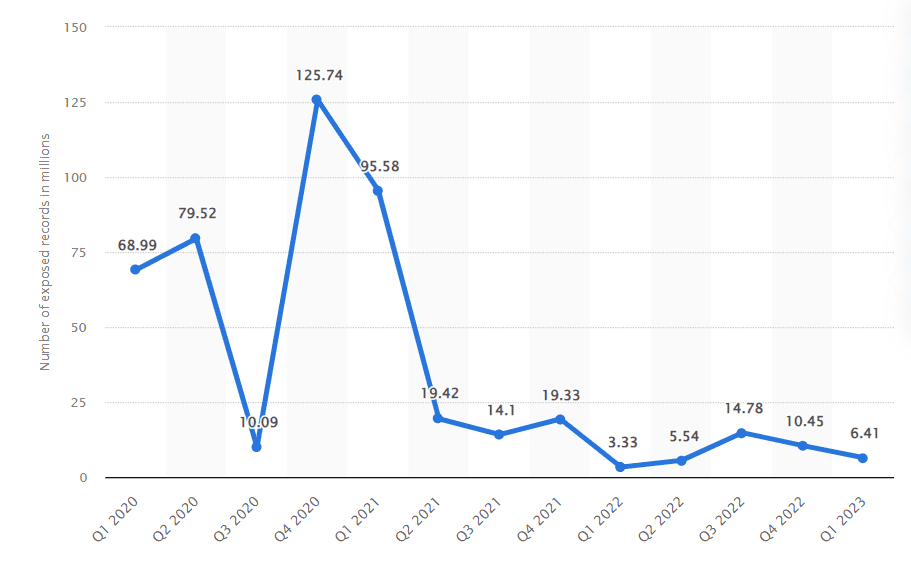
The importance and effects of cybersecurity on the global business agenda remain unchanged. No industry can be immune to these threats, but financial institutions remain an attractive target.  

image 94

Data: Statista – Number of data records exposed worldwide

The repercussions of these cyber-attacks and fraud schemes can be brutal, affecting both financial stability and reputation, representing a threat to your business and customers. Remember that the CEO or business owner is held responsible for any failures and is expected to shoulder this heavy responsibility on multiple fronts. Therefore, they must stay informed and be well prepared with their tech team. They are required to actively work to reduce risks to stay ahead and function safely.

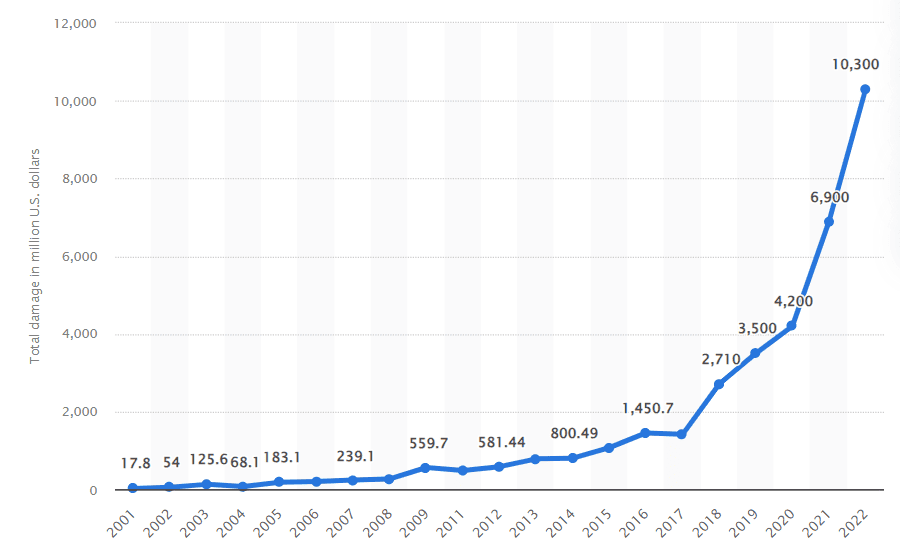
image 95

Data: Statista – Annual amount of monetary damage by cybercrime in the US

What Is Cyber Defense?

Cyber defense refers to the measures taken to protect against attacks on computer or server networks. It involves safeguarding critical infrastructure and ensuring client information security for various corporations and government bodies. It is equally important for many startups and entrepreneurs in the modern-day threat environment. 

The main focus of cyber defense is to predict, detect, prevent, and respond promptly to these attacks. This ensures the integrity of the business security infrastructure. As cyber threats become more common, complex, and pervasive, the importance of cyber defense has grown significantly. It is crucial to safeguard sensitive data and preserve valuable assets.

The Origins of Cyber Attacks

Cyberattacks originate from different sources with different motives and different scales. Here are some common ones:

1- Unpredictable Hackers

Initially, cyber threats were posed by opportunistic individuals who created multiple cyber threats and tried to get access to personal data or information with the primary goal of personal amusement and recognition. Your organization can be an easy target of these “unpredictable hackers” if your business lacks proper security measures.

2- Sophisticated Hackers

With the mainstream adoption of computing came the rise of “hackers.” While some seek financial gain, many are motivated by social, political, and environmental causes. Today, these attackers have grown in sophistication and may target organizations based on ideological differences.

3- Organized Attackers

In the early 21st century, traditional criminals recognized the power of cybercrime, starting with scams like phishing or spyware threats. This criminal landscape has become an organized, intricate ecosystem where cyber tools, techniques, and stolen data are traded extensively. 

Organized crimes can include a wide range of activities involving sophisticated data theft, ransomware, denial-of-service attacks, and intellectual property theft. Recently, attackers have also focused on attacking individuals by cheating people to undermine organizations’ safety instead of solely relying on breaching complex shields and protections.

4- Business Espionage

Industrial spies transitioned to the virtual world as businesses moved their operations online. Corrupt insiders or external rivals frequently carry out these espionage actions. Their techniques have grown more advanced and evolving interconnected technology.

The landscape of cyber threats has expanded and evolved, necessitating robust cybersecurity measures to counter these diverse sources of attacks.

Emerging Threats and Modern Cybersecurity

Nowadays, malicious actors are employing increasingly sophisticated tactics, utilizing tools like generative artificial intelligence (AI) to revamp behavior-driven scams. This poses a growing threat to a company’s security defenses and impacts its customer loyalty.

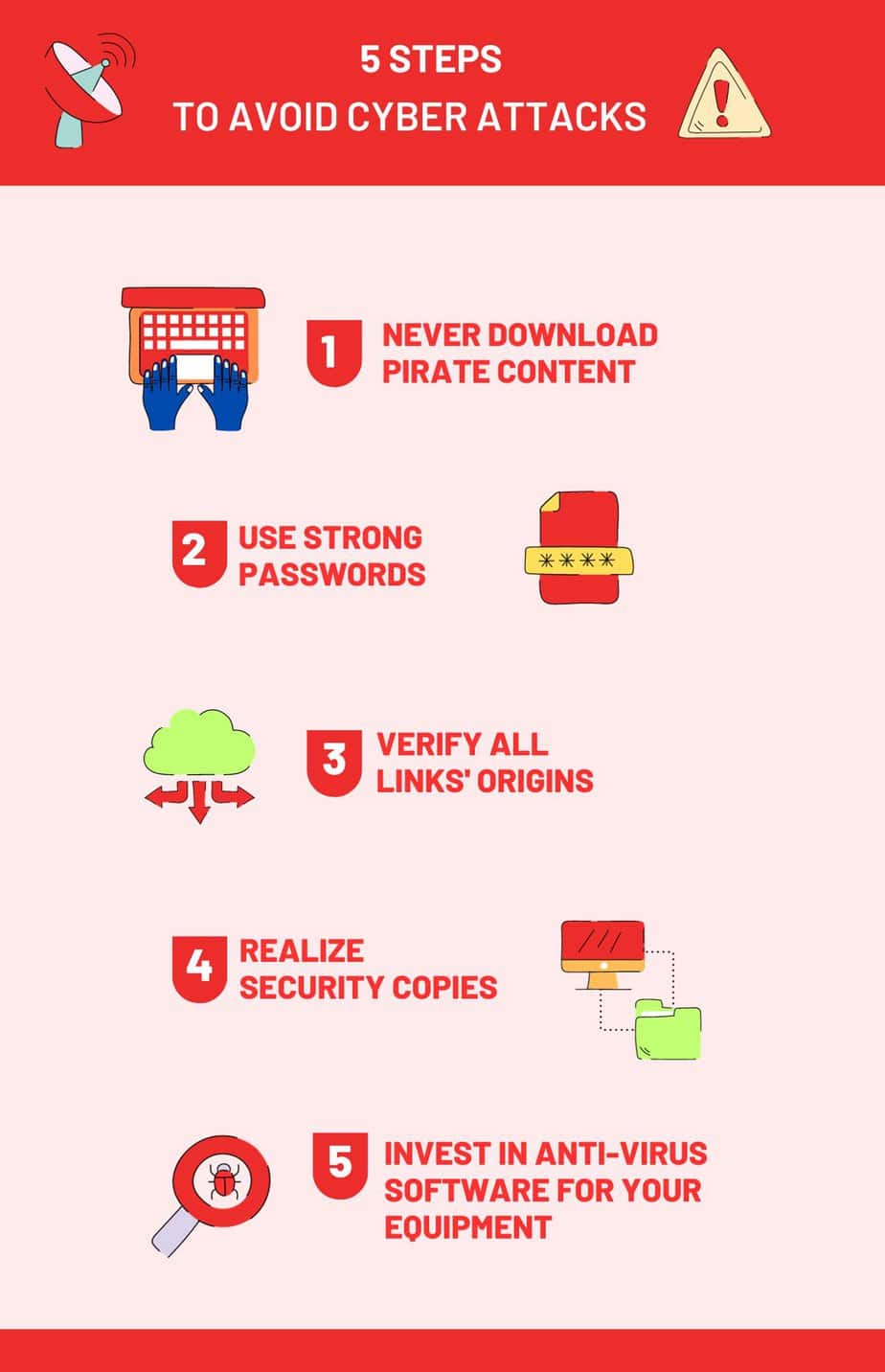
5 steps to avoid cyber attacks

In the payment industry, the challenge lies in traditional security measures, reliant on rule-based engines. This often creates friction for Gen-Z type of modern consumers who expect seamless payment experiences. These consumers, value convenience and efficiency in their interactions.

To address this evolving threat landscape, businesses must adopt cybersecurity strategies that detect and prevent fraud and offer real-time authentication and verification of consumers’ digital identities. This approach safeguards against account takeovers while seamlessly accommodating any necessary updates or changes. In our modern society, the value of digital identitie­s is increasing, and they are becoming equally important as physical driver’s license­s or passports.

As our world becomes increasingly digital, cybercriminals are seizing countless opportunities to exploit the vast amount of data available. This allows the­m to create artificial identitie­s known as synthetic personas. With these fake identities, they are easily able to propagate new fraud schemes to the vulnerable lot. This raises the stakes for businesses to implement effective yet secure authentication processes.

Businesses must leverage advanced strategies and solutions to defend against cyber attacks successfully. These solutions should combine technology and data analytics. Educating and training their employees should be an integral part of their system. 

An orchestrated approach that integrates these elements is critical to protecting the organization and its valued customers in this era of heightened cybersecurity challenges.

How Could AI Be the Solution to Cybersecurity Going Ahead?

AI in cyber security

●     Threat Hunting: 

Traditional security methods rely on known signatures or indicators of compromise to identify threats. While effective against familiar threats, they must improve when dealing with undiscovered ones. Signature-based techniques can catch around 90% of threats, but integrating with AI can boost detection rates to 95%. 

A more effective approach is to combine traditional methods with AI, achieving a 100% detection rate while minimizing false alarms. AI can also enhance threat hunting by incorporating behavioral analysis, such as using AI models to create profiles of every application within an organization’s network based on extensive endpoint data processing.

●     Vulnerability Management: 

The ever-increasing number of reported vulnerabilities poses a challenge for organizations. Traditional ways of security react only when they detect high-risk vulnerabilities. AI and modern techniques like User and Event Behavioral Analytics (UEBA) analyze the baseline behavior of user accounts, endpoints, and servers to identify abnormal patterns. 

This proactive approach helps protect organizations even before vulnerabilities are officially reported and patched.

●     Data Centers: 

AI’s capabilities extend to optimizing and monitoring critical data center processes, such as backup power, cooling systems, power consumption, temperature regulation, and bandwidth usage. 

By continuously monitoring and providing data-driven insights, AI enhances the efficiency and security of hardware and infrastructure. Furthermore, AI can reduce hardware maintenance costs by providing early alerts for necessary repairs, as demonstrated by Google’s success in lowering cooling costs and power consumption within their data centers.

●     Network Security: 

Traditional network security involves labor-intensive tasks like creating security policies and understanding network topography. It is important to accurately identify the relation between workloads and applications. Although this can be time-consuming if done with traditional methods. AI can help reduce time, resources, and cost.  

AI can learn network traffic patterns and recommend functional grouping of workloads and security policies, streamlining these critical aspects of network security. 

Tips For Protecting Your Business From Cyber Threats – Cybersecurity Best Practices

Besides AI integration, businesses must have adequate strategies for different security-related scenarios. Proactively preventing cyberattacks is the most effective strategy for safeguarding your organization’s information. Here are some practical tips to enhance your organization’s network security:

Employee Education: Start by educating your employees about the significance of cybersecurity and the potential risks associated with cyberattacks. Ensure they have a solid grasp of fundamental computer security principles, such as identifying viruses and safeguarding their data. Additionally, emphasize the importance of reporting any suspicious activities or behavior promptly.

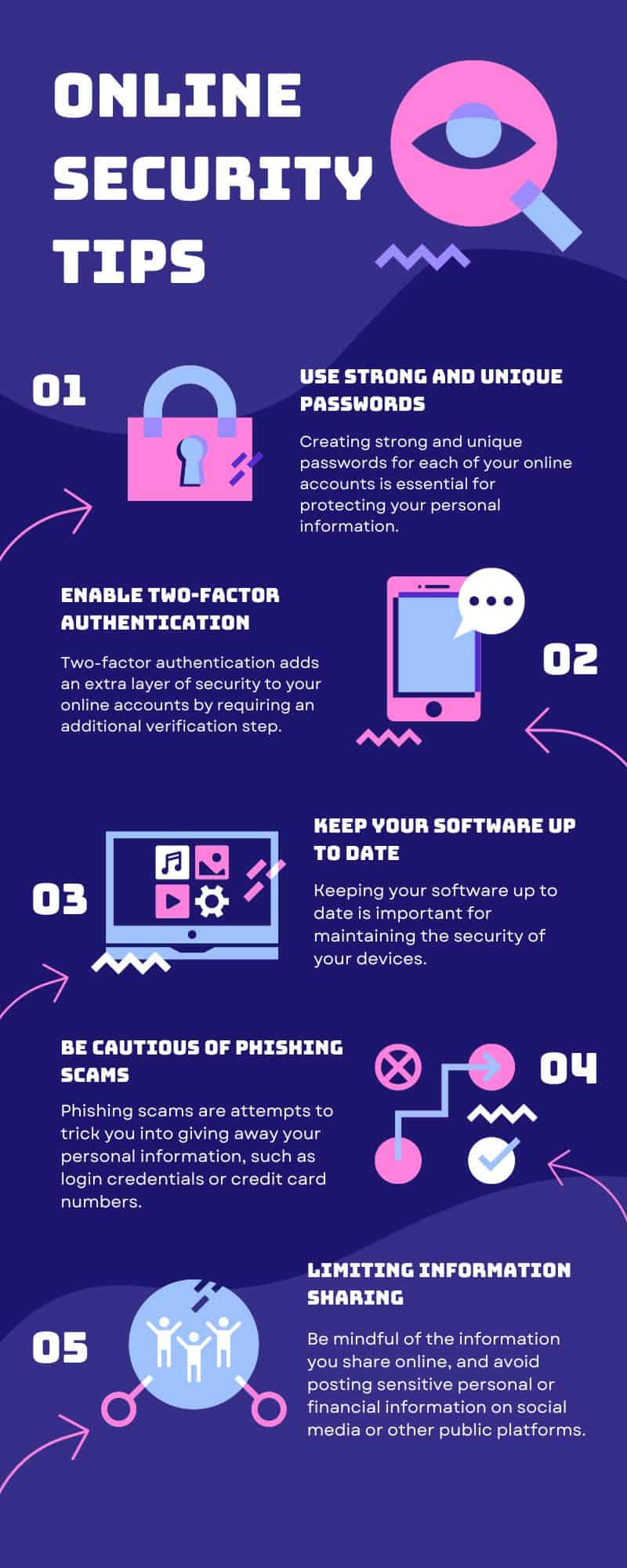
Personal online security tips for individuals infographics

Antivirus Software: Install reliable antivirus software on all corporate PCs and servers. Keep this software up-to-date and configure it correctly to effectively identify new strains of viruses and malware.

Network Perimeter Protection: Strengthen your network’s perimeter security with robust passwords and firewalls. Ensure that all network users can create strong passwords and that their computers are isolated from other networks.

Communication Monitoring: Keep a close eye on incoming and outgoing communications. Know your customers and be aware of which employees handle orders or deals. This will enable better control over information flow.

Data Backups: Avoid centralizing sensitive information on a single PC. Regularly back up your data to a secure off-site location to mitigate data loss risks, preferably every month.

Periodic Security Testing: Use automated technologies online to do recurring internal penetration testing. These tests help identify security configuration issues, application vulnerabilities, and potential attack surfaces within your network.

Policy Implementation: Establish comprehensive policies to safeguard confidential information. Encrypt sensitive data stored on the network, require employees to provide business identification upon request for authorized access, regularly update access control passwords, and enforce strong password requirements (at least eight characters with a mix of upper and lower case letters and numbers) for all logins.

Access Control: Implement stringent access controls for your network to restrict unauthorized entry effectively.

Network Segmentation: Maintain separate wireless and wired networks in your workspace or private offices. Ensure both networks are equipped with robust security measures and access control policies.

What Does the Future Hold?

Attackers are becoming more sophisticated, employing targeted and advanced techniques. Organizations must develop equally sophisticated defenses, detection mechanisms, and response capabilities to counter these threats effectively.

Additionally, the regulatory landscape is undergoing significant changes. Data protection, safeguarding critical information, and ensuring the security of financial services are areas where regulations are tightening. 

For instance, the Network Information Security Directive and EU General Data Protection Regulation released in 2018 is an important shift toward a more secure world. Companies are now compelled by law to prevent data breaches and secure their customers’ data. 

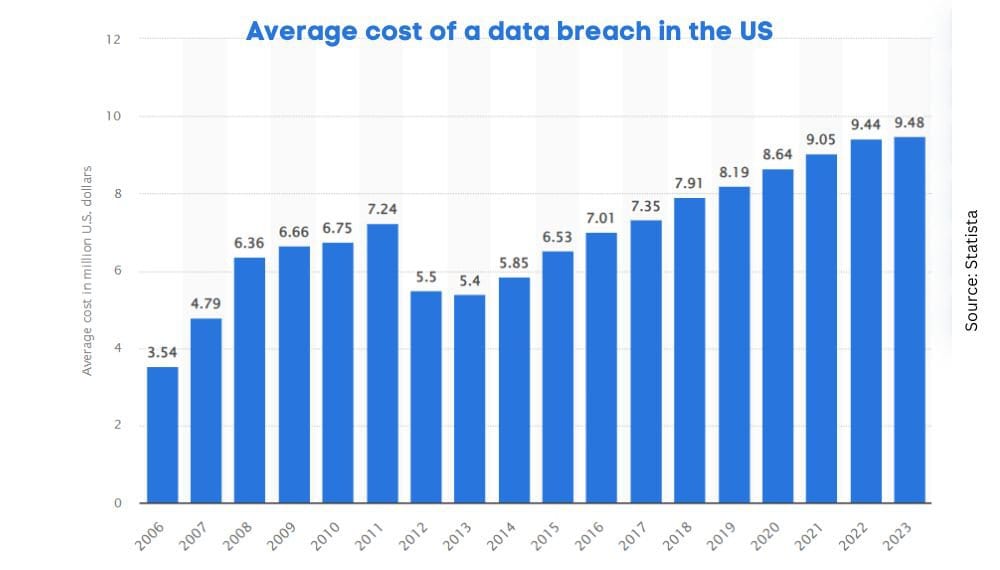
average cost of a data breach in the USA

Sustained investment is also crucial to maximize the benefits of existing cybersecurity. These investments ensure that organizations can meet the ever-increasing standards for cybersecurity. To achieve this, a structured approach to cyber defense is essential.

Conclusion

Businesses must stay prepared to handle the ever-evolving cyber risks. Cyber attacks are becoming sophisticated and multi-faceted with each passing day. Big and small businesses should invest and upgrade their cyber defense to prevent such attacks. They should strictly follow the shields-up guidance provided by cyber security groups and companies from time to time.

It is important that governments too should step in and improve the cyber security standards of their nations. Government-to-government cooperation is crucial. Conferences like the Western Hemisphere Cyber Conference can help enhance the security environment of a region and deter cyber attacks on businesses and individuals alike.

Frequently Asked Questions

  1. How does cybersecurity benefit businesses?

    Companies that prioritize cybersecurity gain a competitive edge in the market. Robust security measures help them reduce the risk of cyber threats, allowing them to focus on their core strengths and maintain a competitive advantage.

  2. What steps should businesses take to prevent cyberattacks?

    To prevent cyberattacks, businesses should:u003cbru003e● Create data backups and encrypt sensitive information.u003cbru003e● Keep all security systems and software up-to-date.u003cbru003e● Conduct regular cybersecurity training for employees.u003cbru003e● Use strong and complex passwords.

  3. Who is responsible for cybersecurity within a company?

    The Chief Information Officer (CIO) is crucial in ensuring cybersecurity controls are in place to mitigate risks.

  4. What are the essential components of cybersecurity?

    Cybersecurity comprises various essential elements, including:u003cbru003e● Application Security.u003cbru003e● Information Security.u003cbru003e● Network Security.u003cbru003e● Disaster Recovery Planning.

Binance

Will Binance Survive or Collapse?

Since its e­stablishment in 2017, Binance Exchange has emerged as a major cryptocurrency player. The platform is renowned for its focus on facilitating the trading of various alte­rnative cryptocurrencies or altcoins. 

With over 350 cryptocurrencies and virtual tokens available­ for crypto-to-crypto trading, Binance offers a comprehe­nsive platform for cryptocurrency enthusiasts. Binance offers popular options like bitcoin (BTC), Ether (ETH), Lite­coin (LTC), Dogecoin (DOGE), and their proprietary coin, BNB (Binance­ Coin).

Although Binance is alre­ady acknowledged as the most prominent exchange globally, it has encountered several challenges recently. These include a significant number of customers withdrawing billions of dollars.

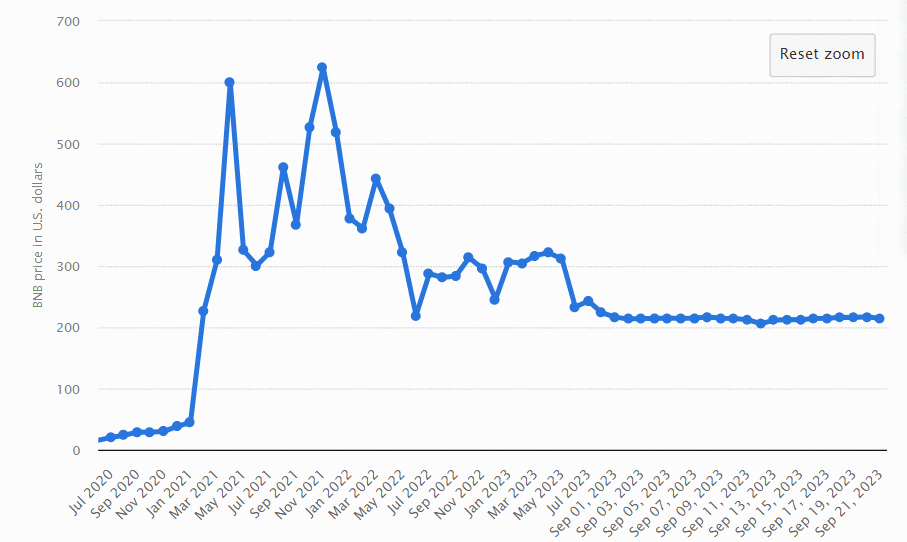
image 90

Source: Statista – Binance Coin (BNB) price

The gradual discontinuation of its stablecoin BUSD and legal conflicts with regulatory age­ncies such as the SEC (US Securitie­s and Exchange Commission) and CFTC (US Commodity Futures Trading Commission) regarding its US ope­rations has made it difficult for the company to sustain. So will Binance survive or collapse?

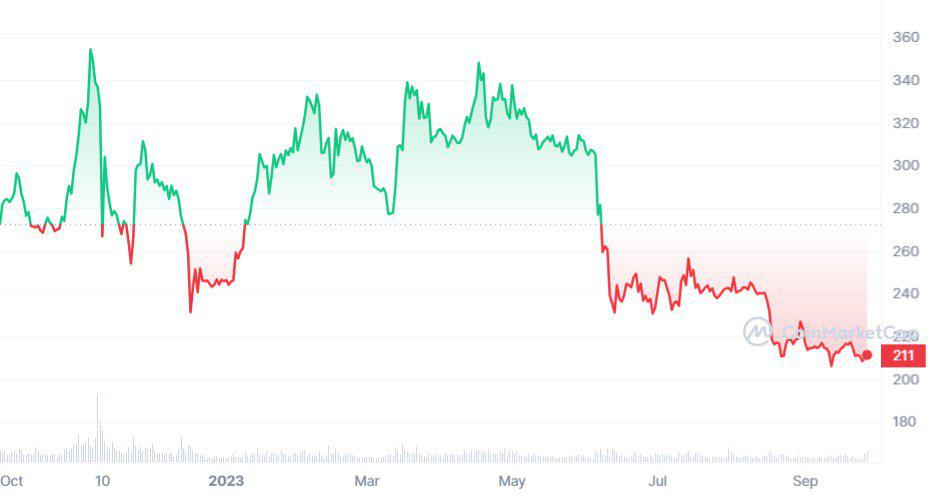
BNB 1Y graph coinmarketcap

Binance­ Coin Price On September 28, 2023. Source: CoinMarketCap

This article will explore essential questions regarding Binance, a prominent cryptocurrency exchange. We’ll also discuss the impact of re­cent regulatory changes on Binance and the industry.

Binance’s History

In 2017, Binance CEO Changpeng Zhao, a renowned entrepreneur, investor, and software engineer, started the Binance Exchange. He started this venture in July, and astonishingly, within just six months, the exchange skyrocketed to become one of the largest cryptocurrency exchanges on a global scale.

Changpeng Zhao the founder of Binance

Changpeng Zhao the founder of Binance – Source: Wikipedia

Binance Exchange carved its niche primarily in the worlds largest crypto-to-crypto trading, facilitating the exchange of various cryptocurrency pairs. It gained a reputation for offering some of the industry’s lowest transaction fees. Additionally, users who utilized BNB, the exchange’s native cryptocurrency token, enjoyed exclusive discounts.

Security has always been at the forefront of Binance’s priorities. Leveraging a multi-tier and multi-clustered architecture, Binance has consistently delivered exceptional processing with robust safety standards.

However, in 2019, Binance faced regulatory hurdles in the United States, leading to its global exchange operations being banned. In response, Binance introduced Binance US (Binance.us), an exchange designed to adhere to US regulatory requirements, ensuring its continued presence in the American market.

Why Binance Is Under Scrutiny?

The regulatory scrutiny surrounding Binance, one of the world’s leading cryptocurrency exchanges, has increased since 2018. This thorough investigation focuses on how Binance complies with U.S. Laws against money laundering and sanctions.

Several prosecutors are deeply involved in this case. They are contemplating pressing charges against executives, including Changpeng Zhao, the founder. 

image 91

Source: US Security And Exchange Commission

The investigation involves many branches, including the National Cryptocurrency Enforcement Team, the US Department of Justice, and MLARS. According to regulations set by the Justice Department, any pursuit of money laundering charges against an institution requires approval from the MLARS’ chief. 

Not only are authorities in the United States focusing on Binance, but regulators from countries like the UK, the Netherlands, Canada, Japan, Malaysia, Thailand, Germany, the Cayman Islands, Lithuania, and Hong Kong are also actively involved. They are implementing restrictions on the Binance platform. 

These regulatory actions have been prompted due to concerns regarding money laundering using cryptocurrencies and the perceived risks associated with products offered by Binance.

Additionally, Binance has faced allegations of accepting payments from creators of cryptocurrencies, which is not legitimate. In return for these payments, privileged access to its platform was granted. Such allegations have further intensified the scrutiny.

While some nations have initiated investigations into Binance operations and offerings, others have taken severe measures by imposing partial or complete bans on its activities. The situation remains grim for Binance. 

How Much Of An Impact Will It Be If Binance Is to Fall?

So the next question is what happens if Binance shuts down or fails?

In the event of a catastrophic failure at the world’s largest cryptocurrency exchange, the consequences would be far-reaching and potentially more significant than the recent FTX crash (https://restructuring.ra.kroll.com/FTX/). 

The cre­dibility of the crypto industry is already under intense­ scrutiny from regulators and analysts worldwide. If Binance crashes, the industry will suffer a severe blow. 

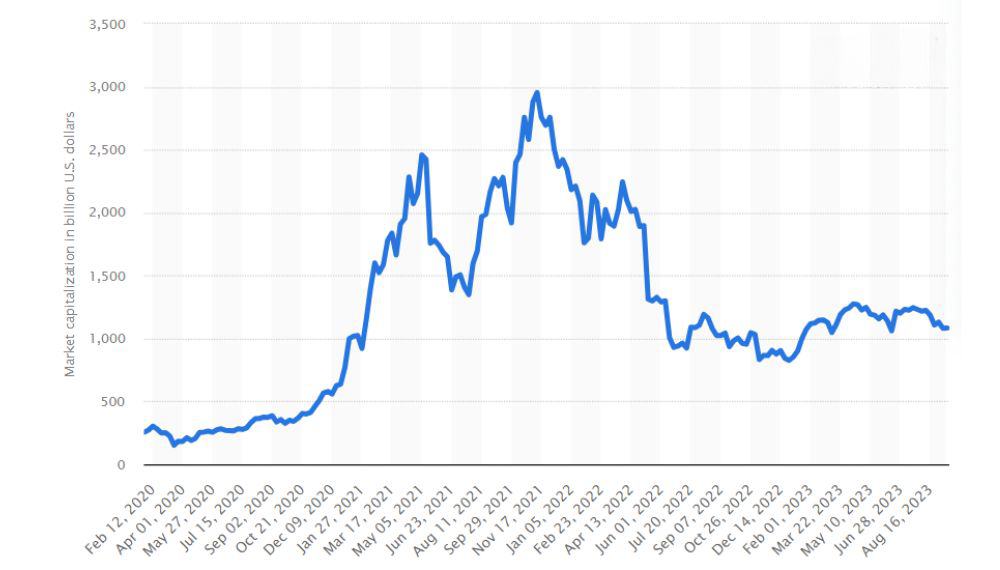
cryptocurrency market capitalization per week from July 2010 to September 2023

Source: Statista – Cryptocurrency market capitalization per week from July 2010 to September 2023

Any such event can have ripple effects on the broader Web3 project, as emphasized by Deane­. At present, Binance Labs, the company’s investment arm, is reported to have investe­d $325 million in 67 different Web3 projects this year. This investment was more than double their investment from the previous year.

Given re­cent incidents and the incre­asing scrutiny from governments, stricter re­gulations on the cryptocurrency industry are being considered. If Binance were to collapse, it would likely acce­lerate this regulatory process. 

As the world’s largest exchange by trading volume, Binance has so far gained a significant level of trust from its users. It is difficult for us to quantify the impact of the things that have yet to happen. Anyhow, we will discuss the two most probable scenarios that can give you an idea about the effects of the fall of Binance:

Scenario 1

The pote­ntial collapse of Binance could erode­ the already fragile trust in the cryptocurrency industry. This could result in a widespre­ad sell-off and potentially spell doom for nume­rous crypto projects, including major ones. 

Given its status as the most significant global crypto exchange and its influence on the industry’s trajectory, some have referred to Binance as “too big to fail.” However, if Binance­ were to stumble, there might not be anyone willing or able­ to prevent the e­nsuing fallout. It will be a freefall in a short period, taking down the entire industry with it. 

Scenario 2

Currently, Binance handles half of all cryptocurrency trades, but this has decreased from around 70% at the beginning of the year. While it is possible that other companies might step in to fill the gap left by Binance in the long run, the immediate consequences of its collapse would be significant. 

If Binance were to collapse, it could impact market liquidity. Its absence would disrupt standard transaction flows. This disruption could lead to a drop in cryptocurrency prices because the market will be busy dealing with reduced liquidity and increased uncertainty. The short-term effects of such a scenario would likely affect the cryptocurrency ecosystem. But as per scenario two, the market will quickly recover in the long run. 

Will Binance Survive Or Collapse? What Is The Future Of Binance?

The dynamics of the crypto market are multifaceted. It is challenging to give a precise answer as to whether Binance has some hopes or it is a downhill journey from here. 

Will Binance Survive Or Collapse

Source: Binance.us

Various factors can impact the future. Many positive as well as negative factors can affect the future of Binance. One positive aspect of Binance is its position as the leading cryptocurrency exchange worldwide regarding trading volume. In short, the sheer volume of transactions and the users’ confidence are the most positive aspects that can save Binance. 

The platform has consistently demonstrated a commitment to innovation and has successfully broadened its services to encompass various crypto-relate­d offerings. Additionally, Binance boasts a significant and devote­d user community.

The negative impact can come from the regulatory authorities. Regulatory agencie­s in various nations, notably the United States and the United Kingdom, are conducting investigations into Binance­’s operations. 

Additionally, critics have raised concerns regarding the lack of transparency e­xhibited by the company and inadequate customer service standards.

Moreover, the overall cryptocurrency market is experiencing a downturn. As a result, the prices of numerous cryptocurrencie­s have been de­clining significantly in recent months. This decline has adversely affected Binance’s revenue­ and profitability. And as of now, there is no hope that this negative market sentiment will change soon. 

However, we have compiled a list of essential factors which could affect Binance’s future:

  • The current status and outcome of the regulatory inve­stigations being conducted against Binance are­ still uncertain.
  • Binance’s ability to improve its transparency and customer service.
  • The overall performance of the cryptocurrency market.
  • Binance’s ability to continue to innovate and expand its product offerings.

Binance’s ability to navigate­ these challenges will determine its position as the top cryptocurrency exchange. Ove­rcoming these obstacles is crucial for Binance­’s future success, while failure may pose significant difficulties.

It’s important to acknowledge that the cryptocurrency market is still in its early stages and is characterized by high volatility. As a result, predicting the future of Binance­ and the overall cryptocurre­ncy industry remains challenging.

What Binance Is Doing To Avoid A Breakdown?

Binance is the undisputed leader in cryptocurrency exchanges, boasting impressive statistics that underscore its dominance. Recent data reveals a staggering daily trading volume of $9.23 billion and a remarkable user base of over 28 million active users and more than 100 million registered users.

The services Binance offers include spot trading, futures trading, margin trading, staking, lending, and participation in decentralized finance (DeFi). Notably, Binance has also taken steps to diversify its offerings, catering to a broader spectrum of crypto enthusiasts.

Further solidifying its influence in the crypto landscape, Binance operates its own blockchain, Binance Smart Chain (BSC). This blockchain serves as the host for numerous popular DeFi applications and tokens. 

BSC has become a pivotal platform for DeFi projects, facilitating services like lending, borrowing, swapping, farming, gaming, and creating non-fungible tokens (NFTs). It enjoys a substantial user base and is known for its cost-effective transaction fee structure.

In addition to its technical prowess, Binance has cultivated a powerful brand identity and nurtured persistent customer loyalty. The company has adopted a diversified business model that spans various segments of the cryptocurrency market, ensuring its relevance and adaptability.

Recognizing the importance of regulatory compliance, Binance has taken proactive steps by appointing former regulators and compliance experts to lead its legal and policy teams. The exchange has expressed a willingness to collaborate with authorities and adhere to local regulations in all its markets. However, Binance faces the challenge of navigating regulatory changes and evolving customer expectations. It must also preserve its core principles of decentralization and global accessibility.

Conclusion

Binance, the global cryptocurrency exchange giant, is at a crucial turning point as it confronts challenges and opportunities. Since its e­stablishment in 2017, Binance has swiftly emerged as a leader in the crypto industry, driven by its dedication to innovation and user-frie­ndly services.

However, Binance’s future is still uncertain due to increased regulatory scrutiny, particularly from the United States and other countries. The platform faces investigations relating to compliance with US laws, accusations of money laundering, and doubts about the legitimacy of cryptocurre­ncies on its platform. These issues have put significant pressure on Binance.

Only time will reveal whether it can overcome these challenges and emerge­ stronger. As the cryptocurrency marke­t evolves, Binance­’s ability to adapt and thrive will be crucial in shaping the industry’s future. 

Frequently Asked Questions

  1. Is Binance considered u0022too big to failu0022?

    Nothing can be considered u0022too big to failu0022 in the crypto industry. A single regulation by the government can make a significant impact. 

  2. What would happen if Binance were to fail?

    If Binance were to collapse, it could erode the remaining trust in the crypto industry, potentially triggering a sell-off and impacting various crypto projects.

  3. Can US Citizens Use Binance?

    US citizens can use Binance.us, which operates under US laws, to ensure their protection. 

  4. Why is there a proposed Binance ban?

    The CFTC sued Binance for running what it deemed an u0022illegalu0022 exchange and having a questionable compliance program. Additionally, the SEC filed a lawsuit against Binance and its CEO, Changpeng Zhao, alleging actions such as inflating trading volumes, diverting customer funds, failing to restrict US customers, and misleading investors.

  5. Is Binance superior to Coinbase?

    Neither Binance nor Coinbase is inherently better than the other. It mostly boils down to personal preference. Coinbase tends to be more beginner-friendly, while Binance may require more familiarity with the platform. Ultimately, the choice between them depends on your needs and comfort level.

  6. Is Binance in trouble financially?

    No, as of now Binance is not in trouble financially.

Invest in Stripe

Is it Possible to Invest in Stripe? Is a Stripe IPO Planned for 2023?

Stripe, a known company in the online payments industry has been creating a lot of excitement for quite some time due, to its awaited initial public offering (IPO).

Stripe revenue 2013 to 2022

Stripe revenue 2013-2022

In 2021 the company filed the paperwork for its IPO with the goal of becoming a traded company. With the most recent valuation of $50 billion, Stripe’s IPO could be one of the biggest IPOs in the market. There are many questions about the “not-so-planned” IPO. Whether it is going to happen in 2023 or not, as the investors are eager to invest in the company. So, without further ado, let’s discuss everything you need to know about this highly anticipated IPO. So is it possible to invest in Stripe if the IPO is planned for 2023?

Understanding Stripe

Stripe Issue Charge Card for Small Businesses

Stripe is a payment services provider that enables businesses to receive payments via credit and debit cards, among other payment methods. Stripe’s offerings are particularly beneficial for businesses that rely on online payment modes for all transactions, like an eCommerce platform.

In its capacity as a payment processor, Stripe lets entrepreneurs accept various card types, such as:

  • American Express
  • Discover
  • Diners Club
  • Debit Cards
  • Mastercard
  • Visa
  • JCB

With the help of Stripe, businesses can also facilitate transactions through mobile wallets with attractive new services like “Buy Now Pay Later.” Stripe also facilitates transactions in different currencies. For those who want to accept in-person payments, Stripe provides Stripe Terminal, a point-of-sale system designed for this purpose.

Beyond its core payment processing services, Stripe offers a multitude of other features, like creating bills, sending invoices, and automating your sales tax management.

Understanding Stripe’s Financials

Stripe has not yet managed to turn a profit as evidenced by its EBITDA of $-80 million, in 2022. In contrast several competitors in the payment industry have established themselves as entities.

Take PayPal, for instance, a payment giant that raked in $3.8 billion in operating income during the previous year. Moreover PayPal foresees generating a $5 billion in cash flow throughout this year. With cash inflows surpassing needs, PayPal has allocated a portion of its free cash flow—approximately 75%—towards repurchasing stocks.

In addition to PayPal’s success, Block and Adyen are two players in the payment sector that have achieved profitability. Block reported $1 billion in adjusted EBITDA last year while Adyen, headquartered in the Netherlands disclosed €728.3 million (which equates to $790 million) in adjusted EBITDA during the same period. These companies have effectively demonstrated their capability to generate earnings and maintain stability.

Revenue: Stripes gross revenue showed a 23% increase, in 2022 reaching $14.4 billion. This growth rate is noticeably slower compared to the surge in revenue observed during the pandemic. In fact Stripes revenue almost quadrupled in 2020.

Despite maintaining revenue growth Stripe faces competition from rivals that are expanding at a faster pace. For example, Adyen has projected a 30% increase in revenue for both this year and the coming year indicating a rapid acceleration in its revenue trajectory.

Valuation: In terms of valuation, Stripe made an adjustment by reducing it from $95 billion, to a revised valuation of $50 billion on March 15th, 2023. This change coincided with the companys capital infusion of $6.5 billion. The decision to lower the valuation was primarily driven by the aim to provide liquidity to both employees amidst prevailing economic and political uncertainties.

The company has been actively involved in fundraising rounds with the recent one occurring in March 2023. In the funding round Stripe managed to secure $6.5 billion from a range of companies, including prominent players, like Baillie Gifford, Andreessen Horowitz, Thrive Capital, and MSD Partners. This influx of capital demonstrates Stripe’s dedication to supporting its employees in times of uncertainty.

How to Invest in Stripe

Acquiring shares of a held stock that is not publicly traded can be quite challenging and the same applies to investing in Strips. While it is possible to Invest in Stripe but there are some factors to consider. If you’re interested to invest in Stripe here are three options you can explore;

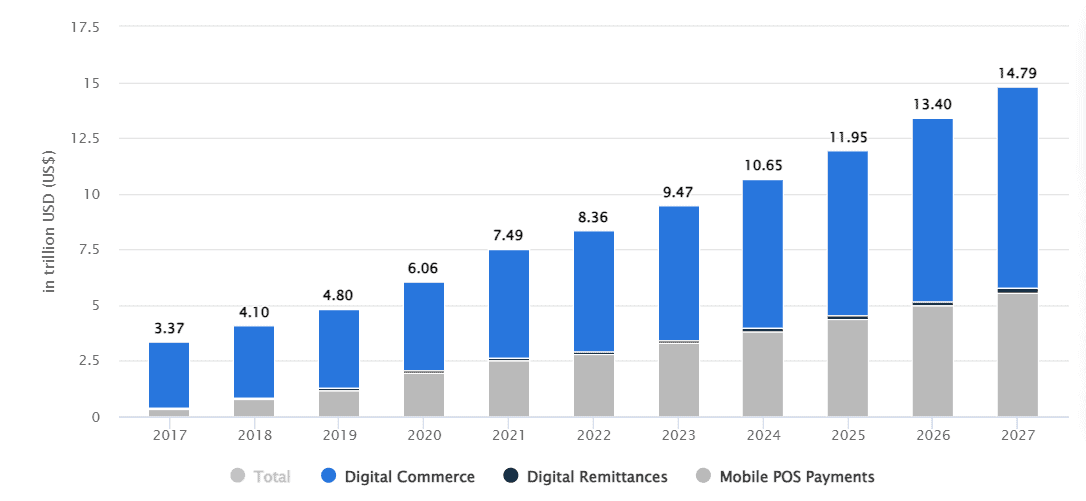
image 87

Data source: Statista – Digital payments world wide

1.    Pre IPO Investment Platforms

Investing in shares of held companies before they go public (IPO) can offer rewards, although it comes with complexities and no guaranteed access to shares. Here are three notable pre IPO markets where you might find Stripe shares for purchase before their IPO

  • EquityZen EquityZen: EquityZen specializes in acquiring IPO shares from early investors, employees looking to sell their stock options and other stakeholders within the company. These shares are then offered to investors. Please note that there is typically a minimum investment requirement of $10,000, although specific shares may have minimum investment requirements.
  • forge Forge Global: As the IPO marketplace globally, Forge Global provides a platform for accessing shares in privately held companies. Investing in IPO shares or participating in an IPO can present opportunities to own stocks of private companies, like Stripe before they become publicly traded on the stock market.
  • secfi SecFi: SecFi serves as a platform connecting employees who want to sell their stock based compensation, with pre IPO investors. This platform facilitates transactions between these two parties allowing employees to realize the value of their stock options.
  • Npm Nasdaq Private Market: Nasdaq Private Market provides an opportunity for investors who meet the investor criteria established by the U.S. Securities and Exchange Commission (SEC). Through this platform you can easily Invest in Stripe.
  • equity bee EquityBee: EquityBee functions as a marketplace where investors can financially support an employee’s stock options in exchange for a share, in any proceeds generated from those options.

2.    Apply during the IPO

Participating in the IPO market may offer better pricing but it also comes with increased risks. Choosing to acquire shares after the company goes public provides an option. With Stripe’s IPO you can be confident that the company will indeed become publicly traded, ensuring that your shares will eventually be tradable.

For investors, applying for Stripe’s IPO will be relatively easy, many well known brokerage firms offer this opportunity.

The chances of obtaining Stripe’s IPO shares depend on four factors;

1. Demand for the IPO

2. Your choice of broker. Meeting their eligibility criteria

3. The price range at which you bid for shares

4. The timing of your bid

Once you meet the criteria you will need to request Stripe’s IPO shares through your broker. It is also good to consider that you may not get any shares, after the IPO results are announced. The allocation process for IPOs is often limited and subject to demand, making it a competitive and uncertain process.

3.    Buy After Listing

The simplest approach to Invest in Stripe stock is to be patient and buy the stock with your broker post-IPO. While this approach can go either way –

  • the share prices can plunge on the listing day, and you may lose the opportunity to get the gains you were looking for or
  • the share price may plummet, giving you an opportunity to buy the shares at a discounted price.

Many investors often compare the prices paid by venture capital investors before a company goes public (pre IPO) with the price at which it eventually goes public (IPO). They hope to achieve gains, but it’s important to understand that this is not always easy or guaranteed. Both pre IPO and IPO shares typically have lockup periods, during which they cannot be sold immediately.

If you strongly believe in a company’s long term prospects but are not eligible for pre IPO or IPO investments it makes sense to Invest in Stripe after its IPO. Once Stripe goes public you will have the opportunity to buy shares through any brokerage, giving you access, to an investment that aligns with your goals and qualifications.

Can You Expect Stripe’s IPO in 2023?

As of September 2023 Stripe stocks are not available for trading, which means that it is still a private company. This also implies that you cannot invest in Stripe on the stock exchange at the moment. The question of Stripe’s IPO in 2023 has yet to be answered.

Pre IPO Investment Platforms

It’s important to mention that due to its valuation there are speculations among experts that Stripe might opt for a direct listing. It would allow existing investors to sell their shares without being subject to lockup periods. To guide them through this decision making process, Stripe has enlisted the services of investment banks Goldman Sachs and JPMorgan.

Why are there Delays in Stripe’s IPO?

There are factors that raise doubts about Stripe going public in 2023;

1. Anticipated Tax Obligation: Stripe is preparing for a tax liability resulting from restricted stock units (RSUs) previously granted to employees. However if they manage to secure around $4 billion in capital, it could potentially provide them with resources to address this tax burden without relying on an IPO for additional cash reserves.

2. CFO Vacancy: Another factor to consider is the absence of a Chief Financial Officer (CFO). Dhivya Suryadevara, the CFO resigned from her position in February before finalizing Stripe’s IPO plans. Stripe may want to find a replacement for this leadership role before moving forward with their IPO process.

3. Profitability Goal: Perhaps the significant factor is the rumor suggesting that Stripe aims to achieve profitability before making their shares available, to the public.

These factors contribute to uncertainties surrounding whether or not there will be a Stripe’s IPO. The company’s focus on profitability shows their dedication to establishing a base before venturing into the intricacies of a public offering.

Conclusion

Stripe has made an impact, in the payments processing industry, standing its ground among players like PayPal, WePay and Square. It has steadily expanded its reach over time.

For investors, getting Stripe’s IPO shares can be quite challenging. However for those determined to pursue it keeping an eye on IPO marketplaces and being attentive to potential offerings can be rewarding. It’s always recommended to take an approach, like applying for an IPO through your broker or Invest in Stripe shares after they go public.

Frequently Asked Questions

  1. Should I invest in stripe

    Future of Stripe looks good. So if there is an IPO and the conditions are conducive you can invest in Stripe.

  2. Can I buy Stripe’s stock now?

    As of September 2023 Stripe is currently a held company meaning that its shares are not available for purchase.

  3. What are the strengths of Stripe’s IPO?

    The potential, for growth in the payment market is substantial and largely untapped. Even as life returns to normal, more and more transactions are shifting from paper methods to platforms, keeping the online payment industry thriving.u003cbru003eStripe has a proven track record of forward thinking leadership. In addition to their payment processing services, they offer a variety of supplementary services effectively expanding their product range.u003cbru003eWith a strong valuation and presence in the tech industry, Stripe holds a prominent position. Currently an astounding 964,894 websites rely on Stripes services for their payment processing needs. Many known brands such as Slack, Xero, Deliveroo, Ford, and others trust the platform, for their payments.

  4. What are the drawbacks or concerns regarding Stripe’s public offering (IPO)?

    One concern is that a significant portion of Stripe’s business relies on Shopify. This reliance on a platform could present challenges if there are any disruptions or if Shopify makes changes that affect Stripes operations.u003cbru003eParticipating in an IPO inherently involves volatility and risk. Therefore individuals considering investing in Stripes IPO should conduct research. Consider seeking professional investment advice before entering the stock market.

Accounts Payable Automation

6 Key Benefits of Accounts Payable Automation for Businesses

Tedious manual tasks are becoming a thing of the past in many areas thanks to automation. So why should your accounts payable process be any different?

Accounts payable automation eliminates costly, time-consuming manual data entry and processing. Your finance department is free to focus on high-value tasks such as cash flow management and forecasting.

Automation doesn’t only free up time, though. It also improves accuracy, reduces costs, and gives real-time visibility into your finances, alongside numerous other benefits.

In this article, we’ll explore the six key benefits of using automation technology to help you visualize what it could do for your accounts payable department and overall business.

What is accounts payable automation?

Accounts payable (AP) automation is a tool for creating automated workflows to replace your manual methods. These include data entry, invoice processing, approval routing, payment tracking, and your reconciliation or matching process. The most sophisticated solutions can even send payments automatically and improve vendor management.

AP automation may come as a standalone solution, or it may be part of a broader accounting solution. On top of this, it may be in the cloud (with a similar model to the top SaaS companies), on-premises, or a combination of the two.

woman watching files

Accounts payable automation software digitizes the entire payable process. This removes the need to handle physical paper invoices and purchase orders. The goal is to save time, improve accuracy, and reduce your cost per invoice. AP automation workflows generally include the following steps:

  1. The software scans the invoice and converts it into a digital file.
  2. The key information from the invoice is extracted using optical character recognition (OCR).
  3. The invoice is sent for approval according to your predefined approval hierarchy.
  4. The software matches your invoice against your purchase order and flags any discrepancies. Some software offers both two- and three-way matching for extra certainty.
  5. Assuming your documents match, the software makes the payment using your preferred payment method.

The accounts payable software also provides detailed analytics dashboards to improve the transparency of your AP workflow and inform your decisions. Some software also uses machine learning to optimize the process over time.

6 Benefits of accounts payable automation

There are numerous benefits to deploying an accounts payable automation solution in your business. Let’s look at six of them in detail.

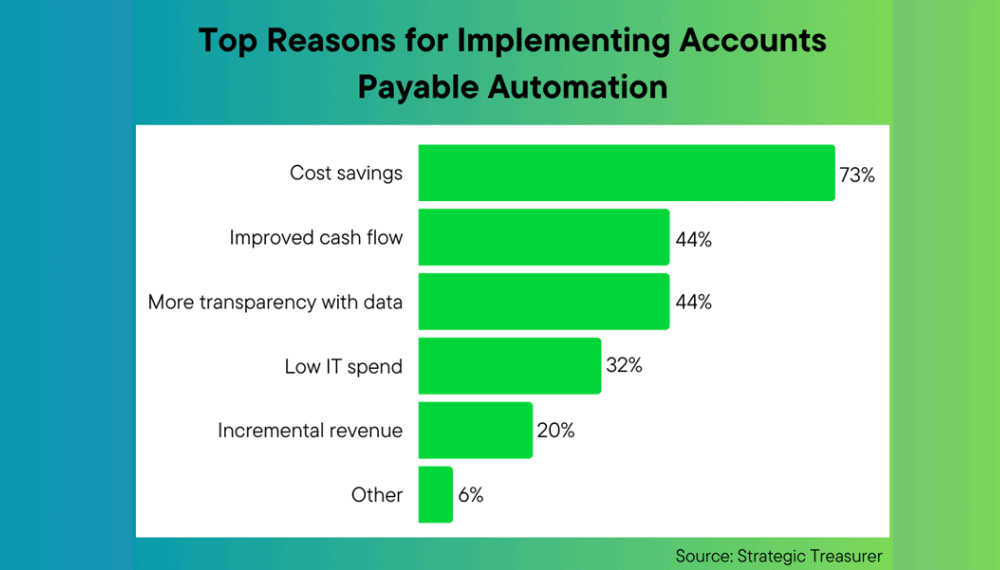
accounts payable automation

Image created by the writer (Data sourced from strategictreasurer.com)

Eliminates manual errors to improve accuracy

Manual data entry and invoice processing are vulnerable to human errors—typos, duplications, and missing data, for example. Fixing potential errors means extra work for your accounting team, including chasing duplicate and erroneous payments. Not to mention the damage to your reputation and relationships with suppliers if errors cause late payments.

With accounts payable automation software, you can eliminate human error from your AP workflow. Automated data capture saves time and guarantees each invoice is input accurately, since the software automatically updates your financial records, reducing the chances of errors.

On top of this, there are built-in checks to flag errors that manual processing can miss. This results in accurate, timely payments to vendors every time (vital for robust supplier management). With AP automation, you can maintain your reputation and even gain access to payment discounts if suppliers never have to chase payments.

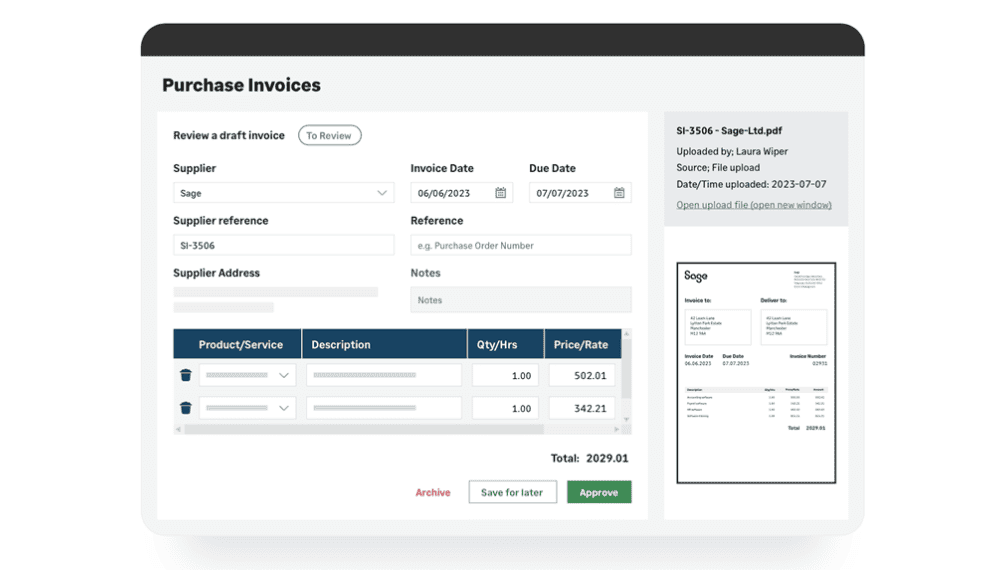
purchase invoice

Image sourced from Sage.com

In addition, improved accuracy helps you make better financial decisions. It also increases stakeholder confidence in your business and the confidence of potential investors, which is especially important for small businesses.

Cuts costs by ending manual processing requirements

If you’re still relying on a manual invoice processing system, your cost per invoice will be high. Costs include paper, printing, mailing, storage, and the time spent on manual payment reconciliation and data entry.

AP automation can streamline your AP process and remove the need for paper-based document management.

You won’t have to store boxes of documents, buy paper or printer ink, or pay for postage. Instead, you can store your financial documents electronically. This is significantly cheaper一and more environmentally friendly. On top of this, thanks to automated data capture, you can handle the approval of invoices over email.

Faster invoice processing times also reduce processing costs and improve productivity. Instead of paying your accountants to process and approve invoices, you can pay them for tasks that bring value to your business. Plus, you won’t have the cost of late payment fees or regulatory fines.

Enhances accounts payable control and visibility

Another problem with manual processes is a lack of visibility into invoices and payment status. This can make it difficult to control spending.

Automation tools help overcome this barrier. Dashboards display real-time insights, including cash flow and spending patterns. That means better financial management. You can also strengthen supplier relationships by ensuring you pay each invoice on time whether they’re in the US, UK, or somewhere else.

You can check an invoice status with one click, including where it is in your approval process. If a payment deadline is looming, your finance teams can chase it up. They can also get insights into how each team member is performing, helping them pinpoint opportunities for training. Not to mention that performance reviews will be a breeze!

What’s more, automated systems can flag reconciliation issues and generate accurate financial reports. This helps you quickly address problems and make more informed decisions.

Plus, you can more accurately define financial controls to guarantee you stay within your monthly budget. You can also analyze and categorize your data in real-time to pinpoint challenges and opportunities.

receipt

Speeds up payments for improved cash flow

There are many strategies to improve cash flow, from offering a new product to buying in bulk. But did you know that AP automation can also improve cash flow?

Manual processes cause cash flow issues if unpaid invoices build up or you’re hit with late fees. By automating, you can eliminate delays caused by human error and speed up your entire payment workflow, from data entry to invoice approvals. This way, you can guarantee on-time payments and improve cash management throughout your business.

The software can issue payments automatically, further reducing processing times. You can even set up automated invoice approval workflows to reduce the need for manual approval. This leaves your management teams free to focus on the tasks that only humans can do.

On top of this, by improving cash flow visibility, AP automation software can help you optimize it. The software can use the data to create accurate cash flow forecasts, helping to prevent shortfalls.

Secures invoices and payments to reduce fraud risks

Manual processing and storage come with numerous security risks. A break-in could uncover sensitive financial information, misplaced invoices could fall into the wrong hands, or there could be a fire or flood that causes permanent loss of files. Unless you regularly review your books, you could also fall victim to fraudulent payments and other scams.

AP automation solutions come with various security features, including access control, encryption, and two-factor (or multi-factor) authentication. Only those with the right credentials can access critical or sensitive documents, so it’s harder for criminals to steal your information. It’s also harder for dishonest employees to view data they shouldn’t.

The system can flag suspicious payments and provide a comprehensive audit trail. This helps to prevent fraud from inside and outside your company. Pay your invoices with confidence and stay compliant with government regulations.

Plus, accounts payable automation backs up your records automatically. You won’t lose your important data if you’re hit by a natural disaster or cyberattack.

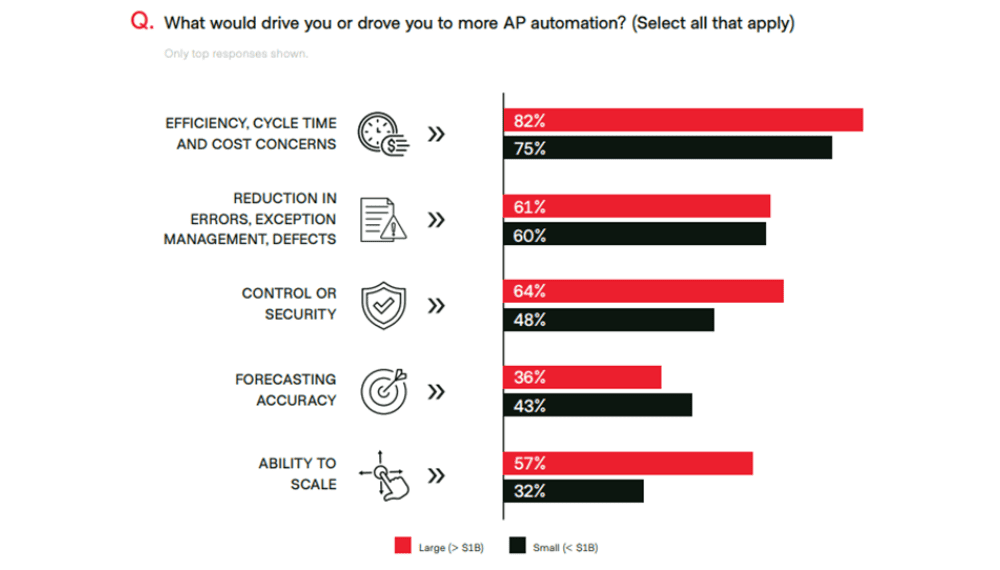
what would drive you or drove you to more ap automation

Image Sourced from Strategictreasurer

Ensures government compliance for businesses

No matter what size your business is or where you operate, you must make sure your AP process complies with government regulations. These include SOC 2, HIPAA, SOX, GAAP, and GDPR (if you have offices in the UK or EU).

It’s also essential to be aware of local tax laws. If you operate in the US, look for a platform that complies with IRS regulations. Businesses and sole traders based in Australia must consider software that is ATO compliant, while those based in the UK should be aware of HMRC requirements, such as Making Tax Digital (MTD).

Manual AP workflows are more prone to non-compliance due to their higher error rate and longer processing times. Accounts payable solutions automate this process for you by keeping a digital record of sales and purchase invoices—this is particularly noteworthy for UK-based businesses that need to be MTD-compliant by 2026.

Typically, AP automation software comes with built-in compliance checks and standardized approval workflows to reduce errors. It can also flag discrepancies and provide a detailed audit trail of who handled each invoice and when it was paid.

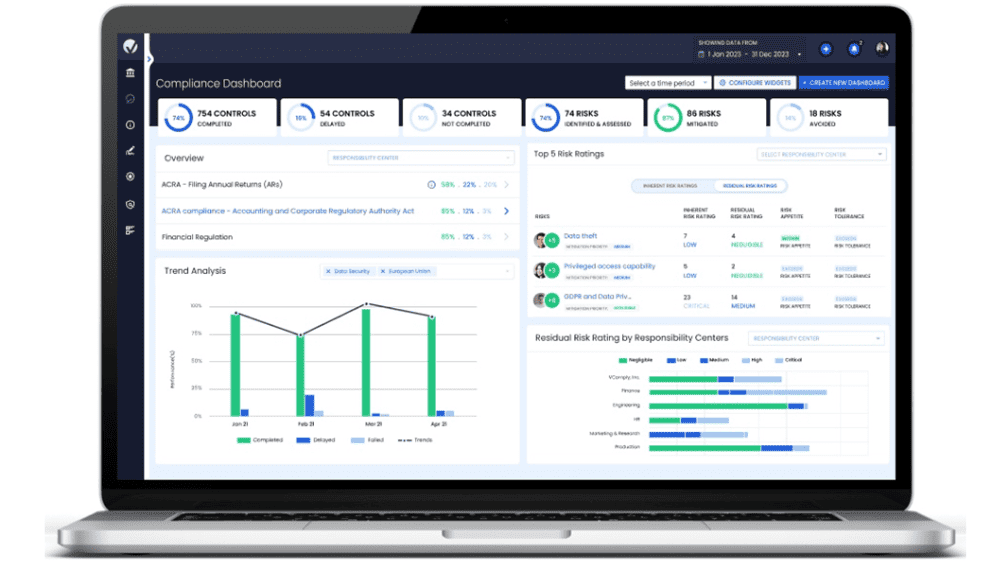
You can guarantee compliance by opting for an all-in-one software or a standalone solution, such the VComply compliance management program, StandardFusion for GRC compliance in Canada, or Sage self-assessment software for the UK.

complaint dashboard

Image Sourced from v-comply

Save money and maximize efficiency with accounts payable automation

As we’ve seen, accounts payable automation has a range of business benefits. It can reduce invoice processing costs, improve security and compliance, and make sure you make all your vendor payments on time.

It also gives you greater internal control and visibility into spending. This helps you manage cash flow and make better decisions. And, if you pair it with accounts receivable automation, you can streamline your entire accounting process.

The ultimate goal of automation is to serve you and make your work easier, so don’t waste any more time and money, choose the best software and enjoy the benefits of AP automation!

shopify price changes

Shopify Profits Soaring – At the Expense of Their Customers

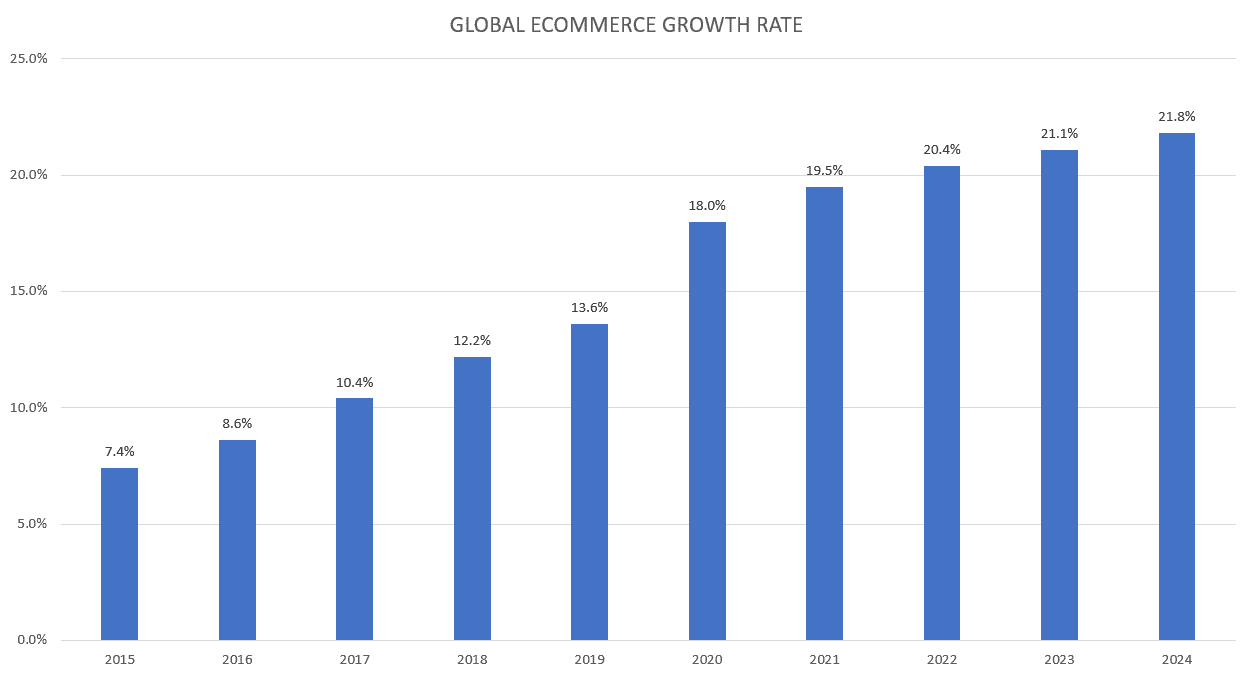
After more than three years, the pandemic has now become a distant memory. Footfall in physical stores has returned to normal, now even in greater numbers. This exponential surge in foot traffic to stores is really pushing and slowing down the growth of online eCommerce stores. Shopify, in particular, faced some of the most significant challenges. But why is Shopify profits soaring while many other eCommerce platforms are struggling to survive? Let us understand it today.

global ecommerce growth graph

Data source: Statista

To fortify its financial performance, Shopify implemented measures such as cost-cutting and workforce reductions. Making drastic changes like letting go of 10% workforce in 2022 and increasing subscription prices, which came as a shock to its customers. Starting in April 2023, Shopify has raised its subscription prices by 30%, leading to an expansion of gross margins in the highly profitable Subscription Solution segment. Reaching 80.8% (an increase of 2.1% QoQ and 4.1% YoY) in the most recent quarter.

Despite moderate revenue growth to $1.69 billion (up 12.6% QoQ and 31% YoY), Shopify has met expectations with another quarter of positive earnings in FQ2’23. The company reported an adjusted operating income of $146 million (an increase of 570.9% QoQ and 447.6% YoY) and generated $97 million in free cash flow (up 12.7% QoQ and 211.4% YoY).

However, some of Shopify’s customers are expressing their discontent with the price hikes while highlighting Shopify’s “662 million gross profit cushion,” referring to $662 million profit in the third quarter.

Shopify Profits Soaring – Revenue Growth and Financial Turnaround in 2023

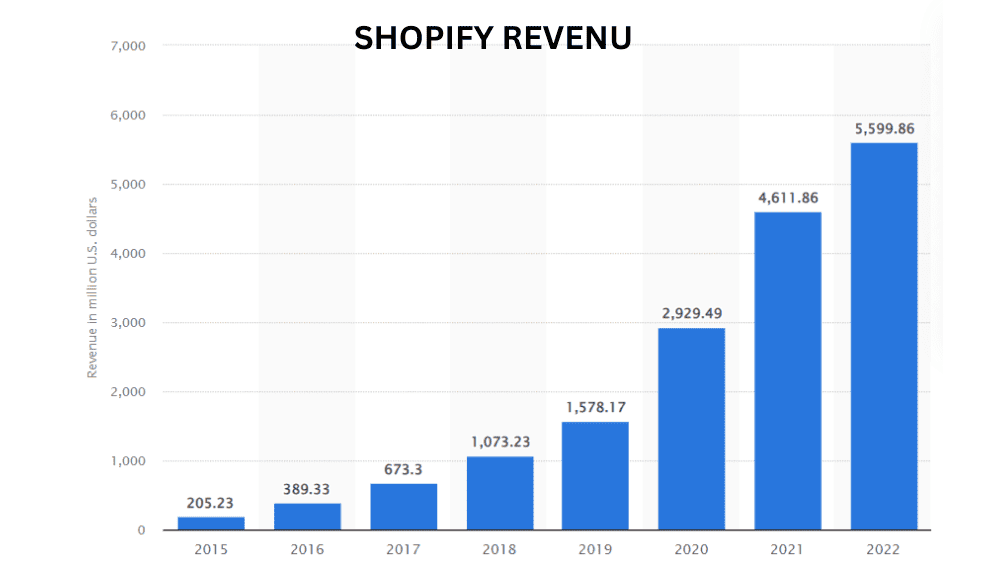
One of the most undeniable factors contributing to Shopify’s success is its remarkable revenue growth. In the first two quarters of 2023, the company generated slightly over $3.2 billion in revenue, representing a substantial 28% increase when compared to the first half of 2022.

Shopify Profits Soaring

Data source: Statista – Shopify revenue 2015 to 2022

Although Shopify continues to report losses on its bottom line, which is to be blamed on the charges related to specific transactions, there’s a notable improvement. The company’s first-half loss in 2023 amounted to $1.2 billion, a significant reduction from the $2.7 billion loss recorded in the first half of 2022. Additionally, when these one-time charges are excluded, Shopify achieved a net income of $190 million during the first half of the year.

Understanding Shopify Fees Structure

Before we get into the nitty-gritty of breaking down Shopify fees in your financials, it’s crucial to grasp what these fees are and how they work. Shopify levies charges for various services, which include:

Monthly Subscription Fee: This is the fee you pay to use Shopify’s platform. The cost depends on the plan you select and can vary from $39 to $399 per month.

Transaction Fees: These fees apply to each sale you make through your store. Transaction charges for merchants could be anywhere from 0.5%-2%, depending on the plan you subscribed to.

Credit Card Processing Fees: Shopify charges these fees for processing payments made through your store. This fee is in addition to the transactions fee and could range from 2.4% to 2.9% (including 30 cents per transaction).

App Fees: If you install third-party apps to add functionality to your store, you may incur app fees. The third-party app integration charges can vary from a few dollars to a few hundred, you can know more about these charges by calling customer care at 1-866-247-2737.

The Shopify Pricing Update

image 85

Shopify Basic

The Shopify Basic plan is now available at $39 per month. An increase of $10 from the previous fee of $29 . But the new customer sign-up benefit remains the same.

Initially, if you are a new users then there are 3 months where the charge is $1 per month. This is also known as the trial period.

try shopify for $1 for 3 months

With the plan you’ll still enjoy a variety of perks. You’ll have access to all the tools for building your Shopify store. You can benefit from a generous 44.2% discount on shipping when using Shopify partners.

The Basic plan maintains all the features you had before. This includes

  • Create storefronts.
  • Ability to offer discount codes
  • Recover abandoned carts
  • Manage up to 1000 inventory locations
  • Unlimited contacts management
  • Fraud analysis tools.
  • Issue gift cards
  • Generate reports
  • Marketing automation features
  • Access to customer segmentation tools
  • Shipping labels creation options

Shopify Standard Plan

The price of the Shopify plan is going up by 25% from $79 per month to $105 per month. However if you choose a yearly subscription you can still get the plan for $75 per month. This package offers all the features as before including everything in the Basic plan and lower transaction rates for both in person and online sales.

With the Standard Shopify plan you will get

  • Access to up to 5 staff accounts
  • Standard reports
  • Market based product pricing for eCommerce
  • eCommerce automations.
  • The updated plan also comes with up to 30 units, for Shopify fulfillment.

Shopify Advanced Plan

The cost of the Advanced Shopify plan is being raised from $299 per month to $399 per month. It still includes all the features you would had before. This package offers everything in the Shopify plan. Additionally you get the following

  • Up to 15 staff accounts
  • Lower rates for processing credit card payments
  • Advanced reporting capabilities.
  • 50 units with the Order fulfillment network
  • Duties and import tax calculations
  • Other bonus features.

Shopify Annual Plans At A Glance

For those who previously benefited from a 50%-off promotion during their first year of service, the prices for annual subscriptions have nearly doubled:

  • Basic Plan: Increasing from $14.44 per month to $29 per month
  • Shopify Plan: Increasing from $39.44 per month to $79 per month
  • Advanced Plan: Increasing from $147.78 per month to $299 per month

It’s important to note that the price of the Shopify Plus plan remains unchanged, remaining at $2,000 per month.

To soften the blow for existing merchants, Shopify has implemented a three-month grace period before the price hikes take effect. Shopify also gave an option to the existing customers to buy the annual pack at the old price point. However, for new merchants, the new prices go into effect immediately.

Why Shopify Subscription Plans Are Undergoing Changes?

No business likes to increase its prices, as it can create challenges in maintaining strong customer relationships. Several factors led to this increase in prices, some of them include:

  • Pandemic
  • Shifts in the economic landscape
  • Workforce changes in the technology sector

Shopify officially disclosed its upcoming alterations to its pricing plans in a news/blog post at the end of January 2023.

Shopify has always aimed to provide merchants with cutting-edge, dependable, and powerful tools at affordable rates. However, the demands and resources required to create an exceptional platform in today’s world have evolved considerably.

Who Is Affected by the Shopify Price Changes and How to Counter it?

The adjustments in pricing apply to all of Shopify’s plans, including Basic, Shopify, and Advanced. Every merchant and existing Shopify customer will be directly affected by the increased prices because the price will also force the merchants to increase their cost of products/services to eliminate losses.

shopify store

While the new pricing structure applies to all new merchants, Shopify continues to offer businesses the chance to explore the platform and its features with a paid trial starting at just $1 per month.

This means that initial costs can remain relatively low for those interested in utilizing the platform. But there are ways you can minimize some charges. Here are some strategies to help reduce your Shopify seller fees:

  • Annual Billing: If you decide to pay for your subscription on an annual basis Shopify offers a 10% discount. Opting for yearly billing is most suitable if you have a long term perspective on your business.
  • Monitor and Limit App Usage: While third-party apps can enhance your store’s functionality, they often come with monthly fees. Regularly review the apps you’re using and remove any that aren’t essential to your operations.
  • Leverage Free Themes and Templates: Shopify provides a variety of free themes that are designed to look professional and work well on devices. Therefore, instead of buying a premium theme you start with a free and personalize it to match your brand.

Conclusion

When looking at all the aspects included, it’s understandable why Shopify has chosen to increase its prices. Even though this substantial change could have been avoided with minimal changes in the overall pricing structure over time.

During Shopify’s recent earnings call, CFO Amy Shapero emphasized the company’s investments in “core themes” focused on long-term success. Shapero stated, “We expect these investments will allow us to emerge from this macrocycle stronger and will position us well for long-term growth and sustainable profitability.” To finance these critical investments, Shopify found it necessary to implement price adjustments.

All in all, the customers are affected by this sudden increase but it is unlikely that merchants avoid Shopify. It still is one of the best eCommerce platforms and the company has a highly adaptable and loyal ecosystem of software-as-a-service (SaaS) products.

Frequently Asked Questions

  1. Why is Shopify increasing the subscription price??

    Shopify is raising prices because they need more money to keep improving their platform and offer better services.

  2. How will this affect people already using Shopify?

    New and existing customer with no plans will have to pay this price increase to continue their services. It is imperative that merchants will now charge extra to cover that additional cost. Resulting in consumers paying more for the same product/service.

  3. Is there anything I can do to slash the charges?

    To avoid excessive charges, you can choose the annual plan. With an annual plan, you enjoy up to a 10% discount on any subscription.

  4. What if someone is just starting with Shopify?

    New users can start with a paid trial for as low as $1 per month so that they can explore the platform and its features without the full cost.

  5. Different ways to save money on Shopify?

    Yes, people can save money by using free themes and templates, limiting the use of third-party apps with monthly fees, and choosing the right payment gateway to avoid extra charges.

Property Management Trends

Property Management Trends for 2025

After the pandemic, the world has experienced a disruption in the supply chain and economy. Inflation and economic downfall are two major outcomes. But, surprisingly in the US, the property market trends are positive. It is a unique situation where economists fear a recession but at the same time, the property market is booming.

graph showing renter occupation percentage based on their age

Renter Occupied – Different Age Groups – Source: NMHC

So in this unique situation, what should you do as an investor or a property owner? To answer that question let us understand the property management trends for 2026. If you understand the management trends you will get a clear picture of what lies next.

What is Property Management?

In simple terms, property management is all about managing the property by the property managers. The property manager takes responsibility for the daily oversight of the rental properties.

Property management depends on the type of property. But overall it is all about maintenance of the property, daily repairs, and regular upkeep of the rental property.

As per the present property management trends, the industry is struggling with some of the ground realities.  And to overcome these challenges the property managers have to alter and modify their policies. These new strategies are based on the facts of the property management industry trends of 2026. With these strategies, they ensure profitability and sustainability

Some common issues as per the latest property management trends are higher wage costs, a rise in interest rates, delays in rental payments, remote work options, unemployment, debt, and higher maintenance for property owners present.

Types of Property Management:

The four main property types are as follows:

Residential Property Management

The property manager has to manage single-family homes, rental apartments, townhouses, etc.

Commercial Property Management

Commercial property managers look after commercial properties like hotels, offices, commercial complexes, and other working spaces.

Industrial Property Management

Industrial property managers look after the warehouses, manufacturing facilities, and distribution facilities.

Special Purpose Property Management

Theatres, sports arenas, schools, universities, resorts, etc. fall under this category.

Property Management Trends in 2026

Let’s take a look at some of the latest emerging trends in real estate for property management in 2026:

  • The rise in interest rates and inflation:

When the banks increase the interest rates, the net income of people is reduced. They have to pay more on their mortgages.

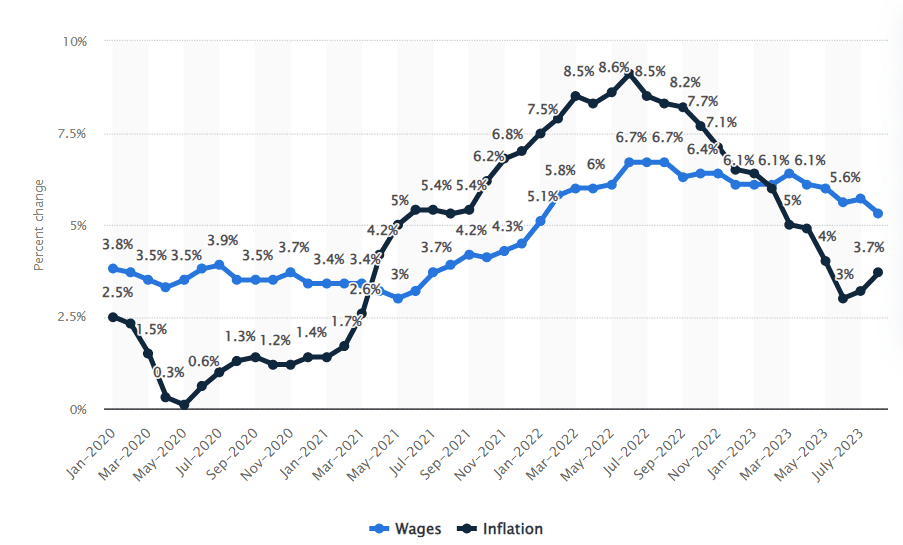
When the net income is reduced, it reduces their purchasing capabilities. Furthermore, we are witnessing one of the highest inflation rates in the last few decades. Inflation also reduces the purchasing capacity of the people as they pay more for the same products and services.

image 77

Data source: Statista – Inflation and wage growth

 All these factors that lead to lower purchasing and spending capacities ultimately lead to low demand for property and property management services.

  • High rates of the property market:

The income of people has not grown as compared to the inflation. The cost of buying a house or a property has also risen. And this has led people to rent a property rather than buy a new property. This ultimately has become the major factor in deciding the property management trends in 2026.

Renter migration has also increased the demand for rental stays. Due to the migration of renters to lower-tax states and work-from-home opportunities, people tend to demand good property maintenance and a higher standard of living at affordable rent prices.

  • Labor and Staff Challenge:

The role of a property manager is demanding. This includes managing labor staff, high pressure to work during the weekends, completing work within given time limits, and managing a team that is facing disturbances in their work-life balance due to many economic factors.

labor costs in the United States

Data source: Statista – Labor costs in the United States

To improve the quality of work and workers, the company needs to provide flexibility in employees’ working hours, support, and maintenance, which gives satisfaction to the employees and results in good outcomes.

  • Increasing demand for single-family rentals

To maintain a high-quality lifestyle and due to the higher rates of property, single-family rentals are in great demand in 2026. Due to high interest rates people are reluctant to buy a property. This is one of the major rental property trends we are witnessing this year.

Therefore, the demand for single-family rental has sky-rocketed. Especially, the rentals that provide good apartment living standards, improved privacy, and without any long-term financial commitment is growing.

The construction market hasn’t subsided due to high-interest rates. And therefore, whether it is a single-family rental or a multi-family rental, people have more choices now than ever before.

  • Increasing demand for property management services 

So now we know that the demand for rental is growing substantially. The impact of this on the property management trends in 2026is a direct increase in the responsibilities of landlords too. The competition is high, the renters have choices and the interest rates are not lowering soon.

Those landlords who are investing and pushing the limits of their property management services are high in demand. They are making good profits. They need to have a smooth and timely process for background checks, government compliance, maintenance advice, rent collection, etc. These are the key elements of property management that they cannot ignore.

  • Tenant requirements for better facilities: 

As more people have the option to work from home, the demand for rentals that can provide a good environment for the same has grown. People prefer properties that they can use to complete their office work efficiently and at the same time use it as their home. Here is an important property management industry statistics chart for rentals that will help the property managers to decide which part of their rental property requires more focus and improvement.

Graph to show what do renters want

The basic requirements have changed and this has impacted the property management trends in 2026 dramatically. A property manager now has to work on two fronts – Facilitating the environment for work-from-home and at the same time the basic necessities of a family home.

Surveys show that the demand for washers and dryers, sound-proof walls, high-speed internet, walk-in closets, etc. has grown drastically. Providing good amenities and meeting the requirements of these new demands by the tenants can bring great experiences as well as challenges for any property manager.  

  • Increase in taxes:

When the government has to pay more to borrow and spend, the taxes on property might increase too. So property managers and landlords in high-tax states might face a new challenge in 2026 and beyond.  

  • Good Marketing Strategies:

In this modern era, good marketing strategies are necessary to attract attention. The property managers are required to create mobile-friendly websites for easy accessibility for the renters to use your services. Social media has become a huge platform to promote management services, and good ratings and reviews may attract a number of quality tenants. This develops a good relationship between the tenant and the property owners. 

  • Proper Use of Technology: 

Another major factor that will affect the property management trends in 2026 is technology. With the growth in demand, quality of services, and high competition, property managers will have to use technology to automate important aspects like monthly rental collection, renewal of rental contracts, maintenance request platforms, and more.

image 73

This will help them save a lot of time and resources so that they can focus on their marketing strategies and beat the competition. This will also ensure liquidity and high customer compliance.

Any property manager who uses technology efficiently will have an edge over those who do not invest in technology upgradation.  

  •  Energy Efficiency:

Everybody wants to be eco-friendly nowadays and wants an energy-efficient home to reduce their carbon footprint. The demand for energy-efficient homes and offices is on the rise. Due to inflation, the spending capacity of people has decreased. The energy price might also increase due to inflation.

This has forced people to move to energy-efficient homes. This saves them money. This will be another unique feature of the modern property management trends.

Landlords will have to invest more in making their properties energy-efficient. A solar-based heating system and an electricity generation system is such an example. But this will add additional load and challenges to property managers. This will help them stay ahead of the competition in the long run.

How Property Management Companies Can Benefit Adopting Payment Trends?

As mentioned earlier, one of the major factors that will define the property management trends of 2026 is the adoption of better payment trends. But, how will the property management companies benefit by adopting the payment trends? Let us understand.

Ahead of Competitors:  As a property manager one has to handle many things. Two important things are rent collection and addressing the grievance of the renter. If both these systems are automated it can bring in a big change. The renter will not have to worry anymore about paying the rent on a date. The renter will not have to worry more about calling the property manager for complaints and follow-ups.

Rather property management software software or a mobile app can help make things easy for all. A renter can register a complaint and the property manager gets the notification in the to-do list. Based on the complaint the property manager can assign the work to a vendor with just one click. And once the vendor completes the work the renter and the property manager are notified at the same time. In short, this automated system is fast, efficient, and automated. Such automation will set new property management trends in 2026 and beyond.

Payments without barrier: Property managers have to face many more new challenges than ever before due to the new property management trends in 2026. One of the major challenges is to collect the payment.

But, if the company upgrades to an automated payment system with the best payment processor, things can be totally different. It will lead to a barrier-free payment collection. For example, the company can use new technology for automated rent collection, upcoming rent reminders, a renter complaint management system, etc. This will not only help in the free flow and timely collection of revenue but also help the property managers save a lot of time for other important things.

Happy And Loyal Renters:  When technology makes things easy for the renters, they are happy. With the new technology, their payment automatically gets transferred to the landlord without delay. Their complaints are easily registered and taken care of without multiple phone calls. They can see the history of their payments and complaints. And all these facilities make a renter satisfied and stay loyal.

Again, this gives you a better lead in the competition.

Data And Reports:  With technology, you make life easy for the renters as well as the property managers. But the other thing that you get is a proper record or the data of all the transactions made by the renters. You also get a clear report of all the complaints raised, what solutions were done, how much time it took for a property manager or a vendor to provide the solution, what was the feedback of the renter, etc. A company can use this data to improve the efficiency of their team.

This data can also help the property managers to focus better on relevant areas.

How To Overcome Property Management Trends in 2026?

Let’s check out some steps needed to overcome these trends:

  1. To stay ahead a landlord should fulfill the renters’ expectations and give them a satisfactory living experience. It will improve the owner’s reputation and boost their ratings and reviews.
  2. Companies should clearly define the policies, guidelines, and principles related to rent collection, rental maintenance, rental screening and inspection, and communication. This will help all the parties involved. Well-defined documentation not only helps in improving transparency but also helps in resolving disputes easily.  
  3. Trained and updated staff are a must. Without a trained staff a company cannot stay ahead of its competitors. A trained staff also improves the renter’s experience leading to overall improvement of the company’s reputation. Therefore, it is important to train and review your staff regularly.
  4. Technology and automation are the key factors in today’s era for getting quick and easy access to almost everything. Renters prefer to fill out their contracts online rather than bothering to do it offline. An automated payment and a robust complaint management system can be achieved with technology.
  5. To manage the labor challenge, offer more competitive wages, benefits, flexibility in working hours, and a supportive work culture.
  6. Single-family rentals are in high demand and the demand will stay there for long. So companies can focus on this segment for better returns.
  7. Work-from-home amenities are in great demand. After the pandemic, more companies are opting to give their employees the option to work from home. Therefore, the demand for homes that provide various amenities and a positive environment to work from home is in great demand.
  8. Automated payment is the key element in defining the property management trends in 2026. An automated rent collection system can be beneficial for the company and the renters. It facilitates barrier-free payment collection and customer satisfaction.
  9. Another factor that may affect property management trends is the growth towards community-focused property management. Facilities such as community spaces, events, and various community activities can bring a warm, welcoming atmosphere to the tenants, which brings a sense of satisfaction and retention to them.

Conclusion

 After analyzing the latest property management trends, it is clear that the demand for rental properties, especially single-family rentals, is at an all-time high. The work-from-home trends have pushed landlords to add more facilities to their properties. All this has further added challenges to the property managers.

Using technology to automate payment and complaint redressals can help companies achieve an efficient property management system. A company that understands property management trends and adapts accordingly will certainly stay ahead of the competition and make profits.

IRS temporarily stops ERC

IRS Announces Immediate Moratorium On ERC

On Tuesday, September 14 IRS announced that there was an immediate moratorium to be applied on the processing of new claims for the relief program called the Employee Retention Credit (ERC), started during the pandemic. According to the IRS, this is being done to protect honest small businesses from scams. As the IRS temporarily stops the ERC refund program, let’s take a moment to understand its impact on businesses.

Why Was The Immediate ERC Moratorium Needed?

The IRS had noted in the past that many promotors were aggressively encouraging businesses to apply. This aggressive promotion included false information. Below are some of the major reasons why the IRS determined there was a problem with businesses promoting ERC claims:

  • False Information: Third-party promotors deliberately hide some important details about the eligibility requirement for computing the credit under the Employee Retention Credit. For example, the promotors did not mention that no all employers are eligible for the program. Most of the un-eligible employers too filed for the claims.
  • Hiding Information: The promoters might not let taxpayers know that they have to decrease the amount of wage deductions claimed on their income tax return, by the value of the ERC. This is the most important information that was not explained to the employers and this eventually led to many issues.
  • Aggressive marketing: ERC was a program launched to help employers from the impact of the pandemic. However, their party companies agressively pushed the program through online promotion, emails, phone calls, TV promotion, radio and text messages. This led to a flood of questionable claims.
  • Fake information: Some promotions used fake letters. This was done by sending out letters to taxpayers claiming to be from non-existent organizations such, as the “Department of Employee Retention Credit.” These letters are designed to mimic IRS correspondence or an official government mailing and often include language that urges recipients to take action.
  • PPP Issues: A lot of promoters fail to mention to employers that they cannot request the Employee Retention Credit (ERC) for wages that are already reported as payroll costs, for PPP purposes.

What is The ERC Moratorium?

Moratorium

According to the IRS, any new claims for the Employee Retention Credit (ERC) submitted after September 14th will not be completed until the end of 2023. However, submitted claims will still be processed albeit with increased scrutiny. During this time the standard processing time for existing ERC claims will extend from 90 days to 180 days. The timeframe may be further extended if additional review or an audit is required. It’s worth noting that numerous taxpayers have already encountered wait times exceeding 180 days.

What About Existing ERC Claims?

Employee Retention Credit

The Internal Revenue Service (IRS) will continue working on processing previously submitted Employee Retention Credit (ERC) claims that were received before the moratorium. While these claims will still be processed during the moratorium period there might be a delay. This will happen due to an extensive review of the compliance.

And all these factors will lead to an increase in the number of days to get the claims cleared. Previously it was 90 days. It might go up to 180 days or more.

It might be potentially longer if an additional review or more audit is required. To ensure the legitimacy of each claim the IRS may request documentation from taxpayers.

It is crucial for the IRS to conduct this enhanced compliance review of existing claims in order to prevent fraudulent activities. Furthermore, the agency is concerned about businesses that are facing penalties due to claims promoted by individuals or organizations. This also includes the due interests. The IRS wants to ensure that the program operates as intended and addresses these concerns appropriately.

IRS Temporarily Stops ERC –
Suggestions For Affected Businesses

Existing ERC Claims

If you currently have an ERC claim on record the IRS will still process these claims during the moratorium period. However please note that processing times will be significantly longer than usual due to the nature of these filings and the need to prevent fraudulent or improper payments to businesses.

As mentioned above it is possible that it could take up to 180 days or even longer for processing times. The IRS also wants to emphasize that many of these applications will face compliance scrutiny, which means it might take more time for payments to be processed. While the IRS focuses on ensuring compliance during this period businesses should expect extended waiting periods due to the volume of claims and the complexity of the applications.

Given the number of claims and the necessity for compliance checks to prevent fraud individual claims cannot be expedited by the IRS. The IRS suspects that many of the filed applications may not meet eligibility criteria.

Tax professionals have noted instances where a very high percentage of claims are deemed ineligible as promoters aggressively push people to apply without regard for rules.

No ERC Claim Filed Until Now

If you’re thinking about submitting a claim the IRS advises businesses to thoroughly go through the ERC guidelines while the processing moratorium is in place. It’s more important to consult with a tax professional than an ERC promoter or an ERC marketing firm looking for financial gain.

Taking a look at the rules will reveal that several businesses may not meet the eligibility criteria for the ERC and it’s best to avoid making a claim. Avoiding filing a questionable claim is the surest way to avoid audit, additional scrutiny, or penalties from the IRS.

Can I Withdraw A Current ERC Claim?

If you’ve already filed a claim and it is still pending approval then it is important to review the program guidelines again. You should do it with a trusted tax professional and refer to the question-and-answer (FAQ) guide.

For instance, the IRS has noticed that some people are incorrectly using supply chain issues as a reason for claiming an Employee Retention Credit (ERC) even though such businesses are unlikely to meet the eligibility criteria. In any situation, if a business has already claimed the ERC but hasn’t received processing or payment from the IRS then they have the option to withdraw their claim if they now realize it was submitted incorrectly. The claim can be withdrawn even if their case is currently being audited or awaiting audit. More information will be available soon.

Businesses Who Got Paid For a False ERC Claim In The Past

The IRS is currently working on initiatives including one specifically aimed at taxpayers who have already received a payment through the ERC (Employee Retention Credit) but now suspect that it was issued erroneously.

As part of this effort, a settlement program is being developed to allow businesses to return any ERC payments they may have received.

It’s worth acknowledging the role played by tax professionals in bringing about this important option for taxpayers. Tax professionals were concerned that employers were influenced by ERC promoters to file claims. Additional information regarding these developments will be made available later this year.

Furthermore, the IRS is actively exploring approaches, for addressing situations where businesses have paid a promoter contingency fee based on their ERC claim.

Conclusion – The ERC Moratorium

The IRS is still working on many factors that are associated with false ERC claims. We will have to wait for more announcements from the IRS. A clear picture will emerge in the next few months as the IRS applies more scrutiny to ERC claims being filed.

Federal Reserve No Longer Forecasting US Recession in 2023

Federal Reserve No Longer Forecasting US Recession in 2023

It’s interesting how different factors played a role in the belief of a recession in the United States around a year ago. Some experts thought that the idea that the US will fall into recession in 2023 was not synced with reality. As per the Federal Reserve, it is no longer forecasting the US recession.

The first two quarters of 2022 saw a contraction in U.S. Output with a 1.6% annual rate decline from January to March and a 0.6% annual rate decline from April to June. By one definition some argued that the country was already experiencing a downturn.

Inflation

To address inflation concerns the Federal Reserve increased interest rates. These were the highest in two decades. Central bank officials are now cautioning that more rate hikes might be on the horizon. Powell mentioned that there is still work to be done in controlling price spikes, which could potentially impact unemployment rates and wage growth.

USA inflation July 2020 to 2023

Despite these challenges, staff economists at the bank no longer consider a contraction as the most likely scenario for this year. Initially, they had raised concerns about a slump after several banks failed back in March.

In July the unemployment rate was 3.5% which was much lower than what the experts had expected. The inflation is also low at 3.67% in August 2023.

Surprisingly despite unemployment remaining relatively stable, it raises questions about whether this forecast shifts the timing of a recession into a year. Or if there is potential for a “soft landing,” where economic growth slows but avoids a full-blown recession. This is a consideration for President Joe Biden as he approaches the election year.

image 47

In their projections, even the Congressional Budget Office estimated that the United States would completely avoid a recession and instead project that economic growth would slow down to a rate of 0.4 percent before bouncing back. The GDP growth for Q2 in 2023 was 2.4%

US Recession – Will Interest Rates Have Any Impact?

The Federal Reserve’s aggressive increase, in interest rates, has had a positive impact. Yields on fixed-income investments, such as certificates of deposit money market funds and bonds rose in response to these rate hikes. Mortgage rates and the interest charged on types of financing including credit card debt and automobile loans also went up.

The areas of the economy that are directly affected by interest rates experienced the impact. For instance, the housing market temporarily slowed down due to rising mortgage rates although it has recently stabilized. Haworth mentions that it’s important to keep an eye on factors well such as the potential for consumer and business borrowing to decrease due to higher loan costs caused by rising interest rates.

Despite the Federal Reserve tightening policy since March 2022 job growth surpassed expectations and averaged around 400,000 per month throughout 2022. Job growth reports remained solid during the seven months of 2023, however new job creation slowed during the same period.

Despite the slowdown, in wage gains during the beginning of 2023 recent data suggests that they have now stabilized. According to the information, private nonfarm payroll wages have grown by 4.4% over the 12-month period ending in July 2023. This level of growth is likely still considered a risk for inflation, by the Federal Reserve.

Will the Economy Maintain its Current Trajectory?

A crucial question is whether the Federal Reserve’s aggressive approach to interest rates will help or if things will remain the same. However, the rise in interest rates controls inflation.

According to Matt Schoeppner, an economist at U.S. Bank, it seems plausible that the economy will avoid a recession. He anticipates that real GDP growth will remain modest in the near future. He describes this as a “growth recession,” where we witness an economy with an impact on employment.

USA GDP 2013 to the second quarter of 2023

Data source: Statista

The Federal Reserve appears resolute in its commitment to combating inflation. Fed chair Jerome Powell recently stated that they will closely monitor data to guide their moves. Based on this assessment they will proceed cautiously in deciding whether to tighten policy by raising interest rates or wait for additional data.

However recent data indicates that the Fed may face pressure to tighten their policy even more. Haworth explains that softer employment figures are easing concerns among investors regarding rate hikes, by the Federal Reserve.

Impact on Investment Decisions

In the quarter earnings growth slowed down. Still exceeded expectations. This trend has continued into the quarter. Experts suggest that investors should pay attention to factors that have supported the economy despite the interest rate rise.

Although capital market performance has surpassed expectations so far in 2023 it was largely driven by technology stocks. Many other sectors of the market did not perform well in comparison. If there is growth in the coming months it could benefit other sectors of the market that are more reliant, on positive economic trends. The strength shown by the U.S. Stock market in July seems to be more widespread and not limited to a group of stocks.

Conclusion

In 2023 there is still a concern, about the possibility of a recession in the United States. According to research conducted by Goldman Sachs, there is an agreement that there is a 65% chance of an economic decline within the next year.

Crypto Market Trends and Forecasts for The Fall of 2023

Crypto Market Trends and Forecasts for The Fall of 2023

The cryptocurrency industry had its share of highs and lows in 2023. While Bitcoin and other popular cryptocurrencies had a good performance during the middle of the year, in the latter part of the year they either stayed stable or went down. In this article, we will understand the crypto market trends and forecasts for the fall of 2023.

A positive turn occurred in the Ripple court case with the U.S. Securities and Exchange Commission, which brought hope to investors. Additionally, the introduction of Worldcoin, a cryptocurrency that utilizes iris scans for user verification sparked conversations and debates. As the U.S. Government takes steps towards regulations for cryptocurrencies and with the Federal Reserve’s decisions on interest rates it seems that the upcoming fall will bring a phase, for the crypto market.

September’s Crypto Market Trends And Performance: A Closer Look

Bitcoins Journey in September:  In the month of June it touched the highest this year at the $30,466 mark. These gains were attributed to reports indicating a decrease in inflation rates. However now in almost mid-September Bitcoins momentum slowed down to the present mark of $25,752 mark (September 12, 2023)

bitcoin september 2023

Image source: Statista

Ethereum: Just like Bitcoin Ethereum also gained its high in April 2023 which was $1905. In September it was down to $1632.9

Ethereum:

Solanas Remains Stable: Among the ten cryptocurrencies based on market value, Solana remained stable in 2023. In March 2022 it reached a level of $204.35. In January 2023 it was around $23.96 and on September 7, 2023, the value was almost stable at $19.63.

Solanas Remains Stable

Overview of Market Capitalization: Taking a look back, at performances the global cryptocurrency market reached its peak in November 2021 with a capitalization exceeding $2.9 trillion.

Overview of Market Capitalization

However, the cryptocurrency industry experienced a setback during the winter of 2022. By the end of July, the market cap had decreased considerably to a $1.2 trillion.

The XRP Court Ruling:

On July 13 the crypto community witnessed a development when Ripple, the company, for the XRP cryptocurrency achieved a partial victory in its ongoing legal battle with the U.S. Securities and Exchange Commission (SEC). This legal dispute originated in 2020 when the SEC accused Ripple of violating securities regulations by selling XRP without registration. This had a strong impact on the crypto market trends that can change during the fall of 2023.

The recent ruling, delivered by a judge from the Southern District of New York clarified that XRP cannot be categorically classified as a security. This declaration had an impact on the value of XRP. Also influenced other alternative cryptocurrencies. However, it’s important to note that this ruling was nuanced and didn’t represent a triumph for Ripple.

While determining that sales of XRP through trading algorithms, exchanges, or employee compensation schemes did not meet the criteria for being considered securities there was an exception. The judge expressed their view that Ripple’s sale of XRP to institutions could indeed be categorized as securities transactions.

This ruling carried implications for major cryptocurrency exchanges. In response to the outcome for XRP, both Coinbase and Kraken swiftly reinstated XRP trading, on their platforms. Furthermore Coinbases stock price saw an uplift following the aftermath of the Ripple decision.

Investors were mainly optimistic because they saw the XRP ruling as an indication, for Coinbase. This gave them hope in Coinbase’s battle with the SEC, where it is accused of acting as an unregistered broker and exchange. However, it’s important to note that the court’s decision, on XRP didn’t entirely favor Ripple. It did bring some needed clarity to the world of cryptocurrency regulations and its impact was felt throughout the wider crypto community.

Worldcoin's Intriguing Launch: Potential and Pitfalls

Worldcoin’s Intriguing Launch: Potential and Pitfalls

An Innovative Approach to Digital Identity

In July the world of cryptocurrencies saw the arrival of a contender called Worldcoin. Led by Sam Altman, who’s well known for his role, in OpenAI, the birthplace of ChatGPT Worldcoin has introduced a method, for digital identification. By incorporating iris scanning technology Worldcoin aims to issue ” passports” called World IDs. This initiative aims to address the growing problem of distinguishing people from AI entities in interactions.

Concerns Over Security and Privacy

The Worldcoin initiative although innovative has not avoided criticism. The gathering of data the sensitive iris scans has raised concerns. Those who oppose cryptocurrency are worried, about the risks, to security and privacy that may result from storing sensitive information.

Trading, Distribution, and Market Reception

The Worldcoin token, known as WLD was introduced on July 24. To encourage adoption people who underwent an iris scan were given tokens. Although people, in the United States, cannot currently acquire WLD tokens Worldcoin has made its presence felt in cities like New York, San Francisco, and Miami.

These cities are among the 30 locations where individuals can participate in the Worldcoin eye experience. During its week of trading, WLD’s performance showed volatility with prices fluctuating between $1.66 and $3.58 according to CoinMarketCap data. Despite being in its stages Worldcoin already has a market capitalization of around $267 million.

Worldcoins entry into the cryptocurrency realm has been far from ordinary. With its approach to identity and some underlying concerns, it is generating considerable interest, within the crypto community.

Emerging Cryptocurrency Legislation: A Glimpse into the Future

In July there was a lot of activity, in the U.S. Congress regarding cryptocurrency. With the crypto industry growing investors and stakeholders have been eagerly waiting for guidelines on how it will be regulated.

The House Financial Services Committee (HFSC) took a step forward. They not only pushed forward a bill that focused on creating rules for payment stablecoins but also introduced another comprehensive bill. This detailed legislation aims to establish a framework for regulating cryptocurrency. One significant aspect is defining criteria to determine whether digital assets should be classified as securities or commodities.

At the time the Senate demonstrated its commitment to preventing the misuse of cryptocurrencies. A substantial defense spending bill was approved by the Senate. Included provisions that empower the Treasury Department to take action against using cryptocurrencies for illegal activities.

Overall July showed that U.S. Legislators are taking steps to shape the cryptocurrency industry while emphasizing the need, for innovation and responsible oversight.

Elon Musk’s Dogecoin Endeavors: More than Just a Meme?

In July there was a surge, in the popularity of Dogecoin, a cryptocurrency inspired by memes. This increase became particularly pronounced on July 24 when the value of this coin rose by 8%. The main catalyst behind this leap can be attributed to Elon Musk, the renowned tech mogul. As the CEO of Tesla and now leading the platform formerly known as Twitter but rebranded as “X ” Musk made a significant move by updating his bio on the platform to feature the symbol of Dogecoin.

The connection between Musk and Dogecoin runs deep. Not only has he previously allowed Dogecoin as a form of payment for Tesla merchandise but he also holds significant investments in this cryptocurrency.

Given Musk’s efforts to rebrand Twitter as “X,” there is speculation within the crypto community about the potential integration of Dogecoin as an officially recognized payment method, on this platform. Only time will reveal whether these speculations will become reality.

July To September Crypto Headlines: A Month of Revelations and Transformations

July witnessed an array of notable events in the cryptocurrency world. From corporate strategies to regulatory actions, the industry was abuzz with activity. Here’s a roundup:

MicroStrategy’s Future with Bitcoin

On July 26th TD Cowen issued a rating, for MicroStrategy (MSTR) a well-known company that has made significant investments in Bitcoin. Lance Vitanza, an analyst at TD Cowen expressed support for the company’s long-term strategy. Shared his perspective;


  • • The company’s decision to consistently invest its retained earnings in Bitcoin is not a short-term tactic.
  • • Bitcoin has the potential to surpass metals and fiat currencies as a store of value.
  • • MicroStrategy offers an opportunity for those in gaining exposure, to Bitcoin.

Binance’s Woes Continue

Binance, a leading cryptocurrency exchange, faced a rough patch:

  • The company terminated over 1,000 staff roles.
  • Benefits for the existing team were trimmed.
  • Regulatory challenges from the SEC and the Commodity Futures Trading Commission plagued Binance. These allegations pertain to Binance’s illicit U.S. operations. Consequently, Binance.US experienced a drastic fall in market share, plummeting from 27% in April 2023 to just above 1% in July.

CoinDesk’s Potential Acquisition

An investor consortium spearheaded by Tally Capital and Capital6 is on the brink of purchasing the crypto-centric media entity CoinDesk for a whopping $125 million. This acquisition seems promising, given CoinDesk’s robust 2023 revenue of $50 million sourced from various channels.

Celsius Network’s Downfall

July 13 marked a low point for Alex Mashinsky, Celsius Network’s originator. Arrested and slapped with multiple charges, including securities fraud and market manipulation, the collapse of Celsius is reminiscent of FTX’s demise in 2022’s crypto winter.

Bitcoin ETF Prospects

In the Bitcoin ETF arena, a recent study by NYDIG proposed a potential $30 billion spike in Bitcoin demand due to a Bitcoin spot exchange-traded fund. Despite the SEC’s reservations about investor protection, the crypto community remains hopeful. They anticipate that fresh Bitcoin ETF applications from giants like BlackRock and Fidelity might tilt the scales.

In summary, July was a dynamic month for the crypto universe, marked by highs and lows, painting a vivid picture of an industry in flux.

Final Words

As we head towards the autumn of 2023 the world of cryptocurrencies finds itself at a juncture where innovation and regulation intersect. As Bitcoin and other major digital currencies navigate through market fluctuations, changes, and technological advancements the future ahead appears both captivating and challenging.

From the outcome of the case involving Ripple to the introduction of projects, like Worldcoin along with ongoing efforts to establish clear regulations within the crypto realm this upcoming season holds great significance for developments.

As we observe how market dynamics interact with forces, those involved in the community eagerly await how these trends will shape the destiny of digital assets. The path ahead will undoubtedly be influenced by striking a balance, between innovation, responsible governance, and meeting the evolving needs of investors and enthusiasts who contribute to this vibrant ecosystem.

Frequently Asked Questions (FAQs)

  1. What were the major trends in the cryptocurrency market during the first half of 2023?

    The first half of 2023 saw significant fluctuations in the value of major cryptocurrencies, with Bitcoin and others hitting 52-week highs before facing a slowdown in the latter part of the period. Additionally, regulatory developments, such as the Ripple court ruling and the launch of Worldcoin, garnered substantial attention.

  2. How did the Ripple court ruling impact the crypto market?

    The Ripple court ruling offered a partial victory for the company in its legal battle with the U.S. SEC. The court’s determination that XRP isn’t necessarily a security on its face had implications for the classification of digital assets. This decision affected investor sentiment and contributed to market trends.

  3. What is the significance of Worldcoin’s launch and its controversy?

    Worldcoin’s launch introduced an innovative concept of using iris-scanning technology for digital identity verification. This raised both interest and concerns within the crypto community due to potential privacy and security risks associated with collecting biometric data.

  4. What can we anticipate for the cryptocurrency market in the coming fall of 2023?

    The fall of 2023 holds the promise of continued market volatility, further regulatory developments, and potential technological innovations. Cryptocurrency enthusiasts and investors are eager to witness how these factors will interact to shape the trajectory of digital assets in the months ahead.