Author Archives: hostmerchantservices

Isis Mobile Wallet is Here

Isis Mobile Wallet Debuts Using NFC Technology

A joint venture between AT&T, Verizon Wireless and T-Mobile known as Isis Mobile Wallet has released a revolutionary mobile payments app that promises to change the way people pay for goods and services. The trio of mobile service providers are ecstatic to finally debut this mobile payment platform right before Black Friday and the rush of the holiday shopping season, as this technology lets consumers conveniently utilize their mobile phone to pay for goods and services. Use of the platform makes it easier for merchants to accept a wider variety of payments and the Isis system itself encourages repeat purchases through loyalty programs tied into the app and its software.

The debut of Isis also heralds a huge step forward for Near Field Communication technology (NFC), a topic we’ve been consistently covering since our Official Merchant Services Blog began.

What Is the Mobile Wallet Platform?

The Isis Mobile Wallet platform is a completely free mobile application that utilizes NFC technology to allow consumers to pay for purchases by waving their mobile device in the air at a terminal that captures the pertinent information out of thin air.  The mobile payment industry has been dealing with one large obstacle from NFC recently, as Apple hasn’t made its iPhones compatible with NFC. And so an Isis representative said that iPhone support would come at a later time. Until then, the app is available on all other compatible phones, but users should be aware that downloading the app could cost money if they are not subscribed to a monthly plan with unlimited data.


How the Platform Works

The NFC technology used in the mobile payments app allows mobile devices to transfer information when they are tapped together.  Merchants who use devices with this technology can accept payments quickly and securely from customers who have compatible devices. But wait, there’s more.

Mobile payments represent just one of the benefits of the Isis app.  Merchants can offer loyalty rewards to customers through the app.  These rewards can be earned and stored directly on a mobile device. We’ve delved into some of these types of incentives in our coverage of the Barclays bPay app, as well as social gifting articles. The basic idea of what’s happening is the app is giving customers yet another avenue for savings through their mobile device, in hopes to spur more purchases. Discounts are automatically deducted from a sale when Isis is used to pay for a product or service.  There’s no need for merchants to have cards or keychains printed, and customers do not have to worry about keeping track of dozens of loyalty cards.

Some specific incentives that are tied with the Isis debut: Isis Mobile Wallet customers can use My Coke Rewards and Isis to get three free drinks at select vending machines, while Jamba Juice is giving away 1 million free smoothies to Isis users. Purchases made from an American Express Serve account through the Isis wallet are eligible for a 20 percent discount (up to $200).

A PIN is used to protect personal information if a phone is lost or stolen.  The wallet can be locked when a phone is lost to prevent information from being breached.

Phone Compatibility With NFC Technology

NFC technology requires a cellphone user to have personal payment information stored on their phone.  The sensitive nature of this information means that extra precautions must be taken.  An enhanced SIM card that specifically details that it has been made for secure data storage must be used in conjunction with the application. Interested customers will have to get an enhanced SIM card to run Isis. They will also have to download the app on Google Play or get signed up at retail stores run by the three carriers.
The Innovation Act

The Innovation Act – Protecting Businesses from Harmful Patent Litigation

Speed and innovation have become crucial business tools of the communications age, but litigious patent trolls stifle innovation by filing questionable patent-infringement lawsuits. The Innovation Act of 2013 seeks to reduce the number of frivolous lawsuits and unsupported complaints by requiring greater responsibility from people who file lawsuits and forcing losers to pay the winning side’s legal fees. The new laws includes criminal penalties for willful abuse of the system.

Terms of the Innovation Act

The Innovation or SHIELD act enjoys broad-based bipartisan support, but the business community of entrepreneurs, inventors and small businesses should support the measure to protect their interests. The law makes it harder for so-called trolls to file unsupported, frivolous or fraudulent patent-infringement suits that beleaguer start-up companies, small businesses, entrepreneurs, and corporate giants.

  • The law’s transparency provisions require plaintiffs to reveal who benefits from litigation.
  • Attorney fees are awarded to the winning party.
  • Plaintiffs must describe how their rights have been infringed with detailed specificity
  • Plaintiffs can no loner file alternative civil suits, and all infringement cases fall under federal jurisdiction.

Why Patent-trolling Thrives

Responding to easier communications, increased research options and global marketing of technical breakthroughs, patent holders seek ways to profit by filing lawsuits. Companies with complex products that use many technologies choose to settle cases instead of fighting back in court. The new law will force the losing side in court cases to pay all associated legal costs, and Host Merchant Services strongly supports the business benefits that the new law should generate.

In 2011, patent-related litigation cost the economy more than $29 billion including more than 5,800 lawsuits, so many companies settle frivolous cases to avoid protracted legal battles. Companies fear to lose their right to market successful products even when cases seem heavily weighted in their favor. Small shell companies routinely attack high-profile corporations like Facebook, Apple and Google hoping to score a financial settlement.

Every argument has two sides, but the Innovation Act of 2013 still protects people with legitimate cases and punishes companies that willfully infringe on protected technology. Plaintiffs merely need to show how each patent has been infringed with specific and detailed explanations.

Frivolous lawsuits on the other hand inhibit innovation, raise prices to compensate for corporate legal costs, and discourage information-sharing among creative thinkers. Patent trolls work the current system by looking for easy marks, quick settlements and products that use technology similar to processes that are protected by obscure or outdated legal claims. The Innovation Act protects small businesses, reduces legal costs for innovative companies, and generally supports a more business-friendly environment for entrepreneurs from all industries. At Host Merchant Services, we support thoughtful legislation that strengthens business and encourages advances in technology.

iPhone and NFC issues

The iPhone and NFC issues [2023 Update]

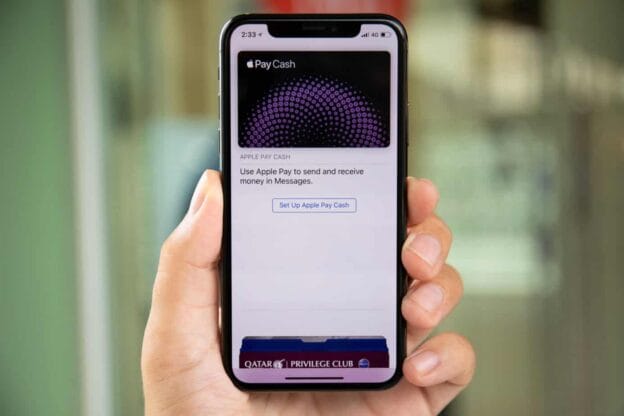
Apple’s Latest iPhone 5S and iPhone 5C Lack NFC Support, Market Setback Expected

The iPhone and NFC issues can lead to a market setback. The sphere of influence of the iPhone apparently extends into industries that develop products for mobile payments. Mobile credit card processing and various merchant services, including various point-of-sale applications, are also influenced by Apple’s decisions. The close relationship between these technologies is most visible in the market for mobile payments.

Specifically, there is a lack of near-field communication, or NFC, support inside the iPhone 5. The absence of this capacity could delay the standardization and adaptation of associated applications. This restriction is already creating waves, which are rippling throughout Western Europe as well as North America; however, Asian markets are not expected to sustain any substantial impact.

Apple’s main competitors fully embrace NFC technology, and the mobile credit card processing market is also doing very well. This situation certainly begs the question: Is this a part of a larger marketing strategy, or did Apple simply drop the ball when developing compatibility for merchant services?

Facilitating mobile credit card processing and other instant transactions does not constitute small potatoes, so it is worth taking a closer look at the situation.

iPhone and NFC issues – Motives and Methods

iPhone and NFC issues - Motives and Methods

Two items seem to be present and capable of driving the decision to scrap the addition of NFC compatibility within the iPhone. First, it is possible that Apple might be attempting to undercut certain competitors. Since these products are targeted at initiating a new method for making fast and secure mobile payments, there could also be a conflict of interest lurking in the background.

Apple could also be attempting to establish a position of influence in the market for merchant services by changing the company tune only when outcry for their support reaches a high point. In addition, Apple has elected to develop the iPhone technology by using iBeacon, which employs similar transmission functions, but it is done via Bluetooth Low Energy or BLE.

Analysts observe that this single decision could put certain product developments for processing mobile payments behind for at least two years. Retailers have certainly responded by delaying their financial commitments for relevant point-of-sale devices and supporting products.

Since several alternatives to NFC are already in development, it seems like a stretch of the imagination to assume that this move is indeed strategic or even deliberate. Perhaps Apple is simply unresponsive to the various market dynamics created by its key decisions; however, this decision could also be motivated by its desire to control the technology and shift market dynamics with iBeacon. Only time will reveal the details.

About NFC

About NFC

One remarkable technological innovation that has transformed our interaction with devices is NFC! Abbreviated as Near Field Communication NFC has gained attention in years, particularly in the realm of ecommerce business. So, what exactly is NFC? How does it work its enchantment?

What is NFC?

NFC, also known as Near Field Communication is a technology that enables devices to communicate and share information within distances. It works on the principle, of Bluetooth and Wi-Fi connections by utilizing radio frequency waves. However, what makes NFC unique is its ability to establish a connection by bringing two devices close together.

Unlike communication methods that require complicated setup processes or pairing codes, NFC allows for seamless interaction with just a tap or touch. This convenience has made NFC widely popular across applications such as payments, ticketing systems, smart home automation, and data transfer between smartphones.

One of the features of NFC is its compatibility with existing infrastructures. Many modern smartphones already come equipped with an integrated NFC chip that enables users to make payments using wallets like Apple Pay or Google Wallet. Additionally, businesses can utilize NFC-enabled point-of-sale terminals for transactions without the need for cash or physical cards.

NFC tags are another aspect of this technology. These small adhesive stickers can be programmed with instructions such as launching apps connecting to Wi-Fi networks or even triggering actions, on your device when tapped against them.

NFC is a way of communicating that makes it easier for devices to connect through close interactions. Its flexibility and user-friendly nature make it a valuable tool, for improving user experiences in industries and everyday situations alike.

Use Of NFC

One of the applications of NFC is for making mobile payments. With a tap of your smartphone or smartwatch, you can conveniently and securely make purchases at stores and restaurants without having to take out your wallet.

Another purpose of NFC is to transfer data between devices. By touching two devices together you can easily share photos, videos, contacts, and more. No need for cables or complicated setup processes.

NFC also finds its usefulness in access control systems. Imagine the convenience of entering your office building or hotel room by tapping your phone on a reader. This eliminates the need for keys or swipe cards. Provides a seamless experience.

Moreover, NFC tags have the ability to automate tasks on your device. For instance, you can program an NFC tag in your car to automatically launch navigation apps or enable Bluetooth connectivity with a tap using your phone.

In addition, to these applications, NFC technology is also being incorporated into marketing strategies. Brands are leveraging this technology to offer engaging interactions, for their customers through posters and product packaging. These interactive elements can activate content when touched with a device that supports Near Field Communication (NFC).

As demonstrated by these examples Near Field Communication has a range of applications, in our lives. It enables us to make payments share files, access buildings, and even enhance marketing initiatives. The potential seems limitless!

How Does NFC Interact With My Device?

How Does NFC Interact With My Device?

When you tap your smartphone against another NFC-enabled device like a payment terminal or another phone the two devices establish a connection. This connection enables them to exchange information without any delay.

The interaction between your device and the NFC-enabled one happens because of fields. When the devices come close to each other their antennas generate these fields that facilitate communication between them.

Once the connection is established data can be transferred between the two devices. This could include making payments at stores or sharing files like photos and videos between smartphones.

One of the things about NFC is its simplicity. There’s no need, for setups or passwords – just a simple tap is all it takes to initiate communication.

It’s worth noting that both devices involved in an NFC transaction must have hardware and software for it to work correctly. Fortunately, most modern smartphones already come equipped with NFC capabilities.

NFC interacts with your device by utilizing fields generated by antennas. It makes things easier, such, as paying and sharing files by creating connections, between devices that work together with a simple tap. So the time you come across that NFC” symbol on a device you’ll have an understanding of its functionality!

Know more about NFC here.

How Does Decred Work?

Bitcoin Craze Generating Big Profits For Some [2023 Update]

Bitcoin is a topic that most people who spend time on the Internet have heard about. A Bitcoin is not a tangible coin like traditional currency. It is a virtual currency that can be bought, sold and mined electronically. For Andreas Kennemar and Marcus Erlandsson, an idea involving Bitcoins turned out to be beyond profitable.

Mining Computers

In the short span of four days, Kennemar and Erlandsson earned $3 million in revenue. How did they do this? KnCMiner, their company, does not actually own the virtual coins or trade them. Instead, they crafted a computer that is designed to mine the currency online. At $7,000 per unit, these computers are certainly more of an investment than the average desktop or laptop. During the second week of November, KnCMiner sold off all of its inventory when Bitcoin prices were skyrocketing. In a record four minutes, the men made an impressive $600,000.

How To Mine Coins

At first mention, the idea of mining a virtual currency may sound like an easy treasure hunt game to the average person. However, the process is very complex. Without the right electronic tools and equipment, mining a Bitcoin is difficult for a regular computer. There are several cryptographic puzzles that must be solved, and the average computer does not have the ability to compute them. This is where the two men who created the mining computers developed their idea. They used a special chip, which is called an Application-Specific Integrated Circuit or ASIC.

To build a coin, a computer has to calculate an encryption problem that is called SHA-256. The graphic card or ASIC does the processing, and the algorithm must be solved in order to create new coins. The process is commonly called solving a block. When a computer is successful in creating new Bitcoins, it will be verified with other processing computers in the network. The first person to solve a new block is the one who receives the coins. Currently, there are 25 Bitcoins per block with a limit of 3,000 per day before it becomes significantly harder to produce more coins.

The idea of this virtual currency certainly provides opportunities for creative people to make money, but some detractors also argue that the system is flawed or unsustainable.  If anything, the value of a Bitcoin has certainly proven volatile.  Here at “The Official Merchant Services Blog” we’ve covered a variety of aspects concerning virtual currency. We delved into tokenization just recently, which facilitates the processing of payments by creating virtual tokens instead of storing cardholder data in a way that is susceptible to breaches and hacks. We have also covered aspects of micro-transactions and how video games embrace both the concept of virtual currency and the sale of virtual items for real currency. Bitcoin and the ongoing developments in Bitcoin mining takes these concepts to a whole new level of depth and economic intrigue. We will continue to monitor and report on the Bitcoin story as it unfolds.

death of e commerce

The Death of E-Commerce? [2023 Update]

I just sat down at my desk and took a few moments to read Antonio Regalado’s fascinating column on E-Commerce from MIT Technology Review. I recommend it to anyone who runs a business, or really anyone who plans to buy something in the next month or two — you know, during the Holiday Shopping Season.

It’s That Time of Year Again

With that holiday shopping season right around the corner the media spotlight on E-Commerce is about to get dialed up a few notches. The standard media grind of finding a new story to keep things fresh, yet rehashing the same old topics over and over again, is really quite fond of the E-Commerce tale since it basically hits every mark needed in a story this time of year. It’s well trod ground (retail sales figures during the time of year when people flock to shop retail), it’s fresh and flashy (buying with a smartphone is the new “it” thing) and it’s easy to write about (everyone’s got a smartphone and in between texts can probably offer an opinion about the story).

So there’s going to be a flood of “E-Commerce, it’s not just for kids anymore!” style pieces written, along with chart after chart of how many billions of dollars are being spent on products through the whiz bang-up new gimmicks of smartypants phones and interwebs tubes (it’s not a truck, but it powers a fleet of delivery trucks!)

It’s this pending recycle of the news cycle that Regalado’s piece really underscores. It’s starts with the subhead of the article, “E-commerce is an idea whose time has come and gone. Here’s why.” A bold statement when placed up against the pending flood of stories that are going to tell us that E-Commerce is (still) the next big thing.

But that’s the hook of Regelado’s article. And it certainly worked its magic on me and got me to read it.

More Than Meets the Eye

Regalado’s point isn’t that E-Commerce is done. It’s more that it’s becoming part of the everyday fabric of retail business. So he’s saying that E-Commerce has been merged into a total shopping experience and is no longer a new gimmick.

The article really slams this point home when it quotes Chris Fletcher, a research director at Gartner (who we here at HMS have used data and graphics from on this very topic). Fletcher told the MIT Technology Review’s Business Report, “we should stop calling it E-Commerce and call it just commerce,” and suggested that it’s really just a part of the shopping experience now.

This quote called up more than a few variants of the corny joke, “In China, they just call it food.” But the point is very well taken this year, and is something we’ve been alluding to for two years now at Host Merchant Services: The whole shopping experience has blending together with Online and Brick and Mortar since the very beginning.

Days of Future Past

This has really obvious but powerful ramifications for our company. As more and more people just accept online shopping as much a part of the process as window shopping or catalog shopping, the amount of credit and debit card transactions continues to increase. Those are the two most common methods of payment in this online environment. And so as the business evolves to the point where popping into a Macy’s ends up auto-texting you a free discount code on your next Macy’s purchase, payment card transactions become the norm.

Keeping an Eye on Heat Mapping

Oh and Regelado’s article really dives into that bit with your location spawning discounts:

” Threatened by the growth of low-cost online merchants, traditional retailers are reacting by following customers onto the Internet. Macy’s does it as well as any. On its website, it installs 24 different tracking cookies on a visitor’s browser. On TV, it runs ads with Justin Bieber that urge millennials to download its mobile app, which tells them which of the chain’s stores is closest to their location. Once inside, they can use the app to scan QR codes on a pillowcase or a pair of shoes. Online orders now ship from the backrooms of 500 Macy’s stores that this year began acting as mini distribution centers.”

Omnichannel marketing is the buzzword associated with this. But it’s something we’ve been discussing at HMS for awhile now. Our partnership with Barclay’s Mobile app opened this slick marketing tactic up to us ages ago. It’s really quite clever. The business uses its connection to your phone (and thus your own transaction history, your GPS location, as well as data that it can find in various places like social media) to track your buying habits.

I remember the first time the heat mapping aspect of Omnichannel Marketing was explained to me by HMS Tech expert Ken Hemmel.

He described a system where I’d be walking along on Main Street in Newark, which was where the Barclays app was being targeted, and I’d pop into a restaurant. I’d buy a meal and have a glass of a particular wine with that meal. The information would then prompt my phone the next time I walked past a wine and spirits store that was participating in the program. And I’d be given a coupon code to save money on a bottle of that kind of wine I had with my meal. This would combine transaction history, with GPS location and turn into an aggressive marketing tactic to get my business.

A Whole Store in Your Pocket

Another salient point Regelado’s article made really resonated with me personally. The article cites US Census economic data and states that only 5.2 percent of US retail purchases were made online in 2012. But then the article cites the effect of online research, noting that 80 percent of BestBuy customers said in a survey that they already searched for price information online before making a purchase in person. And that a third of them do so on a phone while inside the store.

So the last two purchases I made at BestBuy were an HD TV, which I searched for information on while in store, and a computer which I was shopping for online before I went there. I fell right into those statistics. I wanted to comparison shop and read reviews before making the purchase and had the device right there in my hand that let me do exactly that.

The only thing that held me back from ordering either  of these items completely online was impatience. I wanted the item that day. Which is exactly what Relegado’s article also gets into:

“But now [Amazon] and other Internet companies, including eBay and Google, are investing in same-day delivery—getting goods to people just hours after they order them. With their drop boxes and fleets of delivery cars, they’re bidding to eliminate one of physical retailers’ main advantages: immediate gratification.”

The suggestion is that technology is pushing retailers to evolve. They embrace social media, and online power, and create a shopping experience once again tailored to meet the needs and convenience of their customers.

Been There, Done That?

It reminds me of Warren Ellis and Darrick Robertson’s groundbreaking comic book, Transmetropolitan. Set in a Bladerunner-on-acid style future and revolving around a pastiche Hunter S. Thompson-inspired Gonzo journalist named Spider Jerusalem, the comic had a very humorous but also telling take on marketing and advertising in our near future. It suggested neural advertising bombs delivered directly to our brains, tracked by our own viewing habits, to offer us the products we’d be most interested in. As deft and powerful as that future marketing blitz was shown to be in the imaginary world of Transmet comics, the reality is we’re about to be in on the beta test of that entire concept with the way retail is evolving through E-Commerce.

swipe fee

Swipe Fee Suit Ongoing After Fairness Hearing [2023 Update]

A $7.25 billion settlement relating to credit card interchange fees continues to encounter stiff opposition from a number of major retailers and several significant retail trade associations.

Case History

The antitrust case against Visa, MasterCard and several issuing banks stemmed from a dispute relating to the percentage of credit card transaction fees that retailers must remit to the credit card processing network. The fees generally range from 1.5-3 percent and are shared with the bank that issued the card.

Also known as “swipe fees,” these charges serve to underwrite the supporting infrastructure that allows businesses to accept and process credit cards. Large retailers and supporting associations have repeatedly complained about the costs associated with accepting credit cards and the fees for merchant services.

These grievances resulted in a number of lawsuits filed in 2005, which were eventually consolidated into a single case known as the Payment Interchange Fee and Merchant Discount Antitrust Litigation.

There were 139 parties involved as plaintiffs, and the case was active for over eight years. In July 2012, a settlement was reached that provided $6 billion in damages to affected retailers and another $1.2 billion for a temporary reduction in interchange fees. As a further concession, Visa and MasterCard eliminated certain rules for merchant services that prohibited surcharging, which is a practice that allows retailers to recoup credit card costs by passing them on to the consumer.

Opting Out

Almost immediately, opposition to the swipe fee settlement began to emerge. The primary objections centered on the belief that the agreement does not provide any meaningful reforms to the current model. Many merchants believe that market forces will not allow for credit card surcharges since consumers will object to the added fees. Other retailers oppose the stipulation in the agreement that prohibits future swipe fee lawsuits.

As a result, major retailers such as Target, Nike, Home Depot, Lowes, Starbucks and Best Buy ultimately opted out of the settlement. Major trade organizations, including the National Restaurant Association (NRA), have voiced significant opposition to the agreement. In fact, the NRA strongly encouraged its constituent members to reject the settlement and highlighted the potential negative impact it could have on the emerging mobile payments market.

Many retailers ultimately declined to participate in the settlement. Since the total number merchants who opted out exceeded 25 percent of the collective annual U.S. retail transaction volume, MasterCard and Visa could have elected to withdraw from the deal. However, they chose to continue with the process.

In September 2013, a fairness hearing was held in U.S. District Court under Judge John Gleeson that allowed dissenters to present final arguments. Gleeson is expected to issue a decision on the settlement sometime in mid-January 2014.

Recent Developments

After assessing their options, Target Corp. and 17 other retailers filed a separate lawsuit against Visa and MasterCard in May 2013. The plaintiffs charged that the banks and credit card companies have engaged in an “illegal and anti-competitive scheme.” They contend that the Visa Check Swipe Fee settlement did not adequately address the basic issues of the original case.

In the most recent action relating to the new litigation, Visa and MasterCard argued in federal court that the pending antitrust action initiated by Target Corp. is prohibited under the terms of the July 2012 settlement deal. The defendants contend that the retailers have misinterpreted the terms of release relating to the previous case for the sole purpose of instigating additional litigation.

MasterCard and Visa strongly reject the plaintiff’s arguments and contend that the Visa Check swipe fee settlement case preempts any new action relating to interchange fees, which they contend were adequately addressed under the previous settlement.

The Saga

To review the full extent of this ongoing saga, you can read our previous coverage of this settlement:

  • The Big Cash Comeback
  • Don’t Call it a Comeback
  • NRF Opposes Interchange Settlement
  • Interchange Settlement Nears Preliminary Approval
  • Merchants Appeal Key Part of Interchange Settlement
  • Interchange Settlement Given Preliminary OK
  • Challengers Awaiting Final Approval
  • What Does the Future Hold for Interchange
icloud keychain

iCloud Keychain to Now Store Credit Card Data [2023 Update]

Apple’s recent software update includes a new product called the iCloud Keychain. With the feature, consumers can save sensitive information in a secure online file. Specifically, Keychain will save passwords and credit card information for all of their Apple devices. The program also helps Internet users create safer passwords.  Given the new functionality allowing users to store credit card data and synchronize with the cloud, we thought this functionality would be of particular interest to our customers and blog readers.

Keychain Details 

The Keychain service operates on Safari in iOS as well as OS X Mavericks. Once it has helped a consumer select a secure password, it will store the information and synchronize it to the consumer’s iOS and Mac units.  The software upgrade also makes credit card processing easier for consumers as Keychain saves the user’s credit card number and expiration date. To abide by MasterCard and Visa regulations, the program is unable to store the Card Verification Value, or CVV, code.

As a result, consumers will still need to input this information manually. Users should keep in mind that the software can only operate in Safari on Mac. Therefore, users of Chrome or FireFox will need to use a different password storage provider. In addition, consumers must have the iOS 7 upgrade installed on their devices.

Installation Overview

While installing the OS X Mavericks upgrade, the system will automatically ask the user if he or she would like to establish iCloud Keychain. When the user approves the setup, the program will direct him or her through the security key creating and linking process. If consumers prefer to establish the program manually, then they can access Keychain through the iCloud settings screen on a Mac device. Once a user has accessed the program, he or she will need to enter the password information manually into the system for the Apple program to save it. Keep in mind that other devices can be added to the program. However, the system will require approval for each extra unit. Once Keychain receives authorization, it will automatically begin updating on that unit. If a user decides to remove Keychain from his or her device, then the cancelation procedure is easy to complete. To remove the program, just click on the settings option and turn off the “Approve with Security Code” feature. Users who change their mind can easily reactivate the program.

Keychain Offers Convenience

Credit card processing is easier for consumers who have Keychain on their iOS and Mac devices. The Apple program is secure and helps users create better passwords to safeguard sensitive information. Keychain is a system feature that provides extra security and overall convenience.

How to Save Money on Credit Card Processing Fees

Here at Host Merchant Services we guarantee to save our customers money every month on their credit card processing. We understand that some of you are wondering how we do this! Transparency is a key cornerstone of our customer service values, so we have no problem sharing our secret formula and show everyone out there exactly how we carve out superior savings for every single one of our customers. We believe that when you get your statement every month, you should understand every item, and it should match what you were promised in the sales process. One of the first things to understand when switching to Host Merchant Services is we utilize the most cost effective and fair pricing available in credit card processing. It is called interchange plus or “cost plus pricing.” Interchange is a set of rates and fees determined by the card associations (Visa, Mastercard, and Discover). What this means is that our merchants are able to clearly see what interchange categories they qualify for. Here are a few different interchange categories that merchants pay with the same consumer visa credit card. Keep in mind each interchange category has a percentage and a dollar amount included in the category.

Supermarket Credit 1.22% + $0.05
Small Ticket (Transactions under $15) 1.65% + $0.04
Standard Retail / Restaurant 1.51% + $0.10
Charity 1.35% + $0.05
Service Station 1.15% + $0.25
e-Commerce / Mail order & Telephone order 1.80% + $0.10

These examples are based on interchange plus pricing. They also don’t include processor markup, and we have the lowest in the industry! There are other types of pricing that processors will use. You may encounter three-tier pricing (1.79% Qualified, 2.49% mid-qualified, and 3.29% non-qualified) for example. Some merchants are priced flat rate (2.9%, or 2.75%) or flat rate plus surcharges. There is also the dreaded enhanced bill back! Once you understand your pricing and category you need to look at how you are accepting your credit cards. Credit cards that are taken face-to-face (card present) often cost less than cards that are taken over the phone or on the Internet (card not present). For example, retail swiped transaction of 1.51% versus an e-Commerce transaction of 1.80%. Card associations justify this increased interchange rate due to transactions not being face-to-face. The next step in saving money is learning how much money is currently being spent on average to take in each dollar on credit cards. This is called your effective rate. This is calculated by totaling all the money you are paying in fees divided by the total amount your business processes in sales and refunds. For example a merchant who pays $300 in fees to bring in $10,000 in credit cards has an effective rate of 3.00% ($300 / $10,000 x 100 = 3.00%). A few other pieces of information are important to solving the puzzle. The average ticket or average transaction amount is also critical to understanding your rates. The reason being is that a $.20 transaction fee is not a substantial amount of an average ticket of $100 ($.20 / $100 = 0.20%). However, take that same transaction fee on an average ticket of $10 ($.20 / $10 = 2.00%). This goes to show that merchants with larger average tickets pay lower effective rates on average. Lastly we want to look at other fees; many processors will charge monthly fees, statement fees, administrative fees, regulatory and product fees, PCI fees, and annual fees. Host Merchant Services will help you save money on these fees as well! You can learn more about this process through our Official Host Merchant Services Road to Savings Infographic. The best way to start the process is to have one of our industry experts analyze a current merchant statement. We will walk you through the confusing process by explaining what you are currently paying versus what you would pay with HMS. Along with the potential to save hundreds to thousands of dollars each year on your credit card processing, we’ve upped the ante with our new $100 Challenge.

Call us today at (877) 517-4678 and let us design a solution that dramatically improves your bottom line – we guarantee it!

iPhone 5C and iPhone 5S on HMSPay

Apple recently set a new record as it sold over nine million new iPhones in one weekend. The new offerings consisted of two related yet distinct models. Both phones figure prominently in an exciting new narrative for mobile credit card processing. The iPhone 5S is a prestige model with solid glass and aluminum construction. Though the affordable iPhone 5C uses a plastic build, it is still a trendsetting phone with powerful features.

With the continual growth of the iPhone phenomenon, iPhone payments will become even more important for competitive business development. Support for the new iPhone 5S and 5C is critical for meeting the demands of mobile-focused modern consumers. Host Merchant Services’ mobile payment solution includes full support for both new models of the iPhone. Companies using HMSPay to support iPhone payments can better cater to tech-savvy mobile consumers. Practical for businesses of all sizes, HMSPay is easy to use, affordable and completely secure.

In many respects, HMSPay is a new and different way to accept credit cards. Upon receiving their mobile card swiper devices, HMSPay clients can start processing iPhone 5S and 5C transactions within minutes. This service boasts sophisticated features, exceeding those of any counter-top dial terminals. Realizing that security is all-important for cloud-based mobile payments, HMS encrypts all transactions to fully meet PCI-DSS compliance standards. These are the standards set by Visa and MasterCard to ensure that merchants can accept credit cards without exposing themselves and consumers to needless risk.

With such cutting edge technologies, one might expect HMS to charge steep rates for its mobile payments solution. In truth, HMS sets a new standard for transparent, reasonable processing costs. HMS customers enjoy month-to-month service, honest billing and the processor’s remarkable Best Price Guarantee.

Most iPhone 5S owners are forward-thinking individuals interested in faster, more secure mobile transactions. Merchants who accept iPhone payments act as ambassadors for a new era of efficient, high-tech commerce. Whatever their specific products may be, companies that keep up with changing payments technology can easily set themselves apart from their competitors. Host Merchant Services is committed to supporting the development of cutting-edge payment systems for the hard-working entrepreneurs.

3

Tokenization Makes Card Use Safe

Safeguarding Stored Cardholder Data with Tokenization

In this era of connectivity, consumers are increasingly concerned about the safety of their personal data. Leaders in the merchant services industry are actively engaged in developing new ways to protect customer information. Here at Host Merchant Services, we commit to security by providing our clients with tokenization, the most secure type of cardholder information storage available today. This system has enormous potential for any company that regularly utilizes credit card processing.

Tokenization involves taking in cardholder data and returning a token, a string of letters, numbers, and characters that represents and stands in place of the original data. Each token serves as a pointer for cardholder information, which is securely stored offsite in a cloud-based database. Since tokens do not contain cardholder data in and of themselves, they are essentially immune from the threat of hackers and identity thieves.

Tokenization And PCI Compliance

Tokenization and PCI Compliance

Through data tokens, merchants can safely store customer information with payment gateway providers like Host Merchant Services. This system is particularly well-suited for companies that charge customers on an ongoing basis. For example, businesses that offer subscriptions or memberships generally charge clients around the first of the month.

Storing large amounts of cardholder data for this purpose can create PCI compliance headaches. Essentially, when a merchant retains and stores a customer’s card information, it changes the level of compliance they have to adhere to for PCI DSS standards. You can review PCI Compliance in more detail here, but Tokenization helps to alleviate some PCI issues for merchants and boost transaction security at the same time.

Instead of storing cardholder data on-site, merchants can store tokens and simply pass these tokens to their payment processors at the appropriate times. Upon receiving these tokens, processors use the tokens to pinpoint cardholder data and generate unique credit card transactions. This system is fast and efficient while minimizing the risk of fraud and identity theft.

Helping  Businesses Small And Large

Helping  Businesses Small and Large

Token systems are ideal for smaller companies seeking to reduce their PCI compliance burdens while maintaining impeccable customer security. That said, companies of all sizes use data tokens to simplify their operations. For example, a tokenization-based payment processing system is useful for closely managing even a large-scale customer rewards program. The ability to store the tokens securely while not compromising customer cardholder data, lets a large company deftly keep track of and maintain their rewards program.

As credit card processing becomes ever more critical for modern commerce, many more companies will adopt this robust system of safeguarding customer data. Here at HMS, we are proud to offer tokenization as an integral part of our Transaction Express payment gateway.

A payment gateway is a system of technologies and processes that allow merchants to electronically submit payment transactions to various payment processing networks (i.e., the Credit Card Interchange and the ACH Network). Payment gateways may also provide merchants with transaction management, reporting, and billing services. Payment Gateways essentially bridge the gap between web-based payment options and credit card processors.  To take payments in a store, you must have a merchant account, to take payments online you must have a payment gateway.

Beyond the in-house Transaction Express gateway, Host Merchant Services also supports a variety of other Payment Gateways for your payment processing needs. We are able to customize a payment processing solution that fits your own individual needs. Here is a brief list of the Payment Gateways we support directly.

Services like the ones Host Merchant Services offers demonstrate how the payments industry is working tirelessly to prioritize information security.

Benefits Of Tokenization In Payments

Benefits Of Tokenization In Payments

Tokenization within the realm of payment gateways involves substituting payment information, like credit card numbers with an identifier or token. This token serves the purpose of enabling transactions without exposing the data. There are advantages to using tokenization in payment gateways;

  1. Enhanced Security: Tokenization provides security for information by preventing access and reducing the risk of data breaches. Since intercepted tokenized data is useless without the tokenization system it holds no value for attackers.
    PCI DSS Compliance; Compliance with Payment Card Industry Data Security Standard (PCI DSS) is crucial for businesses that handle cardholder data. By minimizing storage and transmission of information tokenization helps reduce the scope of PCI DSS compliance audits.
  2. Risk Reduction: Replacing card details with tokens significantly decreases the risk of transactions. Even if a token is somehow intercepted it cannot be easily exploited for transactions without access, to a system.
  3. Simplified Compliance: Tokenization assists in meeting regulations related to data protection and privacy.
    It ensures that customer data, which is sensitive is handled securely and in compliance, with requirements like GDPR, HIPAA, and others.
  4. Efficient Operations: Tokenization simplifies the process of integrating payment gateways into systems. By eliminating the exposure of card data during transactions developers can focus on integrating with the tokenization system making it a straightforward process.
  5. Building Customer Trust: Businesses that prioritize the security of payment information are likely to gain customer trust. Tokenization showcases a commitment to safeguarding customer data fostering trust and confidence in the brand.
  6. Convenient Recurring Payments: Tokenization proves advantageous for businesses offering subscription services. Once a card is tokenized it can be utilized for recurring payments without customers needing to enter their card details.
  7. Accelerated Transactions: ** Processing Speed;** Since tokenized transactions do not involve transmitting the information they can be processed rapidly resulting in enhanced efficiency, in payment processing.
  8. Support, for Multiple Channels: Tokenization can be used in payment channels, such as mobile and in-store transactions. This flexibility makes it a versatile solution for businesses that have payment requirements.

In essence, tokenization in payment gateways offers a security measure that minimizes the chances of data breaches and ensures adherence, to regulations. Improves the overall effectiveness and reliability of payment procedures.