For the second time in a week, a major retailer has reported a data breach that may affect thousands of customers. This time, the target is Sally Beauty Supply, the largest seller of beauty products in the world. So far, the breadth and severity of the security breach are not known, but Chris Brickman – president and CEO – confirmed that the company was investigating the illegal intrusion and pledged to work with any customer who had been affected.
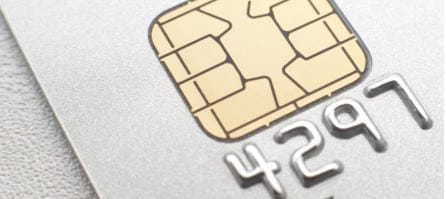
This incident highlights ongoing security problems within the merchant services industry. Over the past several years, as computer hackers have become more sophisticated, such data breaches have seemingly occurred with regularity. In response to this problem, the industry has attempted to adopt several important mobile payments standards. In fewer than six months, retailers such as Sally Beauty Supply will be required to improve their point-of-sale systems so that they can accept so-called “chip-based” credit and debit cards.
This regulation stems from the actions of EMV (“EuroPay, MasterCard, and Visa”), a global consortium that sets the standard for authentication measures used to verify credit and debit card transactions. EMV – which includes every major global card issuer – has set an October deadline for merchants to accept integrated circuit cards (or simply “chip cards”) at their places of sale. This change comes with several security benefits. Under the old “swipe and sign” model, making fraudulent charges was relatively easy; all that was necessary to make an unauthorized charge was to swipe the card and provide a forged signature. Simple sixteen digit account numbers are easy to steal and reproduce. The use of chip cards combats this practice in two ways. First, it makes it nearly impossible to reproduce fraudulent cards. Second, it assigns a unique identification number to every transaction, which makes it easier to track suspected fraudulent usage.
However, full adoption is unlikely to occur by October, both because not all consumers own chip-based cards and because some retailers lack the capacity to process these cards. For merchants, failure to comply with these standards comes with a real price. Most card issuers have announced dates for “liability shifts,” which signify that retailers – not banks, as was usually the case – will be responsible for reimbursing customers for any fraudulent transactions if the retailer lacks the technology to handle a chip-based charge.
The Sally Beauty data breach underscores the need for immediate change. In the coming years, the merchant services industry will have to continue to evolve to ensure that mobile payments are secure. While the move towards chip-based cards will not solve all problems, its full implementation would go a long way. The sooner, the better.
For many consumers, Starbucks coffee has become an essential part of their morning commute. They take a quick detour on their way to work, pay with their credit card or smartphone, and get back on their way, ready to take on the day. But recently, some customers have been reporting an unwanted addition to their morning routine: unauthorized charges on their debit and credit cards stemming from the Starbucks app.
The recent data breach goes like this. Hackers gain access to an unsuspecting customer’s account in some way. They then use the app’s ‘auto-reload’ function to top off as many as a dozen new Starbucks’ pre-paid cards. Finally, they ‘gift’ these cards to themselves, presumably to sell on the black market.While this lack of security has left many customers irate, Starbucks itself has denied that the data breach comes from an internal problem with their app. Instead, they claim, the problem has a much simpler explanation: weak passwords. Oftentimes, hackers will ‘spam’ a company’s automated login systems with a multitude of passwords, hoping that at least a few work. Other times, hackers get their hands on the login credentials of thousands of customers of another company – say, a bank – and use that to attempt to log in to apps like Starbucks’ payment app.This is where customers can ensure their own security by employing certain practices. Merchant services and mobile payments experts suggest that customers use strong passwords. For example, don’t use a password that is easily associated with the application that you are using. The password for your Starbucks app probably shouldn’t be ‘frappucino.’ Secondly, don’t use the same password across different accounts. It’s bad enough if hackers get your password to one account. This problem is compounded if they can use this info to hack all of your accounts. Lastly, change your passwords frequently. Experts also agree that until the Starbucks breach is completely resolved, it is wise to turn off the ‘auto-reload’ feature in the app.
While the Starbucks breach isn’t disastrous in and of itself, it does signify some of the problems that lay ahead in the merchant services industry. As consumers demand quicker and easier mobile payments, how will their security be ensured? Certain practices, such as sending a confirmation text message to a person’s cell phone when an account has been accessed from a new device, seem like common sense and could have helped to prevent the Starbucks data breach. Will consumers embrace these policies, or will they view them as needless annoyances? Time will tell.
EMV stands for Europay, Mastercard and Visa. It is a system which incorporates technology that will standardize the means by which credit and debit cards (collectively “chip cards”) will communicate with card readers and provide a way for customers to buy products from the widest possible variety of merchants and merchant services.Current card readers rely on the ability to read a “magstripe” or magnetic strip affixed to the back of each credit card and debit card. Stored in this magnetic memory is the information necessary to verify the identity of the account associated with the purchase.The current merchant services system is inherently insecure, however. Since the information on the magnetic stripe can be easily read by any card reader hardware, it can be read by anyone with such hardware, even someone who is not processing a sale.
The new EMV system depends on a combination of a chip built into each card and a means of digitally “signing” each transaction to ensure that even if the data from one transaction is available to someone who is trying to gain unauthorized access to the account, that data is not usable for a second transaction, as that second purchase will have its own digital “identity.” These capabilities are built into EMV readers.
This is all accomplished through the use of strong cryptography and independent verification of the card and account credentials at the point of purchase by the chip card and the EMV reader. In theory, the system will either make it impossible or extremely difficult for an unauthorized third party to make a purchase without authorization from the account holder.
Three of the major U.S. card providers have implemented plans for a roll-out of new EMV compatible systems beginning in October of 2015. The United States is the only G20 nation that has not committed to EMV as a standardized means of processing card-based payments, even though there are over 23 million EMV readers deployed so far.
Ironically enough, it may be contact-less payment systems that drive the adoption of systems like EMV. Mobile payment and contact-less payment options are growing in both availability and popularity. Since these systems can independently verify authorization for transactions and further, can modify their authorization systems, they will provide good competition for future EMV innovation and adoption rates.
One of the most significant skirmishes in the ongoing battle over mobile payments supremacy involves a major American electronics retailer, an iconic tech brand and an industry giant. According to a recent report published by the Wall Street Journal, Best Buy could be the next major retail chain to accept Apple Pay in the United States.
Apple Pay is an advanced electronic payments system that can transform an iPhone 6 or iPhone 6 Plus into a mobile wallet. The iPhone, along with its various accessories and peripherals, is a major selling item at Best Buy; for this reason, the move to accept Apple Pay seems like a smart decision. However, such a move will impact the store’s current relationship with Merchant Customer Exchange (MCX).
Best Buy currently uses MCX as its preferred system for mobile payments. MCX utilizes its own mobile wallet system, called CurrentC, which is proprietary. Best Buy is not the first major MCX client to accept Apple Pay; the iconic CVS and Rite Aid drugstore chains in the U.S. have also made the iPhone their favorite mobile wallet.
At this time, Best Buy is not completely switching over to Apple Pay; in fact, they can only use it through a combination of the store’s mobile app and their iPhone. Shoppers are currently free to use CurrentC and other mobile payments they may see fit to use when they purchase electronics. However, MCX is naturally concerned about the upcoming expiration of its exclusive agreement with Best Buy. Moreover, MCX is worried about the future of its proprietary electronic payments platform; after all, Best Buy is already planning on making the required modifications and upgrades to its cashier register network.
It stands to reason that MCX, a coalition of American providers of merchant services, should be worried about Apple Pay. MCX was organized for the purpose of joining strengths and efforts against the likes of Apple Pay, Google Wallet, PayPal, et al. To this effect, MCX applied its business acumen to secure exclusive contracts such as with Best Buy; alas, iPhone users seem to be warming up to Apple Pay in greater numbers.
It is unlikely that MCX will abandon the CurrentC platform or else give up without a fight. Innovation seems to be key in the mobile payments industry, and thus this is something that MCX should consider when the time comes to head back to the drawing board.
In 2005, a class-action lawsuit was filed against Visa and MasterCard by claimants who argued that the two credit/debit card providers were colluding in price fixing and anti-competitive practices. The case was settled in 2013, and the card companies agreed to provide compensations totaling $6.05 billion, reduced by 25% to account for exemptions and exclusions, to merchants who accepted Visa or MasterCard payments in the United States between January 1, 2004 and November 28, 2012. Claimants may receive $6,000 per $1 million in Visa or MasterCard transactions processed during this period.
Your business could qualify for compensation from this fund. If you believe you are entitled to compensation, or would like to find out more about compensation and filing, Host Merchant Services is ready to get you started.
How do I qualify for funds?
To qualify for compensation from the $6.05 billion settlement fund, your business must have accepted transactions from Visa or MasterCard credit or debit cards at any point between January 1, 2004 and November 28, 2012. The settlement fund covers only transactions processed in the United States during the described time period.
If your business meets this requirement, then you are eligible to file for a claim using HMS’s easy filing service. Once filed, claims are reviewed by settlement administrators, who process your application and determine the compensation your business is due.
What will HMS do for me?
We at HMS want our clients to receive the full compensation to which they are entitled. We understand that claim filing can be an arduous process, and that business owners sometimes elect not to file because of the investment of time and resources it requires. Therefore, HMS is proud to announce that it will help facilitate the claim filing process on behalf of your business. We will provide recovery services to clients, and we will work to ensure you are fairly compensated.
You only need to provide your business information to get the filing process started. The forms are straightforward and easy to use, and you will be contacted if more information is required. The initial filing process takes only minutes, yet it can earn your business anywhere from thousands to millions. You will receive updates about the status of your claim as it progresses through settlement administration.
What will this pay? Do I have to pay anything?
The settlement will allow claimants to recover $6,000 per $1 million in Visa or MasterCard credit or debit card payments processed between January 1, 2004 and November 28, 2012. Claimants must file to receive funds; no funds will be paid to your business unless you apply for them. A standard legal fee will be charged at the time of claims payment – you will not be charged until you receive your money. In the event that your claim is denied, you will be charged nothing for the filing or processing services. There are no initial fees or hidden charges. Our system is zero risk for your business.
How do I get started?
HMS will be accepting clients for Visa/MasterCard compensation claims soon. Look for updates in the near future; we will provide more information as we finalize our system. At that time, interested clients can sign up for claim filing through HMS.
If you are interested in filing a claim through HMS’s recovery services, please complete the form below.
The story of retail has largely been a story of a shift in focus from individual customers to the mass economy, but there’s a push to take everything back to the personal level. Recent studies about consumer preferences indicate that consumers are more receptive to personalized shopping experiences and services. If you can make the customer feel valued, then you can earn his or her business for years to come. BLE can change the customer experience and bring a revolutionary change in the mass market.
The individual’s wants and needs
Consumers are entitled to what they want. That’s the perspective that drives the economy. If a consumer has a want, he or she finds a business that can fulfill that want in a satisfactory manner.
Studies are demonstrating that what consumers want is a personal experience tailored to their other wants. One of the draws to retail websites like Amazon.com is those sites’ ability to track consumer history and offer targeted suggestions. The 2013 Online Personal Experience study released by Janrain concluded that 74% of respondents reported being frustrated by websites that provided advertisements and notifications irrelevant to their personal interests. Additionally, 57% of respondents indicated that they would provide information to a website if they thought that information would be used in a way that benefited them.
These findings, and others, indicate that consumers are willing to allow data usage in order to improve the customer experience. Too much data usage, and irresponsible data usage, are still major concerns for businesses, especially given the rise in major data breaches exposed since 2013. However, using a limited amount of data to provide a much more personal shopping experience is something retailers should be pursuing.
What data is relevant?
Consumers provide a lot of opportunities for data analysis. With the popularity of online shopping, retailers have access to purchase history, products viewed or searched for, wishlists and bookmarks, shipping addresses, billing information, and favorite product categories. Any given set of data can tell you something about a consumer.
In a physical store, information such as consumer routes, loiter time in each department, aisles visited, and purchase history are all relevant to the consumer experience. However, this data has proven difficult to measure on a meaningful scale, at least until recently.
BLE and an opportunity for data collection
Bluetooth Low Energy has made quite a splash in the retail industry because of its power to provide data to both the consumer and the retailer. In simplified terms, BLE-enabled business models use BLE emitters called “beacons” to transmit Bluetooth signals across an area of about 200 feet. These signals can be detected by smartphones. If a consumer’s smartphone has the retailer’s app, the consumer can receive push notifications containing offers and information based on their current location within the store.
BLE is more suitable for these data collection and message-pushing purposes than Wi-Fi or cellular signals, which are blocked by or experience interference with walls and other structural elements. In a BLE-enabled data model, retail apps use beacon signals to determine what messages a customer sees, and retailers can associate different beacons with different content depending on that beacon’s physical location in the store. The beacons themselves don’t transmit anything except a unique Bluetooth signal, so everything from location association (based only on signal strength, and calculated by the app itself) to message selection and delivery is handled by the app.
How can BLE personalize the customer experience?
We’ve covered this topic in some depth in another article, but to summarize: BLE enables retailers to add online functionality into the in-store experience. BLE-enabled apps can be programmed to deliver different messages, offers, and suggestions based not only on a consumer’s current location but also on his or her previous locations.
Additionally, apps can integrate online shopping features such as account sign-in, purchase history, and wishlists. With this data available, apps can then compare in-store inventory to previous purchases and wishlist items to offer very targeted selections.
There’s even some talk of enabling apps to ring for a sales or customer service associate to be dispatched to the user’s location within the store. This kind of functionality would help maximize convenience for the customer and facilitate an omnichannel retail strategy.
All of this would also translate well into support for a loyalty program. Apps would provide users with a persistent means of tracking and managing their rewards and progress. Reminders about upcoming or available rewards are likely to keep customers coming back.
Where do we go from here?
For now, the industry needs to test the waters and see exactly where BLE can carry it. Various retailers are testing BLE in certain applications such as in-line ordering and contactless payment. There are definite challenges for retailers, but overcoming or sidestepping these challenges will open up new possibilities.
It’s a big question in the payments industry right now. In an earlier article, we discussed how the U.S.’s eventual transition to EMV could accelerate the rise of the mobile wallet as a payment medium. But we also discussed some of the problems, and there are many problems.
First things first: are mobile wallets safe?
One of the primary concerns amongst consumers is whether or not mobile wallets are a safe form of payment. According to the 2014 Digital Wallet Usage Study by Thrive Analytics, “Security concerns remain the main barrier to adoption.” These results closely follow from those of Accenture’s Consumer Mobile Payments Survey.
The concern is legitimized by media coverage of major recent data breaches and smartphone malware incidents. Consumers need to be reassured that their data is safe, and they want to take the least risk necessary when making payments or providing account information. Traditional credit card transactions, although unsecure compared to EMV transactions, may appeal to consumers because they don’t appear to expose any information. The challenge for mobile-capable merchants and for mobile wallet providers certainly lies in reassuring consumers that mobile wallets are safe in general, and much safer compared to traditional magnetic stripe card payments.
What about competition?
Many retailers are interested in creating their own proprietary mobile wallet applications, but this may impact the way consumers perceive mobile wallet technology as a whole. Ron Herman, CEO of Sionic Mobile, expressed his concerns about consumer “overload” in the app store: to the average consumer, it may be very difficult to differentiate between the countless applications already available. In a sense, the market may inadvertently be training them to look for the name on the application rather than what the application provides. This is bad news in an industry that is ultimately focused on driving spend by improving the consumer experience.
Companies should be focused on offering a complete package to consumers. Many would-be mobile wallet users are looking for incentives to try mobile wallet payments; headaches and confusion are only likely to turn them away from this payment medium.
What about mobile wallet acceptance?
Another major hurdle for mobile wallet providers is the slow uptake of mobile compatibility amongst U.S. merchants. The problem is cyclical: merchants don’t view mobile wallets as a major player in the payments ecosystem, so they are hesitant to enable mobile compatibility (if they even have it); consumers then see that many merchants are still not mobile-compatible, so they are hesitant to begin using mobile wallets.
If left to continue, this vicious cycle will prevent mobile wallets from reaching their potential as a payment medium. What can be done to solve this problem? A few things.
First, mobile wallet providers need to emphasize to consumers that mobile wallet technology is secure and worth pursuing. It’s best to address the market’s primary concerns, and data security is a hot-button issue nowadays. Accenture’s findings indicate that consumers are much more likely to continue using mobile wallets if they make at least one payment through a mobile wallet application. To get that far, though, consumers need to be reassured that they are protected from the risk of exposure (and from the risk of fraud).
Second, mobile wallet providers need to emphasize to merchants that mobile wallet technology is becoming more prolific and is therefore worth supporting. The main concern amongst merchants is that mobile wallets don’t represent a significant portion of payments, and that the technology is therefore not worth pursuing. In fact, mobile wallets present promising opportunities for merchants, especially given the trend toward a cashless or less cash dependent consumer base. EMV compliance could be used as a selling point here; EMV technology supports mobile wallets, so the push to establish EMV compliance in the U.S. could be presented as an opportunity for merchants to support mobile wallet transactions.
What do consumers want to see?
The vast majority of market research tells us a few things about consumers’ wants and expectations when it comes to mobile wallet technology.
First, consumers want to know that their data is being protected. Security is consistently at or near the top of mobile wallet survey results; consumers need to feel confident that the technology they use is safe to use.
Second, consumers want to know that their payment methods will be accepted at a range of merchants. Consumers are less persuaded — and even dissuaded — by limited applications. If they can’t be sure that mobile wallet technology, or a certain mobile wallet app, will give them greater freedom, they won’t be willing to add it to their payment arsenal.
Furthermore, incentivization drives mobile wallet use. Part of the draw of mobile wallet technology is the potential to integrate customer rewards programs and promotional campaigns into a system that already handles payments and many other non-commercial activities. The convenience of bringing together the payment and customer service utilities is a significant contributor to existing mobile wallet usage, and it stands to reason that further developing and emphasizing these features is one of the keys to increasing mobile wallet usage and customer spending.
What can we expect to see?
There are a lot of forces at work here. Nobody can be absolutely certain about what will happen with mobile wallet technology down the line, but it’s clear that consumers are hesitant to make the transition from cash and cards to app-based payments. What we hope to see is a rise in emphasis on the consumer: the mobile wallet should empower consumers by facilitating convenient and simple payments and supporting incentivization. So long as consumers are concerned about mobile wallet security or confused by what’s being offered, they’ll cling to what they know.
Interested in accepting mobile wallet payments?
Host Merchant Services offers EMV solutions for business owners. If you’re interested in getting a head start on the rest of the U.S. market, contact an HMS sales representative today and ask about our EMV-compliant equipment and processing options.
Mobile wallets are big news right now. It seems like more apps are released every day. There are big players like MasterCard’s MasterPass and Apple’s Passbook, and there are also store-specific payment apps that allow consumers to shop at specific chain locations. The options are there, and consumers are increasingly taking advantage of mobile payments to slim down their wallets and speed up their checkouts.
According to the Digital Wallet Usage Study (Thrive Analytics), 32% of consumers are now using mobile wallets as part of their payment wheelhouse. That figure is set to rise, especially if EMV systems become more popular.
EMV and Mobile Payments
EMV is a big player in the mobile payments world because EMV systems are designed to support near-field communication (NFC) contactless payments from both EMV smart cards and mobile wallet apps. Internationally, EMV is the standard for payments. However, the U.S. is lagging in uptake; the U.S. payments ecosystem is still dominated largely by magnetic stripe cards, which means EMV-capable point-of-sale systems are not yet as widespread as they could be.
MasterCard, Visa, Discover, and American Express are pushing for merchant EMV compliance by October 2015. Compliance is not mandatory, but merchants will be held liable for card fraud if they do not meet EMV standards. If the push to transition to EMV is successful, we will see a rise in mobile wallet usage because of widespread compatibility.
Although mobile wallet applications appear to be promising, as an emerging technology, they have some growing pains to overcome.
As Ron Herman, CEO of Sionic Mobile, writes, mobile payments are currently divided between many applications. Store-specific wallet applications are to blame for this one; many retailers are taking the marketing opportunity to release chain-specific payment apps that double as customer loyalty trackers. Although combining loyalty tracking with mobile payments is a good idea in theory, the execution is lacking because it divides the consumer between many limited applications. It’s suggested that the mobile wallet experience will continue to falter until these applications are drawn together into a unified consumer experience.
Mobile wallets are also not a catchall payments solution because POS support for mobile payment applications is not yet universal. This is a transitional period on the payments timeline; we’re looking at a payment ecosystem that’s still clinging to magstripe technology, and EMV and mobile payments are edging their way into a system that doesn’t have the infrastructure to fully support them.
What will the future hold for mobile wallets? Hopefully good things; it seems that the mobile payment sector will continue to grow as consumers gravitate toward convenience and speed. That does mean, however, that convenience has to be a priority. The mobile wallet experience needs to be straightforward and unified if consumers are to embrace it as the future staple of their payments wheelhouse.
Interested in EMV solutions for mobile wallet acceptance?
Host Merchant Services offers EMV solutions for business owners. If you’re interested in getting a head start on the rest of the U.S. market, contact an HMS sales representative today and ask about our EMV-compliant equipment and processing options.
Modern point-of-sale technology has progressed from the cash register to the full-service point-of-sale system, but is it about to progress once more? Mobile point-of-sale (mPOS) systems seem to be poised to become the next step in the evolution of merchant technology.
Why? mPOS blends the functionality of the POS system with the mobility, familiarity, and speed of tablet and smartphone platforms. The result: merchants can take their selling power to the floor and engage customers anywhere rather than just at the checkout aisle.
Omnichannel is the prevailing goal of the retail industry. It seeks to blend the multiple shopping channels, such as in-store, mobile online, and computer, into a single customer experience. How does mPOS promise to deliver on this goal?
By empowering the employee. mPOS-equipped sales associates or customer service associates can bring the full power of the POS system onto the sales floor and directly to the customer. This allows them to access the in-store and online inventories, pricing information, estimated restock times, and other business data in real time in order to answer customer questions on the spot.
mPOS systems also give your employees access to customer loyalty information, which is invaluable for engaging customers in a meaningful way. If your sales staff can identify repeat customers, they can tap into purchase histories to suggest items and influence their customer service approach. These CRM capabilities greatly expand the ways in which your staff can engage your customers and, as a result, the customer loyalty your business enjoys.
Additionally, mPOS systems enable sales associates to process transactions on the floor, reducing the strain on checkout aisles. Smaller checkout lines, bigger bottom lines.
So why isn’t everyone using mPOS already?
Unfortunately, there’s some resistance to mPOS because many merchants don’t yet understand its utility. There’s a notion that mPOS systems are little more than card swipers, suited to flea markets and conventions, but not SMB use.
The truth is that mPOS systems have a great deal of potential as complete, integrated systems rather than just point-of-sale devices. They bring together POS, CRM, and business data like inventory and pricing. In short, they do most of what traditional POS systems do, but in a more compact and portable package.
Are there downsides to mPOS?
Well, yes. No system, including mPOS, is perfect. The most immediate downside to mPOS systems is really more of a limitation of the equipment on which it depends. Peripherals like scales, printers, and scanners are still bound by size and weight constraints (although printers and scanners are becoming more compact and may one day be integrated into dedicated mPOS platforms). This means that taking mPOS systems onto the floor will require leaving some of the hardware behind.
However, merchants need to remember the applications of mPOS systems. The best use for a portable and compact POS system is not to bring the entire point-of-sale suite to every location in the store. Rather, it is to better equip employees by giving them the most relevant elements of that suite to take onto the floor and engage customers.
Additionally, mPOS systems are easily mounted so they can function like traditional POS systems when the need arises. This approach to POS stations is more cost-efficient than the traditional approach because it eliminates a significant portion of the expense of the core device: the computer. This introduces entirely new possibilities as well. For example, a business with a multi-station customer service desk might allow customer service representatives to detach mPOS systems from their mounts in order to take customers onto the floor and offer detailed, personalized answers to questions and concerns.
Interested in joining the mPOS trend?
HMS offers mPOS systems as part of our credit card processing program. We supply the tools your business needs to reach its potential. Contact a sales representative for more information: [email protected]
877-517-HOST (4678)
Call us today and let us find the mPOS system that helps your business succeed!
In the digital age, people have come to rely on smartphones for many purposes. They’re practically inseparable from one another. In what the retail industry views as a natural progression from accessing calls, texts, and emails, consumers are also using their smartphones as part of the shopping process.
In a new report by G/O Digital and Keyring, 90% of respondents affirmed that they use their smartphones at some point while shopping. The study investigates the ways in which consumers are using mobile technology and makes some targeted suggestions for retailers looking to keep up with their shoppers.
Smartphones grant access
According to the survey, a staggering 90% of respondents chose their smartphones as the most convenient devices for in-store shopping activities.
When asked about their pre-store shopping practices, 89.3% of respondents acknowledge that they prefer using their smartphones to other devices for making shopping lists. Up to 61% write shopping lists frequently.
Research is key
An impressive 55.4% of respondents stated that they use their mobile devices to conduct price-related searches: searching for coupons, browsing deals and sales, and comparing prices. 47.4% of respondents stated that they are most likely to purchase one of the items they’re researching when that item’s price is discounted through a sale or coupon.
Trends vary by store
Although consumer research is important across all kinds of retail stores, consumer preferences differ from category to category.
Consumers shopping for apparel and shoes are vastly more likely to purchase an item while it is on sale or clearance: 60.7% of respondents chose this as the top purchase influencer. By comparison, coupons accounted for 10.9% of influence, while brands were ranked even lower at 7.9%. These shoppers are looking for savings on the products they want.
Consumers shopping for groceries rated sales (29.8%), quality (26.4%), and everyday low prices (20.7%) as the most significant influences. Coupons were chosen by only 13.1% of respondents. These shoppers are looking for consistency in the stores they frequent.
Consumers shopping for electronics value reviews and ratings more than any other factor: 54.4% of respondents chose it as the most important influence on the purchase process. 21.1% chose sales, and 15.2% chose brands, but only 3.4% chose coupons. These shoppers are looking for trustworthiness in the products they want.
Recommendation: personalize information and advertising
The report suggests that retailers invest in targeted advertising for specific locales. Consumers are more receptive to advertising that seems to understand their needs, and they are more responsive to stores that provide “personalized content.”
The report states:
In today’s “Age of the Customer,” consumers want and expect the shopping experience across every single channel and device to be highly personal, relevant and targeted to their local needs – and in real-time too.
Retailers should also think about how smartphones and general connectivity affect the store selection experience for their shoppers. Consumers are likely to use their smartphones for everything from locating stores to reading store reviews, looking up hours, and even checking location inventory. Stores should be looking to make this information as available to mobile platforms as possible. The easier it is for research-savvy consumers to find a retailer’s locations, inventories, and discounts through mobile research, the greater the opportunity for that retailer to win the sale by influencing the purchasing process.
HMS can help
All of the above information points merchants toward a single conclusion: cater to your customers in their real-time local environment. HMS simplifies this task by offering point-of-sale solutions for your business. With a POS system, you gain access to many features: you can automate your inventorying system, integrate e-commerce, and track trends.
Automated inventory and integrated e-commerce options allow you to provide your customers with up-to-date online information about your stock, and they also enable your customers to make online purchases immediately.
POS systems also provide reporting features, which allow you to track sales by item, the success of certain promotional campaigns, and customer loyalty. These features, in turn, allow you to customize your business strategy to better reach your target audience. They allow you to design more effective marketing campaigns, distribute relevant promotional information, and maintain customer loyalty.
For more information about our POS solutions, please contact us.
Image and facts from The Local Mobile Advantage of Retailing (report).
Benefits Of Smartphones In Improving Retail Experience
How Smartphones Are Ehnacing Retail Experience For Users
In our fast-paced society, smartphones have become an integral aspect of our everyday life. They play a role in all aspects of our lives such as communication, entertainment, shopping, and banking. As e-commerce continues to grow traditional physical stores find themselves facing competition. Nevertheless of perceiving smartphones as a detriment, to their business retailers can utilize them to improve the retail experience.
Increased Accessibility And Convenience For Consumers
A significant revolution brought about by smartphones is the rise of shopping apps. These apps enable consumers to explore and purchase products from the comfort of their homes. While on the go. This eliminates the need to physically visit a store saving both time and effort. Moreover, these apps often offer recommendations, seamless payment options, and real-time updates on sales and promotions.
Another way in which smartphones are enhancing accessibility in shopping is through stores. Retailers now employ reality technology to create stores that can be accessed through smartphone cameras. This allows consumers to virtually try on clothes or visualize furniture in their homes before making a purchase decision. Not only does this make shopping more convenient. It also minimizes the risk of buying items that may not fit or meet individual requirements.
Furthermore, smartphones are revolutionizing payment methods with wallets, like Apple Pay and Google Wallet. Consumers no longer need to carry cash or cards while shopping as these wallets offer an alternative.
Digital wallets provide a way to store credit and debit card details. They can be conveniently accessed via a smartphone when making purchases. This not only accelerates the payment procedure but also enhances security by minimizing physical contact, with commonly touched surfaces.
Personalization And Customization Through Mobile Apps
Smartphones have revolutionized the industry in many ways and one significant change is the emphasis on personalization. Retailers now leverage customer data gathered through their apps to gain insights into preferences, behaviors, and purchasing patterns. This enables them to offer recommendations and special deals that are tailored to each customer’s needs and interests.
For instance, if a customer frequently buys skincare products from a brand using the retailer’s app they might receive promotions or recommendations for new products from that same brand. This personalized approach not only enhances the shopping experience but also demonstrates that the retailer values and understands their customer’s preferences thereby increasing the likelihood of making a sale.
Additionally, mobile apps provide customization options that were previously unavailable in stores. Customers can conveniently personalize their orders or items through an app rather than relying on salespeople or browsing physical product displays. This newfound control over purchase decisions empowers customers. Enhances their shopping experience.
Another way mobile apps enable personalization is by leveraging location data to tailor marketing messages. By utilizing GPS technology integrated into smartphones retailers can send notifications or alerts about promotions or store events based on a customer’s current location.
Overall smartphones have brought about an era of personalization, in retail through data-driven insights, customization options, and targeted marketing strategies enabled by apps.
Enhanced Customer Service And Communication
As e-commerce and mobile shopping continue to rise in popularity retailers have had to adapt their strategies to meet the needs of a growing number of customers who prefer using their smartphones for shopping. But it’s not about changing how people shop but smartphones are also bringing about a revolution in the customer service experience.
One of the ways that smartphones are improving customer service in retail is through enhanced communication channels. In the past customers had to visit a store or call a customer service hotline for any inquiries or concerns they had. This process could be time-consuming and frustrating for both parties involved.
However, with smartphones communication has become significantly more convenient and efficient. Customers can now easily connect with retailers through channels like social media platforms, email, live chat support on websites, and even text messaging. This allows for responses and quicker resolutions compared to other methods.
Furthermore, many retailers have developed their apps that offer additional features such as real-time customer support chats where shoppers can receive instant assistance with their purchases.
Some applications also offer the option for customers to conveniently monitor their orders and receive updates, about sales or promotions on their smartphones. Moreover, smartphones are facilitating communication within stores. For instance, employees who have been provided with company smartphones can easily communicate with one another regarding inventory levels or product availability eliminating the need, for methods of communication.
Mobile Payment Options For A Seamless Checkout Process
Thanks to the increasing popularity of smartphones and mobile technology retailers now have the ability to provide mobile payment options that greatly simplify and streamline the checkout process, for both customers and businesses alike.
Mobile Wallets
Mobile wallets have become incredibly popular as a way to make payments using your device. They offer a solution by allowing users to store their credit or debit card details on their phones. This means that you can easily make payments at participating stores without needing to carry wallets or cards.
Known mobile wallet options include Apple Pay, Google Pay, and Samsung Pay. These platforms use near-field communication (NFC) technology making it simple for users to complete transactions by tapping their phone on a terminal.
One of the benefits of using wallets is the enhanced security they provide. With features like authentication (such as fingerprint or facial recognition) tokenization and encryption these platforms offer a layer of protection, against fraud when compared to traditional cash or card transactions.
QR Code Payments
QR code payments have become more and more popular with better and compatible smartphones entering the market. This particular method includes scanning a QR code presented by the retailer using a smartphone camera app that’s connected to a payment method. It is gaining traction due to its simplicity and cost-effectiveness for both consumers and businesses. With QR code payments consumers no longer need to worry about carrying cards or cash.
Data Tracking And Analysis For Targeted Marketing Strategies
The use of smartphones has significantly transformed data collection and analysis in the industry. With more and more shoppers relying on their phones for shopping retailers now have access to an amount of data that can be leveraged to develop targeted marketing strategies.
Let us start by discussing how smartphones are reshaping the way data is gathered in stores. In the past traditional methods like surveys and focus groups were employed to understand consumer behavior. However, these methods were time-consuming, expensive, and often provided insights. Thankfully with smartphones being a part of our daily lives, retailers can capture real-time data through various channels such as mobile apps, social media platforms, and even Wi-Fi tracking.
Mobile apps have emerged as tools for collecting information about consumer behavior. Many retailers have their branded apps that enable them to track user activity within the app itself. This includes details like viewed items, purchases made, and even location data if users have granted permission. Additionally, social media platforms offer insights into consumer behaviors through analytics tools that track engagement rates and demographics.
Furthermore, smartphones are revolutionizing data collection in stores through in-store Wi-Fi tracking—an approach. This technology allows retailers to gather information about customer movements, within their stores.
Retailers can gather insights, about customer behavior by providing Wi-Fi in their stores. This enables them to track the movement of customers, within the store using their smartphone’s MAC address. Through this retailers can identify the frequented areas of the store. Pinpoint any areas that may require enhancements or improvements.
Streamlining Inventory Management And Supply Chain Processes
The retail industry has always been an ever-changing market, where businesses are constantly looking for ways to streamline operations and enhance efficiency. Inventory management and supply chain processes have undergone advancements in years thanks, to the integration of smartphones into the retail landscape.
Gone are the days of inventory counting or relying on outdated systems to keep track of stock levels. Smartphones have revolutionized how retailers handle their inventory making it faster more precise and more efficient than before.
One of the advantages of using smartphones for inventory management is that it eliminates the need for data entry. In methods, employees had to count products and then input this information into a computer system. This process was not time-consuming but also prone to errors. With smartphones, retailers can utilize barcode scanning technology to record product details without any room for mistakes.
Furthermore, smartphones enable real-time updates on inventory levels. As soon as a product is scanned or sold the system is automatically updated, providing retailers with up-to-the-minute information, on stock levels at all times. This helps prevent overselling or overstocking of products and empowers businesses to make informed decisions regarding restocking orders or promotional activities.
One of the benefits of utilizing smartphones to manage inventory is their convenience. Employees are no longer restricted to a place or device, for inventory management. They can effortlessly access the required software or applications using their smartphones from any location, within the store thereby enhancing convenience and productivity.
Cookie Consent
We use cookies to enhance your browsing experience, analyze site traffic, and support our marketing.You can accept all cookies, reject non-essential ones, or manage your preferences below. Learn more in our Privacy Policy.
Cookie Preferences
Manage your cookie preferences below:
Essential cookies enable basic functions and are necessary for the proper function of the website.
Name
Description
Duration
Cookie Preferences
This cookie is used to store the user's cookie consent preferences.
180 days
These cookies are needed for adding comments on this website.
Name
Description
Duration
comment_author_email
Used to track the user across multiple sessions.
Session
comment_author_url
Used to track the user across multiple sessions.
Session
comment_author
Used to track the user across multiple sessions.
Session
Google Tag Manager simplifies the management of marketing tags on your website without code changes.
Name
Description
Duration
cookiePreferences
Registers cookie preferences of a user
2 years
td
Registers statistical data on users' behaviour on the website. Used for internal analytics by the website operator.
session
These cookies are used for managing login functionality on this website.
Name
Description
Duration
wordpress_logged_in
Used to store logged-in users.
Persistent
wordpress_sec
Used to track the user across multiple sessions.
15 days
wordpress_test_cookie
Used to determine if cookies are enabled.
Session
Statistics cookies collect information anonymously. This information helps us understand how visitors use our website.
Google Analytics is a powerful tool that tracks and analyzes website traffic for informed marketing decisions.
Contains information related to marketing campaigns of the user. These are shared with Google AdWords / Google Ads when the Google Ads and Google Analytics accounts are linked together.
90 days
__utma
ID used to identify users and sessions
2 years after last activity
__utmt
Used to monitor number of Google Analytics server requests
10 minutes
__utmb
Used to distinguish new sessions and visits. This cookie is set when the GA.js javascript library is loaded and there is no existing __utmb cookie. The cookie is updated every time data is sent to the Google Analytics server.
30 minutes after last activity
__utmc
Used only with old Urchin versions of Google Analytics and not with GA.js. Was used to distinguish between new sessions and visits at the end of a session.
End of session (browser)
__utmz
Contains information about the traffic source or campaign that directed user to the website. The cookie is set when the GA.js javascript is loaded and updated when data is sent to the Google Anaytics server
6 months after last activity
__utmv
Contains custom information set by the web developer via the _setCustomVar method in Google Analytics. This cookie is updated every time new data is sent to the Google Analytics server.
2 years after last activity
__utmx
Used to determine whether a user is included in an A / B or Multivariate test.
18 months
_ga
ID used to identify users
2 years
_gali
Used by Google Analytics to determine which links on a page are being clicked
30 seconds
_ga_
ID used to identify users
2 years
_gid
ID used to identify users for 24 hours after last activity
24 hours
_gat
Used to monitor number of Google Analytics server requests when using Google Tag Manager
1 minute
Marketing cookies are used to follow visitors to websites. The intention is to show ads that are relevant and engaging to the individual user.
Facebook Pixel is a web analytics service that tracks and reports website traffic.