
Unified Payments Interface (UPI) is a transformative technology from India that operates via a UPI-enabled smartphone app to facilitate real-time digital payments. This platform enables users to send and receive money, pay bills instantly, and authorize transactions using just one app in one simple step.
The system allows users to view account balances, handle various bank accounts, and utilize different payment methods without needing physical debit or credit cards, thus streamlining the entire payment process. UPI represents a significant shift from traditional payment systems like NEFT (National Electronic Funds Transfer) or RTGS (Real-Time Gross Settlement), which are similar to ACH (Automated Clearing House) and Fedwire payment systems in the US. It enhances efficiency by eliminating time restrictions for both individuals and businesses.
UPI employs a robust, multi-layered security architecture with extensive encryption levels, protecting data confidentiality and integrity during transactions.
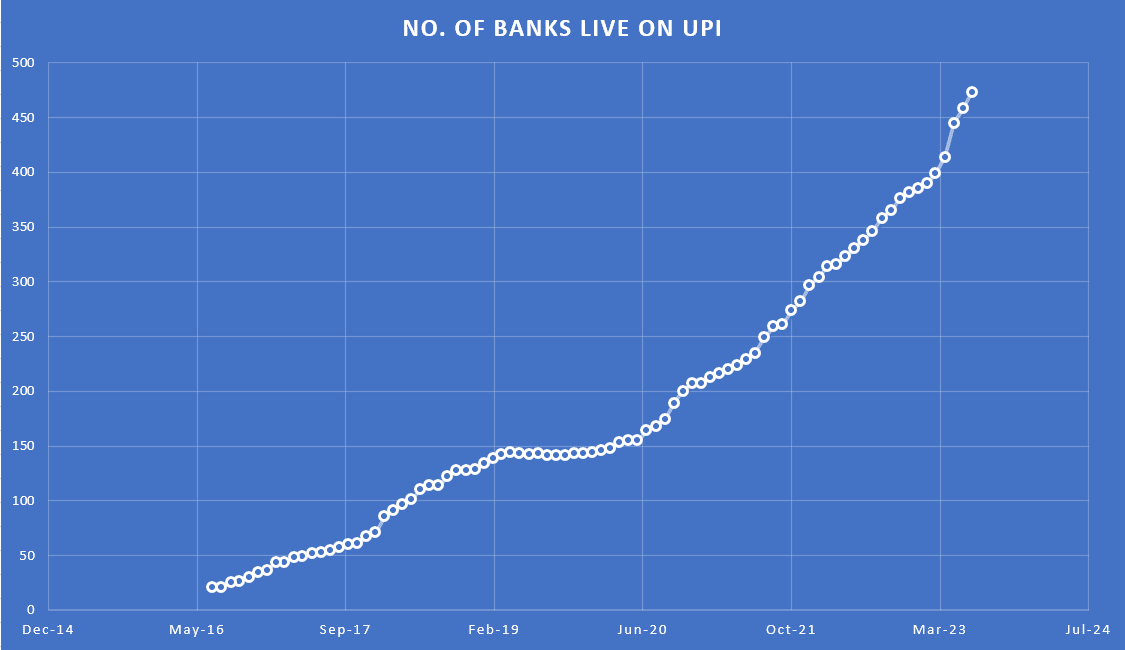
Source: NPCI
UPI (Unified Payments Interface) is a real-time payment system that enables instant transfers between bank accounts in India. Users can connect several bank accounts to a single mobile application, creating a streamlined and secure transaction environment. The National Payments Corporation of India (NPCI) oversees the system.
Introduced on April 11, 2016, UPI was developed through a collaborative effort between the Reserve Bank of India (RBI), NPCI, various banks, and payment service providers. The initiative aims to enhance digital payments and advance financial inclusion by making money transfers more accessible and convenient.
To operate UPI, users need a UPI ID and a UPI PIN. The UPI ID acts as a unique identifier created during the setup process, similar to an email address but using numbers or letters, such as DonLettermar@xyzbank.
UPI enables users to transfer money to peers, pay for services, or settle bills directly from their bank accounts, facilitating payments anytime and anywhere, thus eliminating the need to carry cash or physical payment cards.
The UPI facilitates inter-bank transfers between individuals via a simple two-click authentication process. As mentioned, the RBI supervises this system, ensuring regulatory oversight. UPI enables the transfer of funds between bank accounts using a mobile interface.
Recognized as a secure method for transferring money, UPI eliminates the need for physical cash or in-bank transactions. The initial version of UPI was introduced in India on April 11, 2016, and banks started progressively integrating this system in August 2016.
UPI operates on established frameworks like the Immediate Payment Service (IMPS) and Aadhaar Enabled Payment System (AEPS), which support efficient transactions across different accounts. The system supports sending (push) and receiving (pull) money and is applicable for in-store or QR code-based payments, as well as recurring payments such as utility bills, school fees, and other regular charges. By using a single identifier, UPI allows for mobile payments without needing credit or debit cards, internet banking, or entering bank account details, enhancing the security of sensitive personal information and facilitating easy transactions for bank account holders using smartphones.
This system can reduce reliance on cash and decrease the number of individuals needing access to banking services.
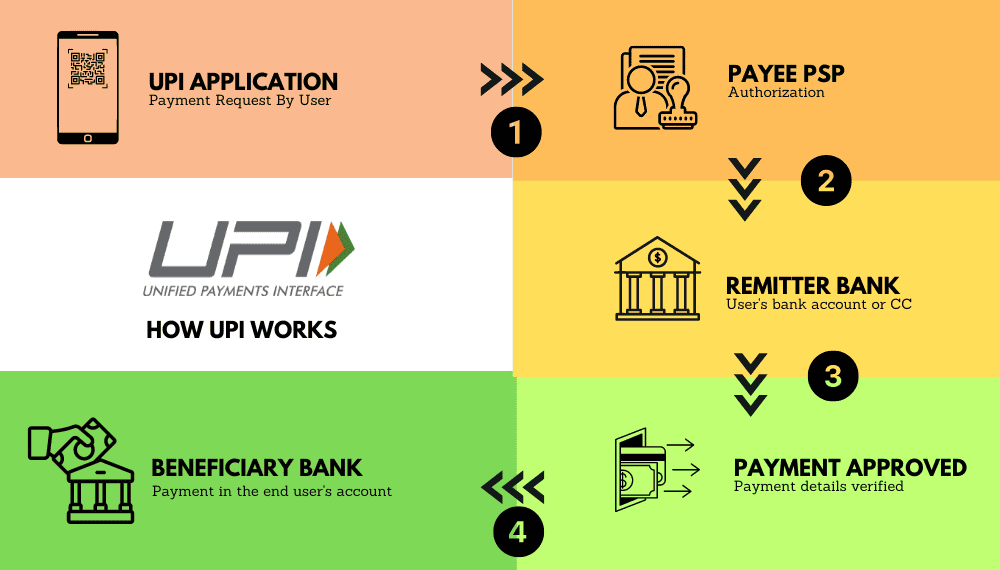
A user signs into their UPI application and chooses the option to make a payment. They input the recipient’s virtual ID and the amount to be sent, then select which of their bank accounts the funds will be drawn from.
After verifying the transaction details on a confirmation screen, the user inputs their PIN to proceed. The transaction concludes with a notification indicating success or failure.
A recipient logs into their UPI app and selects the option to request money, typically a Request for Payment (RFP). They enter the sender’s virtual ID and the desired amount and choose the bank account where the funds should be received.
After confirming the transaction details, the sender is notified via their mobile device. Upon opening the notification in the UPI app, the sender can review the payment request and choose to accept or decline it. To proceed with payment, the sender enters their PIN. A notification confirming the completion of the payment is then sent to both parties.
The entities involved in UPI transactions encompass:
UPI is rapidly becoming a preferred payment method both within India and internationally, distinguishing itself through several notable features:
UPI promotes a less cash-reliant economy by facilitating an easy and secure electronic payment method, empowering consumers. Overall, UPI’s comprehensive features make it a robust tool for efficiently managing personal and business transactions.

The NPCI asserts that UPI is the safest platform for non-cash transactions, backed by several security measures:
The charges for UPI transactions can differ based on the bank or payment service provider. Typically, UPI transactions are free for users, meaning neither the sender nor the recipient incur fees for transferring money via UPI. Some banks or providers might apply charges for specific transaction types or additional services.
For example, Google Pay, which operates on the UPI platform, implements a small ‘convenience fee’ for mobile recharges. However, it does not charge for most other UPI transactions conducted through its app. It’s important to know that transaction limits, which can vary by bank, apply to these apps.
To ensure clarity on any potential costs, it is recommended to consult your bank or payment service provider for the most current information on fees associated with UPI transactions.
UPI, or Unified Payments Interface, represents a significant advancement in India’s digital payment landscape, allowing users to perform seamless, real-time transactions through a single mobile app. This system simplifies financial interactions by enabling money transfers, bill payments, and account management without needing physical cards or detailed banking information.
Overseen by the National Payments Corporation of India (NPCI) and built on frameworks like IMPS, UPI ensures robust security with encryption and multi-layered protection. It has transformed traditional banking, promoting efficiency and convenience for individual users and businesses. As UPI continues to expand, its features like decentralized operation, immediate payments, broad connectivity, and enhanced privacy set new standards in the digital payment domain, facilitating a move towards a less cash-dependent economy.
Unified Payments Interface (UPI) simplifies digital transactions by combining multiple bank accounts into one mobile app. Developed by the National Payments Corporation of India (NPCI), it allows instant peer-to-peer and merchant transactions without detailed bank information, boosting financial inclusion across India.
UPI connects various banking systems, allowing users to manage and transact from any linked accounts via a single app. It supports diverse transaction types, including transfers, bill payments, and merchant transactions. Features like UPI AutoPay for recurring charges and UPI 2.0 for linking overdraft accounts enhance its versatility.
UPI transactions are secured with a unique UPI ID and confidential PIN for each transaction. Advanced encryption standards protect data integrity and privacy. NPCI regularly updates security protocols to counter emerging threats, ensuring a secure environment for financial activities.
UPI is expanding globally to support cross-border transactions, reducing costs and simplifying payments for Indians abroad and international users in India. Initiatives like the UPI-PayNow linkage with Singapore and discussions with other countries highlight UPI’s potential as a global payment system, enhancing convenience and economic integration.