

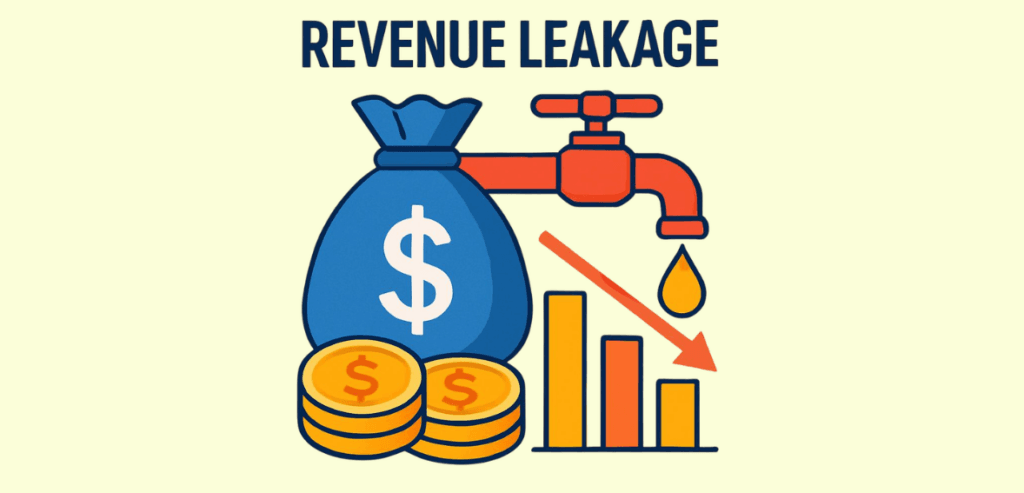
Revenue leakage occurs when a business loses revenue that could have been earned due to a lack of awareness within that part of the business. Annually, 42% of businesses experience revenue leaks, resulting in up to 5% of total EBITDA loss. Even small amounts can collectively add up to millions in annual revenue that would otherwise have been part of your bottom line.
To maintain a healthy earning, identifying and fixing these leakages becomes necessary. There are different ways, such as auditing your earnings, using data and analytics to identify anomalies, and implementing revenue management strategies to fix these leaks and maintain growth.
Unintentional loss of revenue that would have been earned but wasn’t captured due to gaps in that part of the business is revenue leakage. These leaks usually go unnoticed until the company audits the earnings, performs a reconciliation, or does a financial review.
Common gaps and errors that cause these leaks include:
Primarily, these leaks occur when there is a contractual agreement or an ongoing transactional customer relationship, and the obligations or terms aren’t met. The losses go beyond just financial ones; they affect the company’s or a specific channel’s growth trajectory and competitive standing.
Revenue leaks occur when cash-to-order processes break down. Some common leaks include:

Revenue leaks can persist for a long time without the business even noticing the pattern. Any of the sources we discussed above can lead to small leaks, which can compound over time if the company doesn’t take measures to stop revenue leakage.
To detect the revenue leakage early on, companies should focus on these five signs:
Preventing revenue leakage should cover end-to-end operational issues. A leakage can occur at any point in the order-to-cash process, so prevention methods should combine discipline, ownership, and the right systems. We have listed seven ways below to prevent and stop revenue leakage:
1) Diagnose the “where” and “why” before you automate
Structurally solve the leaks by doing a thorough assessment. You should first form a hypothesis about where the leaks are occurring and rank them to understand the financial impact your business is facing. Once you have a sense of the leakage, it’s time to validate the findings by running an audit or recreating the transaction steps.
Root-cause analysis is a recommended approach here, using cross-functional data such as logs, interviews, and system reviews to identify the real source.
2) Replace manual handoffs with integrated workflows
As mentioned previously, manual processes or spreadsheets-focused systems always tend to fail, especially when the business setup is expanding or complex as it is. These inefficiencies cause:
You should choose systems/tools that automate these and connect operational data directly to invoicing and revenue reporting. With an integrated contract and revenue management process, you ensure milestones, penalties, and deliverables flow into billing automatically.
3) Strengthen contract governance (especially renewals and changes)
Contract terms hide many details that can cause revenue leakage, including outdated auto-renew pricing, missed renegotiation windows, or servicing after expiration. You should put controls in place to continuously track expirations, renewal clauses, escalations, and obligations, and ensure amendments/change orders are synced across CRM, finance, and billing.
Centralized contract repositories (and AI-enabled CLM, where appropriate) can help flag mismatches and enforce terms at scale.
4) Lock down pricing, discounting, and policy enforcement
Revenue slips when promo pricing doesn’t end, discounts aren’t governed, or penalty fees aren’t enforced. Establish clear pricing rules, tighten approval thresholds, and keep price lists up to date.
Experts also recommend eliminating confusing price sheets and holding the line on discount autonomy, as dynamic pricing models can reduce losses caused by outdated pricing strategies.
5) Fix service delivery leakage with better scoping and time capture
Service-centric firms often leak revenue via scope creep and under-recorded time. Improve how you define the scope of Work and SLAs, then ensure time and billing tracking is accurate and timely (e.g., centralized timesheets, mobile time entry, automated reminders). Better delivery visibility also reduces invoice rejection and rework.
6) Improve invoicing quality and collections discipline
Even perfect billing is useless if cash isn’t collected. Strengthen follow-ups, dispute handling, and credit policies, and monitor late-payment patterns.
Improving collection processes and using debt recovery approaches when unpaid receivables are a major contributor.
7) Add controls, compliance checks, and accountability
Use periodic compliance checks and technology audits to catch non-compliance penalties, system glitches, and integration gaps.
Implement tiered access controls for pricing/billing changes, assign a clear “revenue assurance” owner, and track leakage KPIs so prevention becomes continuous.
Revenue leakage is a problem that goes beyond a mere financial issue. Yes, finances are a big part of it, but at its core, it’s a visibility and execution problem that creeps in wherever order-to-cash processes break down. Issues like missed charges, inconsistent invoice pricing, billing errors, contract non-compliance, and invoicing delays may seem like small issues in themselves, but collectively they can quietly drain profitability and distort how healthy the business really is.
As we have covered, these revenue leakages are preventable when you treat them systematically. It’s a structural process that starts by identifying the biggest leak points through reconciliation and root-cause analysis. Then remove the most common triggers by integrating workflows across sales, delivery, finance, and billing. Strong contract governance, disciplined pricing and discount policies, accurate time/usage capture, and consistent collections practices ensure you bill what you earn and collect what you bill. And finally, assign clear ownership and track leakage KPIs so revenue assurance becomes an ongoing habit.