You want to open a gym but are kept awake at night by the same lingering question. How much does it really cost? The answer is more complicated than what typical articles say. On the low end, it could cost $10,000. On the high end, it could exceed $500,000 depending on the type of gym, location, and how frugal you’re willing to be.
This guide outlines the real numbers. You will find costs for building a gym, monthly operational costs, and startup costs to help you build a budget for the best gym opening experience. There are no vague estimates. Only real numbers can you use to plan accordingly.
Depending on your approach, a new gym can be built for as cheap as $10,000 and as expensive as $500,000. If you want to design a personal training studio, you can spend $10,000 to $50,000, given the low equipment needs and small space requirements. A Pilates studio can cost $50,000 to $150,000 for the interior and essential equipment, while a commercial gym containing all cardio equipment, a free weight area, and class space easily spans $150,000 to $500,000. Franchise gyms can easily cost the same or more, especially with the added costs of franchisor- and corporate-mandated buildouts, along with royalties and franchise fees.
The cost of leasing a gym, the buildout, and the equipment covers, on average, 60% to 70% of the overall costs of starting a gym. From the first day, these numbers should be influencing your budget. New gym owners commonly mismanage funds in these areas, and as a result, run out of operating capital before reaching the point where the gym becomes profitable.
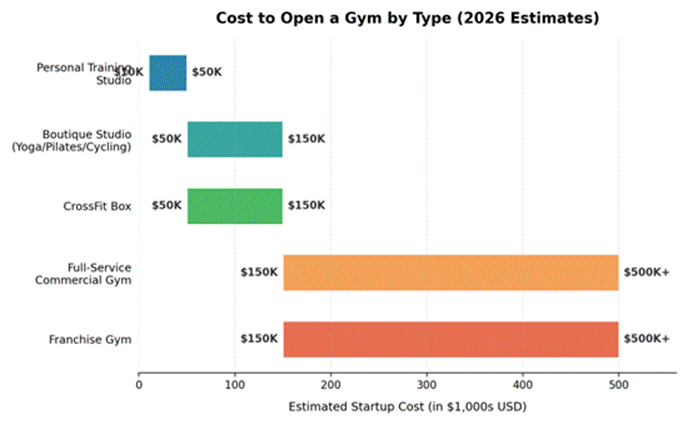
[Insert image here] Figure 1: Typical startup cost ranges by gym or fitness studio type (2026 estimates).
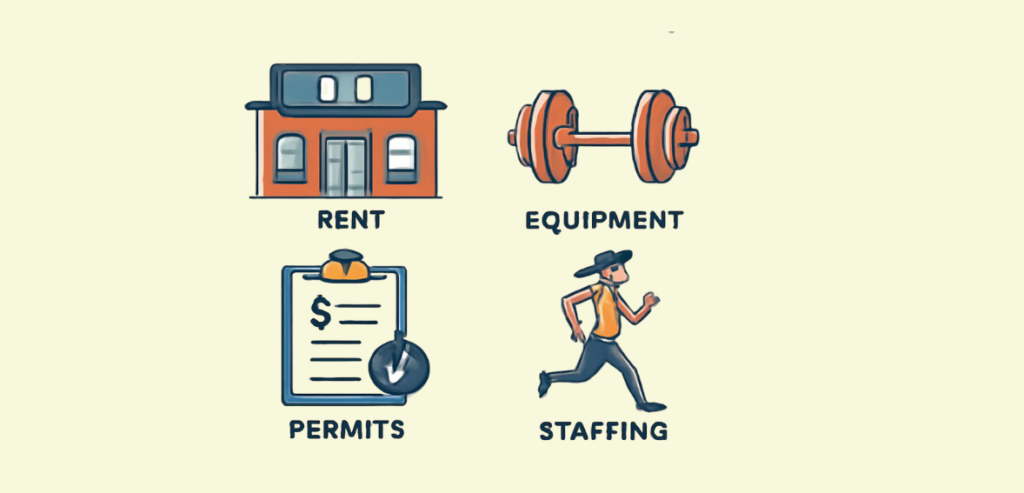
There are many forces working in tandem to determine the startup costs for your gym, each with many potential variables, meaning your costs are unlikely to be shaped by any one decision you make. Commercial real estate in urban locations is often many times more expensive than renting space in suburban strip malls. There are landlords in urban locations who will only rent to you if you pay 3-6 months’ rent before you open.
With more commercial space, you will have higher utility overhead and additional costs associated with flooring and mirrors, among others. Your gym type plays a huge role in your starting costs. An example of this is a raw warehouse with a CrossFit gym inside, needing far less finished work on the interior than a more heavily finished, aesthetic studio where Pilates is taught.
There is a huge difference in upfront costs between leasing and buying your gym equipment, with buying new commercial-grade machines generally much more expensive than leasing or sourcing certified used equipment. Lastly, your staffing choices, local licensing requirements, and pre-opening advertising all contribute to your total costs. This provides you with a framework for accurately estimating the cost of opening a gym rather than simply restating someone else’s cost estimate.
It’s good to zoom in after you’ve learned the details of the broader business model. We take a category-by-category approach to intended expenditure for a new gym business below.
Securing space for your business tends to be your biggest expense, and for good reason. In the U.S., renting commercial real estate costs about $18 to $40 per square foot for the year. Considering a gym takes up about 3,000 square feet, you can expect to spend at least $54,000 in rent annually, if not more. Security deposits can amount to several months’ rent and are typically required by landlords. If buying a space instead of leasing is your preference, expect to make a down payment of 20 – 30 percent of the purchase price. Considering your costs before you purchase the space is important, as they can easily exceed $100,000 before you buy equipment to fill it.
The costs associated with building out your gym cover the flooring, mirrors, sound systems, locker rooms, HVAC systems, shower plumbing, and any necessary construction to change a raw space into a viable fitness facility. The costs to build out a space typically range from $30 to $100 per square foot and vary most with the condition of the space and the amenities you would like to include. A raw industrial shell will cost more to finish than a space that was used as a gym, since existing plumbing, flooring, and electrical work will greatly help lower your renovation costs.
After your lease and buildout, equipment is the next largest expense. Commercial-grade cardio machines (treadmills, rowers, bikes) cost between $1,500 and $6,000 each. Strength training equipment (racks, benches, machines) ranges in price from $500 to over $5,000. Specialty equipment is even more costly. Pilates reformers, which cost $3,000 to $8,000 each, are needed in multiples because studios typically need 10 to 15 reformers. Equipment costs typically account for 30 to 50 percent of overall startup costs. To reduce costs, consider purchasing used equipment. Compared to new equipment, used or refurbished equipment costs 40 to 60 percent less.
You need to get a business license, a certificate of occupancy, health and safety permits, and liability insurance before you can get your gym running and legally protect yourself from injury claims. Costs vary by location, but set aside a few thousand dollars in your budget for registration, permit applications, and the first year of insurance. Cutting costs by forgoing the proper licensing gets the government’s attention, and you’ll either be fined or your gym will be closed, so it is worth it to include in your budget a dedicated line for all these expenses when opening your gym.
Your team is obviously one of your greatest assets and one of your greatest expenses. Depending on a trainer’s or instructor’s experience and how many classes they teach, they cost between $3,000 and $8,000 per month. Administrative staff and front-desk staff cost about $2,000 to $4,000 per month. A general manager would be about $3,000 to $6,000 a month. On average, employee costs make up about 20 to 30 percent of a gym’s budget, so you should really think through the most cost-efficient trainer-to-member ratio before hiring on a full-time basis.
Small businesses in the fitness space often spend between $5,000 and $50,000 in marketing costs for their first branded website and presale campaign in order to bring in their first customers and generate a positive cash flow. In terms of gym management technology, a gym can expect to spend $50 – $250 a month for member management and communication systems, and scheduling software with a billing system, while payment processing typically costs 2 to 3 percent of each transaction. Properly investing in technology will reduce the time you spend managing your gym’s operations with software and systems once your gym reaches its maximum capacity.
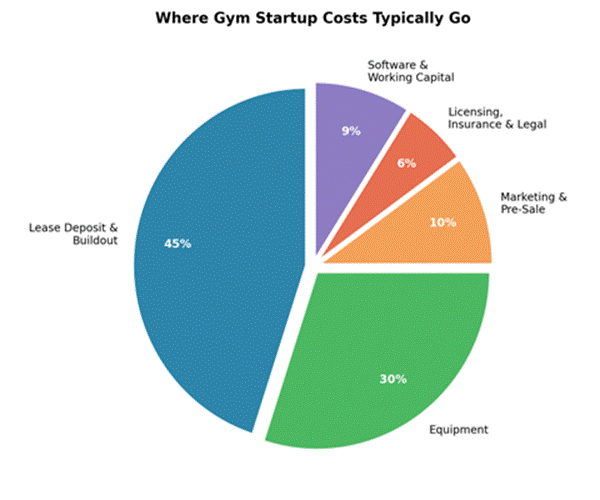
[Insert image here] Figure 2: A typical breakdown of where gym startup costs are allocated.
Since gym startup costs depend on the concept, looking at actual ranges for each business model will help.
The most economical option for entering the fitness industry is a small, private studio designed for individual or small-group training. With 500 to 1,500 square feet of space and minimal equipment, personal training studios can be launched for $10,000 to $50,000. Because of this, it is an attractive option for coaches with client bases who want to own a studio.
Beginning with a $50,000 to $150,000 investment, 1,500 to 3,500 square foot boutique fitness concepts (Pilates, yoga, studio cycling, etc.) can be opened. Of these concepts, yoga studios have the lowest equipment costs. However, reformer Pilates studios have a higher cost of entry because each studio must purchase 10 or more reformers for classes. Each reformer is individually expensive.
Because the exposed, warehouse-style look is part of their branding, CrossFit gyms need less finished interior space. To open a CrossFit box, the price range is $50,000-$150,000. Equipment costs are the highest, and there is an annual affiliate fee in addition to the standard costs of opening a business.
Such gyms can take up over 4,000-8,000 square feet, as typically, a gym has weightlifting, cardio, and fitness space. A gym can also cost anywhere between $150,000 and $500,000 to set up, while larger gyms with pools or saunas can cost much more.
Purchasing an established franchise means a larger initial investment, but you will gain their business model and marketing, and you won’t have to build a brand from scratch. Franchises can vary, but usually, your costs are the initial franchise fee, ongoing royalties, and costs to comply with the parent company’s design standards. The examples below are famous ones you will want to research before deciding between a franchise and starting your own business.
Planet Fitness has become synonymous with low-cost, high-volume membership plans and judgment-free marketing. This model creates a large customer base built on affordable memberships and broad appeal. In order to open a franchise, investors should anticipate large, high-traffic, high-equipment locations that serve thousands of customers. All of this means opening a franchise comes with a high cost that often reaches seven figures. In addition, there are ongoing royalty costs.
Anytime Fitness is a self-service, 24-hour-access gym built on small-footprint locations. After years of successfully serving the market with its small-footprint locations, Anytime Fitness has lower franchise and startup costs than big-box gyms. Franchisees at Anytime Fitness still pay ongoing technology and royalty fees along with an initial franchise fee.
Orangetheory Fitness focuses on heart-rate-based group training and offers 60-minute long sessions that feature a coach. Their class-based studio format means Orangetheory locations require less space than traditional gyms. However, the heart-rate monitoring system and the branded buildout required at each franchise location will lead to higher initial costs for franchisees.
The question of how much to invest in opening a fitness studio is most often asked when considering smaller, class-based, or specialty models rather than a full-service commercial gym. Fitness studios use much less square footage, have a much smaller equipment load, and a more personal buildout. Because of this, fitness studio start-up costs typically range from $50,000 to $150,000.
By comparison, a full commercial gym requires a lot more inventory, a much larger space, and more staff, which is why costs typically exceed $150,000 and often reach $500,000 or more for large commercial gyms. When considering the two models, it is more important to match the model to the available capital than to aim for the largest facility possible on the first day.
Your gym opening budget is just a portion of the cost of getting your gym up and running. Ongoing monthly costs for a small boutique studio are usually between $10,000 to $20,000. Mid-sized gyms spend between $25,000 and $45,000, and large commercial gyms or franchises spend $50,000 to $100,000 or more. This is all an estimate based on the costs of rent, payroll, utilities, insurance, and software.
Equipment maintenance is an additional expense that typically costs gyms $500 to $2,000 per month, plus a few thousand dollars per year for equipment replacements. Because it takes a gym approximately 12-24 months to break even, it is recommended to have at least 6 months of operating expenses saved before opening your gym.
It’s rare for a gym owner to cover the full costs of a gym launch themselves, and financing a portion of your gym startup costs is entirely appropriate. Many first-time gym owners use a combination of personal savings, small business loans, equipment financing, and/or private equity to fund their gym opening budget.
The U.S. Small Business Administration offers multiple loan programs specifically aimed at assisting entrepreneurs with funding the purchase of property, property repairs, and the acquisition of business equipment. One of the most popular funding avenues for new gym owners is SBA-guaranteed loans, like the 7(a) program, because they provide lenders with less risk and thus have lower required down payments and more flexible terms than standard bank loans.
Most gym owners can’t spend several thousand dollars on gym equipment at once. To avoid this massive initial expense, gym owners lease equipment at $2,000 to $3,000 per month and preserve cash. Leasing often includes maintenance, which helps preserve cash. If gym equipment is well maintained, purchasing it is cheaper than leasing in the long run. However, considering the cash reserves during the first year, leasing or phased buying is the smarter decision.
One of the best ways to generate initial cash flow for your business and demonstrate demand in your location is to sell memberships before you open your gym. A strong pre-sale marketing campaign paired up with founding member pricing or a referral bonus can help you fund part of your budget to open a gym and help you prove to lenders and investors that there exists a demand in your location.
Industry data from The Health & Fitness Association shows positive trends in the fitness industry. Membership numbers are increasing, but this is accompanied by new variations in gym concepts. Average gym profit margins are between 10 to 15 percent. However, margins for boutique and specialty studios exceed this, reaching 30 to 40 percent, as a result of leaner overhead structures and a focus on offering premium services. Approximately 50 percent of new gyms close within the first five years of business. Undercapitalization, poor location, limited marketing, and high turnover rates are the leading reasons. This is not to discourage potential business owners, but to show how an accurate, conservative budget is critical and should take precedence over an optimistic budget.
If your buildout requires structural changes or changes to meet the requirements of the Americans with Disabilities Act (ADA), you should review the requirements of the ADA on the official website (ADA.gov) during the early stages of plan development, as compliance after the fact is much more expensive than design solutions.
You don’t have to be wealthy to start a profitable gym. By subleasing space, long-term leasing costs and large upfront deposits can be avoided. Additionally, your equipment budget can be slashed by approximately 50% when you purchase certified used or refurbished equipment. During your gym’s pre-sale, you can start the first positive cash flow. Furthermore, the tenant improvement allowance offsets the cost of your buildout.
Once membership numbers have grown, many successful gym owners have moved to a larger space. Expanding too soon can mean losses from overbuilding to accommodate anticipated demand. The most proven method to sustain the cash in your business and shorten the time to profitability is prudent spending.
There isn’t a fixed number for opening a gym, as it depends on your concept, location, and how lean you are willing to start. Full-service commercial gyms and franchises could be $500,000 or more, whereas personal training studios could be under $50,000.
While some expenses, such as the gym lease and buildout, are fixed, some expenses are variable, such as gym equipment, licensing, and marketing. Realistic gym budgets optimized for these expenses are key for success. Starting lean and growing with your demand is the best way to approach growth and membership for a gym.
Generally, a personal training studio costs less per square foot than many other concepts, particularly because it requires a lesser amount of equipment. Because of this, subleasing a studio, purchasing used equipment, and having a presale campaign can reduce the startup costs of such a venture to between $10,000 and $30,000.
A boutique fitness studio costs between $50,000 and $150,000 to establish. To build a full commercial gym, you need between $150,000 and $500,000. As class-based fitness studios require much less space, equipment, and staffing, the cost difference between a full-service gym and a boutique studio primarily stems from these three areas.
Starting your gym with no financing at all is possible, but not very practical. Most gym owners will use personal savings and then pair that with an SBA-backed loan, investor capital, or equipment financing. Many gym owners will also sell memberships before the gym opens to generate cash flow that helps cover startup costs.
Typically, 30 to 50 percent of a gym’s startup costs go to equipment. This expense category includes your lease deposit and buildout costs. Buying used equipment or leasing equipment instead of buying equipment outright minimizes this cost.
Most gyms break even within twelve to twenty-four months of opening. This is impacted by the gym’s size, location, and marketing. Engaged boutique gyms with good community reach sometimes break even faster than large commercial facilities.