

If you’re part of a nonprofit, charity, church, or organization that relies on donations, recurring giving should be at the top of your priority list. Why? Because it’s one of the most effective ways to build consistent, reliable support for your mission.
Recurring donations don’t just stabilize your revenue, they also make giving easier for your donors and simpler for you to manage. Everyone wins.
In this article, we’ll break down exactly what recurring donations are, why they matter, and how you can set them up quickly, so you can spend less time chasing funds and more time making an impact.
Recurring donations, sometimes called recurring or monthly giving, are pre-authorized gifts of a fixed amount that a supporter allows a nonprofit to charge automatically on a regular timetable (most often monthly, but weekly, quarterly, or annual schedules are also common). Because each installment is processed immediately, these gifts differ from pledges and give the organization a predictable, year-round revenue stream. Membership fees or “subscription-style” programs are simply recurring donations that carry added benefits for the donor.
For example, a donor might choose to give $25 each month to a nonprofit that provides school meals. This steady contribution allows the organization to plan how many children it can serve throughout the year. In a different setup, a local museum might offer a monthly membership for $10. In return, members get free entry, early access to exhibits, and event invitations, while the museum benefits from a reliable source of funding.

In 2023, after adjusting for inflation, individual giving in the U.S. fell by 2.4%, making it harder for organizations to rely on one-time gifts. Recurring donations help bridge that gap by providing a dependable foundation.
In 2024, recurring gifts made up 31% of all online donations, and 57% of digital donors enrolled in a monthly or quarterly giving program. This steady inflow allows nonprofits to forecast income with confidence, rather than scrambling to replace lumpy, unpredictable one-time gifts.
When a nonprofit knows exactly how much will arrive each month, it can allocate funds to ongoing projects, negotiate contracts with service providers, and maintain adequate staffing levels without fearing sudden budget shortfalls.
Acquiring new donors is both time-consuming and costly. However, recurring donors renew their support at a much higher rate – 83.6% in 2023 – compared to only 45.2% of one-time donors.
Because established recurring donors require fewer acquisition touches and stewardship efforts, nonprofits spend less on marketing campaigns, direct mailings, and appeals. Over time, this translates into significant savings on staff hours and advertising dollars, freeing up resources to invest directly in mission-driven activities.
Data from North America shows that a recurring donor provides roughly 3.1 times the lifetime value of a one-time donor. In practical terms, someone who gives a smaller amount every month ends up contributing more over the years than someone who makes a single, larger donation.
This compounding effect is vital: as donors stay engaged longer, they often increase their monthly gift, participate in additional campaigns, or leave a legacy gift – amplifying their total impact.
Although individual recurring payments tend to be modest – around $24 per month on average – they add up to $288 by year’s end. By contrast, the average one-time gift sits at about $115. That means even a series of smaller, manageable payments can outpace occasional lump-sum donations.
Nonprofits benefit from this structure because they receive more total revenue per donor, which can be earmarked for long-term programs, capital improvements, or emergency reserves.
Nearly 94% of recurring contributors choose to give each month, echoing the subscription models people use for media, groceries, or utilities. For donors, setting up an automatic monthly gift is less burdensome than writing checks or making ad-hoc online donations throughout the year.
This ease of giving keeps supporters connected: regular touchpoints, such as monthly impact reports or thank-you messages, reinforce their commitment, deepen their emotional attachment to the cause, and encourage them to remain long-term advocates.
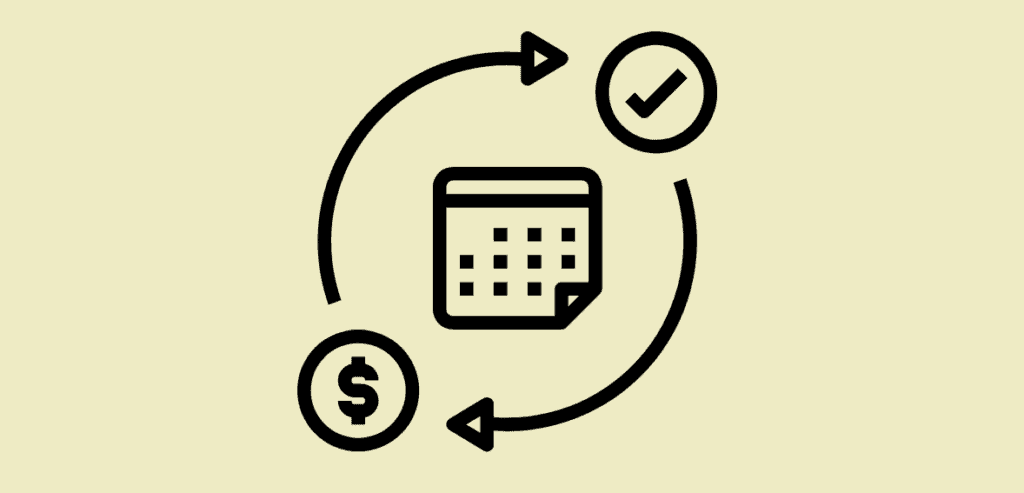
Recurring donations provide nonprofits with a consistent and predictable funding stream by automating the donation process. Here’s a straightforward breakdown of how they function:
1. Donor Enrollment
Donors initiate the process by selecting a donation amount and frequency, such as monthly, quarterly, or annually, through the nonprofit’s website or fundraising platform. They provide their payment details and authorize the recurring transaction.
2. Payment Processing
Once authorized, the donor’s payment information is securely transmitted through a payment gateway, which verifies the details and processes the transaction. The funds are then transferred to the nonprofit’s merchant account and eventually deposited into their bank account.
3. Automated Transactions
At each scheduled interval, the payment processor automatically charges the donor’s chosen payment method. Donors typically receive confirmation emails or receipts for each transaction, and they can manage their donation preferences through a donor portal.
4. Handling Payment Issues
If a payment fails due to reasons like an expired credit card, the system may attempt retries and notify the donor to update their payment information. Advanced systems use smart retry logic to increase the chances of successful transactions.
5. Donor Management and Engagement
Recurring donation systems often integrate with donor management tools, allowing nonprofits to track donor activity, send personalized communications, and provide updates on the impact of donations. This ongoing engagement helps maintain and strengthen donor relationships.
Optimizing recurring giving involves more than flipping a switch on your website. Nonprofits must craft an experience that feels effortless for supporters while ensuring reliable revenue and minimal administrative headaches. Below are nine detailed strategies – presented in a mix of prose and occasional sub‐lists – to help you finely tune every step of the recurring donation journey.
Your donation form is the gatekeeper: if it’s cluttered, confusing, or asks for too much information upfront, many potential recurring givers will abandon the process. Limit initial fields to only what you truly need: name, email, payment details, gift amount, and frequency. Hide “optional” fields (such as phone number or mailing address) behind an expandable section. When donors see a short, uncluttered form that loads instantly on mobile and desktop, they’re more likely to complete it.
Additionally, pre‐set three to four suggested giving levels – labeling them clearly (for example, “$10/month feeds one child weekly,” “$25/month plants five trees,” “$50/month supports a new schoolbook”) – and highlight the middle option without making it feel forced. This guidance helps donors decide quickly, reducing decision paralysis. Above all, ensure your donation page is HTTPS‐secured (so the browser shows that lock icon) and that any validation errors (e.g., “Card number invalid”) appear inline, right next to the field, rather than in an error summary at the top of the page.
Not everyone wants to pull out a credit card each month. In addition to Visa, MasterCard, and American Express, they offer alternatives such as ACH (bank‐to‐bank transfer), digital wallets (Apple Pay, Google Pay), and even PayPal or Venmo, depending on your donor base. Each method has different processing fees – ACH transactions often incur a flat $0.20–$0.50 fee versus 2–3% for cards – so guiding donors toward the lower‐cost option can preserve more of their gift.
To make it even smoother, integrate with a payment processor that securely stores tokenized payment information. Once a donor’s bank or card is on file, they should never need to re‐enter full details when upgrading or renewing their gift. In effect, you’re removing friction: the fewer keystrokes and clicks required, the higher your enrollment and retention rates.
Psychologically, people often choose the path of least resistance. If your donation page’s default selection is a recurring gift – say, $10 per month – instead of a single $120 donation, many donors will simply leave the default in place. At the same time, you should still include a clearly labeled “One‐time Gift” toggle so that those who truly want to give a lump sum can do so.
Frame the recurring option around impact: “$10/month provides fresh drinking water to one family.” If visitors see that a smaller monthly commitment as the default, they intuitively compare it to their monthly coffee habit or streaming subscriptions, and are more likely to sign up. Just be careful: do not hide the one‐time option behind several clicks. Keep both choices on the same page but use layout, font size, or color to make the recurring selection the most prominent.
Even the most dedicated monthly donor will drop off if their credit card expires or a bank declines a transaction, often without notifying you. To combat involuntary churn, choose a payment gateway with “smart retry” logic: it should attempt a second or third charge after a specified interval (e.g., three days, then seven days). If those attempts still fail, automatically send an email asking the donor to update their information.
Before a stored card’s expiration date, send a “friendly heads-up” email approximately two weeks out: “Your card on file is expiring soon, click here to update it so your next gift stays uninterrupted.” In that same email, include a one‐click link to a secure portal where donors can authenticate and swap in new payment details. By intercepting failed transactions early, you can often retain donors who would otherwise drop off silently.
Once someone enrolls in your recurring program, your job is not done. In fact, it’s just beginning. Regularly communicate how their donations translate into real outcomes – bulletins, brief video updates, or a personalized email every quarter are all effective. For instance, “Thanks to your $15/month gift, we delivered 500 tutoring sessions this semester. Next month, we plan to expand to two new schools.”
Avoid long, text‐heavy annual reports for this audience; they’re more likely to read a one‐paragraph success story accompanied by a photo. If you choose to send a newsletter, highlight a “Recurring Donor Spotlight” section that names (or at least profiles anonymously) a donor who’s shown exceptional commitment. This peer recognition reinforces the community aspect and reminds others that they, too, matter beyond their monthly dollar amount.
Recurring donors often want to increase their gift once they see progress in your programs. After six or twelve months of giving, send a targeted appeal: “Because of your monthly support, we’ve sheltered 50 families this winter. Would you consider increasing by just $5/month to provide an additional emergency pack each month?”
To facilitate upgrades, implement a one‐click process that uses the card already on file, no need for donors to re‐type their information. Conversely, some supporters may temporarily need to pause giving (for medical bills, job changes, or travel). Allow them to pause for a set period – say, one or two months – rather than canceling outright. A simple “Pause My Gift” button in your donor portal, followed by a confirmation that explains how easy it is to resume, shows you respect their circumstances and encourages them to return when they’re ready.
Manual data entry leads to errors, duplicate records, and wasted staff time. Your recurring‐giving platform should automatically sync donor profiles, payment histories, and upgrade/downgrade actions with your CRM (e.g., Salesforce, Bloomerang) and accounting software (e.g., QuickBooks). That way, fundraising can see who’s active, who needs a payment update, and who might qualify for a stewardship call or special recognition.
Beyond integration, set up a dashboard (even a simple spreadsheet fed by your CRM) to track metrics such as:
Review these metrics monthly. If retention dips below 80% at the six‐month mark or involuntary churn exceeds 5%, investigate immediately; perhaps a recent batch of card expirations wasn’t handled properly, or a communications gap left donors in the dark about your impact.
Today’s donors span multiple generations, from Baby Boomers and Gen X to Millennials and Gen Z, each with distinct preferences. Younger supporters often prefer micro-giving and mobile‐first experiences, while older donors may feel comfortable with a desktop interface and paper receipts. Segment your email list so that each group receives the format, tone, and ask that resonates best:
When you speak each segment’s “language,” you reduce friction at signup and show donors you understand how they prefer to connect.
Handling recurring gifts means storing and processing sensitive payment information. Partner with a PCI‐compliant payment processor that tokenizes card data and offloads the burden of managing raw credit-card numbers from your server. Ensure your vendor provides:
Communicate your security measures clearly on the donation page – statements like “Your donation is protected by 256-bit SSL encryption” build trust. Internally, train staff on data‐handling best practices, restrict access to donor management systems, and perform an annual review of user permissions to avoid accidental data leaks.
Once your recurring donation program is live, don’t consider it “set and forget.” Solicit feedback every six months via a short survey – 1–2 questions asking about donation experience (“How easy was it to sign up?”) and communications (“Do you feel adequately informed about how your gift is used?”). Use A/B testing on subject lines, email timing, and call-to-action phrasing to determine what resonates best.
Compare your performance against sector benchmarks (for example, a 75–85% six-month retention rate is strong; 5–8% involuntary churn is industry standard). As your data grows, you’ll discover new insights – perhaps monthly donors giving $10–$15 have a substantially higher upgrade rate than those at $5, or you’ll learn that sending impact updates on the 15th of each month yields more email opens. Adopt a “test, learn, iterate” mindset so your recurring giving program becomes more effective each quarter rather than stagnating.

Recurring gifts can transform a nonprofit’s budget, but even minor oversights can drive supporters away. Below are common pitfalls and how to address them effectively.
A simple “thank you” can go a long way. When a donor commits to giving every month or quarter, they’re making a personal investment in your cause. If you skip or delay acknowledgments, donors feel taken for granted.
Send a personalized thank-you message within 24–48 hours of the first automated payment. Follow up quarterly with a brief note that highlights how their ongoing gift is making a difference – whether it’s a success story, a key metric, or a testimonial from someone who benefited.
Donors give repeatedly because they want to see real progress. If you never share concrete results, such as how many meals served, trees planted, or hours of tutoring delivered, supporters lose sight of their role and may cancel.
Create a recurring-donor newsletter or impact bulletin. Include a short update every one to two months: “Your monthly support of $25 provided clean water to 150 families this quarter,” or “Because of recurring gifts, we hired two new counselors.” Even a single paragraph with a photo or quick infographic reinforces trust and engagement.
If a donor needs to jump through hoops, like calling during business hours or submitting a written request, to stop monthly payments, they’ll feel trapped. On the other hand, if cancellation requires just a single click without any confirmation, supporters may cancel on impulse.
Provide a balanced, self-service approach. In your donor portal, let registered users log in to update frequency, amount, or payment method. To cancel, require a two-step process: for example, click “Cancel Gift,” then confirm in a pop-up window that explains how easy it is to restart later. This approach respects donor autonomy without tempting hasty cancellations.
When recurring-gift records live in one system and your CRM or accounting software lives in another, you risk duplicate entries, misattributed gifts, and manual reconciliation work. Inaccurate data not only wastes time but also undermines your ability to steward donors properly.
Choose a donation platform that natively integrates with your CRM and accounting tools. Automate data flow so every new donor profile and each recurring payment automatically updates in your database. Set up rules to tag recurring donors as a specific segment – this ensures they receive tailored communications and that finance sees the correct revenue numbers.
Monthly gifts are often modest – $10, $15, or $25. With payment-processing fees hovering around 2–3% for credit cards (plus per-transaction costs), a significant portion of a small gift can disappear in fees if you don’t offer lower-cost options.
Encourage donors to choose ACH or bank-transfer options, which typically incur a flat fee (e.g., $0.50) instead of a percentage. Clearly explain on the donation page: “Switch to ACH and help us reduce processing costs – more of your gift goes to programs.” Additionally, give donors the option to cover the processing fee at checkout, with a checkbox that says, “I’d like to cover transaction costs so 100% of my gift supports the cause.”
Recurring donations are more than just a convenient payment option – they’re a practical way to build a steady, predictable foundation for your organization’s future. By making it easier for supporters to give regularly, nonprofits reduce fundraising costs, increase donor lifetime value, and gain more time and flexibility to focus on delivering real outcomes.
Setting up and maintaining a recurring giving program isn’t just about software or payment systems – it’s about creating a donor experience that’s simple, secure, and rewarding. When supporters can see the impact of their ongoing contributions and feel connected to your work, they’re more likely to stick around and grow with your mission.
Whether you’re just starting or looking to improve your current setup, a well-run recurring donation program helps your organization plan, respond to challenges, and stay focused on the work that matters.
Recurring donations are pre-authorized gifts of a fixed amount that supporters allow your organization to charge automatically on a set schedule (usually monthly, but sometimes weekly, quarterly, or annually). Unlike one-time pledges, each installment is processed immediately, giving you a predictable revenue stream.
Recurring donations stabilize cash flow, reduce fundraising costs, and boost lifetime donor value – studies show monthly givers typically contribute over three times more than one‐time donors. Having a reliable monthly income lets you plan programs confidently and reinvest savings from lower acquisition efforts.
Keep your donation form short and mobile-friendly – only ask for name, email, payment details, amount, and frequency. Preselect a monthly giving option (while still showing the one-time gift toggle), offer clear giving levels tied to impact, and enable payment tokenization so donors don’t have to re-enter card info.
Choose a payment processor with “smart retry” logic that automatically reattempts failed charges after a few days. Send a heads-up email two weeks before a stored card’s expiration and notify donors immediately if a payment fails – linking them to a portal where they can update their details in one click.
Send concise, impact-focused updates at least quarterly – e.g., a brief success story or one-paragraph report showing how their $X/month made a difference. Segment donors by giving level or generation for tailored messaging, and after six to twelve months, invite them to increase their gift by illustrating exactly what even a small boost would achieve.
Nonprofit Payment Resources covers handling recurring donations alongside receipts, recurring giving and processing fees, all in one place.