
The biggest pain point of HVAC service providers is cash flow. Imagine receiving an order to complete a complex, expensive repair, only to find yourself with an empty bank account while waiting for a check from a job you’ve already completed. Cash flow and profitability are two distinct metrics for evaluating a business’s health. Profitability is the theoretical money you make — the margin achieved on every job. On the other hand, cash flow is the ground reality of how much cash your business can expend. It is an indication of your capability to scale and operate without relying on external credit.
There is a significant gap between service delivery, HVAC payment, and revenue collection. The job may be completed today, but the payment is often delayed for weeks. HVAC payment processing differs fundamentally from other retail businesses. It involves truck rolls, expensive parts, and unpredictable job scopes — making revenue collection complex and difficult to track. The average Day Sales Outstanding (DSO) for traditional paper-based invoices in the field-service industry is 30–60 days. This means a business owner will receive the money for a job he completed today, after two months. Until that time, the business runs on operational cash reserves, which is a critical problem that must be addressed.
To optimize HVAC payment processing, you will have to transition from reactive administration, such as chasing checks, to proactive collection, which involves getting paid before leaving the job site. The following example will help you understand how changing your payment processing approach can transform your business. Suppose a merchant has $50,000 tied up in outstanding Net-30 invoices. They will be stressed about making the Friday payroll, and if the dues are not settled, they will have to take short-term credit to cover the business’s operational costs. On the other hand, a merchant with a daily batch settlement system will have consistent cash flow and will not be stressed about payroll and operational costs.
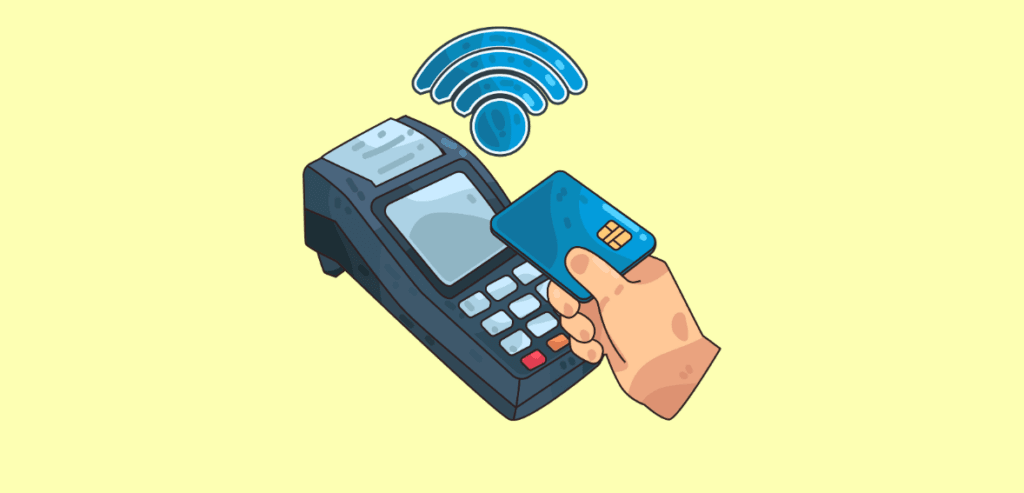
To understand payment processing for businesses, you must know a few key concepts beforehand: payment gateway, payment processor, and batch settlement.
A payment gateway, as its name indicates, is the entry point of the transaction entity in the payment processing system. It can be understood as the digital equivalent of a card reader. The payment gateway securely transmits card data to the card network after encrypting it with various encryption methods, such as tokenization. The entity that routes the transaction between the customer’s bank and the merchant’s bank is the payment processor. The payment processor charges a processing fee on every transaction and must be chosen carefully.
Batch settlement is not an entity involved in payment processing; rather, it is a fund settlement process that a business can adopt. It is the process by which a day’s authorized transactions are grouped and funded to the merchant’s account for settlement.
Now, let us understand the lifecycle of a field transaction. After the job is completed, the technician or the field representative will present the card reader for payment to the homeowner. The client will either swipe or tap their card, and the payment details will be transferred from the device to the payment gateway. Most card readers encrypt data using methods such as tokenization before transmitting it to networks or servers, protecting sensitive data from being leaked in the event of a data breach. From the payment gateway, the encrypted data is sent to the payment processor, which then forwards the payment to the banks.
Mobile payment processing is convenient, but it requires specific hardware and software combos. This is because a single software or hardware device cannot meet the needs of various field-service businesses, as each has its own environmental constraints and invoicing requirements. The HVAC business is fundamentally different from other retail businesses and requires specific investments.
You must also understand the risks associated with card-present (CP) and card-not-present (CNP) transactions. In card-present transactions, chargeback liability can be shifted to the issuing bank by ensuring compliance with the 3D Secure protocol and using an EMV card reader. These mandates cover merchant losses and allow you to shift the liability for absorbing chargebacks to the bank, thereby minimizing losses from credit card fraud, such as payments made with a stolen card.
In card-not-present transactions, the liability lies on the merchant unless they ensure compliance with the 3D Secure mandate. Contrary to popular belief that it slows payments, 3DS2 actually speeds payments, reduces payment friction, and enhances credibility through features such as biometric authentication.
When payment processing is treated as an afterthought, operational friction and invisible leaks start adding up. For this, you must understand two main concepts — the accounts receivable (AR) aging report and administrative drag.
Accounts Receivable (A/R) Aging is a report that sorts your unpaid invoices by the length of time they have been outstanding. It tells you exactly how efficient your payment collection system is. The next thing you must understand is administrative drag. It refers to the unbillable hours the office staff spends chasing money.
Most businesses suffer from the “check in the mail” syndrome. It is when the job has been completed, and the invoice generated has been mailed to the client. The time between when the email is sent to the client and when the client actually pays is the administrative drag period. It creates stress and confusion among staff and can lead to burnout. Another problem associated with traditional billing methods is that invoices could get lost, either physically or in the mail, or have illegible handwriting, or be disputed.
Additionally, traditional payment workflows also cause customer friction. Imagine this: the unit malfunctions, and the customer calls your business to have it urgently fixed. The urgency of the situation could prompt the customer to pay, but sending the invoice a week after a stressful emergency repair often leads to disputes and delayed payments.
The cost of financing your customer’s repairs is expensive. You must pay the supplier before the customer even starts paying you. This calls for efficient payment structures and management systems. Moreover, you must save the time dispatchers waste on debt collection and instead bring in new leads for the business.
The time and place where a retail transaction is completed is known as the point of sale (POS). As a business owner, your goal should be to remove all barriers, such as extra clicks or phone calls, from the payment flow. A frictionless checkout, where all the barriers that prevent the customer from paying you have been removed, can help you get paid faster.
The first step towards optimizing payment processes is to put yourself in the customer’s shoes. Understanding customer psychology is necessary to identify the pain points in making a payment to any business. Customers are the most grateful and willing to pay the moment the heat or AC turns back on. The urgency of getting something as important as an HVAC unit fixed is the best time to get paid.
You should generate invoices on-site and get paid instantly via SMS or email payment links, card readers, or Tap-to-Pay. Eliminate the AR department for residential jobs. Chasing relatively small invoices is a loss to the business. Another point to keep in mind is immediate dispute resolution: if there is an issue with the bill, the technician should explain it on-site before leaving, so the customer does not feel cheated.
While traditional invoicing is still necessary for jobs such as commercial property management, home warranty claims, or government contracts, it is important to introduce frictionless payments and on-site bill generation for residential services so that your business can ensure cash flow from relatively low-ticket jobs and focus more on revenue growth.
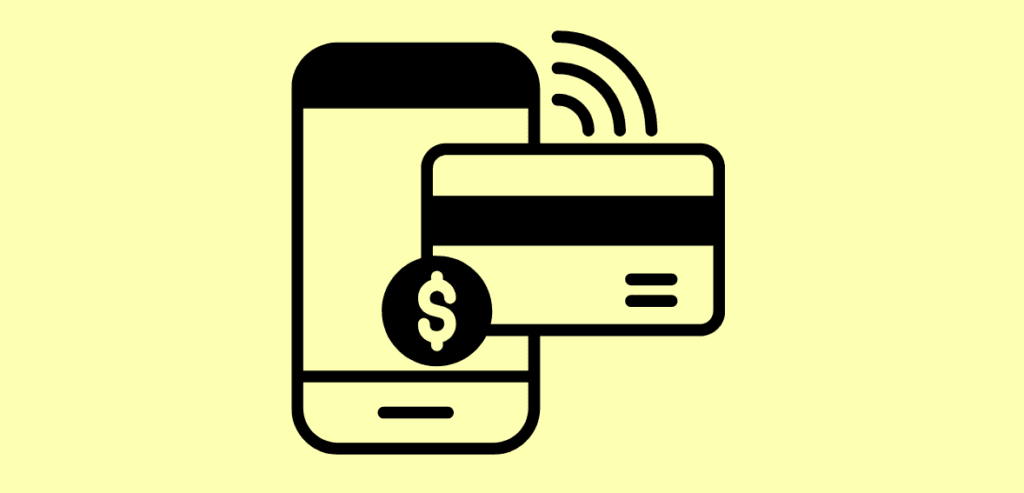
A mobile POS, also known as an mPOS system, turns a smartphone, tablet, or wireless device into a portable checkout terminal for your technicians. The hardware solutions for accepting payments include Bluetooth card readers synced to the technician’s tablets.
Tap-to-Pay is a payment method that works on near-field communication (NFC) technology. NFC is a technology that allows contactless payments via embedded chips in compatible devices. You can implement Tap-to-Pay directly on the technician’s phone, eliminating the need for separate dongles.
Other methods of frictionless payments include QR codes printed on physical or digital invoices, or SMS/Text-to-Pay links sent while the technician is wrapping up their tools. You must ensure that your POS has offline capabilities, as the sites the technician will work on may or may not have a stable internet connection. It is crucial for jobs in dead zones, such as basements or rural areas.
There are various payment methods available in the market, and as a business owner, you must be aware of the ones absolutely necessary for your HVAC business.
The baseline expectation of customers in the era of digital payments is credit and debit cards. To cater to younger customers, such as millennials and Gen Z homeowners, accepting mobile wallets becomes crucial. When you install an HVAC unit, you can enroll the new customer in periodic services, thereby ensuring steady revenue. To accept such recurring payments of periodic maintenance, you should introduce auto-pay in your business. It heavily reduces customer friction and ensures sustained revenue. To accept recurring payments, ACH (Automated Clearing House) transfers are the best option due to their low processing fees, typically $0.25 to $0.50 per transfer.
You can also introduce customer financing into your business. Features such as buy now, pay later or fixed-term loans for high-ticket system replacements encourage customers to make the purchase, even when they do not have the money in hand.
Speed, convenience, and systematization are the pillars of modern HVAC cash flow. Mobile technology that replaces AR aging for residential jobs is necessary to reduce administrative drag and improve cash flow. Now that you understand how digital payments can benefit your business and when traditional payments are necessary, you should start implementing these changes in phases.
Understanding the payment method that best suits various transaction types is necessary to ensure sustained revenue and optimized cash flow. You must remember that the ultimate goal of payment processing is to eliminate the need to chase checks and ensure sustained operational cash to run the business without needing short-term credit.
Equip technicians with mobile Point-of-Sale (mPOS) apps, Bluetooth card readers, and Tap-to-Pay on their phones. Provide them with training on how to use these systems so that they can operate efficiently.
Yes, these mPOS systems are very secure and tokenize the data before transmitting it on the network. This protects sensitive data from being leaked in the event of a data breach.
It depends on the type of job and the nature and ticket size of payments. For residential jobs, on-site card readers are optimal. Accepting ACH for recurring services and traditional invoices for high-ticket commercial contracts is the way to go.
Absolutely. Using digital invoicing to secure a 30% to 50% upfront deposit via credit card or ACH protects your cash flow when ordering expensive units, ensuring you aren’t acting as a bank for the customer.
A good field-service management software, such as Cloud Job Manager, has built-in payment processing that automatically syncs transaction data with accounting software like QuickBooks.