

Visualize the scenario of two business owners who close out their books on the same day. One has a bank balance that makes her feel serene. The other has a bank balance that makes him sick to his stomach, even though he has just had the most successful month in his business’s history. The disparity is not some stroke of good or bad fortune; it is the method of accounting that is used by each of them.
One of the first major choices a business owner faces is whether to use cash vs accrual accounting. More than a bookkeeping preference, this choice has a significant impact on the way profits are perceived, tax liabilities, and ultimately the way a business is viewed by potential investors and creditors. Using the right method can provide a business owner with a true sense of the business’s financial health.
This guide examines various cash and accrual accounting methods, the advantages and disadvantages of each, and the accounting method that will best serve a business at its current stage of development and remain most useful as it scales.

Cash basis accounting tracks your money in the simplest way. You record your business income only after the cash has been deposited into your bank account. You record your business expense only after you make the cash payment. This method eliminates waiting for payments to clear and any guesswork or approximation. If you did not make a cash payment or deposit, it does not get recorded.
This method is used by most people to track their personal checking accounts. Because it is the simplest method, most people record their expenses and income efficiently. It requires a very basic accounting knowledge. For that reason, most freelancers, solo consultants, and small local businesses use cash basis accounting.
Accrual accounting considers the timing of economic transactions rather than the timing of cash transactions. Revenue is earned and recorded at the time of sale, regardless of when cash is collected. Likewise, expenses are recorded at the time of purchase, regardless of whether payment is made in cash.
For example, if you completed a project with a $10,000 sale in June, but your client pays you in August, under the accrual method, revenue for this project would be recorded in June. Under the cash method, revenue would be recorded in August. Both examples relate to the same sale, but provide completely different financial statements, ultimately dependent on the accounting method used.
Accrual accounting is the method required under Generally Accepted Accounting Principles (GAAP). Therefore, mid-range and large corporations use this accounting method. This method gives companies a better understanding of the financial transactions conducted throughout the year by correlating revenue and expenses, rather than correlating revenue and cash transactions.
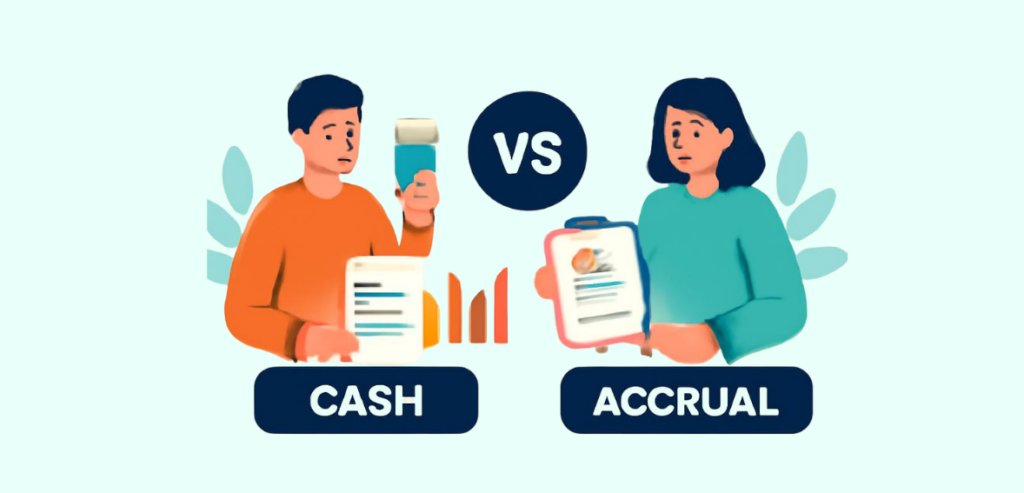
The fundamental factor that sets cash and accrual accounting methods apart is the timing of recognition. If you prefer to know the amount of cash you have available at any given time, cash accounting is the method for you. If you prefer to know the amount your business has earned and the expenses it has incurred, regardless of your cash holdings, accrual accounting is the method for you. Of the two methods, cash accounting is the much simpler and cost-effective method, and perhaps the better one, if you have no formal accounting training. However, it is possible that your cash method accounting in any given month, if you have considerable accounts receivable and payable, may give you a misleading representation of your profitability for that month.
Accrual accounting also relies on the bookkeeper’s time and can therefore be a more costly method; however, it is the method of choice if accurate, long-term profitability is the goal of your business, especially when your business has inventory, accounts receivable, accounts payable, loans, or investors. There is no objective “better” method, as this choice is industry- and business-size-specific.
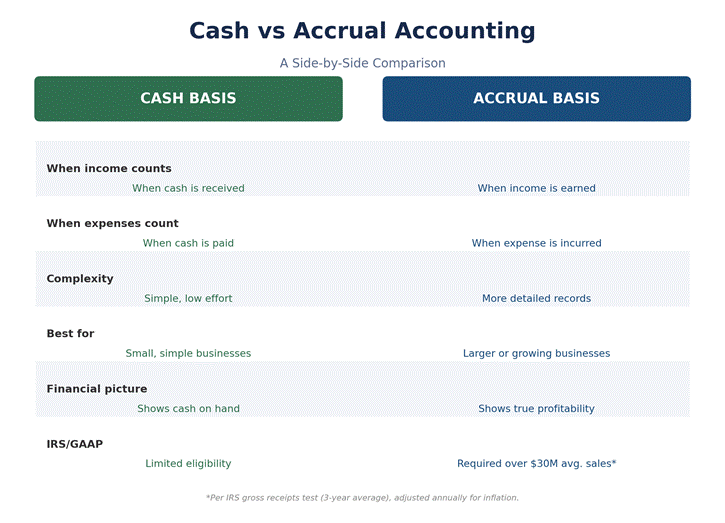
Figure 1: Cash basis vs accrual basis at a glance.
The primary reason for cash basis accounting’s popularity is its ease of use. Because you only have to track cash movements, the time required to keep the books is minimal and can even be done without hiring a professional accountant. A cash basis accounting system can even answer the question of whether there is enough cash available to pay this week’s payroll and other business expenses. For businesses with cash flow problems, the answer to this question is more important and useful for the day to day operation of a business than the theoretically accurate accounting profit.
Cash basis accounting also has some problems. The timing of cash movements can make a business appear profitable because a large check was collected, even though unpaid obligations exist and the business may actually be unprofitable. Conversely, cash-basis accounting can make a business appear unprofitable, even when it was profitable, because clients paid too slowly. Because cash basis accounting does not account for business obligations and money owed to the business, it is not a good method for attracting investors, obtaining financing, or making forecasts.
The biggest benefit of accrual accounting is its precision. It shows your revenue and expenses during the correct periods rather than when cash changes hands. This means your profit or loss statements reflect your true business results, not the profit or loss driven by the timing of cash transactions. This method is especially useful for determining and analyzing your business trends, profit and loss, and for making business decisions regarding employee hiring and purchasing goods for business expansion. This method is also required by banks, investors, and auditors, making it useful for business loans and fundraising.
The primary cost of this method is the bookkeeping. This method requires tracking receivables, payables, and deferred revenue. This usually requires accounting software or professional bookkeeping. Many businesses also face the healthy profit vs unhealthy bank balance bookkeeping riddle. Profit shows on the books, but the business can still have an unhealthy cash balance. This is usually the result of client non-payment. This generally means business owners need to monitor both cash and profit.

Especially for a business in the early stages of growth, cash accounting will likely be the more practical option. You can forgo hiring a bookkeeper as it requires less complexity. Plus, you will be able to concentrate more on cash that is physically in your account. Most businesses that fall below the IRS gross receipts threshold will find that cash accounting is sufficient for IRS compliance. Cash accounting can be very useful for service-based businesses, freelancers, and small shops because it reflects the direct relationship between completing your work and cash receipts.
The choice between cash and accrual accounting systems for small businesses is not as permanent as it may seem. Cash accounting becomes less practical as small businesses purchase inventory, sell on credit, take out loans, or seek small-business investment. Lenders, venture capital firms, and equity investors want to see financial statements prepared on an accrual basis, as cash accounting does not capture business obligations or earned income. For a growing small business, sticking with cash accounting for too long can lead to poor business decisions based on inadequate financial information.
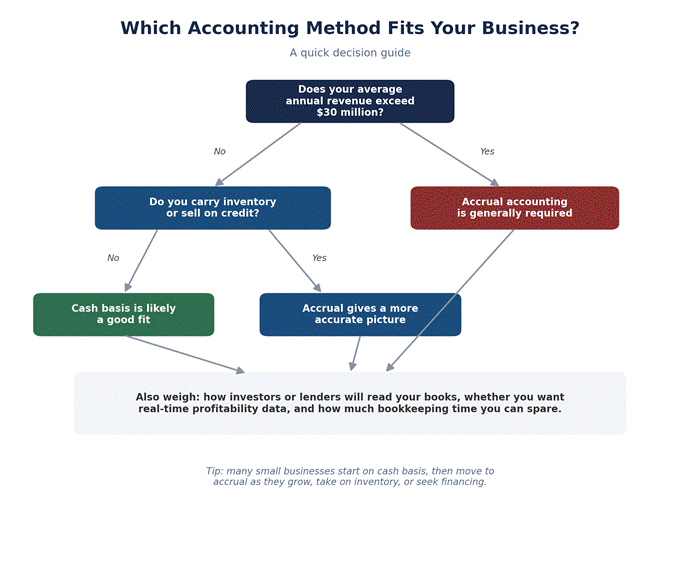
Figure 2: A simple decision path for choosing between cash and accrual accounting.
Rules for the IRS accounting method tell you which tax-filing method you can use. Most businesses structured as C Corporations must use accrual accounting. So must businesses with average gross annual receipts exceeding a certain threshold (about $30 million over the last three years). The IRS adjusts this threshold for inflation. Businesses with inventory as an income-producing factor must use accrual accounting for purchases and sales, even if they use cash basis accounting for other transactions.
Most small businesses, sole proprietors, partnerships, and S Corporations fall below the threshold and are unlikely to produce inventory. Therefore, they can use cash-basis accounting for tax purposes if they want. NOTE: The accounting method used for tax purposes need not match the method used for reporting. However, using the same method for tax and business reporting may reduce confusion and improve business bookkeeping.
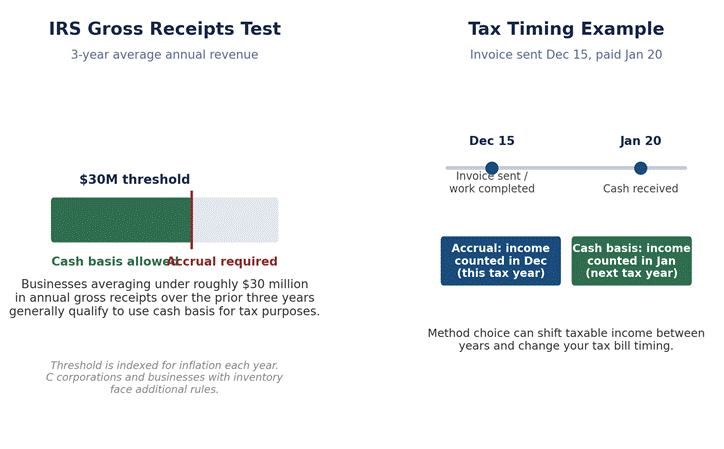
Figure 3: The IRS gross receipts test and how timing affects taxable income.
Yes, a lot of companies do as they start to grow. To the IRS, switching from cash to accrual is a change in accounting method, so generally the new method can’t be used for the next tax return without the IRS‘s permission. This is done by filing Form 3115, Application for Change in Accounting Method, with the IRS. This form goes into detail on how the change will affect the accounting method and how to make the 481(a) adjustment, which accounts for the possibility that income may be double-counted or not counted at all during the changeover period.
In addition to the tax implications of this change, the business’s bookkeeping also changes, and its bookkeeping software might need to be upgraded to a more sophisticated accounting package. The person in charge of bookkeeping will have to learn to work differently, which means tracking accounts receivable and payable rather than cash transactions, as in the cash accounting method. To avoid mixing methods during the year, most businesses choose to do this at the start of a new fiscal year. This is a complicated issue, so most businesses choose to involve a CPA or tax professional to help with the change in financial reporting method.
The method you use for accounting determines when you record income and expenses for tax purposes. This determines your taxable income for the year, even if your earnings over your whole life do not change. With cash basis accounting, an invoice you send in December but that is paid in January will be recorded for tax purposes in the following year, rather than the current year. This method is useful when trying to stay within a certain tax bracket. In contrast, under accrual accounting, the income is recorded when it is earned, meaning you could be taxed on income you have not yet received.
This tax-planning method can be used to accelerate tax-deductible expenses under cash-basis accounting. Simply pay the expense before year-end, and it’s a deduction for the current tax year. With accrual accounting, the tax-deductible expense is recorded in the year it is incurred, regardless of the payment date. This flexibility will result in some businesses using cash basis accounting as a tax planning year-end tool, which requires an understanding of the method to strategically plan the timing of invoices and payments. While this method is within IRS rules, it is prudent to consult a tax professional to clarify the inventory requirements and eligibility limits under IRS accounting methods.
Issues with cash-basis or accrual-basis transactions across financial statements can harm your business. With current accounting software, maintaining parallel cash and accrual accounting systems is much easier. Most software can generate reports in either method with the push of a button. This is especially useful for businesses that prepare tax documents on a cash basis but need accrual-basis reports for internal planning.
QuickBooks is an accounting software product developed by Intuit. It is one of the most used accounting software by small businesses. QuickBooks can report using both cash and accrual accounting methods. Transactions in QuickBooks are reported using a specific method. However, QuickBooks allows users to switch the method used to generate a financial report, which is useful for businesses deciding which accounting method best suits their long-term needs.
Xero is a small- and mid-sized business-focused, cloud-based accounting solution. As with QuickBooks, users can view reports on a cash or accrual basis. Businesses that require advanced bank-feed automation and accrual-based financial statements also prefer Xero.
FreshBooks aims its service toward freelancers and cash-based service businesses. Invoicing and accounting are simplified, but accrual invoicing and reporting functions are available. Because of that, it is a favorite bookkeeping software for many solopreneurs and freelancers.
There may not be a universally right answer for cash vs accrual accounting, but certain factors about your business can help you determine the right accounting method. These factors include, but are not limited to, your business size, industry, future growth plans, and your personal preferences. For instance, a freelance graphic designer wouldn’t need to use accrual accounting. Accrual accounting would likely be needed for a growing manufacturer that has inventory and extends credit to wholesale customers. Many businesses are somewhere between the two extremes and typically use either cash-basis or accrual accounting, transitioning between the two as business growth or other requirements are better met by one method than the other.
The accounting method you choose should be done consistently and accurately, but it should not need to be perfect. Regular bookkeeping completed in a timely manner and using the method most appropriate for your business, even if it is not your preferred method, will benefit your business the most. A qualified accountant should be consulted regularly. If you are still uncertain, consulting a CPA familiar with your industry is a good idea. They will be able to weigh all of your business factors and recommend the accounting method that will most benefit your business.
Choosing between cash and accrual accounting is not simply a bookkeeping decision – it is a decision about how you want to see your business. Cash basis accounting records transactions when cash is exchanged. This is simple and gives you an honest reading of your bank balance. Because of this, it is a good method of accounting for small businesses that do not have a lot of complexity.
Accrual accounting records income and expenses when they are earned and incurred (not necessarily when cash is exchanged), provides a better idea of profitability, and is the method of accounting used by most large, inventory-based businesses and those seeking external financing. Knowing the IRS’s rules on accounting, how and when to switch accounting methods, and how each method affects your taxes will help you make the right decision. Start with the accounting method that is right for your business, and be flexible enough to adapt as it grows.
Under cash basis accounting, revenue and costs are recorded when cash is transferred for the sale or purchase. With the accrual method, revenue and costs are recorded at the point of the sale or purchase obligation, respectively. Long-term profitability is better measured using the accrual method; however, the cash method reflects the immediate availability of cash.
Most IRS requirements are satisfied using cash basis accounting, and it is especially manageable for small or service-based businesses with basic transactions. However, businesses that have inventory, extend credit, or wish to obtain a loan or investment will find accrual accounting easier. This is because most lenders and investors expect financial statements to be prepared on an accrual basis.
The IRS typically requires the use of accrual accounting for C corporations, businesses with an average gross annual income of more than approximately $30 million over the last three years, businesses that work with inventory, and a few other businesses. Typically, businesses that do not meet the above requirements and are not in the inventory industry can use cash basis accounting for tax purposes.
Yes. To the IRS, changing from cash to accrual accounting is a change in accounting method, so a business must file IRS Form 3115 and make a Section 481(a) adjustment to reflect this change. Most businesses partner with a CPA or tax professional to ensure this process is handled properly due to the complexity and specific rules in IRS regulations.
Your taxable income can shift due to your choice of accounting method, even when your total earnings remain the same, because your accounting method stipulates the tax year in which your income and expenses will be reported. With cash-basis accounting, you can influence the timing of income and expenses near year-end, for example, by delaying invoices or accelerating payments. On the other hand, with accrual accounting, income and expenses are reported when they are earned or incurred, which can result in taxable income being reported on income that hasn’t been received.