
Posted: June 25, 2026 | Updated: June 26, 2026 at 2:57 PM
Picture this. Your puppy needs three rounds of shots, a fecal test, a microchip, and a spaying surgery, all within a few months. Paid one visit at a time, those bills land hard. A veterinary wellness plan turns that lump-sum stress into a small, predictable monthly payment. It is one of the fastest-growing ideas in pet care. Yet most owners sign up without really understanding how the billing works.
This guide breaks it all down in plain English. You will learn how clinics bill monthly veterinary wellness plans, what a pet-care package actually includes, and the part nobody explains at the front desk: the emergency balance you may owe if you cancel early. By the end, you will know exactly what you are paying for and why.
Veterinary wellness plans include a package of scheduled preventive services. The owner pays a fee at regular intervals, typically monthly. Conceptually, this is a membership plan for pet health. In exchange for the fee, your pet is provided a planned schedule for the delivery of exams, vaccinations, and health screenings for an entire year.
A wellness plan is focused on prevention. These plans are designed to identify minor health issues before they grow into larger health and cost-related issues. The American Animal Hospital Association has described wellness plans as working much like membership clubs: pet owners pay a predetermined monthly fee and have a set of services available to them as needed.
It is critical to note that a wellness plan is not the same as pet health insurance. A wellness plan is designed to help with scheduled preventive health services. A wellness plan will not help with sudden health-related emergencies, health-related accidents, or emergency health-related surgeries. We will return to this distinction. It is the most important area of this discussion.

Fundamentally, a monthly wellness plan is just a subscription. After you sign up, the clinic keeps a card or bank account info on file and charges a set amount every month for a year (or similar). Many clinics charge a one-time enrollment fee in addition to the monthly subscription, usually in the $25-$50 range.
The clinic uses practice-management software to handle the entire process. The system charges the card, logs what services your pet has used, and tracks the remaining benefits. The graphic below illustrates how that system makes one signature a year of automated, recurring care.
Infographic 1: The monthly wellness plan billing cycle, from enrollment to auto-renewal.
Not all financial transactions involved in various plans of care are the same. Most clinic-based plans are point-of-service plans. This means you walk into a clinic and have a service performed without paying a fee at the time, because your monthly plan fee covers it. The reimbursement style plan (common with insurance-style add-ons) is the opposite. With this plan, you pay the veterinarian and then submit a claim to receive reimbursement. The two billing styles are shown in the table below.
| Feature | Point-of-Service Plan | Reimbursement Plan |
| Where you pay | Built into the monthly fee | Upfront, then claim later |
| Who you use | Usually, one clinic or group | Often, any participating vet |
| Paperwork | Minimal at the visit | Invoice and claim form needed |
| Best for | Loyal clients of one hospital | Owners who travel or switch vets |
| Typical model | Clinic and corporate plans | Insurance-linked wellness add-ons |
Payments can fail, but the software manages the payment failures. If a card payment is declined, the system will try to process the payment after 24 hours, then after 3 days, 7 days, and so on. If the payment is still not made after these attempts, the plan’s benefits will be temporarily suspended until payment is received. This is why it is important to always keep a valid card on file.
A pet-care package includes all of the services associated with a specific plan. Different pricing levels for different life stages are created by clinics. The puppy and kitten plans typically involve completing a series of vaccinations, deworming, and spaying or neutering. Plans for adult pets include check-ups, vaccinations, and routine parasite control. Plans for senior pets generally include expanded routine monitoring, the same as above, along with blood work and urinalysis.
Pricing is based on the pet’s life stage and needs. In the U.S., plans for basic routine check-ups for either cats or dogs typically start at $20-$30. Plans with vaccinations, routine monitoring, and some discounts generally run $40-$60. Puppy, kitten, senior, and dental plans generally run $70-$90 or more, depending on the region and the plan’s benefits. The most common plans and their pricing are shown in the chart below.
| Plan Tier | Typical Monthly Cost | Core Inclusions |
| Basic / exam-focused | $20 – $30 | Wellness exams, light parasite control |
| Standard adult | $40 – $60 | Vaccines, exams, lab work, prevention, discounts |
| Puppy/kitten | $50 – $90+ | Vaccine series, deworming, spay/neuter, exams |
| Senior | $60 – $90+ | Broader screening, bloodwork, and more frequent visits |
| Dental-inclusive | $70 – $90+ | Annual cleaning plus standard preventive care |
Table figures are 2026 U.S. estimates. Actual prices vary by clinic, region, and pet.
Most plans include a discount on services not covered by the plan to encourage people to sign up. One of the more common membership offers a certain percentage discount on other services, such as dental work and other non-routine services. Many other memberships also have annual limits on benefits. This is the limit on benefits for a specified period, after which members must pay for services themselves.
Brand-name programs demonstrate these concepts clearly. Each of the companies below customized its billing and packaging structure, so it would be beneficial to know them by name.
Banfield has one of the best-known programs in the country, with hospitals located in many PetSmart stores. Banfield’s Optimum Wellness Plans combine services such as exams, vaccinations, diagnostic tests, and parasite checks into yearly packages. Customers may pay the full amount or divide the total into twelve equal monthly payments with no interest charged.
Banfield is point-of-service only. There are no claims or reimbursements. All covered services are provided at the visit, and the plan is only valid if provided at Banfield. This plan does not cover services for accidents, sickness, or emergencies. However, it does provide a member discount for those other services.
Covetrus operates on the clinic side of the equation. They are a software and services company that empowers independent practices to develop and manage their own plans. Their CarePlans product provides subscription billing, automatic discounts/distributions, and reporting, and integrates with practice systems so that use is recorded in patient records. The value proposition to clinics is consistent cash flow and simpler client budgeting.
An emerging group of platforms is centered completely around wellness-plan infrastructure. One example is Nest. Nest offers a fully managed service that handles plan design, marketing, and clinic billing. Another example is Digitail. Digitail constructs plans directly in the clinic software and applies discounts in real time during the clinic visit while updating the benefit counters. They both have the same automatic billing trend, with little to no tracking for staff.
This is the part that surprises most people. A wellness plan is not a month-to-month subscription and therefore cannot be dropped at will. The first few visits are often among the most expensive. For example, the first day a new puppy visits a clinic might include an exam and vaccinations, a heartworm test, a blood test, plus the fecal test. All of this is likely to cost the client only one or two monthly payments.
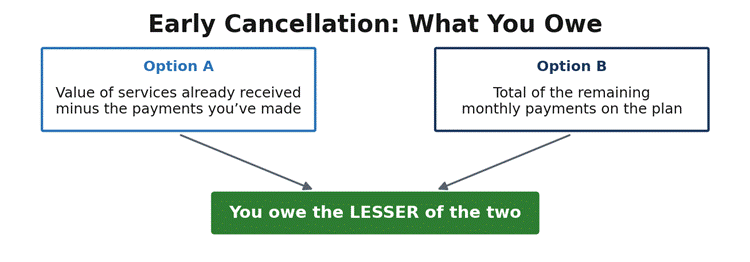
What is the cost of canceling a wellness plan? The plan does not cease to exist. Most clinics will assign what is often referred to as an emergency balance or cancellation balance. Most clients will be evaluated for the lesser of the following two amounts. The first is the full value of the services provided to the client’s pet that were not compensated for, and the second is the total of the remaining monthly payments on the plan. The graphic below will help the client understand how this is calculated.
Infographic 2: How clinics typically calculate the balance owed when a plan is canceled early.
The Pawlicy Advisor example demonstrates how Banfield handles early cancellations. Canceling early means you pay for services rendered, or you can choose to pay the remainder of the plan. As Pawlicy Advisor explains, canceling early effectively resets the arrangement: Banfield services are then charged to the member at the standard, non-plan price, so the member essentially pays the full price for the services rendered.
Most clinics do “cancel for hardship” events. These are genuinely hardship events, such as the death of a pet or relocation to a service area where the pet clinic does not provide service. Clinics do require some documentation, so keep the relevant records on hand.
The most reasonable recommendation is to actually read the contracts. Make sure to read the cancellation policy, the membership terms (including fees), and the renewal terms. Make sure to opt out if you don’t want to be renewed. Most plans are designed to auto-renew at the end of the year. If you don’t want the plan to renew, set up a reminder for that date.
This causes the most confusion and directly impacts your balance. A wellness plan covers anticipated costs. Pet insurance covers unexpected costs. These are different products with different tasks. Your wellness plan will not cover emergency clinic expenses. It will not cover expenses for a torn ligament, a swallowed toy, or a sudden illness.
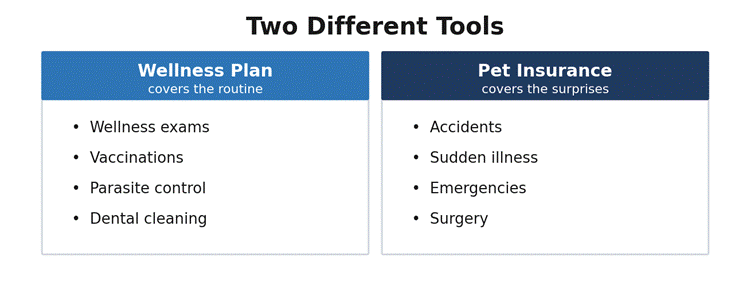
Infographic 3: Wellness plans cover the routine; insurance covers the surprises.
These two tools are designed to work together. The preventive care aspect of the monthly wellness plan is built into the monthly budget. The separate insurance policy will cover the big, scary bills. The table below will line up each of the key differences.
| Question | Wellness Plan | Pet Insurance |
| What does it cover? | Routine, preventive care | Accidents, illness, emergencies |
| How do you pay? | Fixed monthly subscription | Monthly premium, often a deductible |
| When is it used? | Planned, scheduled visits | Unplanned, urgent situations |
| Where does it work? | Often, one clinic or group | Usually, any licensed vet |
| What’s left to you? | Costs above plan caps | Deductibles and co-pays |
To minimize surprise out-of-pocket expenses, having both products is beneficial. The wellness plan covers predictable expenses, while the other insurance policy protects against unpredictable expenses. Alone, neither product solves the complete concern.

To best support your pet’s health, select the best preventive care plan. Begin with your veterinarian. Marketing summaries can be misleading, so pay close attention to which services your pet needs over the next year. These services can include your pet’s wellness exam, vaccines, various tests, and preventive care.
Once you know your pet’s needs, compare these to the services included in each preventive care plan. If a plan provides the services your pet needs, it would be a worthwhile investment. Young and senior pets tend to need more services, so these plans are more beneficial for them.
Consider the commitments associated with the plan. Most preventive care plans require a 12-month subscription and provide an emergency balance. If you expect to see the same veterinarian in the future, then the plan would be worthwhile. If you sign up for a plan you expect to cancel in 2 months, then the plan would be a financial loss.
Wellness plans allow pet owners to spread the cost of preventive care over the year with monthly payments. Clinics consider this a subscription model wherein pet owners pay a predetermined amount each month for preventive care. The clinic provides care and either bills the pet owner or bills the pet owner through third-party reimbursement. The packages are catered to the pet’s age, developing care needs, and preventive needs.
The main consideration, described as a rule, is that a wellness plan is not a subscription. Early cancellation will most likely incur a debt for services rendered. Consider the wellness plan as an annual commitment, not a subscription. To most pet owners, the real value is no surprises at the front desk when care is needed and greater preventive care for the pet.
For real peace of mind, read the contract carefully and ensure your pet’s preventive health is covered by the package you select.
These are completely separate services. A wellness plan is designed to manage costs for routine preventive care, like regular checkups, vaccinations, and parasite control. These services are included for a fixed monthly premium. It is up to the owner to cover the cost of unexpected vet visits for accidents and injuries, as well as emergency surgeries for unexpected illness. These costs are typically recuperated through a reimbursement claim. Wellness plans are of no use at an emergency clinic, and thus, many pet owners purchase both a wellness plan and pet insurance. This way, routine vet care is budgeted under the wellness plan, while the unexpected and unbudgeted vet care is managed under pet insurance.
Your plan doesn’t just disappear. Because most of the costly care occurs during the first several visits, many clinics bill an emergency balance. You usually pay the lesser of the balance due for the services rendered (less any payments) or the total unpaid balance of the term. Most clinics will forgive this balance if you are in hardship. Hardship can include the passing of your pet or moving out of the service area (documented, of course).
Your pet’s engagement with staff also plays a role. Discuss your pet’s expected needs with your veterinarian. If the plan covers those expected needs, the plan will likely pay for itself and help keep preventive care on schedule. Most benefit from the plan that provides more frequent care, specifically, younger pets and older pets. If the additional tier benefits are not used, then a plan with less coverage will be better.