

Posted: June 09, 2026 | Updated: October 06, 2026 at 5:57 PM
No one starts a gym business because they find payment statements fascinating.
We go into this field because we believe in fitness, the social atmosphere, and maybe even helping build something worthwhile in our communities where none had existed previously. Payment processing is an afterthought for most of us; just another hoop to jump through until we can focus on getting the gym up and running. Which, conveniently enough, is exactly what Visa and Mastercard want. Most gym owners overlook the pay-by-bank facility, which lets them bypass credit card fees and save a lot of money.
The majority of gym owners know that credit card fees are around 2 percent, but they do not realize how quickly they eat into their revenue streams. Consider a business earning $30,000 per month in membership fees. Given that the vast majority of those members use their credit cards for payment, that entrepreneur is most likely losing $600 to $1,000 each month on credit card fees alone, even before meeting utility bills and salaries – $7,000 to $12,000 annually. For what? In effect, for giving Visa the opportunity to meddle in the financial transaction between you and your own paying customer.
It seems there is a much better system. In fact, Pay-by-bank has been here all along; the thing is, no one ever forced owners to examine it before now.
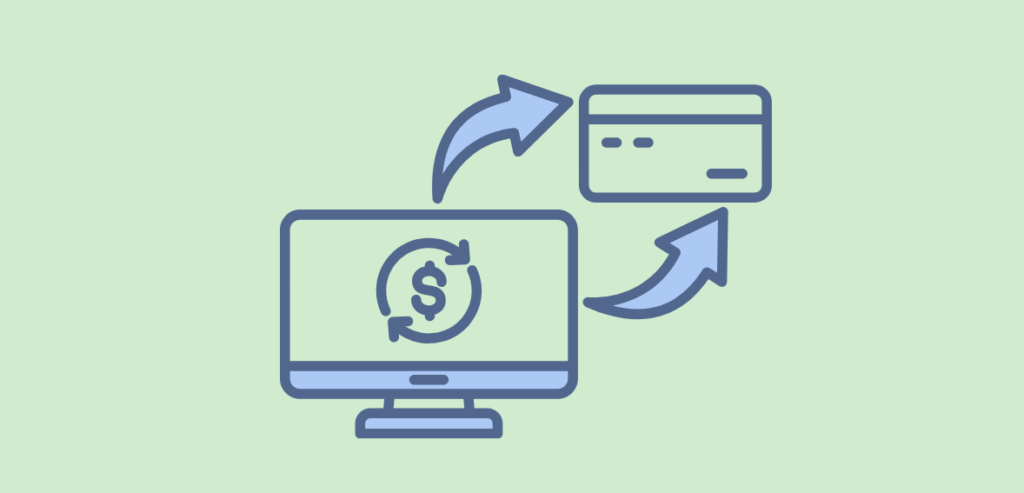
ACH is the Automated Clearing House system. It processes funds transfers between accounts. That’s how your direct deposit goes through, and how your electricity bill payment works too. ACH has been silently transferring funds since the seventies. The fitness business has been using it for years now; however, it was quite a tedious task back then. An individual would fill out a form with their routing number; the gym would batch these debits manually on a monthly basis, and sometimes it went wrong.
All these concerns about ACH were completely valid at the time. It took forever to verify accounts. It took days just to validate an account number by submitting micro-deposits. Billing mistakes would become apparent far too late in that process. It really did seem like a step backward compared to the immediate satisfaction of swiping a card.
Yet many entrepreneurs are still thinking with a very old mindset. Times have changed.
Bank verification tools, such as those embedded directly in today’s gym management systems, can verify a person’s account information within seconds. The customer won’t even need to find the routing number; all they need to do is access their bank through a simple interface that works much like Venmo or Cash App. In addition, due to Same-Day ACH, the settlement time has been dramatically shortened. While it used to take a prohibitive three to five days to settle payments, this delay is now so minimal that it makes no significant difference compared to card payments.
Let’s get down to some cold hard facts, as this is where the theory will either stand its ground or fall apart.
Credit card interchange rates range from 1.5% to 2.5% for most consumer credit cards. But rewards credit cards (usually used by wealthier consumers) are closer to 2.5%. Add in the premium travel credit card, and you may be looking at a rate of more than 2.7%. After you account for the markup your processing service applies, you will be paying between 2% and 3.5%.
ACH is only a fraction of the cost. You’ll most likely be paying somewhere between $0.25–$1.00 for each transaction based on your situation, or even just a very small percentage that stops way below the cost of credit card interchange fees.
Here’s a quick calculation: For your average $50 per month subscription price, even your expensive $0.75 ACH processing fee still pales in comparison to the $1.25–$1.75 you might be losing per credit card transaction. On an annual basis, with 800 members billed monthly, this would result in an additional $5,000–$8,000 per year.
And this does not even take into consideration the horror that is chargebacks. One of your members disputes a charge because they did not realize they had joined, or because they simply did not wish to pay this month, and all of a sudden you owe the reversal amount plus a $25 penalty. Even though ACH disputes exist, they follow completely different rules. The valid grounds are narrow — a customer can generally only dispute an ACH debit as unauthorized, as a revoked authorization, or for an incorrect amount or date — so the “chargeback reflex” that credit card companies have cultivated does not apply here. There is a trade-off worth knowing, though: a consumer has up to 60 days to file, and unlike a card chargeback, you cannot contest an ACH reversal through the banking system. If the member’s bank honors the return, the funds are pulled, and you settle it directly with the member. In practice, that means far fewer disputes, but the ones you do get are resolved member-to-member rather than by fighting the bank.
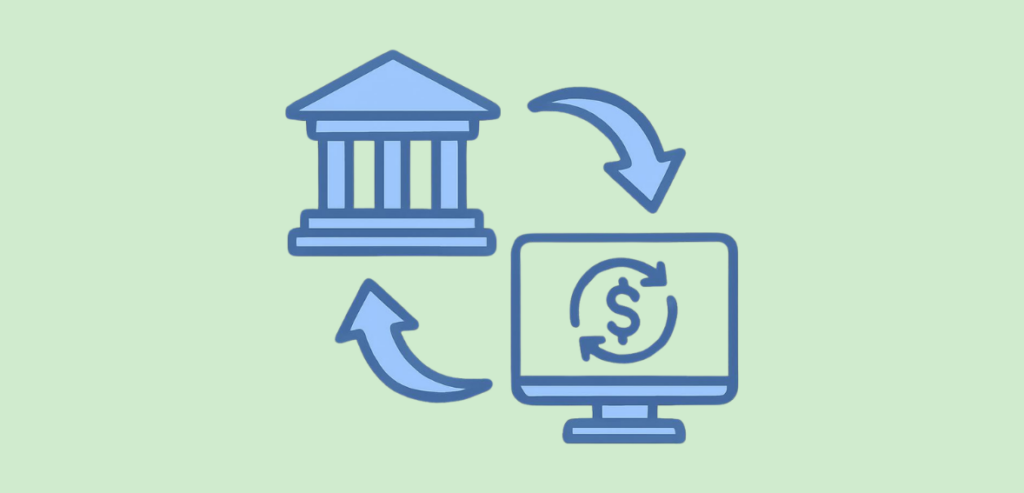
Well, not every kind of business lends itself to making payments through banks. For example, you can’t really expect someone at a coffee shop that does $6 sales at a busy counter to make their transaction as quick as possible.
But with a gym membership, everything’s turned around almost 180 degrees.
This process, in essence, is ongoing. The customer subscribes to the gym service, establishes the payment instrument once, and is automatically charged each month. The minor inconvenience of establishing the ACH transaction occurs only once, when signing up for the gym. This cannot be compared to the expiration of a credit card every few years, which causes the charge to fail, triggers an automated notification, and finally leads to an embarrassing discussion at the reception counter to gather new information. A bank account never expires; it stays open unless closed by the customer.
This is another place where ticket sizes will come into play. Monthly membership costs could range from $30 to $100, with coaching and CrossFit gyms potentially costing $150–$200. With such low numbers, taking percentages doesn’t look like the best strategy. That’s why flat-rate payments via ACH become incredibly appealing if your ticket size exceeds $40.
Of course, no discussion on this topic would be complete without addressing the obvious concern: How willing will members really be to sign up for this service?
It’s a legitimate concern for sure. Any change to billing strategies can result in complaints from some members. However, most owners tend to overestimate their concerns. Remember, most people use autopay for things like car insurance and utilities.
With the right approach, many will even prefer it. No credit card information is in play, so a breach at some unknown retailer can’t compromise the card they would have used to pay their gym membership. It’s an easier, straight-to-the-point payment method.
While it may appear that you’re giving up the profits by offering even a small discount, when considering the bigger picture compared to what the credit card companies are charging you, you’ll most likely still come out ahead. As for new customers? Simply make ACH the default selection on your iPad or website signup form, and there’s little doubt they’ll choose it.

In practice, it’s not rocket science, although you will have to find a processor that actually prioritizes payment processing for banks instead of treating it like an afterthought.
Here are three components that ensure this is a smooth process:
Fortunately, most systems designed today have native support for this capability. What’s key is that your merchant provider understands how to price this type of recurring high-volume business. Take, for example, Host Merchant Services, which offers an ACH/eCheck program specialized for gyms. Pricing is based on recurring volume rather than single-time invoice transactions, which is important because gyms handle hundreds of monthly transactions rather than just a few corporate accounts.
It’s only fair to note that ACH is not a miracle cure. Things go wrong with ACH, just like cards.
A credit card transaction will either go through immediately or be declined straight away. You will be able to tell right away whether or not the card is maxed out. ACH payments take one or two days before the bank sends a return code that could indicate either insufficient funds or an account that has been closed.
However, this doesn’t mean you cannot overcome this obstacle; it simply means you need to put measures in place to ensure it doesn’t happen. For example, your software needs to include logic that immediately sends your members a secure URL so they can update their banking information.
A definite change is occurring in the payment methods for ongoing services. Slowly but surely, the USA is heading towards implementing the same type of account-to-account architecture as the Europeans have had in place for years, with improvements such as the Federal Reserve’s FedNow rail and Same-Day ACH functionality.
Card payments will not disappear overnight, nor do they need to. Card payments make perfect sense for one-off retail purchases or instant point-of-sale payments. However, for a consistent and repeatable payment from someone who has been training with you for two years? Handing over any value in that relationship to the cards doesn’t seem right anymore.
Gyms with razor-thin margins and high-volume operations would see huge benefits from earning a little more profit. That’s because they don’t have to start a fresh marketing campaign or sell any more merchandise to earn additional money. All they are doing is saving money that is theirs.
Related reading on pay-by-bank for gyms: Fitness and Gym Payment Resources.
