Posted: June 12, 2026 | Updated: June 12, 2026 at 2:14 PM
Think about the last thing you bought online. There’s a good chance you didn’t pay all at once. Maybe you split it into four. Maybe you tapped a balance instead of a credit card. That small shift at checkout is now a multibillion-dollar habit. And one company is moving fast to own both ends of it.
Block Inc, the company that owns Cash App, Square, and Afterpay, is integrating its payment solutions. This creates a unified, expanding network that gives Afterpay and Cash App Pay merchants access to tens of millions of customers. This illustrates the direction of payment solutions in retail. Buy now, pay later is moving out of the periphery and is integrating with the banking ecosystem.
Here’s what Block is building, why merchants keep signing up, and what it all means for shoppers and small business owners in 2026.
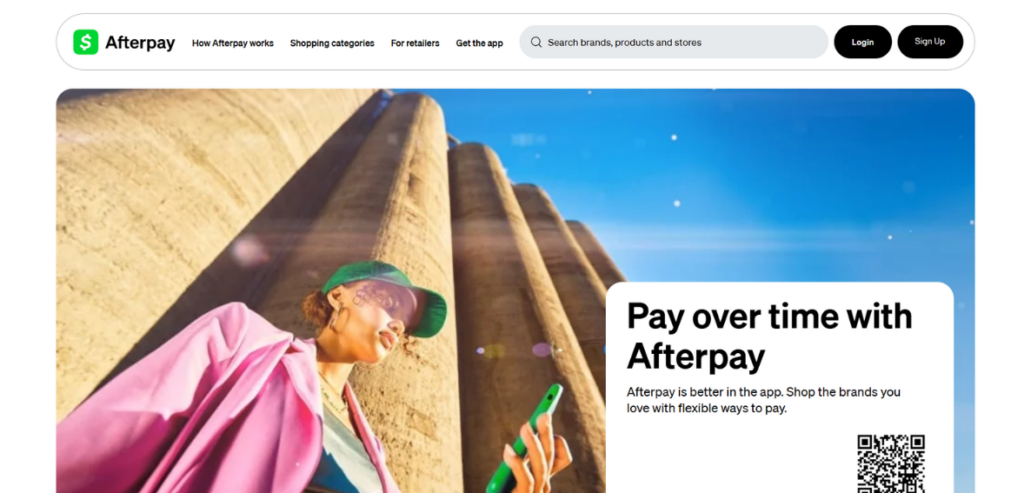
Image Source
In March 2025, Cash App integrated Afterpay’s pay-over-time solutions to hundreds of thousands of partner merchants. Cash App Afterpay, which comes with a new checkout logo, represents a unified branding effort of the two companies. Starting with Pay-in-4, the traditional four-part (interest-free) installment split, Cash App users can use this feature on their Cash App. The Pay Monthly feature, which allows for longer payment terms for large purchases, is coming next.
Block’s acquisition of Afterpay makes considerable sense. There are approximately 57 million Cash App users each month. Afterpay provides flexible payment options and partnerships with retailers for installment purchases. Cash App and Afterpay together form a significant alternative payments network in the U.S. Afterpay co-founder and Block’s head of global sales, Nick Molnar, explained that this allows merchants to access a much larger market, while consumers can access modern payment options beyond traditional credit systems.
From 2023 to 2026, the list of merchants using Cash App continued to expand, with the addition of companies such as Instacart, Fubo, and Lime, as well as many other retail and apparel brands. The pitch to sellers is that Afterpay and Cash App Pay meet different shopper needs. By offering both, sellers can meet consumers’ needs at more stages of the buying journey. This phrasing is thanks to Tanuj Parikh, who leads revenue for Afterpay and Cash App. For more information about the newly added partners, check out PYMNTS’ latest coverage of the merchant expansion.
This is where buy now, pay later merges with digital banking. Cash App has provided consumers the ability to quickly transfer cash to settle a dinner bill or send rent to a roommate. Block aims much higher. According to analysts, the internal objective is “banking primacy” — being the account into which your salary is deposited.
The data indicate improvement. Block capped the most recent quarter with 9.7 million Primary Banking Actives, up 18% from last year. A Cash App account becomes a Primary Banking Active when it receives a direct deposit or an account holder engages in at least $500 worth of monthly transactions across the Cash App ecosystem, including Cash App Card, Cash App Pay, and Afterpay. Under that definition, spending through Cash App’s buy now, pay later (BNPL) service can be enough to count you as a Primary Banking Active.
Layered on top of a foundation already bolstered by a real bank, Block’s offerings include Cash App Green, a younger-skewing status program with a much lower average member age (34 years) compared to a median age above 50 for traditional U.S. banking customers. Other offerings include managed accounts for children, teenage savings accounts, a Bitcoin Lightning network, and peer-to-peer stablecoin transfers planned for 2026. Block co-founder and CEO Jack Dorsey envisions a future Cash App that serves as a financial “protector,” proactively tracking and alerting customers to risks posed by incoming and outgoing transactions.
Sitting below is a chartered financial institution. Square Financial Services is Block’s industrial bank that facilitates much of its lending. And lending is on the rise. In the most recent quarter, consumer lending origination volume grew 82% year over year. Additionally, Cash App Borrow, a product that offers short-term loans, grew an impressive 175% year over year. Afterpay’s post-purchase lending is said to be surpassing the early trajectory of Block’s lending product.
FIGURE 1 — THE BLOCK MONEY STACK
| Layer | What happens | Why it matters to Block |
| Send & receive (P2P) | The original Cash App habit | Brings users in and builds daily trust |
| Spend & split | Cash App Pay + Afterpay at checkout | Pay now, or pay in 4 / pay monthly |
| Bank | Deposits, card, savings, Cash App Green | Turns users into Primary Banking Actives |
| Lend | Borrow + Afterpay credit | The highest-margin layer of the stack |
Each layer down the stack is more valuable to Block. BNPL is the bridge from spending into banking and credit.
Integrating a payment button onto a retail platform can be burdensome. So why are merchants integrating Afterpay and Cash App Pay at such an accelerated rate? The simple answer is reach and conversion. Cash App users are more likely to complete a purchase because they trust Cash App as a payment method. Moreover, Cash App Pay serves as a familiar payment method. In addition, Cash App Pay, paired with BNPL (Buy Now, Pay Later), has a significant and established impact on cart behavior.
The 2026 wave brought a mix of categories, from grocery delivery to eyewear to sportswear. The spread matters. It shows BNPL moving past fashion into everyday spending. The table below groups some of the recently added partners by sector.
TABLE 1 — SELECTED MERCHANTS ADDED TO THE AFTERPAY / CASH APP PAY NETWORK (2025–2026)
| Category | Example merchants | Why it matters |
| Everyday & delivery | Instacart, Lime | BNPL stretches into groceries and mobility, not just splurges |
| Streaming & media | Fubo | Subscriptions and services join the installment world |
| Eyewear & accessories | GlassesUSA, Jaxxon | Mid-ticket items that benefit from a split-pay nudge |
| Apparel & lifestyle | Monday Swimwear, WeWoreWhat, Kat The Label | The fashion core where Afterpay first grew up |
| Sports & audio | Rally House, Shokz, REDVANLY | Higher average order values, ideal for Pay Monthly |
| Family & milestones | Nanit, Herff Jones | Planned, larger purchases that suit installments |
Every new logo expands the network in both directions. An increase in merchants means more places for Cash App users to spend their money. An increase in users means a larger potential customer base for the next merchant. That flywheel is the entire goal.
None of this would matter if shoppers weren’t asking for it. But they are requesting it. Among younger generations who generally distrust traditional credit, the trend toward buy now, pay later retail has become a permanent fixture as a new payment method.
By 2026, approximately 50% of adults in the U.S. have tried some form of buy now pay later (BNPL). The trend is also evident in holiday spending, where shoppers spent $20 billion on BNPL during the 2025 holiday season, up 9.8% from the previous year. Electronics and furniture are among the leading categories. The figures below summarize the headline numbers with some supporting information.
FIGURE 2 — BNPL RETAIL 2026, BY THE NUMBERS
| ~50% | of U.S. adults have used buy now, pay later at least once |
| 20–30% | typical lift in checkout conversion when BNPL is offered |
| 15–40% | reported rise in average order value with BNPL |
| ~40% | of BNPL sales can come from shoppers new to the retailer |
| $20.0B | U.S. BNPL spend over the 2025 holiday season (+9.8% YoY) |
| 96M+ | projected U.S. BNPL users in 2026 |
Figures aggregated from industry research; ranges reflect variations across providers and categories.
The takeaway for retailers is blunt. Offering installments tends to boost conversion, increase basket size, and attract first-time buyers. For a full breakdown of usage and category data, Capital One Shopping’s BNPL research is a useful reference point.
It is beneficial to differentiate between the two tools, as they serve different functions. The term people search—Cash App Pay Checkout—generally means the payment is done in full from the Cash App balance, while Afterpay refers to the pay-over-time service. Block now provides them together, so merchants can serve both types of shoppers in a single integration.
At the online checkout, Cash App Pay allows shoppers to select a payment option, after which the payment is confirmed in the app or by scanning a code, and funds are cleared from Cash App or a linked source. Afterpay, on the other hand, lets the shopper split the cost into four interest-free installments or opt for the Pay Monthly plan to spread a larger purchase over several months. In both cases, the merchant is paid upfront. These payment services offer a user-friendly comparison at first glance.
TABLE 2 — CASH APP PAY VS. AFTERPAY AT CHECKOUT
| Feature | Cash App Pay | Afterpay |
| What it does | Pay in full, instantly | Split into installments |
| Best for | Quick, lower-friction mobile payments | Mid- to higher-ticket purchases |
| Shopper cost | No installment plan | Interest-free Pay-in-4; fees can apply to Pay Monthly or late payments |
| Merchant payout | Receives funds for the sale | Paid up front; Afterpay carries repayment risk |
| Core appeal | Speed and Cash App familiarity | Affordability and bigger baskets |
Offering both is the selling point. A shopper who balks at paying $180 at once might happily split it. Another just wants to tap and go. Covering both reduces the moment of hesitation that kills online sales.
This is a practical consideration for owners reading the news. Should small businesses offer BNPL in 2026? The truth is: it depends on your margins, average order values, and your demographics. BNPL is not free for the business. Providers charge a fee for each transaction, often a percentage plus a fixed amount, which is usually higher than traditional card rates. The expense is charged for the conversion lift.
For some stores, the decision is simple. If you sell items in the $75-$500 range to younger shoppers, then the option to pay in installments can turn a browser into a buyer and lift the average order value. Small to medium enterprises (SMEs) generally see higher cart conversion rates. For tight-margin, low-value, or older-customer businesses, the fee may outweigh the benefit. The table presents the trade-offs.
TABLE 3 — THE MERCHANT TRADE-OFF ON BNPL
| Upside | Cost or caveat |
| Higher checkout conversion, fewer abandoned carts | Per-transaction fees usually exceed standard card rates |
| Larger average order values | Returns can be higher in some categories like fashion |
| Access to younger, BNPL-first shoppers | Adds another payment flow to manage and reconcile |
| You get paid up front; the provider carries repayment risk | Reliance on a third party’s brand and policies |
| Network reach (e.g., Cash App’s user base) | Customer support and disputes may route through the provider |
A reasonable approach is to test rather than commit blindly. Turn it on, watch your conversion and return rates for a quarter, and compare the fee against the incremental revenue. If the lift is real for your store, keep it. If not, the fee is just a cost. Treat BNPL like any other channel: measure it.
When spending and lending occur in the same app, buying and borrowing become indistinct. While this is beneficial to Block’s revenue, it poses financial risks to consumers and to the company’s loan book.
The data shows the early warning signs. Buy Now, Pay Later (BNPL) plans show low default rates, but a significant number of consumers miss payments at least once. This is frequently reported to be between 30% and 40% in surveys. It is also common for consumers to have multiple BNPL loans, making payment oversight difficult. This is referred to as “loan stacking.”
This has not gone unnoticed by regulators. In the U.S., the Consumer Financial Protection Bureau has been particularly focused on BNPL plans and their relationship with traditional credit cards. As this market segment develops, new regulations could bring increased transparency and new consumer rights, especially regarding payment disputes. For Block, focusing on lending to gig workers and those with inconsistent incomes raises significant concerns. What will be the impact on loss rates when the economy experiences a downturn? There is significant financial incentive to pursue this lending. The credit risk is the financial cost.
With a broader view, Block’s strategy is easy to understand. Each payment creates a loop. Cash App customers will not only be paying customers but also be incentivized to continue spending and engage in recurring transactions through Cash App. Block’s Cash App strategy is to keep customers on the ‘Cash App’ loop by offering features and controlling the lending margin.
For users, the incentive to use the Pay in 4 feature is its improved ease of use. This feature does come with risk, as it may drive users to a negative financial position. The appropriate way to use Pay-in-4 is to treat it as a loan, which may be necessary to discourage users from spending beyond their financial limits.
For small business owners, the decision to use the Pay-in-4 feature is much more clear-cut. Pay-in-4 can drive growth for your small business, assuming your product and consumer base are a good fit. However, Pay-in-4 can also add an unnecessary layer of expense to your business. You should evaluate the Pay-in-4 feature based on your own business metrics, rather than on what Block says in its marketing.
Either way, the direction is set. Buy now, pay later and digital banking are merging into one experience, and Block is determined to be the company that owns it. The checkout button you tap in 2026 may turn out to be a bank in disguise. You can follow the source announcements directly through Block’s investor newsroom.
You can now make full payments directly from your Cash App balance with Cash App Pay. Afterpay allows customers to make partial payments via interest-free installments, as well as via the Pay Monthly plan. Block now offers both services so that retailers can cater to your purchasing preferences, whether you want to pay in full immediately or prefer to pay in installments.
The network connects millions of merchants. Recent additions include Instacart, Fubo, Lime, GlassesUSA, Shokz, Rally House, Monday Swimwear, Nanit, among others. The list continues to expand as Block enhances its commerce suite offerings.
Younger shoppers are likely to respond better to this solution, and it can increase order value and improve conversion for mid-ticket items. Unfortunately, it is likely that this solution will be more costly than it benefits your store. Providers charge high, per-transaction fees which often exceed card rates. You will need to run a test, measure the performance lift relative to the fees, and keep the solution only if the numbers work for your store.
Although default rates are low, many users have reported missed payments, and loan stacking is prevalent. BNPL is still a form of lending. Only use this for splittable purchases you are comfortable paying in full, and be mindful of the number of active plans.