
Posted: May 22, 2026 | Updated: October 06, 2026 at 5:57 PM
A vast majority of plumbing businesses are moving away from arrears billing towards collecting a job deposit. A truck roll is the physical act of dispatching a technician and a fully stocked vehicle to the customer’s location. Truck rolls carry a built-in cost, including fuel, labor, maintenance, and service, that is incurred by every plumbing business.
A plumbing company spends an average of $150 to $300 per truck roll, dispatching a vehicle and technician to the job site. But not every prospect leads to a successful trip. Some of them turn out to be tire-kickers. “Tire-kicker” is the industry term for prospects who call for a service or quote but have no real intention of committing to the job.
To protect your revenue margins, it is crucial that you manage your truck roll costs and ensure that the maximum number of trips yield revenue. One way to ensure a truck roll does not go to waste is to collect money from the prospective client before the truck even leaves your garage. Last-minute cancellations leave gaping holes in your revenue. The daily dispatch descends into chaos, leaving the technicians idle while the company loses out on potential revenue from prospects willing to commit.
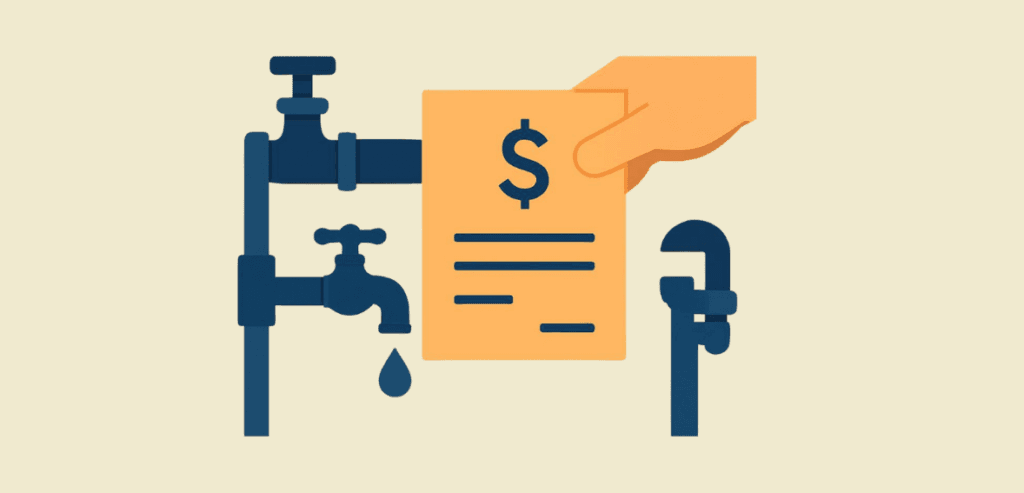
A job deposit is a partial upfront payment collected from the customer before your company dispatches a technician. Cash flow is the net amount of cash credited to and debited from your business account. It dictates whether you will be able to make next week’s payroll on time. A negative cash flow indicates declining health for a business.
A job deposit acts as insurance; by filtering out non-committed prospects, it makes sure that truck rolls are not wasted. Tire-kickers often find it easier to call for services and abandon the call at the last moment when no consequence is attached to it. It acts as “skin-in-the-game,” meaning that the prospect is financially invested in the appointment and is significantly less likely to cancel.
Upfront customer capital investment enables you to purchase expensive plumbing equipment and spare parts, such as water heaters and copper pipes. It preserves the company’s operational reserves. It also filters out potential tire-kickers, because people don’t usually abandon calls they have paid for.
Holding payments until the final invoice is issued makes it psychologically more favorable for the customer. They are not surprised by the full bill at once and have to pay only the remaining amount.

Large installation jobs, such as water heater installations, sewer line replacements, and full repipes, require a substantial upfront reserve to cover the high costs of equipment and spare parts. When such a job is canceled at the last moment, after the technician has arrived at the job site and all the materials have been purchased, it results in significant, unexpected losses that the business did not anticipate.
The first mistake is relying on the prospect’s verdict regarding the problem. A homeowner will panic and mistake a joint leak for a broken pipe. To prevent the cost of a full truck roll or expensive parts, the plumbing company must charge a small diagnostic fee. A diagnostic fee, also known as a dispatch fee, is a small, flat fee charged simply to drive to the prospect’s house and assess the severity of the problem.
Some repairs require special-order parts. The parts are unique, custom-made items, such as high-end fixtures, that the plumber cannot easily obtain on the market. These need to be ordered in advance and custom-made to meet the job requirements. You must decide when to charge a deposit. Charging deposits for expensive repairs helps protect you against tire-kickers. At the same time, charging upfront deposits for basic, low-cost maintenance calls would create unnecessary friction for customers. The decision to charge a deposit must be made carefully; you must be able to distinguish potential loss-making calls from basic ones.
There are two ways you can charge a deposit. The first model is a flat fee, and the other charges a percentage of the full invoice amount. Percentage-based deposits charge a fraction of the total estimated job cost. The industry standard typically sits at 30% to 50%. On the other hand, flat-fee deposits are a set, unvarying dollar amount regardless of the total job size.
Knowing when to charge a flat fee and when to charge a percentage is key to minimizing revenue losses from last-minute cancellations. A 50% deposit is the industry standard for large installations, as they typically involve buying expensive parts. For mid-level jobs where material costs are lower but you still need substantial insurance against abandonment, a 30% deposit of the total estimated labor cost is appropriate.
Flat-fee deposits are best used as a dispatch or diagnostic fee to secure the appointment before the quote is sent. It typically ranges from $49 to $150, depending on the job and driving distance.
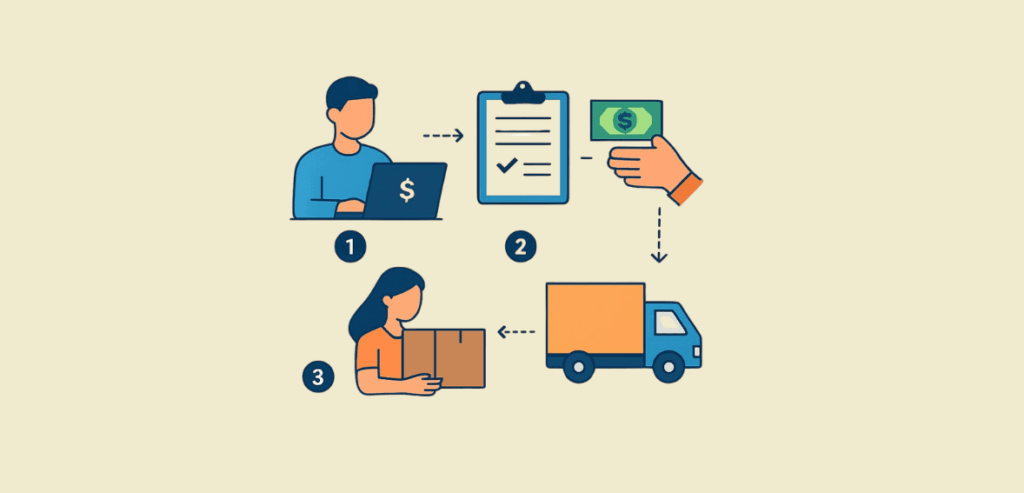
The workflow for the job begins with sending a digital estimate to the customer via email. The customer reviews the estimate and approves it if satisfied. Estimate approval is the process of the customer digitally or physically signing the estimate, agreeing to the scope of work, and the price.
You can implement deposits in your plumbing business by setting up software constraints. A dispatcher gate is a procedural stop in the workflow where a dispatcher cannot assign a technician to a job until a certain condition, such as payment of a deposit, is met.
The customer opens your website and clicks on the estimate. After checking it to their satisfaction, they click “Approve” and proceed with the deposit. Only after the payment has been approved is the option for dispatching a technician enabled. For payments not completed within a set time frame, the estimate automatically expires, releasing the calendar spot and making it available to other prospects.
Automated Clearing House (ACH) is an electronic bank-to-bank transfer that typically carries much lower fees than credit cards. However, the disadvantage of ACH is that it takes a few days to clear. So, if you need instant funds in your merchant account, ACH is not the right option.
Estimate approval is followed by deposit payments. Deposit payments are now accepted online. The choice of invoicing and payment methods greatly affects the effectiveness of your processes. Most modern plumbing businesses use invoices with built-in QR codes or send text-to-pay links via SMS to ensure faster payments. The prospect does not have to click on a PDF, then go to another website, enter card details, and then pay. With built-in payment in your invoices, you ensure customers can pay the deposit as soon as they review the estimate.
After finalizing the invoicing options, the next step is choosing a reliable payment method. The ideal strategy is to provide both ACH and credit card payments. Credit cards are the fastest-moving payment methods; funds are credited to your account within 2-3 business days. The fees, however, on credit card transactions are higher, typically ranging from 2% to 3% per transaction. ACH transfers have significantly lower processing fees, typically $0.25 to $0.50 per transaction. They take around 5-7 business days to settle funds in your account.
However, limiting yourself to a single payment method is not recommended. Reducing payment options when there is massive competition in business means turning customers away right when they are at your door.
Field service management software is used by plumbing businesses to automate the collection of deposits. Field Service Management (FSM) software is an all-in-one platform that integrates all the management services required by service businesses, such as plumbers, electricians, or cleaners.
FSM centralizes all processes, such as estimating, depositing, and final invoicing, into a single digital file, eliminating manual bookkeeping. Automation enables dispatchers to set rules that dictate the scheduling and assigning of jobs to technicians. Good software has features that automatically reschedule and reassign jobs and calendar slots to newer jobs. By automating your deposit collection workflows, you free the technician from debt-collector mode, allowing them to use their time productively to acquire new customers.
Good software automatically generates a full invoice based on the technician’s diagnosis and updates payables after deducting deposits from the total. Integrated software platforms feature real-time dashboards that allow business owners to see their business health, cash flow status, and technician performance all in one place.
Not every customer will be happy with the service you provide. Customers express their dissatisfaction, and leaving them unattended could put you at risk of chargebacks. Objection handling is the process of calmly and logically addressing a customer’s concerns to alleviate their fears and close the sale. New prospects are often skeptical of depositing money up front before the technician actually arrives at the job site. The trust and credibility of a business depend on customer perception. Sending the right trust signals, such as professional branding, clear contracts, and reviews, is crucial to securing customers.
Customers usually push back on deposits. They do so because they think the business will take their money and abandon the service altogether. Building trust through clear, professional communication is vital. You can train your sales staff to articulate sales hooks better. For example, instead of asking for a job deposit, it is much better to ask the customer to “Reserve their spot.” Moreover, you should maintain transparency with the customer, showing them that their deposits are being used to purchase materials for the repair job they requested.
Job deposits are about mutual commitment and protecting cash flow. It is not just an optional step in your service workflow; it has become a survival strategy. Most businesses fail due to poor cash flow, so protecting it is of utmost priority. You can leverage modern software to deliver uniformity and fairness for all prospects, ensuring a frictionless, professional experience. Clear communication and robust documentation prevent chargebacks and build deeper customer trust. Understanding how plumbing companies use job deposits will help you protect operational reserves and ensure sustained growth for your business.
Yes, it has now become a standard industry practice to ask for a job deposit. It is necessary to ensure truck roll costs are protected, and low-commitment customers are filtered out.
Yes, a customer reserves the right to refuse to pay a job deposit. However, it is the plumbing company that reserves the discretion whether to provide the service after the deposit has been refused.
This depends entirely on your company policy. There is no hard rule on it; it is mandatory to explicitly state the refund clause before the payment of the job deposit.
When a customer pays upfront, they have financial “skin in the game.” They are significantly less likely to forget the appointment, hire someone else, or turn the technician away at the door.
A credit card is highly preferred for accepting job deposits. This is because it clears faster, allowing you to schedule the service after 2 to 3 days. On the other hand, ACH doesn’t clear for a few days and poses a risk of losing the deposit if the transaction fails.
Related reading on job deposits for plumbers: Contractor Payment Resources.