
Posted: April 16, 2026
The payment landscape is changing significantly on a daily basis. Failed card payments are not just a technical glitch; they are a massive revenue leak. But it is definitely solvable. You should understand key concepts such as revenue leakage and involuntary churn. Many businesses focus obsessively on top-of-the-funnel conversions but ignore the bottom-of-funnel payment failure rate.
Involuntary churn is driven by failed payments, such as expired cards or false fraud positives, and consistently accounts for 20-40% of total SaaS churn. This represents a significant revenue loss, and most businesses fail to optimize it. Failed payments do not just result in lost sales. Recurring models erode the customer’s average lifetime value (LTV).
You must understand voluntary churn, which means the customer actively canceled their subscription. This is very different from involuntary churn. When the customer’s credit card is declined, it is not their fault. You must understand the difference between soft declines and hard declines, as the first step to closing this revenue leak.
For example, the founder spends thousands on ads to acquire a customer, only to lose them silently in month two, because the debit card had a $0 balance on a Sunday. This is a massive loss for the business, which could have been avoided with intelligent optimization of payment processes.
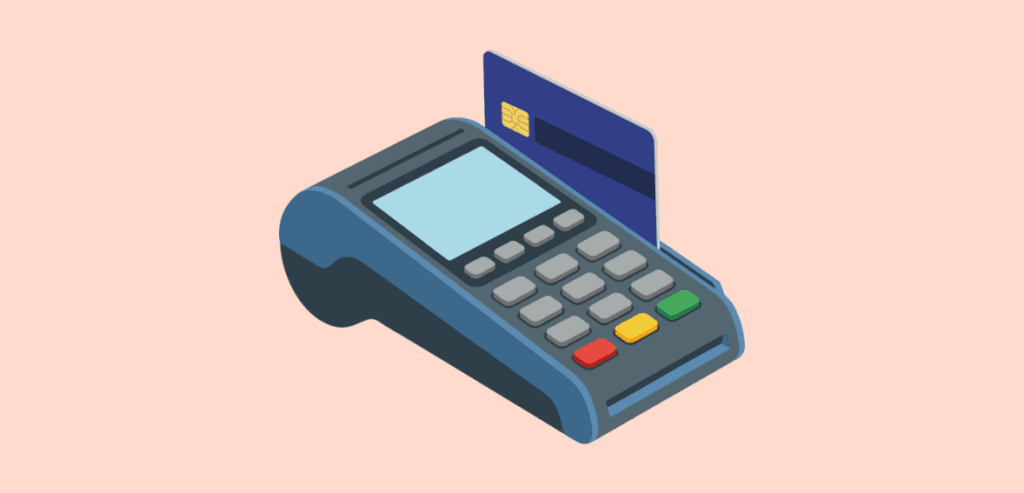
This section provides a simple explanation of the baseline transaction flow to help you understand who actually declines the payment. Before that, we want you to understand the key concepts of payment processing. There are four main parts of the payment cycle: the payment gateway, the payment network, the issuing bank, and the acquiring bank.
The payment gateway is a digital checkout software that securely transmits the customer data to the payment processor. The infrastructure that routes the transaction between the merchant’s bank and the customer’s bank is the payment processor, such as Visa or Mastercard. The issuing bank is the bank that issues the credit card to the customer, while the acquiring bank is the merchant’s bank that receives the funds once the transaction is approved.
Once a customer clicks “Pay” on the payment portal, the payment details are transmitted to the payment gateway. The gateway then sends the data through the card network to the issuing bank, which decides whether to approve or decline the transaction based on factors such as available funds, card status, and fraud risk. If the transaction is declined, the payment cycle stops. Otherwise, once the transaction is approved, the issuing bank sends back a positive response. The response travels back down the chain to the merchant. The acquiring bank then settles the funds in the merchant account.

This section will help you understand what payment declines actually are and how you can optimize your processes to prevent them. The key concepts to understand here are decline codes and authorization responses.
A decline code is a specific two-digit alphanumeric response from the bank that explains exactly why a transaction was blocked. An authorization response is the final “yes” or “no” message sent by the issuing bank after evaluating the transaction risk and available funds.
A decline is an API response indicating that the issuing bank or processor will not authorize the transfer of funds. These responses come in the form of two-digit alphanumeric codes, called decline codes. For example, code 05 means “Do Not Honor,” and code 51 means “Insufficient Funds.” Declines are not personal rejections. They are simply algorithmic safety measures.
If you misclassify these codes, it will lead to either lost revenue, such as from giving up too early, or network penalties from trying too hard. Of the dozen decline codes, only a handful account for the majority of declined transactions. Understanding the reasons and workings of these commonly encountered codes is necessary to optimize your operations to handle these declines.
Not every soft decline is fatal for the business. Most of them are temporary, highly recoverable, and worth fighting for. There are key concepts you must understand to better understand soft declines, such as insufficient funds, velocity limits, and network downtime.
Insufficient funds, or NSF, is a common decline trigger indicating that the customer’s bank account does not have enough money to cover the charges. The fraud-prevention rules that block transactions impose velocity limits: if too many purchases are attempted within a short time frame, those requests are declined.
Another roadblock to payment processing is network downtime. These are brief network outages at the bank or processor level that prevent the transaction request from being completed. Although you can optimize NSF and velocity-limit-based declines, network outages are largely out of the scope of any business owner. It is a choice you make when selecting your payment processor to minimize outages.
A soft decline is a transaction that failed due to temporary issues. The card is valid, the account is real, but circumstantial friction prevents authorization, which in turn blocks the transaction. Common triggers for soft declines include insufficient funds (NSF), processor downtime, and unusually large purchase volumes that trigger temporary fraud blocks.
However, you must not view soft declines as lost revenue. In fact, most of the soft declines are highly recoverable with the right strategy. A soft decline might be approved tomorrow without any customer intervention; therefore, it should not be treated as a hard-and-fast decision, but rather as a temporary halt to your payment.
Now, you understand what soft declines are and what common triggers lead to soft declines. It is time for you to understand hard declines. A hard decline is a permanent payment failure where the issuing bank absolutely refuses the charge, meaning the credit card cannot be used again for that purchase.
You should note that we defined soft declines as temporary halts and hard declines as permanent blocking of payment requests. There are several reasons for hard declines, such as expired cards, lost or stolen cards, and invalid CVVs. A decline indicates that the card has expired, and the customer must enter their replacement card details to proceed with any transaction. These are expired card declines. Sometimes, the customer’s credit card may get lost or stolen. The customer reports this theft to their issuing bank, which in turn blocks the card for any future transactions. In such a case, all transactions on these cards will be blocked, and the customer must enter a replacement card in the system to resume successful transactions.
In simple words, hard declines are transactions that failed due to a permanent, unresolved issue with the payment method. The issuing bank is explicitly saying not to try that card again. Common triggers for hard declines include expired cards, lost or stolen cards, and invalid CVVs. A CVV is a 3-4 digit number on the back of a credit or debit card. The purpose of the CVV is to prove physical possession of the card during online orders. It ensures that the card data is entered by the card’s legitimate owner and that the details are not stolen from the dark web.
A crucial insight for business owners like you: retrying hard declines is not just futile; it actively hurts your merchant account standing. If your account is flagged for multiple hard declines, the banking network will impose penalties. In extreme cases, banks revoke the merchant account altogether.
This section explains the difference between soft and hard declines. We will distinguish between soft and hard declines based on three main criteria: root cause, resolution path, and system action.
The root cause is the underlying reason the transaction was declined in the first place. The resolution path is the specific sequence of actions required to fix the decline and successfully capture the revenue. And lastly, the automated response your payment software should trigger, such as queuing a retry or halting future attempts.
The first difference between soft and hard declines is that their nature varies greatly. Soft declines are temporary and highly recoverable, whereas hard declines are caused by permanent, unresolvable issues with the payment system. Regarding system actions, a soft decline must be automated and safely retried using carefully designed algorithms. On the other hand, retrying hard declines is futile and must be stopped immediately.
Soft declines often require no customer intervention because the system can retry and resolve the issue in most cases. However, for a hard decline, customer intervention is necessary. For example, a transaction declined due to NSF can be retried within 7-15 days, depending on the likelihood of approval; whereas a transaction decline due to an expired card requires the customer to re-enter card data on the payment portal.
The most common decline codes for soft declines are Code 51 (NSF) and Code 05 (Do Not Honor). For hard declines, the most common are Code 04 (Pick Up Card) and Code 14 (Invalid Card Number). The strategy for handling soft and hard declines is also different. Soft declines are handled by optimizing payment processes and implementing smarter retry algorithms. Meanwhile, hard declines require customer intervention, making communication the most important aspect of handling them.
You should treat soft declines as an indication to try the payment method again, whereas hard declines mean that any further retries are in vain.
Soft declines and hard declines are not inherent business failures. In most cases, soft declines can be addressed by optimizing payment processes, whereas hard declines can be addressed through effective communication. The difference between soft declines and hard declines dictates your approach towards handling them. The first thing you do as a business owner is to shift your mindset towards these declines. Viewing them as permanent roadblocks will lead to lost revenue that could have been recovered through efficient processes.
As a business owner, you have to treat declines as a data and operations problem, rather than a cost of doing business. Improving your optimization and communication workflows can help minimize losses from soft and hard declines, respectively, and boost your organization’s long-term revenue.
Yes, most payment processors charge processing fees on all transactions, including declined payments. This is why it is important to implement smart algorithms to handle declines, as unchecked declines can lead to significant revenue leakage.
No, usually hard declines are caused by permanent and unresolved issues, such as expired cards, lost/stolen cards, or invalid CVVs. Retrying hard declines is a waste of operational cash on the processing fees of payments deemed to fail.
A decline stops the transaction before the money moves. A chargeback happens after a successful payment when the customer formally disputes the charge with their bank.
Yes, by enabling an “Account Updater” service through your payment gateway, which automatically fetches new expiration dates directly from Visa and Mastercard.
You can email your customers immediately for hard declines, but for soft declines, you must wait. You should first let your automated system retry the payment based on algorithms, and email only if it still fails.