
Posted: March 11, 2026 | Updated: March 11, 2026 at 11:30 AM
A business can be highly profitable on paper and still go bankrupt in just a matter of time due to poor liquidity. Business owners often overlook the importance of effective cash flow management. A U.S. Bank study found that 82% of companies fail due to poor cash flow management. This occurs due to factors such as lingering high operational costs.
In the modern scenario, if you are trying to manage your cash flow forecast using simple spreadsheets, then you are up for a failure. In this blog, we will teach you everything you need to learn regarding effective cash flow management. We’ll cover topics like building a forecast, accelerating invoice collection, and negotiating payment terms.
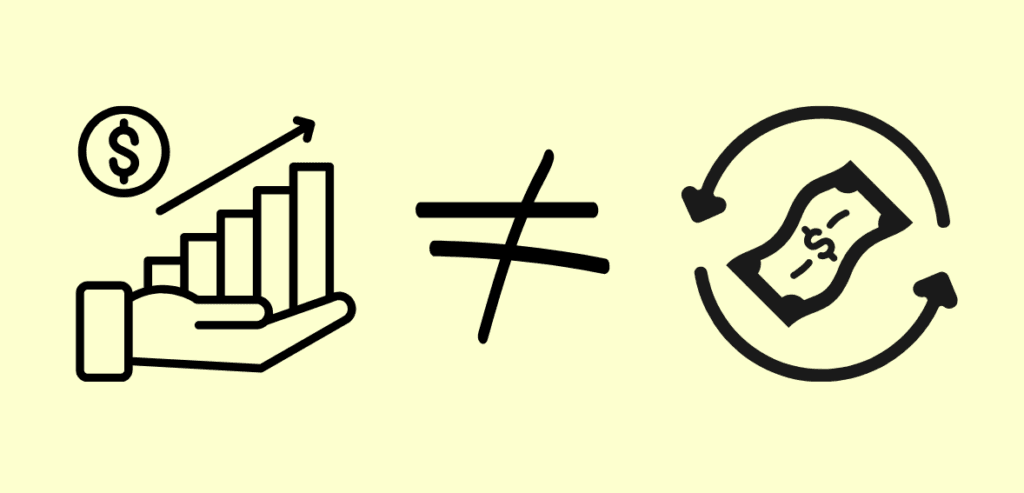
The first fundamental in cash flow management is understanding the difference between profit and cash flow. The biggest myth to bust here is that profit does not equal cash flow. They are different, despite how similar they feel.
Profit does not always equal available cash. It is just a number on your income statement that indicates whether you made money or not. But it does not guarantee that you actually have the money to operate the business in real time.
Cash flow is the actual metric. It tells you how much money you actually have sitting in your bank account to pay next week’s payroll.
Now that you are no longer under the illusion that profit equals cash flow, let us use an example to help you better understand.
Suppose a B2B service agency secures a $100,000 contract. They record the revenue, and the profit is at an all-time high. Everything looks great on paper, huge profits and all. But there is a catch: the client has 90-day payment terms, and the agency needs to pay the contractors today. The end result is a crushing cash crunch. This is why cash flow forecasting is important, and why profits do not equal cash flow.
Before we begin, you do not need to worry about the cash flow forecast. It is just a spreadsheet that tracks money going in and out of your bank account.
This section will provide you with step-by-step instructions on how you can build a predictive cash flow forecast for your business. This will help you follow through with the steps to build an effective cash flow management system to better track your cash flow.
First of all, a question might arise: why take 13 weeks specifically? This is because of three reasons:
Before we dive into creating a cash flow forecast, we need to know what “rolling” means in the rolling forecast model. It basically means we are building a dynamic or alive spreadsheet. In simple terms, we delete the oldest one each week. For example, when week 1 ends, you add a new week 14 and delete the previous one. This ensures we are always looking at exactly 13 weeks into the future.
The golden rule of cash flow: The amount is entered into the spreadsheet only when the money hits the bank, not when a sale is made.
How to build a rolling cash flow forecast?
To make a cash flow forecast, first, open up a spreadsheet and make three simple rows:
If you maintain this sheet for 13 weeks, you will be able to see exactly which week your bank account dips below zero, giving you time to make the necessary adjustments.
In 2026, relying solely on last month’s bank statements is dangerous. A common mistake many business owners make is staying overly optimistic and expecting all the pieces to fit in perfectly. But, in the real world, things don’t work perfectly; there are unforeseen delays, losses, and inflation.
You need to stress-test your forecast by deliberately entering bad numbers into the spreadsheet, so you know what it looks like in worst-case scenarios. Some examples of worst scenarios can be:
There can be so many scenarios and variables. The key point is that if your forecast is missing payroll due to any of these scenarios, your business is at risk. You need to make a cash buffer to deal with it.
Accounts Receivable (A/R) is a fancy term for “money people owe you”. If you have sent an invoice but haven’t been paid yet, then that money sits in Accounts Receivable.
Another important term here is A/R Aging Report. This is a list generated by accounting software that groups unpaid invoices by how incredibly late they are. It usually categorizes them as 30 days, 31-60 days, 61-90 days, and so on.
Letting your money sit in A/R is like handing out free 0% interest rate loans to your clients. You should pull Aging reports weekly and actively work to get your invoices paid. Here are some invoice collection tips to better manage your A/R:
If your payment process is tedious or takes too long, your payments will inevitably be delayed. Consider the psychology behind payments here. Would you prefer a single-click payment solution or a 5-click process with a manual bank transfer? The answer is obvious: you will delay the payments if there are many steps involved.
To avoid this friction, consider integrating tools such as Stripe, GoCardless, or QuickBooks Payments to enable one-click ACH or credit card payments directly from the invoice. If you optimize this step alone, a large fraction of client payments will become on time.
You should have a clear follow-up sequence for late payers. Having a systematic sequence in place that lays out the exact days overdue and the steps to address them makes it easier for you to manage clients and eliminate confusion.
For example, consider this sample 3-step follow-up sequence for a B2B service agency:
The default industry standards of payment terms are a great reference point. But blindly following industry standards without considering alternative strategies to maximize your business’s efficiency is not wise.
The most common industry standard for payment terms is Net 30 and Net 60. For small businesses, Net 30 or Net 60 essentially means they are acting as a free 0%-interest bank for their clients. This can be disastrous. The client will pay you for the services you have already rendered after 30 or 60 days, but you need money for the payroll today. Oftentimes, small businesses take out bridge loans to cover this cash-flow gap, but that is a risky move.
Instead, you should move to more strategic plans to address this problem. One rule that you can use is the “2/10 Net 30” rule. It means you send the invoice to the client and tell them they must pay within 30 days of receiving it, or they can pay within the first 10 days and receive a 2% discount. At first glance, this seems like you are compromising your profits. But, in the long term, sacrificing 2% of top-line revenue is often vastly cheaper than taking out short-term bridge loans to cover cash gaps. This is also a great way to boost your accounts receivable
Another thing you can do in parallel is ask your supplier to increase your net quota. For example, if the current arrangement with the supplier is Net 30, then you can renegotiate payment terms to Net 45, so that money stays longer in your bank account.
Working capital is the “oxygen” for your business. It is the money a business uses to fund its day-to-day operations. Apart from general tips on cash flow, invoicing, and payment terms, there are also a few smart, practical ways to free up working capital for small businesses.
Dead inventory is cash gathering dust in the basement. This is a waste of crucial resources by just keeping them unused. To address this, you should conduct quarterly audits of your inventory and then sell any dead weight, i.e., unused inventory items.
Review your tech stack. If you are paying for SaaS that is not in use, then you are burning precious money. Eliminate any subscriptions that the business does not need.
You should secure a business line of credit when your business is healthy and doesn’t need it. This may sound counterintuitive at first, but you should not wait for your house to go up in flames before digging up a well. Having a business line of credit on good days is better than scrambling when cash is zero.
Cash flow management is the most important thing for a business in 2026. Using the strategies provided in the blog, you can ensure effective cash flow for your business. Combining these strategies with modern automated software is the best defense against economic uncertainty.
You must not wait for the end of the month to start cash flow management; just start now by pulling the current data. Pull out current aging reports and start settling your overdues. In the end, remember that cash flow management is the foundation of any business’s health, and ignoring it can destroy your whole business in the blink of an eye.
In any spreadsheet, make three columns: your current cash, expected cash-in date, and expected cash-out dates. We recommend doing it for 13-weeks on a rolling basis to get a good forecast.
Net 30 and Net 60 are the most common payment terms for small businesses. However, the 2/10 rule is more strategically effective for improving cash flow.
There are a few simple steps, such as conducting inventory and subscription audits and taking out lines of credit when the business is doing well. It all comes down to liquidating dead assets, managing payment terms with your suppliers, and offering strategic discounts to clients.