Posted: February 13, 2026 | Updated: February 13, 2026 at 2:24 PM
If your day-to-day processes are still on Excel sheets or paper clips, it’s hitting your business in the following three ways, then it is time to modernize your business.
Your business’s operations get affected more when customer expectations for speed and accuracy rise. And in the era of digital payments and e-commerce, real-time is the new standard. In fact, a report published by the U.S. Chamber of Commerce concludes that 84% of small businesses with advanced tech adoption see increased sales, and 82% of businesses saw profit growth.
Below, we give you an overview of five systems that can help you streamline business operations and boost profitability in 2026.
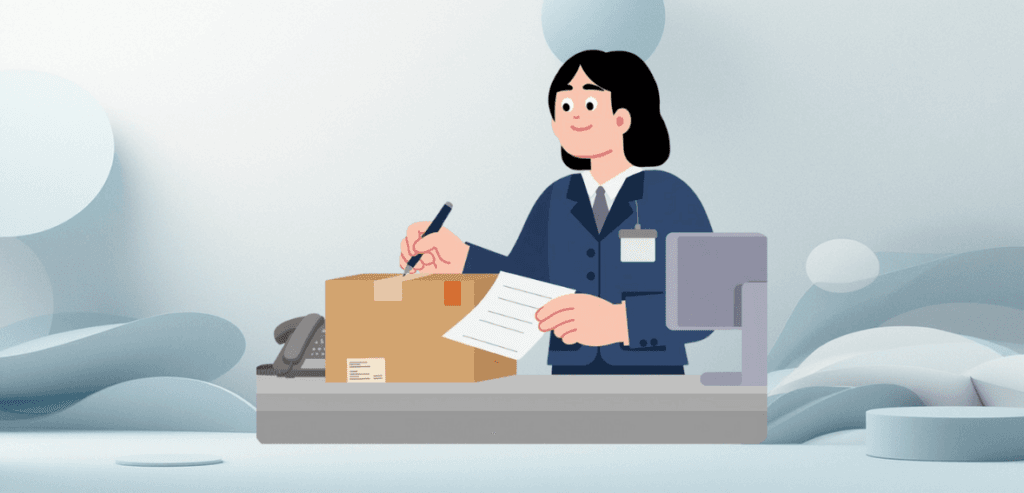
Late payments are a direct constraint to growth as it enables small businesses to spend more time chasing the money. In fact, small businesses on average owed $17.5k. An advanced accounting and invoicing system is the core to being on top of your finances. You not only get detailed reports on every aspect of the business, but you also remove manual processes and friction from “delivery” to “getting paid.” And as cloud accounting automatically syncs bank data to your system, you always know your cash flow.
The overall process is simplified with software options like QuickBooks and Xero. They can help generate an invoice and access data from anywhere. You can send invoices, track expenses, and check cash flow in-store or on-the-move on your phone. You can send an invoice via email, and your customer can pay immediately by clicking the pay-by-link option. Customers can select their preferred mode of payment, like credit/debit, ACH, and popular digital wallets, depending on setup, and that’s it. All this reduces the delays that you may have encountered otherwise.
While QuickBooks and Xero are two prominent options, there are still many other great options out there that may better align with your business. When selecting the right cloud accounting and software options, focus on features that remove steps from your workflow:

Business runs on relations, and a customer relationship management (CRM) system helps manage those relations. All the customer interactions are documented in CRM, even when you are busy. Things like who the person is, what they asked for, what you promised, what happened, and what the next step is – are all reported in CRM.
CRM often pays back quickly:
In fact, after adopting CRM, an average business reports a return of $3.10 for every $1 spent on CRM. Implementation quality and adoption by the business do matter in this. A good CRM implementation is when it becomes the default place where all the sales and services happen:
More often, CRM fails when it is worked on like a database, rather than a system. Pick a CRM that supports the actions you do daily, like logging calls/emails, creating tasks, moving deals, and make it the system of record for your pipeline.
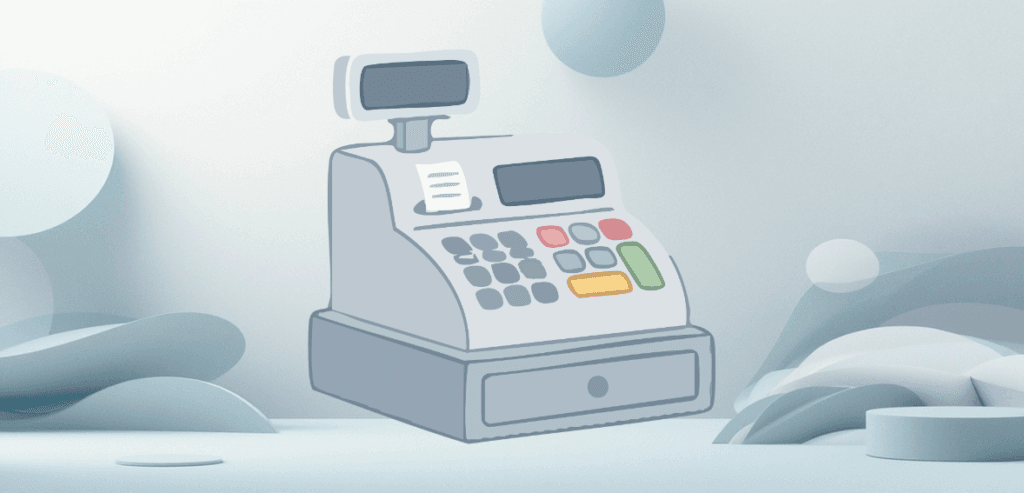
If you sell products, specifically manage physical stock, then you know inventory management is key to business profitability. Overstocking products in low demand ties up your cash until the inventory is sold, and stock-outs lose sales (and customers’ trust). Integrated point-of-sale systems function not only as cash registers but also as tools for managing operations.
An integrated POS connects these together:
Inventory can be tracked and adjusted in the admin panel of the POS. It helps you avoid selling more stock than you have and helps identify reorder timing or excess stock. It also unifies online and offline retail stores, including inventory management and order management.
You should moderize the the “truth layer” of inventory first:

Work delivery is as important as payments system. Without a system, you can expect delays, miscommunication, and “Who’s doing what?. ” It’s chaos, which leads to more rework, missed deadlines, and manual intervention. It’s disastrous when you have multiple projects, clients, or contractors moving at once.
Coordination problems can cost businesses dearly and, most importantly, waste resources in the process. A study finds that knowledge workers spend about 60% of their time on work about work rather than on skilled work.
Management tools make work visible:
You don’t have to sign up for multiple tools; prevent tool sprawl by picking:
Automation is the last key to modernizing your business in 2026. When done right, it gives you compounding gains over time. You can start with the basics by automating repetitive processes in your workflow.
Where “basic AI” makes sense for small businesses, AI should be treated as an add-on that reduces response time and admin overhead, with human review where needed.
Customer-facing conversational AI is moving quickly into the mainstream. 85% of customer service leaders plan to explore or pilot customer-facing conversational GenAI solutions in 2025. In customer care specifically, applying generative AI could raise productivity in customer care functions by a sizable share of current function costs (estimated range 30-45%). This is why small businesses are starting with support triage, drafting replies, and knowledge-base retrieval.
To avoid AI-driven mistakes: limit AI to (1) drafts, (2) summaries, (3) routing/classification, and (4) standardized answers sourced from your approved policies and knowledge base. Then sample and review outputs regularly.
Modernization fails when it becomes a giant “rip-and-replace” project. It succeeds when you sequence upgrades in the order your business feels them: cash flow → customer pipeline → fulfillment/delivery → team execution → automation.
Modernization in 2026 is less about buying “new software” and more about building a connected operating system for your business—one that captures money faster, protects customer relationships, reduces fulfillment mistakes, and cuts coordination overhead so you can focus on growth.
With all the extra effort you will be putting into pushing your business to streamline processes from delivery to getting paid, you could be doing even better. Older systems often hide all the inefficiencies that you are overlooking. You could be losing out on sales because follow-ups are pending, or your staff may be spending an extra 5 hours on bookkeeping that takes 1 hour if it were automated. Modernizing business is about reclaiming time and plugging money leaks with the right tools and systems.
Most software today is user-friendly, and companies also offer tutorials and live support. So you don’t have to go anywhere or contact anyone but the software provider, and you’ll be all set. You can add one system to start with and move from there.
Some tools do come with monthly fees, but consider these expenses as an investment in efficiency. And some are quite affordable too. Say, a good cloud accounting software costs $20-$40 per month but saves 10 hours of manual work – it pays for itself. Plus, there are free versions of many tools that you can start
Start where you see the biggest bottlenecks. If managing sales leads or customer follow-up is not good, a CRM might be a priority. If cash flow is what you think requires immediate attention, then accounting/invoicing first.