
Posted: January 14, 2026 | Updated: January 15, 2026 at 5:22 PM
Worldline, a French payment processing giant, is slimming down its business portfolio as part of a new “focus” strategy. In December 2025, Worldline announced plans to divest its PaymentIQ platform, a payment orchestration gateway, to Sweden’s Incore Invest for roughly €160 million.
PaymentIQ helps online merchants connect to numerous payment providers through a single integration and has been especially popular in the digital gaming and iGaming sectors as a multi-acquirer payment gateway.
PaymentIQ is a payment orchestration platform that allows merchants to route transactions through hundreds of different payment providers via a single API connection. It serves as a hub that connects businesses with over 260 banks, acquirers, and alternative payment methods worldwide. This enables online companies to offer more flexible checkout options and higher payment success rates by automatically routing payments to the best provider based on factors such as cost and likelihood of success.
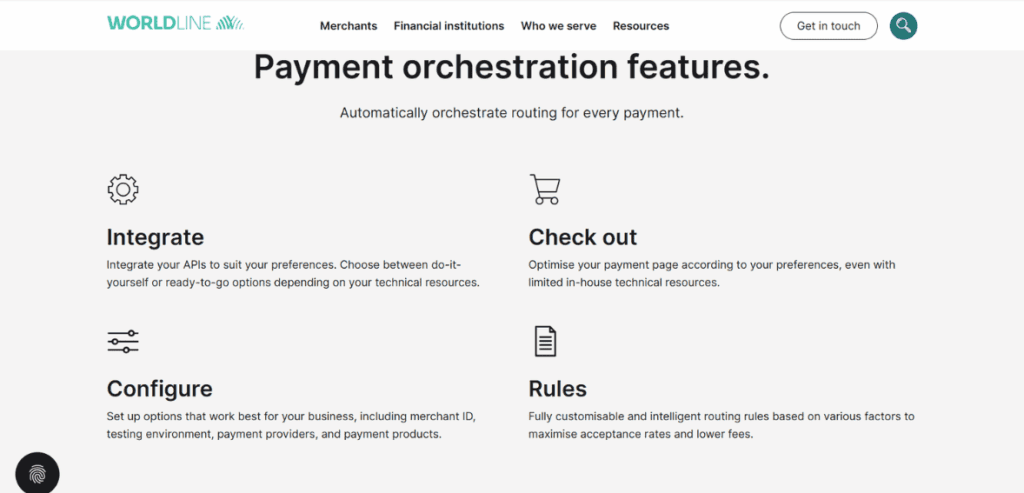
Image source
PaymentIQ can auto-route transactions, provide built-in fraud screening, and support a wide array of payment methods (from credit cards and e-wallets to bank transfers and crypto) – all through a single integration.
Originally built by a Swedish firm called DevCode, PaymentIQ was designed with the needs of iGaming and online gaming operators in mind. It became known for handling complex payment flows for online casinos, sports betting platforms, and gaming marketplaces, where merchants often need to manage dozens of payment options across multiple countries. The platform was acquired by Bambora (a Nordic payments company) in 2017, then absorbed into Ingenico and, through subsequent mergers, into Worldline.
In Worldline’s portfolio, PaymentIQ functioned as a niche SaaS product enabling international merchants (especially in high-growth digital sectors) to expand payment acceptance without heavy IT development. Its value proposition was clear: simplify payments for merchants by offering “one-stop” connectivity to global payment networks, thereby boosting conversion and efficiency in online sales.
Despite its strong technology and a growing user base, PaymentIQ remained a relatively small piece of Worldline’s sprawling business. It generates about €50 million in annual revenue (2024), with an impressive €40 million in EBITDA and €30 million in free cash flow. This makes it a profitable unit – but in context, Worldline’s overall revenue was €4.6 billion in 2024, so PaymentIQ represents just around 1% of the total.
The service also operates largely outside Worldline’s core geographic and client focus (which is mainly mainstream European retailers and banks). These factors set the stage for Worldline to consider divesting PaymentIQ under its new strategic plan.

In 2025, Worldline’s leadership (under new CEO Pierre-Antoine Vacheron) launched a major turnaround initiative called “North Star 2030.” This strategy is a roadmap to refocus the company on its core payment services and to simplify operations after years of expansion. Worldline had grown into a broad entity through numerous acquisitions (including Ingenico in 2020 and various bank-owned payment processors), leaving it with a complex product portfolio and regional businesses.
The North Star plan aims to streamline this “Frankenstein’s monster” of acquired systems into a more unified, efficient company. In practice, that means concentrating on businesses that align with Worldline’s strengths and have synergies with each other – primarily, payment processing and merchant acquiring in Europe – while exiting peripheral or non-core activities.
Worldline explicitly framed the PaymentIQ sale in this context. The company stated that divesting PaymentIQ is a step in its strategic refocus on core European payment activities and part of the simplification journey under the North Star transformation plan. By “simplification,” Worldline means reducing complexity within its organization so that management can focus on core payments offerings (such as card acquiring for merchants, online payments, and processing for banks) without the distraction of running unrelated units.
PaymentIQ, while successful, does not strongly “generate synergies” with its other segments and sits outside the group’s revised risk and strategy framework. PaymentIQ’s business – serving global online merchants and especially gaming companies – is somewhat tangential to Worldline’s main mission of being the European partner of choice for merchants and financial institutions. North Star 2030 calls for Worldline to slim down and double down: shed non-core businesses and double down on its primary payments franchise.
Another facet of North Star is improving Worldline’s financial resilience and investor confidence. After some weaker performance in recent years (and even a compliance controversy in 2025), the firm is in turnaround mode. Management has been cutting costs, tightening risk controls, and raising fresh capital to strengthen the balance sheet.
The PaymentIQ divestment neatly fits into this playbook: it frees up capital and frees Worldline from a niche venture that, while profitable, might require additional investment to scale globally – resources better used in Worldline’s core areas. In fact, Worldline launched a €500 million equity raise alongside these divestitures, bolstered by anchor investments from major French banks, to fund its transformation and reduce debt.

Given that backdrop, it becomes clear why Worldline chose to sell PaymentIQ now. PaymentIQ is a strong product, but not core to Worldline’s integrated payments ecosystem. Worldline’s core business centers on payment acquiring (processing card payments for merchants), payment processing for banks, and related value-added services, predominantly in Europe. PaymentIQ, by contrast, is a vendor-agnostic gateway that integrates with other payment processors (including Worldline’s competitors) to meet merchants’ needs.
Its specialization in online gaming/gambling payments also means higher regulatory complexity and risk – something Worldline has become more sensitive about managing under its “reframed risk framework”. By exiting PaymentIQ, Worldline can avoid those distractions and risks and focus management attention on products and regions where it has a clear competitive edge.
Another reason is portfolio streamlining. Through acquisitions over the years, Worldline has amassed businesses ranging from payment terminal manufacturing to e-ticketing services. The North Star strategy identified several non-core pieces; PaymentIQ was one of the last to be carved out. Offloading it simplifies Worldline’s organization: fewer product lines to oversee, a leaner technology stack to integrate, and a clearer identity as a pure-play payments provider. Worldline stated that the transaction will streamline operations, improve resource utilization, and enable management to focus more closely on its core payment activities.
The proceeds (cash) will strengthen the group’s financial profile and allow capital to be redeployed toward core activities – for example, upgrading their payments platforms or funding growth in key European markets.
Financially, the timing was favorable. PaymentIQ has been growing quickly (its revenue jumped 36% in 2024), but it’s still small relative to Worldline. Selling it for ~€160 million in cash provides an immediate cash boost. To put it in perspective, €160m is about 4 times PaymentIQ’s annual EBITDA – a reasonable valuation for a niche B2B software unit. Worldline likely judged that this cash could earn a better return if invested in its core business or used to pay down debt, rather than holding onto a 50m-revenue adjunct.
Plus, since PaymentIQ’s contribution was under 2% of earnings, divesting it doesn’t hurt Worldline’s overall earnings power significantly (and Worldline can potentially still partner with PaymentIQ as an independent vendor if needed). The company has projected only a ~€50m revenue impact from removing PaymentIQ, which they believe will be offset by growth and cost savings elsewhere.
The PaymentIQ sale is part of a series of divestments Worldline has undertaken as part of its overhaul. In about six months, Worldline has divested four business units, raising over half a billion euros in cash proceeds. These include:
Total expected proceeds from these divestments are in the range of €510–560 million, which will significantly bolster Worldline’s balance sheet. In fact, the first three sales (MTS, North America, EDM) were reported to generate about €350–400m, and the PaymentIQ deal adds another ~€160m.
This influx of cash, combined with the €500m in new equity that Worldline is raising, provides the company with ample financial flexibility to weather current challenges and invest in its core businesses. Worldline can use these funds to reduce debt, fund its technology integration (converging platforms), and pursue targeted growth projects in its mainline merchant services division.
Equally important, by divesting these units, Worldline has reduced its cost base and future capital expenditure needs. For example, the MTS division and EDM services likely require ongoing R&D or regulatory compliance that fall outside Worldline’s payments expertise. Removing them improves Worldline’s profitability metrics and simplifies its organizational structure.
All of this is aimed at helping Worldline achieve the turnaround targets under North Star 2030, which include restoring organic revenue growth (~4% annually by 2027+) and boosting free cash flow to the hundreds of millions. The company’s management specifically highlighted that these divestitures enhance strategic flexibility and allow reallocation of capital to core activities, exactly what one would expect in a focus strategy.
With non-core pieces divested, Worldline is pivoting back to its core mission: being Europe’s leading payment partner for merchants and banks. The company’s vision is to become the “European partner of choice” for payment services. In practical terms, this means Worldline will focus on its merchant-acquiring business across Europe, its online payment gateways for retailers, and its processing services for financial institutions (including issuing and ATM services).
Worldline has a strong footprint in countries such as France, Germany, Belgium, the Nordics, and beyond, serving millions of merchants, from small businesses to large enterprises. By focusing on these markets, Worldline can leverage its local expertise, wide acceptance network, and scale advantages – traits that are crucial in the highly competitive payments industry.
The divestment of North American operations was a clear signal of this geographic focus. Competing in the U.S. against entrenched local processors was an uphill battle; instead, Worldline chose to double down on Europe, where it has home-field advantage. Likewise, selling a specialized global platform like PaymentIQ indicates that Worldline will focus on its own integrated payment platforms rather than third-party orchestration tools.
Worldline is investing in unifying its myriad systems (including those from the Ingenico acquisition and others) into a single, modern infrastructure that can handle in-store, online, and cross-border payments seamlessly. This should help Worldline innovate faster (for instance, launching new payment methods or AI-driven fraud tools across its network) and provide a more consistent experience to merchants. Essentially, a more focused Worldline can become more agile and customer-centric, unburdened by sidelines.
Focusing on core payments also positions Worldline to better compete with specialized rivals such as Adyen, Stripe, and Nexi. These competitors often tout the simplicity and singular focus of their platforms. Worldline, through North Star initiatives, is aiming to achieve a similar level of cohesion by consolidating its APIs and services into a single set across its offerings. By 2030, Worldline envisions a unified architecture supporting everything from point-of-sale transactions to e-commerce to account-to-account payments on a common backbone.
A streamlined product suite and organization will likely improve Worldline’s ability to innovate and respond to market needs (e.g., by supporting instant payments or digital wallets EU-wide), thereby strengthening its competitive position in Europe. The sale of non-core units, such as PaymentIQ, is a means to that end, allowing Worldline’s management to focus squarely on its European payments empire.
Worldline’s portfolio pruning is part of a broader trend in the payments and fintech industry: big players are refocusing on their core strengths, while investors are acquiring the carved-out niche businesses. In recent years, several financial technology conglomerates have realized that “bigger” isn’t always “better” when it means operating across too many disparate areas. For example, in 2023, FIS (a U.S.-based fintech giant) chose to spin off and sell a majority stake in its merchant payments arm, Worldpay, to a private equity firm, effectively reversing a prior expansion and refocusing on its core banking software business.
Similarly, Fiserv offloaded non-core units (like a loan servicing segment) to concentrate on payments and fintech solutions for banks. These moves echo a common theme: large fintech companies streamline operations to improve efficiency, address investor concerns, and zero in on markets where they have a competitive edge.
Worldline’s strategy fits this narrative. After a decade of aggressive acquisitions (which made it a top-three payment processor in Europe), the company hit growing pains – from integration challenges to a slumping stock price – prompting a “back to basics” approach. By selling off side businesses, Worldline can avoid being a jack-of-all-trades and instead strive to be the master of its core domain (payments).
This trend acknowledges that the payments sector is rapidly evolving; focused specialists often outperform conglomerates that are too spread thin. Investors have rewarded companies that demonstrate a clear focus and penalized those with complex, sprawling structures.
On the flip side of these divestitures, there is another trend: specialized investment firms eagerly buying up these carved-out units. In PaymentIQ’s case, Incore Invest – a Swedish investment firm – saw an opportunity to acquire a high-growth platform and nurture it as an independent business.
We’ve seen private equity and niche investors do similarly in fintech: for instance, the private equity firm Apollo took over Worldline’s former payment terminals division (Ingenico hardware) to run it as a standalone company, and GTCR (another PE firm) acquired FIS’s Worldpay with plans to invest in its growth. These investors often believe they can unlock value in niche platforms by giving them dedicated focus and funding, away from the constraints of a larger parent company.
For PaymentIQ, being under Incore Invest could mean more tailored attention and resources to expand its orchestration technology. Incore has already indicated it will carve out PaymentIQ (legally known as CoreOrchestration AB) into a standalone business and work closely with the team to strengthen product packaging, sharpen execution, and capture additional growth opportunities.
As a pure-play payment orchestration provider, PaymentIQ might grow faster or serve a broader range of partners than it could within Worldline. The payment orchestration market itself is sizable (estimated at around $3 billion and growing) and highly dynamic. We may see PaymentIQ target not just gaming merchants but any online merchant needing to simplify multi-provider payments – competing with other orchestration specialists on the global stage. Incore’s acquisition reflects confidence that focused growth strategies can unlock the full potential of such niche platforms, which might have been undervalued inside a conglomerate.
Worldline’s decision to sell PaymentIQ for €160 million signals a clear strategic pivot: simplify the group and double down on core payments. By divesting this orchestration unit (and other non-core assets), Worldline is “trimming the fat” to focus on its North Star, delivering payment services at scale across Europe and adjacent markets. The deal strengthens financial flexibility and removes a business that, while strong, sat outside its primary scope, leaving a leaner Worldline better positioned to invest in unified platforms, market expansion, and innovation in merchant acquiring and processing.
For the broader fintech industry, the move reflects a wider trend of major players streamlining to stay competitive as agility and specialization increasingly beat sheer size. PaymentIQ’s carve-out also highlights a healthy investor ecosystem willing to back niche platforms as standalone specialists. Under Incore, PaymentIQ can pursue its mission of connecting merchants to multiple payment providers, while Worldline’s sharper focus could improve execution and rebuild investor confidence, making this a win-win example of fintech recalibrating toward a clearer strategic fit.
Worldline is simplifying its portfolio under its “North Star 2030” focus strategy. PaymentIQ is profitable, but non-core and has limited synergies with Worldline’s main European acquiring and processing business.
PaymentIQ is a payment orchestration platform that connects merchants with hundreds of payment providers through a single API. It helps route transactions smartly to improve success rates, reduce costs, and expand payment options globally.
Worldline’s core is a large-scale payments infrastructure for mainstream European merchants and banks. PaymentIQ is a vendor-agnostic gateway with a strong presence in iGaming and is outside Worldline’s main strategic and risk focus.
The ~€160 million sale adds financial flexibility and reduces operational complexity. It also frees management time and capital to invest in unified platforms, European growth, and core product innovation.
PaymentIQ is expected to operate as a focused, standalone specialist with dedicated ownership. Under Incore, it can scale faster, refine its product packaging, and expand beyond its strong gaming base into broader e-commerce use cases.