

Posted: January 19, 2026 | Updated: January 20, 2026 at 12:29 PM
In recent years, embedded finance – the integration of financial services into non‐financial software – has exploded. Platforms that serve small businesses now routinely bake in loans, payments, banking, and insurance tools. This trend is putting SMBs at the forefront of the financial landscape by giving merchants instant access to credit as part of their day-to-day operations.
Small merchants prefer one-stop solutions rather than juggling banks, money apps, and spreadsheets. In fact, a study finds that 88% of U.S. small businesses report regular cash flow disruptions. With so many Main Street firms living hand-to-mouth, offering loans directly in the software they already use is a powerful idea.
Many small merchants could benefit from built-in financing offers like the NMI Business Capital, right in the software they use to manage sales and payments.
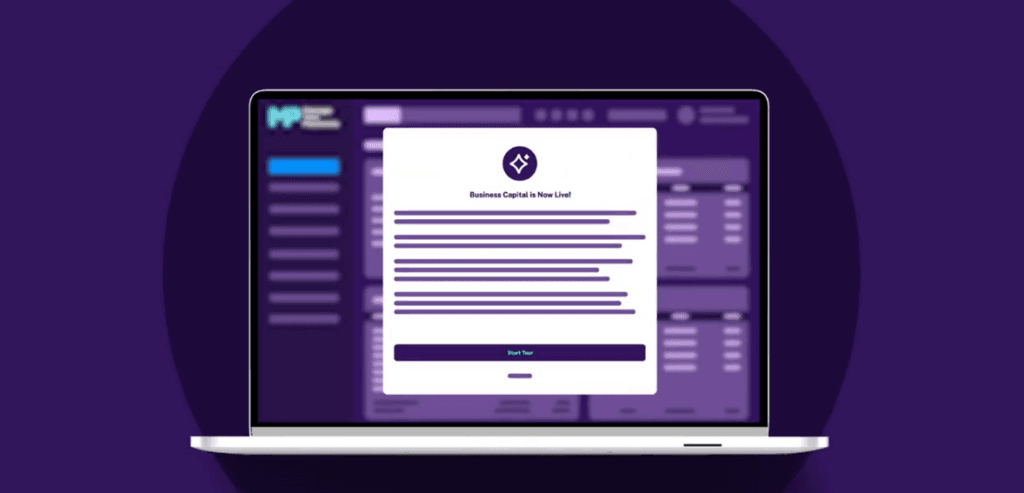
Image source
NMI – a leading provider of embedded payments infrastructure (often white‑labelled by banks, ISOs, and software platforms) – has now stepped into lending with its NMI Business Capital program. Launched in late 2025, Business Capital lets NMI’s partners (banks, ISOs, SaaS providers, payment facilitators, etc.) embed pre‑approved working‑capital loans into their merchant portals.
A merchant logging into their NMI-powered dashboard will see a simple loan offer based on their recent sales. The key promise is speed and simplicity, with no lengthy applications or credit checks to bog down the process.
By integrating funding into the existing payments portal, NMI aims to let merchants close their financing gap without switching systems. As NMI Chief Growth Officer Peter Galvin explains, with 88% of small businesses reporting ongoing cash flow disruptions, access to funding is more important than ever. Embedded funding within the platforms merchants already use removes much of the friction and administrative burden associated with traditional lending. Instead of forcing a merchant to leave the platform and hunt for a bank loan (which could take weeks), Business Capital surfaces an offer automatically as part of their daily routine. The merchant clicks “Accept,” and funds arrive in 1–2 business days.
NMI’s approach means partners do almost no extra work or take on any additional risk. The lending engine – powered by fintech partner Parafin and backed by Celtic Bank – handles underwriting, compliance, and servicing. The partner (whether it’s an ISO, a bank, or a SaaS provider) simply toggles the feature on in their NMI portal.
The platform even provides analytics on adoption and loan performance. In return, partners earn a share of each loan’s fixed fee – creating a new revenue stream without added cost or complexity.
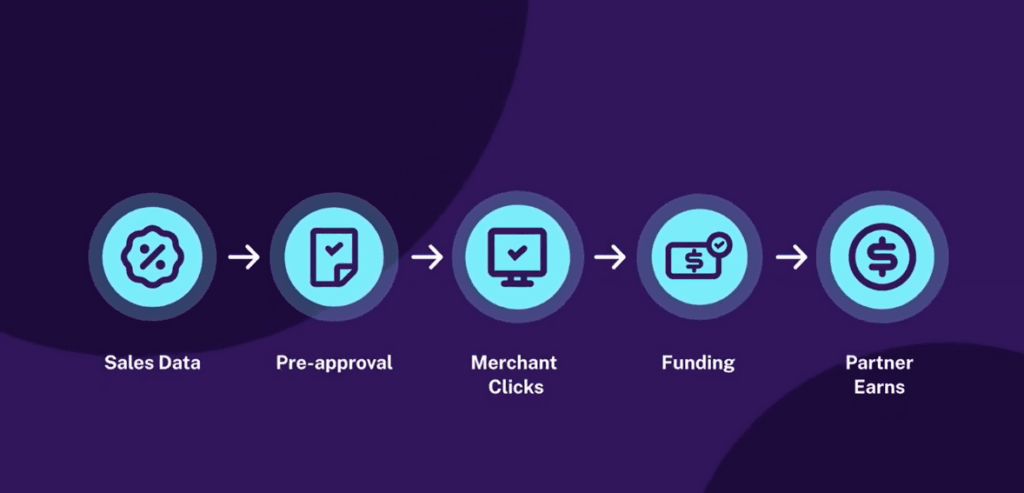
Image source
NMI Business Capital is built directly into the NMI Merchant Portal, the interface merchants already use to review transactions, settlements, and reports. When the feature is active, the portal runs a brief eligibility check on a scheduled basis or whenever requested. If a merchant qualifies, a tailored funding offer appears, such as “Borrow up to $10,000 today.” The offer is powered by Parafin’s lending platform, which reviews historical processing data and risk signals without pulling personal credit. The merchant can accept or decline with a single click. After acceptance, funds are usually deposited into the merchant’s bank account within one to two business days.
Repayment is automatic and straightforward. Each day, a fixed percentage of the merchant’s card sales is applied to the outstanding balance, similar to Square’s financing programs. Because payments adjust with sales volume, merchants repay more during strong periods and less during slower ones, which helps manage cash flow.
Pricing is simple and transparent. There is a single upfront fee based on the loan amount, with no compounding interest, late fees, or added charges. The total repayment amount is set at the start, while daily payments vary based on revenue.
For partners, a key advantage is that all loans are issued by Celtic Bank. This keeps the product fully regulated and FDIC-backed without requiring the partner to act as a lender or manage credit decisions. NMI handles the on-platform experience, while Parafin operates behind the scenes. To partners, it functions as another software feature; to merchants, it feels like funding that is part of their existing payment system.

These features reflect best practices from earlier embedded lending programs. In fact, platforms like Stripe, Square (Block), Shopify, Toast, etc. have long used exactly this model: they offer merchant cash advances or term loans repaid via daily sales.
The infrastructure is proven – payment processors see the sales, and they simply divert a percentage to recoup the advance. NMI is now giving that capability to any ISO or software provider connected to its platform.

For merchants, the biggest advantage is access and speed. Many small businesses have been reluctant or slow to seek bank financing – often because of paperwork, long approval times, and inflexible terms. Embedding a loan offer in their day‑to‑day system changes the game. A merchant doesn’t have to stop operations to fill out forms; instead, a small business owner can tap a button during end-of-day reconciliation and see an instant decision.
This “one-click capital” approach happens right when cash flow is being reviewed – a moment when merchants are most open to funding. And because the repayment flexes with sales, businesses are not overburdened during slow periods.
Plus, the transparent fee structure avoids many pitfalls of payday-style loans. Merchants know upfront exactly how much they will pay (the fee), and there are no surprises. The absence of compounding interest and late penalties further protects business owners from runaway debt in case of delays. In sum, Business Capital aims to keep financing fast, fair, and frictionless for the end customer.
For platform partners (ISOs, PayFacs, vertical SaaS companies, etc.), Business Capital is a value-add with little downside. It deepens the merchant relationship: a platform that provides both payments and capital becomes harder to leave.
The revenue comes from sharing the fixed fee on each loan. Unlike card processing fees (which largely cover costs), loan fees are nearly pure profit for the partner, boosting margins. One industry analyst even points out that integrated merchant financing can triple pay‑fac gross margins while cutting churn – if done seamlessly.
Crucially, partners incur no lending risk. All underwriting and compliance is outsourced to Parafin/Celtic. NMI’s platform merely channels the loan – it never holds the debt. The partner doesn’t need to expand its balance sheet or navigate banking regulations. This “no-lift” model is an attractive alternative to traditional co-branded loans, where an ISO might need to conduct manual reviews or assume liability. With Business Capital, the platform’s IT team integrates once, and lending is done.
Embedded lending meets merchants where they need it. According to a survey, 88% of U.S. SMBs regularly experience cash flow disruptions. Having financing offers built into the payments interface helps stabilize those swings.
NMI’s entry into embedded lending is part of a larger industry shift. Major payment companies have been layering credit onto their platforms for years. Square (Block) pioneered this in 2014 with Square Loans, and has since advanced tens of billions in small-business funding. Shopify Capital (launched in 2016) likewise funds merchant advances using its payment and e-commerce data. Stripe Capital (for Stripe’s sellers) and PayPal Working Capital are other examples. These programs all share the same DNA: underwriting based on transaction data and repayment via revenue share.
What’s notable is that embedded lending is still in early innings. The addressable market for embedded lending could be $48 billion in annual revenue, of which only a small fraction has been captured so far. SMBs themselves want it – nearly 70% say they’d prefer their software or payments provider to offer loans. Yet historically, many banks and fintechs have failed to deliver fast, seamless products. NMI’s new program reflects the recognition that the future of SMB finance lives inside the apps they already trust.
By partnering with Parafin, NMI is effectively turning its entire reseller network into a lending channel. Those merchants might now get a loan offer while reviewing yesterday’s sales, just as easily as they could see yesterday’s deposits.
In the short term, NMI’s Business Capital may primarily benefit its existing customers (ISOs and SaaS vendors who already use NMI). But the long-term implication is broader: it signals that payment gateways are no longer just pass-through utilities. They’re becoming full-featured commerce platforms. And by embedding lending, they’re offering SMBs a one-stop shop for both selling and growing.
NMI’s Business Capital underscores how pervasive embedded finance has become in the SMB ecosystem. By letting merchants get quick loans with no extra forms or credit checks, directly in the same portal where they view sales, NMI aims to alleviate the very cash-flow worries that plague small businesses.
At the same time, it lets payment software providers unlock a new revenue source, without taking on lending headaches. This win‑win comes at a time when 88% of merchants could use it most. In short, funding is finally being woven into the commerce fabric, meeting merchants exactly when and where they need it.
NMI Business Capital is an embedded financing feature within the NMI platform that enables payment providers to offer pre-approved working capital to their merchants. Offers are based on processing history and appear directly in the merchant dashboard.
Merchants accept a pre-approved offer online and typically receive funds within a day. Repayment occurs automatically as a small percentage of daily card sales until a fixed total is repaid.
NMI does not lend the money itself. The funding and credit risk are handled by a lending partner, while NMI enables the experience and repayment through its payments platform.
It provides fast access to cash with minimal paperwork and flexible repayment tied to sales volume. This makes it easier for merchants to manage cash flow without traditional loan hurdles.
The structure is similar, but NMI makes this model available to many payment providers and ISVs. It allows them to offer Square- or Stripe-style funding without building their own lending programs.
