Posted: December 30, 2025 | Updated: January 21, 2026 at 12:05 PM
Tired of credit card fees eating into your margins? You’re not alone – and you have options. This guide breaks down everything merchants should know about surcharging credit card payments or offering cash discounts as of 2026.
We’ll clarify where surcharges are legal and the ground rules set by Visa/Mastercard if you do add a fee. Importantly, we’ll also explain the difference between adding a surcharge and giving a cash discount.
A credit card surcharge is an extra fee a merchant adds to a customer’s bill when they pay by credit card. The purpose is to offset the merchant’s credit card processing fees. For example, if your processing fee on a $100 sale is about 3%, you might add a 3% surcharge so the customer pays $103, covering the $3 fee you’d otherwise absorb. Surcharging shifts the cost of accepting credit cards back to the customer. This practice became allowed in the U.S. after a 2013 court settlement, and by 2026, it is legal in the majority of states – but not everywhere.
In most U.S. states, it is legal for merchants to add a credit card surcharge, but a few states still ban the practice outright. Notably, Connecticut, Massachusetts, Maine, and Puerto Rico prohibit credit card surcharges, meaning you cannot add a surcharge in those states. (Cash discounts, discussed later, remain legal there.) A handful of other jurisdictions have recently tightened surcharge rules as well. For example, California is a high-risk state for add-on checkout fees due to its price transparency rules (SB 478) and prior surcharge restrictions. Many merchants avoid traditional surcharges and instead use dual-pricing or cash-discounting models to remain compliant with card network and state requirements.
A cash discount is essentially the mirror image of a surcharge. Here, instead of adding a fee on top of the price for credit card users, you give a discount or reduced price to customers who pay with cash (or check, debit card, or other non-credit methods). The outcome can be very similar – card-payers end up paying more than cash-payers – but legally and perceptually, cash discounting is treated differently. Cash discounts are legal in all 50 states and have been encouraged by laws and card network policies for decades.
Under a cash discount program, a merchant might mark all prices to account for the typical cost of credit card processing, then offer, say, a 3% discount at the register if the customer pays with cash (or an equivalent method that doesn’t incur heavy fees). So, if an item is listed at $100 (the price when paying by card), a customer paying cash might get 3% off and only pay $97.
Either way, the merchant receives roughly $97 net – the difference is whether that extra $3 goes to the processor as a fee (in a card transaction) or is forgiven as a discount to the cash-paying customer.

The big advantage is that cash discounts are explicitly allowed everywhere – even in states that ban surcharges, you are permitted to offer a discount for cash payments. There are also fewer bureaucratic hoops. You don’t have to register with card networks or worry about strict caps, since you’re simply giving a discount off the regular price. From a customer-relations perspective, a discount can feel like a reward (for using cash) rather than a penalty for using a card.
This positive framing can make cash discount programs more palatable to customers who might otherwise complain about fees.
To run a cash discount program correctly (and avoid any perception that you’re just sneaking in a surcharge by another name), you need to advertise and handle your pricing appropriately. The key is transparency in pricing:
One compliant approach is to post your prices as the credit card price, and then advertise a discount (e.g., “X% off”) for paying with cash. For instance, your menus, stickers, or price tags list the higher price (which covers card fees), and you subtract the discount at the point of sale for cash transactions.
Alternatively, you can list two prices for each item – a “cash price” and a “credit price”- side by side, so customers can see that paying with a card costs more. Either method is acceptable. What you should not do is advertise one (lower) price, then simply add a fee at checkout for credit cards without prior indication – that starts to look like an undisclosed surcharge and can violate truth-in-pricing regulations. Make sure the customer is aware of the price difference from the start.
Just as with surcharges, it’s wise to post signage or notices informing customers that “We offer a X% discount for cash payments” or similar wording. This sets expectations. The receipt for a cash sale can show the discount as a line item (e.g., “Cash Discount -$3.00”) so the customer sees they saved money by paying cash.
For a card sale, since you’ve either listed the higher price or shown both prices upfront, the receipt will just show the full price (no extra fee line needed, because in theory the listed price was the card price). The overarching goal is that the customer doesn’t feel tricked – the pricing difference between cash and card should be transparent and presented as a discount, not as a last-minute fee.
Unlike surcharges, you typically do not need to notify card networks when implementing true cash discounts. All the major card brands allow merchants to offer discounts for cash or other payment methods as long as it’s clearly a discount, not a surcharge.
There’s also no hard percentage cap on cash discounts (you’re free to set any discount amount), though most merchants will keep it in the same ballpark as typical card fees (e.g. 3-4%) to preserve their margins. Keep in mind that extremely large “cash discounts” could raise customer suspicion or regulatory interest if they start to look punitive; a reasonable discount that reflects avoided fees is the safest approach..
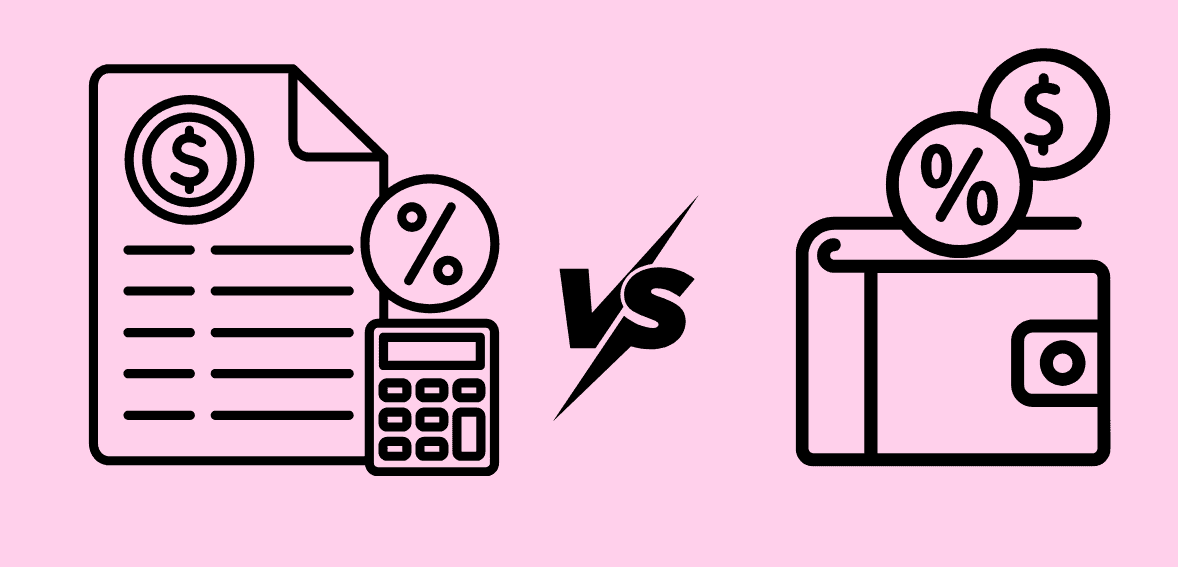
It’s important to distinguish between surcharges and cash discounts, as the two strategies have different rules and implications. Below is a quick comparison of key differences:
| Feature | Credit Card Surcharging | Cash Discounting |
| Legality | Allowed in most states; banned in a few (CT, MA, etc.) | Legal in all 50 states (no state bans) |
| Card Network Rules | Strict rules: capped by network + your actual cost (Visa 3%), acquirer notification required, and disclosure/receipt rules. | Minimal network restrictions (no cap or notice required) |
| Applies To | Credit card transactions only (no surcharges on debit/prepaid) | All payment types can receive a discount (cash, debit, check, etc.) |
| How It’s Applied | Added as an extra fee on top of the price at checkout | Given as a discount or price reduction off the listed price |
| Receipt Display | Shown as a separate fee line item on the receipt | All payment types are eligible for a discount (cash, debit, check, etc.). |
| Customer Perception | Often viewed as a penalty or “extra charge” on the purchase | Often viewed positively as a “savings” for paying by cash |
| Compliance Burden | High – must comply with state laws + card rules (signage, fee caps, notifications) | Low/Moderate – generally simpler, just ensure honest advertising of prices |
Both approaches can achieve a similar result (offsetting the merchant’s processing fees), but they do so in opposite ways. Surcharging explicitly passes the cost to credit card users as an added fee, which requires navigating additional legal constraints and risks annoying customers who don’t like surprise fees.
Cash discounting adds the cost to prices and then offers a discount to incentivize other payment methods, which is legally permissible everywhere and often more acceptable to customers, though it requires a careful pricing strategy. However, it requires a careful pricing strategy.
As of 2026, the major U.S. credit card networks have established specific rules that merchants must follow to apply credit card surcharges. These rules address surcharge limits, advance notification, disclosure standards, and enforcement.
| Network | Maximum Surcharge Cap | Notification Requirement | Key Conditions |
| Visa | Up to 3% (or the merchant’s actual cost, whichever is lower) | Notify Visa and your merchant acquirer at least 30 days before starting | Surcharge limited to credit cards only; cannot exceed merchant’s cost of acceptance. |
| Mastercard | Up to 4% (or the merchant’s actual cost, whichever is lower) | Surcharge limited to credit cards only; must not exceed the actual cost of acceptance. | Typically, notification to the acquirer is required |
| American Express | No fixed industry cap published; treat similarly to cost recovery | Typically notification to the acquirer is required | Surcharge only on credit transactions and must comply with parity rules for similar card types. |
| Discover | Notify the network and acquirer at least 30 days before starting | No specific published cap separate from the overall rules | Surcharge only on credit transactions and must follow network rules consistent with cost recovery. |
Credit Cards Only: Merchants may only add a surcharge to credit card transactions. Debit and prepaid card transactions cannot be surcharged under card network rules, even if a debit card is processed as “credit.”
Advance Notification: Merchants must notify their acquirer (payment processor or bank) at least 30 days before commencing surcharges. Some networks still recommend notifying the network directly, but acquirer notification is the standard method.
Disclosure and Signage: Merchants must post clear notices that a surcharge will be added. Notices must typically be displayed at the point of entry, at the point of sale, and in online checkouts.
Receipt Itemization: The surcharge must appear as a separate line item on all transaction receipts and be labeled appropriately.
Uniform Application: Surcharges must generally be applied uniformly across all credit card transactions under a given card brand; differential pricing by specific card products may be restricted.
State Laws Also Apply: In addition to network rules, merchants must comply with applicable state laws, which vary and can prohibit or limit surcharging.
This list is for credit card surcharges only. Cash discounts are legal in all 50 states.
| State | Status (2026) | Notes |
| Alabama | Allowed | Standard card network rules apply. |
| Alaska | Allowed | Standard card network rules apply. |
| Arizona | Allowed | Standard card network rules apply. |
| Arkansas | Allowed | Standard card network rules apply. |
| California | Restricted/High-risk | SB 478 requires upfront all-in pricing; add-on checkout surcharges are risky. Many merchants use dual pricing/cash discounting. |
| Colorado | Allowed with limits | Allowed but capped at 2% or merchant cost of acceptance. |
| Connecticut | Prohibited | Credit card surcharges are illegal. |
| Delaware | Allowed | Standard card network rules apply. |
| Florida | Allowed | State prohibition found unconstitutional; follow network rules. |
| Georgia | Allowed | Standard card network rules apply. |
| Hawaii | Allowed | Standard card network rules apply. |
| Idaho | Allowed | Standard card network rules apply. |
| Illinois | Allowed | Standard card network rules apply. |
| Indiana | Allowed | Standard card network rules apply. |
| Iowa | Allowed | Standard card network rules apply. |
| Kansas | Allowed | Standard card network rules apply. |
| Kentucky | Allowed | Standard card network rules apply. |
| Louisiana | Allowed | Standard card network rules apply. |
| Maine | Prohibited | Credit card surcharges are illegal. |
| Maryland | Allowed | Standard card network rules apply. |
| Massachusetts | Prohibited | Credit card surcharges are illegal. |
| Michigan | Allowed | Standard card network rules apply. |
| Minnesota | Allowed with limits | Allowed but capped at 2% or the merchant cost of acceptance. |
| Mississippi | Allowed | Standard card network rules apply. |
| Missouri | Allowed | Standard card network rules apply. |
| Montana | Allowed | Standard card network rules apply. |
| Nebraska | Allowed | Standard card network rules apply. |
| Nevada | Allowed with limits | Allowed but surcharge may not exceed processing cost; disclosures required. |
| New Hampshire | Allowed | Standard card network rules apply. |
| New Jersey | Allowed with limits | Allowed; surcharge must not exceed merchant processing cost. |
| New Mexico | Allowed | Standard card network rules apply. |
| New York | Allowed with limits | Must display the highest total price (credit price) or dual pricing before checkout; surcharge cannot exceed actual processing cost. |
| North Carolina | Allowed | Standard card network rules apply. |
| North Dakota | Allowed | Standard card network rules apply. |
| Ohio | Allowed | Standard card network rules apply. |
| Oklahoma | Allowed with limits | Ban repealed Nov. 1 2025; capped at 2% or merchant cost. |
| Oregon | Allowed | Standard card network rules apply. |
| Pennsylvania | Allowed | Standard card network rules apply. |
| Puerto Rico | Prohibited | Credit card surcharges are illegal. |
| Rhode Island | Allowed | Standard card network rules apply. |
| South Carolina | Allowed | Standard card network rules apply. |
| South Dakota | Allowed with limits | Allowed; surcharge may not exceed processing cost. |
| Tennessee | Allowed | Standard card network rules apply. |
| Texas | Unclear/disputed | Allowed but often requires that the surcharge not exceed the processing cost. |
| Utah | Allowed | Standard card network rules apply. |
| Vermont | Allowed | Standard card network rules apply. |
| Virginia | Allowed | Standard card network rules apply. |
| Washington | Allowed | Standard card network rules apply. |
| West Virginia | Allowed | Standard card network rules apply. |
| Wisconsin | Allowed | Standard card network rules apply. |
| Wyoming | Allowed | Standard card network rules apply. |
Whether you choose to implement a surcharge or a cash discount program, how you execute it makes all the difference. Here are some best practices to ensure you recover costs fairly and transparently:
Always verify the current laws in your state (or any state where you operate) before starting. Surcharge regulations can change, and you don’t want to inadvertently break the law.
Likewise, review the card network requirements for surcharging (which are updated from time to time) to make sure you’re in compliance. If in doubt, consult with your payment processor or a legal advisor about surcharging in your jurisdiction.
Do not charge more than your actual card processing cost. The aim is to offset fees, not turn a surcharge into a profit center. Charging a higher-than-necessary fee will not only violate card network rules (and possibly state law), but also will certainly irritate customers. Determine your average effective credit card processing rate and set your surcharge or cash discount percentage at or below that level (capped by your actual processing cost and the card network limits, 3% for Visa, and up to 4% for Mastercard).
If your fees average 2.5%, you might set a 2.5% surcharge – customers will find that easier to swallow than a full 3% in that case, and it stays within the rules.
Surprises are the enemy of customer goodwill. Post signs prominently about your surcharge or cash discount policy so customers know before they reach the checkout. For brick-and-mortar stores, put a notice at the entrance and at the register. For e-commerce, display the notice on the payment page (before the final purchase confirmation).
The signage or notice should clearly explain the fee or discount and which payment methods it applies to. When customers understand why you’re implementing a fee (e.g., “credit card fees have increased, so we add a small charge for credit transactions”), they may be more accepting of it than if it seems hidden.
Make sure employees know how to explain the surcharge or discount to customers and handle common questions or pushback. If a customer asks “Why am I being charged extra for using a card?”, staff should be ready to politely explain it’s to cover processing costs and that no fee is charged for cash or debit payments.
Well-informed staff can turn a potentially negative encounter into a positive one by highlighting the customer’s options (e.g. “You can save a few dollars by using debit or cash for this purchase, totally up to you!”). Consistency in how the policy is presented will avoid confusion.
Pay attention to how your customers respond. Some businesses find that a small surcharge has little to no impact on sales, while others might get complaints. If you notice many customers walking away or commenting negatively about the fee, consider adjusting your approach.
You could try a lower surcharge percentage, offer a cash discount instead, or ensure your prices remain competitive even with the fee. It’s a balance – recovering some fees vs. possibly losing sales. Gauge what your market will tolerate.
Laws and card network rules can evolve (for instance, the surge in “junk fee” regulations aimed at greater price transparency). Stay updated on any changes in surcharge legality or requirements.
Also, re-check your processing rates annually – if you negotiate a lower rate with your processor, you might reduce your surcharge accordingly (since you only need to cover the actual cost). The goal is to keep your fee programs compliant and fair over time, not “set and forget.”
As of 2026, U.S. merchants can offset credit card processing costs either by adding a credit card surcharge or by offering a cash discount, but the two approaches are regulated very differently. Credit card surcharges are allowed in most states but are banned in a few, including Connecticut, Massachusetts, Maine, and Puerto Rico, and they must comply with strict card network rules such as advance notice, fee caps tied to actual processing costs, clear signage, and receipt disclosure.
Cash discounting, by contrast, is legal in all 50 states and does not require network registration, provided pricing is transparent, and the discount is clearly presented as a reduction from the posted price. Because of the lower compliance burden and more favorable customer perception, many merchants choose cash discounts or dual pricing instead of traditional surcharges, especially in high-risk states with strict price transparency requirements.
In most states, yes. Credit card surcharges are allowed if clearly disclosed and capped at your processing cost, typically around 3%. Debit card surcharges are not allowed.
You must notify card networks in advance, cap the fee at 3% or less, post clear signage, and show the surcharge as a separate line item on receipts. Non-compliance can violate your merchant agreement.
A surcharge adds a fee to card payments, while a cash discount lowers the price for paying with cash. Cash discounts are legal everywhere and often preferred because they feel like a reward, not a penalty.
Some accept small fees, while others dislike unexpected charges. Clear signs like “Save 3% by paying cash” and reasonable rates help reduce complaints.
Surcharges shift card fees to card users, while price increases spread the cost across all customers. The right choice depends on your market, customer expectations, and the level of competition in your pricing.u003cbru003e