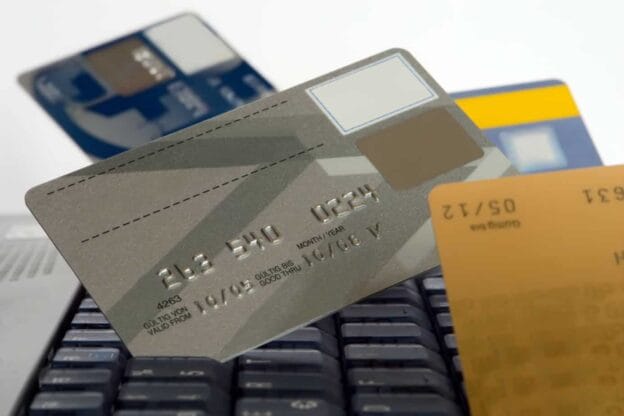
Should Nonprofits Accept Donations on Credit Cards?

Larger charities such as the American Red Cross and the American Cancer Society are easily recognizable. People like to donate to charities that have a reputation for doing meaningful work and spending their money sensibly. However, even these organizations have to seek out donations constantly to keep up and running. For smaller nonprofits and charitable causes that are just getting off the ground, seeking out donations can easily become a full time job.

Accepting credit cards for nonprofit charities is one way an organization can easily increase the volume of their donations. American society lives by their plastic, both debit and credit, so a nonprofit that is not poised to accept donations from a card is going to have a harder time procuring donations.

Some nonprofits do not accept card donations simply because they do not want to spend the small monthly price. This thinking can be somewhat backwards though. If the increase in donations is great enough, it will offset this small monthly cost. In order to accept card donations, a nonprofit has to establish a merchant account and is required to pay certain fees. The fees vary depending on the merchant account and the types of cards that will be accepted.

If the nonprofit already operates a website, accepting cards through the site is a very quick and easy way to increase donations. Many studies have shown that people spend more on their cards than they do with cash. This is true whether they are shopping for groceries or donating to a charity. By accepting cards on the website, a nonprofit will see increased donor amounts.

donations

Donate Online

If the nonprofit is a smaller organization and does not run a website, they can still accept credit cards. With a mobile card reader available for smartphones, an organization can accept cards a lot faster and easier than before. Many smaller merchants, nonprofit and otherwise, now use these readers so that they can accept cards on the go, say for example at a gala or other fundraising event.

Some organizations do indeed prefer credit cards for nonprofit donations because they generally mean larger donations. Another bonus for accepting cards is the ability of the donor to set up a recurring monthly payment. This is fantastic for a nonprofit because it means a steady, dependable stream of funds. Donors do not have to remember to send in a monthly check or cash, the money simply comes out of their account every month.

As the number of recurring donors increases, it becomes easier for the nonprofit to budget and forecast out spending. This also might allow them to increase services or programs offered to the people or cause they serve.

There are many aspects to consider when deciding if a nonprofit should or should not accept credit cards. The size of the organization, the size of the normal donation and the possibility of setting up recurring payments are all factors to consider. In addition, the operator of a nonprofit needs to research their options in regards to fees and choose the one that charges the least amount. Host Merchant Services has the lowest fixed monthly fees and uses interchange plus pricing in order to deliver the best value for your nonprofit or charity.

There are also added benefits for the donor to use their credit card to donate. If they have a card that offers rewards they can earn points while donating to a good cause. If they are near a certain reward, it is possible that they might even donate more than they would have otherwise. While this seems shallow to other charitable givers, remember that a donation is gladly received no matter what the donors underlying reasons may be.

Steps Can Help Merchants Meet Visa CPS Requirements

Every merchant who accepts Visa debit or credit cards is subject to transaction and processing fees. The determination of what those fees, known as custom payment services (CPS) fees, will be follows a complex maze of calculations based upon such things as the type of card the customer uses, the volume of credit card transactions the merchant processes in a given time frame and whether or not the card is actually presented to the merchant. Added to the mix in late 2012 was a transaction integrity fee (TIF), which Visa charges for all non-compliant transactions in an attempt to get merchants to begin providing all the information needed to ensure that the customer is a legitimate user of the card.

There are steps a business owner can take to meet the Visa CPS requirements. The easiest way is to install a card reader in each of your locations that accept credit cards and require your customers to swipe their cards to pay for the purchases. Additionally, you should encourage customers to opt for a debit transaction rather than credit whenever possible. Many customers prefer not to do this because it requires them to entire their four-digit PIN number, but Visa charges its lowest fees for debit transactions. Some merchants are beginning to add a processing fee to all credit card transactions in order to encourage customers to choose the debit option.

Visa also charges a higher fee for card not present transactions, such as phone, mail order or online purchases. These are the types of transactions that will typically be subject to the new TIF. However, you can reduce your risk of being assessed TIF by ensuring that your systems are submitting all the required information to Visa. One of the most commonly missed pieces of information is an address verification system (AVS) request. If you do not request this at the time the transaction is submitted for approval, it will be subject to TIF.

Visa Transaction Integrity Fee, TIF, FANF, Fixed Acquirer Network Fee

Another step you can take to ensure that you are meeting the Visa CPS requirements is to batch and submit your sales on a daily basis. Not only does this begin the process of transferring the funds from Visa to your bank account, it also saves you money. Failure to close out your sales within 24 hours following the first transaction will result in higher fees. Host Merchant Services can provide you with auto-batching terminals so that one more task is off your plate.

Although it can be difficult to determine the type of card being used in each transaction, merchants can take steps to minimize their processing costs by meeting simple Visa CPS requirements. Taking a few moments to review your systems to ensure that you are submitting compliant transactions and doing all you can to encourage customers to choose a debit transaction over a credit transaction are the easiest ways to ensure that you qualify for the lowest fees possible for the your merchant classification and transaction types.

Eleven-letter Dirty Word: Chargebacks

If you surveyed everyone in the payment processing world, both merchants and processors, what they wish they could do away with for good, I would venture a guess that 8 out of 10 would say chargebacks. Unfortunately this is not going to happen in the foreseeable future. And the reason for that is simple: the credit card associations and credit card issuing banks have setup the system to ensure that consumers feel secure in using their credit cards.

The causes of chargebacks vary but inevitably boil down to one simple truth: the customer disputes the charge on their account from the merchant. These range from circumstances that are out the control of the business owner to conditions that can easily be remedied. They include, but are not limited to the following:

  • Fraud occurred or is suspected
  • Discrepancy in amount charged
  • Good or service paid for but never received
  • Unauthorized or duplicate transaction
  • Quality of the good or service did not match customer’s expectation
  • Customer does not recognize the transaction or the associated company name

Just based on this short list alone it is evident that chargebacks are inherent within the credit card system. While the majority of industries are compliant, there are certain verticals that have been identified as having higher occurrence of chargeback rates. The card associations tend to deem these “high risk” and many have trouble getting on boarded with most merchant services providers.

Avoiding Chargebacks

Depending on what type of merchant you are, there are simple steps you can take to greatly reduce the risk of having chargebacks. Let’s explore some different scenarios.

Brick and Mortar Merchants

Typically if you are a retail merchant with a physical location your risk of chargebacks is relatively low. The customer is receiving the good or service right at the time of payment and if the merchant has good business processes the customer should be happy with the quality. Also, your staff should be aware that whenever possible to swipe the physical card to ensure the lowest possible rate. Common practice is also to get a signature on the receipt and keep copies on file for 18 months in case of disputes. If you must key in the transaction by hand, be sure to make an imprint of the card with a signature as well.

Internet & Mail/Telephone Order

With the absence of a face-to-face transaction there are a number of added hurdles that need to be cleared in order to ensure a successful transaction. One first step is to make sure that your processor includes your customer service number along with your DBA (doing business as) name to be displayed on the customer’s statement. This will eliminate any confusion as to where the charges are coming from.

Online sellers should take advantage of fraud prevention tools that are available by the processing bank. These include AVS and CVV2. Address Verification System (AVS) compares the billing address with what is on file with the card issuer. Now while AVS does not approve or decline a transaction, a merchant can use the resulting code that is returned to pre-screen the transaction before committing to the sale. Card Verification Value 2 (CVV2) is the three-digit number that is printed on the back side of the card to the right of the signature panel. In a card-not-present environment this is just one more step to help protect the merchant. For more information read the VISA card-not-present tools.

What to do when…

When you find yourself facing a chargeback claim, a compliance allegation, or an arbitration request the biggest thing to keep in mind is to pay attention to the deadlines presented, act quickly, and provide as much supporting documentation as possible. The more documentation you gather over the process of doing business, the more ammunition you will have to support your claim. Also, failure to abide by the timelines for response means the loss of the transaction amount. In addition, the business may also be fined for non-compliance.

The ERR Pricing Trap

In recent weeks I have personally spoken with numerous merchants who want to try and understand their monthly statement better. It seems like some providers of credit card processing have come up with a game: “confuse the merchant”. Different combinations of low rates and high fees or vice versa. One pricing structure that I have seen quite often lately is referred to as bill back or ERR (Enhanced Recover Reduced).

ERR is presented as a simple and clear pricing system for merchants. This couldn’t be further from the truth. While on the surface the one flat rate for every transaction seems easy to understand. While the (usually) low rate will seem enticing from the merchants point of view because it is only one rate as opposed to the hundreds that exist in the current interchange chart, the processor isn’t telling the whole story. Whoever said “if it sounds too good to be true, it probably is” was a very wise person. The secret behind ERR pricing is the second charge for mid or non-qualified cards. This is the difference between the flat rate and the actual interchange rate for the mid or non-qualified cards with an additional surcharge tacked on.

baitandswitchIn essence the one, low flat rate that these processors will reel merchant s in on and then slap them with high, additional surcharges is a classic case of “bait and switch”. Often seen in “big box” retail stores, bait and switch is when a business will advertise a low priced product that is not available. Then will substitute a higher priced product for the customer to fill the void of a missed opportunity. The legality and fine print often associated with this tactic exploits some loopholes and seems shady to the average consumer. Whether legal or not, at the end of the day the consumer is often left feeling taken advantage of.

The “trap” part of this pricing usually comes in the form of a term on the contract a merchant is asked to sign. These usually are around 36-months but can be any length of time. Processors will often convince decision makers that there is a need to sign for a term to get the best rates. Yet this is simply not true. And if the merchant decides he would like to get out of the contract before the full term has expired there are more often than not hefty early termination fees.

On the flip side to questionable business tactics and non-transparent pricing is interchange plus pricing. Here at HMS we believe that the customer should never walk away feeling like they lost and that a business relationship can be a win-win situation for both the merchant and Host.

man_holding_head_on_side_of_bedEvery business that takes credit cards, bar none, has to pay interchange rates. Bottom line. Full stop. What differentiates each processor is what they choose to charge on top of this. Those that don’t mind if they can sleep at night tend to markup interchange with exorbitant rates and/or backdoor fees. We prefer a more upfront and fair approach.

So let’s quickly recap. Enhance Recover Reduced makes it difficult for merchants to accurately calculate their effective rate as the “bill back” amount is often reflected on the next month’s statement. This roundabout and confusing pricing structure is not clear and easy to understand upfront. That in and of itself is reason enough to switch to a processor that provides the clearest pricing available. Take a look at this Statement Breakdown that outlines how to read and understand our statement vs. the rest.

Top 5 Myths About Credit Card Processors

It’s no secret that credit card processing is not a favorite topic of my business owners. Yet in the current economy consumers are trending toward more of a “cashless” society. Even more, most credit cards now offer some sort of incentive, such as rewards or points, so more consumers are using cards even for minor transactions. So it is important for merchants to be able to separate the facts about the industry versus myths that have been created. This knowledge can help the overwhelmed business owner really have an impact on the bottom line. The following are some of the most infamous myths that many merchants believe to be fact.

Accepting cards is too expensive

Back in the dark ages of credit card processing, there existed just three rates. Whether taking a Visa, MasterCard, or AMEX each had their own set rate. It was a simpler time but many businesses were left wondering if the system could be improved. The truth is that with the current interchange system there are something around 400 rates depending on the card. While this may seem backwards, it actually benefits the business because it assigns each card a respective rate dependent on risk and benefits to the cardholder. A card present debit card transaction is at a much lower rate than a card not present business rewards card. This transparent pricing shows what interchange is on every transaction as opposed to one flat rate.

You must sign a contract to get the best rates

This is one of my favorites. Most merchants are told that they must sign an agreement with a 36-month or longer term in order to be given the best rate. At Host Merchant Services, we do not believe in holding businesses financially hostage and locked into a term contract. Our goal is to provide the best service and lowest rate and to earn each and every one of our clients business on a month to month basis. The real goal behind these contracts is to ensure consistent monthly revenue for the processor and to punish the merchant if they choose to leave. This brings me to the next myth…

Hefty early termination fees

More often than not, when a contract is signed for a term, there is a large early termination fee if the services are stopped before the end of the term. This is found in other industries as well, like personal cell phones. This financial penalty often keeps merchants in an undesirable setup even if they are unhappy and WANT to switch. Many times this is coupled with another misleading stipulation…

Terminals must be leased or purchased

Wrong. Leasing a terminal for hundreds of dollars a month is one of the most disingenuous ways processors take advantage of businesses. Often times after just a few months, the business has paid out the actual value of the terminal if it was bought outright. At HMS we “lend” the terminal for use by the merchant as long as they are doing business with us. If they stop processing with us, we just ask to have the machine returned. That simple. Oh and did I mention we also provide free paper?

It takes too long to get your money

Quite the opposite actually. We can provide 24-hour funding when batches are complete by a certain time. This is a vast improvement from the up to 72-hour or more time frame that other providers hold your money.

It is easy for entrepreneurs to feel mislead and lost in the minefield that is the payment processing industry. Contact one of our knowledgeable merchant specialists today so that Host can guide you safely through the field and to industry leading payment processing.


bPay Gaining Momentum in Newark, Wilmington

In the last update regarding the bPay mobile wallet initiative we covered the fact that Host Merchant Services is now partnered with Barclays to grow the adoption of this very innovative and versatile form of payment.

To recap…

bPay is a two pronged application that benefits both businesses and consumers. Merchants can market to consumers with compelling offers directly through the application and SMS marketing. They also have the added value to accept credit cards through a mobile wallet and contactless payment terminal.

Consumers get the convenience of a secure mobile wallet and weekly deals from local businesses. These exclusive offers are just that, exclusive. They are only offered through the bPay app and can only be redeemed by paying with the app as well. They also have the ability to load all of their credit cards into their wallet so that they have the flexibility to pay with many different accounts and not just locked into one.

Now what?

With the previous successes in Wilmington near downtown and Lower Market Street and a strong presence on Main Street and near the UD campus in Newark, Barclays is looking for the next area that is poised to grow and adopt the bPay system to engage and benefit both businesses and consumers alike. One area that both HMS and the team at Barclays believe would benefit the most is the Trolley Square neighborhood. Trolley has a dense concentration of businesses that fit the bPay mobile wallet profile.

Businesses and customers both benefit from the increased speed of bPay transactions. For the business, there is no need for the cashier to swipe a card, verify ID, print out a receipt and get a signature. Multiply this over the course of hundreds of transactions a day and the time savings is huge.

For the customer, the time savings is minimal but the focus is more around convenience. The ability to choose which card he would like to pay with by just a few taps on his smartphone and then quickly scanning the barcode. This eliminates the need to dig in his pocket to fish out his George Castanza wallet and then try and find which card to use.

The bottom line here is that mobile payments and more specifically mobile wallets like bPay clearly have added value for both consumers and business owners alike. The technology and adoption is no longer the fledgling product of just a few years ago and moving forward is only going to grow. That makes right now an ideal time for businesses and consumers to adopt the system.

For businesses in the Wilmington and Newark, DE area that are interested in getting more information please email us at [email protected].

Square Amends Terms of Service

Square Amends Terms of Service, Bans Gun Sales [2023 Update]

In a surprising move, Square card reader updated their terms of service agreement that every user must agree to before processing to include the ban of all sales of firearms, firearm hardware, and ammunition. Previously, the agreement had only excluded sales of guns and other weapons from online, mail order, and telephone sales outlets.

The move comes at a time when many brick and mortar gun stores and gun show vendors are doing more business than ever. This increase in volume is mainly due to recent legislation on the state and federal level to limit consumers’ access to certain types of weapons and ammunition. This fear of the unknown for the future has fueled a run on shops that are struggling to keep inventory on their shelves.

Some other notable businesses that ban weapon sales are eBay, a popular online –auction site, and PayPal. This leaves many reputable merchants with a question mark of who they can process their legitimate transactions with in a time when their business is experiencing exponential growth.  The finance arm of General Electric will also no longer provide funding to gun retailers.

Accept mobile payments

For those vendors that do business through gun shows and need a mobile processor for their smartphone or tablet, we offer a great alternative to Square. HMS has a number of mobile payment processing solutions that work with both iPhone and iPad as well as Android smartphones and tablets. For those merchants that have brick and mortar locations we can provide our lowest interchange plus pricing along with our wide variety of terminals and integrations into existing POS systems.

Gun show vendors usually require a mobile payment processing solution

At the end of the day this change to Square’s policy leaves many gun sellers without a means to accept credit cards in a time when business is booming. HMS is a great solution not only because we have many clients that are gun vendors but also because we can provide an affordable rate to maximize the profit from that next sale. I’ll finish with one last intriguing question: what is the best way to recycle all those obsolete little squares…?

Website Banner ATM Machine 1

Thieves use ATMs in multi-million dollar heist

Late last week prosecutors unsealed Federal court documents that charge eight men with stealing $45 million dollars from numerous global banks to pay for high-end watches, expensive cars and other luxuries. In December 2012 and February of this year, the prosecutors allege that these men withdrew $2.8 million dollars from ATMs in only two attacks throughout the New York City area. The additional $42 million was withdrawn from other banks around the world by a team known as a “cashing crew.”

Authorities say that the global crime ring used prepaid debit cards in addition to hacked bank account numbers and PINs to withdraw the money in six continents and 27 different countries. The simple version of how they pulled this off is as follows: the hackers hacked their way into the banks’ systems and radically increased the values that were loaded onto the cards. Then with the information they obtained about the accounts, account and PIN numbers, used the cards to go on an ATM emptying spree.

In total, the operation needed over 40,000 individual transactions over the course of several months. It has been described as a “virtual criminal flash mob, going from machine to machine drawing as much money as they can before these accounts are shut down.” The eight suspects arrested in NYC followed what seemed to be a pre-planned route around the island of Manhattan, seemingly making a loop around Central Park. Those arrested had pictures on their cell phones of piles of $20 bills and also purchased a couple Rolex watches, a Porsche and Mercedes SUV.

This story not only caught my eye because of the sheer number of money stolen but also because of how the thieves went about pulling it off. In effect, they traded out ski masks and guns for computers and an internet connection. While the ringleaders were able to do the majority of the leg work online without much risk of being caught they still had to rely on “foot soldiers” to carry out the rest of the process.

The fact that this involved prepaid debit cards is what piqued our interest here at HMS as we value the security of debit and credit card processing. Attacks like this are a great reminder of why there are the comprehensive checks and security measures when it comes to card transactions. The fact that the authorities were able to trace these transactions, track down those involved, and arrest them is a testament to the vigilance of those enlisted to watch for fraud and other malicious activities when it comes to the financial services industry.

Being reactive is sometimes not enough though. Because of these recent events we are likely to see regulations and more security put in place in an effort to become more proactive in preventing attacks like this from occurring in the future. Who knows exactly what this will mean for the industry? For that we will just have to stay tuned.

About PCI Compliance Fees

Many businesses that accept credit cards wonder what the PCI compliance fee is and why they have to pay it. It all starts with the information that a retailer gains when a customer purchases a product or service using their credit or debit card to pay for the transaction. The thin black strip on the back of the cards holds sensitive information that can be used to defraud the card holder if a criminal gets hold of that information. A merchant must take steps to ensure that all personal information collected from a customer is kept safe and away from those who intend to do harm to others.

There have been some notable breaches of data over the past few years like what happened at TJX companies – the parent company of the T.J. Maxx and Marshall department stores. Over a 16 month period, thieves hacked into TJX’s computer system and stole information from over 45 million cards. This caused serious problems for the company and their customers that ended up costing a lot of time, money and effort addressing the damage caused by the breach.

Employees of businesses have also been known to steal this type of information. All they need is to gain access to credit and debit card receipts so they can purchase items using someone else’s card number. These types of incidents have increased with the proliferation of these cards. The major credit card companies like Visa, MasterCard, American Express and others developed guidelines that a business must follow to protect customer information. Failure to abide by these guidelines can result in the credit card companies deciding to discontinue doing business with a non-compliant company.

Many business owners know they should keep information safe, but many also have no idea why they are also being charged a PCI compliance fee.

These fees are charged for basically three reasons: education, non-compliance, and insurance.

Many credit card processing companies spend time working with business owners to make sure they understand what is required and how to meet those requirements. Some will add a fee to cover the cost of this educational component.

Businesses that do not show they are in compliance are also susceptible to being charged fees. This is generally done to remind the owners that they should take the time to fulfill the requirements. This portion of a fee could disappear once they have certified with the processors that they have taken appropriate action to protect their customer’s information.

A third component of some fees is insurance to help cover any breaches. The TJX breach ended up costing well over a quarter of a billion dollars. This is a cost many businesses cannot afford to absorb and still survive. The insurance will not cover breaches where the company was involved in the criminal activity.

The fees can be charged either monthly or annually. The fees range from five to 15 dollars per month to over 99 dollars per year.

merchant website seo

Merchant Website SEO [2023 Update]

merchant website seo

Practicing Good Merchant Website SEO

Most business owners know by know that the Internet isn’t going away, and if you want to succeed in business you need to have an online presence. Having a website is only the start, however. Without good merchant website SEO, chances are that the business website will never rank high enough in the search engines to make it worthwhile. Good search engine optimization practices can help stack the deck so even small business owners will have the ability to have their sites compete with the big boys.

Formatting for ideal on page SEO

The way an article or web page is formatted on the site can make a big difference when it comes to ranking in the search engines. One of the worst kept secrets is that Google has hired human quality readers, and formatting a webpage to be well organized and easy to read makes a big difference now when it comes to ranking well for keywords.

This means several things for how a website owner needs to design how their page looks. Informational pages need to include plenty of subheadings, bullet points, lists, and short paragraphs. Think “reader friendly.” Pages should be easy to scan and never appear as block paragraphs.

When looking at a retail page that’s mostly products, merchant website SEO work can be a little bit more challenging. It’s a good idea to stay away from iframes, which lead to outgoing link saturation and also isn’t the best way to present a large number of products. All products should have varied descriptions to add in as much relevant and original text as possible.

Carefully using keywords

Keywords remain a very important aspect of SEO for any website. The key is to walk that fine line between making sure to use enough keywords and a good variety of related keywords versus not using too many. While the numbers vary from one expert to another, it’s generally agreed that it’s not good to go above 2% of text on any page being one keyword.

The other important way that keywords on a page of text can help increase rankings is where they appear. The main keyword the site owner wants to rank for should be located in the title of the page or article. In the text itself that means a well optimized page will have the keyword in the first paragraph, often in the very first sentence. One or two variations of that keyword phrase should be used in the middle of the text and then once again in the last paragraph.

Do backlinks still matter?

One of the strongest ways to boost website rankings is still to get backlinks from related websites. Good merchant site SEO means finding specialty blogs or related sites that might naturally link to the site. There is some controversy with the practice of backlinking because intentionally manipulating backlinks can result in the website actually losing rank.

The best way to boost SEO with backlinks is to offer a good guest blog post to a related site. Give them some quality writing, and link back just using your URL or the actual name of the website. Doing this keeps it legitimate, gives an SEO boost to the merchant site, and helps avoid any search engine ranking penalties.