
industries use crm

What Industries Use CRM?

Any company that wants to provide a better customer experience needs to focus on CRM. CRM software is a great tool to collect and organize all customer data in a single platform. CRM will not only save you a ton of administrative costs but also make it easier for your team members to collaborate and achieve better results.

Any company that serves customers needs an organized CRM system. Without CRM software, it’s going to be next to impossible to access customer data when you need it. Not to mention that collecting and organizing customer data is a difficult task on its own. But when you have a CRM system in place, all your team members have access to the same customer information and they can access the customer data in real-time. CRM is not only great for tracking customer information but it’s also useful in the sales process. Your sales team will be able to figure out who the hot leads are and can spend their valuable time and energy to go after them.

Which Industries Use CRM?

CRM is a must-have tool for any business that deals with customers. Whether you are in a B2B or B2C industry, having a CRM system will be useful for you. CRM benefits all industries. Different industries benefit from CRM software in different ways. We will jot down some of the industries which rely heavily on CRM software as an integral part of their workflow. We will also look at how each of these industries differs in the way they use CRM software.

Finance and Banking Industry

The demand for CRM software is huge in the finance and banking industry. Whether it’s an internet bank, commercial bank, or an international bank, they are all using sophisticated CRM software.

There is stifling competition in the finance industry. If you don’t provide excellent customer service, your customers will have no problems jumping ships. CRM software helps in the finance industry by streamlining daily activities, tracking sales, and improving security.

Decision-making is highly important in the finance industry. To make a decision quickly, you need quick access to the relevant data. Good CRM software has reporting systems that will aid decision-makers in making data-driven decisions.

Healthcare Industry

The use of CRM software was always there in the healthcare industry but it increased during the pandemic. The front-liners were under immense pressure to cater to numerous patients in very little time.

Hospitals used CRM software to facilitate collaboration between the nurses, doctors, and hospital staff. CRM software was used to collect and organize patient data, track how the patients progressed and how they responded to different medications.

The patients were able to reach out to the hospitals quicker because of CRM. Patients that didn’t have severe health problems could book online sessions because of CRM. The CRM brings all the patient data to an integrated platform. Even if the doctor or nurse is changed, they will know what to do by looking at the patient data.

Sales and Marketing Industry

This is surely the industry that is most positively impacted by the use of CRM software. Sales and marketing agencies get countless benefits by using and integrating CRM software into their workflow.

CRM software aids sales agents in exploring, monitoring, and closing potential customers. CRM software provides them with information regarding who the most valuable leads are. The most valuable leads can be determined by the metrics you set. For example, the most valuable leads for you can be the people who spend more than two minutes on your website. If you find that those leads are way more likely to convert into customers, they are valuable leads for you.

CRM software also raises the productivity of the sales agents. CRM software comes with great collaboration tools and the tasks can be assigned easily to the right sales agent. All agents will know exactly what is expected of them. It will be easy for the team leader to identify the agents that perform the best as there are reporting tools within any CRM software.

Tourism Industry

If there is one thing that millennials like to do, it is traveling. The tourism industry had been growing rapidly before the pandemic hit. Thankfully, it seems like we have passed the worst of the pandemic and things are getting back to normal.

CRM software comes in handy in the travel and tourism industry. There is always a huge number of customers to cater to in the tourism and hospitality industry. It is difficult to keep track of all the customer requests, customer complaints, etc. Without proper CRM software, conducting day-to-day operations will be difficult in this industry.

All the customer data can be put together in an organized manner using CRM software. The tour agents can access that data anytime. They can easily recognize what customer problem needs to be solved by taking a look at the data. You can make notes of common customer complaints and issues using CRM software.

There are a lot of moving pieces in the traveling industry. There are customers, hotel bookings, air tickets, bus tickets, etc. involved in any tour company. Managing all this information without a proper system in place will drive anyone crazy. If you are in the tourism industry, you should invest in CRM software without any doubt. It will make the lives of both your employees and customers easier. Using CRM software will surely lead to a better customer experience and it will improve your customer retention rate.

Non-Profit Organization

A large number of people believe that CRM isn’t useful for non-profit organizations. But nothing could be further from the truth. Non-profit organizations benefit from CRM software just as much as any other business out there.

CRM helps non-profit organizations collect and manage the information about the donations and the donors. It helps them send personalized messages to each of the donors thanking them for their contributions. Non-profit organizations use CRM software to boost their fundraising process and coordinate different projects.

Final Thoughts

Modern CRM software is capable of doing a wide variety of complicated tasks. We have looked at how the different industries take advantage of CRM software to manage their workflow and provide exceptional customer service. All companies can benefit from CRM software but if you are working in any of the industries we must, investing in CRM software is a non-negotiable for you.

blockchain and crypto trends 2022

Blockchain and Crypto Trends for 2022

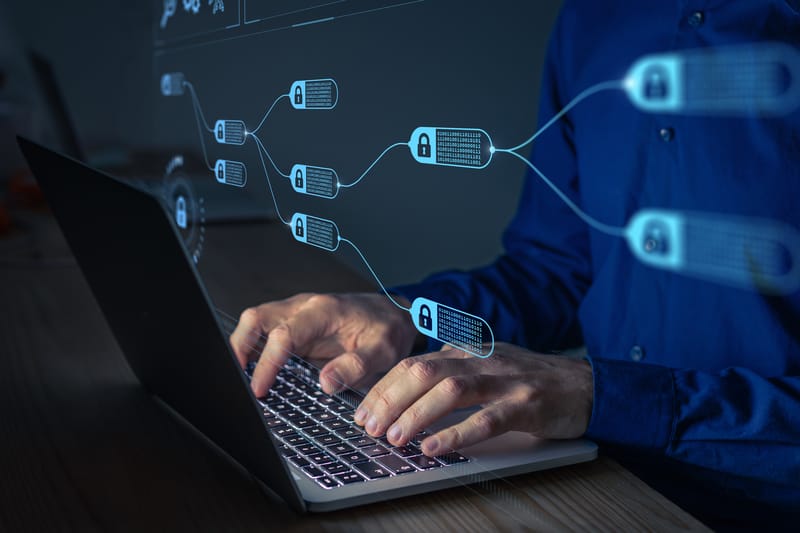
Cryptocurrencies are virtual currencies, which rely on blockchain technologies to secure and track transactions. Several app development companies also have started using innovative blockchain technology. Blockchain and crypto have become one of modern technologies with a bright future. 

As a rising technology, it has also caused the growth of the cryptocurrency market. Cryptography ensures the security of blockchain. The network participants also get private keys to deal with transactions. There is no failure risk to the network, as the information has no chance of disappearance at any time. However, read below to learn about Blockchain and Crypto trends of 2022.

Top Blockchain and Crypto Trends For 2022

National cryptocurrencies- One of the noticeable trends

Governments of several countries have recognized that blockchain-derived currencies are highly advantageous. While there is increasing use of Bitcoin, some governments are skeptical about the particular use of cryptocurrencies.

top Blockchain and Crypto Trends

However, according to the latest prediction, the blockchain market in 2022 will accumulate very high revenue. In China and a few other countries, there are restrictions on blockchain transactions with bitcoins. Still, several other countries will embrace cryptocurrency in the coming years.

Helping with the distribution and control of vaccines

According to 2022 predictions, blockchain technology will be capable of tracking and controlling vaccine delivery from manufacturers and vendors to patients. An open-source and permission data exchange platform unites localized and diverse vaccine management strategies to create an integrated view. Participants will be able to use the systems of interaction.

top Blockchain and Crypto Trends distribution and control of vaccines

By providing real-time visibility of the chain of custody and distribution of vaccines, blockchain eliminates blind spots across private and public entities. Due to the proactive identification of supply chain issues, spoilage, adverse reactions, and fraudulence, vaccines will be easy to deliver.

Higher acceptance of Bitcoin and altcoins

Market analysts have predicted that there will be an increasing use of altcoins. However, bitcoins will not lose considerable value. In fact, in recent rallies, bitcoin has outpaced the gains of most altcoins, particularly in terms of market capitalization. Rallies in Bitcoin tend to spark rallies in altcoins and a “rising tide lifts all boats.” 

Since the introduction of Bitcoin, several universities and global academic institutions have shown interest in accepting Bitcoin payments. In 2022, there will be a continuation of this trend. It will reduce the problem of international students facing issues with fiat currency transactions.

Integration of blockchain into governmental agencies

Several government authorities have thought of accepting the concept of a distributed ledger. That is why they may adopt blockchain facilities in the future. Today every government agency has a unique database. Sometimes it can be difficult to maintain and manage information across multiple organizations. Using blockchain technology, it is easy to manage data effectively.

top Blockchain and Crypto Trends - blockchain into governmental agencies

The decentralized ledgers are capable of holding the residents’ information. Moreover, the system uses modern encryption technology with 2-factor authentication for higher security standards.

Blockchain for political and social goals

Blockchain technology will find its application in political and social activities. The latest trends indicate that virtual currency has developed a good solution to ensure digital rights management and transformation. It will also reduce identity theft risks and supply chain management problems.

Using blockchain in retail sectors

In 2021, blockchain has already entered the retail sector. However, in 2022, it will see several other advancements. Blockchain is useful in the retail sector for managing inventory capabilities and the supply chain. Organizations like Walmart and IBM have contracted to create blockchain-based solutions. Technology will simplify the tracking of products.

The global market value of blockchain technology was about $3.67 billion in 2020. By 2028, it will have an increase of 82.4% fueling an increase in the number of blockchain apps.

The trend of crypto brokers and bitcoin ATMs

It will be easy to buy and sell cryptocurrencies. Cryptocurrency market researchers predict the Bitcoin ATM installation in different countries. As cryptocurrencies enter the real world, consumers will embrace these virtual assets.

The increasing use of cryptocurrencies will also cause the emergence of crypto brokers. These brokers will gear up the game by leveraging innovative features. They offer several options on bitcoin, dogecoin, and Ethereum.

The crypto market is focusing on environmental concerns

The crypto market will assign high levels of importance to the potential environmental effects of cryptocurrency mining. Bitcoin mining and the resulting energy consumption will have a big effect on the virtual digital token. That is why the coming generations will need to create innovative solutions to reduce the adverse effects on the Bitcoin mining process.

Transforming the economy with blockchain

According to some recent predictions, blockchain wallets will have several applications. It will result in economic growth in 2022 driven by cryptocurrency and blockchain technologies. International organizations and their representatives think that blockchain will benefit their business. They will be able to operate more efficiently and securely, especially for conducting financial transactions.

Cryptocurrency will bring new opportunities for investments

Cryptocurrency will turn out to be one of the hottest investment opportunities. You may have noticed volatility and inconsistency in traditional investments like stocks and bonds.  They are here to stay, but there is a place for crypto in the portfolios of individuals and companies. Corporations will start investing in cryptocurrencies. In the coming years, investments in Bitcoin will become a standard.

Higher importance to crypto education

Recently, cryptocurrency education has gained attention. Several people have understood the potential value of blockchain technologies. It is anticipated that there will be a trend of learning the way of trading and selling cryptocurrencies. It will be easier to trade cryptocurrencies because of the constant upgrades of the trading platforms. Moreover, you may find the chance to invest fiat currencies into crypto.

Governments accept cryptocurrencies with some regulation

Governments condemn the decentralized nature of cryptocurrencies. Global leaders think of the risk of misusing digital tokens for illegal purposes. However, governments have started imposing regulations against it and eventually will have to find a way to work with these technologies.

These are some of the latest trends found in the world of cryptocurrency and blockchain technologies. Blockchain has become acceptable to several industries, including automotive, aerospace, and finance. Cryptocurrency usage and investment is already exploding globally, and this trend should only intensify in 2022, even if there might be some setbacks along the way.

finserv acquires bentobox for better payment experience in restaurants

Fiserv Acquired BentoBox – Restaurant Tech Update

The race to provide POS-centric solutions to restaurants’ digital needs is accelerating. Getting ahead in this race, Fiserv came out with the announcement that it acquired a growing restaurant marketing and commerce platform called BentoBox. Fiserv has already signed an agreement and it aims to integrate BentoBox technology into its Clover restaurant technology solutions. This acquisition will enable Fiserv access to BentoBox’s restaurant website-building technology, marketing tools, and digital ordering solutions.

BentoBox – The Growth Story

Since its inception in the year 2013, BentoBox has grown drastically. Within a short span of 8 years, it now powers more than 7500 restaurant concepts across 14000 different locations.

BentoBox was known for its robust platform that offered website design, online marketing, and ordering tools to help restaurants grow. It gave restaurants an interface for a unique dining experience for their customers. BentoBox platform converted restaurant visitors into loyal customers and helped generate new avenues for revenue.

In a statement, Frank Bisignano said that customers are looking for a seamless and consistent experience when they engage with a restaurant online or offline. He added that with the addition of BentoBox’s website building capabilities, the business management solution of Fiserv will become more robust, and can cater to all kinds of restaurants. 

Clover Expansion

Clover can expand its dining and business management solutions to nearly 200,000 restaurants with this transaction coming into force. These restaurants also include those delivering unique dining experiences like casual and complete dining services.

They will be able to offer an integrated platform to deliver a customized customer experience.

Due to the pandemic, restaurant technology has grown at a slower pace. There were many incompatible solutions that restaurant owners had, making it difficult to find a perfect solution. There has been a massive shift for restaurants as they now need a significant digital presence. Tech providers are racing to capture this vast market to cater to the restaurant’s digital needs with a connected and comprehensive system. And the fight will become more intense as the pandemic enters its final stages. 

POS providers already had an advantage. They were at the forefront of this race and looking for solutions for connecting their payment systems with separate ordering software. Fiserv has been trying to capture this market has launched their updated Clover Station Solo. This device helps to connect the restaurant’s front and back-end operations and can be integrated with Grubhub, a food delivery marketplace, to track order delivery. 

What After Finserv Acquires BentoBox?

After Finserv acquires BantoBox, they can quickly grab a more significant share of the market. It will now provide a seamless experience to customers and cater to merchants with a vast range of digital products.

According to Nandan Sheth, Fiserv’s Digital Commerce business head, the company is now taking care of restaurant categories, which had many inefficiencies. Also, they are looking to speed up the areas where people pay their checks. Look for a future shift to payments via digital wallets. With this, the company can provide a better customer experience, and the merchants can choose from a vast range of products.

BentoBox has been aggressively working to identify places where the digital needs of the restaurants have not been improved. In its effort to fill the gap, BentoBox launched its product for the pre-order and catering needs of the restaurants.

In an interview, Brian Lee, BentoBox vice president, said that they talked to many restaurants offering catering and other pre-order services, and they all faced similar problems. He also noticed there were no tools available in the digital markets to manage the catering and pre-orders. BentoBox noticed these deficiencies, which got more noticeable due to COVID problems and shortage of staff.

Clover’s move to integrate the digital ordering feature with their payment solution has been widely reported. Reports said that 58% of the consumers are now ordering more food from restaurants than prior to March 2020. It also said that now about 61% of the consumers are ordering food online from restaurants.

binance to raise $1 billion fund

Binance to Raise $1 Billion Fund to Increase Adoption of its SmartChain and Other Blockchain Tech [2023 Update]

Did you notice how drastically Binance Coin’s (BNB) Price surged a few days ago while the rest of the altcoins were bleeding badly? It was hard to miss such a dramatic increase but the question is whether it was a manipulative move or there was a solid reason behind it.

On Oct 12, 2021, Changpeng Zhao, Binance’s CEO) announced that Binance has decided to double down on its position on the Binance Smart Chain to boost the adoption of digital assets globally. The company has launched $1 billion funds to push the adoption of Binance Smart Chain and the entire blockchain industry.

It was such a massive move that investors pulled out their investments from other crypto coins and started investing in Binance Coin aggressively. Similarly, the technical analysts started following the herd based on their technical indicators.

So, it was the major reason due to which we observed a huge pump in Binance coin’s price. Some of you may be thinking about whether this news was actually worth it or was it just hype created by market manipulators.

Today we’ll be answering this question in detail. So, let’s get started.

What is Binance SmartChain?

Binance SmartChain

Many of those in the cryptocurrency space are still trying to figure out the exact reasons for the spike in the price of Binance Coin. So, it’s important to shed some light on what Binance SmartChain is.

Binance Smart chain isn’t the only blockchain launched by the company but the company had already a blockchain called Binance Chain that was running well. However, the company was failing to keep up with the other bigger blockchains.

The main purpose of the Binance Smart chain was to reduce the transaction costs because developers and investors weren’t comfortable with the original Binance Chain. Moreover, this new blockchain has enabled developers to launch Dapps (decentralized apps) and other Defi Products.

Binance smart chain works in parallel with the Binance chain but it’s a standalone blockchain which means it can continue running its operations even if the Binance chain stops working for some reason.

The beauty of the Binance Smart Chain is that EVM (Ethereum Virtual Machine) is Compatible. So, the decentralized apps or Defi products built on Ethereum’s smart contract can be migrated to the Binance Smart Chain without any disruption.

It’s one of the major reasons why BSC became so popular right after its launch because Ethereum’s smart contract is a bit congested and its fees are also higher than BSC.

How the Company is planning to use this $1 Billion Funding?

Binance had dedicated around $100m to BSC almost a year ago to support decentralized finance (Defi) projects. After receiving an amazing response from the consumers, the company has finally decided to inject another $1 Billion for further growth. Here’s an overview of how the company is planning to use this $1 billion in different categories.

Incubation Program for Industrial Development

The company is planning to use a major part of this investment for industrial development. They’ve decided to use around $500 million for this program. The program is mainly focused on reducing the gap between crypto blockchain and current technical financial sectors.

Obviously, they can’t do it alone and they need the support of several industry-leading organizations to achieve success. Therefore, the company is collaborating with leading bodies of this industry to ensure the growth of decentralized computing, artificial intelligence, virtual reality, gaming, and blockchain-based financial services.

The company has planned to spread the basic vision of financial inclusion and healthy sovereignty with the help of global blockchain researchers, crypto advisors, fintech companies, and influencers.

It may take some time to achieve this goal but BSC has taken a great step towards a better future. And they deserve some appreciation and recognition for such a great vision.

Builder Program

The company has dedicated around $300 million to the builder program. This program will provide essential support to technological startups facing problems with launching their projects in the crypto world.

The primary purpose of this program is to incubate at least 100 innovative decentralized apps on Binance Smart Chain (BSC). The company is planning to use around $200 for this particular setup.

The remaining $100 million will be used to conduct developer conferences, joint bug bounty programs, and hackathons locally and globally. Furthermore, this funding will also be used to support existing development programs.

Talent Development

We can’t expect continuous growth in the blockchain industry unless we have some brilliant minds on board. The company has designated around $100 million for talent development. This funding will be used to provide academic scholarships to institutions while educating new crypto investors about how this industry works and how they can take advantage of it.

Under this program, the company will also launch a mentorship program for developer communities. Most importantly, these funds will be used to strengthen research & development around Cryptography. The company is expecting to extract fruitful results from this particular program.

Liquidity Incentive Program

There is a little known reason some investors aren’t interested in investing more in the digital asset market.  Yes, trust is a major concern but there is another reason. They don’t get the perks they usually get in traditional financial markets. This liquidity incentive program is going to attract more professional traders and institutes towards the digital asset market.

This liquidity incentive program is going to streamline yield farming in vaults, borrowing and lending in money markets, arbitrage gains, and more. The company is going to use $100 million for this program as well.

What is the Invesment Outlook for Binance Coin Now?

We aren’t financial advisors and we are here to educate our readers about financial markets, so we don’t make recommendations, let alone suggest investing in Binance coin solely based on this news. Ethereum Smart Chain is still leading the industry. And Binance may still need more upgrades to win the race.

However, this $1 billion investment is an amazing initiative. And the expectations are that the Binance coin will become stronger if these plans are implemented properly.

Conclusion

A sudden price hike in Binance Coin’s price surprised many crypto investors. We believe this $1B investment news was the trigger behind this run and it appears to be a genuine gain so far. It is exciting news that the company is planning to use this $1 Billion fund for the Binance Smart chain and advancing other blockchain technology in general.

restaurants can build loyalty with mobile messaging

How Restaurants Can Build Loyalty with Mobile Messaging [2023 Update]

Loyalty programs through mobile messaging are an effective way to increase your restaurant’s customer retention rate. The increasing use of mobile in placing orders is unlikely to change. That trend is here to stay. SMS marketing is the best possible way to utilize this opportunity to get your customer’s attention.

However, SMS marketing is only effective when done correctly. If your promotional messages annoy your customers rather than help them, they can unsubscribe, wasting a perfect opportunity. 

You don’t have to worry about going wrong if you carefully follow our guidelines to build loyalty with mobile messaging and the rules we discuss. 

What is Text Message Marketing?

text message marketing

SMS marketing or text message marketing means communicating with your customers through text messages on various deals, updates, offers, or reward programs

Build Loyalty with Mobile Messaging – Strategies to Follow for an Effective Marketing Program

There are a few strategies at the heart of successful text message marketing campaigns. Let me discuss them here and, you too can drive sales and reap the benefits of this marketing tool.

Build Loyalty with Mobile Messaging - Strategies to Follow

Reach Out at The Right Time

The first thing to keep in mind is that there is a window of time when your customers decide where to dine. If you are visible to them during their time of decision-making, there’s a good chance they’ll pick you. 

83% of consumers decide where they’ll dine within three hours of having their next meal. That is why timing is crucial. If you are offering a combo meal of soup, salad, and sandwiches at a discount rate, your chances of getting your customers to eat at your restaurant are higher if you send them a promotional text before lunchtime. 

On the other hand, a 2 a.m. text about the same deal is likely to annoy your customer and hit unsubscribe.

Analyze Data for Personalized Marketing

The great thing about the increasing use of mobile for ordering food is that you can easily track your customers’ preferences. If a customer tends to order food at a specific time, make use of that information and send them eye-catching deals and offers around that time. 

Build Loyalty with Mobile Messaging Analyze Data

If your customer always orders two items together, maybe add a discount on that combo. Your customer is much more likely to purchase if you are responsive to their consumption patterns. 

Focus on Providing Value

You can introduce different loyalty programs to increase customer loyalty. Promoting these programs through text messages is a good way to go. It is important to be clear about the benefits your customers will receive. Customers don’t want to know about your business if there isn’t something in it for them. Keeping all your promotional content customer-oriented and relevant is necessary. 

Rewarding customers on their birthdays, giving special discounts on repeat purchases, and, other such tactics are good ways to retain customers. 

You can also give them special discounts if they place an order through your restaurant’s app. Incentivizing your customers to download your app like this is a clever strategy that many businesses follow.

Have a Clear Call To Action

A call to action is a message that induces a customer to perform a specific task. Make it clear in your promotional texts what you want your customers to do and reward them for that behavior. To make this even more effective, create a sense of urgency. It is an age-old trick in marketing but, it still works.

Build Loyalty with Mobile Messaging - Clear Call To Action

People have a fear of missing out on incredible opportunities. Creating that sense of urgency will drive in that fear and make your customers respond. The end date to an offer makes that offer far more tempting. Use this strategy and, you’ll surely see some results.

How To Create Restaurant Text Coupons

Here are some guidelines that will help you compose the perfect test coupons.

Say More with Fewer Words

A text message is limited to 160 characters. This can be restricting if you’re not making sure to cut down on unnecessary words. Stick to the point as much as you can and get creative to come up with captivating taglines.

Proofread

A spelling mistake can be disastrous as customers may see your messages as spammy and unsubscribe to your text message marketing campaign. 

Include Opt-Out Option

If you are not required to add an opt-out option to your promotional text messages by-law, I’ll still recommend you to do it. Having an opt-out option makes your customers feel secure as they are in control. Nobody likes feeling trapped and hassled. Your customers will probably disengage from your brand completely if you give them that feeling.

I once had an entrepreneur send me an email about how I wasn’t interacting with his emails as I used to. He even sent me a link to unsubscribe if I wanted to do that. It made me feel that he aimed to provide value to his subscribers. I found myself paying more attention to his content. This reverse psychology gimmick worked on me. You could give it a try as well if you see your customers not interacting with your campaign at all. 

For Higher Engagement- Send MMS Instead of SMS

Visual messages are more effective than text messages. There is a whole science on making MMS more impactful. Through MMS you can send attention-grabbing bold headlines, short videos or, colorful pictures to hold your customer’s attention. 

Some services help businesses connect to their customers through text messages and MMS. They make your work much easier and know what needs to be done to help your business grow.

Conclusion

Mobile marketing is a must to grow a business in today’s fast-paced world. Starting from text message marketing to launching apps and partnering up with third-party delivery apps, businesses now have to tackle a lot just to stay relevant and thrive. Without doing these, your restaurant may find it hard to grow.

Businesses that adapt fast to the shifting trends are the ones that stay strong. Following these tricks will help you start a successful text message marketing campaign and keep you in the game. 

secure restaurant funding

How to Finance a Restaurant and Secure Restaurant Funding

The success of a restaurant depends on a wide variety of factors. These factors are delicious food, great location, superior customer service, and a steady supply of funding. There are a lot of expenses involved in running a restaurant. Without financial backing, it is impossible to run a restaurant business.

In the first six months of the pandemic, one out of six restaurant businesses had to close. This fact alone will make anyone think twice before opening a restaurant. Fortunately, the worst of the pandemic seems to be beyond us as we are moving on to a better world. There is increased demand among people to have a dine-in experience in restaurants. If you have been passionate about starting or expanding your restaurant, now is a good time to follow your dream.

To run your dream restaurant effectively, you need to have a steady supply of capital. There are a lot of costs involved in running a restaurant. You need money to rent or buy space, hire staff, manage inventory, marketing, etc. It’s hard for any individual to have that kind of money on his own. If it is difficult or impossible for you to manage thousands of dollars on your own, you need to turn to restaurant financing.

You need funding to get your business up and running. It takes businesses ample time to become profitable. Funding helps you cover the expenses until your business becomes profitable. The process of securing funding is a great learning experience for any aspiring restaurateur. It forces the restaurant owner to think about the financial implications of the business and come up with a solid plan on how to be profitable.

We will be looking at some of the best options to secure financing for your business. Whether you are looking to start or expand your business, these will be helpful for you. We will discuss the pros and cons of each of these options.

Merchant Cash Advance (MCA)

Merchant Cash Advance is a way of securing a lump sum of money in return for a percentage of profit on future sales. These advances are offered by merchant payment systems and they act as a loan against your future credit and debit card receipts. Institutions that provide merchant cash advances provide capital to businesses. In return, they will get a fixed percentage of the sales until their loan is repaid. The amount to be repaid will be set beforehand and it will be greater than the original amount. It will make sense if we look at an example.

Let’s say your restaurant receives an advance of $30000 for a 10% markup. Now, you will have to pay the advance provider $33000 from your future sales. The payment to them will be automatically made from your credit and debit card sales.

Pros

  • MCAs are great for you if you have a steady flow of regular credit and debit card sales. 
  • It’s a simple and unrestricted way to secure funding. If you have steady credit and debit card transactions, it will be easy for you to get an advance.
  • You can get funding really quickly. In some cases, it takes as little as 2-3 days.

Cons

  • You can’t pay it back early to save interest rates. The payback amount is already set and you will have to pay it in full.
  • This option is not ideal for new businesses as some business history is required to get these loans.
  • It is not ideal for businesses that do most of their transactions in cash.

Small Business Administration Loan

SBA Loans are a great way for small businesses to secure funding. The SBA guarantees to repay a certain percentage of the loan to the bank if the borrower is unable to repay it. The most common SBA loan for restaurants is the SBA 7(a) loan. These loans typically cover expenses to purchase an existing restaurant, purchase equipment for the restaurant, and renting or buying space for the restaurant.

Pros

  • It is easier to qualify for SBA Loans than traditional bank loans.
  • The loans are backed by the government and you can get up to a $5 million loan.
  • If one institution rejects your application, you can still seek approval from other institutions.

Cons

  • Loan approval can take up to months.
  • A lot of detailed documentation is required to get approval for the loan.

Business Line of Credit

With a business line of credit, you can secure loans as you need them. You won’t have a lump sum of cash but you will have a line of credit that you can use whenever you need it. You will be able to borrow the amount that your line of credit allows you to.

It’s a flexible option for you to use. You will only pay interest on the amount you borrow. It works similar to a credit card but better. The limit is higher and the interest rate is lower than a credit card.

Pros

  • It’s a flexible option for you to secure loans as you need them.
  • You only have to pay interest on the borrowed amount.

Cons

  • You need to pay administrative costs to keep your line of credit open.
  • It is not a long-term financing solution.

Friends and Family

If all your efforts to raise capital fail, your friends and family are likely to be your biggest supporters. This may seem like a scrappy option but having people you love and trust to back you in your journey is actually a viable option.

Pros

  • No paperwork or detailed documentation is required.
  • You don’t need collateral to get a loan from your family and friends.

Cons

  • It has the potential to destroy personal relationships if things go south.
  • The terms and conditions of the deal can end up being confusing and unclear.

Final Thoughts

Finding a way to secure funding is a key ingredient in your restaurant’s recipe for success. You need to prepare well to secure funding for your restaurant. Have a clear and concise business plan that you can be proud of. When pitching your ideas to your potential investors, predict the objections they are likely to raise and provide logical answers to those objections. Securing funding will allow you to make your dreams come true.

grow restaurant revenue using your online menu

4 Ways to Grow Restaurant Revenue Using Your Online Menu

Online ordering is growing in popularity every day. More and more customers are starting to order online. Online orders are a great way for restaurants to serve their customers. They can serve more customers now than they could in their limited dining space.

Unfortunately for many restaurants, the level of competition is also very high. Most restaurants are engaged in a fight to encourage more customers to purchase with them. To stand out from this competition, you need to make sure that you are positioned well. One of the best ways you can make your brand differentiate from others is through your online menu.

Your online menu is your silent salesman. Did you know that 77% of diners are likely to visit your website or go through your online menu before they decide to purchase with you? When customers are deciding whether to go with your restaurant or not, your online menu will be their biggest decision-making factor.

Your online menu needs to be well planned and strategically designed. You can’t just make a scanned copy of your existing menu, upload it, and expect great results. The rules of engagement are different when it comes to online ordering. Your online menu needs to be organized well and easy to navigate. Here are the best tips we can give you so that you can use right away to optimize your menu and increase your revenue:

Use Your Brand Story in Your Menu

If you want your brand to stand out from the others, you need to make sure you are telling your brand story through your menu. You can influence a customer’s decision by the simplest of subtle triggers.

If you just incorporate a positive adjective, it will create a positive perception in the customer’s mind. You need to keep that in mind when you are drafting your menu description. For example, if you have a vegan restaurant, make it known to the guests that you only used locally grown vegetables. Whatever it is that you do differently from your competitors, make sure your customers get a chance to know that.

If you are using this strategy, you can justify charging a premium on certain items. For example, the price of the meal that is cooked with organic produce is likely to be higher than the other meals on the menu. Your customers will have full transparency to the menu and it will help them come to a final decision quicker.

Strategic Upselling

Do you want to maximize your revenue from your online menu? Upselling is the best way for you to achieve that. We all know that bringing in new customers is difficult and expensive. It costs four times as much to retain your existing customers than to acquire new ones. Through upselling your customers, you can generate more money from your existing customers and increase your revenue.

One of the ways to upsell your customers is to offer recommendations to them. Once they have added something to their cart, you can show them an option that says “Most customers pair it with this”. You can use your own verbiage but hopefully, you get the idea. It’s all about making a digital version of the “Would you like fries with that” effect that McDonald’s has been executing successfully. If they add the additional item to their cart, it’s more revenue for you. If they don’t, then no harm is done to you.

The other way of doing upselling is more common. You can offer customers options like “Extras, Add Ons” where they can customize their meals and add extra slices of cheese, toppings, sauces, spices, etc. This allows the customers to get creative with their meals while you make money in the process. Customers are much more likely to check a box on the screen than when they are dealing with a live server.

Optimize Menu Categories for Online Order

The attention span of people is getting shorter and shorter every day. Our goal is to make it easier for the customer to make a buying decision as soon as possible. If you don’t get a customer interested in your online menu within three seconds, there is a strong probability that you have lost that customer.

If you look at a traditional menu, the categories in there go like “Appetizers, Entrees, Sides, Desserts, Drinks”. This set of categories works in a dine-in situation as customers are already familiar with this setup. But as we mentioned earlier, the rules of engagement are slightly different in the online world.

We need to capture the attention of our customers as soon as possible. The way to do that is to highlight your most popular items right away. Your customers should know about what most of your customers are ordering from you. Think of it as a digital way to offer your recommendation to a customer. Doing this will make your customer more likely to be interested in your menu and make a purchase.

Highlight Specials and Follow Trends

Nobody can expect what the next big trend will be. But everybody can be prepared to capitalize on it as it happens. For example, a while ago the pictures of rainbow-colored foods were going viral on Instagram. A lot of restaurants joined that trend and started offering these rainbow-colored foods. That trend was short-lived and then the trend of activated charcoal blackness came into action. You will never know what the next big trend is but you can capitalize on it as it happens.

On the more predictable side of things, there are seasonal trends that you can always use to your advantage. For example, you can customize your menu according to seasonal holidays. Also, it will be a great idea if you highlight the different diets you cater to. For example, having a separate category for vegan, keto diet, gluten-free and paleo foods will greatly help your customers. It will help them navigate your menu quicker and they will know exactly where to find what they are looking for.

You can also make the most of your online menu to attract customers by providing discounts, offering “buy 1, get 1” offers, or highlighting a rewards gram. You can offer coupon codes if they order during happy hours. If you leverage these tips, you can make the most of your online menu and generate more profits for your business.

benefits of qr codes

Benefits of QR Codes and How Restaurants Can Use Them

The pandemic has made it necessary for restaurants to limit face-to-face interactions as much as possible. In that effort, restaurants and pubs have set up QR codes for taking orders and digital payment. 

We don’t think this change is going to go away as both customers and restaurants are benefiting from the use of QR codes. According to a survey, about eighty percent of pub-goers who have used digital methods to order online want to keep doing it in the future. 

If you are wondering how your businesses can reap benefits from using QR codes, we’re here to give you a breakdown of them. We’ll also discuss the process of introducing QR codes to your restaurant. 

Benefits of Using QR Code Menus And Payment Portals

There is no shortage of benefits to restaurants when it comes to using QR codes. Here’s a list of them.

  1. Reduce Expense by Eliminating Printing Cost

Printing Physical menus can increase your restaurant’s expense a lot if you frequently need to change it. The upside of having a digital menu is that you’ll save up on the expense of printing physical menus. The only expense will be the graphic designer you hire for this job. 

  1. Reduced Staffing Cost

When a customer scans the QR code provided on their table, it redirects them to your restaurant’s website or app where they can have a look at your menu. After that, they can choose the items they want and order directly. Since you won’t need people to take orders, you can reduce the number of your waiting staff and save up. 

Your staff can also focus more on the needs of the customer and provide a better service when they don’t have to run back to the kitchen. 

  1. Getting Bigger Orders

Customers are likely to place a 30% bigger order when ordering digitally. This is because they don’t feel hassled to make a quick decision. They can take their time to order everything that they want. 

Sometimes customers also find it awkward to order too many items at once, thinking they will be judged. Not having to tell another person that they want a second helping of fries, is just what can make the customers order that second helping. 

  1. Better Dining Experience

There is nothing that can ruin a customer’s dining experience as much as having to wait for someone to take their order for too long can. As they say, first impressions stick to the mind and if your customer has had such an experience with your restaurant, they are unlikely to return.

QR codes reduce this waiting time as customers themselves are in charge of placing orders. Since the order is sent to the kitchen directly, the food can be prepared faster as well, reducing the time that your customers spend waiting even further.  

  1. Reduced Expense on Updates to The Menu

You can update your menu frequently if you are using a digital menu. The process is also less time-consuming as there is only one thing you need to get done, which is updating the design of the menu.

If you just want to change only the prices or lists of items, then you can do that in a matter of minutes. You’ll just need minimal editing and integrating the updated menu into your system.

A digital menu is much less of a hassle. 

  1. More Menu Design Options

With a printed menu, you have to worry about fitting things in a limited space. But with a digital menu, you can add as many enticing images as you want as there are no space limitations. Images can be far more lucrative when it comes to food, tempting your customers to try out more dishes. You can also add short videos to make certain items on your menu even more appealing.

  1. Customer Data 

Customers have to input their email address and number to place their order. This lets the restaurant enter them into their mailing list or text marketing campaign. These channels of promoting restaurants have proven to be effective when done right. 

Restaurants can get more customers to come back by sharing value-adding promotional content with their customers. 

How Restaurants Can Use QR Codes?

To set up a QR code payment and ordering system at your restaurant, you have to take care of these steps.

  1. Create QR Codes for Ordering And Payment

You can do this with the help of numerous companies that offer their services to help your business set up QR Code payment and ordering systems. You can set up self-serve ordering with square online, Clover, or any other such company in the market. 

  1. Setting Up Your Restaurant With Required Tools

You’ll have to ensure that your waitstaff has access to tablets or smartphones. You’ll need to configure some back-end software to integrate QR code ordering and payment with POS payment solutions. 

  1. Place QR Codes in Appropriate Places

Place the created QR codes throughout your restaurant. The entrance, individual tables, near the cashier are places that are more visible to the customers. QR codes to place orders should be placed on individual tables so customers can scan them to order. 

When the customers are done eating, your staff can bring them a printed-out QR code that they can scan to pay. Customers will either pay with a mobile wallet or they can manually input their payment information in a form that will load when the QR code is scanned.

Conclusion

Setting up QR code payment and ordering systems is easy and cost-efficient. You don’t have to spend a lot on hardware as your waiting staff most probably have access to smartphones. There are also loads of benefits for you in making this conversion. 

People are moving towards mobile ordering and payment. This is becoming the preferred way of doing things. Customers these days expect to be able to pay with a quick scan and order without much face-to-face interaction. Setting up QR codes is a step in the right direction for any restaurant business.

mobile restaurant app vs third party apps

Branded Mobile Restaurant App Vs. Third-Party Apps

The number of orders that customers are placing through their phones is increasing every day. While websites for every restaurant have become a standard and are still an effective portal to drive online sales, their usage is declining. These days the most convenient way of ordering food online is through a mobile app.

Here we will compare the pros and cons of launching a branded mobile restaurant app with joining a third-party delivery app. We’ll also discuss which approach will work best to drive your sales and maximize revenue.

Pros and Cons of Branded Mobile Apps 

Branded mobile apps are apps that are run by the restaurant and represent the brand of the restaurant. The initial cost of designing and launching such an app is more. That is what most business owners focus on and opt out of this option. However, there are benefits of a branded mobile app that can be worth investing in. 

Pros of Branded Mobile Apps

Here’s a look at the pros of branded mobile apps.

  1. No Competition

If you are using a branded mobile app, the only restaurant that it features is yours. Your restaurant will be one of many in whatever category you are featured in a third-party app. 

  1.  Control Over Your Branding

You can control your branding completely. The design of the app can be such that it gives your customer a taste of what it’s like to dine in your restaurant. You can’t do that with third-party delivery apps as they have complete control over the interface and design.

  1.  Customer Data

Now, this is the best benefit branded mobile apps have to offer. You get to keep your customers’ data and therefore market to them on a personal level. Personalized offers that are based on your customers’ past purchases are far more effective at making them your repeat customers. You can cater to their individual need and establish a connection to gain customer loyalty.

  1. Control Over All Aspects

You get to control every aspect of the process. Starting from what your customers see up to delivery, everything is in the restaurant’s control. If there is any issue, you can respond quickly as you know exactly what went wrong. This is important in retaining your customers. As a customer who has had a bad experience is highly unlikely to order at your restaurant again.

Cons of Branded Mobile Apps

There are several disadvantages as well. They are listed below-

  1. Hard To Get Downloads

This is by far the biggest issue with branded apps. A customer has limited phone storage. It makes much more sense to download a third-party app where they get so many options. Customers are not in the habit of downloading individual restaurant apps, The only customers that are likely to download your app are those who already order from you frequently.

Getting new customers to download your app is not easy. The best way to mitigate this is to offer special discounts for using your restaurant’s app to order, referral code reward campaigns, and special loyalty programs. 

  1. High Initial Cost

Making and maintaining an app is costly.

  1. Training and Hiring Employees for Delivery

You’ll have to spend on additional employee salaries and training programs.

Pros and Cons of Third-Party Delivery Apps

Third-party delivery apps get millions of downloads. They’ve become closely integrated with modern life that most people reach out to their phones these days to place an order. The pandemic has only accelerated the rise of mobile ordering. 

There are lots of ways in which third-party apps can boost your business. Let’s discuss them here.

Pros of Third-Party Delivery Apps

  1. No Initial Cost

To get registered on a third-party app, restaurants do not have to pay any additional fees. If your business is small or new, you probably want to limit your expenses. Third-party apps allow you to reach a customer base you’d otherwise have no access to.

  1. Easy to Acquire New Customers

Third-party apps come with their own sets of loyal customers. You can register in the most popular ones and tap into that market. These apps come up with many marketing schemes to attract even more customers. You can leverage their popularity and bring in business. 

  1. Delivery is Taken Care Of

Third-party delivery companies have trained employees who take care of delivering your restaurant’s food to the doors of your customer. These companies are delivery experts and are very efficient.

  1. Access to Additional Resources

You can get access to resources and experts that your restaurant cannot invest in. Delivery tracking, various payment methods, delivery systems, and many other such resources are costly or time-consuming to manage.

  1. Shared Service Accountability

Your restaurant and the third-party app will both be accountable in case any issue arises. Having two brands attached to an experience confuses the customers as to which one to hold accountable. But with a branded restaurant app, you are solely responsible and your name is strongly associated with any bad experiences.

Cons of Third-Party Delivery Apps

  1. No Control on Visibility

You have no way of controlling your visibility in a third-party app unless you spend extra dollars to be featured heavily by those platforms. Even when customers actively search your restaurant’s name, third-party apps show other similar restaurants to the customers along with yours.

  1. High Commission Rate

Restaurants have to pay anywhere between 15-30% of their revenue. Needless to say, that can eat into your profits. 

Branded Mobile Restaurant App Vs. Third-Party Apps- Which One to Choose?

If you run an established restaurant with many loyal customers, I’d recommend you to use a more blended approach. Investing in your restaurant’s app can lead to long-term benefits. But, if your business doesn’t have a huge customer base and is new or on the smaller side, you should stick to only using third-party delivery apps. 

Final Verdict

It is getting tougher each day to stand out in the restaurant industry. Having a website is now only the bare minimum you can do. Having a way for your customers to order through an app is essential to stay in the game.

p2p payment

Pros and Cons of P2P Payments for Merchants

Timely payment is essential for the success of any business. A business cannot survive without a system where the buyers can quickly pay them. Therefore, with the advancement of technology, we see many new methods of payment evolving. Especially in late 2021, when the corona pandemic is waning, the businesses have adopted P2P enthusiastically. But with this new payment facility, many new issues need to be addressed too. Today we will address the pros and cons of P2P payments for merchants and individuals. 

Peer-to-peer payments have given people a seamless option to send or receive money without friction. Companies have benefited from P2P services during COVID19 when people avoided any physical contact, primarily through currency and cards. P2P was a great solution in this scenario. 

Growth of P2P globally and in the US

Over time, P2P has become more popular and acceptable as a payment system. Every day, millions of people globally install and use a P2P app like Google Pay, Venmo, or Apple Pay Cash. The global peer-to-peer market will reach a level of $589 billion by the end of 2028. Furthermore, the number of P2P users in the US will grow exponentially to around 132 million by the end of 2021.  The future of P2P is bright.

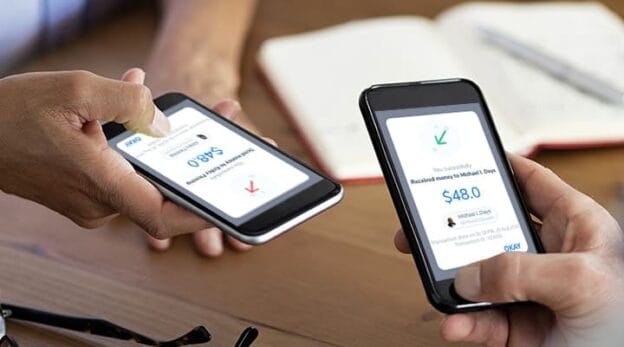
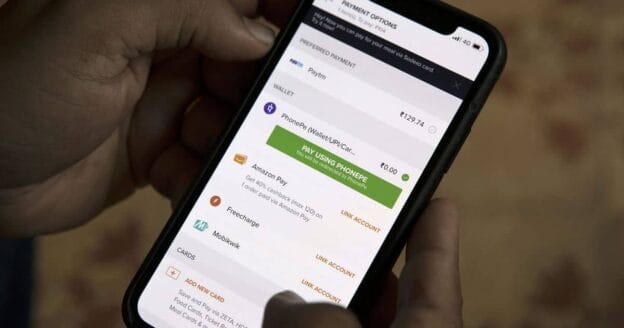
P2P is a convenient mobile wallet application that eliminates the requirement of carrying cash, credit cards, debit cards, or any other physical forms of payment. Users can pay from the app on their mobile devices. They can easily receive money without hassle. They can also keep the money in the wallet provided by the app or they can get the money transferred to their bank account in seconds. Furthermore, they can keep a track of how much they are spending.

How does the peer-to-peer system work?

world banking and finance 32597812

To make a P2P payment, the sender and the receiver must install an app on their respective devices. There are multiple different P2P apps available today, which the user can download from the app stores. 

The user has to complete a quick registration once the app is installed on their smartphone. Registration is a simple process. It takes only a few minutes of users’ time. Once the user registers, a fund source needs to be added. A bank account or debit card usually needs to be added so that you can easily add and withdraw funds from the app. Similarly, if someone pays you via the app, you can transfer the amount to your bank. 

Before you start sending or receiving payment, you will have to go through an authentication process. P2P app companies follow almost identical authentication methods. However, the authentication process might be different in different countries. 

Once authenticated, the user can then send and receive money. To send money, the user will first have to add a recipient. One can also request money from someone else. Both parties should have the same app for a P2P transfer. 

How will businesses benefit?

A business owner knows that the easier you make it for your clients to pay, the more they will buy from you. In simple terms, if you accept peer-to-peer payments, it is more likely that the customer will purchase from you instead of going to a merchant that only accepts cash or cards. 

Globally, P2P payments have contributed to the expansion of the economy. 

Countries like Saudi Arabia, Peru, Chile, and Colombia are witnessing a multi-fold growth in P2P transactions. They are the leaders in this segment when it comes to growth per million population. According to the latest figures, people worldwide made 70.3 billion transactions in the year 2020. Estimates for 2021 are yet to be known, but we know which direction this is going. 

P2P Payments – Important Pros and Cons

With such an encouraging growth of P2P transactions in the US and globally, one should remember a few essential aspects of P2P. With facility comes risk. And yes, there are specific risk factors with P2P. 

Many new people are switching to peer-to-peer transactions because of the ease and compliance. But, they are not aware of the risk that it poses. It can be anything, ranging from the human error of sending the money to the wrong person to getting scammed easily. Therefore, it is essential to know the pros and cons of a P2P payment for merchants and individuals. 

You can assess the benefits against the risk and then decide if P2P payments are right for you. 

Pros of P2P Payments 

#1- It is an effortless process to send or receive money. One doesn’t have to go through multiple complicated steps for the transaction. You can directly use a phone number or scan a QR code to proceed with the instant transaction. This ease of sending or receiving money has made peer-to-peer transactions popular. 

#2- When you send or buy money via P2P, there is no middle man or a money holder. Transactions are electronically processed. This doesn’t require much overhead. Therefore, the transaction fee is relatively low. Most systems offer free debit and ACH transactions and make a fee on credit cards processed through their system.

#3- Safety is another reason why people prefer P2P. P2P networks are encrypted when used properly can be relatively safe since they don’t expose card data or personal information to merchants.

#4- Many people use P2P networks because the currency conversion charges are less than banks or brokers. P2P also makes it possible for the user to buy products globally and enjoy the real benefits of globalization. 

Although P2P payments offer many benefits, there are also drawbacks to discuss.

Cons of P2P payments for merchants and others

#1 Mistaken transactions: Sending money to the wrong person is the most common error that we find on a P2P network. New people are not accustomed to the interface. They make mistakes while sending or receiving money. Human errors lead us to the next issue, which is another significant drawback with peer-to-peer payment. 

#2 Dispute redressal: If you made a payment to the wrong person from your bank’s Internet banking system, you could get a refund quickly. You can contact the bank, and they will get the refund from the recipient. But, when it comes to P2P, there is no mediator involved in the transaction. 

Many P2P apps do not have a refund or dispute system in place. Nor do they have any arbitration process in case of a disagreement between the sender and receiver. This makes it very difficult for an individual or a merchant to get a refund of their money. 

#3 Security: Complete security is essential at both ends. P2P networks are secured, but what about your smartphones? If the smartphone is compromised or hacked, the hacker might use the P2P app on your mobile for fraudulent transactions. New smartphone users are usually the target of hackers as well as social engineering to trick them into sending funds.

As an individual, one should always use strong passwords, face recognition, or fingerprint authentication to avoid such issues. 

Conclusion

Peer-to-peer payments for merchants and individuals have made life easier. The market for such apps is growing like never before. But one should always be cautions and take appropriate safety measures while sending and receiving funds via P2P systems.