There are a few different dynamics related to the secured payment environment that are presently shifting simultaneously. The most significant shift that has been in the making for nearly a decade but has recently accelerated is consumer preferences for both eCommerce andmCommerce, short for mobile commerce. This has also resulted in an increase of cashless payments, emphasizing the need for secure payment mechanisms.
The second shift is the unruly environment of cybersecurity. It is believed to be the most significant form of fraud risk that businesses are preparing for. Recently, 38% of companies surveyed are increasing their technology spending for cybersecurity to ensure secure payments. This is especially relevant since the US government recently warned that businesses will be susceptible to cyber-attacks.
As a result of these ongoing changes and new trends, it is essential to know how businesses ensure secure payments. Below we look at how payments are secured and a further review why this is important now.
What are secure payments?
A secure payment is when the payment information used in a transaction is protected via cryptographic encryption while being transmitted for payment processing. The credit card number or the debit card number, expiration date, and the three or four-digit code on the backside of a card are hidden from view and free of unauthorized access throughout the entire process.
A secure payments system ensures that personal and financial information is safe and helps builds trust in the platform on which it is used.
What are ways to ensure your payments are secure?
When customers process payments online on an eCommerce platform or any other site from which they conduct a transaction, those sites have to demonstrate how customers’ financial data is secured.
One form of security measure to check for on a site is SSL, short for Secure Socket Layer. SSL is an encryption method that ensures the security of the financial information that passes between various parties while the transaction is being processed. Customers can check if the website they’re on has an SSL certificate by right-clicking on the payment section of the website and then clicking on Properties and then Details. If the site’s list of encryption certificates has included SSL, then the website is protected by SSL encryption.
Another option would be a next-level proactive filter to detect fraud. These filters let you monitor and set limits of specific transaction thresholds and filter out certain geographical regions culpable of the higher fraudulent activity. An excellent example of one such tool is the Advanced Fraud Detection Suite from Authorize.net.
Finally, there is authentication another layer of security used to verify the cardholder’s identity by having shoppers enter the three or four-digit code on the back of their credit card, known as the Card Code Verification service. (CVV2). An alternative to CVV2 verification is the Address Verification Service (AVS), which will require the cardholder to verify a portion of their address on file with the issuing bank.
Within the authentication process, there is also the popular 3D secure optoin, which all the major card networks have adopted. 3D secure generates a one-time code sent to the cardholder to enter into the payment gateway during a transaction to verify the user’s identity. The 3D Secure protocol is considered to be a strong customer authentication security layer by many regional jurisdictions such as the EU.
Why do you need secure payments?
Security protocols have been applicable to merchants accepting card payments online for nearly two decades. The Payment Card Industry Security Standards Council (PCI SSC) introduced its first security protocol iteration in 2004, including numerous security control mechanisms and data encryption guidance.
Meanwhile, online shopping has been around since the early ‘90s. Consumers’ shopping habits via the web really started to grow over the past decade with the advent of smart devices that let them quickly look, scan, search, find, and pay for items. That adoption has further accelerated during the past couple of years, and just eCommerce alone is now expected to grow to as large as $500 billion globally[MF1] .
However, as the opportunities have grown, so have the risks. Businesses consider cyber-fraud their most significant fraud risk. Even government bodies are more vocal now, identifying the risk cyber-attacks pose to companies. Just the eCommerce industry alone is expected to lose as much as $75 billion between 2019 through 2023 globally, according to Cybersource[MF2] .
Regardless of the risks posed, consumers are increasingly more comfortable with online payments, feeling it is okay for merchants to store their payment details on their systems, and feel that additional security measures may be too cumbersome. The title theme of the 2021 American Express Digital Payments Survey was “Digital Convenience Is Here to Stay.” The survey results found that merchants are increasingly cognizant of the trends and are looking to draw a balance between that convenience and the need for enhanced security efforts.
We’ve experienced a complete paradigm shift in how we interact, do business, learn, work, shop, and pay in the past couple of years. All of these are not a foreign concepts that were suddenly introduced to us but ones that have accelerated with great intensity during this time.
As a result, the security around these behaviors has become paramount, specifically those that track our identity, finances, and spending habits. Payments is that one domain that intersects all those areas and where we should exercise great caution to ensure that there is a robust mechanism for secured payments. It is essential to understand what secure payments are, how they are achieved, and why they are crucial.
There can be no doubt that 2021 was a fantastic year for cryptocurrencies, with Bitcoin hitting an all-time high, and El Salvador becoming the first country to accept Bitcoin as legal tender.
In light of crypto’s growing popularity across various sectors, merchants may want to set up cryptocurrency payment systems or find a crypto payment processor.
Although crypto payment processing is still in its early phases, this article covers various options for companies interested in engaging with cutting-edge alternative payment technology.
Why Are Companies Accepting Cryptocurrencies?
Several reasons have led to companies accepting crypto as a payment option, from their increased adoption to targeting specific customers. Here’s a more detailed breakdown of these reasons:
Several crypto enthusiasts choose to trade to take advantage of the market’s volatility, while others are interested in using the technology to implement payments, non-fungible tokens, and decentralized finance (DeFi). According to a study conducted by the University of Chicago, about 13% of Americans trade cryptocurrency. In the eyes of these people, cryptocurrencies are a valuable investment and infrastructure that will eliminate the need for credit card networks and banks.
Crypto users are typically a more avant-garde clientele that values transaction transparency. According to a recent survey, around 40% of crypto buyers are first-time buyers, with their purchase amounts more than twice those of credit card users.
Best Crypto Payment Gateways in 2026
Cryptocurrencies are usually sent peer-to-peer via QR codes or crypto apps using hashes which can be emailed, texted, copied, or pasted. However, payment gateways and similar services provide additional payment processing functionality and efficiency to cryptocurrency transactions. Highlighted below are some of the biggest cryptocurrency payment gateways available now:
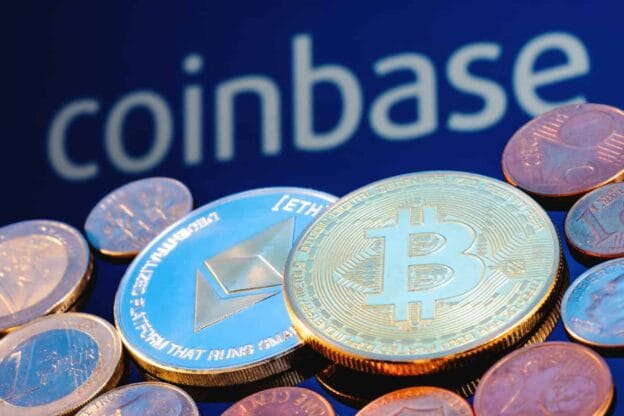
Coinbase Commerce
Coinbase is one of the world’s largest cryptocurrency exchanges, and it’s the most popular in the United States. Its large user base enables it to provide users with incredible features that make their lives easier.
For individuals who wish to enter the crypto market, Coinbase serves as an on-ramp and off-ramp, enabling them to buy, sell, and trade crypto in their local currencies. Coinbase offers this service for free for the first $1 million in transactions, after which it charges a 1% merchant fee.
Coinbase also provides a cryptocurrency gateway through which merchants can make sales. WooCommerce and Shopify are both supported by Coinbase Commerce. On the other hand, one of the main drawbacks of the platform is that it is custodial. In other words, merchants will not have complete control over their private keys when holding crypto in a Coinbase account, resulting in the possibility of losing money.
BitPay
While cryptocurrency is still a relatively new technology, BitPay has been involved in cryptocurrency payments for more than a decade.
The cryptocurrency payment gateway technology offered by BitPay relies on an invoicing system based on a simplified QR code. By locking in the currency rate at the time of sale, BitPay protects businesses from market volatility. This process lets you accept a cryptocurrency payment while never having the money pass through your hands unless you don’t want your payments in cryptocurrency.
BitPay business uses the auto conversion feature to receive every cryptocurrency accepted in dollars and euros via direct bank transfer.
With the BitPay cryptocurrency payment gateway solution, you can accept payments using your tablet or laptop. Merchants can deposit funds in the BitPay Wallet, a one-of-a-kind custodial wallet. They can also use their cryptocurrency to make purchases from other cryptocurrency merchants.
CoinGate
Coingate offers an advanced, user-friendly app that enables merchants to set up and manage payments directly from their phones. It also supports 40 other cryptocurrencies, which means that companies may significantly increase the number of payment methods they provide by utilizing this crypto payment gateway.
To make things even more interesting, Coingate offers a range of plugins and even supports the integration of the bitcoin payment button on any website. Coingate charges a 1% fee on all transactions, typically taking roughly an hour.
AlfaCoins
AlfaCoins, unquestionably one of the top bitcoin payment processors, enables users to split payments between cryptocurrency and fiat currency. It is an excellent option for merchants who want to keep some bitcoin from each transaction to profit from rising prices, as it allows them to protect their interests without risking the entire amount of the transaction.
While AlfaCoins offers a slightly lower transaction charge of 0.99 %, it does not give the $1 million in free transactions as Coinbase does. However, AlfaCoins charges no additional fees to establish the bitcoin payment system and does not require a subscription. Aside from Iran and North Korea, AlfaCoins can be used in any country. It is also possible to withdraw funds in USD or EUR.
NOWPayments
NOWPayments is one of the more basic and uncomplicated crypto gateways on this list with no custodial features. While most crypto gateways provide low rates to businesses, NOWPayments has some of the lowest available, as long as you don’t mind being reimbursed in the same currency you were paid in.
It can process over 50 different coins, which should satisfy most of your needs if you want to expand your payment alternatives beyond the typical suspects. Transaction costs start at 0.5% and drop as your monthly sales volume increases. If you’re going to settle for a currency other than the one you received, you must pay an additional 0.5%. There is also a fixed rate exchange option to protect you from volatility, which increases the base charge to 1%.
GoCoin
GoCoin is popular among developers all around the world. This is because it provides a fundamental and simple API for them to use. GoCoin has a plethora of plugins, allowing it to be utilized on various online shopping platforms, including Shopify.
This cryptocurrency payment gateway’s customer service is well rated. It offers payouts in USD and levies a flat 1% fee on all transactions. It is supported in all but a few nations worldwide, making it a viable option for merchants.
Conclusion
Choosing a cryptocurrency payment processor is one of the first steps on your route to success. While crypto payments are still in their early stages, they can be a low-cost alternative to processing non-cash transactions when credit card transaction rates are increasing. Make sure you choose a provider with a good reputation and affordable rates that will provide you with the desired exposure level to cryptocurrency.
The eCommerce market has been growing dramatically in the last few years, particularly during the pandemic. According to eMarketer, worldwide eCommerce sales exceeded $5 trillion for the first time in 2022 and are expected to climb past $7 trillion by 2025. Starting a business in 2026 centered around selling eCommerce products is more relevant than ever.
However, succeeding in eCommerce takes more than just selling anything online. You need to choose the right product.
In this article, you’ll learn about 25 eCommerce product ideas that have the potential to be big winners in 2026. In addition, there are also tips for choosing the product that works best for you and suggestions for places to continue looking for more ideas.
Top 25 eCommerce Product Ideas to Start Selling Online
There’s a wide variety of products you can sell that are in great demand. The key areas to target are related to personal care, eco-friendly alternatives, work-from-home solutions, or tech gadgets. Take a look at this product list to find your next eCommerce project:
1. Home office solutions
Working from home has never been more popular, possible, or accessible. So naturally, products oriented towards creating your own home offices are in high demand.
In 2022, 16% of all companies have shifted to fully remote work, and 58.6% of the U.S. workforce works remotely. The circumstances of the pandemic caused the vast majority of Americans to switch from in-person jobs to remote work. And this phenomenon was seen all over the world.
Office chairs, seat cushions, and desks are good alternatives to offer comfort at home, while Wi-Fi repeaters and range extenders are great products that improve connectivity.
2. Home decoration products
With more people than ever working from home, it stands to reason that they’ll be interested in making their personal spaces more appealing, and the data supports this. The home décor market was already trending back in 2020, and it’s forecasted to have a constant growth of 4.8% between 2022 and 2026.
Carpets, beddings, and storage containers are just some of the products you can offer in this space. The benefit of these products is that their appeal is not limited to remote workers, which explains the projected constant growth of the sector.
3. Candles
If you are looking for a home décor product that is consumable and can be bought repeatedly by the same customers, candles are a great choice. They fill that desire to beautify your personal space and are easy to dispose of once all the wax has been consumed.
One great thing about candles is that they don’t need to be your entire business. You can easily sell them as part of a more extensive line of products, like beauty or meditation brands.
4. eLearning courses
Subscription-based products have been on the rise for a while now.In that category, eLearning courses are shining due to their low setup cost, as well as their ability to be sold over and over with little to no additional input. There’s only one significant investment with this product, the time and energy required for the initial creation. Once the course has been created, you don’t need to do anything else other than selling it.
You most likely already know enough about a topic to create your own course; you only need to arrange that information in a digestible package.
5. Subscription boxes
Building on the previous point of subscription services, one popular idea is selling subscription boxes that cater to specific interests. With these products, you get money so long as the customers remain subscribed.
A subscription box can take many forms, from catered snacks to food delivery kits, comics, toys, and even cosmetics. There are a lot of different approaches you can take to this idea, which makes it easier to tailor it for a specific niche.
If you can find one market that hasn’t been tapped by the subscription box craze, you will likely hit a gold mine.
6. IoT Devices
We’ve evolved from smart devices to those that interconnect to create a unified ecosystem of convenience. IoT, which stands for Internet of Things, is the term used to describe these types of devices. More and more people are looking for products that can synergize with those they already own and create a sort of “smart home” that they can control through one device or even their voice.
Smartphones are an obvious one, but there are also smart refrigerators, cars, and air conditioners. If this sounds out of your price range, you could go smaller with smart light bulbs, speakers, or watches.
7. Smart Lighting
Continuing to build on the IoT point, smart lighting is anexcellent choice for a smart product that is budgetfriendly for the seller and the buyer. The market for smart light bulbs has been growing incredibly fast and is expected to continue growing at a rate of 20.4% annually.
It gives customers a way to upgrade their home with a smart device that’s convenient, and even fun, at a reasonable price.
8. Software as a Service (SaaS)
With the increased evolution of our marketplaces and workplaces, businesses have felt the need for software options that are flexible and fulfill a wide variety of requirements, or just concrete ones. Customers, too, have demanded services that some of the current software solutions can’t provide.
That’s where Software as a Service, or SaaS, comes in. For people that have coding skills, selling a software solution that’s created specifically to solve the needs of a business or individual. But SaaS isn’t about a one-and-done deal.It’s about providing continued support to the end-users through tech support and additional changes.
9. At-Home fitness equipment
One of the other trends that you will notice on this list is an increased interest in products oriented towards improving your health and general wellbeing.Within that space, at-home fitness equipment has become particularly popular. Thanks to the ease with which we can look up exercise routines online, it’s easier than ever todo your own workouts at home. Plus, people are flocking to their own in-house gyms,thanks in part due to the effects of the pandemic.
Yoga mats, stationary bikes, and resistance bands are some popular products in the home fitness equipment area. You’ll want to target something that’s convenient, easy to use, and doesn’t require too much space.
10. Shapewear
Foundation garments, more commonly known as shapewear, havebecome so popular that even Kim Kardashian launched her own line, Skims, back in 2019. What started as a trend for women to look more fashionable has evolved into a culture of empowerment, body positivity, and inclusivity. These products are no longer about looking good but instead feeling good in your own skin. This continues the trend of products targeted at taking care of yourself gaining popularity.
Another similar product is athleisure, a type of hybrid clothing meant to provide comfort while still looking good. Both markets are expected to see continued growth in the future.
11. Skincare products
The skincare industry has always been popular. It’s been estimated before that the average American spends over $300 on skincare every year. With the increased awareness of physical wellbeing, this is likely to go up.
However, this isn’t an easy industry to get into, as there are a lot of safety regulations and tests to pass. On the other hand, these same barriers make it so competition is more limited than other products on this list.
12. Air quality appliances
Continuing the healthcare trend is the rise of interest in products that improve air quality. Air humidifiers, dehumidifiers, and purifiers are the main products in this category. These threefocus on different aspects of the air we breathe and, as such, don’t compete directly with each other.
Humidifiers increase the humidity levels in a roomthrough the use of water vapors or steam, while dehumidifiers do the opposite. The former is meant to help with issues like dry throat, nose, and skin, while the latter handlesallergies caused by mold and bacteria.
Lastly, purifiers remove air pollutants like pollen, spores, and pet dander through the use of a filter.
13. Air Fryers
Another product that’s on the rise thanks to increased health consciousness is air fryers. More and more people are looking to lower their use of oil to fry foods, in a bid to lower cholesterol levels. Not only that, but a lot of people find air fryers significantly more convenient, thanks to their “fire and forget” approach to frying.
With the technological advancements in this space, they are easier to use and more energy efficient than ever, which is a great selling point.
14. Pandemic-related items with longevity
The pandemic saw a meteoric rise in interest formany products. While some of these, like toilet paper, have come back down to reasonable levels, other products continue to remain popular.
For example, oximeters to help keep track of your health and board games to have fun with folks at home.Anything pandemic-related that has use outside of the pandemic is a potential high seller.
15. Baby products
There are products that will always be popular, such as those targeted at mothers and babies. This is a market that will always exist, but also one that has been growing thanks to increased spending around the world. Parents are more concerned with safety and convenience than ever before, and products that answer those needs can carve their own spot in the market.
Currently, baby carrying straps, bouncers, and breast pumps are particularly popular products. Toys meant to help babies develop can also be a good choice.
16. Pet Products
Another market that is unlikely to go away anytime soon is that of pet products. The demand for online stores centered around our animal friends has continued to grow. Pet food is one product that will always be needed, but you might find it easier to offer other items like bathing tools, toys, or carriers.
The last item, in particular, has become more popular over time, with people looking for ways to travel with their pets while ensuring their safety and comfort.
17. Cannabis products
The cannabis industry is absolutely massive, even though its legal status in several countries across the globe remains a touchy subject. The market is projected to grow to $70.6 billion by 2028, and society’s views surrounding its recreational and medical uses are quickly shifting.
In the United States, cannabis is considered legal for medical purposes in Washington D.C. and 35 states. It’s also legal for recreational use in 16 states. In the U.S., CBD products can be legally sold in any state. THC products, however, are not legal in all states yet.
While cannabis is slowly being decriminalized in several other countries, including those in Europe, Africa, and South America, it still carries harsh punishments in many countries.
Make sure you are following your local laws and regulations if you decide to sell this product.
18. Biodegradable products
Thanks to an increased consciousness of the impact of climate change, eco-friendly and biodegradable products have gained popularity. Products that use environmentally friendly materials, or that are easy to recycle, have gained interest in the eye of a customer base that is more concerned with their ecologicalfootprint.
For example, some vendors are offering laptop sleeves and phone cases made out of compostable materials. There are even compostable yoga mats made out ofcork, which would allow you to tap into two markets simultaneously.
19. Reusable water bottles
Another product idea that targets those worried about the environment is reusable water bottles. It continues to build on the interest in sustainable products that current and upcoming generations have.
One significant aspect of this product is how much personality can be given to it through changes to its shape, color, design, or logo. You can customize your bottle to fit the image of your brand.
20. Phone accessories
All over the world, smartphones are one of the most common devices people own. And in the world of phones, accessorizing is second nature. It’s estimated that 83.7% of the world owns a smartphone, with 97% of the U.S. having a cellphone of some sort. That’s a gigantic customer base for phone accessories.
There are a lot of different products that you can sell to phone owners, which can help provide better functionality to their phones, make them last longer, or make them more visually appealing. For instance, in the convenience area, you can provide power banks, wireless charging stations, tripods, and wireless headphones.
21. Car accessories
While working from home is on the rise, people still spend a significant amount of time commuting to work, or just driving around in their cars. Not only that, but thanks to apps like Uber and Lyft, working from your car has turned into a popular job alternative.
And just like people enjoy customizingtheir home offices, they love personalizing their cars. Some of the products for car customization offer additional features or convenience, such as USB chargers, phone holders, or rear cameras.Other products target the comfort aspect, like air fresheners and seat covers.
22. Drones
The drone market is growing and evolving rapidly. Drones are used extensively in the military for their surveillance capabilities but have also been adopted for commercial and personal use thanks to improvements to the technology, and its price.
The drone market is expected to grow at a compound annual rate of 16% between 2022 and 2026, so the potential for this product is significant.
Nowadays, it’s not uncommon for people to own a drone. This has opened the market to hobbyists that want to have the latest and the best.
23. Jewelry
In this day and age, personalization is the name of the game. This has been highlighted by several prior entries in this list and can be seen very plainly in the evolution of the jewelry market.
Jewelry has moved from being more of a high-end product to one that’s more accessible to all. Marketplaces like Etsy have given rise to more personalized jewelry items that are still affordable.
24. Hair scrunchies
This might sound out of place with other products on the list, but thanks to a recent comeback, hair scrunchies are a strong candidate for eCommerce product. According to Pinterest, scrunchies outranked all other beauty trends in their platform by 6,309% back in 2020. While they aren’t as popular as during that year, they are still an appealing prospect thanks to their popularity and low cost.
25. Sex toys
While in the past such a product proposition might have seemed outrageous or out of place, societies changing sensibilities towards sexuality have given rise to increased adoption of sex toys as mainstream purchases. It’s even considered an aspect of self-care.
And the market is evolving with technology, with new toys having more tech-based functionalities and even falling into the area of IoT devices.
How to Find the Right Idea for You
With so many product ideas to choose from, selecting one might seem like an impossible task. However, it’s not one to be taken lightly. While all of the aforementioned products have a lot of market potential, they might not all be the right fit for you. When looking to choose which product to sell, consider the following:
Your location and the type of market regulations that you’ll face there
The offerings of your current competitors or potential competitors
The channel you would use to sell the product
Whether you will be drop shipping or wholesaling.
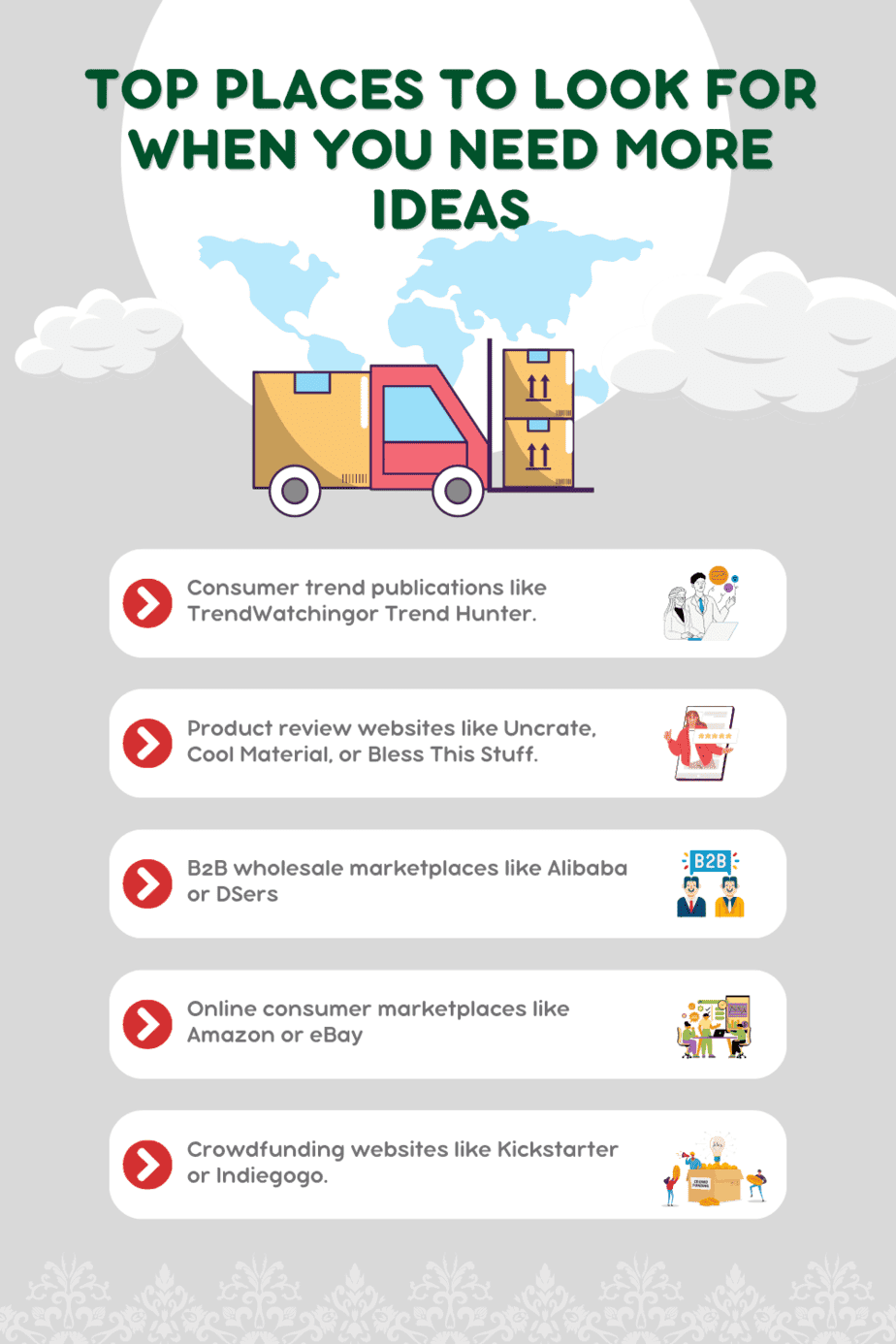
Places to Look for When You Need More Ideas
If you didn’t find an idea in this article that resonated with you, you could try looking for inspiration in other places. Here’s a brief list of spaces where you might find inspiration for a new product idea:
Consumer trend publications like TrendWatchingor Trend Hunter.
Product review websites like Uncrate, Cool Material, or Bless This Stuff.
Social curation sites like The Fancy or Wanelo.
B2B wholesale marketplaces like Alibaba or DSers
Online consumer marketplaces like Amazon or eBay
Crowdfunding websites like Kickstarter or Indiegogo.
Social media networks like Instagram or Pinterest.
Your competitors.
Closing Thoughts
The best time to jump into the eCommerce market was five years ago. The second-best time is now. This market is growing more and more every year, and the business opportunities keep increasing with this growth. If you target products that satisfy the public’s increasing interest in personalizing their spaces or taking care of their health and environment, you will be on the right path, given the current trends.
Many experts are now growing more confident in their beliefs that Bitcoin will hit $100,000 sooner than people think. Many also strongly believe that it will hit that price point by the end of 2022. These claims are backed by technical and fundamental analysis.
News and Indications
The world of cryptocurrency has recently come about with some potentially bullish news. To start with, President Joe Biden has finally signed the cryptocurrency executive order in March of 2022. The markets had been waiting on this order for months to gauge its potential impact. As a result of this executive order, BTC jumped higher with the removal of uncertainty from the market, however it has recently suffered declines along with the broader market. However the issuance of this executive order did remove the overhang of some uncertainty that had potentially been holding back many crypto assets. Many experts say this executive order may spark other occurrences that help propel Bitcoin to greater heights.
Some analysts agree that the price of each bitcoin could go as high as a million dollars. Out of all of the catalysts that have got bitcoin so far, Walmart just may be the one that pushes it significantly higher. It is now hosting Bitcoin ATMs where you can go in and buy bitcoin with cash.
In other happenings, you also have the Houston pension funds that are supposed to pay retired firefighters. They have a five billion dollar pension, out of which, they used 25 million dollars to purchase Bitcoin and Ethereum. This is a good indication that big money investments are now starting to enter the crypto space.
Facebook Partners with Coinbase
Facebook is partnering with Coinbase to introduce its wallet. Very soon, people will be able to send cryptocurrencies to each other using the platform. Not to mention, Facebook’s brand reinvention into Metaverse is also a bullish indication for Crypto. Anyone who has not invested in Bitcoin yet may change their minds once Facebook introduces its crypto wallet.
Bitcoin’s Price
The market cap of Bitcoin has reached 1.2 trillion dollars which means that it is very close to surpassing the entire market cap of silver. Despite its rising price, many critics still believe that Bitcoin does not hold long-term value, and this is because its price has fluctuated over many stages and cycles. To get a better perspective on the price of Bitcoin and where it could be headed, it is important to look at the stock-to-flow model.
This model looks at finite limited resources such as gold, diamonds, and other commodities. Looking at these commodities, one can somewhat accurately predict the price of a particular asset sector in the future. Many experts have used the stock-to-flow model and applied it to bitcoin.
Keep in mind that this model only looks at the stock, which refers to the amount of something in existence. It then compares it to the flow, which refers to the rate at which you create, produce, or find something. The stock-to-flow model for bitcoin has been extremely close to following its price, and according to its chart, the price is on the verge of something very big about to happen.
Bitcoin is Backed by Strong Narrative
One of the biggest reasons why bitcoin has been accelerating in value is because of the narrative behind it. Money is on everyone’s mind, and the narrative surrounding bitcoin is getting stronger, which will lead to further adoption. This narrative has to do with how the government is still printing plenty of fiat currency and using it as an easy escape to get rid of their economic shortcomings.
Excessive printing of money is causing high rates of inflation in the country along with other factors. This allows them to use the money to buy up bonds, corporate debt, and other assets. This incentivizes people with money to buy assets which are perceived to be a store of value, like commodities and now also cryptocurrency. All of this has the effect of asset inflation which leaves more dollars in the system competing for the same amount of goods.
This does not mean that your net worth is increasing. Instead, it simply just takes more money to get the same amount of available goods. This narrative of money is very persistent and will set the foundation for bitcoin adoption.
How Talking Points and Distrust Will be Enough
Inflationary pressures have investors strongly considering alternative asset classes as a way to stay ahead of the curve. Historically investors have looked to perceived “stores of value” like gold and silver to stay ahead of inflation, but cryptocurrency has potential in this area.
For some investors, they may consider putting all of their money into stocks, as a means to outpace inflation. For some, this means putting their money into bitcoin and crypto assets. Many are even labeling bitcoin as the fastest horse in the race of all existing asset classes according to the data. Some models predict that bitcoin is the best hedge against inflation.
Final Thoughts
Overall, gauging bitcoin’s performance will require plenty of patience, and since it is dependent on some external factors like world events, anything can happen in terms of its valuation. Whether or not its price will reach the $100,000 mark by the end of 2022 is very debatable. However, there are more bullish fundamental indicators than bearish ones, which is why you can expect good things from your bitcoin investment.
Over the last few years, the B2B payments landscape has seen numerous advancements, gaining considerable traction in the business space. A study by Gartner predicts that in the span of the next few years, 80 percent of B2B sales transactions between suppliers and buyers will take place over digital channels. The opportunity to make B2B payments will provide astronomical benefits to all sectors of the market. Keep in mind that about 28 trillion dollars worth of B2B transactions occur on an annual basis. 1.8 trillion of that amount ends up being card payments, while 12 trillion goes through checks.
B2B Payment Landscape
Many interesting things are happening in the world of B2B eCommerce. Besides the fact that it is a 12.2 trillion dollar market– that’s six times larger than the B2C market! –around half of all sales are recorded through manual processes. Sales reps, purchase orders, and paper-driven business processes are in need of extensive upgrades.
There is a massive opportunity for innovation in the B2B commerce space. Taking advantage of this opportunity can accelerate companies’ growth, whether they’re already there or are looking to enter the space. Now, new marketplaces, distributors, and industry players are making a big difference in helping the overall market to grow. However, traditional methods are yet to improve when it comes to the payment types within the market.
You have to think about companies making larger payments to suppliers or vendors. When you are a supplier dealing with a business, remember that they will not pay anyone upfront, so the way you get paid can vary. In this case, knowing B2B payment processing tips can help.
How Do Payments Affect B2B Commerce?
B2B companies that are starting to go online, whether they have just started operations or have some eCommerce experience, need to consider payment methods. The speed at which companies conduct business operations is increasing rapidly, and today’s payment processes need to be efficient and solid to support online transactions. In this highly digital world, banks are taking measures to accommodate the speed at which businesses are continuing operations.
They are working with industry leaders to accelerate business-to-business payments by incorporating modern solutions that meet the demands of the future. The aim of such system integration is to replace checks and invoices with end-to-end automation and technologically advanced solutions. Whether it is invoicing, payments, remittance information, and more, change is inevitable.
Trends of B2B Payments
Moving Away from Paper
Consumers are no longer relying on paper transactions and have decided to move to digital alternatives since they are cheaper, faster, and safer. 59% of users currently use mobile banking, but businesses aren’t catching up. Despite mobile banking being a digital alternative, it is nowhere near the scale of B2B payments that you can use today. Companies will soon realize that a scalable and standard process is well within reach. Implementing and deploying B2B payment methods will mitigate paper processes to a large extent.
Making B2B payments using manual methods will have its fair share of errors. It is also more costly and time-consuming than digital alternatives. Digital innovations in the B2B payment sector are causing businesses to strategize their processes, ensuring they are more streamlined. Innovations that include these strategies present businesses with the opportunity to re-imagine their current payment system entirely. This maximizes the efficiency of payment processes at every step of the way.
Transformative Benefits
Businesses benefit from adopting electronic payments. Automating business processes offers further advantages, which is critical if you wish to survive in today’s economy. These include error reduction, cash management, increased transparency, risk mitigation, and more.
One of the trends also includes electronic invoices, electronic remittances, and other automatic financial procedures. All of this combines to make payments less manually intensive and quicker. It also frees up employees’ time, so instead of keeping up with payments, they enjoy the peace of mind to perform important tasks that contribute to the business’s growth.
Digitalization also helps businesses manage cash flow capabilities with real-time data management. Ultimately, decreasing invoice payments can help businesses avoid delayed payments and take advantage of early payment discount programs. Virtual exchange systems of value are much more efficient and reduce any potential for human errors.
Risk Mitigation
B2B payment trends that take virtual undertakings are also very low on risk thanks to limited manual processes and a low volume of paper checks, which minimizes the risk of fraud. It will also increase transparency, making cash more manageable. Reports tracking unpaid and paid invoices bring about greater insights that lead to a better automation process. It also makes payments more secure and stable for businesses, which opens up more revenue generation opportunities.
E-remittance
The data collected by the E-remittance technology make payment applications faster and more precise. It also improves the accuracy of receivable balances and different accounts. Though the benefits are clear, frameworks for account management may differ in the coming future. Service providers are likely to act as service points to deliver data and information to clients.
Concluding Words
B2B payment trends in 2022 will have standards that ensure interoperability, allowing businesses to incorporate a highly compatible payment option that receives payments through various channels. Payment systems in the future will formulate a virtual framework that will help businesses enhance connectivity and value across an expansive cross-border network. Suppliers will likely have to engage with providers and locate access points. All of this will help make payments more accessible for B2B transactions.
On May 10th, Coinbase announced that it had filed for a registration statement with the Securities Exchange Commission (SEC). The announcement came along with their reports for the first quarter of 2022, where they reported missing the revenue estimates that were previously given by analysts and sending shares down as much as 19%.
In a released statement from Coinbase discussing their registration statement with the SEC, the statement was intended to be used for potential prospective offerings, including the sale of new securities. However, new securities won’t be immediately available.
This statement, and their recent Q1 results, came during a major sell-off in the crypto market which has been referred to by some as a crypto crash, with Bitcoin dropping below $30,000. Coinbase has lost more than 70% of its value since late March.
Coinbase commented on its goals and approach to capital structure over the years, stating that its aim has always been to raise capital at the lowest cost possible to its shareholders. They expect that the shelf registration would speed up the process of issuing securities to a matter of days, which they hoped would allow them to time the market conditions better.
While these are the company’s statements on the matter, the reality is that their decision could have been driven by other factors, such as the uncertainty surrounding crypto assets regarding the U.S. federal securities law, as well as the mounting pressures for crypto regulation.
Coinbase reported, in their filing, that the SEC traditionally doesn’t confirm the status of crypto assets as securities in advance. Since the evolution of crypto assets and their classification is still ongoing, it’s difficult to predict how to classify them. The only crypto assets that the SEC has given a definitive view on are Bitcoin and Ethereum, which they don’t see as securities. However, Coinbase stated that the SEC’s views are not binding for courts, other agencies, or even the SEC itself. Coinbase believes that should the SEC change its approach, it could have a significant impact on the business.
Other crypto assets have yet to be ruled out as securities by the SEC under their current rules, though the company’s analysts argued that none of the assets traded on their platform are considered securities.
For their part, Coinbase gave a warning on their filing for people investing in crypto assets. They warned that should the SEC, or any other regulatory authority be it national or foreign, determine that a crypto asset traded on the platform was a security, Coinbase wouldn’t be able to continue offering said asset until they could do so in a compliant manner.
This statement helps shed light on Coinbase’s decision to file with the SEC, as they seem to be preparing in advance to offer crypto assets on their platform that are considered a security by the SEC or any court.
The registration has more potential benefits for Coinbase, as it would allow them to provide the company’s crypto products and assets on top of those from third parties. As of now, there is regulatory uncertainty regarding the company’s yield-generating activities such as staking and lending. These could eventually be considered securities, but the filing would allow Coinbase to act quickly on that matter.
Coinbase also revealed that it had received investigative subpoenas from the SEC regarding its stable coin and yield-generating product plans. Should these be classified as securities, the registration could help the company keep these services afloat by meeting the necessary compliance measures.
In the last part of their statement, Coinbase mentioned that they believed this shelf registration statement would enhance the company’s flexibility, as well as enable access to other capital markets more efficiently and effectively when market conditions were optimal.
The pandemic left a major impact on the way things work. From business operations to the way we interact – it affected everything. It also pushed companies to reconsider the incentives they use to attract employees. This is largely driven by employees’ newfound demand for remote working opportunities. Another example includes applications that allow workers to get paid on a daily basis. With just a few clicks, they can withdraw money as soon as their shift ends.
There’s immense competition among businesses to hire the right hourly workers as the labor market is very tight. This has created a situation that favors the worker because they now have a variety of options to choose from. The current condition of the labor market has led to these applications becoming a key recruiting tool. Company owners using these instant payment methods explain that these have helped them attract new employees and manage their money better.
Job candidates can easily go onto the application and see how much they can earn on an hourly basis as their work shift continues. Since workers find this system very convenient, many recruiters are marketing its integration to draw more applicants to their companies.
Employees are also starting to recognize how great it feels to clock out after a shift with more money in their bank accounts. Hourly workers see numerous benefits of such a system, like having gas money for one’s car immediately after a shift, making instant pay seem like a practical solution for employers.
Early Adopters of Instant Pay
Some of the first businesses that implemented instant pay include nursing homes, and they continue to use this technology today. Moreover, millennials find the instant payment system to be ideal since it fits right into their lifestyle. To start with, instant pay solutions are easily compatible with mobile applications and digital solutions.
Tech-savvy users who describe themselves as digital natives find this feature quite lucrative. Nowadays, candidates and prospects are actively looking for such options on social media so that they can land a job where they can enjoy flexibility through instant payment systems. To integrate a payment method that helps employees get their hands on their money instantly, companies are relying on applications such as Instant Financial. This application allows workers to get paid a few minutes after clocking out.
One aspect of a weekly payment system that attracts employees is that they’re able to save money by getting an accumulative amount at the end of the week. This way, the application also caters to workers looking to save money through weekly payments.
It has an option that allows employees to control how much money they get at the end of the day. For instance, they can choose to withdraw only 50% of their earnings at the end of the shift. This will allow them the flexibility that millennial and tech-savvy prospects demand. For companies looking to attract new talent, applications such as these prove quite effective.
Instant pay systems, applications, and other new ways to pay that are similar have been at the forefront for many giant companies and retailers when it comes to recruiting. With applications such as these, employees are leveraging the convenience of being able to access their funds instantly. What’s more, these types of apps keep you from delaying necessary tasks simply because you’re waiting for your next paycheck to arrive.
Pay Apps and Their Benefits to Employers
Overall, an employer’s biggest win is employee retention. If they can keep an employee satisfied enough to remain in the company for a long time, it increases productivity and helps with growth. In a competitive environment where many companies are implementing tactics to attract prospects, this can be difficult.
Implementing innovative payment systems for instant payments can prove integral for employee retention. This can solidify an employer’s employee base and help them form a satisfied workforce. In the long term, this can improve productivity and help ensure the company’s growth.
It’s also worth keeping in mind that instant pay options keep employees from seeking short-term loans and lending opportunities. Such loans, often called payday loans, can potentially put them in never-ending debt. Lending and borrowing never come without stress and emotional burden. Employers can prevent this from happening by helping them get paid quickly. This way, employees can avoid troublesome bill collectors, tax collectors, and landlords pushing them to make payments.
When you pay employees as soon as their shift ends, they no longer have to loan out products and services at hefty interest rates. This has a resounding impact on their finances and keeps them emotionally and mentally healthy. These applications also help reduce employers’ burden since they no longer have to make special amends to ensure employee satisfaction.
Financial Stability Factor
Debt can single-handedly make things very difficult for a happy employee. The fact that daily payment systems can help workers dodge stressful debt makes it an impeccable solution for employers.
Employers can use many angles when trying to attract employees with instant pay, with one of the strongest ones being the ability to control how much money you make in a company. After all, the rewards of your labor should be instantly redeemable since you’ve put in the effort to produce results.
Final Words
Companies are beginning to realize this, and applications and systems are making it possible for them to implement it. This is an employee benefit that has the edge over all others when companies are trying to retain and attract employees.
On May 11, the Fintech Firm FIS and the Banking-as-a-Service startup Treasury Prime revealed through a press release that they are partnering to launch an embedded finance tool. One of the main reasons they cited was the growing need for financial institutions to provide digital banking experiences to their customers, a necessity that is exacerbated by the digital transformation of the global economy.
In their statement, FIS remarked on embedded finance being a key trend in the finance industry, as it allows companies the ability to provide FinTech services through their digital channels such as payments, banking, investments, credit, and insurance.
This news comes just a month after FIS unveiled its Banking-as-a-Service Hub, on April 12. Back then, FIS said this tool would provide institutions of all sizes a full suite of banking and payment capabilities, as well as allow them to configure new financial service offerings with ease.
FIS’ aim with this tool is to provide small to medium-sized financial institutions with the necessary tools to complete, thanks to improved digital banking services. According to FIS’ release, this tool would allow the institutions to provide new methods for managing deposits and accounts payable transactions, as well as other banking functions, remotely and digitally.
FIS’ Head of Payments, Kelly Beatty, stated in the release that embedded finance is growing as a trend due to the way it empowers businesses to quickly implement innovative ideas through the combination of financial services with user experiences. One example she mentioned was how embedded finance allows commercial services like lending and insurance to be handled with the same convenience as regular app purchases.
Beatty also stated that the needs of the customers was the focus of these services. In the release, she said that customer’s expectations could be reached through the integration of financial services into business software, new channels can be created that can reach even more financial services.
On their end, Treasury Prime’s CEO Chris Dean said that the banks that take advantage of these embedded services can become the foundation for a new generation of financial institutions, and that embedded finance could bring them new potential revenue streams.
In the press release, it was also revealed that Grasshopper, a digital commercial bank, would be the first financial institution to use FIS’ embedded services tool.
The market for embedded finance experiences continues to rise, with one study finding that 23% of consumers had used buy now pay later (BNPL) to split large purchases into smaller installment payments at the point of sale (POS).
In their increased bid to boost their embedded finance capabilities, Fintech platform FIS has acquired Payrix, the embedded payment company. Payrix was founded in 2015 and has provided embedded payment solutions to serve SMB eCommerce merchants.
According to their press release, this would boost their eCommerce offerings to companies regardless of size or industry, through the addition of embedded payments using a Software-as-a-Service platform (SaaS).
This continues FIS’ expansion of payment capabilities that started with the acquisition of Worldplay in 2019. The acquisition will allow FIS to expand its reach to a global scale, as well as include new capabilities such as automated digital onboarding, billing, compliance, and settlement. This would let the company expand into the SMB eCommerce market, as well as others.
This acquisition gives FIS more share in the embedded finance industry, where they were already a powerhouse in terms of banking solutions for depositing, lending, or issuing payment assets.
FIS didn’t disclose the terms of the acquisition, nor were they included in their February financial results.
FIS’ bets for more embedded finance services are grounded in reality. 60% of decision-makers at financial institutions in the UK have integrated at least one piece of digital technology in the last year. Embedded finance services are quickly gaining popularity worldwide. Around 57% of legacy financial institutions expected to take advantage of FinTech partnerships, with close to 48% of them seeing this as essential to innovate. Furthermore, 52% of these institutions are considering the potential of developing disruptive technologies, while 25% believe that they can make their services more appealing through their use.
Everything points to FIS making the right decisions in terms of acquisitions, with the payment and finance sector quickly evolving and companies rapidly absorbing one another. FIS’ rival, Fiserv, acquired the remaining stake of Finxact for $650 million, while another company, Fintech Amount, bought Linear for $175 million. This was around the same time that NMI, the global payment platform, acquired IRIS.
For their part, FIS reported net earnings of $4.1 billion for 2021. This was an increase of 19% over 2020, with their fourth-quarter alone reporting $1.2 billion in net earnings, up 16% from the previous year. Their revenue, meanwhile, was up 11% both for their fourth quarter and the whole year of 2021. Revenue for the fourth quarter was $3.7 billion, while the year as a whole saw $13.9 billion in revenue.
The consumer price index (CPI) fell from 8.5% in March to 8.3% in April, according to the report from the U.S. Bureau of Labor Statistics, failing to meet the expectations of Wall Street for consumer prices and inflation. Economists had previously forecasted a drop to 8.1% for the same time period, owing to raises in rates from the Federal Reserve. However, it still was the first drop in eight months. While experts believe that inflation may finally have peaked, others feel that the Federal Reserve will need to be more aggressive regarding the interest rates for things to return to normal levels.
This is reflected in the way that prices went up. The consumer price index went up 0.6% for most items between March and April, with the exception of groceries and gas. Wall Street expected a rise of only 0.4%, given that the increase was 0.3% in March. The fact that the increase doubled is a sign that inflation is still a factor.
This increase in prices caused the stocks to end lower once more. The Dow Jones Industrial Average finished 1% lower, or over 300 points,the same day the report was released. The S&P 500 meanwhile fell 1.6%, and Nasdaq Composite fell by 3.2%.Some of the heaviest hits were felt in the Tech industry, with companies such as Netflix, Amazon, Apple, and Tesla falling by 3% or more due to the continued offload of shares by investors.
This data has worsened the state of the crypto market, as well as further eroded the confidence of its investors. Bitcoin’s price fell another 7% to reach around $29,000, its lowest point since the late 2020-early 2021 surge in price. Though it has since stabilized at around $30,000.
While food, shelter, and vehicle prices surged, gas prices fell around 6%, which helped counteract the overall increase and slow the rate of inflation. Experts believe that the peak of inflation has most likely been reached, but that the prices will continue to be above the Fed’s expectations during 2023. The chief economist of Comerica Bank, Bill Adams, stated that the slower inflation seen in April was most likely an effect of March’s gas price surge, itself owed to the Russia-Ukraine war.
This slow down of inflation, after a 40-year high, paints a slightly better picture after months of price increases. Still, April was the second-highest inflation level in four decades. The Federal Reserve set a 2% rate of inflation as its target, but experts expect that to rise to 5% or 6%, one of its highest points in history.
Chris Zaccarelli, chief investment officer of Independent Advisor Alliance, stated that the Fed would need to raise rates more quickly and to higher levels in order for things to stabilize. He predicted at least four 50 bps rate hikes during 2023. On May 10th, one day before the report was revealed, United States President Joe Biden referred to inflation as his top domestic priority and the mainproblem that families are currently facing. This increased escalation in inflation is owed, in part, due to disruptions in supply chains caused by the worldwide COVID-19 pandemic.
Cookie Consent
We use cookies to enhance your browsing experience, analyze site traffic, and support our marketing.You can accept all cookies, reject non-essential ones, or manage your preferences below. Learn more in our Privacy Policy.
Cookie Preferences
Manage your cookie preferences below:
Essential cookies enable basic functions and are necessary for the proper function of the website.
Name
Description
Duration
Cookie Preferences
This cookie is used to store the user's cookie consent preferences.
180 days
These cookies are needed for adding comments on this website.
Name
Description
Duration
comment_author_email
Used to track the user across multiple sessions.
Session
comment_author_url
Used to track the user across multiple sessions.
Session
comment_author
Used to track the user across multiple sessions.
Session
Google Tag Manager simplifies the management of marketing tags on your website without code changes.
Name
Description
Duration
cookiePreferences
Registers cookie preferences of a user
2 years
td
Registers statistical data on users' behaviour on the website. Used for internal analytics by the website operator.
session
These cookies are used for managing login functionality on this website.
Name
Description
Duration
wordpress_logged_in
Used to store logged-in users.
Persistent
wordpress_sec
Used to track the user across multiple sessions.
15 days
wordpress_test_cookie
Used to determine if cookies are enabled.
Session
Statistics cookies collect information anonymously. This information helps us understand how visitors use our website.
Google Analytics is a powerful tool that tracks and analyzes website traffic for informed marketing decisions.
Contains information related to marketing campaigns of the user. These are shared with Google AdWords / Google Ads when the Google Ads and Google Analytics accounts are linked together.
90 days
__utma
ID used to identify users and sessions
2 years after last activity
__utmt
Used to monitor number of Google Analytics server requests
10 minutes
__utmb
Used to distinguish new sessions and visits. This cookie is set when the GA.js javascript library is loaded and there is no existing __utmb cookie. The cookie is updated every time data is sent to the Google Analytics server.
30 minutes after last activity
__utmc
Used only with old Urchin versions of Google Analytics and not with GA.js. Was used to distinguish between new sessions and visits at the end of a session.
End of session (browser)
__utmz
Contains information about the traffic source or campaign that directed user to the website. The cookie is set when the GA.js javascript is loaded and updated when data is sent to the Google Anaytics server
6 months after last activity
__utmv
Contains custom information set by the web developer via the _setCustomVar method in Google Analytics. This cookie is updated every time new data is sent to the Google Analytics server.
2 years after last activity
__utmx
Used to determine whether a user is included in an A / B or Multivariate test.
18 months
_ga
ID used to identify users
2 years
_gali
Used by Google Analytics to determine which links on a page are being clicked
30 seconds
_ga_
ID used to identify users
2 years
_gid
ID used to identify users for 24 hours after last activity
24 hours
_gat
Used to monitor number of Google Analytics server requests when using Google Tag Manager
1 minute
Marketing cookies are used to follow visitors to websites. The intention is to show ads that are relevant and engaging to the individual user.
Facebook Pixel is a web analytics service that tracks and reports website traffic.