As online shopping continues to rise, brick-and-mortar stores are continuing to look for ways to stand out. It is no secret that gift cards are a great way to incentivize purchases and drive business. According to a report by the National Retail Federation, 88% of adults received a gift card last year, and 43% used it within the first week of having it.
If you were never convinced about the benefits of launching a gift card program for your company, continue reading for more information. The following might change your perception and help to grow your business. This blog post will cover why you should consider implementing a gift card program in your business.
Top Reasons to Implement a Gift Card Program for Your Business
Consumers love gift cards
According to recent public data, the number one reason why consumers love gift cards is that they serve as a “one-size-fits-all” type of gift. However, there are additional reasons why gift cards are so popular. They are easy to buy and can be purchased during any time of the year. This makes gift cards flexible, convenient, and a great option for all individuals.
Gift cards are thoughtful gifts that can be used in any way the recipient chooses. Consumers can also receive gift cards as rewards for completing surveys, participating in focus groups, or achieving certain health or wellness milestones from their employers. These are all standard ways that gift cards are distributed to different groups of people.
Great way to build brand awareness and drive sales
If your brand is new, giving away gift cards is a great way to get your name out there. If a consumer tries your product or service but doesn’t have enough money to purchase it, they can always use their gift card to complete the purchase and leave your business satisfied.
You can also get your gift cards in the hands of new customers by hosting a contest or giveaway. You can then track how many people used the gift card to make purchases and calculate an ROI. If your brand is already established, gift cards are a great way to keep your current customers happy.
You can offer gift cards as rewards for completing surveys, participating in focus groups, or achieving certain health or wellness milestones. Additionally, can also offer gift cards to customers who refer others to your business. This is a great way to increase referrals, boost your customer acquisition, and increase your customers lifetime value.
Gain better insights into the behavior of your consumers
Gift cards are easy to redeem and will provide a wealth of information to your employees. You’ll be able to see where your customers live, what stores they visit, and what times they prefer to shop.
This information can help you understand the needs and wants of your consumers and help you to make more insightful business decisions. You can also offer gift cards in different denominations so that your customers can make purchases based on their income levels. This will allow you to test different gift card amounts to see what works best for your brand.
Increase foot traffic and improve branding through exclusive promotions
You can offer exclusive promotions to customers who use a gift card to make a purchase. For example, you can offer a free service, product, or discount on your first visit after using a gift card. This is a great way to increase foot traffic and improve brand recognition for your business.
By giving away freebies, you’re showing your customers that you appreciate their gift card purchases. You can also implement a gift card exchange program if a customer has a gift card they cannot use or trade it in for a discount on their next purchase.
A low-cost way to acquire new customers
Gift cards are an effective way to acquire new customers without spending much money. You can offer gift cards in exchange for referrals. This allows you to acquire new customers without spending money on advertisements.
It’s also a low-cost marketing strategy that allows you to test different offers to see what works best for your brand. You can also offer gift cards to customers participating in focus groups and surveys. This is a another great way to get new customers for your business again without spending money on advertisements.
Benefits of Implementing a Gift Card Program for Your Business
For a good reason, gift cards are indeed a popular holiday present. They’re simple to buy and wrap and allow the receiver to select their own gift. But did you know that gift cards may also be an important marketing tool for smaller companies? Read on to know much more about the advantages of providing gift cards to consumers.
Among the most obvious advantages of selling gift cards is how they can assist bringing in new clients. If someone gets a gift card from a store as a gift, they will most likely return to spend it. They may also end up picking up a couple of additional products while they’re in the store.
Gift cards can help keep existing consumers returning to your establishment. If consumers appreciate their shopping experience and the things they sell, they are more likely to come back if they have a gift card to utilize. Furthermore, offering loyalty benefits or discounts on new purchases when consumers utilize a gift card can motivate them to return and buy with you again.
Gift cards also can assist boost sales during quiet periods, such as soon after Christmas or summer. Customers who are given gift cards but do not have time to spend them immediately will surely come into your shop to redeem them, giving you a much-needed boost in sales during these down times of the year.
With all of these advantages, why should a business owner reject this payment model? Some people have expressed concern about the cost of set-up charges or regular processing.
That objection, however, is illogical because those costs, like any worthwhile company expense, should be considered an expenditure that will return benefits once the product begins selling.
Conclusion
Gift cards are a great way to drive sales and reward customers. If your brand is new, gift cards are a great way to get your name out there. If you’re already established, gift cards are a great way to keep your current customers happy. Gift cards are easy to redeem and will provide a wealth of information to your employees to make further decisions.
You can also offer gift cards in different denominations so that your customers can select the amount they they would like to purchase. You can also implement a gift card exchange program or offer gift cards in exchange for referrals. This is a low-cost way to acquire new customers and a low-cost way to reward your current customers.
The global market for in-vehicle payment systems was estimated at USD 4.23 billion in 2021 and is predicted to increase at a compound annual rate of growth (CAGR) of 13.2% between 2022 and 2030. In-car payment services enable drivers to order and purchase food, drinks, gasoline, groceries, parking spaces, and tolls without leaving the vehicle.
Improvements in Internet of Things (IoT) technologies and concerted efforts by many manufacturers to incorporate new, advanced entertainment methods in their models are likely to drive market expansion over the following decade. The increased demand for frictionless payment options in the because of the COVID pandemic and ongoing advances in vehicles are some of the major reasons for industry growth.
MasterCard, PayPal and Visa, among others are collaborating with manufacturers worldwide to create and incorporate new payment methods and systems in vehicles. For example, General Motors Co. partnered with MasterCard in May 2017 to develop and create a new in-vehicle payment system.
Market Methodology
Connected cars are automobiles with technology built into them, allowing them to communicate with other technologies. Vehicles use their interconnection to offer in-vehicle payment options to passengers.
As a result, connected cars’ increasing acceptance and growth are predicted to increase demand for these payment systems globally. Furthermore, major brands, including Mastercard, Visa, and many others, are engaging in automated digital payments, which are projected to impact the market soon.
For example, in January 2019, Visa signed a collaboration with SiriusXM Linked Vehicles Solutions Inc. to improve the in-car customer experience and provide automakers that use SiriusXM’s connected vehicle services with a SiriusXM e-wallet. The partnership will also allow Visa cardholders to use these payment services to pay for petrol, coffee, parking, cinema tickets, and other items.
Payment services
In 2021, the credit and debit payment segment held the biggest market share of roughly 53%. Debit and credit cards are the most common payment methods, and they are widely used for contact and contactless purchases. The increased desire for cards, cardless transactions, and post-cash transactions among people of all ages are likely to drive market expansion over the forecast timeframe.
The mobile-wallet sector accounted for a sizable proportion of the industry in 2021 and is expected to grow at a 14.2% CAGR from 2022 to 2030. The expanding popularity of electronic payment methods and the comfort and ease of pocket payments are particularly exciting for individuals to use in-vehicle payment systems, also contributing to the market’s growth.
As a result, various apps or wallets, such as Amazon Pay, AliPay, Google Pay, Apple Pay, Samsung Pay and Venmo, are commonly utilized for payment. Meanwhile, as part of their efforts to aid consumers in buying and making payments interactively, both Amazon and Google have linked their virtual assistants to their respective payment gateways and e-wallets.
Application Insights
In 2021, the food/coffee sector accounted for approximately 27% of total revenue. Passengers and drivers increasingly prefer to order coffee and meals on their way to work, offices, or other destinations.
Drivers have recognized that waiting in traffic to buy food and coffee is no longer an option. As a result, drivers prefer to place an order, make payments, and simply collect their items on the way that can save time and prevent inconvenience, fueling the appeal of in-vehicle online payments.
From 2022 to 2030, the parking category is expected to grow at a 15.4% CAGR. Over the projection period, the huge number of commercial and passenger cars is predicted to contribute significantly to the expansion of the parking segment. According to OICA data, sales of commercial cars in China climbed 18.7% year on year in 2020.
Driving Factors
Fuel growth
Growth Growing traffic road congestion, toll plazas, gas stations, parking lots, and other locations encourage individuals to utilize these payment options. Adopting these digital payments in such apps will save effort and make it easy for their customers to pay and order for a variety of things. After that, infrastructural expansion of these locations to accommodate in-car payment is projected to drive industry growth in the coming years.
Propel growth
The increasing digitalization of automobiles and the expanding usage of IoT and mature 5G connection will likely drive global supply for in-car payment solutions. Furthermore, with rising awareness of different in-vehicle methods in developing and underdeveloped nations and expanded applications throughout the forecast period, these solutions are anticipated to fuel market expansion.
Drive growth
Government-enforced social distancing requirements in the face of the pandemic and growing public safety concerns were projected to increase demand for contactless solutions, accelerating the implementation of in-vehicle online payments. Furthermore, the attention of major companies such as Mercedes-Benz, General Motors, Hyundai, Honda, and others on creating contactless linked vehicle payment systems is expected to boost the market growth.
In-Vehicle Payment Systems: Highlights
The industry is segmented, and the level of fragmentation will diminish over the the next decade. This in-vehicle online payments market forecast research provides a complete study of the main market vendors to assist players in strengthening their market presence
The research also provides industry executives with data on the competition environment as well as insights into the various product offerings provided by various organizations
Continuous advancements in connected car technologies and IoT have resulted in the migration of mobile wallets to dashboards, as OEMs now collaborate with card networks and numerous shops to outfit their car offerings with in-vehicle digital payments
In-Vehicle Payment Systems: Key Takeaway
Market CAGR for the predicted period 2021-2025
Detailed information on the elements that will support the expansion of the in-vehicle online payments market over the next five years
Estimated market size for in-vehicle payment systems and its contributions to the parent market
Forecasts for future trends and shifts in consumer behavior
The expansion of the market for in-vehicle payment systems all over North America, Europe, South America, APAC and MEA
An examination of the market’s market environment, as well as thorough information on vendors
Detailed information on the reasons that would impede the expansion of in-vehicle online payments market vendors
Conclusion
Due to the increasing use of connected cars and the rise of telematics, the market for in-vehicle payment systems will likely expand rapidly during the forecast period. The global market for in-vehicle payment systems is anticipated to be worth $36.68 billion by the end of 2025.
The expanding popularity of e-commerce and the increasing usage of digital wallets are some of the primary factors driving the expansion of in-vehicle payment systems. However, during the forecast period, the hurdles for in-vehicle payment systems are projected to be a lack of understanding about in-vehicle transactions and worries about data security and privacy.
Some of the solutions for driving the in-vehicle payments market include using NFC-enabled phones for in-vehicle transactions, biometric authentication, and blockchain technology. Because of the increasing use of connected cars and the rise of telematics, the market for in-vehicle payment systems will likely expand rapidly during the forecast period.
In the world of e-commerce and online retail, businesses need to be constantly adapting to the changes that are happening in real time. There are constantly new innovations being made in the world of payments that typically take the market by the storm. In addition, users are demanding more than ever, and as each day passes, consumers are spending more and more time on their mobile devices and less time on desktop computers.
Customers’ digital transformation is now seen very clearly in many sectors. In terms of how they pay for goods and services, same-day delivery services, virtual fitting rooms for online shopping, and AI-based suggestions while purchasing to gain more information during the buying process.
In this article, we’ll cover the top payment processing trends that will take shape in 2023. Continue on to learn more about what you can do to improve your business today.
Payment Processing Trends That Are Taking Shape
Virtual Assistants
Virtual assistants are already commonplace on smartphones and smart speakers. They are intelligent computer programs that can perform tasks for you and assist with minor things in terms of appointment setting, scheduling on calendars, and automating messages. In the next 5 years, virtual assistants will be able to assist with online purchasing and payment. One of the biggest payment trends that will take place in 2023 is the growing popularity of virtual assistants.
Consumers will continue using voice assistants such as Amazon Alexa and Google Assistant to shop and pay for goods. This will be done by linking your bank account with your virtual assistant. It is believed that when this happens, virtual assistants will assist you to make purchases with only a few words.
Additionally, payment information will be stored on the device itself in order to prevent data breaches and identity theft. Virtual assistants are expected to become more useful as AI technologies advance but currently, they are only used to answer questions, provide relevant information, and even assist with daily tasks.
Biometric Identification
Biometrics is the use of biological traits to identify a specific person. Fingerprints have been used for many years to identify people. However, retinal scans, earlobe geometry, and hand geometry are other biometric identification technologies that have recently been introduced.
Biometric technology uses fingerprints, facial scans, or other biological markers to identify people. This technology is used in payment authentication to replace passwords and paper-based ID cards. As of 2020, one-third of enterprises had adopted biometric authentication and this trend will continue further.
Moreover, by 2023, biometric authentication is expected to be commonplace in financial transactions. This is because biometric authentication is highly secure and convenient and it does not rely on static passwords that can be stolen, shared, or forgotten. Instead, it uses unique physical traits that cannot be replicated from one person to another.
Artificial Intelligence and Machine Learning
Artificial intelligence (AI) is a technology that enables computers to think and act like humans. AI has been around for a long time in various forms and there is growing interest in machine learning, which is a subset of AI.
Machine learning is a form of AI that enables computers to learn without being explicitly programmed. It is a technique used in computer systems that teach computers to employ algorithms to change their behavior based on new data that they gather. There are many ways in which machine learning can be applied to payments.
With machine learning, you can create payment flows that take a complete 360-degree view of your customers. This allows your business to understand customer preferences and requirements better. With the help of machine learning, businesses can create payment processes that are adaptive, easy to use, and scalable.
Same-day Delivery Services
The popularity of same-day delivery services is expected to increase in the coming decade. Same-day delivery services have already taken over the grocery sector and are growing in the retail industry. With the growing use of AI and robotics, same-day delivery services are expected to become even more common.
On the other hand, consumers are becoming increasingly impatient with waiting for goods to arrive. They want their orders to be delivered quickly, within hours. By 2023, more businesses are expected to offer same-day delivery services and this growth can be attributed to the increasing use of AI and the IoT in supply chains.
In the case of online retail, same-day delivery is possible if the supplier is nearby, however ensuring these services are also dependent on the shipping carrier. Typically for same day delivery, customers can receive products immediately if they are willing to pay a premium.
Real-time Payments
Real-time payments have been around for some time now, however, they are expected to become even more commonplace in the next few years. Real-time payments rely on a system that settles transactions instantly rather that authorizing a card.
This means that the funds are transferred between the two parties instantaneously. Real-time payments are advantageous because they prevent fraud and are highly secure. Real-time payments can be used in a variety of situations and typically can be used for person-to-person, online, or card-present transactions. These payments are made using APIs or sophisticated software systems. Furthermore, with the advancement of AI and blockchain technologies, real-time payments are expected to become even more common among larger and smaller institutions.
Augmented Reality and Virtual Reality Shopping
Virtual and augmented reality technologies will evolve in the next few years and will enable shoppers to virtually try on clothes, view furniture in their homes, and interact with products like never before.
This technology is already present in the gaming industry, however, it is now being explored by the retail industry. For example, a retailer could allow customers to try on certain styles of jeans or dresses in a virtual dressing room. This is expected to be convenient and time-saving for shoppers. Additionally, retailers can obtain valuable insights about their products and services to make changes based on real data for their shoppers.
This will let them tailor their offerings and improve their customer experience. Retailers can also integrate augmented reality or virtual reality technology into their websites. This will let customers experience their products as if they were holding them in their hands.
Blockchain Technology
Blockchain technology is expected to become mainstream in the next five years. The financial sector has already embraced this technology and now, it is slowly making its way into the retail industry. The blockchain is a publicly distributed ledger that allows transactions to be recorded and verified anonymously.
This works through peer-to-peer networks, where each computer acts as a node and these nodes are then linked together to create a chain. This technology offers several benefits to the retail industry because it is secure, scalable, and inexpensive, and at the same time offers a high degree of functionality. Moreover, blockchain technology can track goods through the supply chain and verify their authenticity. This is expected to be especially helpful for companies selling luxury goods. Additionally, blockchain technology can let customers pay for goods without needing a third party to process the transaction.
Conclusion
As you can see, e-commerce is not slowing down anytime soon, and payment innovation will continue to drive much of the industry’s growth. In order to keep up with the ever-changing trends and demands, businesses must constantly test new things.
With the advent of AI and machine learning, businesses can make their payment processes more efficient and secure. It is important for business owners to explore news ways to engage with customers, and doing so can help business owners gain a significant competitive advantage.
People around the world have drastically changed their lifestyles and the way that people operate in the world are significantly different since the pandemic. Due to this, the way that people expect to conduct transactions have changed as well. Before the pandemic hit, most of the worlds global population used traditional ways of payment. Cash, debit and credit cards, online banking and mobile wallets were the typical options. However, due to the pandemic, more and more people have started utilizing mobile banking or other forms of contactless payments.
This became a new normal and with this came better technologies and many innovations in the payment industry. The payment industry changed rapidly in front of our eyes and international payment trends were greatly impacted. Due to customer expectations, international payment trends in 2023 will likely continue to change in order to uphold how customers want to process transactions with merchants.
Top International Payment Trends to Follow in 2023
The world’s payment industry is experiencing a period of growth, and the industry is going to continue expanding in 2023. Some stores have shifted and experienced more online shopping than in-person shopping. Even the way people choose to make payments in-person has changed. We anticipate these changes to continue evolving rapidly over the next year. The following are some of the most important trends to watch for in the upcoming year:
Online payment for offline purchases
The pandemic forced people to make digital payments. People were afraid of touching the cash as they were afraid of contamination. In 2023, online and offline payments will become more integrated. Consumers will likely continue to prefer to pay online even if they purchase products/services in-person. Therefore, payment processors and financial institutions will continue to improve the customer experience for online payments. Mobile wallets will become increasingly popular and QR scanning for payment will be the new normal and with the introduction of biometrics and AI, online payments will be even more secure.
Credit card payment trends in 2023
According to the MasterCard 2018 Global Payment report, credit card payments are still the most popular payment method. Credit card payments are expected to grow at a rate of 5% in 2023. The main reason for this is due to their convenience, security, and different rewards programs.
Debit card payment trends in 2023
As the world continues to become more connected, credit card usage will increase. Credit cards are still the most popular payment method in most countries, but debit cards will also become more popular over time as people move away from using cash.
Mobile payments are also set to experience a boost in popularity by 2023 as people continue to use their smartphones more often and make purchases online or at brick-and-mortar businesses that accept mobile payments.
Buy now pay later (BNPL) is another option that has been growing in popularity among consumers looking for ways to save money up-front on purchases they make. This allows for a customer to pay for a portion of the item, and then pay off the rest over time in a monthly payment. This trend could likely grow if interest rates decrease, incentivizing people to utilize these financial tools.
Mobile payment trends in 2023
In 2023, mobile payments will become much more popular than they are today. Mobile devices are already used to pay for goods and services, but in 2023 they also will be used to pay utility bills and for government services.
In addition to being a convenient way to make purchases on the go, mobile payments can also help make life easier for those who have trouble remembering their banking information or PIN numbers when visiting a bank branch or ATM machine at home. For example, you could use your mobile phone’s camera to scan an image of your debit card so that you don’t have to physically show it each time you want to access your account balances and transactions history—all without having to write down any personal information whatsoever!
Buy now pay later payment trends in 2023
Buy now pay later payment is becoming more popular. There are many reasons why you should consider this method of payment, including:
It’s a convenient way to shop online and offline. If you’re traveling, it can be nice not to have to worry about paying for your purchases before you leave home or while on vacation; all that matters is getting them paid after your return.
It’s an easy way to plan ahead without having any concerns about being able to make payments quickly when needed (e.g., during tax season). This method also makes it easier than ever before because there aren’t any fees associated with making these types of purchases—and if there were, they would likely be minimal compared with traditional methods like credit cards.
Digital wallet payment trends in 2023
Digital wallets are growing in popularity, as more customers are turning to them for their payment needs. The reasons for this shift include:
They’re becoming more secure. With the rise of biometric technology, digital wallets can now generate unique codes for each transaction and verify your identity before you can use them—a major step toward making digital payments more secure.
They’re becoming more convenient. As we’ve seen with Amazon Prime Day and Black Friday sales (and even Cyber Monday), consumers are looking for ways to save money on items they want by buying them at lower prices than traditional stores offer during these events; this means that companies need new ways of encouraging customers who might otherwise not have considered using their products or services before now—and one way they can do that is through discounts such as those offered by Amazon Prime memberships. These give buyers access into exclusive deals like free shipping offers available throughout certain time periods each year after an annual subscriptions have been purchased.
QR-code payments trends for 2023
The QR-code payment trend will continue to gain momentum, but it won’t be the only method in town. In fact, there are several other ways that you can pay with a QR code.
In 2023:
QR codes will be used more frequently in countries outside of China (like Japan and Brazil) as they have become more popular there. This is due to the fact that these countries are less likely than China to have cashless payment infrastructure installed at all retail locations—so if your bank doesn’t support it yet, then you’ll still have to use cash or another type of payment methods like NFC or contactless cards when shopping in those countries’ markets.
Companies will start using QR codes for payments within their own operations as well.
Payments regionalization and localization trends in 2023
One of the major trends in payments is payment localization. Payment localization refers to the ability for a merchant or consumer to choose where they want their money sent, not just where it’s held by a bank or other financial institution.
Payments regionalization and localization are closely related at this point in time, with both being tied directly to the concept of digital currencies like Bitcoin that allow users to send funds anywhere in the world instantly at no cost. This has caused many companies who rely on traditional methods of transacting business (like banks) to rethink how they do business with their customers because there could be significant benefits when it comes down to choosing which country you prefer sending money from/to based on factors like language barriers and cultural differences—or even just convenience!
Technology modernization in payments in 2023
The technology landscape for payments will be a major driver of change. In 2023, there are many ways that you can make and receive payments.
Online and offline payments: With the rise of digital wallets and credit cards in the United States, we expect an increase in online transactions as well as offline ones—especially for e-commerce transactions (e-commerce is one way to use a card or phone app). We’re also seeing more people using their smartphones to pay for things like coffee at Starbucks; this has led some companies like Starbucks & Dunkin Donuts to offer free WiFi access so customers can check out quickly while waiting in line outside their stores!
Credit card payment trends in 2023: There will be an increase in the number of banks issuing new credit cards with chip technology by 2022; this means that if you have one now it will likely remain unchanged until later this decade when most merchants switch over completely instead making just minor adjustments here or there depending on how much work needs to be done before security upgrades need to be made.
Cybersecurity To improve with technology in 2023
Cybersecurity is a major concern for businesses and individuals. Cyber attacks are happening with increasing frequency, and they have the potential to cause significant damage to your business or personal life.
In the past decade, technology has helped improve cyber security by providing ways for businesses to better protect themselves from hackers and other cyber attacks. Technology will continue to play an important role in improving this area in 2023 because it offers many advantages that can be used by companies worldwide:
Security cameras are now available at all retail locations; these cameras monitor what goes on inside stores so employees know when someone sneaks into the store without paying for goods or services (which leads us to our next point).
Biometric scanners allow shoppers who use these devices at grocery stores or department stores such as Macy’s, Wal-Mart, etc., to access their accounts without having their passwords exposed. This means fewer chances of being hacked into through phishing scams.
Conclusion
Overall, the global payments industry is going to change dramatically in the next few years. The rise of mobile payments and digital wallets will continue to grow, as well as growing trends for QR-code payments and other innovations like the smart home. There are also new developments on a regionalized or localized scale that could have a big impact on how people pay each other.
Automated Clearing House, also known as ACH technology is used by many businesses to process electronic payments. It’s a fast and easy way to send and receive money which can save you time and money and allow you to focus more on the operations of your business. In order to keep up in any fast-paced industry, you need a reliable partner with a proven solution. When choosing a check-to-ACH conversion company, ask yourself these five questions to ensure you choose a provider that will help your business grow:
What Is ACH?
The Automated Clearing House is the electronic network that processes payments between financial institutions.
ACH transactions are sent and received electronically, so they can be completed at any time during a 24 hour period.
This allows you to complete your transactions in seconds instead of days or weeks like with paper checks, which often take longer than they should to clear through the banking system.
How Does ACH Work?
ACH is a network that seamlessly processes electronic transactions. The ACH network enables financial institutions to move funds from one bank account to another at the same bank, or between two different banks, through the automated transfer of funds in real-time.
Banks, credit unions, and other financial institutions use the ACH service to send payments directly into your bank account via electronic fund transfers (EFT). This includes direct deposit and bill payments, wire transfers, debit card transactions, payroll deductions at the pay window, and more!
New Pew Study Finds Online Bill Payments Are Gaining Popularity
If you’re looking for a way to pay your bills online, it’s important to keep in mind that this trend is growing. According to a recent Pew study, online bill payments are getting more popular as people become increasingly comfortable with technology and can understanding how online banking and bill paying works.
Online bill paying is a convenient way to save money on late fees and avoid annoying customer service calls from debt collectors. Instead of having to write out checks or transfer money via snail mail every month (which sometimes takes days), you can just send electronic payment through your bank account or credit card login directly through your web browser or mobile app without ever leaving home.
Online bill payments are also a great way to keep track of your finances since they’re all in one place and can be tracked electronically. You won’t have to worry about losing a checkbook or forgetting to write out a check and put it in an envelope to be sent. Just log into your account and send the payment right then and there. Typically, you can also set up recurring payments so that they payment is automatically deducted from your account on the same day each month.
ACH Fraud on the Rise, Costing Businesses Millions
ACH fraud is on the rise, costing businesses millions of dollars each year. In fact, it’s the fastest-growing type of fraud and has increased by nearly 30% over the last decade.
ACH transactions are irreversible and require a lot of information from both parties to verify an identity or payment method information. This makes them perfect targets for criminals who want to steal money from you or your company through unauthorized transactions (called “account takeover,”) which can be done undetected if they know how much money you have in various accounts at any given time.
The good news is there are ways you can protect yourself against these criminals—even if they manage to get into your account first!
Here are 4 important steps you can take to prevent fraud:
Create a strong password that is different from all your other passwords. We know this is difficult, but it’s important! If you use the same password for everything, it only takes one breach to access all of your accounts. Use a combination of letters and numbers with capital letters at the beginning and end of each word; it will make it harder for hackers to guess your password.
If you have a bank account with an ACH feature, set up two-factor authentication (also known as “two-step verification”). This is when you use something else besides your password to log in, such as a PIN code sent to your phone or a biometric identifier like fingerprint scanning.
If you have an online account with a bank or credit union, set up login alerts. This is when your institution will send you an email or text message whenever someone logs into your account from an unknown device that you have not authorized.
If you use online banking, do not click links or attachments in emails sent by your bank or credit union. These could be phishing attempts that lead directly to a fake website designed to steal your information.
How to Choose the Right Check-to-ACH Conversion Company
In order to keep up in this fast-paced industry, you need a reliable partner with a proven solution. When choosing a check-to-ACH conversion company, ask yourself these five questions to ensure you choose a provider that will help your business grow:
What is the company’s reputation? – If the company has a long-standing positive reputation, it is worth it.
How long have they been in business? – Time in business is crucial. We do not want to discourage you to working with new companies. But, if any company has been in the field for a long time and also has a good reputation, then you should consider working with these companies first.
What awards and honors have they won over the years, if any?
Who are their major clients who use their services regularly (and why)? Do they have good reviews?
How much do they charge? – Some companies charge more, but have a good reputation. Some charge less but have negatives reviews from the past. Think about these points.
How do they handle customer service and security issues, if any? – This is another point that will help you decide if the company is going to assist you in the future if you have any issues with the payments or their services.
What type of solutions do they offer? Are they able to provide you with what you need?
While ACH is an important part of the check conversion process, it’s not all you need to be successful. Look for a provider that offers a wide range of solutions including:
A. ACH processing
B. Electronic payments (ACH & credit cards)
C. Direct deposit and payroll services
D. Mobile platforms accessibility
Conclusion
With all of these innovative technologies available, your business can continue to innovate by incorporating new functionality into your day to day operation. It’s important to stay on top of these things so that you don’t miss out on the latest trends and technologies. When considering which check-to-ACH conversion company to use, ask yourself these questions to ensure you choose a provider that will help your business grow.
Recurring payments are a great way to increase revenue and maximize your eCommerce store’s capabilities. With recurring payments, you can set up monthly or annual subscriptions that provide customers with access to your products or services on a frequent basis. This can be especially valuable when used in conjunction with other methods of advertising like email marketing and social media advertisements. In this article, we’ll explore how you can maximize revenue with recurring payments on your eCommerce store.
What are Recurring Payments?
Recurring Payments are a way to get your customers to continuously purchase your products or services on a regular basis rather than making a one-time purchase. They are the most common type of subscription payment and they can be used in a variety of different industries.
Subscription payments have been around forever, but they are especially powerful when you integrate them into your eCommerce store where customers can opt themselves into a subscription program that deducts the recurring payment automatically from their bank account.
Maximize Revenue with Recurring Payments
Increasing your revenue channels is challenging, yet one of the most important things you can do as an eCommerce store owner, and implementing recurring payments are a great way to do just that. Here are some tips on how to calculate recurring revenue return on investment (RRORI) as well as a list of the six best subscription apps for eCommerce stores.
How to Calculate Recurring Revenue Return on Investment
To calculate the recurring revenue return on investment (RRROI), you need to know how much of your subscription fee goes toward each of the following components.
The following steps will help you figure out this information:
Expenses: This is the most important part of any recurring revenue model based on subscription. So you should first list all the expenditures. These can be customer acquisition costs, the cost of actual service/product, the cost of your staff members, etc. Once you know your expenses, you can calculate the profit per customer.
The number of customers: Many times you will not cross your breakeven line until you accumulate a certain number of customers. Your goal should be to figure out that number and reach that milestone as soon as you can. One way that you can do this is by increasing your marketing budget or budget to acquire each customer. However, if you make changes to your expenses, you will have to factor that into what was mentioned previously.
Trail Period— Offering a trial period is a great way to attract more customers. But, remember to add the losses due to the trial period to your expenses and incorporate that into your break even equation.
Option for a lifetime subscription – If your service/product does not require recurring expenses to produce, then a lifetime subscription option can offered to your customers. The benefit of this type of subscription is that you generate more revenue in the at the beginning of a customers subscription. These types of options enable a business to be able to spend more on marketing in order to reach more customers.
Different Types of Subscriptions
There are several ways to implement recurring payments on your website, ranging from SaaS subscriptions to subscription boxes. Each of these different types of recurring payment options has its own pros and cons:
SaaS
SaaS is a business model for software licensing in which the software is licensed on a subscription basis and is centrally hosted by the vendor, who charges a monthly or yearly fee for use.
Subscription Boxes
A subscription box is a collection of products that a customer receives monthly or weekly that come in a bundle form. Customers typically can choose between one-time purchases or recurring payments, which allows you as the seller to set up recurring payments with their credit card or bank account.
Benefits of having a subscription box:
They’re easy to market. If you are selling multiple products that are similar, all it takes is adding an additional product option on your website in order for your customers to purchase.
Your customers will get a fresh supply of your products during each recurring billing cycle – customers don’t have to worry about buying new items all the time (or even at all.) This helps you increase the amount of sales that you are making per customer.
Digital Products
Digital products are a great way to increase revenue. In fact, digital products make up more than half of the total $1 trillion in annual e-commerce sales.
Subscription models are a great way to increase revenue by offering recurring payments for your customers’ purchases over time rather than simply selling them one item at a time. Subscription models can be used to sell digital products as well, like courses, eBooks and membership sites that provide value over time, such as software.
Membership Sites
Membership sites are an excellent way to bring in new customers and drive repeat sales, as well as increase your site’s value over time. Membership sites allow you to keep your customers over time, having older customers and new customers, and allows you to build a culture around your brand.
As you can see on our example below, membership sites offer several different options for recurring payments. If you’re not sure which option is right for you, take some time to think through your needs and determine how much money it will take to uphold the site for each customer before deciding which method works best for your company.
Subscription Apps for eCommerce Stores
If you’re looking to maximize revenue from your recurring payments, then subscription apps are the way to go. The best part? They don’t require any additional work on your part. It’s just a matter of integrating them into your eCommerce store and incentivizing your customers to sign up for your services. Two well-known payment gateways will help you in collecting subscription money directly on your website are:
Stripe– Stripe is one of the most popular payment processors out there because it offers great flexibility in terms of pricing plans and integrations with other services like WordPress or Shopify (see below). You can use this payment method with any platform or app that supports stripe integration since they provide an API so companies can integrate their own systems into theirs instead of having them be dependent on another system like PayPal does currently.
Braintree – Braintree has been around since 2011 but has recently expanded its offerings significantly through partnerships with other companies like Apple Pay which makes it easier than ever before when dealing with online payments via mobile devices such as smartphones or tablets rather than laptops/desktops. Users might not necessarily have 24/7 access to the internet via a desktop depending on the location where they live.
6 Best Subscription Apps for Your eCommerce Stores
Recharge Subscription App
Recharge is a subscription billing platform that makes it easy to sell subscriptions and recurring billing in your iOS and Android apps. Recharge is built for developers, so you can focus on what matters most: building your app.
Recharge provides everything needed to build an awesome recurring revenue product, including:
A simple set of APIs to integrate with third-party apps or services like Stripe or PayPal
A customer feedback system that helps guide your business decisions
Recurly
Recurly is a subscription billing platform that helps businesses increase their revenue by sending recurring payments to their customers.
Recurly has more than 4,000 paying customers, including Slack and Shopify. It’s used by companies like Kickstarter, Carbonite, and DoorDash. Recurly offers a free plan with up to 10 plans available depending on your needs (from $7/month and up).
The free plan includes unlimited transactions per month, but it does require you to have an invoice template created before you can start making recurring payments for your customers using Recurly’s tools. You can’t make any changes after this point without purchasing additional services from the platform or manually creating invoices from scratch if needed—and even thenm it may be difficult because there are no easy-to-follow tutorials on how exactly their tools work!
Smartrr
Smartrr is a subscription billing platform for SaaS companies. It also offers a free trial for users who want to test the platform out before making any long-term commitments.
Smartrr’s main selling point is its ability to integrate with third-party software and services, allowing you to process recurring payments faster than ever before!
Subscribepro
Subscribepro is a recurring billing and marketing platform for subscription businesses. It helps you manage your recurring billing and marketing needs, including:
Managing your customers’ subscriptions
Creating new subscribers via email drip campaigns
Providing ongoing support to existing customers
Appstle
Appstle is a subscription billing solution that allows you to manage your recurring billing. It includes features such as:
Subscription Management – You can create and manage multiple subscriptions across multiple versions of your mobile app or website, including free trials.
Automatic Billing – The program will automatically charge customers after they’ve downloaded or purchased your product or service once per month for up to 6 months in advance (with some exceptions). This means you don’t have to worry about manually charging users on the days when their next payment is due.
Active Users – We’ll match any active user with their first payment date so no one misses out on receiving money owed to them.
Pabbly Subscriptions
Pabbly Subscriptions is a subscription management app that allows you to create and manage recurring payments for your customers.
With Pabbly Subscriptions, you can easily create new subscriptions with just a few clicks. The platform also provides reports on the number of active subscriptions, cancellations, and refunds for each customer.
Conclusion
So there you have it, six subscription apps that can help maximize revenue with recurring payments. These are just some of the ways in which you can use recurring payments to increase your eCommerce store’s revenue. If you want more information on how this can impact your organization, check out our article on how to calculate return on investment (ROI).
A recent study found that poor customer service costs American businesses $62 billion annually in lost revenue. Simply reading this statement should be enough to convince you that improving customer experience is an extremely high priority. But the question is, how exactly do you go about doing this? The simplest answer for a retail store is a seamless and quick checkout experience for your customer. Here are three great ways you can use POS to increase retail sales.
An interactive point-of-sale (POS) system can be an invaluable tool for significantly growing your business’s revenue. Removing as many obstacles as possible in the buying process is imperative for producing happy customers. In many cases, POS is the major factor that makes the entire difference. Many stores sell similar products. So what is different between a successful store a store that has failed? Typically the answer is centered around a customers experience with purchasing, loyalty programs, and how they are treated.
Not only will efficient POS software assist you in managing your day-to-day sales and inventory, but it will also assist you in expanding your customer base, which is essential to your business growth. When you hear about success stories regarding retail stores, use of a high grade POS system is common in the equitation. They are excellent at increase retail sales through a high-quality customer experience during their checkout process.
Imagine shopping for hours and then finding the POS not working or working slow. Who would like to wait at the billing counter for longer than they have to after spending time selecting the products that you want to purchase?
How Does a POS System Work?
How can you use a POS to increase retail sales?
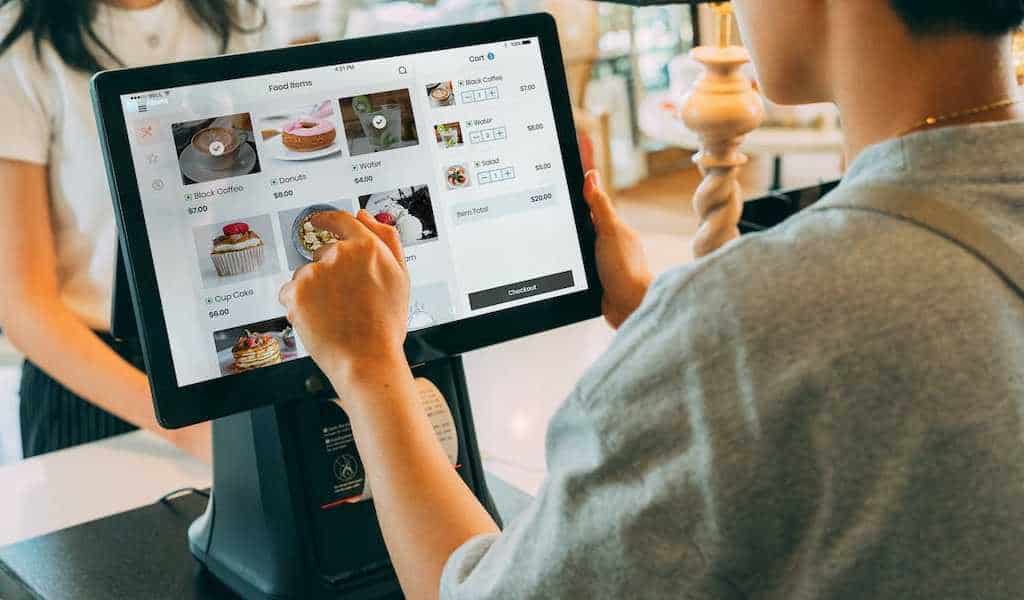
The point of sale (POS) is the time and location that a customers pay for their products. POS software is used in retail stores to simplify the selling and purchasing processes. As a result, transactions can be completed extremely fast and it allows the cashier to service a customers needs in seconds.
A modern POS system consists of one main computer linked to multiple mobile or fixed checkout terminals. Businesses in various industries have different POS system requirements which may require a little bit of a different setup.
This type of selling system is made up of various pieces of software and hardware. These tools work together to enable businesses to conduct customer-facing transactions. POS setup in a company is primarily determined by the payment methods that your organization accepts and the functionality that you are looking to implement.
Important Ways a Great Retail Point of Sale Can Improve Your Business
POS speeds up transactions
Customers may become irritated if they are forced to wait in a long line to purchase products from your store. A dependable POS software will reduce customers’ time waiting to make purchases.
The system will also reduce instances of human error, which can result in financial losses. Installing a POS system that includes barcode scanning will improve payment speed, efficiency, and pricing accuracy. Customers are more likely to shop where they can be serviced quickly.
Any POS software that is slow or sluggish will diminish the customer experience. While a customer might be happy about the quality of your products and loved the prices that you have, in their mind, slow service and inefficient processes can drastically effect their attitude towards you in the long run. Avoiding these issues will help you keep customers for longer periods of time.
Seamless customer experience
Improving customer experiences through Point of Sale (POS) technology is critical for retail businesses to increase sales. To create a seamless customer experience, all aspects of the purchasing process must be considered, from the customer conducting pre-purchase research to ordering, shipping and receiving their goods, and the post-sale experience.
Most customers nowadays expect a seamless and integrated shopping experience across all channels. This is how smart retailers have created memorable experiences for their customers and strengthens their brand through word-of-mouth marketing.
Better Inventory Management Systems
Your store’s inventory can be easily tracked with a high quality POS system. It will allow you a real-time control of your inventory. Implementing a more robust inventory management system that allows you to monitor these types of metrics is one of the best benefits of a POS system to increase retail sales.
When utilizing a quality inventory management system, for items that already exist within your inventory, you have the ability to easily update quantities by scanning items to be automatically loaded into the POS. This will save a considerable amount of time compared to traditional inventory tracking and allow you to keep exact track of the items you have in stock.
Every time you make a transaction, whatever products are sold will be directly deducted from the inventory count, saving you time and effort.
Omnichannel Checkout
Due to the fact that much of the customer experience occurs directly in the store, your check-out process must provide a quick, agile, and seamless experience every time a consumer decides to shop. Point-of-sale systems that accept payments via mobile devices, tablets, and iPad’s can make a significant difference by allowing sales staff to move around the store and engage directly with shopping customers.
According to a Capterra study, retailers in the United States using a mobile POS system increased from 32% in 2017 to 46% in 2020, and this trend is expected to continue. According to the study, 64% of retailers surveyed believe that using a mobile point of sale system helps them increase sales, and 82% believe that having the mPOS allows them to provide seamless customer experiences.
Why is POS Experience Important?
Knowing your customers well allows you to easily encourage them to revisit and buy their needs. With so many shopping options and brand competition in the retail industry, creating a personalized shopping experience that converts regular customers into loyal shoppers is critical. POS experience is an effective way to accomplish this by:
Enhancing in-store services
Using optimized technology to streamline the payment process
Connecting to the online ordering process
Data collection and management across channels
Conclusion
A good POS system can improve your brand’s outward appearance and the in-store customer experience. POS captures valuable data about customers’ shopping habits and provides real-time reports, improving checkout performance and other operational efficiencies. So merchants should use good POS to increase retail sales.
Point-of-sale systems offer personalized discounts based on the customer’s purchase history, increasing customer loyalty, and can create repeat shopping. You should consider implementing a POS system that fits your business model is a worthwhile investment as it can help you grow your companies revenue while maintaining your sustainability.
The payment industry is undergoing a major shift, with the emergence of new players and traditional firms introducing new products and services. Innovators are disrupting the industry by offering payment solutions that leverage advanced technologies and digital currencies to meet customer needs.
Moving payments to the cloud
Cloud capabilities have been in the market for a while now. However, with AI developments and better technologies plus a global reach, here are three reasons why payment companies are moving to the cloud.
Cloud-based computing and payment systems are faster and more scalable
Cloud-based payment solutions are more secure and flexible, making them easy to implement into a company
Cloud-based payment solutions are more efficient and accessible from multiple devices
Cost-effective cloud-based payment solutions are more flexible and secure than what we have seen in the past. Payment solutions that are built with cloud computing will allow you to increase your transaction speed and also the security surrounding sending and receiving payments. Additionally, the cloud allows you to integrate new features into your existing infrastructure without any downtime, allowing you greater control over your customer data and system as a whole.
New Areas of Specialization
The payments industry is not immune to disruption. New players and existing ones are all looking at ways to disrupt the status quo, but there are some key areas where they’re already starting to find success.
Mobile payments: Mobile payments are gaining popularity like never before. Especially after the pandemic things have changed drastically in this sector. It is gaining popularity in developed economies as well as emerging economies. Payment through QR scans, mobile wallets, and bank-to-bank transactions are the new innovations in this field. Globally, the e-commerce market now fully depends on mobile apps and mobile payments.
Alternative payment methods: Alternative forms of payment such as Paypal, Venmo, and other peer-to-peer payment platforms allow users to make or receive payments without directly logging in to their bank account. Similar systems are being developed in many other countries. With internet adoption increasing in most countries, this way of payment will certainly gain popularity and continue to challenge traditional banking systems. The money transfer is typically faster and just as secure.
Credit card rewards: Credit cards are another convenient way to make payments, and due to fierce competition with the new payment methods, credit card companies are offering far more rewards than ever before. Credit Card companies are focusing on encouraging the use of new payment systems with their cards in order to earn rewards.
Building on a Firm Foundation
Despite the looming recession, the payment industry has a firm foundation. With the introduction of biometrics and AI, the days are not far when cards or mobiles will not be required for payment. New innovations in technology will make it far easier for people to make payments and much easier for business people to scale.
These innovations will not only enhance the scope of the payment industry but at the same time help grow businesses, at a much faster rate than ever before.
With crypto disrupting the market, the payment industry will experience less dependency on government and central bank controls opening new opportunities for innovation, which will further strengthen the foundation of the global payment market and industry.
Stronger Payment Security Innovations
As you can imagine, security is a top priority for banks and payment processors. Transactions are an extremely important part of their business model, so they need to ensure that their security is to the highest standards. They also want to protect consumers against fraud, which has become increasingly common over the past decade as criminals have become more sophisticated in their methods.
In light of these concerns, new solutions are evolving rapidly within the payments industry. One example: Apple Pay has been around since 2014, but only recently became available on Android phones through Google’s Wallet app (which itself was acquired by Google).
Apple Pay uses near-field communication (NFC) technology to let users pay at NFC terminals without having to manually enter their credit card each time they make a purchase—a process that many merchants find inconvenient or even painful. Another example of this is WeChat Pay which allows people who have linked their bank accounts with WeChat Wallet access to send payments. This helps reduce friction so customers can spend less time during the checkout process from merchants’ websites or when sending peer-to-peer payments.
The payments industry is changing rapidly, and it’s important for businesses to stay on top of these developments. As consumers become more comfortable with digital wallets, it’s likely that companies will start allowing users to pay with them as well. This will be especially useful for small businesses who don’t have the resources to set up their own payment systems, but also important for large organizations to watch out for so that they stay up to date with the latest technological advancements.
Digital Currency by Banks
Digital currency is a form of currency that only exists electronically and central banks are showing interest in launching their own currencies in digital format. It can be stored in virtual wallets, which are accessed via an app on your phone or computer. You can use digital currency to purchase goods and services from merchants who accept it as a valid payment method.
Digital currencies are not printed or minted like gold or silver coins; they’re created by computer software to facilitate transactions between buyers and sellers over the internet (and sometimes within physical stores). The most popular types of cryptocurrency include Bitcoin, Ethereum, and Litecoin—but there are hundreds more out there!
Cryptocurrencies are created through a process called mining. Mining is the act of verifying transactions on the blockchain network, and it’s done by people (or “miners”) who run computers that work to solve complex mathematical problems. Once a set number of transactions are verified, miners receive cryptocurrency as payment for their work.
The Global Market Landscape Will Determine Investment in the Payments Industry
The global market environment will determine investment in the payments industry over the next decade. Depending on what happens with powerful and emerging economies could determine what companies gain investment in the payment industry.
Top Trends In Global Payment Market
The global payment market is expected to grow at a CAGR of 9.9% from 2019-2025, according to the report “Global Payment Market Analysis and Forecasts: 2019-2025” published by GlobalData.
The report further states that the payment industry in developed countries such as Australia, Canada, and New Zealand is expected to register the highest growth rate during this period due to their high adoption rate in retail banking services as well as a few other factors.
The report also predicts that the Asia Pacific region will be one of the fastest growing regions due to its increasing customer base coupled with innovation in technology along with rapid urbanization (in terms of population.)
The report states that the global payment market is expected to grow from USD 2.3 trillion in 2019 to USD 3.5 trillion by 2025 at a CAGR of 9.9%. The report states that the major reason for such rapid growth is due to the increasing adoption of mobile payments and digital wallets among consumers, merchants, and financial institutions (FIs).
This report also states that other factors such as increasing adoption of point-of-sale (POS) terminals and card readers, rising demand for cashless payments in emerging markets, and increasing demand for digital services among consumers are also expected to boost the global payment market.
Conclusion
As the payment industry continues to evolve, there are many opportunities for innovators to take advantage of the market. The most powerful trend in the payments industry is its shift toward cloud-based solutions that leverage technology and data analytics as individuals and organizations create new products and services. These innovations can help streamline operations, optimize costs, improve security and simplify the customer experience. With so many exciting developments happening at once, it will be up to companies like yours to stay ahead of the curve by making it easier than ever before for customers around the world to pay their bills online or through mobile phones.
ACH payments are fast, secure, and an extremely common way for businesses to send or receive money. ACH payments are typically processed within two business days at most, which means when you get paid by ACH, there is a possibility you can collect your funds within a few hours of receiving payment confirmation from your payee (or their bank). So what are the benefits of getting paid by ACH and what are the best ways to drive these types of payments?
What are ACH payments?
ACH payments are electronic payments, typically credited to a recipient’s bank account. They’re used for recurring bills and are very common in business-to-business transactions, but they can also be used for consumer-to-business (C2B) transactions as well.
ACH payments are generally faster than other payment methods because they don’t require a credit check or any other form of verification from the sender. The sender simply sends an authorization code to his/her bank along with instructions on how much money should be transferred from his/her account to the recipients, which will then be processed automatically by your financial institution at the completion of each request.
4 benefits of ACH payments
ACH payments are a great option for businesses that want to offer their customers the ability to pay on their terms and receive funds quickly. They’re also secure and much less expensive than some other payment methods, including payments via credit card and checks.
ACH payments are extremely secure and are a direct connection from bank to bank.
ACH payments are often cheaper than other payment methods, typically charging a set rate rather than a percentage of the transaction.
ACH payments can be used for recurring bills or subscriptions, which makes them great for companies that want to offer their customers the ability to pay on a constant cycle.
ACH payments are processed by your bank or the financial institution (like PayPal) using an automated clearing house (ACH) system that allows them to send funds directly into your account without any additional fees or delays. This means you’ll get paid faster than if you utilize a direct deposit or wire transfer, which can take several days after they’ve been deposited into their own accounts.
The main benefit of this process is that it’s a more consistent method of accepting payments because there isn’t any risk involved in waiting for pending funds until they’re available for use—funds that are received can be utilized immediately upon being credited.
How do you start getting paid by ACH?
Once you’ve determined that your bank is not going to be able to help, it’s time to start looking for a new payment processor. There are many companies that offer ACH services and will allow you to get paid by ACH instead of by check or money order.
If your bank does not offer this service, consider switching banks and opening an account at another institution that does provide this option. This can be particularly helpful if:
You want more control over how much money comes into your business;
You have trouble getting payments approved through traditional channels (like checks); or you want the security of knowing that funds will arrive on time without having them sitting in an account for days before being deposited into yours
The next step is to find a payment processor that provides ACH services. These companies will typically charge a monthly fee and a per-transaction fee for their services. Once you have selected a company, you can begin setting up the account by submitting your business and banking information—including the routing number and bank address—and providing other details such as how much money should be sent each time someone makes a payment to you through the ACH processor.
Ways To Drive ACH Payments
Same Bank Transfer
Using the same bank that your customers is using is an extremly simple way to transfer money. This is the easiest way to get started and allows you to work directly with the banks payment processor, which will be familiar with your business and you can explain how and why you need ACH services. The bank is essentially transferring money between internal accounts, and this is extremely low risk.
Using a Processor that Supports Recurring Payments
Using a payment processor that supports recurring payments (like ACH) as well as the other services you need is the simplest way you can expand the types of payments you can accept. If your processors supports ACH, this will allow you to accept recurring digital payments without having to worry about creating individual bank accounts for each client or account type.
Focusing on Convenience and Security
When looking to drive ACH payments from your customers, focus on highlighting conveneice and the security. Top of the line payment processors will be able to ensure that all of your ACH transactions run smoothly by assiting with automatic billing setup and offering comprehensive reportin features so that everyone, recipient and payee knows exactly what is happening at all times.
Allocate a Budget
Define a budget for your ACH promotions to encourage your customers to utilize this payment method. Start with a small budget and see how it goes. If you see results and your customers are electing to pay for your goods or serivces with ACH, increase the budget at will. You can also try different marketing channels to see which works best for you. Make sure to track the results of your marketing campaigns so you know what works and what doesn’t. If you are looking for customer adoption of this particular payment method, spending a piece of your marketing budget on awareness can help.
Define Your Strategy and Goals
In order to encourage customer adoption of a particular payment method, you have to define your “payments mix” strategy and goals. There are many different strategies that you can use to drive more ACH payments, including:
Defining your goals with the help of your sales team or marketing department. What do they want? What do they need? Is it new customers, existing customers who have been on the fence about buying from you, or both? How do you plan on reaching these people? Do they already know about your company and services but aren’t ready to make a purchase decision (e.g., someone who’s interested in becoming an agent)? If so, then what should you be doing differently with you content and advertising campaigns so that those prospects will consider investing their money in you rather than someone else’s a product or service offerings?
Promote ACH Payments During Customer Onboarding
If you’re a business that offers ACH payments, it can be hard to drive customers to your website and into the checkout process. You might want to consider sending out email or text message campaigns that promote ACH payments as an option during customer onboarding.
Email: Promote the benefits of using ACH payments by including links in your emails and encouraging consumers who receive them to sign up for this payment method.
Text Messages: Text messages are another great way of driving traffic and conversions by providing value-added information right when customers need it most (e.g., “We offer free shipping on orders over $50!”). The value proposition will get more attention than if it were simply presented at checkout time; plus this type of communication is becoming more common as open rates on text message marketing is extremely high —so why not use them? If possible try adding a link back into these messages so that users can easily follow through with their purchase later on down the road if they haven’t already made up their minds yet.
Include an ACH payment option on your website and mobile app
Conclusion
ACH payments are a great way to make sure your business is paid on time and in full. This is also a great way to gain your customers trust and ensure that their payments are made with the highest security measures taken. If you’re looking for more information about how to implement ACH payments into your business, please reach out to us and one of our representatives can assist you in your search.
The upcoming SaaS payment trends for 2023 are a bit different than what you might be expecting. While we have seen SaaS flatten out at times in the past few years, 2021 and 2022 have been exciting years for the industry. The pace of change has accelerated significantly, and as a result, we’re seeing more and more companies coming onto the scene to take advantage of this new environment and our digital world.
In this article, we will cover some of the major trends that are shaping this new era of SaaS payment processing and explain why they matter so much for companies who utilize this technology.
What is SaaS payment processing?
SaaS payment processing is a form of cloud computing. In this model, customers pay for software on a subscription basis through the use of monthly or annual payments. The software can be used by multiple users at once, which makes it easy to scale up in the event that your business grows.
It is likely that the implementation of SaaS payment processing will continue to gain popularity because it’s one of the most popular forms of cloud computing today and has many benefits for small businesses.
Is SaaS still relevant?
SaaS is a great way to scale your business. It allows you to minimize costs, attract customers and get more value out the software that your business has developed.
While there are many different types of SaaS options out there (including Google Docs, Skype, and Microsoft Office 365), the SaaS payment trends for 2023 are going to be building on what we’ve already seen in 2021 and 2022: more companies moving away from traditional software purchases like Oracle or SAP licenses, and towards subscriptions that include additional services such as training workshops or consulting sessions with experts in their field.
Why is the SaaS trend increasing?
SaaS is a subscription-based business model that is now being well-accepted across the globe by small and large businesses alike.
With SaaS, users can access software applications through their web browsers or mobile devices. Companies provide an online catalog of products and services that they sell to customers over the internet, who pay for them using a monthly subscription (called a “monthly fee.”) Because these purchases are from for the same items or services from the same customer, the cost to acquire additional purses is reduced drastically. This factor is highly interesting to business owners who are looking to scale their revenue without scaling their operation, a recurring payment system will allow them to do just that.
The 8 Global SaaS Payment Trends For 2023 – You Need To Know About
As we know, SaaS is a subscription-based business model. In this model, customers pay for software as a service (SaaS), which means they have access to all of the functionality and features of the application over time until they cancel their subscription.
SaaS has become one of the most popular ways for companies to launch new products and services because it allows them to focus on building their product without worrying about operations or maintaining physical infrastructure while doing so. This makes it easier than ever before since you don’t need any extra equipment or space—you can just continue to develop your software from your computer.
Subscription Models are Gaining Popularity
Subscription models are gaining popularity because they offer customers more value and flexibility than traditional software purchase models. Customers are no longer buying a one-time license but instead subscribing to a service that offers ongoing support and constant updates. Subscription models are typically cheaper as compared to one-time costs and thus it has become the reason behind mass adoption.
This shift in customer behavior is also helping businesses save on costs and make better use of their resources by making it easier for them to scale up their operations as needed. For example, if you’re a small business with limited resources or just starting out, then subscription models can be an valuable way for you to grow at your own pace without having to invest much upfront money into building out your product or service infrastructure (which usually means hiring employees.)
Subscription models are also great for businesses that want to keep their customers engaged with their software by offering them new features or updates as soon as they’re available. This can help you avoid the problem of losing customers because your software is outdated or doesn’t have the latest features.
Customers Want Flexible Payment Methods
When it comes to SaaS subscriptions, customers want to be able to pay for their subscriptions in the way that is most convenient for them. They also want a variety of payment methods that are easy and convenient.
Payment methods play an important role in customer satisfaction with your product or service. You need to provide multiple options so customers can choose from several methods when paying for your product or service. The best way for you as an eCommerce merchant or subscription business owner is by offering flexible payment methods such as:
You can also add new payment methods over time to give your customers the option to pay for your product or service in ways that are convenient for them. For example, if you offer a new cryptocurrency as a payment method and it becomes popular with certain segments of your customer base, then you could expand the number of cryptocurrencies accepted by adding additional crypto coins.
Payment Should be a Friction-Less Experience
Customers want to pay for services in a way that is most convenient for them, not just one specific way or another. This means you have to think about what type of payment method your customers will prefer: credit card, PayPal, Venmo (or another third-party app), direct debit from their bank account, etc.
The good news is that SaaS companies are already doing this well by offering multiple payment options—so don’t feel like you need to reinvent the wheel!
The best way to get started is by looking at your existing customers. Which payment methods do they prefer? Which ones are most popular with your audience? What can you do to improve the experience for those who prefer one method over another?
Niche Businesses Stand Out to Customers
One of the most important factors in determining a SaaS’s success is how easily it can be integrated into your existing business. A niche business that focuses on one specific area, like accounting software or marketing automation tools, will have an advantage over companies with broader ambitions.
The bottom line: if you’re looking for a SaaS solution that helps you focus on what matters most—like improving customer satisfaction and increasing revenue—it may be worth considering a niche product instead of one that tries to do everything at once.
While it’s true that niche SaaS solutions tend to be more specialized, they are not always the right solution for your business. If you’re looking for a way to streamline and automate your entire system, but don’t have any specific areas in mind in which you want to improve, then a broader product may be better suited for you.
Increasing Real-Time Data Technology and Analytics Usage – The Core Of SaaS Payment Trends for 2023
Real-time data technology and analytics usage are increasing. One of the key trends for SaaS payment processing in 2023 is that it’s becoming more important to have real-time analytics from your platform. The modernization of the payments infrastructure was necessary for SaaS companies to be able to process payments quickly and accurately, which is continuing to help them meet their customer needs better than before.
Real-time data technology can provide insights into what customers want or need from a product or service, allowing companies to optimize their offerings based on feedback from users so that you don’t miss out on sales opportunities. This is especially important has we are current living in a time period in which people are using smartphones more often than ever before.
Modernization of Payments Infrastructure
Maybe the number one thing that has propagated the SaaS payment trends for 2023 in a positive direction is the modernization of the payment landscape and new technologies that are emerging in leaps and bounds.
Payments around the world are becoming more digital and automated. The ability to accept payments online is becoming more important as the growth of online payment methods increases and more of the global population has access to smartphones and computers. The use of mobile payments is also increasing, which gives merchants flexibility in terms of how they collect their customers’ data.
The Payment Services Directive (PSD2) is a regulation that was established in 2015 by the European Union. This regulation makes it mandatory for banks to share customer data with third-party service providers, such as online payment processors. By sharing this information, merchants will be able to offer their customers more secure and convenient payment methods.
Diversification and Evolution of Payment Technologies
Diversification of payment technology to accept payments is another trend. New technology is evolving every day in payment systems and gateways. Here are a few important diversification SaaS payment trends for 2023.
Buy Now Pay Later – The fastest SaaS payment trends for 2023
One of the most exciting changes in payment technologies is buy-now-pay-later, which allows you to pay for a portion an item and have it shipped immediately. You can preorder an item and make a payment when it’s ready for delivery; this is particularly useful for things like concert tickets or sports jerseys that need to be purchased quickly.
Biometrics
Biometrics is another popular option for online retailers because they allow customers to skip typing their credit card information every time they want something from you. Biometric technology uses facial recognition or fingerprint scanning as a way of verifying who you are before allowing access to your account or making purchases through your app (this will be more common as technology improves).
Digital Wallets – Already Functional, But Still On Top
Digital wallets are another way that consumers can store their money securely while still having full control over how much money comes out at once when making transactions—and these wallets come in various forms depending on what type of device they’re being used on! For example: if someone uses Apple Pay with an iPhone then they’ll get access only within apps that accept Apple Pay; however, if someone has an Android phone then those users will have access across any app regardless of whether it accepts NFC payments directly from bank accounts via debit cards instead.
Making Cybersecurity a Top Priority
As the number of SaaS businesses grows, so too does the need for cybersecurity. Despite being a priority for most SaaS companies, cybersecurity has remained low on their list of priorities—and that’s unfortunate because it can mean lost revenue and customer dissatisfaction. The good news is that this situation is changing fast. As more people use cloud computing services like email and social media platforms like Facebook or Instagram (which are also classified as “software” under federal law), they’re becoming targets for hackers looking to steal data from them.
A survey conducted by Software as a Service Security Alliance found that more than half (56%) of respondents felt they needed better protection against online threats such as malware or viruses; another 19% said they should focus more on protecting against phishing scams; while still another 14% said they should improve their overall security practices overall.
As the demand for cybersecurity grows, so too does the need for SaaS companies to step up their game. This is especially true as more businesses migrate their technology infrastructure to cloud-based platforms, which are easier and cheaper to manage. But at the same time the major barrier in positive SaaS payment trends is the cost of security infrastructure and resources.
Growing Usage of Artificial Intelligence (AI) and Machine Learning (ML)
AI and ML are becoming key to SaaS payment processing. They’re the future of payments, and they can be used for fraud detection, customer service assistance, and more. AI will impact the SaaS payment trends in 2023 and beyond for many decades to come.
AI and ML are being used for fraud detection in ways that weren’t possible before: by analyzing large sets of data from multiple sources (such as transaction records), these algorithms can identify patterns that would otherwise have gone unnoticed. For example, if you are sending money through a third-party service with no proof of identity or address verification—and there’s no way for them to tell who you really are—you could end up losing your money due to fraudulent behavior.
AI also helps businesses manage their costs by identifying ways they can reduce their operating costs while still providing high levels of quality service.
AI can also help businesses predict when customers will be most receptive to certain offers or products. For example, if you want to launch a new ad campaign for your SaaS company and you know the best time of day to do so is between the hours of 6 am and 8 am, AI can show you data that supports this theory. In addition, AI could help businesses better understand their customers by analyzing all aspects of their behavior—from how much time they spend on each page in your app to what types of content they consume.
Conclusion
SaaS payments are still the most popular way for companies to accept payments today and will be for many years to come. The advanced security features and streamlined processes make them ideal for all types of businesses. We are very excited for the future of SaaS payments and looking forwarding to seeing these developments being adopted by business owners across the country.
Cookie Consent
We use cookies to enhance your browsing experience, analyze site traffic, and support our marketing.You can accept all cookies, reject non-essential ones, or manage your preferences below. Learn more in our Privacy Policy.
Cookie Preferences
Manage your cookie preferences below:
Essential cookies enable basic functions and are necessary for the proper function of the website.
Name
Description
Duration
Cookie Preferences
This cookie is used to store the user's cookie consent preferences.
180 days
These cookies are needed for adding comments on this website.
Name
Description
Duration
comment_author_email
Used to track the user across multiple sessions.
Session
comment_author_url
Used to track the user across multiple sessions.
Session
comment_author
Used to track the user across multiple sessions.
Session
Google Tag Manager simplifies the management of marketing tags on your website without code changes.
Name
Description
Duration
cookiePreferences
Registers cookie preferences of a user
2 years
td
Registers statistical data on users' behaviour on the website. Used for internal analytics by the website operator.
session
These cookies are used for managing login functionality on this website.
Name
Description
Duration
wordpress_logged_in
Used to store logged-in users.
Persistent
wordpress_sec
Used to track the user across multiple sessions.
15 days
wordpress_test_cookie
Used to determine if cookies are enabled.
Session
Statistics cookies collect information anonymously. This information helps us understand how visitors use our website.
Google Analytics is a powerful tool that tracks and analyzes website traffic for informed marketing decisions.
Contains information related to marketing campaigns of the user. These are shared with Google AdWords / Google Ads when the Google Ads and Google Analytics accounts are linked together.
90 days
__utma
ID used to identify users and sessions
2 years after last activity
__utmt
Used to monitor number of Google Analytics server requests
10 minutes
__utmb
Used to distinguish new sessions and visits. This cookie is set when the GA.js javascript library is loaded and there is no existing __utmb cookie. The cookie is updated every time data is sent to the Google Analytics server.
30 minutes after last activity
__utmc
Used only with old Urchin versions of Google Analytics and not with GA.js. Was used to distinguish between new sessions and visits at the end of a session.
End of session (browser)
__utmz
Contains information about the traffic source or campaign that directed user to the website. The cookie is set when the GA.js javascript is loaded and updated when data is sent to the Google Anaytics server
6 months after last activity
__utmv
Contains custom information set by the web developer via the _setCustomVar method in Google Analytics. This cookie is updated every time new data is sent to the Google Analytics server.
2 years after last activity
__utmx
Used to determine whether a user is included in an A / B or Multivariate test.
18 months
_ga
ID used to identify users
2 years
_gali
Used by Google Analytics to determine which links on a page are being clicked
30 seconds
_ga_
ID used to identify users
2 years
_gid
ID used to identify users for 24 hours after last activity
24 hours
_gat
Used to monitor number of Google Analytics server requests when using Google Tag Manager
1 minute
Marketing cookies are used to follow visitors to websites. The intention is to show ads that are relevant and engaging to the individual user.
Facebook Pixel is a web analytics service that tracks and reports website traffic.