
NFC 0111 1

Mobile Wallets and the Future of Payments

Mobile wallets are big news right now. It seems like more apps are released every day. There are big players like MasterCard’s MasterPass and Apple’s Passbook, and there are also store-specific payment apps that allow consumers to shop at specific chain locations. The options are there, and consumers are increasingly taking advantage of mobile payments to slim down their wallets and speed up their checkouts.

According to the Digital Wallet Usage Study (Thrive Analytics), 32% of consumers are now using mobile wallets as part of their payment wheelhouse. That figure is set to rise, especially if EMV systems become more popular.

EMV and Mobile Payments

EMV is a big player in the mobile payments world because EMV systems are designed to support near-field communication (NFC) contactless payments from both EMV smart cards and mobile wallet apps. Internationally, EMV is the standard for payments. However, the U.S. is lagging in uptake; the U.S. payments ecosystem is still dominated largely by magnetic stripe cards, which means EMV-capable point-of-sale systems are not yet as widespread as they could be.

MasterCard, Visa, Discover, and American Express are pushing for merchant EMV compliance by October 2015. Compliance is not mandatory, but merchants will be held liable for card fraud if they do not meet EMV standards. If the push to transition to EMV is successful, we will see a rise in mobile wallet usage because of widespread compatibility.

Karen Webster, CEO of Market Platform Dynamics, suggests that EMV acceptance would accelerate the growth of the mobile payments sector by significant margins. Contact-based EMV payments are inconvenient in a society accustomed to swipe-and-sign payments. It’s very possible that consumers will transition to mobile payments in order to sidestep the hassle and open up a much wider array of services.

The Problems

Although mobile wallet applications appear to be promising, as an emerging technology, they have some growing pains to overcome.

As Ron Herman, CEO of Sionic Mobile, writes, mobile payments are currently divided between many applications. Store-specific wallet applications are to blame for this one; many retailers are taking the marketing opportunity to release chain-specific payment apps that double as customer loyalty trackers. Although combining loyalty tracking with mobile payments is a good idea in theory, the execution is lacking because it divides the consumer between many limited applications. It’s suggested that the mobile wallet experience will continue to falter until these applications are drawn together into a unified consumer experience.

Mobile wallets are also not a catchall payments solution because POS support for mobile payment applications is not yet universal. This is a transitional period on the payments timeline; we’re looking at a payment ecosystem that’s still clinging to magstripe technology, and EMV and mobile payments are edging their way into a system that doesn’t have the infrastructure to fully support them.

What will the future hold for mobile wallets? Hopefully good things; it seems that the mobile payment sector will continue to grow as consumers gravitate toward convenience and speed. That does mean, however, that convenience has to be a priority. The mobile wallet experience needs to be straightforward and unified if consumers are to embrace it as the future staple of their payments wheelhouse.

Interested in EMV solutions for mobile wallet acceptance?

Host Merchant Services offers EMV solutions for business owners. If you’re interested in getting a head start on the rest of the U.S. market, contact an HMS sales representative today and ask about our EMV-compliant equipment and processing options.

[email protected]

877-517-HOST (4678)

Is mPOS the future of retail?

Modern point-of-sale technology has progressed from the cash register to the full-service point-of-sale system, but is it about to progress once more? Mobile point-of-sale (mPOS) systems seem to be poised to become the next step in the evolution of merchant technology.

Why? mPOS blends the functionality of the POS system with the mobility, familiarity, and speed of tablet and smartphone platforms. The result: merchants can take their selling power to the floor and engage customers anywhere rather than just at the checkout aisle.

We’ve already discussed the advantages of using mPOS systems in restaurants, but what about the trend in other industries?

mPOS and omnichannel retailing

Omnichannel is the prevailing goal of the retail industry. It seeks to blend the multiple shopping channels, such as in-store, mobile online, and computer, into a single customer experience. How does mPOS promise to deliver on this goal?

By empowering the employee. mPOS-equipped sales associates or customer service associates can bring the full power of the POS system onto the sales floor and directly to the customer. This allows them to access the in-store and online inventories, pricing information, estimated restock times, and other business data in real time in order to answer customer questions on the spot.

mPOS systems also give your employees access to customer loyalty information, which is invaluable for engaging customers in a meaningful way. If your sales staff can identify repeat customers, they can tap into purchase histories to suggest items and influence their customer service approach. These CRM capabilities greatly expand the ways in which your staff can engage your customers and, as a result, the customer loyalty your business enjoys.

Additionally, mPOS systems enable sales associates to process transactions on the floor, reducing the strain on checkout aisles. Smaller checkout lines, bigger bottom lines.

So why isn’t everyone using mPOS already?

Unfortunately, there’s some resistance to mPOS because many merchants don’t yet understand its utility. There’s a notion that mPOS systems are little more than card swipers, suited to flea markets and conventions, but not SMB use.

The truth is that mPOS systems have a great deal of potential as complete, integrated systems rather than just point-of-sale devices. They bring together POS, CRM, and business data like inventory and pricing. In short, they do most of what traditional POS systems do, but in a more compact and portable package.

Are there downsides to mPOS?

Well, yes. No system, including mPOS, is perfect. The most immediate downside to mPOS systems is really more of a limitation of the equipment on which it depends. Peripherals like scales, printers, and scanners are still bound by size and weight constraints (although printers and scanners are becoming more compact and may one day be integrated into dedicated mPOS platforms). This means that taking mPOS systems onto the floor will require leaving some of the hardware behind.

However, merchants need to remember the applications of mPOS systems. The best use for a portable and compact POS system is not to bring the entire point-of-sale suite to every location in the store. Rather, it is to better equip employees by giving them the most relevant elements of that suite to take onto the floor and engage customers.

Additionally, mPOS systems are easily mounted so they can function like traditional POS systems when the need arises. This approach to POS stations is more cost-efficient than the traditional approach because it eliminates a significant portion of the expense of the core device: the computer. This introduces entirely new possibilities as well. For example, a business with a multi-station customer service desk might allow customer service representatives to detach mPOS systems from their mounts in order to take customers onto the floor and offer detailed, personalized answers to questions and concerns.

Interested in joining the mPOS trend?

HMS offers mPOS systems as part of our credit card processing program. We supply the tools your business needs to reach its potential. Contact a sales representative for more information:
[email protected]
877-517-HOST (4678)

Call us today and let us find the mPOS system that helps your business succeed!

smartphones

Smartphones drive the retail experience [2026 Update]

In the digital age, people have come to rely on smartphones for many purposes. They’re practically inseparable from one another. In what the retail industry views as a natural progression from accessing calls, texts, and emails, consumers are also using their smartphones as part of the shopping process.

In a new report by G/O Digital and Keyring, 90% of respondents affirmed that they use their smartphones at some point while shopping. The study investigates the ways in which consumers are using mobile technology and makes some targeted suggestions for retailers looking to keep up with their shoppers.

Smartphones grant access

According to the survey, a staggering 90% of respondents chose their smartphones as the most convenient devices for in-store shopping activities.

When asked about their pre-store shopping practices, 89.3% of respondents acknowledge that they prefer using their smartphones to other devices for making shopping lists. Up to 61% write shopping lists frequently.

Research is key

key-ring-big-1

An impressive 55.4% of respondents stated that they use their mobile devices to conduct price-related searches: searching for coupons, browsing deals and sales, and comparing prices. 47.4% of respondents stated that they are most likely to purchase one of the items they’re researching when that item’s price is discounted through a sale or coupon.

Trends vary by store

Although consumer research is important across all kinds of retail stores, consumer preferences differ from category to category.

Consumers shopping for apparel and shoes are vastly more likely to purchase an item while it is on sale or clearance: 60.7% of respondents chose this as the top purchase influencer. By comparison, coupons accounted for 10.9% of influence, while brands were ranked even lower at 7.9%. These shoppers are looking for savings on the products they want.

Consumers shopping for groceries rated sales (29.8%), quality (26.4%), and everyday low prices (20.7%) as the most significant influences. Coupons were chosen by only 13.1% of respondents. These shoppers are looking for consistency in the stores they frequent.

Consumers shopping for electronics value reviews and ratings more than any other factor: 54.4% of respondents chose it as the most important influence on the purchase process. 21.1% chose sales, and 15.2% chose brands, but only 3.4% chose coupons. These shoppers are looking for trustworthiness in the products they want.

Recommendation: personalize information and advertising

Increased Accessibility And Convenience For Consumers with Smartphones

The report suggests that retailers invest in targeted advertising for specific locales. Consumers are more receptive to advertising that seems to understand their needs, and they are more responsive to stores that provide “personalized content.”

The report states:

In today’s “Age of the Customer,” consumers want and expect the shopping experience across every single channel and device to be highly personal, relevant and targeted to their local needs – and in real-time too.

Retailers should also think about how smartphones and general connectivity affect the store selection experience for their shoppers. Consumers are likely to use their smartphones for everything from locating stores to reading store reviews, looking up hours, and even checking location inventory. Stores should be looking to make this information as available to mobile platforms as possible. The easier it is for research-savvy consumers to find a retailer’s locations, inventories, and discounts through mobile research, the greater the opportunity for that retailer to win the sale by influencing the purchasing process.

HMS can help

All of the above information points merchants toward a single conclusion: cater to your customers in their real-time local environment. HMS simplifies this task by offering point-of-sale solutions for your business. With a POS system, you gain access to many features: you can automate your inventorying system, integrate e-commerce, and track trends.

Automated inventory and integrated e-commerce options allow you to provide your customers with up-to-date online information about your stock, and they also enable your customers to make online purchases immediately.

POS systems also provide reporting features, which allow you to track sales by item, the success of certain promotional campaigns, and customer loyalty. These features, in turn, allow you to customize your business strategy to better reach your target audience. They allow you to design more effective marketing campaigns, distribute relevant promotional information, and maintain customer loyalty.

For more information about our POS solutions, please contact us.

Image and facts from The Local Mobile Advantage of Retailing (report).

Benefits Of Smartphones In Improving Retail Experience

How Smartphones Are Ehnacing Retail Experience For Users

In our fast-paced society, smartphones have become an integral aspect of our everyday life. They play a role in all aspects of our lives such as communication, entertainment, shopping, and banking. As e-commerce continues to grow traditional physical stores find themselves facing competition. Nevertheless of perceiving smartphones as a detriment, to their business retailers can utilize them to improve the retail experience.

Increased Accessibility And Convenience For Consumers

Increased Accessibility And Convenience For Consumers

A significant revolution brought about by smartphones is the rise of shopping apps. These apps enable consumers to explore and purchase products from the comfort of their homes. While on the go. This eliminates the need to physically visit a store saving both time and effort. Moreover, these apps often offer recommendations, seamless payment options, and real-time updates on sales and promotions.

Another way in which smartphones are enhancing accessibility in shopping is through stores. Retailers now employ reality technology to create stores that can be accessed through smartphone cameras. This allows consumers to virtually try on clothes or visualize furniture in their homes before making a purchase decision. Not only does this make shopping more convenient. It also minimizes the risk of buying items that may not fit or meet individual requirements.

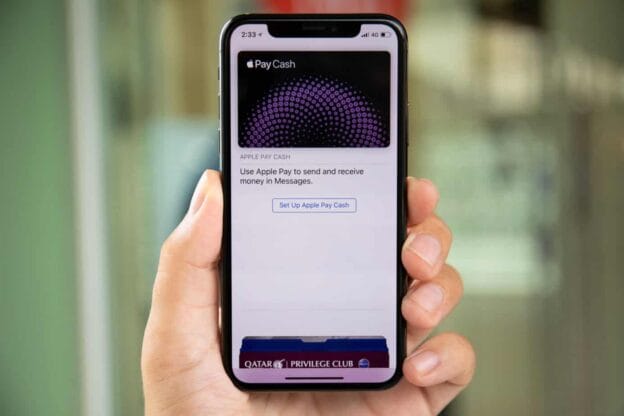
Furthermore, smartphones are revolutionizing payment methods with wallets, like Apple Pay and Google Wallet. Consumers no longer need to carry cash or cards while shopping as these wallets offer an alternative.

Digital wallets provide a way to store credit and debit card details. They can be conveniently accessed via a smartphone when making purchases. This not only accelerates the payment procedure but also enhances security by minimizing physical contact, with commonly touched surfaces.

Personalization And Customization Through Mobile Apps

Smartphones have revolutionized the industry in many ways and one significant change is the emphasis on personalization. Retailers now leverage customer data gathered through their apps to gain insights into preferences, behaviors, and purchasing patterns. This enables them to offer recommendations and special deals that are tailored to each customer’s needs and interests.

For instance, if a customer frequently buys skincare products from a brand using the retailer’s app they might receive promotions or recommendations for new products from that same brand. This personalized approach not only enhances the shopping experience but also demonstrates that the retailer values and understands their customer’s preferences thereby increasing the likelihood of making a sale.

Additionally, mobile apps provide customization options that were previously unavailable in stores. Customers can conveniently personalize their orders or items through an app rather than relying on salespeople or browsing physical product displays. This newfound control over purchase decisions empowers customers. Enhances their shopping experience.

Another way mobile apps enable personalization is by leveraging location data to tailor marketing messages. By utilizing GPS technology integrated into smartphones retailers can send notifications or alerts about promotions or store events based on a customer’s current location.

Overall smartphones have brought about an era of personalization, in retail through data-driven insights, customization options, and targeted marketing strategies enabled by apps.

Enhanced Customer Service And Communication

As e-commerce and mobile shopping continue to rise in popularity retailers have had to adapt their strategies to meet the needs of a growing number of customers who prefer using their smartphones for shopping. But it’s not about changing how people shop but smartphones are also bringing about a revolution in the customer service experience.

One of the ways that smartphones are improving customer service in retail is through enhanced communication channels. In the past customers had to visit a store or call a customer service hotline for any inquiries or concerns they had. This process could be time-consuming and frustrating for both parties involved.

However, with smartphones communication has become significantly more convenient and efficient. Customers can now easily connect with retailers through channels like social media platforms, email, live chat support on websites, and even text messaging. This allows for responses and quicker resolutions compared to other methods.

Furthermore, many retailers have developed their apps that offer additional features such as real-time customer support chats where shoppers can receive instant assistance with their purchases.

Some applications also offer the option for customers to conveniently monitor their orders and receive updates, about sales or promotions on their smartphones. Moreover, smartphones are facilitating communication within stores. For instance, employees who have been provided with company smartphones can easily communicate with one another regarding inventory levels or product availability eliminating the need, for methods of communication.

Mobile Payment Options For A Seamless Checkout Process

Mobile Payment Options For A Seamless Checkout Process

Thanks to the increasing popularity of smartphones and mobile technology retailers now have the ability to provide mobile payment options that greatly simplify and streamline the checkout process, for both customers and businesses alike.

Mobile Wallets

Mobile wallets have become incredibly popular as a way to make payments using your device. They offer a solution by allowing users to store their credit or debit card details on their phones. This means that you can easily make payments at participating stores without needing to carry wallets or cards.

Known mobile wallet options include Apple Pay, Google Pay, and Samsung Pay. These platforms use near-field communication (NFC) technology making it simple for users to complete transactions by tapping their phone on a terminal.

One of the benefits of using wallets is the enhanced security they provide. With features like authentication (such as fingerprint or facial recognition) tokenization and encryption these platforms offer a layer of protection, against fraud when compared to traditional cash or card transactions.

QR Code Payments

QR code payments have become more and more popular with better and compatible smartphones entering the market. This particular method includes scanning a QR code presented by the retailer using a smartphone camera app that’s connected to a payment method. It is gaining traction due to its simplicity and cost-effectiveness for both consumers and businesses. With QR code payments consumers no longer need to worry about carrying cards or cash.

Data Tracking And Analysis For Targeted Marketing Strategies

The use of smartphones has significantly transformed data collection and analysis in the industry. With more and more shoppers relying on their phones for shopping retailers now have access to an amount of data that can be leveraged to develop targeted marketing strategies.

Let us start by discussing how smartphones are reshaping the way data is gathered in stores. In the past traditional methods like surveys and focus groups were employed to understand consumer behavior. However, these methods were time-consuming, expensive, and often provided insights. Thankfully with smartphones being a part of our daily lives, retailers can capture real-time data through various channels such as mobile apps, social media platforms, and even Wi-Fi tracking.

Mobile apps have emerged as tools for collecting information about consumer behavior. Many retailers have their branded apps that enable them to track user activity within the app itself. This includes details like viewed items, purchases made, and even location data if users have granted permission. Additionally, social media platforms offer insights into consumer behaviors through analytics tools that track engagement rates and demographics.

Furthermore, smartphones are revolutionizing data collection in stores through in-store Wi-Fi tracking—an approach. This technology allows retailers to gather information about customer movements, within their stores.

Retailers can gather insights, about customer behavior by providing Wi-Fi in their stores. This enables them to track the movement of customers, within the store using their smartphone’s MAC address. Through this retailers can identify the frequented areas of the store. Pinpoint any areas that may require enhancements or improvements.

Streamlining Inventory Management And Supply Chain Processes

Streamlining Inventory Management And Supply Chain Processes

The retail industry has always been an ever-changing market, where businesses are constantly looking for ways to streamline operations and enhance efficiency. Inventory management and supply chain processes have undergone advancements in years thanks, to the integration of smartphones into the retail landscape.

Gone are the days of inventory counting or relying on outdated systems to keep track of stock levels. Smartphones have revolutionized how retailers handle their inventory making it faster more precise and more efficient than before.

One of the advantages of using smartphones for inventory management is that it eliminates the need for data entry. In methods, employees had to count products and then input this information into a computer system. This process was not time-consuming but also prone to errors. With smartphones, retailers can utilize barcode scanning technology to record product details without any room for mistakes.

Furthermore, smartphones enable real-time updates on inventory levels. As soon as a product is scanned or sold the system is automatically updated, providing retailers with up-to-the-minute information, on stock levels at all times. This helps prevent overselling or overstocking of products and empowers businesses to make informed decisions regarding restocking orders or promotional activities.

One of the benefits of utilizing smartphones to manage inventory is their convenience. Employees are no longer restricted to a place or device, for inventory management. They can effortlessly access the required software or applications using their smartphones from any location, within the store thereby enhancing convenience and productivity.

A new age of affordable POS

Point of sale systems are ubiquitous today. Restaurants, retail stores, online merchants, and even independent vendors all use them. Why? POS systems reduce labor costs, improve transaction accuracy, and allow merchants to integrate many features into one customer relationship management (CRM) package. For example, they enable gift and loyalty cards and facilitate personalized advertising. The bottom line is that POS systems are critical. In the fast-paced retail world, you need to be able to process quickly, accurately, and efficiently.

Because POS is so important, it makes sense that business have a hard time balancing cost and service. What’s the right price to pay for POS? How many features should your business be getting for its money? What makes the most sense for your staff and customers? These are all pressing questions for merchants.

The good news is that affordable POS systems are becoming more accessible. Even the technology that powers  high-end systems is becoming more common, so small businesses can have access to powerful hardware and software without enormous start-up costs. Big distributors are finding it harder and harder to charge you unaffordable prices for their systems.

Business owners also need to consider whether they want to buy POS systems on their own or as part of a package from a payment processing company. If you buy your own POS, you’ll have to pay up front for your system, and you’ll need to pay a company to process your transactions. If you buy a package from a processing company, you’ll often find yourself locked into contracts.

Host Merchant Services makes the choice easy. We roll the systems right into the processing package to provide you with an affordable POS that covers all of your bases for you, and we don’t lock you in with cancellation fees and contracts. We want our services and our systems to give your business the freedom to operate as you want it to. If you’re interested in taking the next steps with your business’s processing capability, contact us for a free quote and more information.

Bank of America to pay $772 Million Penalty

On Wednesday April 9, 2014 Bank of America settled a lawsuit and agreed to pay $772 million in penalties for deceiving millions of customers into buying costly and unneeded services when they signed up for credit cards.

The Crux of the Case

The Consumer Financial Protection Bureau said that Bank of America illegally deceived 2.9 million customers into buying extra credit card services those customers did not need and that Bank of America charged others for needless credit monitoring between 2000 and 2012.

“Bank of America both deceived consumers and unfairly billed consumers for services not performed,” Richard Cordray, director of CFPPB told the Associated Press. The settlement deal is the largest refund amount ordered to date by the CFPPB, and is the biggest settlement over credit card “add-on” services won by the federal government.

Bank of America will also have to pay an additional $20 million penalty to the Consumer Financial Protection Bureau and $25 million to the Office of the Comptroller of the Currency.

Delving into the details of the settlement, some of the misleading practices included Bank of America telemarketers telling customers that the first 30 days of a service were free when instead the customers were charged. Also, the bank led customers to believe that they were merely agreeing to receive additional information about add-on services, when in fact the bank was enrolling those customers into the services during calls.

Bank of America released a statement saying that the bank had already refunded money to a “majority” of the affected customers.

Bank of America’s Been to the Dance Before

This isn’t the first time Bank of America has been hit hard by its desire to charge customers fees. Back in 2011, when the Durbin Amendment going into effect was all the rage, Bank of America came up with a plan to charge their customers a fee for using their debit cards.

Bank of America stated its reason for this fee was to offset predicted losses the bank would incur because of the Durbin Amendment.

This went over like a lead balloon, and eventually Bank of America backed off this idea. It’s no mere coincidence that this fee and the resultant backlash heralds from the time period covered in the lawsuit. It seems back in those days, Bank of America was just really into adding fees for everything it could think of.

Transparent Pricing and No Fees

Host Merchant Services was hip to the pitfalls of fees right from its inception. HMS delivers personal service and clarity. The company promises no hidden fees. And a transparent pricing plan so that its customers are not saddled with all of these “add-ons” that Bank of America was so gung-ho about in 2011.  HMS  believes that when you get your statement every month, you should understand every item, and it should match what you were promised in the sales process.

fraud

Stemming the Tide of Fraud [2023 Update]

Chargebacks are a headache for both merchants and credit card processing companies alike. They create problems with merchants getting money for the goods and services they provided, and can really cut into the profit for both small business owners and larger corporations.

Although chargebacks cannot be 100% gotten rid of, there are some steps that merchants can take to drastically reduce their occurrence. The more a merchant knows about processing procedures, the less likely it is a merchant will do something — or not do something — to prompt a chargeback. So let us help guide you through some very basic tips and guidelines for Chargebacks.

What is a Chargebackchargeback

Chargeback typically refers to the act of returning funds to a consumer. The action is forcibly initiated by the issuing bank of the card used by a consumer to settle a debt. Essentially what happens is a consumer disputes a transaction, and the credit card company’s bank responds by taking the money back from the Merchant and returning it to the consumer.

Customers dispute charges to their credit card usually when goods or services are not delivered within the specified time frame, goods received are damaged, or the purchase was not authorized by the credit card holder — the latter being the most common reason for a chargeback.

The chargeback mechanism exists primarily for consumer protection.

Why do Chargebacks Happen?

Here’s a roundup of the most common reasons a chargeback is filed:

  • The card was fraudulent.
  • The cardholder disputes the quality or receipt of merchandise.
  • The amount charged to the card was incorrect.
  • Processing errors were made during the transaction.
  • Proper authorization was not obtained.
  • The merchant did not fulfill a retrieval request.

Tips for Dealing with Fraud Face-to-Face

So what can you do to prevent fraud and chargebacks when you find yourself face-to-face with a potential fraudster? The following tips are intended to keep you from being the victim of fraud and will you avoid chargebacks when conducting in-store transactions.

  • Never accept an expired credit card.
  • Always inspect the card. Keep the card throughout the transaction. Never accept a card that appears to have been altered.
  • Whenever possible, obtain a swipe of the card through the terminal and verify that the card number on the terminal matches the card number on the card.
  • When the card will not swipe and you must manually key in the card number to your terminal, you MUS also get an imprint of the card using an imprinter with your merchant plate and have the customer sign the imprinted sales draft.
  • In addition, if you are handwriting a sales draft, you need to fill out the draft completely with the transaction date and items purchased.
  • Compare the name printed on the electronic sales receipt to the name embossed on the card.
  • The embossing on the card should be clear and straight and the hologram should be smooth with the card and three-dimensional.
  • Make sure the signature panel has not been tampered with.
  • Compare the signature on the sales draft and the back of the card. The card must be signed. If the card is not signed, have the customer sign the card in front of you, and then check the signature on a picture ID. If the signature on the back of the card does not match the signature of the sales draft, do not continue with the sale.
  • Use the account number-verifying terminals or visually compare the last four digits of the embossed account number to the four digits printed on the sales receipt to determine they are the same numbers in the same sequence.
  • Also compare the four digits printed on the card with the first four numbers embossed on the card. The first four numbers should always match. If they do not, do not complete the transaction and notify the authorization center.
  • Obtain an authorization for the full amount of the sale (though hotels may authorize within 15% of the total).
  • If you receive a “call center” or “pick up card” message through your terminal, call the authorization center immediately and follow their instructions to the letter!
  • If you receive a “do not honor” or “decline” message through your terminal, do not proceed with the transaction. DO NOT try again for an authorization; there is no protection for a transaction after you have received a “decline” or “do not honor” message, even if you receive an approval code on a second or third or fourth attempt.

It Might be Time for Code 10! 

If you are suspicious of a sale, ask for a Code 10 Authorization. A separate phone call to your authorization center asking for a Code 10 Authorization lets the center know you have concerns about a transaction. A Code 10 Authorization is a universal code (like a safe word) that provides merchants with a way to alert the authorization center that a suspicious transaction is occurring. The Code 10 Authorization Operator asks a series of questions that can be answered with yes or no responses, just to keep things on the down low during the encounter; just remain calm and follow the operator’s instructions. And NEVER put your life in danger.

Reminder: Although an authorization code is required on all transactions, it does not guarantee that it is a valid sale made by the legitimate cardholder! Even if you follow all of these tips to the letter, the card issuer and the bank are still capable of making you responsible for any faults or cracks in their system. An authorization code means that the account is open and has the available credit at that time, but it is not a guarantee of payment. In fact, many chargebacks are commonly triggered not by fraud — but by buyer’s remorse.

For More Information

To find out more about Chargebacks and to gain some Chargeback Tips, be sure to CLICK HERE and read The Official Merchant Services Blog entry from January 9, 2012.

Counterfeit Fraud Liability

EMV Smart Cards are an inevitability. They are coming, they will be standard, and the United States is going to have to adjust. The major credit card companies, in preparation for changing the standard have instituted a shift in liability. The fraud liability shift goes into effect on October 1, 2015 for Visa, MasterCard, American Express, and Discover. The shift is what’s key here as the credit card issues announced that on October 1, 2015 counterfeit fraud liability — which has traditionally been assumed by the card issuer — will be absorbed by the party that does not enable EMV during the fraudulent transaction.

By liability shift the payment networks mean that a non-EMV compliant party will be liable in the event that an EMV chip card is used at a non-EMV-capable terminal, and the resulting transaction is determined to be counterfeit fraud. In layman’s terms, this is going to affect chargebacks and fraud situations and has the chance to be bounced back onto the merchant.

Each acquirer must assess their situation to determine if and when it makes sense for them to migrate their customers to EMV. If, for example, cross-border transactions are an extremely small percentage of an ATM acquirer’s transaction volume, the acquirer may decide to defer upgrading their ATMs until a later date; they therefore accept the risk that they may accept a transaction initiated by a counterfeit EMV chip card and as a result they may be liable for that counterfeit fraud.

The Straw the Stirs the Drink

This has been in the works for quite some time now, but the issue is heating up in the U.S. media because of a recent spate of data breaches. The major hack of discount retailer of Target reported that hackers stole credit and debit card data from 40 million accounts right smack dab in the middle of the holiday shopping season. After that, more hacks came trickling in, including lodgers at Mariott hotels and customers of the Los Angeles DMV’s credit card processing services. Add this recent spate of data breaches to the larger historic ones, such as The Global Data Breach the Official Merchant Services Blog thoroughly covered, or in April of 2011, when the Playstation Network was hacked, compromising the vital information of 77 million accounts, and 24.5 million Sony Online Entertainment accounts. This has been touted as one of the largest personal data heists recorded in history, and prompted Sony to shut down its services for a month. And let’s not forget that in 2009, credit card processor Heartland Payment Systems disclosed that thieves had broken into is internal card processing network, and installed malicious software that allowed them to steal track data on more than 130 million cards.

Needless to say, the data breaches are pushing lawmakers, banks, acquirers and merchants to find safer transaction protocols — and EMV is the leading candidate.

Host Merchant Services image breaking down how chip cards work

What is EMV?

EMV is a worldwide standard for credit and debit card payments based around the use of chip card technology. The acronym stands for Europay, MasterCard, and Visa, who collaborated to create the technology. The goal of this project was to create a card that worked based off of a microprocessor chip that is read by the payment terminal. Because the U.S. has yet to widely deploy embedded chip technology, the nation has increasingly become the focus of hackers seeking to steal such information. The stolen data can easily be turned into phony credit cards that are sold on black markets around the world.

The transaction has a built in verification system that requires both the chip in the card and a PIN number the customer enters. This extra step verifies that the person with the card is in fact authorized to use it. This is just the first facet that makes these transactions more secure. Each chip contained in the card generates an original and unique code for each transaction. This unique identifier makes it easier to track transactions and identify fraud.

The Timeline

Here’s a brief overview of the changes that are coming to prepare for EMV adoption in the United States:

  • April 13, 2013: Visa, MasterCard, Amex, and Discover have mandated that acquirers and processors must be able to send and receive the additional data that is included in EMV transactions. This does not mean that all ATM and POS terminals must be upgraded to support EMV by April of 2013. It does mean that the payment networks expect any acquirer or processor that connects to their network to certify that they can send and receive EMV data in online transactions by that date. This mandate focuses on POS. In addition to the network readiness mandate, MasterCard also introduced aliability shift for cross-border Maestro ATM transactions: starting in April of 2013, if a transaction is initiated by an EMV chip card at a non-EMV U.S. ATM, and the transaction is later deemed to be counterfeit fraud, the non-EMV compliant party is liable for that fraud. This does not mean that all U.S. ATMs that accept cross-border Maestro transactions must be upgraded to support EMV by April 2013; however, acquirers must be aware that they may now be liable for counterfeit fraud in the scenario described above.
  • October 3, 2013: Various waivers are in effect for qualifying merchants. MasterCard begins to offer Account Data Compromise (ADC) relief, American Express offers PCI DSS reporting requirements relief, and Discover will grant annual PCI audit waivers.
  • April 1, 2015: Visa institutes a liability shift whereby U.S. third party ATM acquirer processors and sub-processors must be able to support EMV data.
  • October 1, 2015: Visa, MasterCard, Amex, and Discover institute a liability shift for all POS devices, excluding fuel pumps. A waiver by MasterCard extends ADC relief on this date.
  • October 1, 2016: MasterCard institutes a liability shift for all ATM transactions in the U.S. (all MasterCard-branded products).
  • October 1, 2017: Visa, MasterCard, Amex, and Discover institute a liability shift for fuel pumps. In addition, Visa institutes a liability shift for all U.S. ATM transactions across all Visa and/or PLUS-branded products.


Wal-Mart Sues Visa

The swipe fee antitrust lawsuit that The Official Merchant Services Blog has been covering for a few years now has an update: Wal-Mart, accusing Visa of excessively high card swipe fees, is suing Visa for $5 billion. The action by Wal-Mart is being taken because Wal Mart opted out of the settlement of the class action lawsuit between merchants and Visa and MasterCard.

This follows our previous report of the Minnesota Twins also opting out of the settlement. Wal-Mart filed the suit Tuesday, March 25, in the U.S. District Court for the Western District of Arkansas, where Wal-Mart is headquartered.

Wal-Mart’s Side of the Suit

Wal-Mart, the world’s largest retailer, is seeking damages from price fixing and other antitrust violations that it claims took place between January 1, 2004 and November 27, 2012.

In its lawsuit, Wal-Mart contends that Visa, in concert with banks, sought to prevent retailers from protecting themselves against those swipe fees, eventually hurting sales. Wal-Mart stated in court documents: “The anticompetitive conduct of Visa and the banks forced Wal-Mart to raise retail prices paid by its customers and/or reduce retail services provided to its customers as a means of offsetting some of the artificially inflated interchange fees. As a result, Wal-Mart’s retail sales were below what they would have been otherwise.”

Wal-Mart contends that that the way Visa set up the swipe fees violated antitrust regulations and generated more than $350 billion for card issuers over the time period in question, in part at the expense of the retailer and customers.

Case History

The antitrust case against Visa, MasterCard and several issuing banks stemmed from the dispute relating to the percentage of credit card transaction fees that retailers must remit to the credit card processing network. The fees generally range from 1.5 to 3 percent and are shared with the bank that issued the card. Also known as “swipe fees,” these charges serve to underwrite the supporting infrastructure that allows businesses to accept and process credit cards.

Large retailers and supporting associations have repeatedly complained about the costs associated with accepting credit cards and the fees for merchant services. These grievances resulted in a number of lawsuits filed in 2005, which were eventually consolidated into a single case known as the Payment Interchange Fee and Merchant Discount Antitrust Litigation.

There were 139 parties involved as plaintiffs, and the case was active for over eight years. In July 2012, a settlement was reached that provided $6 billion in damages to affected retailers and another $1.2 billion for a temporary reduction in interchange fees. As a further concession, Visa and MasterCard eliminated certain rules for merchant services that prohibited surcharging, which is a practice that allows retailers to recoup credit card costs by passing them on to the consumer.

After a settlement was reached in the case, major retailers such as Target, Nike, Home Depot, Lowes, Starbucks and Best Buy ultimately opted out of the settlement. Major trade organizations, including the National Restaurant Association (NRA), have voiced significant opposition to the agreement. In fact, the NRA strongly encouraged its constituent members to reject the settlement and highlighted the potential negative impact it could have on the emerging mobile payments market.

The Saga

To review the full extent of this ongoing saga, you can read our previous coverage of this settlement:

Online Poker in Delaware

Online Poker in Delaware [2026 Update]

On Tuesday, February 25, 2014, Nevada and Delaware lawmakers signed a landmark agreement to join the states together in online poker ventures, potentially increasing payouts for residents who gamble online. The Multi-State Internet Gaming Agreement signed by Gov. Brian Sandoval of Nevada and Gov. Jack Markell of Delaware established a legal framework for the first authorized interstate Internet gambling.

The legislation opened up a landmark new initiative for the two states. Delaware officials supported this venture in the hope that revenues from online poker in Delaware, blackjack, and slots would help boost revenue in the state’s three brick-and-mortar casinos. Competition in those real-world casinos has risen significantly because of the appearance of new facilities in surrounding states. This increased competition has affected overall state revenues from gambling and prompted Delaware lawmakers to seek out other revenue streams like online gambling.

Nevada has three online poker websites: Ultimate Poker, which is owned by a subsidiary of Station Casinos; WSOP.com, which is aligned with the World Series of Poker; and Real Gaming, which is owned by South Point. Delaware’s websites are controlled by the state’s three racetrack casinos and run on 888’s platform.

Online Poker in Delaware

The potential boost to Delaware’s economy from this move is unclear. Delaware officials predicted that online gambling would generate up to $5 million in state tax revenue in its first year. Those officials have since scaled back that forecast after some technical difficulties and slow take-up online.

Eilers Research gaming analyst Adam Krejcik told investors that Delaware’s current numbers “have been nothing short of a disaster.”

According to the Delaware Lottery, the state brought in $145,200 in revenue from online gaming in January, following $140,000 in December and $111,000 in November.

Nevada hasn’t broken out online poker revenues in the state’s monthly figures, but Union Gaming Group estimated the revenues were between $200,000 and $750,000 each month.

Online Poker in Delaware: Already Opposition

Opposition to online poker in Delaware

On top of the consternation over the economic impact of this partnership is mounting opposition to the law. On March 26, 2014 members of both parties in Congress supported a ban on online gambling. This bipartisan ban comes just mere months after Delaware’s online gambling system went live and a few short weeks after Delaware and Nevada signed The Multi-State Internet Gaming Agreement.

Both Republican and Democrat lawmakers introduced legislation in the House and Senate aimed at banning online gambling, setting the stage for a two-pronged battle in Congress. The measures are aimed at reversing a 2011 decision by Attorney General Eric Holder that a 1961 law used in recent years to curb Internet gaming only barred sports betting. The bills would broaden the prohibition to where it stood before Holder’s ruling.

The Other Shoe Drops

So after Delaware, New Jersey, and Nevada leaped into the space created by the Holder ruling, creating online gambling systems, both Delaware and Nevada teamed up to allow their customers to play against each other in a virtual environment. But before this entire endeavor really gets going, Congress is looking to ban it outright. One key component to why the customer interest is lackluster has to do with something extremely basic (and relevant to The Official Merchant Services Blog): Credit Card Acceptance!

According to uspoker.com, the lack of credit card acceptance is one of the biggest complaints about regulated online poker in Delaware, Nevada, and New Jersey. The Mastercard acceptance rate at regulated sites is higher than Visa, however, neither is high enough to be considered adequate for players and operators.

While this is all still new and getting off the ground, the trend in behavior shows at least one of the obstacles online gambling in Delaware faces. Regulated sites have higher fees, and that is there to help offset the risk of fraud. Essentially what happens with these kinds of sites is that they suffer from a much higher rate of chargebacks.

The Other Shoe Drops

A chargeback typically refers to the act of returning funds to a consumer. The action is forcibly initiated by the issuing bank of the card used by a consumer to settle a debt. Essentially what happens is a consumer disputes a transaction, and the credit card company’s bank responds by taking the money back from the merchant and returning it to the consumer. Customers dispute charges to their credit card usually when goods or services are not delivered within the specified time frame, goods received are damaged, or the purchase was not authorized by the credit card holder — the latter being the most common reason for a chargeback. The chargeback mechanism exists primarily for consumer protection.

Now in online gambling, the risk of a chargeback happening is much higher. Customers who lose money will oftentimes initiate the chargeback instead of taking the loss.

Card issuers have the right to block any transaction that the company does not consider legitimate. Online gaming transactions, even if explicitly legal, sometimes fall into this category. Chargebacks are expensive for banks. These costs are passed onto merchants and processors in the form of penalties and higher processing fees. Banks loathe chargebacks and online gaming has been associated with too many of them over the years. This is one reason credit card companies are not quick to approve these transactions.

But regulation steps in and alleviates these fraud issues. All of the concern related to abusive chargebacks is resolved in regulated markets because players cannot easily charge back a credit card transaction. The transaction is coded as a legitimate, regulated purchase. Many are considered cash advances.  The poker site can prove where the player was located at the time of the transaction and that the chips were received. Proper player verification also provides evidence that a charge was proper.

In Conclusion

The allure of online gambling is still high and Delaware is one of the states diving headfirst into the industry. But there are already obstacles facing the First State. A ban from Congress and all of the problems with chargebacks and fraud create a daunting road ahead for Delaware’s online gambling future. Teaming up with Nevada in a partnership to expand the competition was a good first step. But more states need to be involved if the fledgling endeavor is to really get going. That also helps with the fraud issues as it will take more states regulating online gaming to help make banks more comfortable with the industry. This will also help the profitability of processing these transactions.

los angeles dmv

Hax Target: Los Angeles DMV [2023 Update]

Apparently the general disdain that people stereotypically have for the DMV is shared by the collective Hacker community. Or maybe local governments still haven’t caught up with the cutting edge of cyber crimes, leaving your sensitive credit card information in danger of virtual theft even while you stand in an agonizingly long line just to renew your tags or pass your eye test. Either way, the latest news of a big bad Data Breach isn’t a retailer. It isn’t a video game company. It isn’t even a hotel chain. Nope. It’s the DMV!

Police suggested someone may have breached the credit card processing services at the California Department of Motor Vehicles, according to the DMV’s website.

The agency “has been alerted by law enforcement authorities to a potential security issue,” a DMV spokesman said in a statement. The state DMV advised anyone who has renewed their driver’s license in California using a credit card to keep a close eye on their statements for unusual activity. “There is no evidence at this time of a direct breach of the DMV’s computer system,” the statement said. “However, out of an abundance of caution and in the interest of protecting the sensitive information of California drivers, the DMV has opened an investigation into any potential security breach in conjunction with state and federal law enforcement.”

As is usual in these data breach news breaks, it was security blogger Brian Krebs out in front of everyone. Krebs — who broke the story of the blockbuster breach of Target customers’ credit card data last year — cited several financial institutions that received private alerts this week from MasterCard about compromised cards used for charges marked “STATE OF CALIF DMV INT.”

MasterCard said it was aware of and investigating reports of a potential breach involving the DMV. The credit card company could not, however, provide any details on what information may have been compromised or how many cardholders may be affected.

It remains unclear how many people might be affected by a potential DMV breach, but Krebs reported that one bank received a list from MasterCard of more than 1,000 cards that were potentially exposed. Krebs reported that the information stolen included credit card numbers, expiration dates and three-digit security codes printed on the back and that the affected transactions were believed to have been made between Aug 2, 2013, and Jan. 31 of this year.

How Big is that Breach?

Something to keep in mind about this DMV breach is that the data breach is rather mundane when compared to breaches of the past. Last year’s massive Target hack, which dominated headlines, counted a reported 40 million Target customers’ credit and debit card accounts were illegally accessed from Nov. 27 to Dec. 15, while as many as 70 million shoppers may have had their names and home and email addresses stolen over an indeterminate amount of time.

In April of 2011, the Playstation Network was hacked, compromising the vital information of 77 million accounts, and 24.5 million Sony Online Entertainment accounts. This has been touted as one of the largest personal data heistsrecorded in history, and prompted Sony to shut down its services for a month.

In 2009, credit card processor Heartland Payment Systems disclosed that thieves had broken into is internal card processing network, and installed malicious software that allowed them to steal track data on more than 130 million cards.

So the 1,000 cards exposed by the Los Angeles DMV is a mere drop in the bucket of the overall data breach saga. That number may be a bit of a low estimate, however, as according to the latest information released by the DMV, more than 11.9 million online transactions were conducted with the agency in 2012, marking a 6% increase from the year before. Online services include transactions such as payment of registration fees and the purchase of specialized license plates. Still no matter what the actual number ends up being, it will fall short of the bigger hacks in cybercrime history.