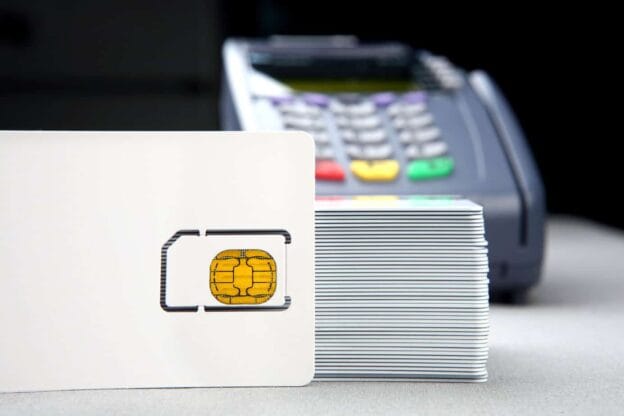
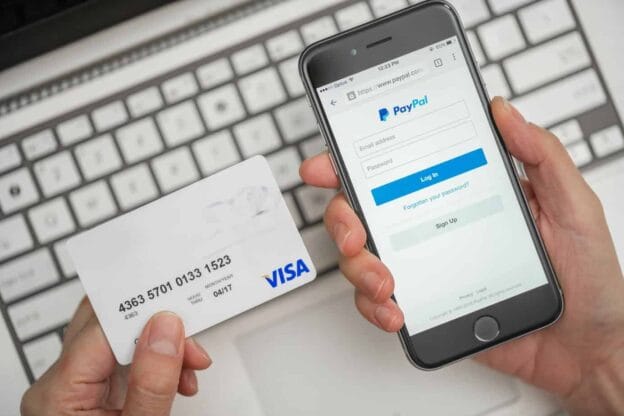
Modern payment methods in the United States range from EMV chip cards to digital wallets to bitcoin; however, there’s one traditional form of payment that has managed to survive the shift towards digital.
Use of Paper Checks by American Business Entities
The use of paper checks by American business entities and individuals remains uncomfortably high in the 21st century. A 2013 survey by the Association of Financial Professionals indicated that half of all U.S. companies were happy using old-fashioned checks for their payment transactions.
In 2016, a survey conducted among 120 American retailers revealed that only half of respondents were interested in going digital for their payment methods; among those that were still using checks, 10% stated that they had no intention of switching to electronic payments ever.
The most surprising data of the aforementioned 2016 survey is that they half of the respondents explained that 3/4 of their payments were still made by writing out checks. Some of these retailers do not accept checks from shoppers, but they will still write and mail a check when they need to make a payment to a vendor. The only electronic payments they make are to international vendors.
When it comes to the adoption of electronic payment methods and advanced credit card processing, the U.S. is notorious for being a slow adopter. Many Latin American nations have virtually eliminated checking accounts in lieu of express deposit accounts with debit cards for consumers and electronic ledgers for business entities; this is a financial trend that dates back to 2005. Even the switch to EMV credit card processing is taking much longer than expected in the U.S.
Retailers and other businesses still using company checkbooks in the U.S. need to realize that a significant amount of fraud is perpetrated through gaining access to checking account information, which can be easily collected from each and every check printed.
Electronic payment platforms and credit card processing offer far more security measures to prevent theft and fraud, and they tend to be less costly than checking accounts. Automating the accounts payable process with digital platforms is clearly the most sensible way of doing business in the 21st century, and this is something that the American enterprise world should realize. Host Merchant Services takes pride in helping businesses switch over to using electronic payments, which are far more secure and up-to-date in the 2016 business world.
Over the last couple of years, more retailers and providers of merchant services in the United States have been settling into the new Europay, MasterCard and Visa (EMV) credit card processing system. As EMV acceptance expands, business owners will start to see more technology upgrades offered by through their merchant services providers.
One current quirk of chip card acceptance is that shoppers believe it takes too long in comparison to the old magnetic stripe system that enabled the swipe transaction. Current EMV implementations do not allow swiping; instead, shoppers have to insert their cards into the credit card processing terminals and wait for the processes of verification and authorization to be completed.
What is a Quick Chip?
Quick Chip, a new EMV technology improvement by Visa, which is starting to make its way to select merchants, aims to make transactions smoother at the register. With Quick Chip, chip card acceptance will be vastly improved for Visa chip card holders.
How Quick Chip Benefit the Shoppers and Business Owners
In essence, Quick Chip speeds up the checkout process for the benefit of shoppers and business owners. This new merchant services upgrade allows shoppers to insert their cards into the terminal and wait just one or two seconds. Upon receiving acknowledgment, shoppers can retrieve their cards and put them away in their wallets, purses or pockets.
To a certain extent, the Visa Quick Chip emulates the swipe transactions of yesteryear, which were very satisfying for both store clerks and consumers. With this upgrade, which rolled out in select California stores in late July, the crucial check out experience speeds up considerably for the purpose of making shoppers happier.
A very advantageous aspect of Quick Chip is that it can be rapidly implemented. The first installation in California was a network of chip card terminals at a chain of grocery stores with seven locations. In only one week, the new system was running flawlessly.
When it comes to credit card processing, speed is of the essence. The Quick Chip system comes at a time when shoppers at major metropolitan areas have noticed that lines at the cash register are getting longer and moving slower due to the new chip card systems. This could be a good argument in favor of near field communications (NFC) payment systems and smartphone wallets, but this transition will take a while. For the time being, solutions such as Visa Quick Chip are the kind of technology upgrades that merchants and shoppers are looking for.
American companies that use credit card processing and merchant services are on high alert after a Russian hacking group breached the servers of various POS or point of sale systems.
The first victim of the breach was tech giant Oracle, which in mid-2016 acquired MICROS Systems, a major provider of POS solutions for the retail and hospitality industries.
Cyber-Attack on Oracle MICROS
Following the cyber-attack on Oracle MICROS, five more providers of cash registers reported being hacked by the same Russian crew.
The companies targeted by the hacking group have an important business aspect in common: they all offer cloud cash registers, which are advanced POS or point of sale systems integrated with functions such as employee scheduling, customer relationship management (CRM), credit card processing, marketing intelligence, merchant services, and more.
Security analysts who covered the aforementioned incidents explained that the Russian hackers were specifically looking for individual customer account records, which means that they were trying to get their hands on credit card data. A likely suspect has already been mentioned, the Carbanak Gang.
An initial security investigation indicates that Oracle became aware of the breach when it detected a malicious code in a few servers used by nearly 700 customers. The attack also included a help desk system used by Oracle to provide technical support to clients. This is very concerning because hackers could gain the ability of intercepting service tickets and spoofing support agents.
It is not unusual to see hacking crews such as the Carbanak Gang being suspected of pulling off major cyber heists. Internet security experts have been following this cybercrime group for a while; they believe that this group may be associated with the Bratva, which is the name insiders use to describe the Russian mafia.
It is interesting to note that one of the reasons major cyber-attacks come from Russia is that computer education has major support in public schools and state-funded universities. It is believed that the Russian government often recruits malicious hackers to work as cyber warfare agents.
Software giant Oracle Corporation became the victim of a data breach last week when a Russian organized cybercrime group gained access to hundreds of their systems. According to security experts the group gained access through a customer support portal for companies that use the MICROS point-of-sale software from Oracle. The MICROS software payment system is an extremely widely used credit card processing system and is used in more than 330,000 cash registers throughout the world. This makes MICROS undoubtedly one of the most used POS systems worldwide, and its compromising is a cause of great concern to both consumers and businesses alike.
The extent of the breach is currently unknown as Oracle has been somewhat slow to comment on what exactly has occurred, so far only revealing that malware was found in some systems run by MICROS and both unauthorized network connections and malicious processes had to be blocked. Oracle has also informed consumers that their credit card processing system ensures that data is encrypted throughout MICROS systems and which means they are less likely to be at risk. It is unclear at this time if customer data was even seized, however MICROS is encouraging all of its customers to err on the side of caution and reset their passwords and check their credit card statements.
A source with ties to the Russian criminal underground has claimed that this same group is tied to or responsible for stealing over $1 billion from banks worldwide last year through a series of malicious data breaches and hacking of merchant services worldwide. If this claim is true, this gang certainly knows what they are doing and as a result the breach could potentially be much larger than anticipated. Oracle themselves say initially they expected the data breach to be somewhat localized to just a handful of systems but soon realized that it had reached in excess of 700 systems for merchant services.
MICROS is a massive service throughout industries ranging from hospitality to standard retail cash registers, and it’s wide span of use should be cause for concern for a great deal of businesses. While it is unlikely that this data breach was an attempt to steal personal info from consumers, given the gang’s past, it cannot be completely ruled out as a possibility. However, it is far more likely that this was a robbery, perhaps of funds or at worse accessing various credit card processing information through MICROS systems in order to steal from individuals.
Regardless of their intentions, the MICROS data breach is being touted as nothing less than a “very big deal.” It is potentially one of the largest data breaches in recent memory and one that certainly has the potential to be the most impactful to many consumers and businesses worldwide. It just goes to show that no company can be too secure when it comes to their merchant services and credit card processing systems.
For the majority of individuals in the property management sector, a checkbook is a vital device that lets vast sums of money be transferred from one point to another without carrying briefcases full of bills. It is also a perfect way of making payments tenuously (mainly rent payments and even utility bills). With millennials promptly flinging over check books for mobile payments, however, it has made the rental industry rethink if it should start implementing mobile payments. For the majority, that is a tool that is to be applied soon.
In 2000, it was noted that the use of checkbooks dropped by almost half of what was used in previous years. A report from WePay indicated that more than 52% of millennials have never actually used checks; this makes a sound case for seeking an alternative mode of payment.
One famous developer, Jonathan Eppers who is the founder and Chief Executive of RadPad, believes that the perfect solution might be all that is needed, with satisfactorily expedient and robust mode making it as easy to pay your rent as it is to pay cash.
For instance, RadPad has by now been used to make transactions of an accumulative total of 120 million U.S. dollars in rent. However, Eppers points out that the mobile payments technology is new to many individuals.
For property management managers, it wasn’t necessary for them to change before. There was no reason for them to shift since checks worked fine for them. Furthermore, because rental houses were primarily occupied, it wasn’t necessary to make things more convenient to attract more tenants since they would just show up either way.
That might be changing, however, as many firms comprised of huge names such as Square are making an entry into the rental market and providing these services.
The major thing to take into consideration is that the situation on the ground that will make paying rent more convenient for tenants might not be put into place during the coming days. It might require a condition such as the introduction of an enhanced economy or purchasing homes becoming much more popular than renting.
For this reason, it is advisable for a landlord to get ready for such prospects and have a new rent payment method in place.
Mobile rent payments: one piece of collecting rent. The rest of our property management payment guides are in Property Management Payment Resources.
Kimpton Hotels & Restaurants is investigating reports of a data breach at several of its properties.
Kimpton operates 62 boutique hotels across the country and has begun to look into the scale of this hacking. Management has hired a computer security firm to find out if guest information or internal systems have been hacked. The hotel group has been discreetly advising guests who recently stayed at Kimpton to monitor their credit card bills and immediately notify their banks of unauthorized charges.
Headquartered in San Francisco, Kimpton released a statement that said, in part, “Kimpton Hotels & Restaurants takes the protection of payment card data very seriously. Kimpton was recently made aware of a report of unauthorized charges occurring on cards that were previously used legitimately at Kimpton properties.” Kimpton says it is doing everything it can to resolve the matter. They do offer customers some small solace about fraudulent charges to customer accounts. “Payment card network rules generally state that cardholders are not responsible for such charges.”
One computer blog has reported finding multiple sources in the financial industry ready to confirm a pattern of fraudulent credit card processing, suggesting a data breach at somewhere in the vicinity of two dozen Kimpton hotels.
The hotel chain is not the only hotel to find itself on the wrong end of a data breach. Over the last year, a number of hotel chains, including Trump, Starwood, and Hilton, found themselves victim to cyber criminals with customers’ information stolen. Omni Hotels had 50,000 credit card numbers taken.
Reportedly, most of the incidents appear to have occurred at counters with POS systems, including gift shops, restaurants and stores, but there were also complex data breaches that accessed information through internal data systems.
These breaches only reinforce the need for strong security measures to avoid even the smallest data breach. From merchant services to POS, cyber criminals are working as fast as possible to breach security technology as developers are finding ways to fortify defenses. From patches and upgrades to better firewalls, everyone should be protecting their data which is always at risk.
The only means of sustenance for nonprofit organizations is the money they receive from a variety of sources. Because many NGOs want to maintain neutrality and independence in operations, they do not accept corporate funding. They therefore depend solely on funding sources such as road side stands, races and fairs to raise funds for operations. These traditional methods of raising funds posed a limitation to cash as the only acceptable method of receiving payments. With the growing demand for more digital modes of payment instead of paper cash, many nonprofit organizations are seeking new ways they can receive cash digitally.
Beyond the tradition
There are several digital tools through which nonprofits receive charity donations. These fundraising tools raise millions for the nonprofit industry every year. Even though it may be difficult for some NGOs to accept digital payments due to governmental regulations or lack of online banking infrastructure, the digital modes of receiving charity donations remain an emerging trend. This is because these tools are easy to use and are affordable at every level of fundraising to the NGOs. The digital tools for raising charity funds allow nonprofit organizations to reach a large number of donors simultaneously. It also allows flexibility and ease for both the donors and the NGOs. With these systems, one can donate with just a simple click of a button. These methods of fundraising are the best for a century which is characterized by convenience.
DipJar technology
One of the key technologies that seek to provide nonprofit organizations with more convenient ways of accepting charity donations is DipJar. DipJar is a platform which has been designed in a way that facilitates at-the-spot payments and enables a person to donate even when he or she is not holding cash at that moment.
FirstGiving
FirstGiving was specifically designed to aid nonprofit organizations. This digital tool for receiving charity donations can be used together with other donation tools such as CRM, CMS, donor management, and social media. FirstGiving enables the nonprofit organization to receive online donations. It also provides an option for managing direct donations and the opportunity to interact with the donors.
PayPal donations
PayPal is another means of receiving donor funds from around the world. It also helps nonprofits to gather information about donors who donate through PayPal so that they can contact them subsequently for further discussions.
The way forward
Moving from the traditional ways of fundraising to the new, modern ways of fundraising or to adopt a combination of both will provide the nonprofit organization with more sources for funding. Other networks such as the Good DonateNow Lite, google wallet, and others provide suitable and convenient platforms on which nonprofit organizations can receive charitable donations. Online fundraising is becoming the order of the day. This is due to the fact that it provides more convenience and ease in raising funds. It also projects the nonprofit organization to the view of several donors.
For more on new ways to accept donations and other nonprofit payment questions, see Nonprofit Payment Resources.
Discovering Visa and PayPal were partnering up has shaken up the credit card processing industry. It is believed that everything from merchant services to eBay will be affected. Some immediately lauded how the partnership will enhance in-store NFC payments. The most cynical critics believe Visa, with PayPal under its watchful eye, will be better suited to tackle competition like Checkout.
The major reason this partnership has stunned the industry is because company heads at Visa and PayPal previously expressed opinions that could be interpreted as being diametrically opposed to ever working together.
Visa CEO Charlie Scharf has stated that payment players – merchant services, credit card processors, etc. – were either against Visa or with Visa. He believed “co-opetition” did not reflect how the traditional payment ecosystem and standard network model had operated for over five decades. The success of PayPal’s ACH and the many accounts it held contradicted this and, for Visa, made PayPal a serious concern.
Meanwhile, Dan Schulman, CEO at PayPal, has made it quite clear he saw PayPal as a new and unique entity after its break from eBay. Schulman has made it clear that he was running a very different enterprise. He stated the company was primed to look at consumer options and, yes, partnerships. As the driving force behind ACH, PayPal was pretty much indifferent to tender types.
Among the most interesting notions to come out of the partnership is that it will energize in-store NFC payments. Others took issue with PayPal’s business model being totally overshadowed by its new partner’s traditional credit card processing. Some analysts wondered if Visa would force PayPal to disband its business model and take on a more traditional credit card processing operation. Whatever is to come, the market took notice of the potential disadvantages. The day after the announcement, PayPal saw its stock ending down 6.75%.
Visa is the biggest credit card network in the world. PayPal is the world’s largest digital payment network with an estimated 188 million active users. PayPal’s merchant services are beloved by vendors and businesses globally. PayPal also has dormant accounts that this partnership could reinvigorate with accountholder incentives.
Still, while one can make it look good on paper, all the credit card processing in the world cannot guarantee this will work.
The emergence of online lending platforms has transformed how SMBs can secure support. Today we will understand the advantages that online lending brings to SMBs and how it effectively addresses the obstacles they encounter when pursuing loans. We will also understand how SMBs and online lending is fast evolving and benefiting the merchants in the US and globally.
Why More Strict Financial Regulations are Pushing Community Banks to Offer Online Lending for SMBs?
Originally, all banks were local. There were even strict regulations prohibiting banking across state lines after the Great Depression. The fear was that if national banks failed, it could destroy the entire financial system. Of course, that was the same fear articulated during the 2008 Sub-Prime Mortgage Crisis.
Local banks have an advantage with respect to their community focus. They can shake the hands of the local barber, farmer or plumber and discuss their needs for raising money. This community focus allows for small business loans that are beneficial for the lender, borrower and community.
Gradually, local banks began to expand with the relaxation of regulations during the 1990s. The community focus has not been lost, the majority of small business loans are still provided by the local banks. After the Sub-Prime Mortgage Crisis, tighter financial regulations were established which are now pinching the profit margins of many local banks.
Now, paperwork can be so costly at local brick-and-mortar banks that small business loans are simply not profitable.
What is the Answer?
Perhaps, online lending can be used to kill two birds with one stone.
By making a more affordable streamlined process, the community banks can create a cheaper online lending format that might be up to 75% lower. This allows for SMBs to continue receiving funding while improving their technological accessibility.
Many SMBs are owned by single proprietors. They can now complete the online loan process faster and receive cash infusions to keep their business growing more rapidly. As small businesses hire more workers – the entire nation benefits.
The World Wide Web continues to change how businesses are run. Affordable, accessible, and simple online loan application forms are a key benefit. Most individuals are simply sick and tired of filling out the same long, tedious applications in triplicate. SMB online finance is a win-win for all parties.
SMBs and Online Lending
The emergence of online lending has had an impact, on small and medium-sized businesses (SMBs). These innovative platforms have disrupted the lending landscape providing SMBs with access to much-needed capital. The days of complicated loan applications that often lead to disappointment are now a thing of the past.
Through lending, SMBs can now apply for loans conveniently from their office or home with a few clicks. The process is. Efficient, saving business owners time and effort. No longer do they have to wait weeks or even months for a decision. Many online lenders offer approval within hours or days.
One notable advantage of online lending is its flexibility. Traditional banks often have criteria for loan approval putting SMBs at a disadvantage. Online lenders recognize that each business is unique and consider factors beyond credit scores. Such as cash flow, sales history, and industry trends. When making decisions.
Additionally, online lending presents opportunities for businesses, with collateral or those who may not meet stringent requirements imposed by banks. This inclusiveness allows medium businesses (SMBs), in various industries to access the finances they need to expand their operations invest in new equipment or technology launch marketing campaigns, and hire more staff members. The possibilities are endless!
In addition to being accessible and flexible another notable advantage of lending is its transparency. Unlike banks that may surprise borrowers with fees and complex terms, reputable online lenders provide upfront information about interest rates and repayment schedules. This ensures that you know what you’re getting into before accepting any offer.
As more SMB owners discover the benefits offered by lending platforms it’s no surprise that this industry continues to thrive! Whether you’re starting your dream business or aiming to take your existing venture to heights consider exploring the world of lending—a modern solution designed specifically for small businesses like yours.
Benefits of Online Lending for SMBs
One of the significant advantages of online lending for small and medium-sized businesses (SMBs) is the speed and convenience it offers. Traditional loan applications can be a process involving paperwork and taking weeks or even months for approval. However with lending platforms SMBs can quickly and easily complete their applications, from their offices.
In addition, to saving time online lending also offers medium businesses (SMBs) a wider range of lenders to choose from. Of being restricted to banks or credit unions SMBs can connect with lenders from all over the country or even internationally. This increased competition among lenders often leads to terms and competitive interest rates.
Another advantage of lending is that it allows SMBs to secure funding even if they don’t have credit scores. Traditional lenders usually have requirements when it comes to creditworthiness, which makes it challenging for SMBs to qualify for loans. On the other hand, online lenders take a comprehensive approach considering factors like cash flow and business performance in addition to credit history.
Moreover, numerous online lending platforms provide repayment options specifically tailored for SMBs. These options can include extended repayment terms or adjustable payment schedules that account for fluctuations in revenue.
Online lending has transformed how SMBs access financing by offering approval times, a selection of lenders with improved accessibility regardless of credit score limitations, and flexible repayment options customized for their unique needs.
Obstacles faced by SMBs in obtaining loans
Small and medium-sized businesses (SMBs) often encounter difficulties when trying to secure traditional loans, from banks and financial institutions. These challenges can impede their growth potential. Restrict their opportunities.
SMBs often face a hurdle when it comes to getting financial support from lenders. Banks usually have requirements, such, as a track record of profitability, collateral, and excellent credit scores. Unfortunately, these are not always attainable for businesses.
In addition to these standards, the application process for loans can be quite burdensome for SMBs. It involves submitting paperwork and financial statements that provide information about their business operations. This can be time-consuming. Take away resources that could be better utilized in running and expanding their business.
Another challenge arises from the repayment terms offered by banks. These terms may not align with the cash flow patterns of SMBs. Small businesses often experience fluctuations in revenue streams, which makes it difficult to meet fixed payments.
Furthermore, it is worth noting that traditional lenders tend to adopt an approach when evaluating loan applications from SMBs. They might prioritize corporations or industries perceived as risky compared to smaller ventures or innovative startups.
Given these difficulties faced by SMBs when seeking financing through channels online lending platforms specifically tailored to their needs have emerged as a solution.
Stay tuned for our blog section where we will delve into how online lending has revolutionized access to capital, for medium-sized businesses!
Addressing the Challenges: How Online Lending Helps SMBs
Online lending has revolutionized the financing landscape for medium businesses (SMBs) in need of financial support. SMBs often face obstacles when it comes to obtaining loans but fortunately, online lending platforms have emerged as a solution, to these challenges.
One of the difficulties that SMBs encounter with loans is the arduous and time-consuming application process. Banks typically demand paperwork, financial statements, and collateral which can overwhelm business owners who are already juggling multiple responsibilities.
However online lending platforms offer an application process that’s both speedy and convenient. Business owners can complete an application form with a few clicks and submit their documents electronically. This streamlined approach saves them time and energy allowing them to focus on running their businesses of drowning in paperwork.
Another significant challenge posed by loans is the eligibility criteria imposed by banks. Many SMBs struggle to meet these requirements due to credit history or insufficient collateral. Recognizing that each business is unique online lenders take into account factors such, as cash flow analysis or social media presence when evaluating loan applications.
Moreover, online lenders offer flexibility in terms of loan amounts as compared to banks. They specifically cater to the capital requirements of small and medium businesses (SMBs) by providing smaller loan sizes that align with their needs. This enables businesses to access funding without burdening themselves with debt or borrowing more, than necessary.
Furthermore what sets lenders apart from institutions is the speed at which they evaluate loan applications. While decision-making processes at banks can take weeks or even months online lenders often provide funding within days of approval. This quick turnaround time ensures that SMBs have access to the working capital they need promptly allowing them to seize opportunities or address expenses without delay.
Additionally one of the advantages of lending is that it opens up opportunities for businesses in all industries regardless of their geographic location. Transactions occur digitally through platforms that can be accessed from, around the world.
Data security issues at Wendy’s have now been super-sized.
Following whispers of a data breach in January, Wendy’s finally confirmed payment security issues in May, when spokesmen admitted fewer than 300 stores had been affected by malware. Now, the company admits the real number of compromised restaurants is over 1,000.
Thieves installed malware on POS card terminals to capture card numbers, cardholder names, verifications values, expiration dates, service codes and other critical data. Wendy’s stated that CVV codes were not at risk. The malware has been called “highly sophisticated in nature and extremely difficult to detect.”
The initial claim of fewer than 300 affected stores was cast into doubt by reports from card issuers that fraudulent charge volume indicated a far larger distribution throughout the chain’s 5,800 U.S. locations. Wendy’s states that the attack came in two separate waves, making it difficult to determine the total size of the data breach when it was first detected. Investigators first determined the scope as only 300 locations, only to be hit by a second, mutated strain of the malware soon thereafter.
The attack appears to have been the result of compromised security credentials used for remote access by third-party POS service companies. These companies are often hired by franchisees to manage POS systems in their restaurants, and most access them remotely. Of the 5,800 Wendy’s restaurants in the U.S., only about 630 are owned and operated by Wendy’s itself, with the remainder in the hands of local franchise owners. None of the company-owned stores have been implicated in the data breach.
In response to their discovery of the larger scale of the breach, Wendy’s has compiled a searchable database of affected locations. This database is accessible to customers on the company website.
The affected locations had not yet moved to the use of EMV chip cards. Gavin Waugh, vice president and treasurer at The Wendy’s Company, believes that the attack might not have been prevented by use of EMV. Wendy’s declined to provide a timetable for the completion of the rollout of EMV to their network of restaurants.
Gartner Group analyst Avivah Litan states that although many locations have received and installed EMV-capable terminals, not all have activated them. She acknowledged that there is a backlog of requests at the companies who certify EMV readiness for merchants ready to move to the new standard.
Cookie Consent
We use cookies to enhance your browsing experience, analyze site traffic, and support our marketing.You can accept all cookies, reject non-essential ones, or manage your preferences below. Learn more in our Privacy Policy.
Cookie Preferences
Manage your cookie preferences below:
Essential cookies enable basic functions and are necessary for the proper function of the website.
Name
Description
Duration
Cookie Preferences
This cookie is used to store the user's cookie consent preferences.
180 days
These cookies are needed for adding comments on this website.
Name
Description
Duration
comment_author_email
Used to track the user across multiple sessions.
Session
comment_author_url
Used to track the user across multiple sessions.
Session
comment_author
Used to track the user across multiple sessions.
Session
Google Tag Manager simplifies the management of marketing tags on your website without code changes.
Name
Description
Duration
cookiePreferences
Registers cookie preferences of a user
2 years
td
Registers statistical data on users' behaviour on the website. Used for internal analytics by the website operator.
session
These cookies are used for managing login functionality on this website.
Name
Description
Duration
wordpress_logged_in
Used to store logged-in users.
Persistent
wordpress_sec
Used to track the user across multiple sessions.
15 days
wordpress_test_cookie
Used to determine if cookies are enabled.
Session
Statistics cookies collect information anonymously. This information helps us understand how visitors use our website.
Google Analytics is a powerful tool that tracks and analyzes website traffic for informed marketing decisions.
Contains information related to marketing campaigns of the user. These are shared with Google AdWords / Google Ads when the Google Ads and Google Analytics accounts are linked together.
90 days
__utma
ID used to identify users and sessions
2 years after last activity
__utmt
Used to monitor number of Google Analytics server requests
10 minutes
__utmb
Used to distinguish new sessions and visits. This cookie is set when the GA.js javascript library is loaded and there is no existing __utmb cookie. The cookie is updated every time data is sent to the Google Analytics server.
30 minutes after last activity
__utmc
Used only with old Urchin versions of Google Analytics and not with GA.js. Was used to distinguish between new sessions and visits at the end of a session.
End of session (browser)
__utmz
Contains information about the traffic source or campaign that directed user to the website. The cookie is set when the GA.js javascript is loaded and updated when data is sent to the Google Anaytics server
6 months after last activity
__utmv
Contains custom information set by the web developer via the _setCustomVar method in Google Analytics. This cookie is updated every time new data is sent to the Google Analytics server.
2 years after last activity
__utmx
Used to determine whether a user is included in an A / B or Multivariate test.
18 months
_ga
ID used to identify users
2 years
_gali
Used by Google Analytics to determine which links on a page are being clicked
30 seconds
_ga_
ID used to identify users
2 years
_gid
ID used to identify users for 24 hours after last activity
24 hours
_gat
Used to monitor number of Google Analytics server requests when using Google Tag Manager
1 minute
Marketing cookies are used to follow visitors to websites. The intention is to show ads that are relevant and engaging to the individual user.
Facebook Pixel is a web analytics service that tracks and reports website traffic.